2027 Online Geosciences Degrees for Energy and Natural Resources Careers

Co-Founder and Chief Data Scientist
Facing a rapidly evolving energy sector, professionals in geosciences must quickly adapt to shifting technologies and regulatory demands while balancing ongoing employment and family obligations. This challenge is intensified by limited local access to specialized programs and the need for timely credentials to remain competitive. Recent Department of Education data shows a 45% national surge in enrollment for fully online science degrees, signaling increased acceptance of remote pathways as viable alternatives to traditional campus-based study.
This shift reflects growing employer recognition of flexible learning formats without compromising rigor. This article evaluates accessible online geosciences degrees tailored to energy and natural resources careers, helping prospective students navigate program quality, flexibility, and career relevance to optimize their educational investment.
Key Things You Should Know
- Online geosciences degrees in 2026 average 20-30% lower total cost than on-campus alternatives, but reduced hands-on field training risks lower employer ratings in applied skills per the U.S. Bureau of Labor Statistics.
- Energy sector hiring favors graduates with integrated software proficiency; 65% of employers in 2024 explicitly require remote-ready GIS and petrophysics tools, intensifying curriculum selection pressures on prospective students.
- Rapid automation shifts have flattened entry-level positions, extending time-to-promotion beyond 5 years, forcing candidates to weigh accelerated degree completion against diminished initial workforce impact.
What are online geosciences degrees for energy careers?
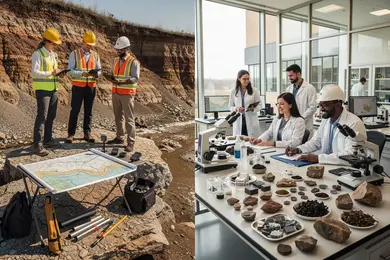
Online geosciences degrees for energy sector careers prioritize practical skills critical to exploration fields such as oil, gas, and renewables. Programs emphasize seismic interpretation, reservoir characterization, and environmental impact evaluation, often incorporating industry-standard software and data analysis to meet employer expectations for geological modeling and regulatory compliance. However, graduates must be cautious of distance learning geosciences programs for natural resources that lack rigorous lab simulations or fieldwork, as these gaps can hinder job readiness despite theoretical knowledge.
Working professionals or career changers benefit from the flexibility of these programs, allowing continuous employment while acquiring targeted credentials. For instance, an environmental consultant moving into energy exploration can leverage online curricula to quickly gain expertise in hydrocarbon systems and seismic data without sacrificing income. Yet, quality and industry recognition remain pivotal, necessitating careful review of alumni outcomes and partnerships with energy firms.
The employment outlook supports this pathway, with geoscientists earning a median annual wage of $99,240 in 2024 and the field growing at 3% from 2024 to 2034. Candidates must balance this steady demand with the competitive nature of the job market, which favors those holding a bachelor's or higher degree alongside relevant internships or connections. To explore what other career options might align with your interests beyond geosciences, consider reviewing jobs for environmental science majors for additional perspective on related fields.
How do online and campus geosciences programs compare?
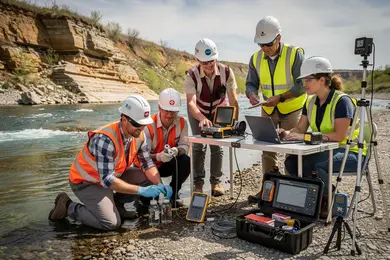
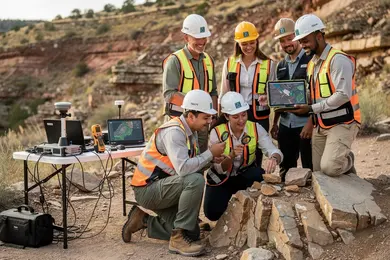
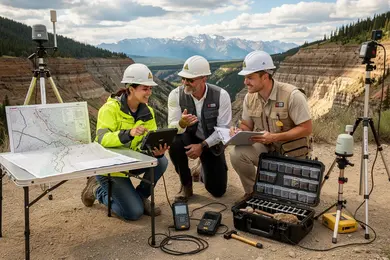
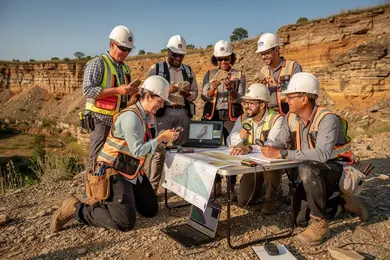
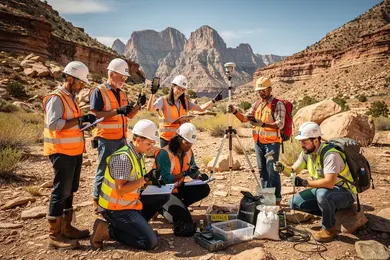
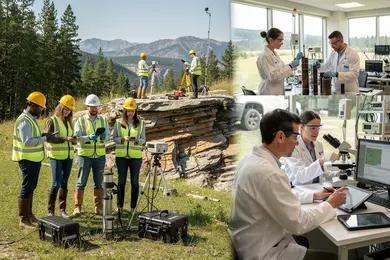
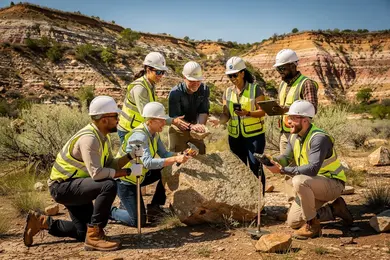
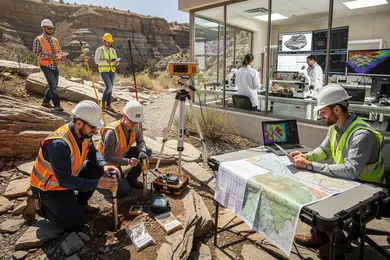
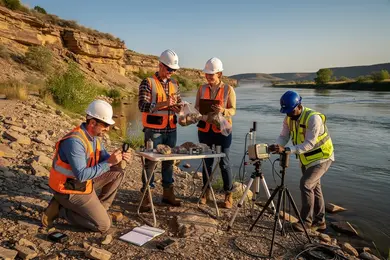
Graduates of campus geosciences programs typically enter the workforce with deeper field experience, a critical advantage for roles involving onsite geological surveys or equipment operation. This hands-on competence aligns with employer expectations in sectors like energy, mining, and environmental consulting, where interpreting field data and operating specialized equipment are daily requirements. Online vs campus geosciences degree programs for energy careers demonstrate a clear divide: online offerings provide theoretical rigor and flexibility, but students must independently secure local internships or summer fieldwork to obtain comparable practical skills.
From a workforce perspective, employers prioritize candidates who have demonstrated fieldwork proficiency due to the 1,400 new jobs projected by the U.S. Bureau of Labor Statistics in relevant natural resources sectors over the next decade. Those in campus programs often have immediate access to labs, equipment, and mentorship, shortening the timeline for developing these competencies. Meanwhile, online geosciences education's flexibility appeals to professionals balancing work and study or those targeting analytical roles where in-person fieldwork is less critical.
Decision-makers should consider logistical tradeoffs such as relocation and fixed schedules for campus programs versus time-efficient but potentially lengthier field experience acquisition in online tracks. Hybrid or targeted summer programs can serve as effective bridges to enhance employability within this competitive market.
For prospective students evaluating program costs in context, identifying affordable pathways aligned with career goals is paramount. Resources like the data science degree rankings offer insight on cost-efficiency for related STEM fields, informing strategic choices regarding specialized education investments.
Which accreditation should a geosciences program have?
Regional accreditation from recognized U.S. agencies like the Higher Learning Commission (HLC) or Middle States Commission on Higher Education (MSCHE) remains the baseline for geosciences degrees, ensuring eligibility for federal aid and employer acceptance. However, the practical distinction often emerges with specialized accreditations such as ABET accreditation for online geosciences programs, which industry employers-especially in petroleum geology-frequently use as a proxy for applied science rigor and hands-on competence.
This differentiation directly affects hiring and licensure pathways. Graduates from ABET-accredited curricula typically face smoother transitions to Professional Geologist status, avoiding additional exam hurdles or licensing delays prevalent in some states. Conversely, environmental consulting firms may prioritize programs with ties to the American Geosciences Institute or environmental endorsements that emphasize regulatory frameworks.
Employers' valuation of these accreditations is reflected in compensation: geoscientists' median wage of $99,240 notably surpasses related fields such as environmental scientists or cartographers, signifying a premium on accredited, technically proficient preparation. Choosing a non-accredited or regionally unrecognized program limits both short-term employability and longer-term career mobility.
Students assessing program quality should also consider practical alignment with their career goals rather than accreditation alone. For those weighing degree options, understanding how accreditation intersects with workforce expectations is critical and might even influence decisions such as whether pursuing a masters in library science worth it is relevant to their broader professional development.
What courses are in an online geosciences degree?
Online geosciences degree curriculums tailored for energy careers must equip students with both core scientific knowledge and practical skills to meet demanding industry standards. Employers prioritize proficiency in analyzing mineralogy, petrology, sedimentology, and stratigraphy to assess subsurface formations crucial for exploration in oil, gas, and mining sectors. However, these technical courses are only part of the equation; graduates must also demonstrate competency in data management, regulatory compliance, and workforce-relevant GIS technologies.
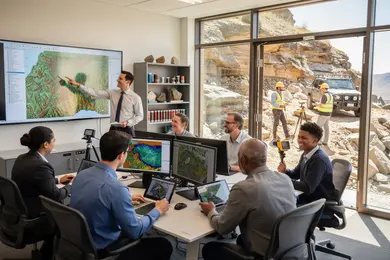
Programs often blend theoretical coursework with virtual field methods or limited on-site residencies to address a common drawback in online formats: minimal hands-on experience. For example, a geoscientist proficient in GIS and remote sensing can effectively model reservoir extents and predict mineral deposits, directly influencing project profitability and risk management. This alignment with natural resources and geosciences course study enhances real-world employability.
Financial commitment is a critical factor. Southern New Hampshire University's online geosciences bachelor's program charges $320 per credit hour-approximately $960 per course-which is relatively affordable among nonprofit institutions nationally. Prospective students should weigh this against median annual wages ranging from $65,000 to $95,000 based on specialization and location.
Balancing rigorous science with operational skills remains essential. For an informed decision on affordable graduate pathways, students can explore options beyond geosciences, such as a library degree, which offers distinct workforce trajectories and cost profiles.
What admission requirements do geosciences programs require?
Entry to geosciences programs for energy and natural resources careers requires more than general science aptitude; applicants must demonstrate quantitative skill through coursework in algebra, geometry, chemistry, physics, and often calculus. A competitive GPA above 3.0 in STEM subjects signals readiness for the analytical demands, while many programs still require SAT or ACT scores, though more are waiving these for candidates with strong academic or professional backgrounds.
Applicants targeting oil & gas, mining, or environmental consulting-sectors employing roughly 80% of geosciences graduates-face distinct expectations. Work portfolios illustrating applied fieldwork or research are frequently necessary, especially for graduate admissions, reflecting employer preference for demonstrable practical skills over theory alone. For instance, a professional shifting from related environmental work must confirm prerequisite coursework and may need bridge courses or assessments to meet program standards.
Those aiming for government roles, comprising about 10% of graduates, encounter stricter credential and security clearance requirements that influence admissions and long-term employability. Aligning entry criteria with targeted career paths-such as securing industry certifications or internships-can significantly affect hiring outcomes in competitive fields like mining and consulting, according to U.S. Geological Survey labor studies. Admission strategies must balance academic qualifications, practical experience, and sector-specific demands to optimize graduate success and address workforce realities.
How long does an online geosciences degree take?
Completion time for an online geosciences degree varies significantly, typically ranging from two to four years based on prior credits, part- or full-time enrollment, and program design. Transfer students leveraging relevant college credits can often finish in as few as two years, while those pursuing accelerated pathways face the challenge of balancing intensive study with professional or family responsibilities.
Programs often integrate theoretical coursework with hands-on lab or fieldwork, which may include hybrid formats or residency requirements. This adds scheduling complexity and may require employer support for on-site participation or recognition of professional experience to avoid prolonging degree timelines.
For professionals targeting rapid career shifts into sectors like energy resource management, competency-based models that accelerate credit completion offer a strategic advantage. However, these demand sustained discipline amid competing obligations.
Employer expectations in energy and natural resources emphasize both academic credentials and applicable skills. Nearly 94% of Appalachian State University graduates in geoscience and environmental science secure roles in related fields, illustrating the importance of program alignment with workforce needs and timely completion.
Delays due to credit transfer issues, fieldwork scheduling, or coursework pacing translate directly into lost employment opportunities in a competitive market. Prospective students should carefully assess program flexibility, practical requirements, and the feasibility of accelerated study relative to their career and personal context.
How much do online geosciences degrees cost?
Choosing an online geosciences degree requires weighing tuition costs against the tangible benefits of program quality and career outcomes. Bachelor's programs typically range from $15,000 to over $60,000, with public universities offering lower rates for in-state students-sometimes $300 to $600 per credit-and private or out-of-state options exceeding $1,000 per credit. Graduate degrees follow similar patterns but may demand higher per-credit fees due to specialized coursework and research.
These financial considerations significantly impact access to roles in sectors where the median pay for environmental scientists and specialists is $80,060, combined with a projected 4% job growth through 2034 per Bureau of Labor Statistics data. Professionals targeting environmental or energy industries should expect higher upfront costs for programs emphasizing industry certifications and fieldwork, which can accelerate employment prospects.
Additional expenses such as technology fees, software licenses, field studies, and onsite lab visits further complicate budgeting. While employer tuition reimbursement can defray costs, it often limits program options.
Applicants with $20,000 to $40,000 budgets tend to find a balance in accredited bachelor's programs that include internships and strong alumni networks, optimizing employability without excessive debt. Those pursuing advanced research or specialized roles should anticipate investing more for skill development aligned with stable labor market demands in natural resources and environmental fields.
What jobs can geosciences graduates get in energy?
Geosciences graduates commonly navigate tradeoffs between fieldwork demands and data-intensive roles, with skills in GIS, remote sensing, and analytics shaping their niche within energy sectors. For example, petroleum geologists combine seismic interpretation and geological modeling under tight deadlines, leveraging software proficiency while making immediate operational decisions. Conversely, renewable energy firms engage geoscientists to assess site viability for wind and solar projects, where environmental impact and subsurface analysis take precedence over rapid data turnaround.
Employability hinges on mastering industry-standard platforms like ArcGIS early, as entry-level roles demand spatial accuracy alongside ongoing certification to keep pace with evolving technology. Mid-career professionals must balance this with regulatory compliance in resource management, translating technical data into strategic business input. Geographic mobility also factors into career viability since many resource-focused roles are regionally concentrated.
Prospective students should critically assess program offerings emphasizing hands-on GIS and remote sensing projects targeted at energy applications to increase employability and clarify career pathway choices between data-centric and field-coordinated roles.
What salaries do geosciences careers offer?
Salary potential in geosciences varies sharply depending on specialization, experience, and location, with entry-level geological technicians earning around $60,000, while seasoned petroleum geologists and seismic interpreters command between $100,000 and $130,000. Federal positions, for example at the U.S. Geological Survey, often offer stability combined with competitive pay exceeding $120,000 in senior roles-a critical consideration for professionals prioritizing long-term security over industry volatility.
Workforce projections indicate modest growth of 4.9% through 2029, but this masks pronounced labor shortages due to retirements, which inflate salaries in niches like environmental consulting and energy transition projects. Those transitioning from unrelated fields face a steeper climb: employer demand increasingly favors advanced geospatial analysis competencies and demonstrated expertise in interpreting complex datasets relevant to resource exploration and hazard mitigation.
Geoscience graduates aiming for leadership or project management in oil, gas, or renewables can expect $110,000 to $140,000 salaries, particularly in hubs like Houston or Denver, but this must be weighed against the comparative job stability and lower pay in academia or public policy. Candidates should also consider the competitive hiring landscape that values cross-disciplinary STEM skills and operational insight to manage financial and environmental risks effectively.
What certifications help geosciences graduates advance?
Professional certification directly affects hiring outcomes in geosciences by validating technical expertise and regulatory knowledge that employers demand. The Certified Professional Geologist (CPG), governed by the American Institute of Professional Geologists, is a key credential often required to advance in roles involving environmental consulting, mineral exploration, or compliance. For instance, candidates without a CPG may struggle to compete for senior positions where ethical and technical mastery is non-negotiable.
Licensing such as the Registered Professional Geologist (RPG) is essential in many states for legally accountable work, particularly in public safety and engineering geology. This distinction expands responsibilities and access to projects requiring official sign-offs, directly impacting job eligibility and career trajectory. Energy sector professionals benefit markedly from certifications in petroleum geology or reservoir engineering, which address the rigorous risk assessment and technical demands of oil, gas, and renewables operations.
GIS-related credentials like the GIS Professional (GISP) credential increasingly intersect with geosciences careers focused on environmental and resource management, ensuring proficiency in spatial analysis and remote sensing technologies. Given projections of over 33,800 new combined geoscience and environmental science jobs in the coming decade per Carleton College's SERC analysis, prioritizing credential pathways aligned with specific industry demands can be decisive.
Tradeoffs include balancing certification timelines and fees with required professional fieldwork, which often delays immediate advancement but enables eligibility for higher compensation bands and leadership roles. Graduates must strategically match credentialing efforts to their target roles and regional regulatory frameworks to maximize practical value and labor market relevancy.
Other Things You Should Know About Geosciences
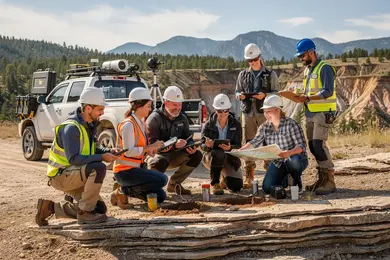
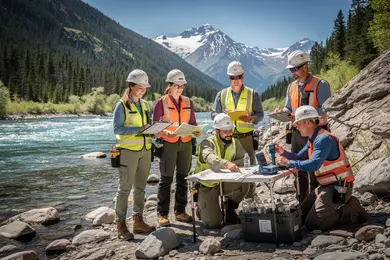
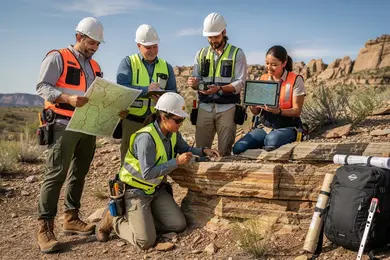
Most employers in energy and natural resources expect graduates to have practical field skills alongside theoretical knowledge. Online programs that incorporate optional or mandatory fieldwork components significantly improve employability since remote-only training leaves a gap in real-world data collection and interpretation abilities. When evaluating online degrees, prioritize those with clear, structured field experience opportunities integrated into the curriculum or partnerships for supervised internships.
Online geosciences degrees often demand more self-discipline due to less direct supervision but do not inherently reduce academic rigor. The workload parallels on-campus programs, including lab simulations and complex data analysis assignments. Students should expect to allocate substantial time for technical software training and independent research, which may require additional effort without in-person lab support.
Employer acceptance depends largely on program reputation, accreditation, and demonstrated competencies rather than delivery format alone. Graduates from well-recognized online programs with verifiable lab and field components are increasingly competitive. Candidates should emphasize practical skills and applicable project experience during hiring to counter any bias toward traditional degrees.
Most online geosciences programs require 1 year of college-level chemistry, 1 year of calculus, and introductory geology or earth science before admission. Some schools also ask for physics, a minimum 2.5 to 3.0 GPA, and official transcripts showing prior lab coursework.
References
- Geoscience Careers https://education.americangeosciences.org/resources/geoscience-careers/
- How do recent geoscience graduates experience the job market? - GeoExpro https://geoexpro.com/how-do-recent-geoscience-graduates-experience-the-job-market/
- Graduate Certificates in Mineral Exploration - Department of Geology and Geological Engineering https://geology.mines.edu/graduate-programs/graduate-certificates-in-mineral-exploration-3/
- ABET Accreditation a Clear Pathway to Professional Geologist and Geologist in Training Licensure Under New California Regulations - ABET https://www.abet.org/abet-accreditation-a-clear-pathway-to-professional-geologist-and-geologist-in-training-licensure-under-new-california-regulations/
- Online Geoscience Degrees: Top Schools and All Programs in 2026 https://www.gisdegree.org/online/geoscience-degrees/
- Geoscientists: Salary, career path, job outlook, education and more - RaiseMe https://www.raise.me/careers/life-physical-and-social-science/geoscientists/
- Supporting Geoscience Students https://www.grow-geocareers.com/forgeodepartments
- The Geological Society - Degree Accreditation https://www.geolsoc.org.uk/education-and-resources/universities/university-degree-accreditation/
- ThisIsGeoscience - Geoscience Salaries https://www.thisisgeoscience.com/the-resources/geoscience-salaries
- Working in Geosciences | TotalEnergies Careers https://careers.totalenergies.com/en/find-out-about-our-jobs/working/working-geosciences