2027 Geosciences Careers That Reward Strong Fieldwork Skills

Co-Founder and Chief Data Scientist
Geosciences professionals often confront unpredictable field conditions that demand rapid adaptation and precise data collection, where minor errors can skew environmental risk assessments or resource evaluations. As employers increasingly seek candidates adept at navigating complex terrain and managing robust fieldwork protocols, a 2024 National Science Foundation report noting a 15% growth in field-oriented geoscience roles underscores shifting workforce priorities. This trend signals growing opportunities yet also heightened competition, particularly for candidates balancing upskilling with existing commitments.
This article evaluates current geosciences careers that prioritize strong fieldwork skills, offering strategic guidance for navigating education and job selection to maximize practical career outcomes.
Key Things You Should Know
- Fieldwork-heavy geosciences roles commanded a 12% premium wage growth from 2022-2025, per the U.S. Bureau of Labor Statistics, but demand for advanced remote sensing skills now competes, creating tradeoffs in skill specialization.
- Employers report 67% preference for candidates with ≥2 years of integrated field data and GIS experience, pushing undergrads toward costly dual-certification pathways to meet workforce acquisition benchmarks.
- Field-intensive degree programs average 25% higher tuition and require prolonged off-campus commitments, with implications on workforce entry timing and financial barriers, according to the National Science Foundation 2024 education survey.
What geoscience careers rely most on strong fieldwork skills and outdoor research experience?
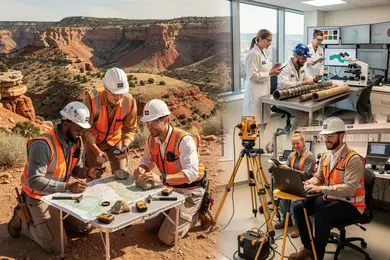
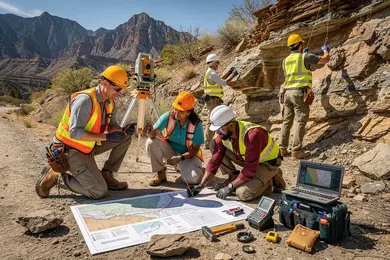
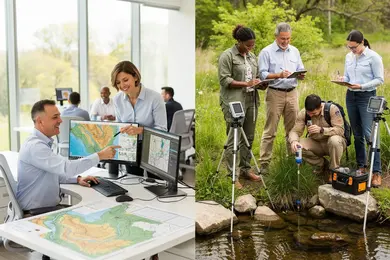
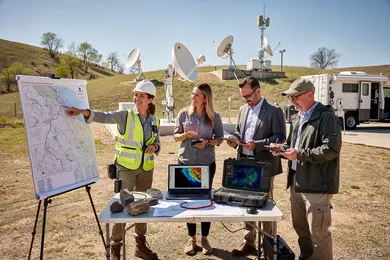
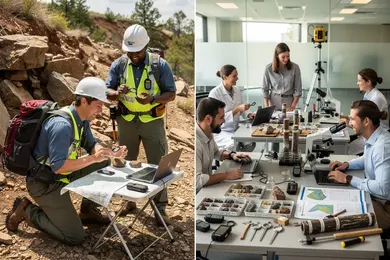
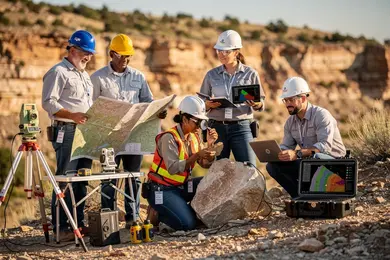
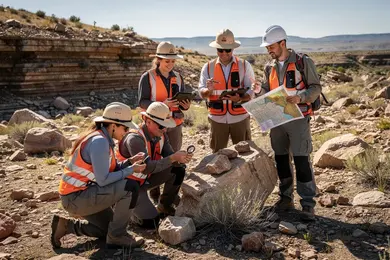
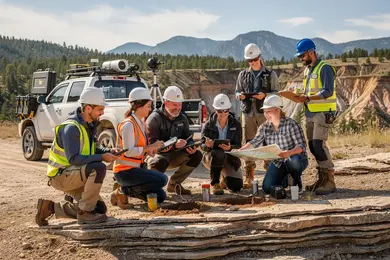
Field-based geoscience careers demand precise outdoor research skills, with environmental, hydro-, and engineering geologists relying on accurate geological mapping, soil and water sampling, and site contamination assessments amid challenging conditions. For instance, environmental geologists investigating contaminated locations must produce reliable field data that directly shape remediation strategies, affecting public health safeguards and regulatory outcomes.
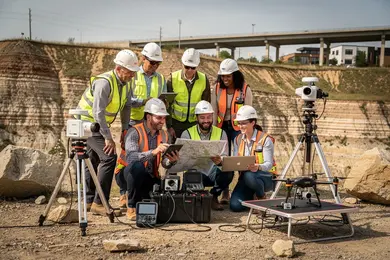
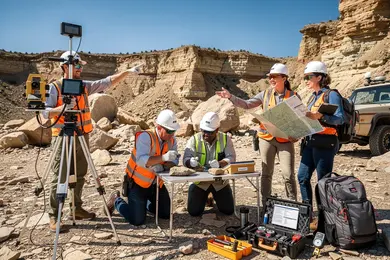
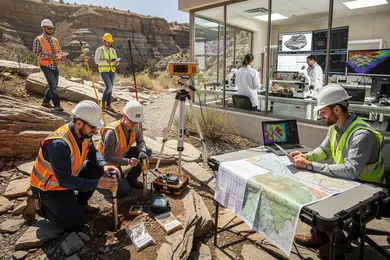
Geosciences jobs requiring strong fieldwork and surveying skills extend into natural resource exploration, where seismic surveys, rock core sampling, and structural mapping inform extraction projects. Deficiencies in these competencies risk delays or inflated costs due to poor data quality, a factor employers scrutinize during hiring and performance reviews.
Workforce data from the U.S. Bureau of Labor Statistics note a median annual wage of $80,090 for environmental scientists and specialists, with job openings expected to expand by 6% through 2032, driven by both growth and retirements. Candidates must demonstrate endurance for extensive field assignments, strict adherence to safety protocols, and proficiency with GPS and sampling technologies.
Applicants who acquire documented field experience via internships or cooperative education programs hold a competitive edge. Compared to office-based roles, field-centric positions typically involve less predictable schedules and higher geographic mobility, considerations critical to educational and career planning. Prospective students might explore colleges with GIS programs to build complementary skills relevant to these demands.
What does day-to-day fieldwork look like in different geoscience roles?
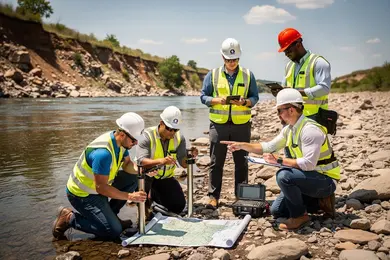
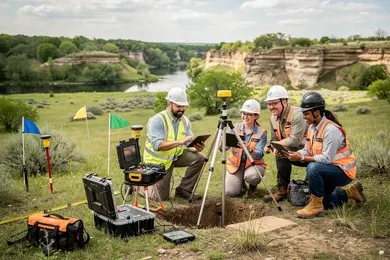
Fieldwork responsibilities in geoscience careers demand adaptability to varied and often challenging environments, impacting both the nature of daily tasks and the skill set employers prioritize. For example, hydrogeologists increasingly focus on managing complex groundwater monitoring sites, involving precise sampling, piezometer installation, and real-time data logging to track contamination or water table shifts. This specialization reflects growing investment in groundwater remediation, which is projected to rise from $5.2 billion in 2023 to $7.9 billion by 2030, influencing workforce needs and informing training priorities in this segment.
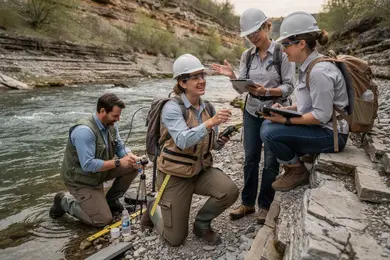
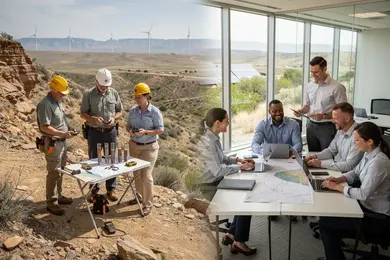
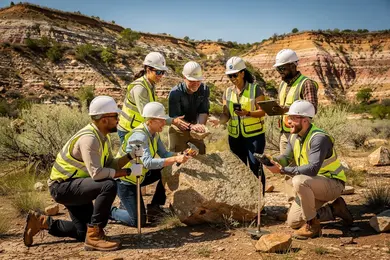
Environmental geologists face physical obstacles and weather variability while gathering soil and rock samples, often collaborating with engineers to delineate contamination zones critical for risk assessment. Petroleum geologists trade routine office work for physically demanding field surveys conducting seismic tests and mapping subsurface structures in remote areas. Exploration geologists working in mining balance intensive core logging and geochemical sampling with rapid digital data processing under tight deadlines. These examples highlight the practical tradeoffs among physical endurance, technical skill, and data accuracy embedded in geoscience daily tasks in fieldwork.
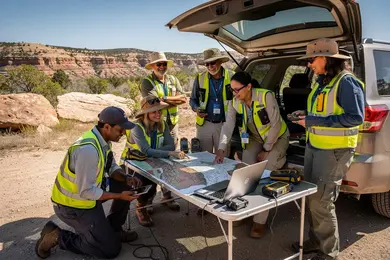
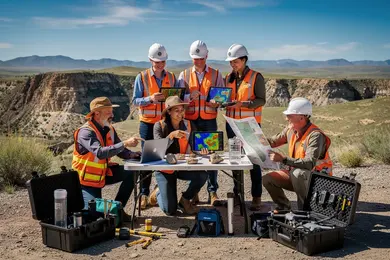
Across these roles, transporting sensitive equipment, maintaining calibration, and consistent protocol adherence under challenging conditions remain constant workforce imperatives. Proficiency with GPS, GIS software, and field data tools complements physical requirements, shaping hiring criteria. Candidates considering this pathway should weigh these operational demands against educational options, including the pursuit of a cheapest data science masters in USA when integrating advanced data analytics capabilities relevant to geosciences careers.
Which geoscience degrees best prepare you for field-intensive careers?
Engineering geology, environmental geology, and geotechnical engineering degrees are distinct in their preparation for field-intensive geosciences careers and differ notably in workforce trajectories and practical demands. Engineering geology combines core geoscience with applied engineering, emphasizing site investigations critical to infrastructure design. Environmental geology centers on field sampling and contamination assessment, skillsets essential for land-use planning and remediation projects in challenging terrains. Geotechnical engineering presents the most targeted route into an expanding sector expected to grow over 5.9% annually, driven by infrastructure and transportation investments.
These top academic programs for field-intensive geosciences jobs mandate rigorous, often extended fieldwork including subsurface sampling, borehole logging, and in-situ testing under varied and sometimes remote conditions. Success hinges not only on technical proficiency but also on adaptability and endurance. For example, engineering geologists working on tunneling projects must reconcile field observations with lab data to support ground stability, integrating multidisciplinary expertise uncommon in broader Earth science degrees.
Employers consistently prioritize candidates whose coursework includes substantial, documented field experience and industry internships. Without this, graduates can struggle to meet the precision and safety standards central to this field. Institutions offering integrated co-op or industry partnerships provide a tangible advantage by exposing students to real-world project workflows. Prospective students should also consider complementary pathways such as computer science degrees online where data analysis and modeling increasingly intersect with geotechnical applications.
How do online, hybrid, and campus geoscience programs handle required fieldwork?
Fieldwork remains the defining differentiator in evaluating online and hybrid geosciences fieldwork requirements versus campus programs. Employers in resource extraction sectors expect demonstrable practical skills, and campus geosciences programs fieldwork integration delivers by embedding extensive, prolonged field experiences within the curriculum. For instance, petroleum geologists, who earn a median wage of $144,810 according to U.S. Bureau of Labor Statistics, depend heavily on direct exposure to field conditions that campus settings provide through guided group projects and university-led expeditions.
Hybrid models accommodate working professionals by condensing fieldwork into intensive, travel-based sessions. These short but focused field experiences demand students independently manage logistics and actively meet competency targets, bridging remote theoretical learning with vital hands-on practice-yet they carry higher friction for scheduling and access.
Purely online programs struggle to validate field competency. They typically rely on industry partnerships or regional camps that require students to self-arrange supervision and equipment. Virtual simulations enhance theoretical understanding but fall short in replicating tactile skills crucial for exploration or environmental roles. Graduates of online pathways often must secure external field experience to remain competitive.
Prospective students should consider how fieldwork delivery affects career readiness and factor this alongside institutional costs and program reputation. For comparative information on affordability across disciplines, students can explore options such as a library science degree as a reference to academic pricing structures.
What core courses and labs build the strongest field skills in geosciences?
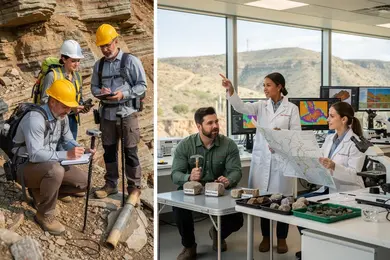
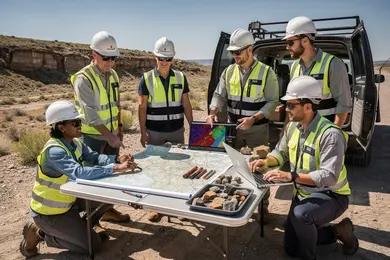
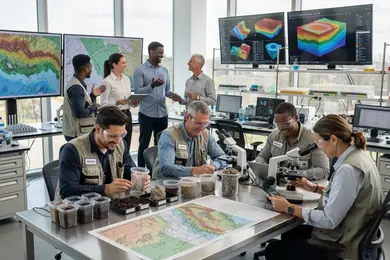
Proficiency in field skills within geosciences fundamentally depends on integrated coursework paired with rigorous hands-on training. Structural geology, with advanced outcrop analysis and fault interpretation, directly sharpens observational accuracy necessary for subsurface modeling. Meanwhile, mineralogy labs using hand specimens and thin sections enhance field-based mineral identification, accelerating real-time decision-making during exploration.
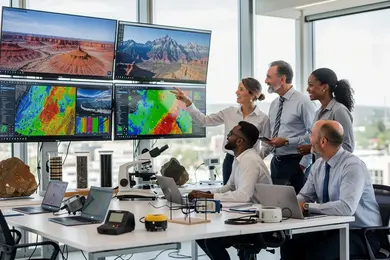
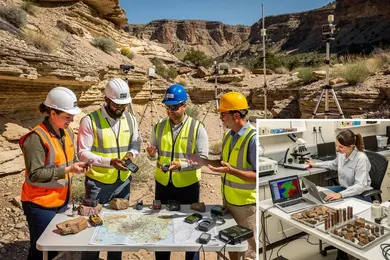
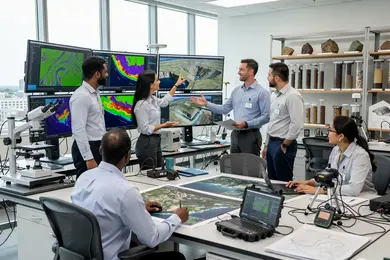
Field methods labs that combine GPS, GIS software, and remote sensing with traditional tools cultivate the practical ability to synthesize diverse geospatial data quickly-a skill employers expect in resource quantification and environmental assessments. For instance, GIS projects simulate scenarios requiring rapid interpretation under time pressure, mirroring actual exploration challenges.
The expected growth in demand for critical minerals like lithium, cobalt, and nickel-projected to increase by 1.5 to 7 times between 2020 and 2035 due to energy transition needs-raises the stakes for robust economic geology training. Candidates lacking strong field exposure in assay analysis, geochemical sampling, and core logging face longer onboarding periods and reduced immediate job readiness, highlighting the operational value of resource evaluation labs.
Employers prioritize candidates who sustain mapping precision and sampling efficiency across variable terrain and climates. Field camps lasting 4-6 weeks or more significantly improve these competencies. Balancing theory with applied fieldwork is not an academic luxury; it materially shortens retraining times and improves long-term employability within mineral exploration and energy-focused geosciences roles.
What admission requirements and prior experience help you enter field-focused programs?
Admission into field-focused geosciences programs hinges on proven competence in core physical sciences-geology, chemistry, physics, and especially calculus-with advanced coursework often expected at the bachelor's level. Applicants lacking direct field experience risk falling behind, as employers and graduate programs prioritize hands-on skills such as geological mapping, soil sampling, and remote sensing. Practical experience in terrain navigation and data collection directly influences employability, underscoring why integrated field camps and cooperative education placements are critical.
The economic consequences of natural disasters-exceeding $300 billion worldwide-have triggered increased demand for geoscientists adept in geospatial technology and hazard risk assessment. This shift means candidates must present documented expertise in hazard mapping and risk evaluation to secure roles in environmental consulting, government, or emergency management sectors. Without prior exposure to these areas, new graduates face steep on-the-job learning curves that can delay project contribution.
Besides technical skills, safety training in wilderness medicine, GPS, and environmental regulations is a practical differentiator in competitive admissions and hiring. Programs and employers alike treat these certifications as indicators of readiness to navigate liability and operational constraints inherent to fieldwork. Students weighing geosciences pathways should favor programs emphasizing experiential learning and safety competence to align education with immediate workforce demands.
How can you verify accreditation and program quality for geoscience fieldwork training?
Effective verification of fieldwork training in geosciences pivots on tangible outcomes rather than institutional prestige alone. Accreditation from recognized regional bodies is a baseline, but real credential value emerges from programs endorsed by professional organizations like the Geological Society of America or the American Geosciences Institute. This ensures alignment with practical competency expectations rather than theoretical knowledge alone. Without independent data on field hours, employer feedback, and graduate success in specialized roles-such as volcanology or geothermal exploration-candidates risk enrolling in programs that fail to meet evolving workforce standards.
Given the projected 75% expansion in global geothermal capacity by 2030 (from 16 GW to 28 GW as reported by the International Renewable Energy Agency), training that incorporates hands-on experience in high-temperature environments and technical skillsets like remote sensing or geochemical sampling is increasingly critical. Graduates unprepared for onsite hazard assessments or thermal mapping face diminished job prospects in this dynamic sector.
Direct assessment through industry connections, including employer and alumni insights, reveals whether programs offer meaningful internships and practical safety certification. Programs lacking robust partnerships or logistical support for demanding field conditions often leave students under-equipped for real workplace challenges.
What salaries and advancement opportunities exist in field-oriented geoscience jobs?
Field-oriented geoscience careers demand a blend of practical experience and technical acumen, with salaries typically starting between $55,000 and $85,000 annually. Specialized roles, such as marine and coastal geologists, often command higher wages due to niche expertise. By 2030, the ocean economy's projected $3 trillion annual value, fueled by sectors including offshore renewables, coastal protection, and seabed mapping, signals robust demand for professionals skilled in field survey, environmental assessments, and sampling.
Advancement hinges less on formal credentials alone and more on demonstrable field proficiency, especially with geospatial data technologies and nautical navigation. For instance, a geologist adept in integrated marine survey equipment may accelerate into project management or senior scientific positions earning beyond $110,000, particularly within government or energy sectors. Conversely, those lacking hands-on expertise may stagnate in entry-level roles despite advanced degrees.
Career progression involves tradeoffs like the physical demands and irregular schedules typical of fieldwork, where resilience and geographic mobility-relocating to coastal or resource-rich hubs-can materially influence earning potential and opportunities. Additional certification in GIS, remote sensing, or environmental compliance often supplements practical skills, enhancing employability. Employers prioritize adaptive problem-solving onsite and multidisciplinary leadership, making this a field where operational know-how frequently outweighs purely academic advancement.
- Starting salaries range from $55,000 to $85,000, with specialized marine roles at the upper end
- Projected ocean economy growth to $3 trillion by 2030 drives demand for field skills
- Promotion tied to field expertise in technologies and leadership, not just degrees
- Physical demands and geographic flexibility significantly affect career trajectory
What is the job outlook for geoscientists with strong fieldwork expertise in the U.S.?
Employers in environmental agencies and resource management increasingly demand geoscientists with robust fieldwork expertise, as on-site data collection and real-time problem solving directly affect project success and policy decisions. Candidates lacking hands-on experience risk being limited to analytical roles vulnerable to automation and funding cuts, while field-savvy professionals gain access to more resilient positions and accelerated career trajectories.
For example, agencies like the U.S. Geological Survey prioritize geoscientists able to navigate diverse terrains and interpret field measurements accurately, critical for land restoration and hazard assessment projects addressing soil erosion that impacts over 3.2 billion people worldwide.
- Strong field skills enable adaptability in multi-disciplinary teams managing watershed restoration, erosion control, and disaster mitigation efforts.
- Employers expect integration of remote sensing with verified ground observations, a competency inaccessible to those without field experience.
- Graduates focusing on laboratory or office-based roles face narrower job prospects and higher volatility compared to those with applied site experience.
Prospective students should weigh the tradeoff between programs emphasizing field internships and technical training versus purely theoretical curricula, as the former offers tangible advantages amid increasing demand for sustainable land-use expertise. This dynamic calls for deliberate educational choices aligned with practical job market requirements rather than generic academic appeal.
How can students build field experience through internships, research, and certifications?
Practical field experience in geosciences requires deliberate alignment of internships, research, and certification to meet distinct employer demands and student capacity constraints. Internships with government or environmental consulting firms expose students to site safety protocols, data collection limitations, and the operational use of GIS software-a skill increasingly critical as the global GIS market projects growth from $9.4 billion to over $19 billion by 2032. This trajectory amplifies hiring preference for candidates proficient in spatial data interpretation.
Engagement in faculty-led or independent research projects on topics like remote sensing, soil sampling, or hydrogeology cultivates methodical data analysis competencies and can strengthen professional profiles through contributions to published datasets. However, balancing research with coursework and fieldwork is necessary to avoid compromised academic outcomes.
Certifications such as OSHA's HAZWOPER and GPS surveying are practical investments-but require time management tradeoffs, as credentialing demands often coincide with hands-on training and coursework. For example, a student targeting mineral exploration roles might prioritize internships focused on rugged terrain sampling plus safety and drilling certifications, whereas someone pursuing environmental monitoring would emphasize GIS accuracy and regulatory compliance.
These differentiated approaches address industry expectations where data-driven decision-making governs resource management and environmental assessment, directly influencing employability based on how well students tailor their experiential learning to niche workforce needs.
Other Things You Should Know About Geosciences
While not always mandatory, pursuing advanced degrees can benefit geosciences professionals by offering deeper theoretical insights and specialized skills that can enhance fieldwork. However, practical experience, demonstrated through internships or field courses, often has a significant impact on career advancement opportunities in 2027.
Seasonal variability significantly shapes fieldwork schedules, with many projects concentrated in favorable weather months to ensure safety and data quality. This results in periods of intense activity followed by off-season work focused on analysis or planning. Candidates must weigh the physical demands and potential income fluctuations against project timelines; flexibility and readiness for variable hours are expected in employer evaluations.
Field-intensive certifications demonstrate specific practical skills valued by employers and improve immediate employability in roles requiring direct outdoor work. However, broader training provides foundational knowledge that supports adaptability across disciplines and may open alternative career paths if field opportunities are limited. Students aiming for immediate fieldwork roles should prioritize certifications, while those seeking versatility should balance both approaches.
Most employers require OSHA 10-hour or OSHA 30-hour training, plus first aid and CPR certification before field deployment. Teams working on remote sites often add wilderness first aid, defensive driving, and Hazard Communication training. Federal projects may also require site-specific safety briefings and a written field safety plan.
References
- 5. Best Practices for Instruction of Geoscience Undergraduates https://www.americangeosciences.org/change/sections/instructional_best_practices/
- How do recent geoscience graduates experience the job market? - GeoExpro https://geoexpro.com/how-do-recent-geoscience-graduates-experience-the-job-market/
- Advice for Applying to PhD Programs https://www.brains-explained.com/advice-for-applying-to-phd-programs/
- What do geologists do? https://www.geolsoc.org.uk/Geology-Career-Pathways/What-is-Geology/What-do-Geologists-do.html
- 500+ Water Jobs (Updated Today) â Free to Apply https://jobs.watertechintel.com/blog/geology-major-jobs
- Considering Further Education https://www.uwindsor.ca/careercentre/488/considering-further-education
- The Importance of Internships and Practical Experiences for Career Guidance https://www.philippevivier.com/en/the-importance-of-internships-and-practical-experiences-for-career-guidance.html
- How Internships Help You Choose a Major: Earn Real-World Experience Before Committing to Your Choice https://www.deltainstitute.co/blog-delta-institute/how-internships-help-you-choose-a-major-gaining-real-world-experience-before-committing-to-your-academic-path
- Supporting Geoscience Students https://www.grow-geocareers.com/forgeodepartments
- Information about Geoscience Related Careers https://careerexplorer.americangeosciences.org/careersinfo/