2027 Geosciences Specializations With the Broadest Career Mobility

Co-Founder and Chief Data Scientist
Choosing a geosciences specialization that maximizes career mobility presents a high-stakes dilemma for professionals balancing rapidly evolving industry demands against educational constraints. Labor market analyses from the U. S. Bureau of Labor Statistics reveal that interdisciplinary skills and adaptability now outweigh narrow technical expertise, reshaping employer expectations. Meanwhile, recent data from the National Center for Education Statistics shows a surge in part-time and online enrollment among adult learners, reflecting a clear trend toward flexible learning modalities that accommodate mid-career pivots. This convergence of workforce fluidity and education accessibility complicates pathway selection, especially for those eyeing resilience across multiple sectors. This article identifies geosciences specializations offering the broadest career mobility to guide strategic academic choices aligned with real-world opportunities.
Key Things You Should Know
- Applied geophysics specialization commands a 14% wage premium per 2024 BLS data, yet demands costly certifications and fieldwork hours, restricting rapid career shifts for cost-sensitive entrants.
- Employers prioritize hydrology-trained candidates for climate resilience projects, driving a 25% job growth rate in this niche, emphasizing specialized skill obsolescence risk outside emergent sectors.
- Remote sensing expertise shortens market entry by 20% due to abundant online micro-credentials, but overreliance on automated data tools limits advancement in traditional geoscientist roles.
Which geoscience specializations offer the broadest career mobility across industries and job roles?
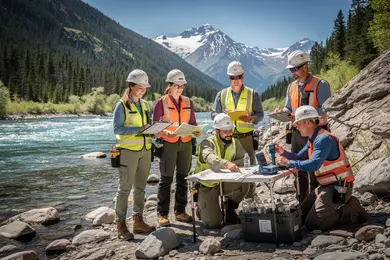
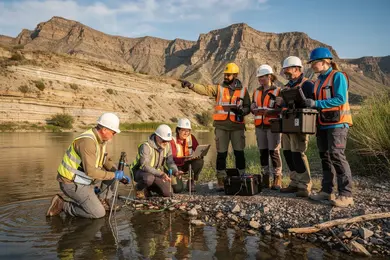
Hydrogeology offers notable career flexibility tied directly to essential sectors like agricultural irrigation, municipal water supply, and environmental regulation. The global groundwater economy, valued at approximately $535 billion annually in food production, supports 38% of irrigated land worldwide, which indicates sustained demand for expertise in groundwater modeling and aquifer management. This specialization appeals to government regulators, private environmental consultancies, and infrastructure firms focusing on sustainable water resource management. Such cross-industry career opportunities in geosciences fields reflect hiring priorities centered on technical proficiency combined with regulatory knowledge.
Economic geology presents a practical tradeoff: while rooted in mineral extraction, it increasingly serves clean energy needs by aligning with the critical minerals market. Professionals adaptable to data analytics, remote sensing, and geochemistry positions have a competitive edge in transitioning between traditional mining roles and renewable energy projects. This broadens employability but also demands ongoing skill development relevant to evolving energy policies.
Geotechnical engineering demonstrates mobility across urban infrastructure and disaster mitigation. For example, assessing seismic risks fits both public urban planning and private construction sectors. Graduates with these skills navigate lateral moves between government and commercial projects, underscoring the value of multi-sector experience. When evaluating geosciences specializations with highest career flexibility, consider how technical tools like GIS and hydrological modeling integrate with regulatory frameworks.
Given these dynamics, prospective students aiming for a strategic pivot should weigh not only technical specialization but real-world hiring patterns and employer expectations. Understanding practical pathways can also apply to professionals exploring options beyond geosciences, such as the speech language pathologist field, where analogous career transition challenges arise.
How do different geoscience specializations compare in salary potential and long-term job outlook?
Salary potential in geosciences specializations varies significantly depending on sector stability and market demand. Environmental geosciences lead in both salary growth and job security as the environmental remediation market is projected to rise from $118.2 billion in 2024 to $163.4 billion by 2029, with median salaries typically between $70,000 and $95,000. This sector benefits from consistent hiring across government and private consulting firms, driven by regulatory frameworks and sustainability initiatives. However, those aiming for petroleum geosciences should anticipate high entry salaries-often exceeding $100,000-coupled with volatile long-term prospects tied to fluctuating oil prices and energy policy shifts.
Mining geology professionals face moderate median wages of about $65,000 to $85,000, but geographic and commodity price fluctuations constrain mobility and job stability. Applied geophysics and geotechnical roles offer more consistent wages near $75,000, typically linked to urban infrastructure and disaster risk sectors, yet their growth mirrors the construction industry's cyclical nature.
Balancing these realities is critical for students and career changers assessing the long-term job outlook for geoscience careers. For example, environmental geoscience positions reduce exposure to abrupt downturns common in extractive industries, offering broader employment across government, private, and nonprofit environments.
Prospective candidates should also consider practical factors such as regional employment density and adjunct skills. Exploring details on program costs and fees can further inform decisions; a useful resource regarding an animal science degree online provides a structured approach to evaluating educational investments relevant across STEM disciplines.
What degrees and training do you need to enter the most versatile geoscience fields?
Entry into versatile geoscience careers increasingly hinges on both foundational degrees and specialized training aligned with market needs. A bachelor's in geology, environmental science, or geophysics remains essential, but advanced roles demand master's-level expertise or certifications focused on subsurface modeling, regulatory frameworks, and data analytics. For example, the rapid 50% expansion of global carbon capture, utilization, and storage (CCUS) capacity to 1.1 billion tonnes annually creates a specialized niche requiring more than general geology knowledge.
Employers expect candidates to have practical skills with seismic interpretation, GIS, and reservoir simulation software. Professional licensure enhances mobility, especially within consulting and government sectors where legal accountability is crucial. Students pivoting from unrelated STEM disciplines must add mineralogy, stratigraphy, and hydrogeology courses to remain competitive.
Training pathways for broad career mobility in geosciences will vary by focus. Mining geologists should prioritize economic geology and resource estimation, while climate-oriented professionals must develop expertise in carbon cycles and environmental risk. Programs with integrated internships or industry collaborations yield 30%-40% higher employment rates post-graduation, reflecting the need for applied experience to meet evolving expectations.
Prospective students should also explore options like an online library science degree as a complementary skill set for managing geoscience data and research, broadening interdisciplinary capabilities relevant in knowledge-intensive roles.
How do online geoscience programs compare with campus-based options for career-focused learners?
Practical skills and hands-on experience remain decisive factors in hiring for geotechnical and environmental roles, where campus-based and online geoscience degrees differ markedly in their approach to career outcomes. While online geoscience degrees provide theoretical knowledge comparable to campus programs, they often lack integrated fieldwork and direct access to faculty-led projects. Students pursuing online pathways must independently secure local internships or cooperative education to meet employer expectations, a logistical challenge absent from the embedded opportunities in campus programs.
Campus programs leverage internships, laboratories, and field camps, facilitating smoother transitions into specialist roles especially amid rapid infrastructure growth. This advantage reflects broader career advancement opportunities in online vs traditional geoscience education, since connections through research and established industry networks often influence recruitment in consulting and government sectors.
Working professionals considering an online degree must weigh the burden of managing field experience alongside self-discipline and time management demands; campus students gain structured schedules aligned with employer recruitment cycles. The global geotechnical engineering services market's rise from $2.1 billion in 2024 to $3.1 billion in 2030 signals increasing demand for applied geoscience expertise, rewarding degrees with substantial practical training.
For those exploring specialized degrees with cost-efficiency, comparing options such as a library science degree can offer insights into balancing affordability with career-focused outcomes across disciplines.
Which geoscience specialties best support career switching into energy, environment, tech, and policy?
Transitioning from traditional geoscience specialties like GIS and environmental geoscience into energy, environment, tech, or policy sectors depends heavily on technical adaptability and targeted upskilling. GIS skills in spatial data management and analysis are directly applicable to energy asset mapping, climate policy modeling, and smart city planning-fields linked to a GIS market expected to grow from $11.9 billion in 2024 to $27.0 billion by 2030 (14.7% CAGR). This makes GIS expertise one of the more versatile pathways.
Energy geoscientists skilled in subsurface and reservoir modeling can reposition toward geothermal energy or carbon capture but face real barriers without fluency in regulatory frameworks and economic drivers, essential for policy roles. Environmental geoscience graduates are increasingly valuable in tech-driven environmental consulting and regulatory agencies when they combine fieldwork with remote sensing and data analytics.
Workforce experience shows that shifting from petroleum-focused roles requires deliberate retraining in programming languages like Python and R alongside understanding environmental legislation. Lack of these competencies often causes career stagnation despite strong core geoscience skills.
Prospective career shifters must also evaluate the need for supplementary credentials in GIS technology, environmental law, or data science to avoid mid-career disruption.
What core courses and skills build the strongest foundation for flexible geoscience careers?
Core coursework in geology, geophysics, and environmental science paired with quantitative skills remains essential for geoscience careers in 2026. Employers increasingly demand proficiency in data analysis, geographic information systems (GIS), and remote sensing technologies to navigate sectors like resource extraction, environmental consulting, and disaster risk management. The integration of advanced statistics with programming languages such as Python and R enables real-time hazard modeling and enhances predictive accuracy-skills particularly vital as global losses from natural disasters hit $313 billion in 2024 with just 40% insured.
Students must weigh the value of hands-on training in field data collection, lab work, and specialized simulation software. For instance, a geoscientist moving into urban planning must combine knowledge of soil mechanics and sedimentology with competency in urban GIS to effectively assess ground stability.
Beyond technical expertise, workforce success hinges on communication and project management skills to function in multidisciplinary teams. A common tradeoff in many programs is underemphasizing these soft skills, which restricts adaptability across energy, policy, or climate adaptation roles without retraining.
Choosing a program with strong industry connections is critical, as internships and applied projects directly influence employability amid competitive markets. Prioritizing geostatistics, hazard mapping, and risk assessment within one's curriculum reflects pragmatic alignment with expanding demand for hazard and risk modeling professionals in insurance, emergency response, and infrastructure planning.
How do accreditation and program quality impact career mobility in geoscience specializations?
Accreditation directly impacts employability and specialization mobility in geosciences by signaling that a program meets rigorous curriculum and industry standards. Graduates from regionally accredited programs are preferred by employers because such programs deliver up-to-date technical skills and regulatory understanding essential for fields like mineral economics and environmental licensing. For instance, a mining geologist trained in an accredited program engaging extensively with critical minerals is better positioned amid the sector's market surge to over $400 billion as highlighted in the International Energy Agency's 2024 Critical Minerals Market Review.
Conversely, completing unaccredited or outdated programs often necessitates extra certification or retraining, delaying entry into specialized roles or licensure required for jobs in environmental geoscience. This can restrict both salary growth and access to leadership positions.
Quality programs also enhance access to internship networks and emerging focus areas such as clean energy minerals and climate risk assessment. However, programs lacking such integration impose long-term adaptability costs as market demands evolve.
Students should verify accreditation through recognized bodies like ABET and review graduate placement data within their target industry. Prioritizing programs with explicit ties to professional certifications expedites the licensing process, avoiding costly detours in a dynamic 2026 geosciences labor market.
What entry-level geoscience roles offer the most pathways to advancement and specialization changes?
Entry-level jobs in environmental geology, hydrogeology, and marine geosciences serve as versatile starting points for shifts across related specialties. For instance, a position as an environmental field technician focusing on contamination assessment can evolve into roles in resource management, regulatory compliance, or renewable energy evaluation. This adaptability is especially relevant given the surge in offshore wind development, projected to receive over $1 trillion in investments by 2040 according to OECD and International Energy Agency 2024 data.
These roles develop critical foundational skills-like data collection and analysis-that underpin advanced specializations such as geospatial modeling or climate impact assessments. The expanding global ocean economy, expected to reach $1.5 trillion by 2030, sustains demand for professionals comfortable across multiple environmental and engineering domains.
Tradeoffs include entry-level roles often offering lower initial pay and requiring physical readiness for fieldwork compared to lab or office positions. However, such positions accelerate skills acquisition and boost mobility through lateral moves into project management, environmental consulting, or geotechnical engineering, especially when supplemented with certifications like GIS proficiency or environmental auditing credentials.
Integrating emerging data science tools into these pathways also allows technicians originally focused on monitoring to pivot towards predictive analytics or policy advisory functions, aligning with strategic sectors like offshore wind and water resource management.
How can internships, research, and fieldwork expand your geoscience career options over time?
Securing internships or research roles in geosciences is a strategic choice that directly affects employability and skill development but demands careful evaluation of tradeoffs like financial strain and time management. For instance, internships with environmental or energy firms offer exposure to regulatory compliance and resource management, making candidates competitive for positions such as climate risk analysts or sustainable resource consultants. These roles align with the International Labour Organization's projection of a 14 million global net increase in green jobs by 2030, validating a targeted focus on climate-related competencies.
Research experiences cultivate technical expertise in geospatial analysis, GIS mapping, or remote sensing-skills increasingly valued beyond traditional geology or hydrology roles. Participation in funded projects also grants access to professional networks and publications, enhancing visibility in applicant pools where empirical proof of ability matters.
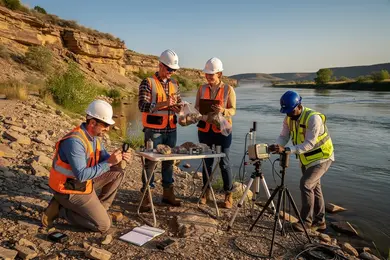
Fieldwork, while essential for adaptability and problem-solving under dynamic environmental conditions, introduces scheduling conflicts and travel commitments that may complicate academic progress or personal responsibilities. Students must account for such costs against the structured but often lower-paying nature of internships. Verifying the duration and stability of research funding is equally essential before committing.
By prioritizing internships or research that focus on climate resilience strategies or data analytics, candidates align with expanding sectors demanding specialized expertise and measurable, relevant experience. This pragmatic approach supports a career pivot or advancement decision based on awareness of employer expectations and evolving labor market realities.
What criteria should you use to compare U.S. geoscience programs for long-term career flexibility?
Programs in U.S. geosciences must prioritize technical versatility to meet shifting industry demands, particularly in space resource mapping and satellite data analysis. Traditional specialization in sedimentology or hydrogeology risks narrowing career options, whereas proficiency in remote sensing, GIS, and planetary geology opens paths in emerging sectors, including aerospace and extraterrestrial exploration. Global investment in space technologies exceeded $12.5 billion in 2024, illustrating the substantial market expansion beyond conventional earth science roles.
When evaluating programs, focus on these criteria:
- Cross-disciplinary curricula that enable transitions from environmental consulting to satellite mission roles.
- Collaborations with government and private lunar exploration initiatives, enhancing internship prospects and applied experience.
- Placement rates above 75% across diverse industries like energy, environmental management, and aerospace.
- Faculty with research expertise in geospatial technologies, remote sensing, and data science supporting practical skill development.
- Flexible delivery models (hybrid/online) accommodating working professionals.
Consider the opportunity cost of narrow specialization: a student trained solely in traditional methods may find limited mobility compared to peers fluent in satellite data integration, which employers increasingly value for terrestrial and space resource identification. Training focused on coding and advanced geoinformatics directly aligns with workforce agility demands and long-term career resilience.
Other Things You Should Know About Geosciences
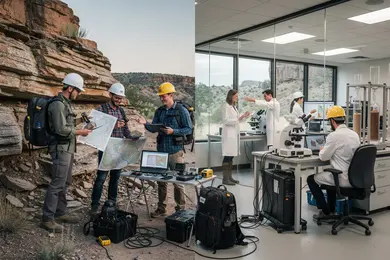
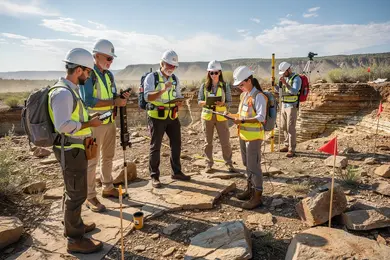
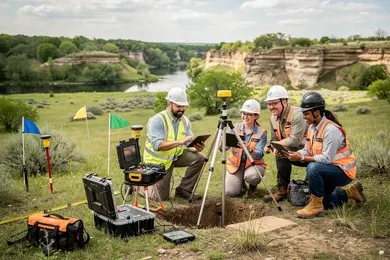
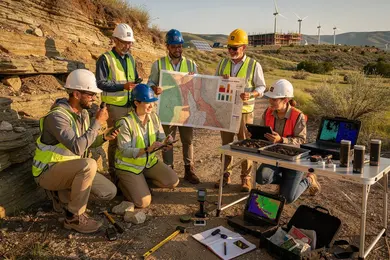
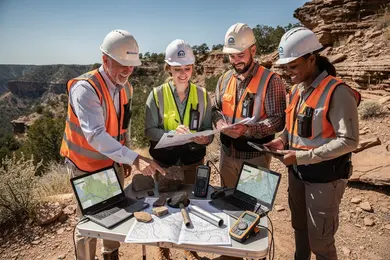
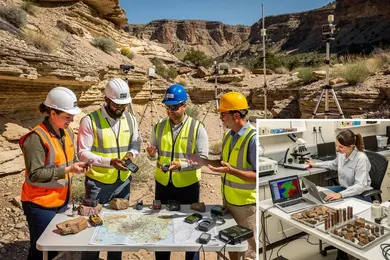
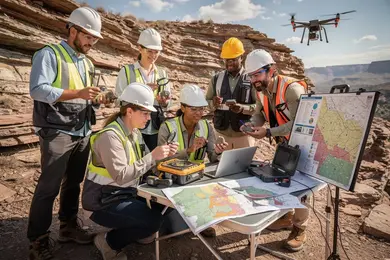
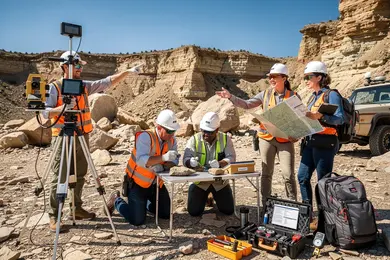
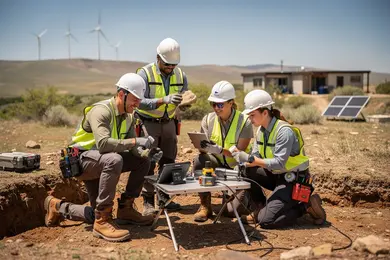
Fieldwork skills remain critical despite growing reliance on remote sensing and modeling technologies. Employers expect graduates in geosciences to demonstrate practical ability in data acquisition and site assessment, especially in environmental consulting and resource exploration. Candidates without field experience often face limited entry-level opportunities, particularly in roles that require onsite decision-making or regulatory compliance. Prioritizing programs with substantial field components improves adaptability and employer confidence for transitioning across sectors.
Early specialization narrows initial job eligibility and can restrict lateral movement between industry sectors. Programs that encourage broad foundational training before specialization typically produce graduates with wider career options and easier adaptation to shifting market demands. For professionals seeking mobility, delaying deep specialization until after gaining workplace context optimizes both employability and the ability to pivot. Employers value versatile skill sets that can apply across different geoscience applications rather than narrowly focused expertise.
Applied geology offers the broadest mobility because it uses core skills in mapping, subsurface interpretation, and resource evaluation across multiple sectors. Employers commonly want a bachelor’s degree plus field methods, GIS, and data analysis; a master’s degree improves access to senior roles, but is not always required.
References
- Online Geoscience Degrees: Top Schools and All Programs in 2026 https://www.gisdegree.org/online/geoscience-degrees/
- The Geological Society - Degree Accreditation https://www.geolsoc.org.uk/education-and-resources/universities/university-degree-accreditation/
- What Does the Future Demand Look Like for Applied Geoscientists? https://www.aegweb.org/index.php
- The Value of Undergraduate Geoscience Courses and Programs https://nagt.org/nagt/policy/ps-valuegeo.html
- Major to Career: Geosciences https://www.dickinson.edu/info/20107/geosciences/3969/major_to_career_geosciences
- Geoscience Careers https://education.americangeosciences.org/resources/geoscience-careers/
- Best Online Geoscience Courses and Programs | edX https://www.edx.org/learn/geosciences
- Career Paths in Renewable Energy: Opportunities and Specializations | EuroClimateJobs https://www.euroclimatejobs.com/article/838/career-paths-in-renewable-energy-opportunities-and-specializations
- GEOXPERT HUB | Exploration Geology Job Vacancies and Internships https://www.geoxperthub.com/employment/job-vacancies/exploration-geology.php
- Geoscience Career Pathways https://www.grow-geocareers.com/careerpathways