2027 Best Online Geosciences Programs for Professionals Seeking Environmental Agency Careers

Co-Founder and Chief Data Scientist
Professionals targeting environmental agency roles often confront a bottleneck: how to gain advanced geosciences credentials without pausing full-time work or relocating. Traditional programs rarely accommodate the irregular schedules and geographic limitations of mid-career learners. Recent data from the National Center for Education Statistics reveals a 15% surge in online STEM enrollments among adults over 30, reflecting growing demand for flexible, accessible options that blend rigorous science training with real-world applicability. This shift signals that program structure and timing increasingly dictate whether prospective students can balance education, employment, and family commitments while positioning for competitive agency careers.
This article evaluates top online geosciences programs designed to meet these critical needs and ease entry into environmental agencies.
Key Things You Should Know
- Federal agency hiring forecasts indicate a 12% growth in environmental specialist roles requiring advanced geosciences knowledge, pressuring candidates to prioritize programs emphasizing applied GIS and data modeling skills over theoretical coursework.
- Employers report 43% of hires struggle with translating academic research into regulatory compliance contexts, creating a premium on programs with integrated policy practicum components, affecting long-term career placement and advancement.
- Median tuition for top-tier online geosciences programs rose 18% since 2023, outpacing salary growth for entry-level environmental analysts by 5%, forcing candidates to balance accelerated credentialing against potential debt burden.
What are the best online geosciences degrees for launching or advancing environmental agency careers?
Choosing the best online geosciences degrees for environmental agency careers requires aligning technical content with regulatory and applied science skills employers demand. For example, a Bachelor's in Environmental Geosciences emphasizing GIS and water resource management positions graduates for roles in pollution control or natural resource oversight, while advanced Master's programs centered on risk assessment and environmental law best prepare professionals targeting supervisory employment.
Employment for environmental scientists and specialists is projected to grow 6% by 2032, adding thousands of positions largely influenced by candidates who combine strong analytical capabilities with practical regulatory understanding. Key employer preferences include experience with remote sensing, environmental impact tools, and familiarity with EPA standards, a combination often emphasized in top online geosciences programs for professionals in environmental careers.
Doctorate in data analytics online credentials may also enhance career paths by equipping graduates with advanced data interpretation skills crucial for interpreting complex environmental datasets and communicating risk to policymakers.
Yet, online students must carefully evaluate program flexibility and practicum options since hands-on experience remains essential. Accelerated tracks with recognized credentials tailored to federal employment standards benefit working professionals shifting into this field, where compliance knowledge directly affects promotion opportunities.
Practical decisions hinge on these trade-offs:
- Undergraduate programs offer entry pathways but require specific technical and regulatory coursework.
- Graduate programs provide specialization but demand commitment to hands-on or field components.
- Data analytics skills increasingly differentiate candidates in environmental science employment.
How do online geosciences programs compare with on-campus options for environmental careers?
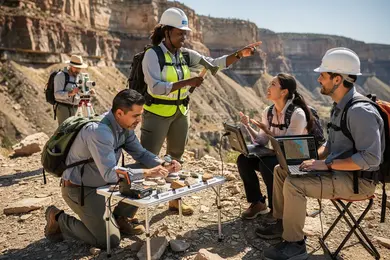
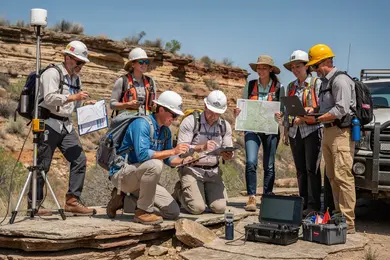
The decision to pursue an online geosciences degree versus traditional programs for environmental careers hinges on the availability of practical, hands-on training essential for government and agency roles. Online geosciences degree programs offer flexibility but often lack the embedded fieldwork and direct faculty interaction that on-campus environments provide, which can put graduates at a disadvantage when applying for positions demanding applied experience with data collection, site assessments, and laboratory analysis.
Government employers emphasize demonstrated competencies attained through real-world projects. Without structured internship support or enforced fieldwork requirements, online students must independently secure local opportunities to meet these expectations. This disparity becomes clear when comparing online and on-campus geosciences education for environmental professionals: campus programs tend to facilitate stronger networking with employers and enhanced access to research facilities, boosting job prospects.
For working professionals, balancing an online curriculum with weekend or summer field projects can preserve income and allow immediate application of skills, while recent graduates often benefit more from immersive, on-campus engagement. Candidates should critically evaluate programs for mandated practical experiences and employer collaboration resources, especially as environmental science job growth outpaces the average, intensifying competition.
Prospective students seeking a best online data science masters should similarly assess whether online frameworks align with their professional goals and industry standards before enrollment.
What accreditation should online geosciences programs have for federal and state environmental jobs?
Federal and state environmental employers typically require applicants to hold degrees from accredited online geosciences degrees for environmental agency careers. Regional accreditation recognized by the U.S. Department of Education or CHEA is a baseline; without it, candidates risk disqualification, delayed credential recognition, or ineligibility for government occupational codes that impact salary and security clearances. Accreditation from ABET further differentiates candidates in technical geosciences roles such as hydrogeology or environmental consultancy, which emphasize applied engineering skills and lab experience.
For example, a state environmental agency may mandate a bachelor's degree from a properly accredited program before permitting professionals to lead environmental impact assessments or remediation projects. This requirement shifts practical hiring decisions and regulatory compliance directly onto accredited educational preparation.
Employer demand for accreditation correlates with wage data: median earnings for geoscientists exceed $99,000, notably higher than the national median wage. This reflects how accreditation signals verified expertise and readiness for complex regulatory environments.
Working professionals should confirm that online geosciences programs list both regional and, if relevant, ABET accreditation, ensuring curriculum alignment with state licensure and certification standards. Unaccredited pathways often lead to wasted resources and blocked access to federal or state environmental roles.
Those considering a shift in related fields might also find value exploring a online exercise science degree as a complementary or alternative pathway where similar accreditation rigor applies.
Which online geosciences degree level (bachelor's, master's, certificate) fits environmental agency goals?
Environmental agencies typically require a bachelor's degree in geosciences to qualify for entry-level roles like field analyst or environmental technician. Choosing ideal bachelor's or master's geosciences programs for environmental agency professionals involves weighing upfront costs against long-term job prospects; many online bachelor's degrees remain affordable, often under $36,000 total tuition, supported by data such as affordability studies on comparable fields like the mechanical engineering degree online. While a bachelor's degree opens basic career pathways, progressing into supervisory, specialist, or policy roles increasingly demands a master's degree, valued for its advanced analytic, modeling, and regulatory curriculum.
Certificate programs in targeted skills such as GIS mapping or environmental compliance offer short-term gains but rarely provide access to new agency roles; they are often best employed as lateral boosters within existing positions. Practical considerations include balancing tuition and time investment against employer expectations and realistic job requirements-higher credentials do not always translate into advancement without fitting agency hiring patterns.
Key workforce implications are:
- Bachelor's degrees serve foundational entry but limit advancement beyond technician roles.
- Master's programs support specialization and leadership roles but require longer commitment and higher cost.
- Certificates supplement skills for current employees but do not substitute for degrees when targeting new roles.
What courses and specializations in online geosciences are most valued by environmental agencies?
Specialization in applied environmental geology, hydrogeology, and GIS spatial analysis decisively shapes employability in environmental agency roles, directly responding to regulatory and remediation challenges encountered in government and consulting work. Candidates who develop expertise in environmental impact assessment and contamination mitigation align with employer needs for accurate pollutant identification and compliance under federal and state frameworks.
Environmental data modeling and statistical analysis have tangible value given their role in managing extensive datasets from remote sensing and field studies-skills that inform critical permit and policy decisions. Meanwhile, coursework covering environmental laws such as CERCLA and the Clean Water Act provides essential legal fluency to navigate regulatory complexities that influence project viability and community safety.
Consider a compliance manager overseeing groundwater programs: hydrogeology knowledge enables effective monitoring, while GIS proficiency helps in mapping contamination plumes and forecasting their movements-accelerating regulatory responses with measurable impact on ecological stability.
The Bureau of Labor Statistics outlook indicates a 7% growth in geoscientist employment driven largely by demand for specialists who combine technical precision with legal understanding. Programs that emphasize hands-on training in environmental sampling, exposure assessment, and regulatory reporting better prepare graduates for these demanding roles.
What are the typical admission requirements for online geosciences programs focused on environmental work?
Admission into online geosciences programs focused on environmental applications typically hinges on robust undergraduate preparation in STEM fields and relevant professional experience. Most applicants present bachelor's degrees in geosciences, environmental science, geology, or closely related disciplines, accompanied by a minimum GPA of 3.0-though competitive programs may expect higher. This baseline academic standard directly impacts eligibility and career trajectory, given the technical demands of graduate training and employer expectations.
Standard application materials include official transcripts and often GRE scores, but some programs waive testing requirements for candidates with substantive work backgrounds. Letters of recommendation should ideally come from sources familiar with the applicant's technical competencies in environmental sciences, while statements of purpose must clearly articulate career goals focused on regulatory compliance, environmental impact analysis, or resource management challenges.
Prerequisite coursework typically covers calculus, chemistry, physics, and statistics, with growing emphasis on geographic information systems (GIS), remote sensing, or environmental data analytics. These skills are increasingly non-negotiable in consulting or government roles, reinforcing the importance of meeting or exceeding program prerequisites for employability.
Professional experience-often a minimum of two years in relevant agencies or firms-strengthens applications and aligns academic learning with workforce realities. This correlation is reflected in labor data, where master's-level geoscientists earn over $161,260 annually, underscoring that rigorous academic and experiential investment pays off in tangible compensation and influence.
How long do online geosciences degrees take and what do they typically cost?
Choosing an online geosciences program requires balancing duration, cost, and workforce relevance. Bachelor's degrees-spanning 3 to 6 years part- or full-time-offer broad foundational knowledge essential for roles demanding regulatory compliance or complex environmental assessments. By contrast, accelerated master's programs, completed in 12 to 24 months, often target mid-career professionals focused on skill acquisition in GIS and remote sensing-areas that employers value for applied environmental data analysis.
Cost considerations vary widely: public institutions typically charge $10,000 to $35,000 for bachelor's degrees (in-state), while out-of-state or private tuition can exceed $50,000. Online master's programs range from $15,000 to $45,000, and certificates concentrating on geospatial skills cost between $2,000 and $8,000. These certificates often provide the fastest route to meeting emerging market demands, especially as the U.S. Bureau of Labor Statistics projects 4-7% job growth in relevant sectors through the early 2030s.
For example, a working professional aiming to shift into a federal environmental agency role might prioritize stackable certificates or a focused master's targeting GIS to minimize downtime and maximize return on investment. Conversely, recent graduates seeking foundational knowledge for diverse roles may find a bachelor's program more appropriate despite longer time and higher overall expense.
Financial aid and employer tuition reimbursement can significantly affect affordability. Candidates should also factor in lost wages during study periods and select programs aligning tightly with targeted skills to optimize employment outcomes.
What jobs in government and environmental agencies can you get with an online geosciences degree?
Graduates with an online geosciences degree face distinct practical challenges competing against peers with in-person lab experience, especially when targeting technical roles in government agencies. Positions such as environmental geologist, hydrologist, or hazardous waste site manager usually require hands-on skills including GIS proficiency, regulatory navigation, and complex data analysis. Federal employers like the EPA and USGS prioritize candidates capable of integrating field data with compliance frameworks, while state and local agencies expect thorough environmental impact assessments and land-use planning competencies.
Career prospects hinge on supplementing online theoretical learning with localized internships or project portfolios demonstrating applicable skills. Candidates who can present real-world project experience and effective communication across technical and nontechnical teams will improve hiring potential. Critical functions involve monitoring air, water, and soil quality, devising remediation plans, and ensuring adherence to environmental regulations, reflecting a 5-6% job growth outlook reported by the Bureau of Labor Statistics via the University of Illinois Chicago.
Local governments emphasize geoscientists' roles in water resource management and urban environmental health initiatives, often requiring collaborative fieldwork and community engagement. Navigating government job markets demands an understanding of regulatory standards, software tools used in environmental projects, and the ability to produce detailed technical reports. Those pursuing online pathways should weigh these workforce realities and proactively develop applied skills alongside their academic credentials.
What salary ranges and job outlook can geoscience graduates expect in environmental agencies?
Geoscience graduates targeting environmental agencies face salaries typically starting between $55,000 and $75,000 annually, with mid-career ranges stretching to $110,000 depending on location, agency type, and specialization. Compared to environmental scientists, geoscientists encounter slightly slower job growth projections-5% versus 6% over the next decade according to Bureau of Labor Statistics data reported by UIC-rooted in the more specialized nature of their roles. While environmental scientists often handle pollution control and regulatory compliance, geoscientists are more focused on subsurface analysis, hazard assessment, and mineral resource evaluation.
This distinction implies a meaningful tradeoff: geoscience roles generally demand deeper technical expertise, including skills in GIS, remote sensing, and data modeling software. Candidates demonstrating practical field experience, such as geochemical sampling or risk assessment, have a competitive edge within agencies, particularly those managing land remediation efforts.
Federal recruitment complexities-like multi-step clearances and background checks-can delay hiring despite favorable salary expectations, making timing critical for entry-level candidates. Regional variations are significant as well; for example, oil, gas, and mining hubs see elevated demand for geoscientists, whereas environmental policy agencies may prefer broader environmental science backgrounds.
Prospective students considering online geoscience programs should seek curriculum elements that emphasize hands-on learning to align with employer expectations and enhance workforce readiness.
How can applicants evaluate and choose a reputable online geosciences program for agency careers?
Degree recognition hinges on verifying program accreditation rigorously, particularly regional accreditation combined with specialized endorsements from bodies like the Council on Education for Public Health or the Geological Society of America. Such validation directly impacts employability in environmental geoscience sectors, where employers prioritize proven curriculum relevance and skill application.
Employment data illustrates that partnerships with environmental agencies and consulting firms significantly boost graduate job prospects by embedding internships and practical experience into the learning process. For instance, graduates from the University of Illinois Chicago's Earth and Environmental Sciences program are actively recruited by government and consulting organizations, reflecting the value of aligned program outcomes.
Flexible delivery modes must balance convenience with sufficient interactive components for networking and mentorship, especially for working professionals. Programs emphasizing capstone projects tied to actual agency challenges offer candidates sharper competencies in analytical tasks and regulatory reporting, critical for roles in energy, environment, and sustainability.
Cost evaluation should consider not only upfront tuition but also the potential salary gains linked to credential recognition. Online programs vary widely in the quality of resources, such as GIS software access and research databases, which influence skill acquisition. Applicants who overlook these factors risk earning qualifications that do not translate into meaningful job market advantages, despite the robust demand landscape.
Other Things You Should Know About Geosciences
Part-time online study extends the duration of degree completion, which can delay skill acquisition and entry into advanced roles. However, it allows working professionals to maintain current employment, reducing financial risk. Candidates should weigh the impact of slower program completion against employer preferences; some agencies prioritize continuous education pace and recent achievements when considering promotions or new hires.
For environmental agency careers, programs emphasizing applied environmental management and policy tend to align more directly with job functions and decision-making demands. Research-focused tracks may deepen theoretical expertise but often provide less training in regulatory frameworks and practical problem-solving. Choosing a program should hinge on the balance of skills your target job requires; operational roles favor applied curricula, while scientific research positions call for research intensity.
Yes. For federal and state environmental agency hiring, a geosciences program should come from a regionally accredited institution. Many employers and graduate admissions offices also expect course-level accreditation or approval for licensure paths, especially when a program includes 30 to 36 credit hours of upper-division geology, GIS, or environmental science.
References
- The Geological Society - Degree Accreditation https://www.geolsoc.org.uk/education-and-resources/universities/university-degree-accreditation/
- Best Online Geoscience Courses and Programs | edX https://www.edx.org/learn/geosciences
- WaterJobsIntel | 500+ Water Engineering Jobs Daily https://jobs.watertechintel.com/blog/environmental-science-job-outlook
- Geoscience Jobs in Government https://www.grow-geocareers.com/governmentjobs
- Working Geoscience https://profession.americangeosciences.org/working/
- Careers in Geoscience: Environment https://www.aig.org.au/education/careers-in-geoscience/careers-in-geoscience-environment/
- Online Geoscience Degrees: Top Schools and All Programs in 2026 https://www.gisdegree.org/online/geoscience-degrees/
- Master's Degree - Environmental Geology and Earth Dynamics https://www.geoscienze.unipd.it/en/courses/masters-degree-environmental-geology-and-earth-dynamics
- Vacancies and temporary register https://www.ga.gov.au/about/careers/current-vacancies
- Geology and Environmental Studies Careers https://www.uwec.edu/geology-and-environmental-science-department/geology-and-environmental-studies-careers