2027 Best Online Bachelor's in Geosciences for Environment and Climate Career Paths

Co-Founder and Chief Data Scientist
Professionals aiming to address escalating climate crises face a daunting hurdle: acquiring specialized geosciences expertise without forgoing current employment or relocating. Nearly 45% of STEM undergraduates in 2024 enrolled in online programs, according to the National Center for Education Statistics, revealing a decisive shift toward flexible learning that accommodates working adults. This trend reflects growing demand for accessible education tailored to complex environmental challenges, yet not all online programs offer the rigor or applied focus required for competitive roles in climate or environmental sectors. Selecting the right degree pathway directly influences employability and career agility.
This article evaluates the top online bachelor's in geosciences designed for environment and climate career trajectories, clarifying which programs align best with pragmatic workforce realities and professional growth goals.
Key Things You Should Know
- Graduates with online bachelor's in geosciences report 12% lower starting salaries than in-person peers per U.S. Bureau of Labor Statistics 2024 data, creating a tradeoff between cost savings and initial earning potential.
- Employers increasingly prioritize internships and fieldwork experience over online degree formats, limiting direct hiring pathways for fully remote geosciences students according to National Science Foundation 2024 workforce surveys.
- Extended program durations due to asynchronous pacing often add 8-12 months and $5,000-$10,000 more in fees, impacting time-to-employment and lifetime earnings in a rapidly evolving environmental job market.
What is an online bachelor's in geosciences, and how does it prepare you for environment and climate careers?
An online bachelor's degree in geosciences for environmental careers demands more than theoretical understanding; it requires practical skills tailored to real-world environmental pressures. For instance, professionals engaged in coastal resilience efforts analyze sediment transport and sea-level rise data to inform infrastructure adaptation, exemplifying the technical rigor expected in this field. Unlike broader environmental studies, this program emphasizes applied training in areas like geology, hydrology, and climatology, integrated with environmental impact assessment and data modeling.
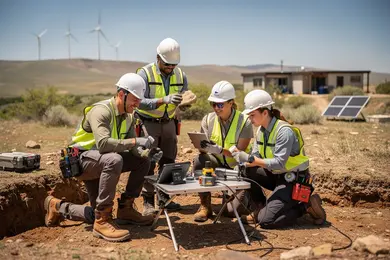
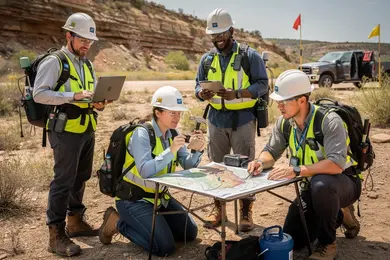
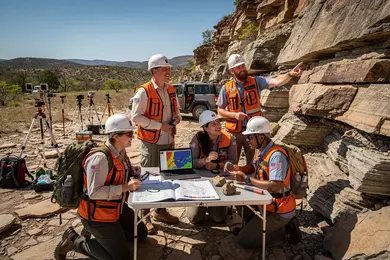
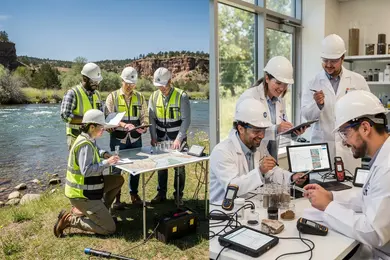
Workforce expectations include fluency in quantitative analysis, regulatory frameworks, and geographic information systems (GIS) expertise. Graduates must demonstrate verified experience, often through hybrid models combining online coursework with local internships or virtual simulations. These arrangements address the challenge of acquiring hands-on skills remotely, a critical consideration for job readiness in positions demanding field data collection or specialized instrumentation.
The growth outlook for geoscientists is notably strong, with a 7% employment increase projected from 2022 to 2032 by the U.S. Bureau of Labor Statistics, driven by urgent needs in climate resilience and sustainable resource management. This trajectory favors applicants blending technical proficiency with practical application. Prospective students evaluating a bachelor's in geosciences for climate change jobs should carefully balance the flexibility of remote study against the necessity for on-site technical experience.
To assess program content and maximize relevant technical capability, examining a geographic information systems degree as part of the curriculum is advisable.
How do online geoscience bachelor's programs compare to on-campus options for quality and outcomes?
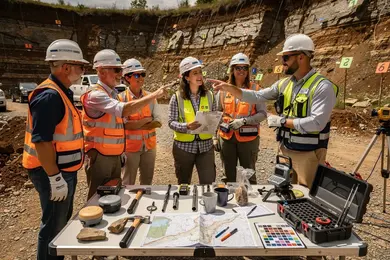
Online geosciences bachelor's degree quality comparison reveals that while academic content often matches on-campus programs due to shared faculty and curricula, key practical elements diverge significantly. On-campus students gain direct exposure to fieldwork and lab techniques, critical for roles requiring physical site assessments. Online programs must therefore incorporate rigorous virtual labs or localized field experiences to mitigate gaps in hands-on training.
Employment outcomes of online versus on-campus geosciences programs align more closely when online curricula integrate internships or industry partnerships that embed applied skills. Job growth projections-5% in geoscience and 6% in environmental science according to the U.S. Department of Labor-reflect employer demand for technical proficiency over the mode of study. Without tangible field experience, online graduates may encounter initial barriers in laboratory or environmental consulting positions.
Mid-career professionals aiming to pivot into environmental policy or consulting benefit most from online programs emphasizing project-based learning combined with proactive networking. Students should anticipate supplementing virtual instruction with local internships or volunteer roles to meet employer expectations. For those pursuing research-intensive or resource exploration careers, limited lab access in remote formats is a notable constraint. Given these tradeoffs, evaluating practical experiential opportunities is essential.
Prospective students also benefit from comparing affordability and return on investment across related fields, such as a data science degree, to strategically position themselves in evolving labor markets.
Which accredited schools offer the best online bachelor's in geosciences for environmental and climate work?
Selecting among the best accredited online geosciences bachelor programs for environmental careers requires assessing how rigor and practical relevance align with workforce expectations. Employers increasingly demand graduates fluent in interpreting complex environmental datasets, applying GIS and remote sensing, and navigating regulatory frameworks-a profile best cultivated through programs combining STEM accreditation with applied, project-based learning. For example, a graduate targeting a role within the Environmental Protection Agency must grasp both scientific principles and real-world policy implications, often accessible through internships or capstone projects embedded in top online bachelor degrees in geosciences for climate-related jobs.
Institutions like Oregon State University, the University of Florida, and Southern New Hampshire University offer fully online formats with recognized accreditation, a critical factor considering licensure and certification pathways that influence career trajectory in environmental policy and land management.
Salary data from EnvironmentalScience.org reports a median geoscientist salary near $99,240 annually, with senior positions exceeding $130,000, emphasizing the return on investment for programs with strong employer connections and demonstrated graduation outcomes. Students must weigh flexibility against accreditation rigor to avoid delays in meeting professional standards.
Those evaluating educational options can also benefit from comparing curricula that enable skills development relevant to emerging climate risk analysis roles, especially as remote work opportunities increase in environmental consulting sectors. For alternative health-aligned sciences, reviewing programs like the best exercise science degree online can offer insight into flexible STEM pathways relevant to environmental health intersections.
What accreditation and state authorization should you look for in an online geoscience degree?
Accredited online geosciences programs in the United States require careful scrutiny beyond institutional credentials. Regional accreditation by agencies like the Higher Learning Commission or Middle States Commission is essential to secure a curriculum respected by employers. Yet, programmatic accreditation from bodies recognized by the Council on Higher Education Accreditation (CHEA) adds critical validation, especially for technical roles in environmental consulting or climate science. An often overlooked but decisive factor is state authorization-online programs must be authorized where the student resides to ensure eligibility for licensure and state-specific employment. Without this, degrees risk being non-transferable or disqualified for certification exams.
For example, a candidate targeting a position at a state environmental agency must confirm their online geoscience degree complies with that state's authorization requirements for online geosciences degrees. This upfront verification can prevent stalled licensing and missed job opportunities in regulated environments.
Online tuition can present a measurable premium; Fort Hays State University's Environmental Geosciences online program costs about $900 more per semester than its on-campus equivalent. Decision-makers should weigh these costs against the convenience of remote study and employer perceptions of online degrees within the sector.
Prospective students should:
- Verify both institutional and program-specific accreditation for scientific integrity.
- Confirm state authorization for their residency to ensure credential acceptance.
- Assess tuition premiums against career advancement potential and access constraints.
Also, those exploring related fields might compare costs and options by evaluating MLIS programs offered online, which sometimes provide a contrasting cost structure and different accreditation nuances.
What courses and specializations are common in online geoscience programs focused on environment and climate?
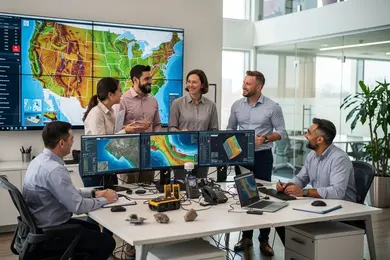
Online geoscience programs centered on environment and climate demand more than foundational knowledge; they require applied quantitative skills and policy fluency that align with evolving workforce needs. Graduates must adeptly use data analysis tools for climate modeling and resource management, often specializing in areas like sustainable resource management or environmental impact assessment.
Students targeting roles in environmental consulting face additional hurdles, needing expertise in environmental law and regulatory compliance to navigate complex permitting processes and mitigation strategies. This reality means programs that only cover core geosciences may leave candidates underprepared for technical or policy-driven positions.
Most online programs merge asynchronous instruction with mandatory local fieldwork or labs, recognizing practical experience as non-negotiable. However, access to specialized facilities remains uneven, creating tradeoffs for fully remote students who risk weaker hands-on skills-a factor that can affect employer perceptions.
North America hosts over 100 online bachelor's degrees in Environmental Studies & Earth Sciences, but quantity does not equal quality. Employers prioritize verified competence in interpreting climate data and understanding environmental regulations above mere credential possession.
- Proficiency in statistics and remote sensing technologies is essential for interpreting satellite imagery and large environmental datasets.
- Program selection should weigh accreditation and lab access heavily to ensure skill readiness.
- Lack of robust technical coursework risks career barriers in both technical and policy sectors.
What admission requirements and prior preparation do online geoscience bachelor's programs typically expect?
Success in online bachelor's programs in geosciences hinges on meeting rigorous math and science prerequisites that directly impact a student's trajectory. Applicants with strong high school or college coursework in algebra, biology, chemistry, and physics face fewer remedial requirements, accelerating degree completion and lowering costs. Conversely, candidates lacking foundational STEM preparation often confront additional introductory courses that delay progress and increase financial burden.
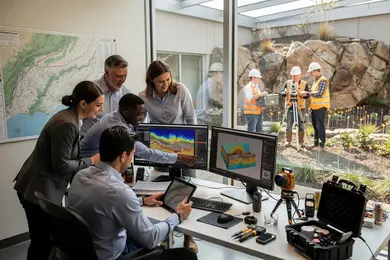
Careers tied to geospatial data-such as GIS specialist or geospatial analyst-demand proficiency with spatial software, reflecting a pronounced workforce shift toward data-driven roles. For example, an applicant proficient in Geographic Information Systems (GIS) can bypass certain entry-level technical hurdles, positioning themselves more competitively in climate and environmental sectors.
Transfer and adult learners frequently navigate standardized testing waivers or portfolio assessments but must verify prior science credits, often contending with limits on transferrable coursework designed to preserve program depth.
Time management and self-discipline are critical admission considerations given the remote nature of most programs. Programming skills in Python or R offer tangible advantages as environmental analysis integrates increasingly with data science tools. Career changers should weigh the tradeoff between immediate upskilling demands-such as building technical portfolios-and enduring employability in areas like environmental policy and field survey roles.
In practice, geosciences graduates who navigate these admission and preparatory barriers effectively align their qualifications with sector demands, reducing time-to-degree and maximizing entry into specialized technical roles.
How long does it take to complete an online geoscience bachelor's and what does it cost?
Completing an online bachelor's degree in geosciences generally requires four years of full-time study, closely mirroring traditional campus programs. Most students accumulate roughly 120 to 130 credit hours over eight semesters. However, accelerated programs or transfer credits can shorten this timeline, while part-time students-often working professionals-may extend it beyond five years to balance work and study.
Cost variation is substantial and hinges on institution type and residency. In-state students at public universities typically pay between $8,000 and $15,000 annually, whereas private or out-of-state students may face tuition upwards of $30,000 per year. Total expenses for the degree can reach from $32,000 to well over $120,000, excluding extra costs like lab equipment, software licenses, or remote fieldwork - especially pertinent for environmental or climate-focused tracks.
The Chicago market illustrates tangible workforce demand: more than 100 environmental and engineering consulting firms actively seek geoscience graduates with field experience and data analysis skills, often acquired via internships embedded in coursework. For prospective students, fast-tracking the degree can jeopardize deep understanding of complex environmental data, which is vital in climate-centered positions.
Key considerations include:
- Choosing a pace that avoids overload while ensuring skill acquisition.
- Accounting for financial aid, employer tuition support, and opportunity costs.
- Prioritizing programs with strong industry connections and flexible schedules to enhance employment prospects.
What careers can you pursue with an online bachelor's in geosciences in environment and climate fields?
Graduates of an online bachelor's in geosciences focused on environment and climate enter a labor market requiring a blend of technical skill and flexibility. Industry demand projects 11% job growth for geoscientists through 2029, driven mainly by environmental consulting and resource management roles. However, success in these positions hinges on the ability to manage complex datasets while balancing significant fieldwork demands, a challenge often underestimated by students.
Typical roles include environmental analysts who conduct field sampling and GIS modeling to assess industrial impacts, especially within agencies like the Environmental Protection Agency. In energy firms, geoscientists interpret seismic and remote sensing data to ensure efficient resource extraction with minimal environmental harm. Water management professions require hydrogeological expertise to evaluate groundwater resources and collaborate with planners on climate resilience.
Key workforce implications include:
- Specialization is critical-broad geosciences preparation often must be augmented by certifications or graduate study for technical consulting roles.
- Strong data analysis and communication skills are expected, enabling professionals to translate findings into practical policy or engineering advice.
- Balancing fieldwork with office-based data interpretation can affect career trajectory, as some employers prioritize candidates who demonstrate adaptability in both domains.
Internships in state environmental agencies or energy companies provide necessary exposure to regulatory processes and workplace standards, essential for bridging academic concepts with practical application.
What salary ranges and job outlook can geoscience and climate-focused graduates expect?
Starting salaries for geoscience and climate-focused graduates in the U.S. vary significantly by employer type and specialization, generally ranging from $50,000 to $75,000. Government roles at agencies like the U.S. Geological Survey or EPA often begin around $60,000, while private sector entry points may be lower, near $50,000 to $65,000. Professionals with five years of experience and technical skills such as GIS or climate modeling can see salaries escalate to between $80,000 and $110,000; senior roles in project or scientific management typically exceed $120,000.
Employment growth is regionally uneven, with states prioritizing green infrastructure like California and Washington projecting faster job creation. This localized demand should shape student decisions about geographic placement and internships.
With 35 distinct bachelor's programs in environmental science available, online options increase access but also competition. A degree alone often falls short; employers prioritize applied skills including climate data interpretation, geospatial analysis, and field experience. Graduates lacking these proficiencies or access to targeted internships may experience slower salary growth and fewer advancement opportunities.
Intentional skill development, especially through hands-on internships within regulatory or sustainability-focused organizations, aligns student competencies with employer needs and directly impacts marketability and salary trajectory. Choosing programs with strong practical components and certifications in climate data tools is a strategic consideration for workforce entry and career sustainability.
How can you evaluate and choose a reputable online geoscience program aligned with your career goals?
Choosing an online geoscience program demands scrutiny beyond surface accreditation; the true measure lies in curriculum alignment with targeted roles such as environmental consulting or climate policy analysis. Programs offering hands-on skills like GIS, remote sensing, data analytics, and field methods better prepare graduates for employer expectations across diverse sectors.
Real-world outcomes reveal that advancement often depends on practical expertise paired with credible education. For instance, progressing from technical positions to roles like natural sciences manager can increase median salaries substantially, as reported by the U.S. Bureau of Labor Statistics and summarized by MyDegreeGuide at $137,900 annually.
Prospective students should assess faculty connections to government or industry to gain exposure to pressing environmental issues and current research, which can be critical for competitiveness. Beware of programs steeped in theory without applied training, which may delay readiness for specialized roles such as climate risk analysis or environmental impact assessments.
Financial costs must be evaluated in light of career outcomes, including availability of financial aid and certification pathways recognized in the environmental and climate sectors. Consider also whether programs update their content with authoritative sources like NOAA or EPA data, ensuring relevance in a rapidly evolving job market. Flexibility in pacing and practical experience options is important, especially for professionals balancing work and relocation constraints.
Other Things You Should Know About Geosciences
Internships or fieldwork components are not always mandatory in online geosciences programs. However, they are highly recommended as they provide practical experience and enhance employment prospects in environment and climate career paths. Students should check specific program requirements and consider participating to gain valuable industry insight.
Faculty specialization significantly impacts the relevancy of coursework and research opportunities. Programs staffed with professors active in environment and climate research or consulting better prepare students for the technical challenges and emerging trends employers face. Choosing a program with strong faculty expertise in these subfields provides a distinct advantage by aligning training with current industry demands and innovations.
Employer perceptions vary, but many in environmental and climate agencies or companies value demonstrated skills over modality. Candidates who supplement online degrees with certifications, internships, or field experience typically face fewer barriers. Prioritize programs that emphasize applied skills and offer career support, as this improves employer confidence in online graduates' ability to perform in field and lab settings.
Many require a capstone, senior seminar, or research project in the final year, often worth 3 to 6 credit hours. Programs may ask students to analyze climate data, map environmental risks, or complete a supervised project tied to an approved topic before graduation.
References
- How to Choose the Best Online Degree for Your Career Goals https://astoriacompany.com/how-to-choose-the-best-online-degree-for-your-career-goals/
- Online Geoscience Degrees: Top Schools and All Programs in 2026 https://www.gisdegree.org/online/geoscience-degrees/
- Earth and Environmental Science https://ees.acadiau.ca/faqs.html
- Study Geosciences in Germany - My GUIDE https://www.myguide.de/en/study-mathematics-natural-sciences-in-germany/study-geosciences-in-germany/
- The Geological Society - Degree Accreditation https://www.geolsoc.org.uk/education-and-resources/universities/university-degree-accreditation/
- Education Requirements https://www.americangeosciences.org/licensure/education/
- How to Choose the Right Degree for Your Career Goals https://www.odljain.com/blog/how-to-choose-the-right-degree-program-for-your-career-goals.html
- ThisIsGeoscience - Geoscience Salaries https://www.thisisgeoscience.com/the-resources/geoscience-salaries
- Online Degrees Across State Lines: Navigating the Legal Landscape https://matchtocollege.com/blog/out-of-state-online-degrees-legal-reality
- How to Choose the Right Program for Your Career Goals | Brighton https://brightoncollege.com/blog/how-to-choose-the-right-program-for-your-career-goals/