2027 Best Online Geosciences Degrees for Hydrology Careers

Co-Founder and Chief Data Scientist
Water resource managers tasked with flood risk analysis often encounter a gap between their field expertise and the evolving technical demands of hydrology. Balancing full-time employment with advancing their credentials complicates access to high-quality education tailored to this niche. Recent data from the National Center for Education Statistics reveals that over 40% of graduate STEM enrollees opt for online formats, reflecting a critical shift favoring flexible, remote study that accommodates working professionals.
This surge underscores the necessity for hydrology-focused geosciences programs that combine rigor with accessibility. This article examines the best online geosciences degrees designed to equip candidates with practical hydrological skills and career mobility.
Key Things You Should Know
- Online geosciences degrees with hydrology specialties often lack required fieldwork components, delaying licensure timelines by up to 2 years compared to hybrid programs, per 2024 US Geological Survey workforce reports.
- Employers prioritize candidates from programs with integrated GIS and remote-sensing training, correlating with 18% higher starting salaries in hydrology roles as tracked by the Bureau of Labor Statistics in 2024.
- Cost differentials between accredited online programs and traditional campuses average 30%, but slower credentialing and lower employer recognition reduce ROI within the first 5 years, based on National Center for Education Statistics data.
What is an online geosciences degree with a hydrology focus, and who is it best for?
Demand for professionals skilled in hydrology within geosciences persists amid a looming workforce shortfall driven by retirements and evolving environmental challenges. An online geosciences degree with hydrology specialization targets this gap by focusing on water systems, groundwater modeling, and watershed management, aligning directly with roles in infrastructure planning, drought mitigation, and contamination remediation.
This degree particularly suits those already working in environmental science, civil engineering, or geology who require flexible, advanced hydrology training without interrupting their careers or relocating. Recent STEM graduates seeking to position themselves within hydrogeology would also find this pathway relevant amid rising industry demand. However, candidates lacking foundational knowledge in earth sciences or environmental studies should anticipate significant catch-up effort due to technical coursework around GIS, remote sensing, and hydrologic data modeling.
Key tradeoffs involve asynchronous online study formats that may limit direct fieldwork or lab access, although some programs offer hybrid options or local partnerships to address this. Careful evaluation of program accreditation and industry internships is essential to improve graduate employability. These factors position this degree among the best online geosciences programs for hydrology careers, especially for those balancing work and geographic constraints.
Employers expect graduates to apply practical skills in regulatory frameworks and data analysis related to water resource management, shifting hiring toward candidates who can demonstrate relevant hands-on experience alongside theoretical knowledge.
For those considering advanced degrees with broad technical applications, reviewing online doctorate data science pathways may offer complementary options in handling complex environmental datasets.
How do online geosciences degrees prepare you for hydrology and water-resources careers?
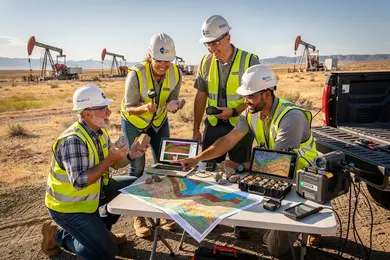
Online geosciences degree benefits for hydrology careers hinge on the integration of core science with applied technical skills tailored to water-resource management. Graduates must master hydrology, geology, environmental chemistry, and GIS mapping to competently analyze groundwater flow and watershed dynamics. For instance, municipal water managers use hydrologic modeling and remote sensing from these programs to optimize water distribution and anticipate drought impacts.
However, while programs offer robust digital data analysis training through virtual labs, the limited access to fieldwork poses a challenge for licensure and consulting roles. Employers increasingly expect proficiency not only in technical tools but also in regulatory frameworks and quantitative skills; hydrologists reportedly earned a median wage of $92,060 in May 2024, emphasizing the value of measurable competencies. Practical experience is still crucial, often requiring internships or local partnerships to offset online education's on-site limitations.
Regarding workforce reality, the outlook shows about 500 annual hydrology openings through 2034, mainly due to retirements rather than job growth. This demands that students develop specialized skills such as environmental impact assessments or climate resilience planning to differentiate themselves. Moreover, program choice should consider available electives aligned with sectors like agriculture or urban planning to enhance employability in niche water-resource roles. These choices also affect how swiftly candidates can achieve state certification.
Students and professionals weighing an online geosciences degree must navigate tradeoffs between convenience and the need for tangible field experience. Programs that incorporate strong industry mentorship or employer alignment can alleviate barriers linked to certification delays.
Those seeking cost-effective advancement in STEM fields, including geosciences, may also explore options like the cheapest master in data science, which offers complementary data analysis skills useful in hydrology and environmental research.
What types of geoscience and hydrology degrees are available online for different career levels?
Selecting an online geosciences degree for hydrology careers requires a clear-eyed understanding of how degree level aligns with employer demands and role expectations. Associate or bachelor's programs tend to prioritize practical hydrologic science, GIS mapping, and compliance with environmental regulations, positioning graduates for technician roles or support functions in water management agencies. For example, a technician focused on data collection or regulatory reporting can often enter the workforce more rapidly through these offerings.
In contrast, mid-career professionals pursuing analyst roles typically require bachelor's or master's degrees with advanced coursework in hydrological modeling, data analytics, and environmental policy. Water quality analysts involved in urban infrastructure projects benefit from master's-level training to interpret complex datasets supporting regulatory decisions. This distinction highlights the tradeoff between speed to employment and the depth of analytical or policy expertise developed.
Doctoral and specialized master's programs in hydrology emphasize research design and quantitative methods, cultivating leadership roles such as natural sciences managers or data scientists. According to MyDegreeGuide's 2024 summary of Bureau of Labor Statistics data, natural sciences managers earn a median annual salary of $137,900, while data scientists average $100,910, reflecting significant rewards for advanced analytical capacity and management skills.
Practical experience with data acquisition and model application remains highly valued, which means curriculum reviewing for sufficient lab or field alternatives is critical. Balancing cost, time, and desired career trajectory helps students navigate the best online geosciences and hydrology programs by career level. Alongside this, prospective learners might also compare options such as an online CS degree for complementary data analytics skills relevant in the evolving geosciences field.
How do online geosciences programs for hydrology compare with campus-based options?
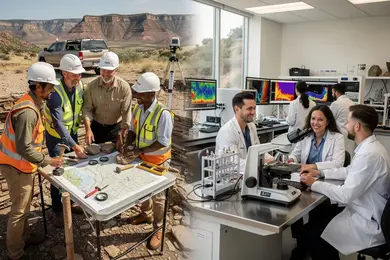
Opting for online geosciences degrees for hydrology presents a tangible cost advantage, with some public universities charging as little as $112 per in-state credit hour, far less than traditional campus programs. This affordability suits working professionals or career switchers who must balance income with education expenses. Yet, this cost efficiency is counterbalanced by limited access to essential hands-on lab work and field experiences, which remain critical in hydrological science careers.
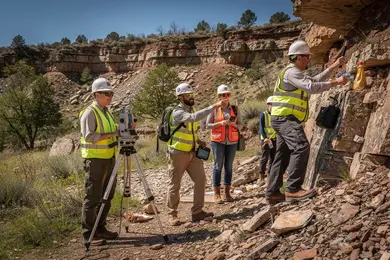
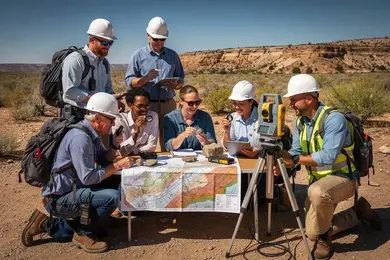
Campus-based hydrology geosciences courses provide direct engagement with specialized equipment and local field studies-skills that environmental consulting firms and water resource agencies prioritize. Online formats often require supplementing with regional internships or short residencies to develop such competencies. This discrepancy means graduates of online programs must proactively seek field experience post-graduation to meet employer expectations, unlike their campus counterparts who typically integrate these experiences into their curricula.
Key considerations include:
- Significantly reduced tuition costs for online study, easing financial barriers.
- The necessity of self-discipline and advanced time management to navigate the online format successfully.
- The requirement to arrange supplemental practical training or internships to build fieldwork skills essential for employability.
For individuals evaluating differences between online and campus-based hydrology geosciences courses, the deciding factor often hinges on career stage and logistical priorities: online programs offer flexibility and reduced costs, while campus programs deliver immersive experiences critical for early-career roles.
Those exploring educational pathways should also consider broader resources, such as options to pursue a librarian degree online, which demonstrates parallel trends toward accessible online graduate education across fields.
What courses and specializations are typically included in an online hydrology-focused geosciences curriculum?
Choosing hydrology-focused programs within geosciences demands close attention to technical depth and practical applicability rather than broad disciplinary coverage. Core courses in surface and groundwater hydrology, hydrogeology, and watershed management provide baseline skills, but real differentiation comes from targeted instruction in GIS-based geospatial analysis and hydrologic modeling-tools extensively used in urban planning and agricultural resource management. Graduates must navigate a shifting landscape where predictive analytics intersects with environmental regulations, requiring statistical fluency alongside domain expertise.
The integration of water quality assessment and water security studies speaks directly to market signals, such as those from the University of Oklahoma's Master of Environmental Science in Hydrology and Water Security, which reports a median salary near $92,000 and modest employment growth with steady annual openings. Employers increasingly seek candidates who balance natural systems knowledge with policy and regulatory savvy, reflecting sector demands for interdisciplinary collaboration.
Practical exposure through capstone projects or applied data sets simulating watershed or contamination scenarios is a critical pivot point. Without experiential learning, candidates risk missing employer expectations anchored in actionable solutions, not just theoretical models. Graduates often transition into roles bridging environmental agencies, consulting, and infrastructure planning, where quantitative skills and regulatory understanding are essential for impact and career mobility.
What admission requirements and prerequisites do online geosciences hydrology programs usually have?
Admission into online geosciences hydrology programs frequently hinges on having a relevant STEM bachelor's degree with a GPA near 3.0 and preparatory coursework in calculus, chemistry, physics, and earth sciences. These prerequisites matter because they ensure students can engage with complex subjects like fluid dynamics and watershed modeling without major gaps. When applicants lack direct geosciences backgrounds, prerequisite bridge courses become a non-negotiable step, extending time to completion and requiring careful program selection to avoid attrition.
Work experience in environmental consulting or water resource management can offset some academic requirements, particularly in applied master's tracks designed for professionals pivoting careers. GRE requirements vary, often waived for candidates with substantial industry experience or strong prior records.
Given a projected shortage of roughly 130,000 geoscience professionals by 2029, programs prioritize applicants able to balance rigorous technical coursework with ongoing employment. This dual demand introduces challenges around time management and access to specialized hydrological modeling software, impacting who can realistically complete these degrees online.
Letters of recommendation remain important, emphasizing applicant competency in both analytical reasoning and field applications. Ultimately, decision-making around program admission involves weighing immediate workforce readiness against potential delays from prerequisite fulfillment and logistical constraints.
How long do online geosciences hydrology degrees take, and what do they cost?
The duration and cost of online geosciences hydrology degrees critically influence employment prospects, especially in sectors like mining, engineering, and environmental compliance. Bachelor's programs typically span four years full-time, with part-time or accelerated tracks extending to five or six years. Master's degrees offer flexibility but generally require two years. Candidates must weigh time-to-completion against the need for hands-on experience; programs integrating internships or fieldwork tend to yield better job-readiness despite higher costs.
Tuition ranges substantially: public in-state bachelor's programs cost roughly $15,000 to $30,000, while private institutions may exceed $50,000. Additional expenses for lab kits, specialized software, or proctored exams often increase total outlay beyond sticker prices. Prospective students should carefully analyze per-credit costs and mandatory fees rather than rely solely on base tuition.
A practical consideration is salary alignment with program investment. MyDegreeGuide's 2025 review reports median geoscience-related salaries between $63,750 and $66,750 for roles like conservation scientists and soil and plant scientists. This range informs decisions around financial aid or employer tuition reimbursement, balancing degree cost against realistic returns.
Ultimately, selecting an online hydrology program involves trading accelerated pacing for the logistical demands of lab or field residencies. Budget-conscious learners benefit from dissecting total program costs and prioritizing experiences that align with employer expectations in their targeted geosciences niche.
How can you verify accreditation and program quality for online hydrology geosciences degrees?
Accreditation profoundly impacts the utility of online hydrology geosciences degrees, especially when targeting government or consulting roles that demand verified technical competence. Regional accreditation approved by the U.S. Department of Education or the Council for Higher Education Accreditation establishes baseline institutional credibility. However, additional programmatic accreditation-such as ABET for engineering-focused tracks or Geological Society of America reviews-can determine whether a graduate's qualifications meet specialized employer standards in hydrogeology or water resource management.
Faculty expertise and active engagement in applied research directly affect both instruction quality and employability. For example, candidates should assess whether faculty are publishing in high-impact journals or securing federal grants in areas like groundwater modeling or climate-water extremes. These connections often translate into enhanced networking opportunities and access to cutting-edge methodologies that surface-level program descriptions cannot convey.
Curriculum relevance also weighs heavily in hiring decisions. Programs that embed skills such as GIS, remote sensing, and water chemistry modeling reflect employer demand for practical technical proficiency. The availability of hands-on capstone or lab experiences online is a key differentiator for demonstrating job readiness versus purely theoretical training.
Lastly, employment outcomes must be scrutinized. Accreditation alone does not guarantee placement; graduates benefit most from programs with transparent partnerships linking students to regional watershed initiatives or environmental agencies. Verified employment rates in hydrology-specific roles indicate whether a degree yields tangible returns in this competitive field.
What jobs, salary ranges, and advancement paths can geoscience hydrology graduates expect?
Geoscience hydrology professionals face a market demanding proficiency in technologically advanced tools such as remote sensing, subsurface imaging, and computational modeling. These skills directly address a projected shortage of 130,000 specialists by 2029, as identified by Ohio University, shaping employers' preference for candidates capable of analyzing complex hydrologic datasets to guide water resource management.
Entry-level salaries typically start near $60,000 in government roles like regional water authorities, with growth potential exceeding $100,000 in senior consulting or management positions. However, this progression requires continuous skill acquisition, especially in geospatial analysis and integrated remote sensing, to avoid career stagnation in manual data collection roles.
Professionals must also weigh sector-specific tradeoffs: federal and state agencies offer stability but slower salary growth, while private consultancies provide higher compensation alongside greater volatility linked to infrastructure funding cycles. Early specialization in emerging hydrology technologies combined with adaptability across disciplines is critical to navigating these dynamics effectively.
A relevant scenario includes hydrologists deploying integrated remote sensing platforms to improve flood risk prediction models-skills increasingly demanded due to climate change impacts. For industry entrants or career shifters, targeted upskilling in computational methods is essential to maintain relevance and advance beyond foundational roles.
Do hydrology and water-resources careers require licenses or certifications, and how do degrees help?
Licensure and certification requirements significantly shape career trajectories in hydrology and water-resources fields, particularly where public safety and compliance are at stake. For professionals involved in engineering or public infrastructure projects, the Professional Engineer (PE) license is not optional but a strict mandate. Certifications like Certified Hydrogeologist or Certified Professional Hydrologist enhance credibility and broaden job prospects, especially in consulting or regulatory environments.
The educational foundation in geosciences is critical, as only accredited programs with core hydrology and water resource coursework fully prepare candidates to meet licensing board prerequisites and handle rigorous examinations. Tuition variability in online geoscience degrees-ranging markedly from around $112 to $728 per credit for out-of-state students-can materially affect access to quality education and, by extension, eligibility for credentials.
Choosing less expensive programs without comprehensive accreditation often restricts professionals to entry-level or assistant roles, limiting upward mobility and salary growth. Conversely, well-structured curricula aligned with credentialing standards enable smoother entry into competitive sectors like municipal water management or federal agencies.
Prospective students must rigorously verify that their selected online programs satisfy state licensing requirements and cover competencies required for certifications relevant to their professional goals. Neglecting this due diligence risks stalled careers, as many employers prioritize candidates equipped with recognized certifications tied to accredited educational pathways.
Other Things You Should Know About Geosciences
Part-time or self-paced formats increase flexibility but often extend the time to degree completion, which can delay entry or advancement in highly competitive hydrology roles. Employers usually value timely graduation and consistent progress, so programs with structured timelines and cohort-based learning foster accountability and signal commitment. Choose self-paced options only if full-time study or fixed schedules create significant barriers, and be prepared to demonstrate discipline and stakeholder communication to offset potential concerns about prolonged completion.
Yes. Many programs require 1 to 2 field courses or lab components, often completed through short residencies, local placements, or approved field sites. Hydrology employers also value GIS, water-quality sampling, and sediment-analysis training, which are usually documented in the transcript or internship record.
The quality of faculty with direct hydrology experience affects curriculum relevance and networking potential for internships or jobs. Programs staffed largely by generalist geosciences professors may offer less specialized mentorship and fewer career connections. Evaluate faculty profiles and program affiliations with water agencies or research centers to gauge real-world exposure. Programs actively engaged with industry partners improve chances for applied learning and employment pathways, a decisive factor when planning strategic career moves.
References
- Water Career Guide - Freshwater Society https://freshwater.org/watercareerguide/
- Careers in Hydrology - British Hydrological Society https://hydrology.org.uk/careers-education/careers-in-hydrology/
- Online Geoscience Degrees: Top Schools and All Programs in 2026 https://www.gisdegree.org/online/geoscience-degrees/
- Salary Information https://www.geolsoc.org.uk/Geology-Career-Pathways/Careers/Salary-Information.html
- 500+ Water Jobs (Updated Today) â Free to Apply https://jobs.watertechintel.com/blog/geology-major-jobs
- Best Online Geoscience Courses and Programs | edX https://www.edx.org/learn/geosciences
- Careers in the Environmental and Water Resources Management https://www.knowyourh2o.com/water-blog/careers-in-the-environmental-and-water-resources-management
- Careers in Hydrology - Division of Natural Resources and Sciences https://naturalresources.skc.edu/hydrology/careers-in-hydrology/
- Degree Courses Archive - IAH - The International Association of Hydrogeologists https://iah.org/education/professionals/degree-courses
- BLOEMFONTEIN CAMPUS FACULTY CONTACT https://www.ufs.ac.za/natagri/departments-and-divisions/institute-for-groundwater-studies-(igs)-home/information-for-students/prospective-students-igs