2027 Online Geosciences Degrees With Strong Cross-Disciplinary Science Training

Co-Founder and Chief Data Scientist
Mid-career professionals in geosciences often confront the challenge of acquiring cross-disciplinary scientific skills without pausing their careers or relocating. With 62% of adult learners enrolling part-time or online according to recent National Center for Education Statistics data, educational flexibility impacts enrollment decisions and career progression significantly. This is critical in geosciences, where integrating data science, environmental policy, and engineering enhances employability yet demands accessible program structures.
Employers increasingly seek candidates versed in multiple scientific domains and adaptable learning formats. This article examines fully online geosciences degrees emphasizing robust cross-disciplinary training, providing guidance on selecting programs that align with practical career advancement and time constraints.
Key Things You Should Know
- 70% of geosciences graduates with cross-disciplinary science skills secure employment in energy and environmental sectors within 12 months, yet integrating advanced chemistry modules extends degree completion by 20%, impacting opportunity costs.
- Employers increasingly demand proficiency in data analytics alongside core geosciences knowledge, with 68% of hiring managers prioritizing candidates trained in machine learning frameworks per a 2024 industry recruitment survey.
- Online geosciences programs with integrated physics and biology offer accelerated pathways, reducing total tuition by up to 15%, but require strong self-directed study habits, limiting access for learners lacking time resources.
What is an online geosciences degree with cross-disciplinary science training, and who is it best for?
Choosing an online geosciences degree with interdisciplinary science courses shapes a professionally versatile skill set vital for addressing multifaceted environmental and resource challenges. These programs merge core earth science knowledge with chemistry, biology, physics, and environmental science, catering specifically to sectors demanding integrated analysis rather than isolated geological expertise.
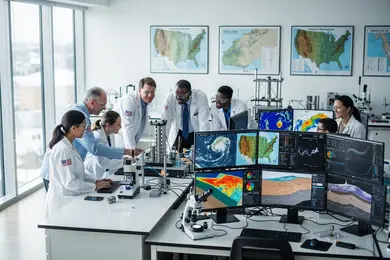
Industry demand increasingly favors geoscientists capable of evaluating geological data alongside ecological and chemical factors. For example, environmental consulting firms now regularly seek candidates who can navigate this complexity, reflecting a shift from traditional roles to applied research and policy influence. This shift highlights the value of best online geosciences programs for cross-disciplinary training that emphasize modeling, data synthesis, and virtual field methods-a critical consideration for working professionals pivoting into fields such as climate resilience or geoengineering.
The labor market outlook remains cautiously optimistic, with a 5% projected growth for geoscientists through 2032 and a 2024 median annual wage of $101,370 as reported by the U.S. Bureau of Labor Statistics. However, prospective students must scrutinize program curricula for practical, integrative training and faculty expertise to avoid narrow specialization that could restrict employability. Those without access to on-campus resources should anticipate the rigors of virtual labs and remote assignments requiring significant self-discipline and technology readiness.
Working professionals evaluating degree transitions may find insights relevant to their options by exploring how others negotiate career shifts, much like individuals moving into fields requiring diverse skill sets. For example, guidance on career pivoting is available in contexts like becoming a speech language pathologist, emphasizing the strategic planning needed for successful transition across disciplines.
How do online geosciences degrees compare to campus programs for science rigor and lab work?
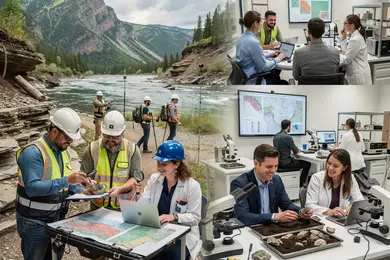
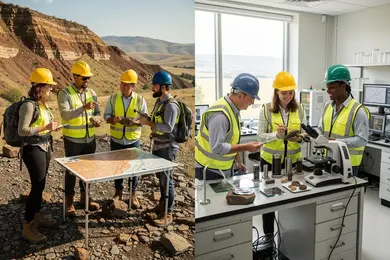
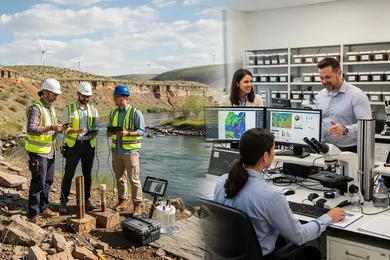
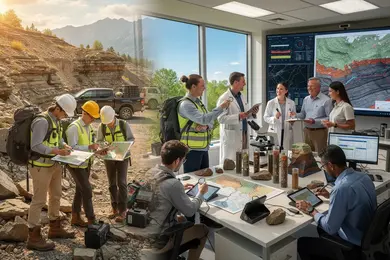
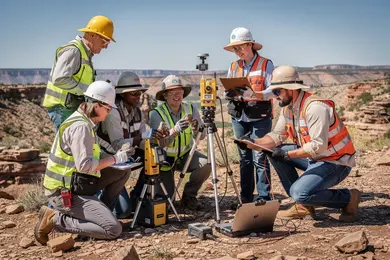
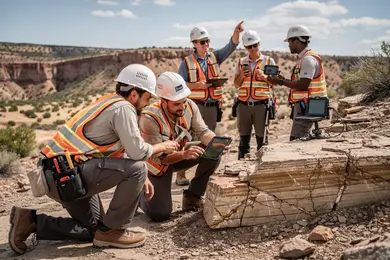
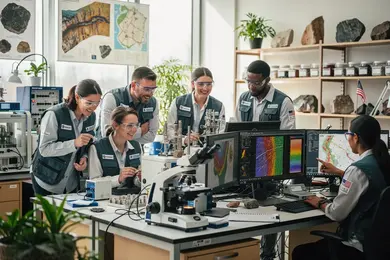
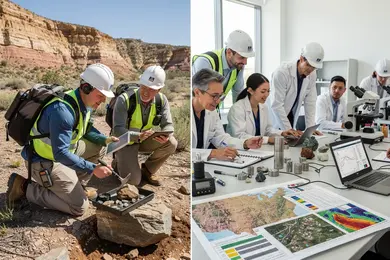
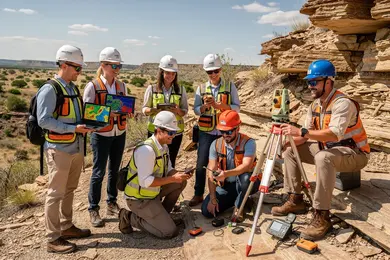
Online geosciences degrees sustain rigorous scientific standards comparable to campus programs, yet virtual geosciences programs lab work quality often falls short in immediacy and depth. Campus-based programs integrate extensive fieldwork, hands-on rock and mineral analysis, and live experiments that many employers in sectors like environmental consulting or petroleum geology demand. These in-person experiences remain pivotal for skill proficiency and problem-solving under real-world conditions.
Students pursuing online paths frequently face logistical challenges securing local partnerships or independent fieldwork, as illustrated by a working professional arranging weekend access to university facilities to fill practical skill gaps. Without such efforts, graduates risk being underprepared for roles requiring subsurface sampling or geophysical equipment operation.
From a curriculum standpoint, accredited online programs match campus rigor with quantitative analyses, geospatial data interpretation, and scientific writing but lack the spontaneous peer collaboration and instructor feedback in labs integral to experiential learning. This difference can influence the immediate applicability of skills upon entering the workforce.
With geoscientists earning a median salary of $99,240 and job growth projected at 3-5% through the mid-2030s, the strategic value of supplemental hands-on experience alongside online coursework cannot be overstated. For those navigating affordability concerns, exploring options like the online environmental engineering degree may offer relevant insights into cost-effective science-focused pathways.
Which types of geoscience degrees and specializations can you earn fully online?
Online geoscience degree programs with interdisciplinary science training offer clear advantages for learners targeting roles centered on environmental science, GIS technology, and earth systems without the constraints of intensive fieldwork. Graduates equipped with strong computational skills and project-based GIS portfolios meet workforce needs across urban planning, disaster management, and environmental consulting-fields growing faster than traditional geology jobs. Yet, those pursuing mineral exploration, petroleum, or hydrogeology careers face tradeoffs, as most pure online pathways lack sufficient hands-on field experience required by employers.
Fully online geosciences specializations with cross-disciplinary coursework emphasize climate science, soil science, and environmental policy integrated with modeling tools, aligning well with public policy and consulting roles that do not demand daily lab or field presence. However, programs often mandate in-person internships or residencies to bridge critical practical skill gaps, especially for traditional geology tracks.
Workers pivoting from unrelated areas benefit most by focusing on computational and spatial data expertise embedded within these online degrees. For prospective students, combining theoretical online study with local fieldwork-sometimes arranged independently-remains a necessary strategy for roles requiring applied geology skills.
For learners interested in broader scientific computing applications, exploring related options such as computer science degrees online can complement geosciences training with foundational software competencies increasingly demanded in modern geospatial analysis.
How can you verify that an online geosciences program is properly accredited and respected?
Accreditation verification is fundamental when evaluating an online geosciences program accreditation in the United States, as it directly impacts professional credibility and career mobility. Regional accreditation from recognized bodies like the Higher Learning Commission or Middle States Commission validates institutional standards critical for employer acceptance and state licensure. For geosciences, programmatic recognition through the Council of Engineering and Scientific Specialty Boards or connections with the American Geosciences Institute offers a layer of industry-aligned validation that supports practical skill application.
Employers prioritize graduates with interdisciplinary science training-blending geology with chemistry, physics, and environmental science-to handle complex field and lab challenges. Programs lacking comprehensive lab components or applied coursework often constrain access to research roles or certifications. Graduate outcomes such as job placement rates and employer partnerships are tangible indicators of a program's relevance and scalability. Public institutions like Fort Hays State University, for instance, present affordable pricing, around $4,134.75 per semester at $275.65 per credit hour, which can suit professionals balancing budget and flexibility without compromising educational rigor.
Prospective students should also evaluate faculty qualifications, delivery format, and technological support for virtual labs or simulations, as deficiencies here frequently result in less industry respect and limited licensure portability. Verifying alignment with state board requirements and exam prerequisites is vital to avoid career bottlenecks.
When comparing programs, consider cost and curriculum depth carefully. For those exploring alternatives, programs offering a computer science bachelor degree online may provide complementary skill sets valuable in geospatial data analysis and environmental modeling.
What core courses and cross-disciplinary science topics are included in online geosciences curricula?
Online geosciences curricula typically cover core subjects such as structural geology, mineralogy, geophysics, and sedimentology, essential for roles in resource exploration and environmental consulting. However, depth and focus vary widely, making it critical for applicants to assess whether programs include cross-disciplinary modules like geochemistry, hydrology, and environmental policy to better align with specific career goals.
Employer expectations differ strongly by sector. Petroleum companies prioritize graduates adept at interpreting geophysical surveys and proficient in programming for seismic data analysis. In contrast, environmental firms seek expertise in hydrological modeling and regulatory frameworks for contamination assessments. This divergence necessitates carefully matching program content with targeted industry demands.
Online delivery presents practical tradeoffs, notably limited fieldwork opportunities. Students often need local internships or virtual labs to develop the hands-on skills private and public employers require. For example, the University of Georgia reports that 90% of its online M.S. Environmental Geology graduates secure employment in earth science fields, with over 50% entering private sectors like petroleum and minerals exploration.
Key considerations include:
- Balancing scientific fundamentals with applied GIS and data analysis skills valued by employers.
- Evaluating program emphasis on policy and risk assessment when aiming for consulting or regulatory roles.
- Understanding the implications of reduced field experience typical of online formats and planning supplemental practical exposure accordingly.
What are typical admission requirements and prerequisites for online geosciences bachelor's and master's programs?
Strong quantitative skills remain a non-negotiable entry point for online geosciences bachelor's programs, where a foundation in algebra, geometry, chemistry, physics, and calculus is pivotal for energy and subsurface specializations. Students without early exposure to these subjects risk increased course load and delayed graduation due to remedial or bridge requirements. For master's applicants, a STEM-related undergraduate degree with a minimum 3.0 GPA is standard, alongside college-level geology, chemistry, physics, and advanced math, often reinforced by GRE scores unless waived for relevant professional experience.
The practical implication of these academic filters is particularly visible in high-paying sectors like oil and gas extraction, where employers demand proficiency in technical software, 3D modeling, and statistical analysis to manage complex geological data confidently. Candidates lacking these skills face limited employability despite degree completion. Professional experience in environmental consulting or petroleum exploration, when combined with the academic prerequisites, significantly strengthens application viability and aligns with dynamic workforce needs.
Admission requirements thus reflect an employer-driven prioritization of math and science rigor. Subsurface-focused students encounter a steeper preparatory curve but gain access to lucrative roles, with median wages exceeding $99,000 as per U.S. Bureau of Labor Statistics data. Absent quantitative and software competencies, graduates risk restricting their career options and earning potential in geosciences.
How long do online geosciences degrees take, and what do they usually cost?
Choosing an online geosciences degree requires balancing program length, cost, and alignment with specific career goals, especially in fast-evolving fields like meteorology and environmental consulting. Master's degrees often target working professionals, with part-time options extending to about two years, while full-time accelerated tracks can shorten completion to 12-18 months. Bachelor's programs generally require four years but allow for flexibility through part-time study or transfer credits; this flexibility, however, may delay workforce entry.
Costs for online master's programs can vary dramatically from $15,000 to over $50,000, forcing prospective students to critically assess return on investment. Higher tuition does not automatically translate to superior employer recognition or job placement, making program reputation and specialized curricula-such as those focused on climate hazards-key factors for forecasting roles tied to a 4% projected employment growth rate through 2032.
Practical challenges also impact degree value. Some courses mandate lab work, which not all programs accommodate virtually, necessitating regional partnerships for field experience. Aligning program features with industry certification requirements and workforce demands-particularly for operational meteorology-helps minimize wasted time and financial exposure.
Students should weigh these tradeoffs according to their specific career trajectories and operational constraints.
What careers can you pursue with an online geosciences degree that emphasizes cross-disciplinary science?
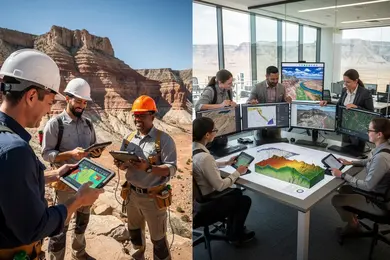
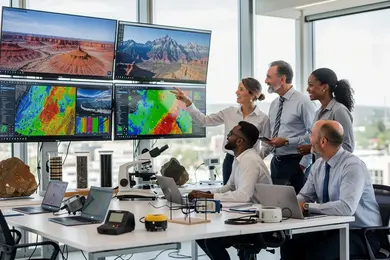
Graduates with an online geosciences degree that integrates remote sensing and GIS skills are positioned to meet distinct industry demands requiring cross-disciplinary competence. This combination is not optional; geoscience roles increasingly hinge on spatial data interpretation for climate resilience, resource exploration, and infrastructure projects. For example, government agencies rely on remote sensing to monitor environmental shifts, while energy companies assess site viability using GIS-based models.
This dual focus demands proficiency beyond theoretical knowledge, emphasizing hands-on software training and computational modeling. Without this, graduates risk marginalization in a job market that values digital fluency, pushing starting salaries higher-by roughly 12%, according to labor statistics-when computational skills are demonstrated.
Remote work expands opportunities but introduces challenges such as maintaining effective communication and self-directed learning amidst rapid software evolution. Employers expect candidates who translate complex geospatial data into actionable insights for scientific and non-expert audiences alike, necessitating strong soft skills combined with technical mastery.
- Cross-disciplinary training supports collaboration across policy, engineering, and environmental sectors.
- Ongoing education is essential to keep pace with emerging geoscience technologies.
- Programs centered on remote sensing and GIS reflect market needs documented by GISDegree.org's 2026 labor analysis.
What salary ranges and job outlook can geoscience graduates expect in different industries?
Entry-level geoscience salaries vary sharply by industry and specialization, signaling crucial tradeoffs for graduates. Environmental consulting offers $55,000-$65,000 annually with relatively stable demand linked to sustainability regulations. Conversely, the oil and gas sector starts around $70,000 but suffers cyclical layoffs influenced by commodity fluctuations, which may disrupt early career stability.
Mid-career roles at federal agencies, such as the U.S. Geological Survey or EPA, offer $80,000 to $110,000, rewarding specialized skills in geospatial analysis and hazard mitigation. Mining companies may pay up to $120,000 but often require relocation to remote sites, posing logistical and lifestyle challenges for many.
The U.S. Bureau of Labor Statistics forecasts a 7% growth rate for geoscientists through 2034, slightly exceeding average job growth, driven mainly by infrastructure investment and climate adaptation projects. Graduates combining data science or environmental policy expertise see higher salaries, sometimes exceeding $125,000 in senior roles.
Online geoscience degree options remain scarce-just 3 of 87 programs offer fully online pathways in 2025-reflecting employer preference for hands-on training through traditional or hybrid formats. Students prioritizing flexibility must weigh limited field experience against stronger hiring prospects tied to internships and labs.
Professionals switching into geosciences from related STEM fields can accelerate advancement by supplementing online degrees with certifications in GIS or environmental compliance, often realizing 10-20% salary increases within three years.
How should you choose the best online geosciences program for your goals and learning style?
Selecting an online geosciences program requires prioritizing curricula that align tightly with specific career outcomes rather than generalized knowledge. For example, professionals targeting roles in applied environmental consulting benefit more from programs integrating environmental chemistry and data analytics than purely theoretical geology tracks. This differentiation impacts employability, as industry roles increasingly demand cross-disciplinary technical skills.
Working students often juggle employment, so program flexibility-such as asynchronous classes and part-time options-is critical for sustained progress without jeopardizing income. Digital resource availability also influences the practical acquisition of skills, especially when hands-on learning via virtual labs or field simulations is needed but in-person access is limited.
Cost evaluation should consider return on investment; a tuition around $320 per credit hour, exemplified by Southern New Hampshire University's rate, provides a benchmark against higher-priced STEM alternatives, reducing financial exposure during career pivots. However, affordable tuition alone doesn't guarantee workforce readiness.
Strong faculty credentials and industry partnerships matter for curriculum relevance and access to professional certifications valued by employers, such as licensed geologist credentials or environmental compliance qualifications.
Additional considerations include the quality of technical support and tailored career services for nontraditional students. These elements often distinguish programs that facilitate smoother transitions into employment versus those with nominal academic value.
Other Things You Should Know About Geosciences
Employers recognize online degrees when the program is institutionally accredited and includes rigorous hands-on components, such as virtual labs or fieldwork alternatives. However, purely theoretical online programs without practical training tend to rank lower in competitiveness. Candidates should prioritize programs with integrated applied experiences and clear industry connections to offset any perceived gaps in in-person training.
Yes. Many accredited online geosciences degrees require an in-person field component, often a summer field camp or supervised local fieldwork. Programs may expect 1 to 6 credit hours of field training, plus laboratory work in geology, chemistry, or physics, to meet accreditation or licensure expectations.
Programs emphasizing broad cross-disciplinary skills provide adaptability across sectors like environmental consulting, energy, and research but may limit deep expertise sought in niche roles. Specialized tracks can increase job market precision but reduce flexibility if career plans change. Prospective students should weigh immediate job role clarity against long-term versatility when selecting curricula.
While some programs admit students without strong STEM backgrounds, success rates and employer outcomes are higher for those with foundational science and math skills. Online learning reduces in-person support, so candidates without this base should consider prerequisite courses or bridge programs to avoid falling behind. Prioritizing preparatory work can significantly improve mastery of advanced geosciences topics and career readiness.
References
- Geosciences Curriculum https://www.dickinson.edu/homepage/413/geosciences_curriculum
- How to Choose Online Degree Courses That Match Your Learning Style https://dsuonline.com/resources/blogs/how-to-choose-online-degree-courses-that-match-your-learning-style/
- The Geological Society - Degree Accreditation https://www.geolsoc.org.uk/education-and-resources/universities/university-degree-accreditation/
- Geosciences https://www.studium.uni-mainz.de/en/choosing-your-degree-program/courses-offered/geosciences_msc/
- Bachelor's Degree in Geosciences | UT San Antonio | Undergraduate Program in Geosciences | Earn Your Degree in Geosciences https://future.utsa.edu/programs/undergraduate/geosciences/
- Curriculum https://earthsciences.dartmouth.edu/undergraduate/curriculum
- 3. What Undergraduate Geoscience Education Should Accomplish https://www.americangeosciences.org/change/sections/concepts/
- Best Online Geoscience Courses and Programs | edX https://www.edx.org/learn/geosciences
- ThisIsGeoscience - Geoscience Salaries https://www.thisisgeoscience.com/the-resources/geoscience-salaries
- UNIGEAPPLY International Admissions SELECTION A.Y. 2026/27 – Students with a foreign qualification, access to Master’s degree taught in English | UniGe | University of Genoa https://unige.it/en/internazionale/procedura-prevalutazione-lauree-magistrali-inglese-solo-studenti-non-eu-residenti-all