2027 Online Geosciences Degrees for Earth Science Technician Roles

Co-Founder and Chief Data Scientist
Many aspiring earth science technicians confront the bottleneck of accessing relevant credentials without disrupting their current employment or geographic constraints. With 42% of U.S. postsecondary students enrolled exclusively online in 2024 according to the National Center for Education Statistics, flexibility has become a critical factor in career advancement decisions. This shift reveals growing demand for programs that accommodate working adults seeking to enter or elevate roles in geoscience fields, where practical skills and timely certification directly impact employability.
This article evaluates online geosciences degree options tailored for earth science technician roles, focusing on program features that align with workforce requirements and learner realities to guide informed enrollment choices.
Key Things You Should Know
- Only 45% of online geosciences graduates in 2024 secured technician roles within 12 months, per NSF data, indicating a credential-employment mismatch that demands supplemental field experience for viable job entry.
- Employers cite proficiency in GIS and environmental sampling over degree modality, with 72% of hiring managers ranking hands-on technical skills as decisive, prioritizing practical certifications alongside online degrees.
- Median program costs jumped 12% since 2022 for accredited online geosciences degrees, intensifying tradeoffs between time-to-degree acceleration and debt burden in this volatile sector per NCES statistics.
What is an online geosciences degree and how does it prepare earth science technicians?
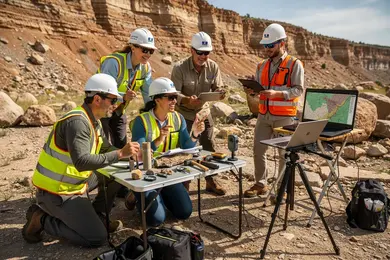
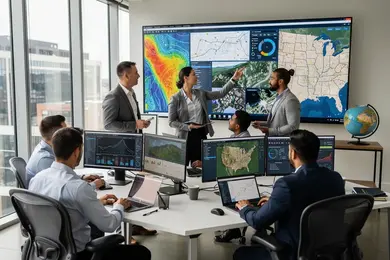
An online geosciences degree programs for earth science technicians shape candidates to handle technical challenges employers face in fields such as mining, environmental consulting, and government regulation. Students gain competencies in earth materials, geospatial systems, and environmental monitoring, which support real-world applications like mapping energy sector resources. For instance, proficiency in GIS enables accurate, cost-effective site assessments, meeting the standards rising from employer demand for analytical accuracy.
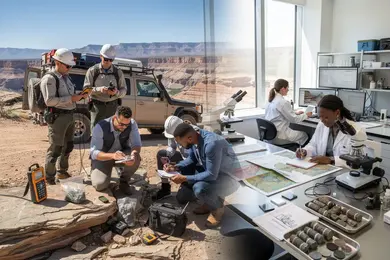
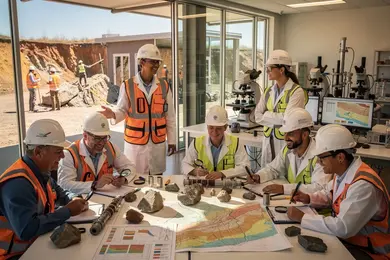
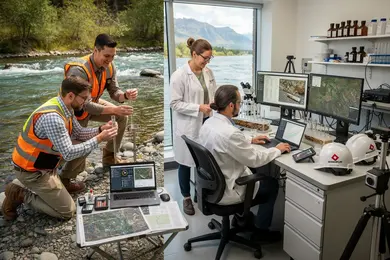
This educational route emphasizes a balance of theoretical foundations with applied digital labs, virtual simulations, and sometimes local field placements to build practical skills-addressing a key limitation of online formats that lack in-person lab access. Graduates emerge prepared for tasks including geological data collection, hazardous material identification, and regulatory compliance testing. The degree's design reflects workforce realities where adaptability and technical precision are increasingly valued due to evolving job requirements.
While convenience suits working professionals, success in these programs depends heavily on self-discipline and engagement with experiential components. According to the American Geosciences Institute, geoscience occupations will grow by roughly 17,000 roles between 2024 and 2034, underscoring the enduring demand for qualified technicians. Median salaries have also seen a notable increase, rising 4.5% from 2024 to 2025.
For individuals researching specific career outcomes, data on jobs with elementary education and environmental science degree provide complementary insight into employment trajectories. This context is essential when evaluating how an online geosciences degree prepares for earth science technician careers with respect to both market trends and educational tradeoffs.
Which types of online geosciences degrees best support earth science technician careers?
Selecting an online geosciences degree program for earth science technicians demands a balance between theoretical knowledge and applied skills, with the latter driving employability in roles requiring field sampling, GIS proficiency, and laboratory analysis. Associate and bachelor's degrees that emphasize practical instruction in data collection and geospatial software prepare candidates for core workforce requirements, especially in environmental consulting or mining sectors.
Advanced degrees rarely accelerate entry into technician roles but may benefit those targeting supervisory or specialized research positions. Certificate and diploma options provide supplementary skills but seldom replace degree credentials necessary for hands-on technician work. Online geosciences degree programs for earth science technicians should include laboratory simulations or local fieldwork components-purely theoretical curricula compromise job readiness.
The U.S. market reward aligns with technical adaptability and multi-tool proficiency, reflecting trends similar to Australia's 18.1% employment growth for Earth Science Technicians (ANZSCO 311412) through 2024. Candidates lacking integrated practical training often face extended onboarding and diminished competitiveness for government or natural resource roles.
Prospective students weighing the best online geosciences degrees for technician careers in the United States might consider programs blending GIS, remote sensing, and quality analysis techniques to meet employer expectations. For additional perspective on value-driven education choices in related fields, see the best data science masters offerings, which demonstrate cost efficiency paired with practical skill development.
How do online geosciences programs compare with campus-based options for hands-on fieldwork?
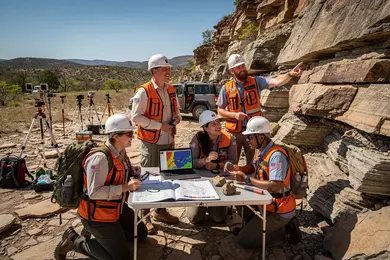
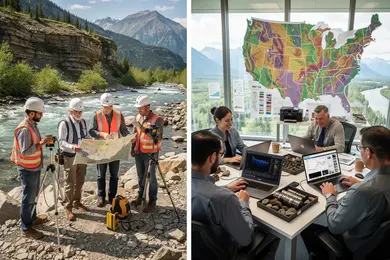
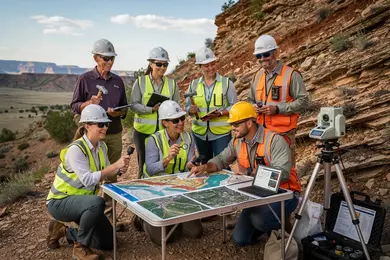
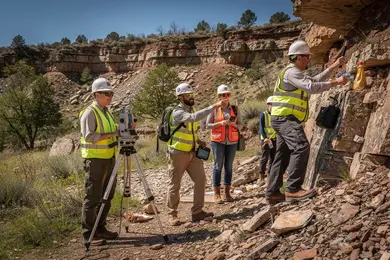
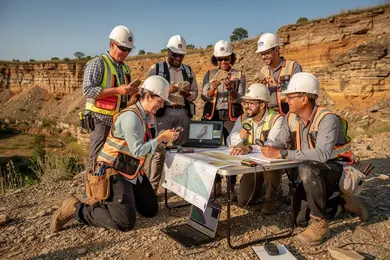
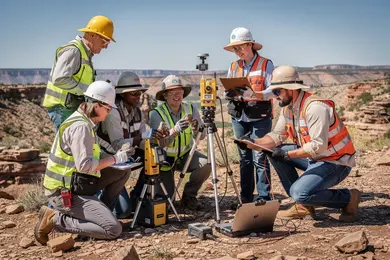
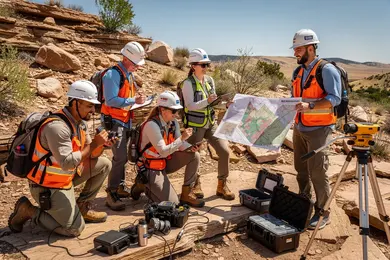
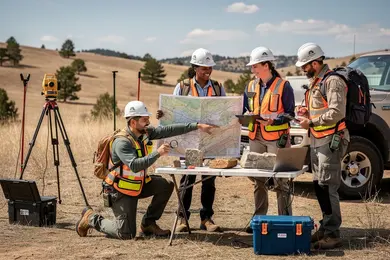
Online geosciences degrees with practical field training often fall short of campus-based programs when it comes to developing essential hands-on skills. Employers in Earth science technician roles prioritize candidates with experience using GPS devices, soil sampling tools, and other field instruments-skills typically honed through supervised exercises during geological field trips. Without this immersive training, graduates face tangible barriers to employment, as practical competence significantly influences starting salary tiers and promotion rates. The U.S. Bureau of Labor Statistics reports median salaries around $99,240 annually, with high performers earning up to $178,880, illustrating how applied field skills can pivot professional trajectories.
Students pursuing online geosciences degrees must often secure local internships or partnerships with environmental agencies to fill the experiential gap. Many programs attempt to bridge this by requiring on-site residencies or collaborating with regional offices, but these options vary and may impose logistical and financial challenges, especially for working professionals balancing schedules. This disparity between campus-based vs online geosciences programs for hands-on experience fundamentally shapes workforce readiness and long-term career development.
Those considering remote study should weigh these tradeoffs carefully, since academic credentials alone rarely substitute for demonstrated field expertise in hiring decisions. For guidance on diverse online fields of study, including complementary paths, see online library science programs.
What accreditation should online geosciences programs have for technician-focused career paths?
Accreditation by regional U.S. bodies recognized by the Department of Education or CHEA is a foundational criterion for online geosciences program accreditation for earth science technicians, directly shaping career viability. Employers in technician roles systematically favor candidates whose programs verify applied training through accreditation tied to practical competencies, not solely academic theory. For example, oilfield service and environmental consulting firms frequently exclude candidates lacking demonstrated fieldwork proficiency explicitly documented in their academic transcripts.
Beyond regional accreditation, specialized endorsement by entities like the Accreditation Commission for Programs in Applied and Clinical Geology (ACG) or connections to the Geological Society of America give programs additional credibility for technician careers in the United States. Such alignment with industry standards enhances graduates' job readiness by integrating clinical hours, field internships, and exposure to certification requirements, such as exams administered by the American Institute of Professional Geologists.
Choosing accredited geosciences degrees for technician careers in the United States demands scrutiny of curriculum design that balances theory with mandatory field experience, ensuring verifiable skill portfolios that employers actively seek. Graduates from programs emphasizing hands-on training tend to achieve higher earnings, with median wages around $102,200 reported by Canada's Job Bank five years after graduation, illustrating tangible outcomes of accreditation and practical exposure.
Prospective students should also consider program support structures, including advising and internship placement, which influence the ease of certification and employability. Interested learners exploring a contrasting field might find comparably affordable pathways via an online library science degree, but must weigh differences in practical exposure and industry expectations accordingly.
What courses and technical skills are typically included in online geosciences curricula?
Online geosciences curricula for earth science technician roles emphasize technical proficiency alongside foundational geological knowledge, yet this balance involves distinct tradeoffs. Core courses focus on mineralogy, petrology, geomorphology, hydrology, and soil science, providing students with necessary analytical tools for interpreting geological materials and processes. At the same time, technical competencies center on Geographic Information Systems (GIS), remote sensing, and environmental sampling, which are essential for practical site assessment and resource management.
Employers typically require graduates to demonstrate skills with industry-standard software such as ArcGIS and ENVI for spatial analysis and visualization. However, the limited fieldwork exposure in online programs can constrain readiness for fully outdoor roles like contamination assessments or hydrogeological surveys. Many programs compensate with virtual exercises, but these cannot fully replicate hands-on experiences critical in sectors ranging from energy to environmental regulation.
Effective communication and report writing are non-negotiable skills given the necessity of translating complex data into actionable information for regulators and stakeholders. Further, workforce data indicates a modest 3% employment growth and about 2,000 annual openings, reflecting steady demand driven by climate adaptation and sustainable resource needs. Prospective students should also consider programming capabilities in Python or R to enhance data manipulation and predictive analytics.
- Core geology courses with practical GIS skill-building
- Hands-on fieldwork often limited by online format
- Industry software proficiency is critical for employment
- Growing demand tied to environmental and climate challenges
What are the usual admission requirements and prerequisites for online geosciences degrees?
Admission to online geosciences degree programs is more than a formality-it represents a practical gatekeeping aligned with technical workforce needs. Most applicants must demonstrate proficiency in math and science fundamentals, with course prerequisites often including algebra, geometry, chemistry, and sometimes physics. A minimum GPA around 2.5 to 3.0 is common, reflecting employer expectations for candidates who will manage complex earth science technician tasks. Some schools still require SAT or ACT scores, though many have shifted to test-optional policies that acknowledge diverse applicant backgrounds.
For professionals aiming to pivot careers, prior relevant experience can sometimes substitute traditional academic requirements, but this varies by institution and often demands clear documentation of applied skills. Upper-level or bachelor's completion tracks may require transferable college credits in natural science fields or foundational coursework in geology or environmental science, mirroring industry emphasis on mineralogy, hydrology, and geospatial analysis capabilities.
Reliable access to digital learning environments and lab simulation software is essential due to the hands-on nature of geoscience technician competencies. Fieldwork remains a component in some programs, creating a logistical and financial tradeoff between fully remote study and necessary in-person training. Tuition rates like Southern New Hampshire University's approximate $320 per credit hour-totaling near $31,860 for a bachelor's-are competitive but do not capture additional costs for materials and exams, which can prolong time to workforce entry if unbudgeted.
- Applicants should prioritize programs with transparent prerequisite policies to avoid delayed graduation.
- Understanding technical rigor up front can enhance job readiness and alignment with employer needs.
- Weighing the convenience of online study against required field components is key when balancing professional and personal commitments.
How long do online geosciences degrees take and what do they typically cost?
Completing an online geosciences bachelor's degree remains the essential minimum for most earth science technician roles, with full-time programs typically spanning four years. Accelerated options can shorten this to about three years but often demand intensive schedules that reduce flexibility for paid work. Conversely, part-time enrollment extends completion to five or six years, delaying entry into the profession and potential income growth while accommodating working students.
The total cost varies significantly: public in-state tuition ranges from $10,000 to $25,000, while private institutions frequently exceed $40,000. Additional annual expenses for materials and software can add $1,000 to $2,000. These financial factors, combined with program length, directly influence how quickly a candidate meets employer requirements, especially in government and mining sectors where a bachelor's degree is typically mandatory.
Balancing accelerated timelines against the risk of inadequate practical experience is critical. Fieldwork and lab components are indispensable for technician competencies, and programs lacking these may hinder employability despite faster completion.
- Full degree completion strongly aligns with workforce entry; Canadian Job Bank data show 34.65% of graduates enter core earth science roles.
- Prioritizing accredited, comprehensive curricula over expedited programs reduces the risk of missing vital applied training.
- Students must weigh cost, timeline, and practical training to avoid delaying certification or workforce readiness.
What entry-level earth science technician roles can you get with an online geosciences degree?
Online geosciences degrees primarily position graduates for entry-level earth science technician roles where practical skills outweigh theoretical knowledge. Common jobs include geological, environmental, and cartographic technician positions, each demanding competence in field data collection, geological sampling, and geospatial software use. Employers expect tangible experience with GIS mapping and remote sensing, often supported by in-person labs or local internships.
For example, cartographers and photogrammetrists-specialists within GIS mapping-are projected to see employment growth exceeding the national average at 6% over a decade. Success in these roles requires beyond-basic coursework mastery of spatial data analysis and photogrammetric software, frequently necessitating additional training to meet workplace standards for precision and efficiency.
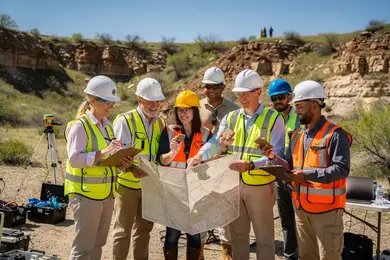
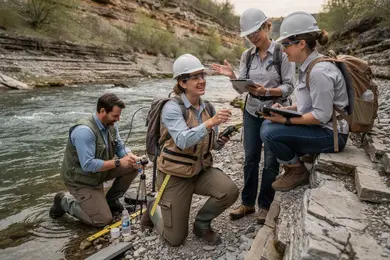
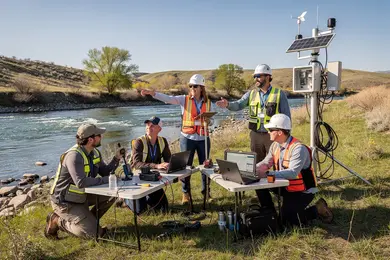
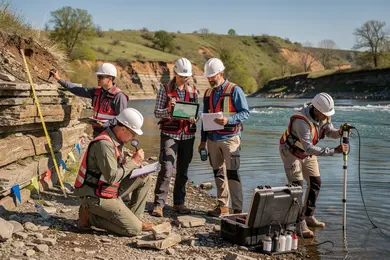
Environmental technician roles typically involve fieldwork in water quality, soil sampling, or pollution monitoring, demanding adaptability to varied environmental conditions and extended hours. Career progression in this area typically hinges on accumulating hands-on field experience and obtaining certifications such as HAZWOPER and GIS credentials.
Because online programs often lack direct field components, prospective students must critically assess whether their chosen programs provide viable pathways to local internships or practicum experiences. This bridging between academic knowledge and applied skills remains pivotal for employability in this technical workforce segment.
What are the salary ranges and job outlook for earth science technicians in the U.S.?
Salary trajectories for earth science technicians in the U.S. reveal pronounced disparities based on specialization and experience, with starting wages near $45,000 in government roles and peaks surpassing $75,000 in sectors like resource extraction. This variation underscores a critical tradeoff: technicians proficient solely in field data collection face capped earnings, whereas those with expertise in GIS and digital tools unlock higher wage brackets and broader sector mobility.
The 5% projected job growth over the next decade is tightly coupled with demand for skills in environmental monitoring and infrastructure development, emphasizing that practical, technology-driven competencies align best with market needs. Employers prioritize candidates who combine hands-on field experience with advanced data management capabilities, which can affect long-term employability and salary growth.
For working professionals, pivoting into roles requiring GIS proficiency or environmental assessment skills typically necessitates targeted certifications or coursework focused on software and data analysis. Programs blending practical application with digital training yield candidates more competitive for top-tier positions. Conversely, purely online degrees without experiential components might limit upward mobility in this technical niche.
Adapting to these realities means recognizing that a narrow focus on traditional fieldwork may constrain career ceilings, while investing in hybrid skill sets better positions technicians to meet evolving demands in the geosciences labor market.
How can students evaluate and choose a reputable online geosciences program for technician work?
Accreditation verification from agencies like CHEA or the U.S. Department of Education is a foundational step for candidates considering online geosciences programs, as it protects the validity and employer recognition of credentials. Beyond accreditation, program content needs to align with technician-level skills such as field methods, GIS, and data analysis, reflecting real job demands rather than academic breadth alone.
Practicums or internships remain indispensable despite remote delivery; students focused on environmental consulting should target programs with remote labs paired with local field opportunities, as hands-on exposure influences employability more than coursework alone. Transparent program outcomes-employment rates, starting salaries, and certification support-offer tangible evidence of return on investment and should be prioritized over vague or outdated institutional claims.
Faculty expertise grounded in applied research or industry experience directly impacts the relevance of training and should factor into program choice. Operational considerations like flexible class scheduling and career advising play a nontrivial role for working professionals balancing study and job demands.
Finally, career trajectory data underscore that initial technician roles are a stepping stone. According to Indeed's 2024 salary data, advancement to specialized roles such as paleontologists or climatologists can more than double earnings, sometimes exceeding $200,000 annually. This emphasizes selecting programs that facilitate not just immediate employment but also upward skill development to navigate evolving labor market demands.
- Verify accreditation status thoroughly before committing to online programs.
- Prioritize curricula with direct applicability to technician competencies and field experience options.
- Seek programs with transparent, recent outcomes data tied to employment and earnings.
- Factor in faculty qualifications and scheduling flexibility relevant to personal circumstances.
- Consider long-term career paths and whether the program supports advancement beyond entry-level work.
Other Things You Should Know About Geosciences
Faculty expertise significantly impacts the practical relevance of online geosciences programs. Instructors with active industry experience tend to integrate current field techniques and employer expectations into coursework, which shapes graduate readiness more effectively than purely academic-focused faculty. Prospective students should prioritize programs where faculty maintain strong ties with regional employers or professional organizations, as this correlates with better internship pipelines and job placement in earth science technician roles.
Most accredited online geosciences programs require 6 to 12 semester credit hours of field or laboratory work, often completed through summer field schools, local site projects, or on-campus intensive labs. These hands-on hours help meet employer expectations for sampling, mapping, and instrument-use skills.
Yes, certifications such as the Geographic Information Systems (GIS) certification or Hazardous Waste Operations and Emergency Response (HAZWOPER) can complement online geosciences degrees. These certifications may enhance employability and demonstrate to employers that you have specialized skills, which can be particularly beneficial for technician roles.
Employers increasingly expect certifications such as OSHA safety training or Geographic Information Systems (GIS) proficiency in addition to degrees. While an online geosciences degree establishes foundational knowledge, these certifications demonstrate practical skills and adherence to workplace standards. Students should incorporate relevant certifications parallel to their degree program, as this combination enhances employability and aligns with employer demands for immediately applicable competencies.
References
- The Geological Society - Degree Accreditation https://www.geolsoc.org.uk/education-and-resources/universities/university-degree-accreditation/
- Earth science technician https://www.jobsandskills.wa.gov.au/jobswa/occupations/earth-science-technician
- Online Geoscience Degrees: Top Schools and All Programs in 2026 https://www.gisdegree.org/online/geoscience-degrees/
- Bachelor's Degree in Geosciences | UT San Antonio | Undergraduate Program in Geosciences | Earn Your Degree in Geosciences https://future.utsa.edu/programs/undergraduate/geosciences/
- Best Online Geoscience Courses and Programs | edX https://www.edx.org/learn/geosciences
- Supporting Geoscience Students https://www.grow-geocareers.com/forgeodepartments
- Earth Science Jobs in All Brisbane QLD - Jun 2026 | SEEK https://au.seek.com/earth-science-jobs/in-All-Brisbane-QLD
- Curriculum https://earthsciences.dartmouth.edu/undergraduate/curriculum
- 8. Recruiting, Retaining, and Promoting Success of Undergraduate Students with Emphasis on Students Underrepresented in the Geosciences https://www.americangeosciences.org/change/sections/recruitment/
- Where to study geology for a career in oil and gas? https://www.rigzone.com/insights/educational-pathways-5/where-to-study-geology-for-a-career-in-oil-and-gas-676