2027 Best Online Geosciences Degrees for Earth Systems Science Careers

Co-Founder and Chief Data Scientist
Balancing a full-time job while pursuing a meaningful advance in earth systems science often forces professionals into untenable trade-offs between program quality, schedule flexibility, and employer expectations. The National Center for Education Statistics reports that over 50% of online learners now seek part-time or asynchronous options, reflecting a shift toward adult learners requiring adaptive scheduling to maintain career momentum. This evolution complicates selecting a geosciences degree that provides both industry-relevant rigor and practical accessibility. As workforce demand intensifies for specialized expertise in environmental monitoring and resource management, choosing the right online program directly affects employability and long-term career growth.
This article evaluates leading online geosciences degrees designed for earth systems science careers, focusing on their ability to reconcile professional obligations with educational outcomes.
Key Things You Should Know
- Data from the U.S. Bureau of Labor Statistics shows a 5% growth in earth systems science roles by 2031, but online degrees often lack embedded internship structures, creating a gap in practical experience employers prioritize.
- Employers increasingly require proficiency in GIS and remote sensing software, with 72% of surveyed geoscience firms in 2024 reporting difficulty hiring candidates with hands-on technical skills despite robust academic knowledge.
- Average online program costs vary widely from $25,000 to $70,000, with 48% of graduates delaying workforce entry over 12 months post-completion due to part-time pacing and employer preference for traditional fieldwork exposure.
What is an online geosciences degree and how does it prepare you for earth systems science careers?
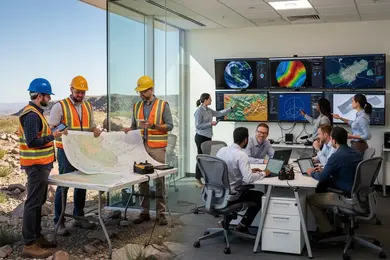
Choosing an online geosciences degree program requires attention to how well it prepares students for earth systems science careers that demand both technical skills and practical application. These programs integrate geology, meteorology, oceanography, and environmental science into virtual coursework, emphasizing competencies like remote sensing, GIS mapping, and computational modeling. For example, a remote geoscientist working with satellite data and predictive models can identify resource deposits without physical site visits, a critical advantage for mineral exploration companies.
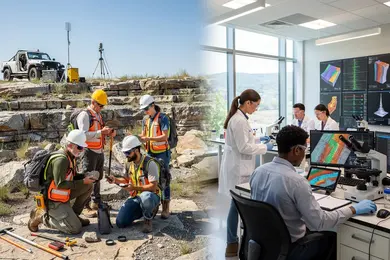
Online geosciences degree programs for earth systems science typically combine asynchronous lectures with interactive labs and virtual fieldwork, an instructional design that suits working professionals. However, limited in-person fieldwork opportunities may restrict qualifications for roles requiring direct geological surveys, making verification of local field access essential.
Employment outcomes hinge on specialization and proficiency in industry-relevant software such as ArcGIS and Python. Median annual wages for geoscientists significantly exceed the overall U.S. median, illustrating strong demand for technically skilled graduates who can support infrastructure planning and environmental risk analysis.
The decision to pursue such a degree should also consider accreditation, curricular alignment with industry needs, and employer networks for internships or project collaborations. This practical alignment ensures graduates meet workforce expectations and can adapt to changing environmental challenges without traditional campus resources.
Those evaluating this pathway may also explore related career options such as jobs with elementary education and environmental science degree that overlap with skills developed in geosciences.
How do online geosciences degrees compare with on-campus programs for quality and flexibility?
Online geosciences degrees match or exceed on-campus curricula in theoretical rigor and scheduling flexibility, making them viable for professionals balancing work and study. However, the practical limitations of fully online formats affect candidates' readiness, since hands-on fieldwork and lab experience remain critical for Earth systems science careers. Graduates without localized internships or cooperative education risk falling short in technical skill demonstration, a key hiring criterion in environmental consulting, energy, and climate sectors.
The advantage of online programs lies in access-learners can enroll remotely in specialized or higher-ranked offerings otherwise inaccessible due to relocation constraints. Yet, securing meaningful field experience often requires proactive negotiation of local opportunities or reliance on hybrid programs, which better integrate practical components. For working adults managing multiple responsibilities, this flexibility complements their schedules but demands strategic planning for site-specific engagement with real-world data collection and analysis.
The Bureau of Labor Statistics projects modest 5% growth in geoscientist employment from 2023 to 2033, with 2,100 annual openings mostly from retirements. This dynamic boosts demand for field-ready candidates who combine academic credentials with practical skills, often attaining quicker advancement into leadership roles. Employers typically favor hybrid or campus-based graduates for entry-level roles where operational readiness is paramount.
As students evaluate online geosciences degrees quality and flexibility comparison, understanding these tradeoffs is essential. Those prioritizing convenience must integrate verified internships to offset experiential gaps. For an informed educational pivot, exploring related pathways such as an online masters in data science can also broaden technical expertise in data-driven geospatial roles.
Which accredited schools offer the best online geosciences degrees in the United States?
Employers in environmental consulting and geological engineering increasingly prioritize candidates with hands-on skills in computational geoscience and remote sensing, making the best accredited online geosciences degree programs in the United States highly relevant for strategic career moves. Arizona State University's online Bachelor of Science in Geological Sciences combines applied field methods with computational tools essential for natural resource management, while Oregon State University's program emphasizes GIS technology aligned with data science and mining sector needs.
Graduates entering roles such as natural sciences managers can anticipate median salaries around $164,300, with geosciences-related data scientists earning about $115,390 annually, reflecting the tangible returns on degrees grounded in analytics and management. Online options within these programs often incorporate virtual labs or internships to simulate field experience, a key consideration for those balancing remote learning with local site obligations.
However, prospective students must weigh tuition costs, state residency requirements, and the geographical reputation of their chosen program. Universities accredited by the Higher Learning Commission ensure recognition necessary for federal aid and employer acceptance, yet regional hiring preferences may influence outcomes.
Deciding among top U.S. universities offering online geosciences degrees requires consideration of practical curricula, career alignment, and experiential learning options. Candidates seeking cross-disciplinary flexibility might also examine fields like nutrition degree online, which share methodological rigor with environmental sciences.
What accreditation should you look for in an online geosciences or earth systems science program?
Regional accreditation remains the definitive measure for recognizing legitimate online geosciences program accreditation standards, as it directly influences credit transferability, federal aid eligibility, and employer acceptance. A degree from a non-accredited institution can effectively block entry into federal geoscience agencies like the USGS or professional licensing arenas, critically narrowing career prospects.
Specialized accreditation such as ABET is uncommon in earth systems science degrees but may enhance value for engineering-focused tracks. Candidates must assess program curricula for practical components-fieldwork and industry credentials-that align with specific geoscience career trajectories. This ensures not only academic rigor but also workforce relevance and adaptability.
Cost variability in online geosciences degrees is substantial, with top-tier programs ranging from $40,000 to $85,000. Given this, accreditation serves as a risk mitigator against paying premium prices for questionable quality. Employment outcomes documented in labor statistics reflect a strong correlation between institutional accreditation and job market success.
Prospective students researching options should verify accreditation status at the point of enrollment, as it can fluctuate. Some may also consider adjacent fields with recognized online library science masters programs as alternative or complementary educational pathways when evaluating return on investment in earth systems science degrees.
What types of online geosciences degrees exist, and which path fits different career goals?
Choosing an online geosciences degree demands close attention to how each program aligns with workforce realities and student constraints, particularly regarding practical skill acquisition and career pathways. A Bachelor of Science (BS) in Geosciences typically targets roles in exploration, surveying, and energy sectors, but online formats challenge students to supplement missing fieldwork-an employer prerequisite-through local internships or camps.
Environmental geosciences programs focus on regulatory compliance, pollution control, and sustainability, emphasizing remote sensing and GIS proficiencies that have become non-negotiable in environmental consulting and government positions. Graduates without these digital skills often face limited job prospects despite theoretical knowledge.
Earth systems science degrees appeal to candidates shifting from STEM backgrounds toward climate, policy, and research roles. Their interdisciplinary quantitative demands and lack of in-person labs compel students to pursue additional experiential learning outside the virtual curriculum to meet employer expectations.
Cost remains a pivotal factor: institutions such as North Carolina Central University and Indiana University Southeast offer accredited programs under $300 per credit hour, below average for bachelor's degrees nationally. For professionals balancing work with education, these flexible and affordable options provide viable avenues for skill upgrading without prohibitive debt.
What courses and specializations are typically included in an online geosciences curriculum?
Online geosciences master's programs require careful assessment of practical constraints alongside academic offerings. For example, programs combining core geology, geophysics, and environmental science with specialized tracks like remote sensing demand advanced quantitative skills such as GIS mapping and statistical analysis. These competencies enable graduates to analyze satellite imagery for real-world applications in agriculture or disaster monitoring, illustrating a direct workforce alignment.
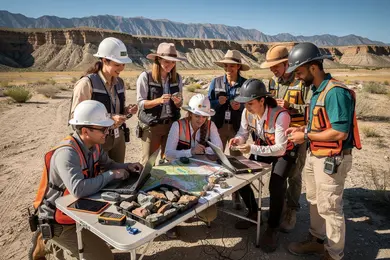
Physical fieldwork remains a challenge for online learners. Virtual labs and data simulations partially substitute on-site experience, but independent or local partnerships for field assignments introduce logistical burdens that may extend program length and increase costs. This operational friction is a significant factor when weighing program options.
Employers increasingly expect proficiency in technical tools, including ArcGIS and seismic data software, alongside interdisciplinary knowledge spanning climate science and sustainability. Applied research projects and internships often dictate employability in government or industry roles more than theoretical coursework alone.
When selecting advanced electives-such as petroleum geology or geohazards analysis-prospective students must evaluate labor market demand closely. Misaligned specialization risks poor return on investment amid competitive hiring. Tuition variation, as noted by CollegeHippo's survey, can also strongly impact total education expenses, with some top-tier private institutions charging up to $62,456 annually.
What are the usual admission requirements, program length, and costs for online geosciences degrees?
Completing an online geosciences degree requires balancing academic prerequisites and career timing, especially for working professionals seeking flexibility. While a high school diploma typically suffices for admission, requirements often include foundational courses in math and science. Transfer credits and relevant work experience can accelerate degree completion, a crucial factor since part-time enrollment may extend study duration beyond six years, delaying entry or re-entry into the workforce.
Cost variability primarily hinges on institution type, residency, and credit load. Public universities charge anywhere from $300 to $1,000 per credit depending on residency, whereas private options range from $800 to $1,500. Total tuition, fees, and materials for a bachelor's degree generally fall between $40,000 and $80,000. Additional expenses, such as GIS software licenses, impose further financial demands but are essential for roles in energy and environmental sectors.
Graduates targeting fields like environmental science face median salaries around $76,530 but must weigh this against the time and investment required for adequate technical training. Selecting programs with flexible sequencing and transparent credit transfer policies enables learners to minimize time and cost while maintaining employment. These realities make strategic choices about program length, cost structure, and credential relevance critical for aligning educational outcomes with market expectations and career objectives.
What careers can you pursue with an online geosciences degree focused on earth systems science?
The shrinking geosciences workforce presents a critical gap: nearly 27% of professionals are set to retire by 2029, creating around 130,000 unfilled roles. This shortfall intensifies demand for candidates skilled in earth systems science, particularly those adept in geospatial data analysis, remote sensing, and predictive modeling. These technical competencies shape employability across environmental consulting, natural resource management, and climate analysis sectors within government and private industry.
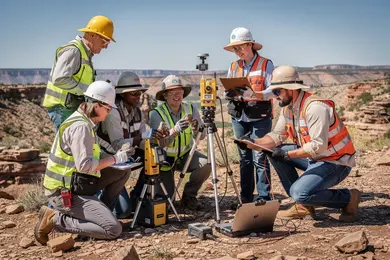
For instance, environmental consultants rely on integrated remote sensing and field assessments to evaluate land-use impacts under regulatory frameworks. However, online programs often struggle to replicate hands-on geological fieldwork, presenting a practical barrier for fully remote students seeking direct site experience.
Professionals pivoting into geosciences must scrutinize curricula for exposure to GIS tools, environmental policy, and climate systems critical to workforce readiness. Early career roles typically involve data collection and reporting, with advancement hinging on project management expertise or specialized research capabilities. Federal agencies like the US Geological Survey and Environmental Protection Agency actively recruit to replace retiring staff, offering stable trajectories amid workforce contraction.
Ultimately, graduates face a competitive yet expanding job market where sustained technical certification and applied field experience outweigh academic credentials alone. Strategic program selection should consider these realities to optimize employability in geosciences beyond the classroom.
What salary ranges and job outlook can geosciences graduates expect in different U.S. sectors?
Salary outcomes for Geosciences graduates in the U.S. heavily depend on sector and location, shaping career feasibility and financial return. Federal roles at agencies like the U.S. Geological Survey typically start between $55,000 and $85,000 but can exceed $110,000 with experience, offering stability but slower wage progression. In contrast, private sectors such as energy and mining provide higher starting salaries, often $70,000 to $95,000, though these roles carry greater exposure to market volatility and cyclical layoffs.
Environmental consulting falls in the mid-range initially ($50,000 to $75,000), with growth linked directly to regulatory trends. The outlook predicts about 6% job growth through 2032, slower than average, emphasizing the need for advanced skills or certifications to remain competitive.
Residency status dramatically affects tuition costs for online geoscience programs-with in-state rates near $112 per credit versus out-of-state fees up to $774-impacting debt load and time to workforce entry, particularly for career changers.
Key tradeoffs to weigh when selecting pathways include:
- Higher entry wages in private sectors vs. greater job insecurity
- Stable but lower-paying government or consulting positions
- Tuition cost disparities influencing financial risk and progression speed
Prospective students must align educational investments with sector dynamics and personal circumstances to optimize outcomes in this specialized but variable labor market.
How can you choose a reputable online geosciences program that aligns with licensure or certification needs?
Licensure in geosciences hinges on selecting programs with precise accreditation and curriculum alignment to state or professional certification standards, such as those of the Association of State Boards of Geology (ASBOG). Candidates aiming for positions with regulatory oversight or requiring public safety accountability must prioritize programs that offer targeted coursework in mineralogy, hydrogeology, and geophysics rather than broad earth science topics.
Programs that facilitate supervised field experience or internships provide a crucial advantage, given many states' mandates for documented practical training. For example, Texas and California enforce different licensing criteria, so students must verify that an online program complies with the state(s) where they plan to practice. Failure to do so risks investing time and resources into credentials that may not qualify for licensure or employment in critical jurisdictions.
Key practical considerations include:
- Confirming regional accreditation and certification alignment
- Evaluating availability of lab work, field components, or virtual simulations replicating professional skill tests
- Checking for structured support in internship placement or supervised experience
- Ensuring program recognition within relevant state licensing frameworks
Geoscientist median earnings, reported as $83,680 by MyDegreeGuide's 2025 overview, underscore the financial disparity compared to related roles in conservation or soil science, emphasizing the value of licensure-compatible programs for income stability and career trajectory.
Other Things You Should Know About Geosciences
Field experience enhances practical understanding and skills, crucial for geoscience careers. Online programs often offer fieldwork components, enabling students to apply theoretical knowledge in real-world scenarios. While not mandatory in all courses, participating can greatly benefit career readiness in Earth Systems Science.
Employers increasingly accept online degrees in geosciences, especially when earned from accredited institutions with rigorous curricula. However, traditional program graduates may hold an edge in competitive situations due to perceived greater access to research facilities and live collaboration. Online graduates should strengthen their profiles through technical certifications, project portfolios, or targeted internships to counterbalance this bias. Focus on programs offering real-time labs, group projects, and direct mentorship to meet employer expectations effectively.
Online geosciences students often face denser workloads compressed into shorter windows without the structured daily rhythm of campus classes. This can demand higher self-discipline and time management skills, especially in courses with complex data analysis or simulation components. While flexibility is an advantage, it risks uneven progress or burnout if pacing is not carefully managed. Opt for programs that provide clear milestones, synchronous sessions, and accessible faculty support to mitigate these challenges.
Many online geosciences bachelor’s programs require a final capstone, while master’s programs often require either a thesis or a non-thesis project. Common requirements include 120 semester credits for a bachelor’s degree and 30 to 36 credits for a master’s degree, with faculty approval on the final project topic.
References
- Geologist-in-Training https://www.americangeosciences.org/licensure/git/
- What Does the Future Demand Look Like for Applied Geoscientists? https://www.aegweb.org/index.php
- Study Geosciences in Germany - My GUIDE https://www.myguide.de/en/study-mathematics-natural-sciences-in-germany/study-geosciences-in-germany/
- Geoscience Careers https://education.americangeosciences.org/resources/geoscience-careers/
- The Geological Society - Degree Accreditation https://www.geolsoc.org.uk/education-and-resources/universities/university-degree-accreditation/
- Best Online Geoscience Courses and Programs | edX https://www.edx.org/learn/geosciences
- Professional Geologist Licensure https://www.grow-geocareers.com/licensure
- Geology https://www.aims.edu/degrees-certificates/geology
- Online Geoscience Degrees: Top Schools and All Programs in 2026 https://www.gisdegree.org/online/geoscience-degrees/
- Beyond Academia: Careers in Earth and Space Sciences - https://wfsj.org/news/beyond-academia-careers-in-earth-and-space-sciences/