2027 Best Online Bachelor's in Geosciences With Physical Geology Coursework

Co-Founder and Chief Data Scientist
Professionals seeking to pivot into geosciences confront a bottleneck: access to programs integrating essential physical geology coursework with flexible scheduling. Traditional on-campus programs rarely accommodate working adults balancing employment and family, limiting skill acquisition critical for roles in environmental consulting or resource exploration. According to the National Center for Education Statistics, online enrollment for bachelor's degrees surged over 12% in the last year, reflecting demand for adaptable formats.
This shift signals employers increasingly expect fluency in core geology concepts without compromising workforce engagement. This article evaluates the best online bachelor's in geosciences offering robust physical geology curricula to navigate these challenges and optimize career advancement.
Key Things You Should Know
- Geosciences bachelor's programs with physical geology coursework increasingly require costly fieldwork components, raising total expenses by 15-25%, which delays degree completion for 28% of students, per National Center for Education Statistics 2024.
- Employers in energy and environmental sectors prioritize candidates with integrated GIS and remote sensing skills, present in only 40% of programs, creating a competitive disadvantage for graduates lacking these tools, Bureau of Labor Statistics 2024.
- Graduates face a 12% hiring gap relative to physical sciences peers due to narrow specialization; diversifying coursework improves employability but often extends time-to-degree, highlighting a critical curriculum tradeoff, NSF workforce data 2024.
What is an online bachelor's in geosciences with a physical geology focus?
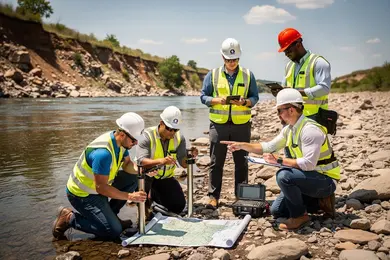
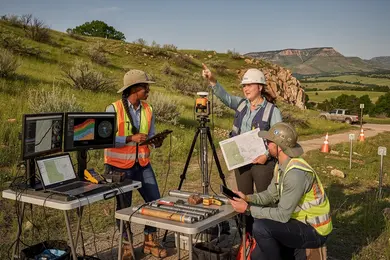
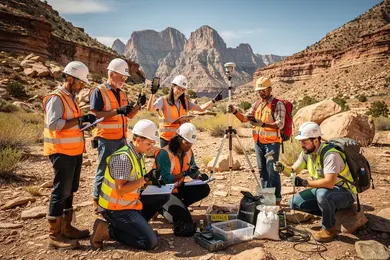
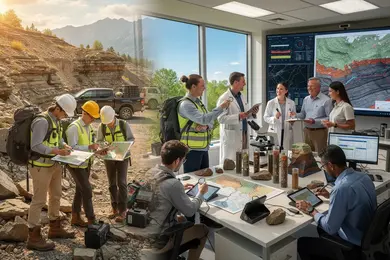
Choosing an online bachelor's degree in geosciences with a physical geology emphasis demands careful consideration of how theoretical knowledge translates to practical skills employers require. Graduates must demonstrate proficiency in mineralogy, petrology, seismic interpretation, and geospatial data analysis to remain competitive in sectors such as energy, environmental consulting, and construction. Programs balance remote coursework with fieldwork components-often local or summer residencies-that deliver hands-on experience essential for geological hazard assessment and resource exploration.
A bachelor's program in geosciences focused on physical geology equips students to analyze soil composition, rock formations, and stratigraphic correlation with tools like GIS software and virtual labs. However, the absence of integrated field experience can limit job prospects or salary growth unless supplemented by internships or cooperative work placements. Professionals pivoting into geology-related roles without relocating must weigh the logistical challenges of fulfilling these immersive requirements alongside remote learning.
According to the U.S. Bureau of Labor Statistics, geoscientists earned a median annual wage of $99,240 in 2024, with employment expected to grow 3% through 2034. Sustained demand underscores the importance of technical competencies alongside certifications and applied experience. For those considering advanced specialization or intersecting fields, comparing options like a data science PhD online can offer alternative pathways to leverage geospatial and analytical skills within data-driven industries.
How do online geosciences bachelor's programs compare with campus-based options for physical geology?
Choosing between campus-based vs online bachelor's degree in geosciences physical geology coursework comes down to the tradeoff between hands-on experience and flexible learning. Physical geology demands extensive lab work, sediment and rock analysis, and field-based surveying skills that campus programs deliver through in-person labs and direct access to specialized equipment. These practical competencies remain essential to employers, especially in environmental consulting and mineral exploration, where demonstrated applied proficiency is non-negotiable.
Online geosciences bachelor's degree programs physical geology coursework often replace tactile lab time with virtual simulations or at-home kits. While this supports theoretical learning, it may fall short in preparing graduates for roles requiring in-field data collection. Professionals pursuing online routes must proactively seek internships or local fieldwork to meet market expectations. For instance, environmental specialists-whose roles are projected to increase 6% from 2024 to 2034 according to U.S. Bureau of Labor Statistics data via EnvironmentalScience.org-benefit significantly from programs that provide regional externships or industry partnerships.
Campus programs also facilitate networking opportunities with faculty and local professionals, a non-obvious advantage critical in geoscience sectors reliant on connections for job placement. Conversely, online pathways afford scheduling flexibility but place the burden on students to independently secure vital experiential learning. Prospective students should assess whether programs balance coursework with practical exposure before committing.
While analyzing degree options, it's useful to compare cost alongside educational value. Those interested in related fields might investigate resources on the cheapest data science masters in USA to understand financial dynamics in interdisciplinary geoscience applications.
Which accredited schools offer the best online bachelor's in geosciences with physical geology coursework?
Choosing among the best accredited schools for online geosciences degrees with physical geology coursework requires balancing cost, credibility, and hands-on training. Public universities like the University of Arkansas and the University of Florida offer full physical geology lab sequences online, essential for meeting employer expectations in fields such as environmental consulting and resource exploration. For instance, transitioning professionals targeting hydrogeology roles must confirm their program includes validated lab skills and geographic data analysis, as many online offerings lack sufficient practical components.
Tuition rates vary widely: in-state costs can be as low as $111.92 per credit hour, while out-of-state rates may approach $500 per credit hour, with many programs priced between $185 and $325 per credit hour. Lower-cost options often require local fieldwork attendance, increasing total time and expenses, whereas pricier programs may provide virtual labs and remote kits but sometimes fall short of rigorous standards sought by agencies like the U.S. Geological Survey.
Students exploring top online bachelor programs in geosciences with physical geology coursework should prioritize full lab integration and strong accreditation, commonly from organizations such as the National Association of Geoscience Teachers. Cost assessments must include credit hour charges plus auxiliary fees tied to mandatory lab experiences, which differ considerably across universities.
For broader educational guidance, those also considering related fields might explore the best online nutrition degree programs to compare operational models in remote learning and practical skill delivery.
What core physical geology and geoscience courses can you expect in these online programs?
Physical geology courses in online geoscience bachelor programs serve as the backbone for technical proficiency that employers expect in sectors like energy, environmental monitoring, and natural hazard assessment. These core geoscience classes with physical geology focus emphasize mineralogy, petrology, sedimentology, and structural geology-covering skills for rock identification, seismic risk analysis, and subsurface mapping. Such competencies are vital in fields including infrastructure development and petroleum exploration, where understanding earth deformation and faulting directly impacts safety and operational success.
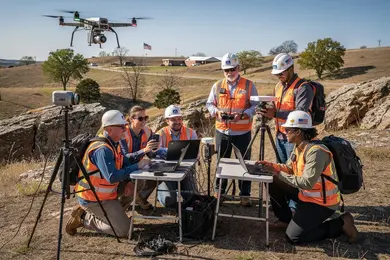
Curricula extending into surface processes, geomorphology, geophysics, and remote sensing respond to evolving industry demands for digital data integration and environmental project applications, such as watershed management. Stratigraphy and paleontology provide niche but valuable skills for dating rock layers and reconstructing historical environments, which can be critical for specialized academic or petroleum geology roles. Note that practical field experience, often simulated online or with limited in-person components, remains a crucial differentiator despite the digital format.
Graduates equipped with these foundational physical geology courses in online geoscience bachelor programs meet a workforce median salary benchmark of approximately $99,240, with the potential for higher earnings in government and oil industry positions. The tradeoff for many students lies in balancing the convenience of remote study with limited hands-on exposure.
Those evaluating advanced study may also find synergy in programs such as a masters of library science, particularly when focused on geospatial information management or digital data curation within environmental sciences.
How do online programs handle physical geology labs, fieldwork, and hands-on learning requirements?
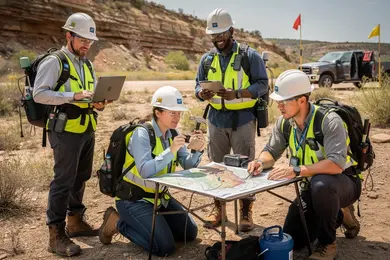
Online bachelor's programs in geosciences attempt to replicate the rigor and hands-on experience critical to workforce readiness by combining remote coursework with mandatory in-person components. The necessity of integrating intensive physical and structural geology labs creates unavoidable tradeoffs: approximately 40-50 credits of the 120 required ensure practical skill acquisition that cannot be fully virtualized. This hybrid model reflects industry demands, especially in fields like environmental consulting or petroleum geology, where employers require demonstrated proficiency with physical specimens and field mapping.
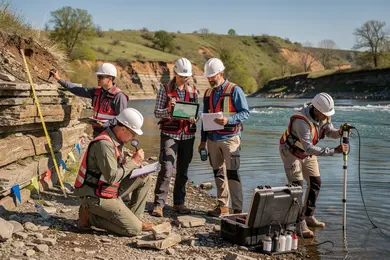
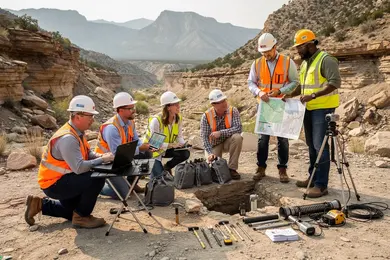
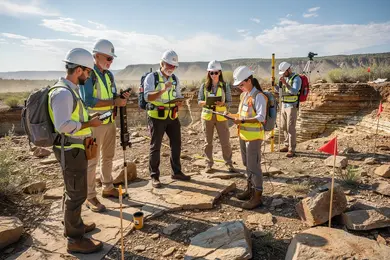
Students face tangible logistical challenges, such as travel expenses and tight scheduling during short residencies or summer field camps, usually lasting one to two weeks at regional sites. These concentrated sessions focus on rock identification, mapping, and geological processes essential for certification eligibility and job readiness. Without such immersive components, graduates risk a gap in practical competencies that pure online formats fail to address.
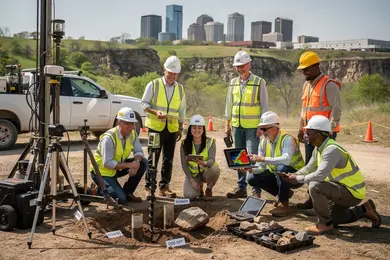
Virtual labs simulate mineral analysis, sedimentology, and stratigraphy experiments through advanced software, but many programs supplement this with partnerships allowing students to access local physical labs under supervision, balancing flexibility and necessity. Prospective students must weigh these operational realities against convenience to choose programs aligned with both their career goals and capacity to meet fieldwork demands.
- Physical geology lab credits comprise a significant portion of the curriculum to meet accreditation standards
- Intensive, short-term residencies enforce direct field experience required for professional credibility
- Local lab partnerships provide essential hands-on training inaccessible through remote simulations alone
- Travel and scheduling constraints represent key barriers affecting nontraditional or working students
What admission requirements and prior preparation are needed for an online geosciences bachelor's?
Admission into an online bachelor's program focused on geosciences with physical geology prerequisites requires a solid foundation in math, chemistry, and physics due to the discipline's quantitative and lab-intensive demands. Programs set minimum GPA thresholds, typically around 2.5 to 3.0, but also account for diverse learner backgrounds by incorporating placement exams or prerequisite courses when necessary. This adapts sequence planning for those without prior science coursework but may lengthen time to degree completion.
While a standard curriculum mandates about 120 credit hours commonly completed in four years on campus, online students-often balancing jobs or family responsibilities-tend to extend their studies over five to six years. This flexibility trades pace for work-life integration without compromising academic rigor or skill acquisition essential for employers.
Environmental consulting, energy exploration, and hazard assessment sectors expect graduates to demonstrate competencies in field methods, geospatial technologies, and rigorous data analysis. Failure to meet initial science prerequisites risks delayed progress and reduced workforce competitiveness.
Key practical considerations include:
- Ensuring readiness for advanced science topics to avoid entrance delays
- Anticipating extended completion timelines under part-time pacing
- Valuing programs with strong advising to navigate academic and career intersections
These tradeoffs require prospective students to critically evaluate how admission standards and program structure align with their professional goals and life circumstances.
How long do online geosciences bachelor's programs take, and what do they typically cost?
Online bachelor's degrees in geosciences with a physical geology focus generally span four to six years, largely influenced by enrollment status and program design. Many students balancing full-time employment opt for extended timelines, which can delay readiness for roles requiring prompt degree completion. Such flexibility benefits adult learners but may inadvertently impede career momentum in competitive sectors.
Tuition varies considerably: public institutions typically charge $200 to $500 per credit hour for in-state students, while out-of-state and private schools can exceed $1,000 per credit. Overall bachelor's costs often range between $24,000 and $70,000. Employers in environmental consulting, governmental resource management, or energy sectors prioritize timely, credible degrees and demonstrated field skills over raw price.
One scenario involves a mid-career professional transitioning into environmental geology who might select a part-time online program extending six years to manage job demands. This reduces immediate financial strain but increases opportunity costs. Conversely, recent high school graduates might pursue accelerated, year-round online formats aimed at finishing near four years, accepting higher per-credit tuition for faster labor market entry.
- Programs requiring remote labs or physical fieldwork can increase both completion time and expenses due to travel or equipment needs.
- Evaluating employer expectations in your target industry is essential to decide whether speed or cost holds more strategic value.
How can you verify accreditation and program quality for online geoscience degrees?
Accreditation is a baseline but not a guarantee of program quality for online geoscience degrees; the distinction often lies in specialized endorsements like those from the American Geosciences Institute or the National Association of Geoscience Teachers. These affiliations matter because they better align curriculum with industry expectations and influence credit transfer and employer recognition. For example, graduates aiming at roles in government or oil and gas sectors benefit from programs integrating physical geology with hands-on fieldwork or advanced virtual labs, reflecting real job site conditions.
Employers in engineering services and energy extraction frequently seek applicants with applied skills, which makes programs without strong industry connections or internship opportunities less competitive. Metrics such as job placement rates and licensure exam pass rates are practical indicators of workforce readiness; however, these figures require validation through direct communication with program admissions to avoid outdated or inflated claims.
Prospective students should also actively assess course syllabi and consult alumni in their target sectors to verify that the degree imparts skills practical to their career goals. Programs lacking this depth risk producing graduates prepared more for academic theory than applied challenges, which can limit employability in technically demanding geoscience roles.
What careers can you pursue with an online bachelor's in geosciences emphasizing physical geology?
An online bachelor's degree focusing on physical geology targets distinct employment sectors where practical geological skills align with employer expectations. Graduates typically enter roles in resource exploration, environmental consulting, or hazard assessment, where they apply knowledge of rock formations, groundwater dynamics, and earth processes directly to site investigations and risk evaluations.
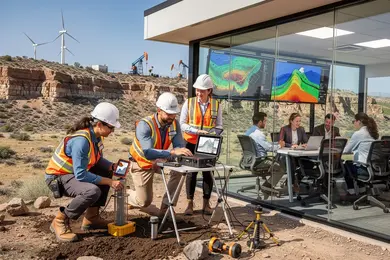
Employment demands extend beyond foundational coursework to include proficiency in GIS mapping, field data collection, and analytical software, emphasizing a blend of theoretical and applied competencies. For instance, a hydrogeologist might assess groundwater contamination patterns critical for municipal water safety, illustrating the necessity for both scientific understanding and real-world application.
Median pay for geoscientists stands around $99,240, approximately double the U.S. median wage, reflecting specialized skill requirements in energy, environmental management, and public safety sectors. However, job growth is uneven geographically and closely tied to natural resource availability and infrastructure investments, influencing strategic decisions about location and industry focus.
Practical considerations include readiness for extensive fieldwork and variable schedules, which can present challenges for candidates prioritizing stability. Moreover, while the degree provides a solid foundation, advancing in fields such as research or consulting often requires additional certifications or graduate education.
- Key roles include geologist, hydrogeologist, environmental consultant, and geological technician.
- Successful candidates demonstrate combined geology expertise and software skills.
- Career outcomes depend on aligning educational focus with evolving regulatory and industry trends.
What are the salary ranges and job outlook for physical geology and geoscience careers?
Bachelor's level salaries in physical geology and geoscience typically start between $55,000 and $70,000, but specialization notably influences earning potential. Positions like environmental consultants or geological technicians are often near the lower end, while roles in energy exploration or applied geospatial services can surpass $110,000 at mid-career. A critical differentiator is proficiency in geospatial technologies, including GIS and remote sensing, which increasingly shape employer demand.
For example, a geologist limited to field data collection usually faces slower salary growth and fewer advancement opportunities than a peer skilled in geospatial software and spatial data analysis. Labor market trends project a 5% job growth rate through 2032, but regional industry shifts-such as energy sector contraction versus renewable energy expansion-create uneven opportunity landscapes.
Graduates with GIS expertise often command 10-15% higher salaries and better positionings in metropolitan job markets. Advanced GIS training can offset limited experience and is especially valued in environmental risk management, urban planning, and natural resource assessments. Employers seek candidates merging rigorous physical geology knowledge with digital mapping skills to address complex environmental and industrial challenges.
In strategic career planning, understanding this skill mix and geographic variation is essential to avoid pitfalls like stagnant wages in shrinking sectors. Adaptation through supplemental GIS certifications or training programs remains a practical step for those aiming to improve employability and achieve meaningful career pivots in geosciences.
Other Things You Should Know About Geosciences
Employers in geosciences recognize online degrees if the program is accredited and includes comprehensive physical geology coursework. However, because geology relies heavily on fieldwork and labs, programs must demonstrate robust hands-on or virtual lab components to match traditional training quality. Prioritize programs that offer clear integration of applied skills, as employers value candidates with practical experience alongside theoretical knowledge.
Online geosciences programs can be as rigorous as their on-campus counterparts, especially when physical geology labs and field experiences are involved. Time management is critical since online students must independently complete complex assignments and coordinate limited in-person residencies or lab sessions. Selecting programs that balance flexibility with structured support will improve success and prevent underestimating the real effort required.
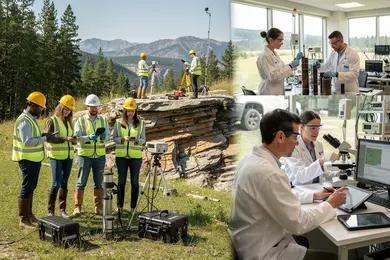
In 2027, many online geosciences programs incorporate virtual labs, interactive simulations, and summer field camps to supplement learning. These ensure students gain practical skills needed for fieldwork, often with opportunities for internships and partnerships with geosciences organizations.
Most programs require at least one field-based component, often a 1- to 2-week summer field camp or an on-campus geology lab sequence. Students usually must complete rock and mineral identification, mapping, and safety training, plus submit proctored lab work or documented field reports for graduation.
References
- Are Online Degrees Accredited? How to Identify Quality Distance Learning Programs https://www.umassglobal.edu/blog-news/online-degrees-accredited-identify-quality-distance-learning-programs
- Is Your Online Degree Legitimate? How to Verify Private University Approval https://matchtocollege.com/blog/verify-private-university-online-degree-approval
- Required application documents https://www.vu.lt/en/required-attachments
- Online Geology Courses | Ingeoexpert Training Center ® https://ingeoexpert.com/en/online-courses/geology/
- Geology - ABET https://www.abet.org/accreditation/new-and-developing-program-areas/geology/
- The Geological Society - Degree Accreditation https://www.geolsoc.org.uk/education-and-resources/universities/university-degree-accreditation/
- Geosciences Bsc https://www.studium.uni-mainz.de/en/choosing-your-degree-program/courses-offered/geosciences-bsc/
- How to become a Geoscientist in Ireland https://www.gsi.ie/en-ie/education/life-as-a-geoscientist/Pages/Where-to-study-in-Ireland.aspx
- Geology and Physical Geography https://www.keele.ac.uk/study/undergraduate-2026/undergraduatecourses/geologyandphysicalgeography/
- Bachelor's Degree in Geosciences | UT San Antonio | Undergraduate Program in Geosciences | Earn Your Degree in Geosciences https://future.utsa.edu/programs/undergraduate/geosciences/