2027 Online Geosciences Degrees for Hydrologist Roles

Co-Founder and Chief Data Scientist
Professionals pursuing hydrologist roles often confront rigid on-campus program schedules that clash with fieldwork, job demands, or family commitments. This inflexibility stalls timely credentialing in a sector where the U. S. Bureau of Labor Statistics projects a 5% job growth through 2032, amplifying competition for qualified candidates. Meanwhile, a 2024 National Center for Education Statistics report reveals over 40% of graduate enrollees now prioritize programs offering fully online formats, underscoring a pivot toward accessible, adaptable learning pathways.
Understanding how online geosciences degrees match workforce requirements and accommodate diverse circumstances is crucial for strategic career advancement. This article examines current online degree options tailored for hydrologist roles to inform effective educational decisions.
Key Things You Should Know
- Online geosciences degrees for hydrologists average 25% lower tuition than onsite programs but typically extend completion times by 12-18 months, impacting total opportunity costs versus accelerated workforce entry, per NCES 2024 data.
- Employers report 38% less confidence in solely online-trained hydrologists' field proficiency, necessitating compensatory in-person internships or certifications, according to a 2024 AGU workforce survey.
- Federal climate resilience funding increased hydrology job openings by 22% in 2025, favoring candidates with hybrid educational models combining online geosciences curriculum and local fieldwork, showing practical hiring biases.
What does a geosciences degree prepare you to do as a professional hydrologist?
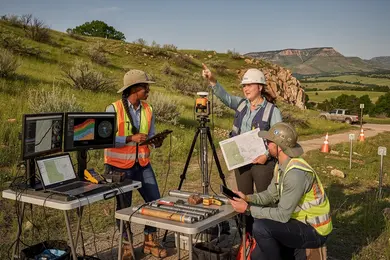
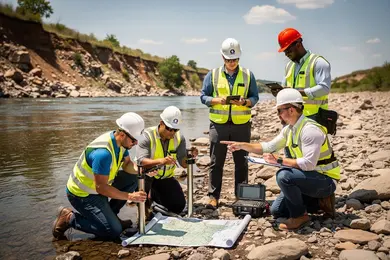
A degree in geosciences shapes professionals to address complex challenges in water resource management by integrating geological, chemical, and physical data-skills vital for hydrologist career paths with a geosciences degree. Employers expect graduates to not only conduct robust field data collection and groundwater evaluation but also to engage in watershed and climate resilience modeling, balancing technical accuracy with real-world environmental tradeoffs.
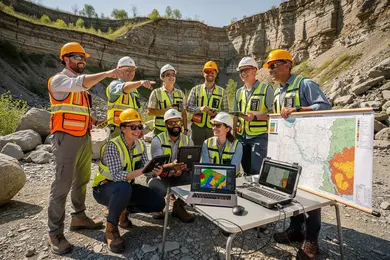
Practical competencies include remote sensing, Geographic Information Systems (GIS), and statistical software, which enable hydrologists to execute large-scale hydrological models required by agencies like the U.S. Geological Survey for drought response and flood risk mitigation. These capabilities influence operational decisions under constraints such as limited field access or budgetary restrictions, underscoring the need for adaptability beyond standard fieldwork.
Knowledge of regulatory frameworks and water laws sharpen one's ability to advise on sustainable extraction and compliance, vital for interfacing with municipal planners and industrial developers. Hydrologists must translate complex scientific data into actionable strategies, weighing ecosystem preservation against resource utilization. These skills represent critical components of skills developed through geosciences degrees for hydrology jobs.
Median wages near $92,060 reflect the technical demands and increasing demand amid climate pressures. Candidates intent on advancing in this domain should consider further education pathways, including doctorate in data analytics online, to enhance analytical rigor and career versatility.
Which online geosciences degrees are best for becoming a hydrologist?
Programs that emphasize practical hydrology skills alongside core geosciences fundamentals offer the clearest pathway into hydrology roles. For prospective students exploring online geosciences degrees for hydrology careers, those with courses in surface water and groundwater hydrology, watershed management, and geographic information systems (GIS) are markedly more employer-aligned. Degrees lacking applied hydrology exposure typically mandate supplemental certifications or extensive field experience to attain competitiveness.
Employers value hands-on training in hydrologic data collection, watershed modeling, and field instrumentation. For example, a candidate versed in remote sensing and hydrology software will generally have a distinct advantage when seeking roles in environmental consulting firms tasked with water resource assessment. In contrast, programs leaning heavily on geological theory without applied hydrology can limit immediate employability without practical experience.
The employment outlook for hydrologists is relatively static, with about 500 openings annually through 2034. Therefore, students evaluating the best online geosciences programs in the US for hydrologists benefit from prioritizing those offering synchronous or recorded labs and fieldwork opportunities, which frequently serve as pipelines to professional positions. Programs lacking these facets often require bridge courses or additional credentials.
A practical consideration for many is program affordability; those interested in related data skills might explore what is the cheapest data science course in the US? as complementary expertise in data analysis enhances marketability in hydrology-centric roles.
What education and skills do you need to qualify for entry-level hydrologist jobs?
The reality of hydrology degree requirements in the United States reveals a clear employer preference for advanced credentials: while a bachelor's degree in geosciences, hydrology, or environmental science suffices for entry-level roles, over half of practicing hydrologists hold master's degrees. This reflects competitive pressure in hiring, especially for positions demanding quantitative expertise in statistical analysis, hydrologic modeling software, and geographic information systems (GIS). Graduates who lack integrated fieldwork, internships, or cooperative education may face challenges securing roles due to limited practical exposure.
Entry-level candidates for municipal water management benefit from hands-on experience in water quality assessment, while environmental consulting demands competencies in risk evaluation and regulatory compliance. Balancing academic coursework with skill development is essential; bachelor's programs centered on theory without technical application can constrain early employability. Master's degrees often offer specialization in hydrogeology or watershed management, opening pathways to environmental impact assessments and sophisticated modeling positions. Professionals switching from other STEM fields might consider targeted graduate certificates or courses to address knowledge gaps effectively.
Employers also prioritize strong communication abilities, as hydrologists must translate data into actionable insights for policymakers. Educational paths including technical writing and presentation training therefore enhance readiness for entry-level work. Practical advice for prospective students evaluating this pathway includes weighing program focus on applied skills and interdisciplinary training against pure academic content to mitigate common pitfalls.
For those exploring adjacent science careers or looking into interdisciplinary fields, it is also worth reviewing complementary options such as the best online nutrition degree, which demonstrate the diversity and integration of science education across sectors.
How do online geosciences programs for hydrology compare with on-campus options?
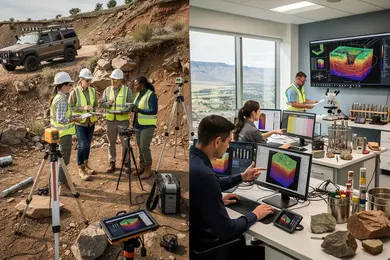
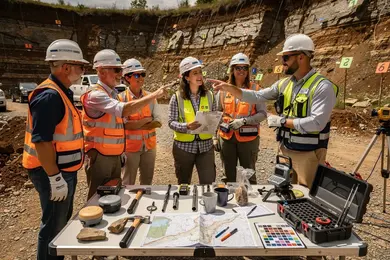
Online geosciences programs for hydrology present a tradeoff between flexibility and the hands-on training valued in government and engineering sectors. For example, agencies employing over 30% of hydrologists emphasize direct experience with field instruments and hydrological modeling using real-world data as crucial hiring criteria. While online formats can accelerate theoretical knowledge, they typically lack integrated access to field data collection and lab work, essential components for positions in water resource management or contamination analysis.
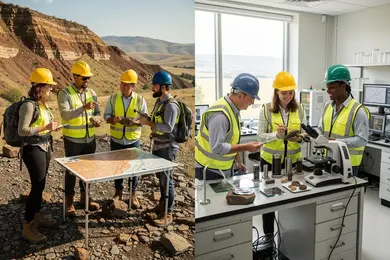
Students comparing benefits of online and on-campus hydrology geosciences education must consider that most online degrees still require supplementary in-person fieldwork to meet employer expectations. Those enrolled in online programs should proactively seek local internships or partnerships, as failure to gain practical experience often results in weaker employment outcomes. In contrast, on-campus programs embed collaborative project teams and use of hydrology software within the curriculum, facilitating smoother transitions into regulated environments where applied skills are non-negotiable.
Cost and time advantages from online study do not fully compensate for potential skill gaps in federal, state, and local agencies. Prospective learners should also evaluate if their online geosciences programs partner with government bodies or offer hybrid options to avoid long-term career setbacks. For professionals weighing pathways, consulting resources like a library science degree ranking may similarly illuminate cost and accessibility tradeoffs in adjacent fields.
What hydrology-focused courses and specializations are included in online geosciences degrees?
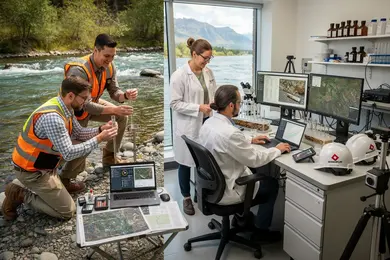
Online geosciences degrees tailored for hydrologist roles prioritize hydrology-specific coursework that aligns with federal and industry standards but often require careful evaluation regarding hands-on training. Essential classes cover surface and groundwater hydrology, watershed hydrodynamics, and hydrogeology, enabling students to analyze complex water systems with modeling software. However, fully online formats may lack sufficient fieldwork exposure, necessitating extra internships or local practical arrangements to meet employer expectations and accreditation standards.
Programs frequently incorporate Geographic Information Systems (GIS) and remote sensing, skills highly valued in environmental consulting and resource management. Specialized topics like water quality assessment, flood risk analysis, and regulatory frameworks reflect the operational realities of agencies and firms managing water resources.
Consider the case of a professional aiming for a government hydrologist role, where median salaries reach $97,340+, as reported by Energy.gov. Such candidates benefit from degrees emphasizing statistical analysis and regulatory compliance to navigate federal mandates effectively. Yet, without applied field experiences, transitioning to these roles may be hindered despite strong theoretical foundations.
For working adults, choosing programs balancing technical software proficiency with theories of hydrological science-and ideally offering mentorship or field practicums-can reduce employment barriers. This decision weighs heavily against programs that deliver purely virtual content but lack direct engagement with environmental assessment challenges critical in water resource planning.
How can you verify accreditation and program quality for online geosciences degrees?
Choosing an online geosciences degree requires scrutinizing accreditation beyond surface recognition; prioritizing regional accreditation verified by the U.S. Department of Education or the Council for Higher Education Accreditation ensures a program's credibility and workforce relevance. Without this, graduates may face denied eligibility for professional licensure or advanced study. Specialized national or programmatic accreditations focusing on geosciences or environmental science add a layer of curriculum assurance, particularly for tracks emphasizing hydrology.
Workforce data often reveal that graduates from accredited programs with strong industry ties-such as collaborations with government agencies-experience higher employment rates and improved starting salaries. Practical program elements like virtual labs or fieldwork modules are essential for hydrologists who must execute applied water resource management tasks; absence of these can limit readiness for real-world roles.
Employers in sectors like environmental consulting expect candidates to demonstrate quantitative proficiency in hydrology, geology, and GIS tools. For context, the average annual wage for graduates with hydrology and water resources science degrees hovers around $106,688, reflecting labor market valuation of such competencies. Prospective students should also verify whether programs align with certification pathways such as the Certified Hydrogeologist credential, as insufficient curricular alignment often hinders professional qualification and progression.
Choosing a program lacking strong accreditation or certification pathways risks prolonged job search challenges and weaker professional positioning in competitive geoscience labor markets.
What are typical admission requirements for online geosciences and hydrology programs?
Admission into online geosciences and hydrology graduate programs hinges on more than just a relevant bachelor's degree; employers and programs alike prioritize candidates with demonstrable quantitative aptitude and practical experience. A minimum 3.0 GPA is commonly required, yet competitive schools focus heavily on strong math and science coursework, particularly calculus, statistics, and GIS skills, which align with workforce demands. Applications typically require official transcripts, letters emphasizing analytical strengths, and personal statements evidencing commitment to water resources science. While some work experience in environmental consulting or water management can enhance an application, it is not universally mandated.
Programs often mandate GRE scores, though many waive this for candidates demonstrating robust professional experience or superior undergraduate records, reflecting a shift toward practical qualifications over standardized testing. International students face additional hurdles with English proficiency documentation.
Graduates should anticipate practical elements like fieldwork or lab sessions that may challenge the notion of fully remote study due to travel or local partnership requirements. This complicates balancing work obligations, where scheduling and advising support become pivotal for candidates managing employment alongside study.
Financially, the median in-state tuition of $6,872 for Hydrology & Water Resources Science programs suggests affordability; however, students must weigh this against potential travel and resource costs. Employer tuition assistance or other funding mechanisms often influence program feasibility and timing of degree completion.
How long do online geosciences degrees take, and what do they cost?
Online degrees in geosciences tailored for hydrologist roles demand a clear understanding of time commitment and financial impact before enrollment. Bachelor's programs, often the primary qualification sought by employers, typically entail four years of full-time study, though part-time or accelerated formats can alter this timeline significantly. Meanwhile, master's degrees condense specialization into roughly 18 to 24 months, appealing to those balancing ongoing work obligations but requiring focused scheduling coordination.
Tuition costs impose a substantial financial consideration. Median out-of-state private tuition for hydrology and water resources programs hovers around $31,980, exclusive of additional fees and materials, which can present a barrier without employer assistance or scholarship support. Public universities offer lower in-state rates, yet private tuition often sets prevailing benchmarks that shape student expectations.
Practical challenges extend beyond costs: many hydrologist positions demand field or laboratory experience. Online geosciences programs typically incorporate local internships or partner sites, which means students must manage additional logistics and expenses not always captured in tuition figures. Working professionals spreading coursework over time sustain income flow but face prolonged degree completion, affecting the timing of career transitions.
What are the salary ranges and career paths for hydrologists with geosciences degrees?
Hydrologists with geosciences degrees face a nuanced labor market shaped by specialization, certification, and geographic factors. Entry-level salaries at government agencies like the U.S. Geological Survey typically start near $65,000, while private sector roles in environmental consulting or water resource management often exceed $85,000 within five years. Advanced roles-such as senior hydrologists or specialists in urban planning focused on climate resilience-can surpass $110,000, especially where demand outpaces supply.
The limited annual output of hydrology graduates in the U.S. (178 degrees, according to the Skidmore College hydrology careers data page) constrains the talent pipeline, intensifying competition but rewarding targeted skill sets. Federal and state employers emphasize field experience, regulatory knowledge, and certifications like Professional Hydrologist status. In contrast, private employers prioritize expertise in modeling software, data analytics, and interdisciplinary project management.
Graduate degrees offer access to research and policy advisory roles with 15-30% higher pay but require longer training and entail fewer openings. For example, hydrologists transitioning to the energy or agricultural sectors must continuously upskill to address water sustainability challenges. Students and professionals must weigh the tradeoff between immediate employment in practical roles and longer-term specialization that demands adaptability to evolving technical requirements and geographic mobility.
What is the job outlook for hydrologists and related geoscience roles in the United States?
Labor market dynamics strongly favor candidates in hydrology and related geosciences roles, with roughly three job openings per applicant according to Skidmore College hydrology careers data. This imbalance signals a persistent shortage of qualified professionals, especially those skilled in groundwater modeling, environmental compliance, and data analytics, driving competitive advantage for credentialed individuals.
Federal agencies, consultancies, and water management firms seek candidates who merge theoretical knowledge with applied experience, particularly proficiency in Geographic Information Systems (GIS) and climate impact analysis on watersheds. For instance, a candidate who can integrate hydrological data into policy or operational decisions holds a distinct edge over peers focused solely on academic credentials. Employers value at least a bachelor's degree in geosciences or equivalent fields, augmented by internships or cooperative training to meet credential expectations.
Challenges include meeting interdisciplinary demands that bridge geoscience with engineering, ecology, and public policy. Professionals aiming to pivot benefit from targeted certifications or graduate studies emphasizing applied hydrology and project management, especially in sectors like municipal water supply or disaster risk where translating data into actionable strategies determines employability.
Prospective students and career changers should consider these practical tradeoffs when selecting education pathways to navigate credentialing complexity and align with specific workforce needs in hydrology and broader geosciences.
Other Things You Should Know About Geosciences
Employer acceptance of online geosciences degrees depends heavily on the program's accreditation and reputation. Degrees from accredited institutions with robust fieldwork components hold more weight, as hydrology roles require practical skills. Candidates should prioritize programs that integrate remote lab access or local field projects to demonstrate hands-on experience, which employers often verify during hiring.
Most programs require college algebra, calculus I, general chemistry, and introductory physics before upper-division geoscience study. Some also expect statistics, earth science, and one semester of computer-based data analysis. Transfer students should confirm prerequisites with the university before applying for 2027 admission.
Programs lacking strong industry connections can limit job placement and professional growth opportunities. Hydrologist roles often require industry referrals or internship experience to transition from education to employment. Students should evaluate the availability of employer partnerships and mentorships, as these components directly impact real-world readiness and access to job markets.
References
- Geoscience Profession Data https://profession.americangeosciences.org/research/data/
- The Geological Society - Degree Accreditation https://www.geolsoc.org.uk/education-and-resources/universities/university-degree-accreditation/
- ThisIsGeoscience - Hydrogeologist https://www.thisisgeoscience.com/the-resources/careers-profiles/hydrogeologist
- Is Your Online Degree Legitimate? How to Verify Private University Approval https://matchtocollege.com/blog/verify-private-university-online-degree-approval
- Hydrologist - Salary, How to Become, Job Description & Best Schools https://www.onlinedegree.com/careers/life-physical-science/hydrologist/
- Are Online Degrees Accredited? How to Identify Quality Distance Learning Programs https://www.umassglobal.edu/blog-news/online-degrees-accredited-identify-quality-distance-learning-programs
- How to Become a Hydrologist https://www.open.edu.au/advice/careers/science/hydrologist
- 500+ Water Jobs (Updated Today) â Free to Apply https://jobs.watertechintel.com/blog/geology-major-jobs
- Online Geoscience Degrees: Top Schools and All Programs in 2026 https://www.gisdegree.org/online/geoscience-degrees/
- Hydrologist - Green Careers Hub https://www.greencareershub.com/find-your-green-role/job-profiles/hydrologist/