2027 Online Geosciences Degrees for Climate Analyst Roles

Co-Founder and Chief Data Scientist
Professionals seeking to pivot into climate analyst roles often confront a critical dilemma: how to balance advancing technical expertise in geosciences while maintaining employment and meeting personal obligations. The rapid 17% increase in enrollment for accredited online STEM degrees reported by the National Center for Education Statistics in 2024 signals demand for flexible, accessible pathways tailored to working adults. Yet, not all online geosciences programs align with employer expectations for analytical rigor and hands-on experience, complicating long-term career mobility.
This article evaluates current online geosciences degrees designed for climate analyst careers, focusing on program structure, practical outcomes, and strategic fit to support informed enrollment decisions.
Key Things You Should Know
- Online geosciences degrees' growing emphasis on remote sensing and data analytics demands candidates balance technical rigor with reduced fieldwork exposure, a critical tradeoff impacting skill completeness.
- Employers prioritize applicants with demonstrated proficiency in climate modeling software and integrated GIS tools, with 62% of climate analyst roles now requiring advanced data science credentials beyond baseline Earth science knowledge.
- Program costs averaging 25-35% below on-campus counterparts improve access but often extend completion time by 20-30%, delaying entry into increasingly competitive climate analyst job markets.
What does an online geosciences degree prepare you for in climate analyst careers?
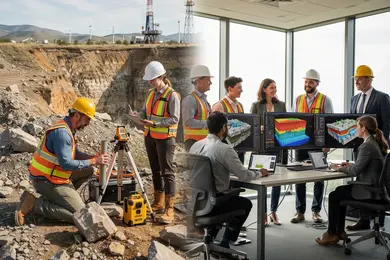
Effective preparation for climate analyst roles depends on mastering advanced data interpretation, spatial analysis, and environmental modeling - core outcomes from an online geosciences degree. These programs prioritize practical skills, including remote sensing and geospatial information systems (GIS), which are crucial for parsing satellite imagery and field data to advise on climate risks and adaptation strategies. Students should expect emphasis on quantitative methods, such as statistical analysis and programming in Python or R, reflecting employer demands for technical proficiency in real-world climate analysis workflows. This skill set aligns with emerging opportunities across sectors including energy, government, and environmental consulting.
A concrete example involves climate analysts in coastal infrastructure: they integrate coastal erosion data with climate forecasts to assess flood risks and design resilient solutions. This scenario demonstrates the importance of both technical capabilities and a nuanced understanding of local geophysical contexts. Programs featuring hands-on projects and software training better equip graduates for these multidimensional challenges inherent to the climate analyst career pathway.
Labor market data shows competitive median salaries near or above $80,000 for climate analysts, mirroring environmental scientist roles, with geoscientists averaging closer to $99,000. Job growth projections of 3-4% highlight steady demand but increasing competition, making applied skills and certifications essential to distinguish oneself.
Choosing an online geosciences program requires scrutiny of practical learning opportunities, faculty expertise, and industry relevancy. For a detailed assessment of relevant educational pathways, consider exploring an online geology degree to align curriculum strengths with specific climate analyst career opportunities.
Which types of online geoscience degrees best support climate analyst career goals?
Effective online geosciences degrees for climate analyst career pathways prioritize applied quantitative skills like GIS proficiency, statistical modeling, and remote sensing to meet employer expectations for data-driven climate assessments. Programs emphasizing atmospheric sciences integrated with software tools such as R, Python, or ArcGIS yield graduates capable of interpreting complex earth system data vital in climate analysis roles.
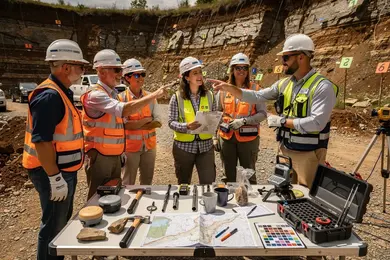
Degrees incorporating hands-on learning via virtual labs, field data simulations, or collaborative research projects directly enhance employability by aligning theory with practical scenarios. For instance, a candidate skilled in analyzing climate model outputs to guide coastal infrastructure adaptation brings immediate value to climate resilience planning. Purely theoretical geology degrees often necessitate supplemental certifications to fulfill industry standards.
The U.S. Bureau of Labor Statistics forecasts 3% growth for geoscientists from 2024 to 2034, underscoring a steady yet competitive landscape that rewards specialization, especially in sustainable resource management. Candidates should weigh tradeoffs such as program duration, faculty expertise, and cost against curriculum depth in emerging topics like climate risk modeling or carbon cycle science. Flexibility and credit transfer policies critically affect working professionals' ability to pivot careers without income disruption.
Prospective students evaluating best geosciences programs supporting climate analysis roles will benefit from carefully assessing curricula for alignment with current climate science advances and industry partnerships facilitating internship placements. Exploring environmental engineering degree options may also complement geosciences training in interdisciplinary climate work.
How do online geosciences programs compare with on-campus options for climate-focused study?
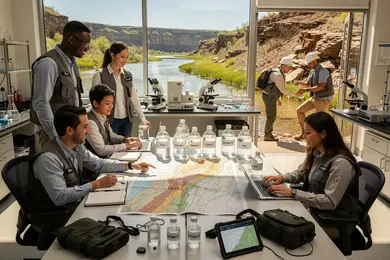
Online geosciences degrees versus traditional campus programs for climate analysis reveal critical divergence in practical training and employer reception. While theoretical coursework is similar, climate analyst roles typically require fluency with geospatial tools, lab techniques, and live environmental data collection-skills more readily cultivated in on-campus settings with physical labs and field stations.
Online students pursuing geosciences education for climate-focused careers must often arrange local internships or applied projects to compensate for reduced hands-on exposure. This patchwork approach can delay readiness for roles demanding integrated field experience. Employer networks and mentorship, vital for career development, usually flourish more easily on campus where faculty engage in active research and industry collaboration.
Professionals balancing work with studies benefit from the scheduling flexibility of online programs, though this may limit real-time collaboration and immediate feedback on complex lab assignments. Salary data underscores differences in career trajectory: the national median salary for climate change analysts hit $75,193 in 2023, with on-campus graduates often securing positions involving both field and analytical skills more rapidly than online graduates, who frequently excel in remote data analysis or policy advisory roles.
- Ensure online curricula include robust virtual labs or practical training components locally.
- Evaluate if career services and employer connections extend beyond virtual formats.
- Plan supplemental certifications or internships to address experiential learning gaps.
For those weighing online degree in exercise science or geosciences, the tradeoff between accessibility and comprehensive skill development remains pivotal, especially in sectors where field competency strongly influences employability and advancement.
What courses and specializations in online geosciences programs are most useful for climate analysis?
Online geosciences programs focused on climate analysis careers must balance technical depth with practical relevance to meet employer expectations. The most relevant online geosciences courses for climate analysis careers emphasize atmospheric science, hydrology, and geospatial modeling, supported by coursework in climatology, remote sensing, GIS applications, and statistical environmental methods. Specializations in climate modeling and earth systems science sharpen the ability to interpret climate data for actionable insights.
Employers prioritize proficiency with tools like ArcGIS and Python, alongside familiarity with climate simulation platforms such as CMIP6. For example, hydrological modeling skills are indispensable in urban planning roles where professionals design flood mitigation strategies, while energy-sector jobs demand understanding climatological effects on renewable technologies. Programs that integrate these competencies with applied case studies and internships provide critical hands-on experience.
Development of data visualization and environmental risk assessment skills is essential, as candidates must translate complex datasets into clear communication for decision-makers. Likewise, capstone projects linked to government or research entities broaden practical exposure and networking capacity. These aspects define top specializations in online geosciences programs for climate data interpretation.
Cost efficiency impacts return on investment; Southern New Hampshire University's online geoscience program charges approximately $320 per credit hour, a comparatively affordable option. For professionals juggling work and studies, prioritizing programs that balance affordability with technical rigor is a pragmatic approach. For those also exploring adjacent technical fields, reviewing comparative offerings such as an online degree in mechanical engineering may be relevant for multidisciplinary roles.
What accreditation and program quality standards matter for online geosciences degrees?
Choosing an online geosciences degree requires scrutiny beyond institutional accreditation to include program-specific credentials from entities like ABET or recognized professional societies. These endorsements signal curricula aligned with industry technical standards, crucial for developing skills in climate modeling, GIS, and remote sensing. For example, positions within federal agencies demand familiarity with geospatial data protocols that generic programs may not cover, impeding timely workforce entry despite degree completion.
Graduates lacking documented program quality and measurable outcomes-such as employment rates, certification success, and internship access-face a tangible risk: slower career progression or stalled pivots. Programs integrating applied coursework and partnerships with industry allow professionals to reskill efficiently without accruing irrelevant credits or leaving current jobs.
Prospective students must weigh regional institutional legitimization alongside program transparency and accreditation focused on climate analysis competencies. Employers consistently prefer candidates with verified technical experience and exposure to real-world challenges, especially as the climate data and GIS workforce is projected to expand 4-7% through 2030 according to the U.S. Bureau of Labor Statistics.
Effective program selection involves:
- Confirming both regional and specialized accreditation
- Evaluating outcome metrics like graduate employment and certification rates
- Assessing coursework relevance to evolving climate resilience and geospatial demands
This approach minimizes the risk of investing in credentials with limited practical applicability or employability advantage.
What are the typical admission requirements for online geosciences bachelor's and master's programs?
Admission standards for online geosciences bachelor's programs demand more than a diploma; they require foundational skills in advanced math and sciences, with a typical GPA threshold around 3.0. While standardized test submissions like the SAT or ACT may be optional at certain institutions, prerequisite knowledge in algebra, calculus, chemistry, and physics remains essential. Applications strengthened by targeted letters of recommendation and personal statements emphasizing scientific inquiry improve chances, particularly for transfer students who must validate prior coursework completion in biology, chemistry, and geology.
For master's level entrants, an undergraduate degree in geosciences or a related STEM field is non-negotiable, along with a strong GPA near 3.0 or higher. Admissions place significant weight on documented coursework in physical geology, geochemistry, and quantitative methods due to their direct relevance in climate-analysis applications. The option to omit GRE scores at many schools shifts focus onto demonstrated research experience or environmental science employment. Critical assets in applications include recommendations that attest to quantitative and investigative capabilities and statements articulating specialized career paths in climate science or environmental consulting.
Employers seeking climate analysts consistently link desired qualifications to median wages near $99,240 annually for environmental scientists and specialists, underscoring market demand for technically proficient graduates. Prospective students must carefully balance program rigor and accessibility against their credentials, recognizing that admission policies and prerequisite mastery materially affect both academic success and workforce readiness.
How long do online geosciences degrees take and what do they typically cost?
Choosing an online geosciences degree for climate analyst roles requires weighing program length and credential level against real labor market expectations. Bachelor's degrees, usually four years full-time, serve as the baseline for entry-level positions favored by employers. Accelerated or part-time options can adjust timelines but often increase complexity in balancing work and study.
Master's degrees extend education by roughly 1.5 to 2 years beyond the bachelor's and are often critical for roles involving policy development or complex climate modeling. This additional study period presents tradeoffs: higher costs and more time versus access to senior analyst positions with greater responsibility.
Cost considerations vary considerably. Public institutions with in-state tuition charge approximately $8,000 to $15,000 annually for undergraduate online geosciences programs, while private or out-of-state tuition can escalate to $40,000 per year. Graduate programs carry a wider range from $15,000 to $50,000 total, reflecting advanced specialization. Prospective students must factor in financial aid and debt risks relative to moderate 4% job growth in atmospheric sciences projected by the U.S. Bureau of Labor Statistics from 2022 to 2032.
Practical program structures like part-time or modular courses enable employed students to maintain income but lengthen completion and may increase total expenses. Employers consistently prioritize candidates with at least a bachelor's, but those aiming for policy roles should consider master's credentials to remain competitive in this niche, evolving field.
What entry-level and advanced climate analyst roles can geoscience graduates pursue?
Climate analyst roles accessible to geoscience graduates vary markedly in scope and responsibility, shaped by the practical demands of environmental policy and ESG frameworks. Entry-level analysts typically engage in spatial data analysis and GIS mapping to support localized climate risk assessments in sectors such as urban planning or energy. For instance, a junior analyst within a municipal agency might use emission data to advise infrastructure projects on climate resilience, a role emphasizing technical proficiency but limited strategic influence.
Moving into senior roles entails command over scenario modeling, regulatory analysis, and stakeholder engagement to balance environmental objectives with economic impact. Senior environmental risk analysts or ESG consultants integrate multifaceted datasets for corporate or governmental decision-making, requiring advanced skills in statistics and regulatory compliance.
Employment prospects reflect a 7% growth projection for environmental scientists over a decade, with a median 2023 salary near $79,000. The sector's demand favors candidates who supplement core knowledge with applied experience and specialization in tools like ArcGIS, R, or Python. Practical obstacles include securing relevant internships and managing the transition from technical training to effective communication.
Those targeting advanced climate analyst positions should plan for graduate-level credentials or certifications aligning with climate science, policy, or data analytics, responding to employer preferences for leadership competency in climate risk and ESG reporting.
What is the salary potential and job outlook for climate analysts with geoscience training?
Starting salaries for climate analysts with geoscience expertise typically range from $55,000 to $75,000 annually, with median wages surpassing $85,000 after five years in federal agencies, energy firms, or consulting. Those with specialized skills in climate modeling or carbon accounting command higher pay, particularly within organizations focused on climate risk management or regulatory compliance. However, these premiums depend on demonstrating multidisciplinary proficiency beyond core geoscience, notably in data analytics, GIS, and programming.
Employment growth for this cohort is projected at 15% through 2032, well above the 5% average for most occupations, driven by expanding regulatory demands and climate adaptation planning. Yet, job stability is uneven; analysts lacking continuous skill upgrades face volatile contracts and slower wage progression.
The Earth Science Graduate Outcomes Report from the Geological Society of London indicates more than 90% of UK earth science graduates secure work or further study within 15 months, a trend reflected in U.S. geoscience graduates with focused climate analytics credentials.
Pragmatically, combining a geoscience degree with relevant internships or certifications in climate data interpretation offers a faster path to stable roles and salary growth. Employers prioritize candidates able to translate complex geoscience data into actionable insights influencing policy or corporate strategy. Without this applied experience-such as scenario testing and regulatory frameworks-entry-level roles rarely convert into senior positions.
How can prospective students choose a reputable online geosciences program for climate careers?
Choosing an accredited online geosciences program with demonstrable faculty expertise and clear industry connections directly impacts employment prospects in climate-related sectors. Accreditation signals adherence to academic standards critical for workforce recognition, avoiding degree investments that offer little practical value. The American Geosciences Institute forecasts a 4.9% workforce increase through 2029, yet hiring tends to favor graduates who combine theoretical knowledge with applied skills-particularly in tools like Geographic Information Systems (GIS) and climate resilience frameworks.
For example, a professional aiming to pivot into climate risk assessment needs access to curricula integrating hands-on climate modeling and employer-relevant data analysis rather than purely theoretical instruction. Partnerships with governmental bodies or consulting firms often enable internships and projects that enhance real-world readiness, a feature missing from programs without such ties. Flexible scheduling and comprehensive career services also affect accessibility and job placement outcomes, especially for working students.
Prospective students should weigh tuition against the ability to transfer credits toward certifications or advanced degrees, safeguarding long-term mobility. Cheaper, unaccredited options risk limiting eligibility for critical certifications and can disconnect learners from evolving industry needs. Prioritizing programs with verifiable graduate success data ensures alignment with shifting labor demands and helps avoid stagnation in competitive job markets.
Other Things You Should Know About Geosciences
Many online geosciences programs lag in integrating the newest climate data analysis software, which are often crucial for climate analyst roles. Students should prioritize programs that include current training in GIS, remote sensing, and programming languages like Python or R. Programs lacking hands-on labs or real-world data projects may leave graduates underprepared for employer expectations in data-driven decision-making.
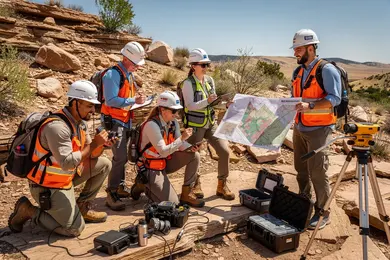
Online formats often reduce or eliminate fieldwork components critical to geoscientific understanding, creating a gap employers notice. Candidates without practical experience in data collection or environmental sampling risk being less competitive. Prospective students should either select programs offering optional field experiences or plan to acquire field skills through internships or local partnerships.
A strong program should include ArcGIS or QGIS, remote sensing with Landsat or Sentinel data, Python or R for geospatial analysis, and climate data visualization. Employers often expect at least one course in GIS, one in remote sensing, and a capstone using real climate datasets.
References
- ABET Accreditation a Clear Pathway to Professional Geologist and Geologist in Training Licensure Under New California Regulations - ABET https://www.abet.org/abet-accreditation-a-clear-pathway-to-professional-geologist-and-geologist-in-training-licensure-under-new-california-regulations/
- Breaking into Climate Data Roles: Entry-Level Jobs, Key Skills, and Where to Apply https://quizlo.ai/blogs/blog-details/breaking-into-climate-data-roles-entry-level-jobs-key-skills-where-to-apply
- A Degree in Earth and Climate Sciences: Jobs, Salaries and Projected Job Growth https://www.bates.edu/earth-climate-sciences/about/eacs-jobs/
- Supporting Geoscience Students https://www.grow-geocareers.com/forgeodepartments
- Are Online Degrees Accredited? How to Identify Quality Distance Learning Programs https://www.umassglobal.edu/blog-news/online-degrees-accredited-identify-quality-distance-learning-programs
- Climate change analysts: Salary, career path, job outlook, education and more - RaiseMe https://www.raise.me/careers/life-physical-and-social-science/environmental-scientists-and-specialists/climate-change-analysts/
- 8. Recruiting, Retaining, and Promoting Success of Undergraduate Students with Emphasis on Students Underrepresented in the Geosciences https://www.americangeosciences.org/change/sections/recruitment/
- The Geological Society - Degree Accreditation https://www.geolsoc.org.uk/education-and-resources/universities/university-degree-accreditation/
- WaterJobsIntel | 500+ Water Engineering Jobs Daily https://jobs.watertechintel.com/blog/environmental-science-job-outlook
- Online Geoscience Degrees: Top Schools and All Programs in 2026 https://www.gisdegree.org/online/geoscience-degrees/