2027 Best Online Bachelor's in Geosciences for Environmental Agency Career Paths

Co-Founder and Chief Data Scientist
Professionals aiming to join environmental agencies face the challenge of securing a bachelor's degree while balancing job demands, often in fields requiring urgent response to climate risks or resource management. The 22% rise in U.S. enrollment in online undergraduate programs reported by the National Center for Education Statistics emphasizes a shift toward flexible learning, enabling working adults to pursue credentials without pausing their careers. This trend reflects a broader need for adaptable education that meets operational realities and evolving environmental mandates.
This article evaluates the best online bachelor's in geosciences options tailored for those targeting environmental agency roles, focusing on accessibility, workforce alignment, and program strengths to inform strategic decision-making.
Key Things You Should Know
- Online bachelor's in geosciences often omit critical fieldwork components required by EPA employers, creating a tradeoff between convenience and qualification for entry-level environmental roles per 2024 OPM hiring standards.
- Federal and state agencies report 12% annual workforce growth in hydrology and environmental risk sectors, favoring candidates with integrated GIS and remote sensing skills usually emphasized in hybrid or on-campus programs.
- Programs averaging $18K tuition yearly still demand 2-4 years for completion; accelerated courses reduce cost but may hinder mastery of complex environmental modeling tools crucial for agency performance.
What is an online bachelor's in geosciences and how does it prepare you for environmental agency careers?
An online bachelor's in geosciences for environmental agency careers develops specialized competencies in earth system analysis and regulatory compliance, skills that are pivotal for roles in agencies such as the EPA and USGS. Beyond foundational knowledge in geology, hydrology, and atmospheric sciences, these programs emphasize practical applications like GIS mapping, remote sensing, and environmental impact assessments, directly supporting tasks like contamination evaluation at Superfund sites.
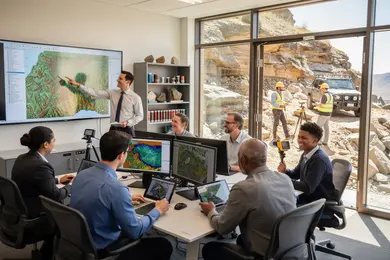
For working professionals, an online geosciences degree prepares for environmental jobs by allowing integration of remote job tools for data collection and reporting that mirror agency workflows, enabling career continuity during studies. The median federal government wage of $115,310 in May 2024 underlines the strong market valuation of these competencies, notably exceeding the broader geoscience median of $99,240.
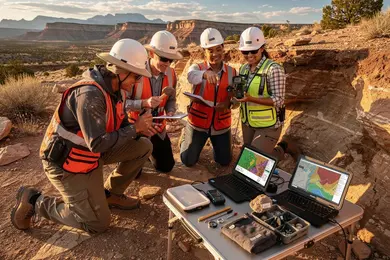
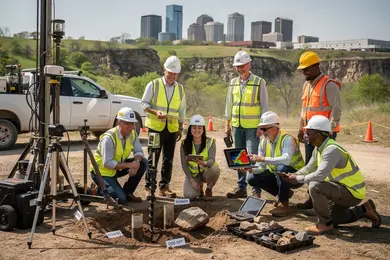
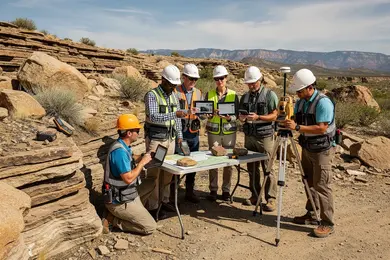
Key considerations for prospective students include access to specialized software, data sets, and opportunities for virtual labs or field experience to fulfill practical skill requirements. However, fully remote formats often limit hands-on fieldwork-a critical component for some positions-so hybrid programs or supplementary internships may be necessary to acquire site-assessment experience.
Evaluating program accreditation and industry-recognized certifications strengthens employability in this competitive sector. For those seeking details on highly regarded academic options, see geology degree online.
Which accredited online geoscience bachelor's programs are best for environmental agency career paths?
Online bachelor's programs in geosciences aiming for environmental agency employment show clear value when they align directly with federal and state regulatory demands. Graduates fluent in applied geoscience, data analysis, and compliance protocols enter agencies such as the EPA prepared for concrete tasks-site contamination assessments or habitat conservation planning-that define daily workflows. For candidates targeting the best accredited online geoscience bachelor's programs for environmental careers, program accreditation by bodies like ABET and inclusion of environmental chemistry and GIS skills are critical differentiators.
Programs lacking hands-on components, such as fieldwork or virtual labs, limit graduates' ability to meet agency expectations that often mandate practical experience. The real-world consequence is diminished employability, especially when state-level roles require competencies in environmental monitoring or water quality analysis.
Those pursuing top online geosciences degrees for environmental agency jobs should also prioritize curricula offering specialization in environmental geosciences, internship pipelines with government or EPA-linked entities, and training in software like ArcGIS and statistical modeling. This blend of technical and regulatory preparation is supported by projected 7% employment growth for environmental scientists over the next decade.
For a cost-efficient overview of viable options, prospective students can review environmental engineering degree online listings, aiding informed decisions about program affordability without sacrificing alignment with agency workflow requirements.
How does an online geoscience degree compare with an on-campus program for environmental careers?
An online geosciences degree often matches on-campus programs in core theory but falls short in delivering immediate fieldwork and lab experiences critical to environmental agencies. Candidates with hands-on skills like direct environmental site assessments remain preferred, especially in roles demanding precise field data interpretation to ensure public safety and regulatory compliance. For example, environmental engineers earn a median wage of $104,170 and routinely manage contaminated site cleanups where firsthand field knowledge reduces costly errors. Similarly, environmental scientists, with median wages around $80,060, require applied technical experience that purely online coursework may lack.
Employers prioritize verified experiential learning when hiring, which often means internships or agency partnerships integrated within on-campus geosciences degree programs. Online students pursuing an online degree in exercise science or related fields must supplement with deliberate in-person opportunities to align skills with workforce expectations. Those navigating an online geosciences degree versus on-campus for environmental careers should weigh the extra initiative necessary to secure local field experiences independently.
Practical competencies in GIS and mapping software can be attained online if programs offer synchronous labs and remote platform access, but bridging the fieldwork gap typically requires targeted practicum components or employer collaborations. Flexible online scheduling benefits working professionals pivoting careers, yet the absence of embedded experiential training often separates candidates during recruitment, underscoring a non-negotiable need for real-world readiness.
What geoscience courses and specializations most closely align with environmental agency job roles?
Core geoscience courses designed for environmental agency careers must go beyond theory to address immediate workforce needs, especially in geospatial analysis and environmental geology. Skills in Geographic Information Systems (GIS) and remote sensing are indispensable, given the 5% employment growth projected for surveying and mapping technicians by the U.S. Bureau of Labor Statistics. This demand translates into practical roles involving land use planning, pollution tracking, and habitat conservation. Prioritizing these areas improves alignment with the skills government agencies actively seek.
Specializations tailored to environmental agency job-related geoscience specializations, such as hydrology and environmental geochemistry, equip students to manage water resource challenges and contamination assessments common at the EPA or USGS. Combining spatial data analytics with environmental regulations prepares graduates to execute compliance monitoring and environmental impact reports, tasks central to these jobs.
Advanced data modeling and geotechnical field skills enhance readiness for terrain evaluation and disaster risk roles. For example, expertise in soil erosion informs flood risk assessments critical to emergency management-a clear intersection of science and practical application required by federal and state programs.
Currently, programming and database management expertise aimed at automating geospatial workflows significantly improves employability. Agencies seek individuals capable of synthesizing spatial datasets with environmental monitoring tools to generate actionable intelligence.
Because balancing technical and regulatory knowledge is a persistent challenge, students should target multidisciplinary programs that integrate internships or cooperative education placements, bridging academic learning with agency expectations. For those considering adjacent technical fields, exploring the best online electrical engineering degree programs for veterans may offer complementary skills applicable to environmental technology roles.
What admission requirements and prior preparation do online geoscience bachelor's programs typically expect?
Online geoscience bachelor's programs demand a solid STEM foundation, often requiring prerequisites in algebra, biology, chemistry, physics, and geometry. Candidates lacking this background face the challenge of completing foundational courses alongside degree requirements, which can slow progress and increase workload. Admissions committees increasingly de-emphasize standardized tests, focusing instead on demonstrated academic readiness and relevant remote learning experience, reflecting a shift toward candidate adaptability in digital learning environments.
Transfer applicants must submit detailed transcripts showing prior coursework in physical sciences or quantitative fields, a critical factor employers weigh when assessing readiness for fieldwork or agency roles. Practical experience in environmental or technical positions adds measurable value, signaling proficiency with real-world tasks like data analysis or environmental compliance.
Programs frequently require applicants to confirm technological readiness, including reliable high-speed internet and familiarity with GIS or remote sensing software, essential for uninterrupted participation in labs and internships that underpin professional certification. Tuition affordability, ranging approximately from $5,400 to $11,700 annually among leading programs, presents a strategic consideration for prospective students balancing cost, program rigor, and the performance demands expected by EPA or state-level employers.
Given workforce demands, success hinges on strong analytical skills and applied knowledge, both prioritized in admissions to reduce attrition and ensure graduates meet environmental agency requirements. Candidates should weigh these academic and technological prerequisites carefully against their career trajectory and field-specific employment possibilities.
How long do online geoscience bachelor's programs take and what do they usually cost?
Online bachelor's programs in geosciences shape the timing of workforce entry with direct implications for salary growth and eligibility in environmental agencies. A typical four-year full-time path can be compressed to three years or stretched beyond five with part-time study, but each choice affects access to EPA internships and field experience critical for federal environmental scientist positions, which prioritize near-graduation candidates.
Cost remains a significant factor; annual online tuition at many regionally accredited public institutions falls below $8,000, offering an economical alternative to the national average for public four-year universities. However, students should anticipate supplemental expenses for textbooks, lab supplies, and fieldwork fees, potentially adding thousands to yearly costs.
Prospective students evaluating program flexibility must consider:
- The tradeoff between accelerated degrees that shorten time to employment but can increase workload and financial pressure.
- Extended part-time enrollment that may ease income disruption yet delay career progression and salary benefits.
- The impact of financial aid, with grants and scholarships possibly reducing net costs by up to 40%, altering long-term debt and affordability.
Employers seek candidates well-versed in earth systems, data analysis, and regulatory frameworks-skills developed through comprehensive coursework and hands-on experiences. Balancing these demands against personal and professional constraints is essential for a strategic pivot or advancement in geosciences careers.
How can you verify accreditation and program quality for online geoscience degrees in the United States?
Accreditation status directly impacts both eligibility for federal financial aid and employability in government environmental sectors, making it an indispensable factor when selecting an online geoscience degree program. Without regional accreditation recognized by the U.S. Department of Education, graduates may face significant barriers to working in federal or state agencies, which often require degrees from accredited institutions. Specialized accreditations from bodies like ABET or the Geological Society of America further affirm that a program's curriculum aligns with industry benchmarks.
Employers demand proficiency in practical skills such as field methods, geographic information systems (GIS), environmental data analysis, and regulatory compliance. Programs integrating up-to-date hands-on or virtual laboratories better prepare students for tasks like conducting environmental impact assessments or climate risk modeling-core functions in many agency roles.
Employment trends according to the U.S. Department of Labor forecast growth outpacing average occupational rates, particularly within environmental science and geosciences. This creates a competitive market where verified program quality and proven graduate outcomes, like placement in government positions or attainment of certifications such as Certified Environmental Professional (CEP), provide tangible advantages.
Key evaluation points include:
- Verification of institutional and programmatic accreditation status
- Alignment of curriculum with federal and state environmental agency competencies
- Graduate employment statistics specifically in government or regulatory positions
- Faculty expertise demonstrated through professional collaboration and published research
Choosing a program without such credentials risks limited access to governmental roles and reduced long-term career mobility, underscoring the critical nature of accreditation beyond mere academic formality.
What entry-level and mid-career jobs in environmental agencies can you pursue with this degree?
Entry-level employment in environmental agencies with a bachelor's in geosciences often centers on roles such as environmental technician or junior geologist, which require applied skills in sample analysis, GIS mapping, and impact monitoring. These hands-on competencies are essential for compliance tracking and habitat evaluations but demand practical experience, often gained through internships or fieldwork, to secure initial positions.
A typical trajectory might begin with soil and water quality testing at agencies like the U.S. Environmental Protection Agency, progressing within five to seven years into remediation oversight or regulatory reporting roles. Mid-career opportunities such as environmental specialist or hydrogeologist involve managing complex studies and policy coordination, with median salaries near or exceeding $90,000-competitive within the STEM public sector but contingent on specialized certifications and demonstrated regulatory knowledge.
Geoscience graduates targeting public environmental work should weigh the competitive entry landscape and the necessity of tailored skills that align with regulatory frameworks and permitting processes. The field offers above-average median salaries (around $99,240) and steady job growth (3-5% through 2034), making it viable for those prepared to invest in both technical proficiency and certification credentials.
- Early roles emphasize technical field experience and compliance monitoring
- Mid-career positions demand leadership in impact assessments and interagency collaboration
- Certification in GIS and environmental regulations enhances positioning in a competitive workforce
What salaries and job outlook can geoscience graduates expect in environmental agency roles?
Geoscience graduates targeting environmental agencies face a salary range of roughly $55,000 to $75,000 initially, with mid-career earnings averaging between $85,000 and $110,000. Federal positions typically offer better pay but come with demanding hiring requirements and security clearances, making state and local agency roles more accessible despite lower compensation. Entry-level roles require significant hands-on experience; therefore, securing internships or fieldwork is essential to improve competitiveness.
For example, the Chicago area hosts over 100 consulting firms actively recruiting earth science students, creating a pipeline that feeds talent into public agencies and emphasizes the necessity of applied skills like environmental compliance and field sampling. Without such experience, graduates often struggle when shifting to regulatory roles due to a steep practical learning curve.
Employment prospects in environmental agencies are expected to grow about 5% through 2032, driven by demand for expertise in environmental protection and climate resilience. However, immediate openings may be limited by local budget constraints, often pushing candidates toward consulting jobs initially.
Key factors influencing career trajectory include geographic flexibility and willingness to undertake field assignments, which can accelerate promotion and salary increases within public sector roles.
- Starting salaries: $55,000-$75,000
- Mid-career averages: $85,000-$110,000
- 5% projected employment growth through 2032
- Critical skills: data analysis, environmental compliance, field sampling
Are licenses, certifications, or federal hiring standards needed for geoscience roles in environmental agencies?
Licensing is generally not a baseline requirement for geoscience-related roles in federal environmental agencies, but credentials and certifications significantly shape competitiveness and advancement potential. For instance, entry-level technician positions primarily demand a bachelor's degree in geosciences or related fields without mandatory licenses. Yet, specialized mid-career roles often require certifications like the Certified Environmental Professional (CEP) or credentials from the American Geosciences Institute to validate regulatory knowledge and technical expertise.
Consider a candidate applying for a federal role involving wetland delineation or soil contamination assessment. Without a certification such as the Soil Science Society of America's Certified Professional Soil Scientist (CPSS), the candidate may be at a disadvantage when competing for positions at pay grades GS-7 and above, where hiring preferences favor formally credentialed applicants.
Key workforce implications include:
- Federal agencies like the EPA and USGS emphasize academic qualifications and experience more than professional licensure.
- Security clearances may be relevant depending on the role but are separate from licensing considerations.
- Certifications convey practical skills critical for performance and promotion.
Environmental science and protection technicians saw median annual wages rise to about $49,490 between 2017 and 2023, with projected job growth around 7% through 2033 per the U.S. Bureau of Labor Statistics. This steady demand signals employers' preference for candidates who combine a degree with targeted certifications that address federal agency standards and specialty-specific skills.
Other Things You Should Know About Geosciences
Environmental agencies prioritize demonstrable skills and relevant experience over program delivery mode. However, online programs with strong fieldwork components or local lab partnerships tend to yield better employment outcomes. Applicants from purely online courses without practical exposure may face challenges competing for hands-on roles. Prioritize programs that integrate internships or verified field experiences to ensure your degree is valued equally by employers.
A strong program should include GIS, remote sensing, geostatistics, and field methods, plus map interpretation and data analysis. Environmental agencies often expect ArcGIS or QGIS exposure and 120 semester credits for the bachelor’s degree. Coursework in hydrology, soils, and environmental regulations also supports entry-level hiring.
Leadership advancement within environmental agencies depends more on professional experience and demonstrated management skills than on degree origin. An online degree does not inherently limit career growth, but candidates must proactively build networks and gain experience to overcome possible biases. Early-career professionals should seek roles offering leadership development and mentor support to compensate for any perceived lack of traditional academic prestige.
Yes, many 2027 online Bachelor's in Geosciences programs incorporate virtual labs, fieldwork opportunities, and simulations to ensure students gain practical experience. These elements are designed to align with the practical needs of careers in environmental agencies, providing a balance between theoretical knowledge and applicable skills.
References
- Licensure of Geologists in the United States https://www.americangeosciences.org/licensure/
- Greener Careers https://greenercareers.co.uk/blog/new-to-the-field-entry-level-environment-jobs-to-kickstart-your-career
- The Geological Society - Degree Accreditation https://www.geolsoc.org.uk/education-and-resources/universities/university-degree-accreditation/
- Finding a Job - Green Jobs for Nature https://greenjobsfornature.org/get-that-green-job/job-vacancies/
- Browse Databases and Directories | Council for Higher Education Accreditation https://www.chea.org/search-institutions
- Information about Geoscience Related Careers https://careerexplorer.americangeosciences.org/careersinfo/
- Entry level environmental jobs in the UK https://environmentjob.co.uk/jobs/q-entry-level-environmental-jobs
- Accredited Online Courses: How to Pick Programs That Actually Count https://www.upskillist.com/blog/accredited-online-courses-how-to-pick-programs-that-actually-count/
- Early careers - Environment Agency https://environmentagencycareers.co.uk/early-careers/
- GEOLOGIST SERIES https://jobapscloud.com/MD/sup/bulpreview.asp