2027 Best Online Geosciences Degrees for Energy and Natural Resources Careers

Co-Founder and Chief Data Scientist
Energy sector professionals often face a critical challenge: acquiring advanced geosciences expertise that aligns with evolving extraction technologies and sustainability mandates without disrupting ongoing careers. The U. S. Bureau of Labor Statistics projects a steady 5% growth in related geoscience roles over the next decade, yet traditional degree programs rarely accommodate working adults balancing job demands and family. Meanwhile, research from the National Center for Education Statistics reveals a 15% rise in online STEM enrollments among adults in the last two years, reflecting a shift toward flexible, accessible learning models crucial for timely career pivots.
This article evaluates the best online geosciences degrees tailored specifically to these realities, helping professionals identify programs that optimize time, cost, and workforce relevance for energy and natural resources careers.
Key Things You Should Know
- Online geosciences degrees often lack fieldwork intensity critical for energy sector roles, with 62% of employers citing practical experience gaps, pressuring students to balance real-world internships alongside virtual curricula.
- Despite 9% sector employment growth projected through 2031 by the U.S. Bureau of Labor Statistics, 45% of hiring managers prioritize advanced GIS and modeling certifications absent from many virtual programs, affecting graduate competitiveness.
- Fully online options reduce relocation and tuition costs by up to 40% but extend degree completion by an average of 1.5 years per Open Education Database 2024 data, complicating early career entry and salary progression.
What is an online geosciences degree and how does it prepare students for energy and natural resources careers?
Online geosciences degree programs for energy careers must balance technical rigor with practical industry demands, a challenge that shapes employability and field readiness. Graduates often confront employer expectations for hands-on expertise in subsurface analysis, geological surveying, and environmental impact assessment-skills traditionally honed in physical labs and field settings. The practical limitation of remote learning frameworks becomes evident without integrated virtual labs or fieldwork options, which are indispensable for compliance with nationally recognized certifications and industry credentialing.
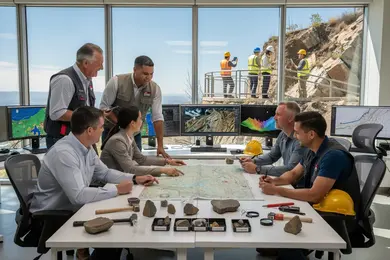
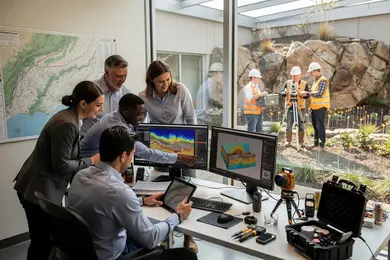
Programs emphasizing core competencies such as geophysics, sedimentology, GIS mapping, remote sensing, and data modeling reflect the skillsets actively sought in natural resources sectors. Professionals trained online can directly apply their knowledge to tasks like risk assessments for offshore drilling or sustainable mineral extraction, demonstrating the relevance of how an online geosciences degree prepares students for natural resources jobs. However, prospective students must critically evaluate the extent to which a program incorporates experiential learning and industry-aligned tools.
Employment data from the U.S. Bureau of Labor Statistics projects a 3% growth rate for geoscientists between 2024 and 2034, with a median annual wage nearing $100,000 in energy-related roles. This growth, influenced by evolving energy policies and sustainability initiatives, highlights the value of education merging theory with applied skills. For those weighing program options, investigating schools with GIS programs can provide additional context on curricular focus and technological integration. More detailed information can be found at colleges with GIS programs.
How do online geosciences programs compare with on-campus options for quality, labs, and fieldwork?
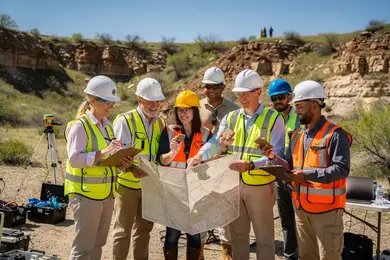
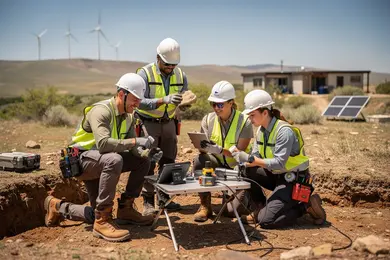
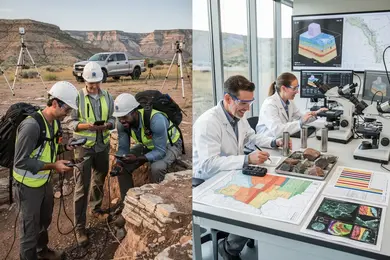
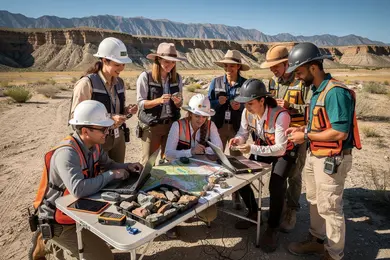
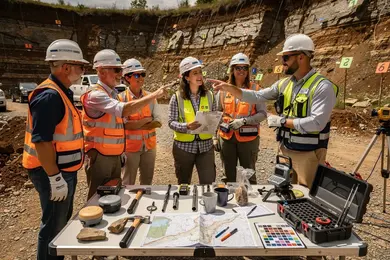
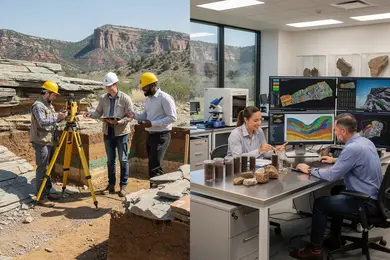
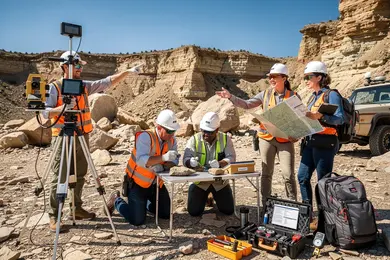
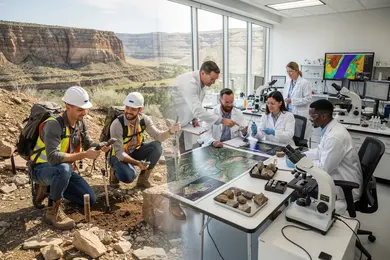
Online geosciences programs align closely with on-campus degrees in core theory but fall short in delivering hands-on lab and field training, a crucial gap reflected in practical skill acquisition. This difference becomes prominent when comparing fieldwork opportunities in online versus traditional geosciences degrees: online formats rely heavily on virtual labs and simulations, which lack the tactile experience of working directly with physical samples or field instruments. Such deficiencies often translate into extended post-graduation training periods-commonly six months or more of supervised fieldwork-to achieve the proficiency levels expected by employers in sectors like mineral exploration and environmental site assessment.
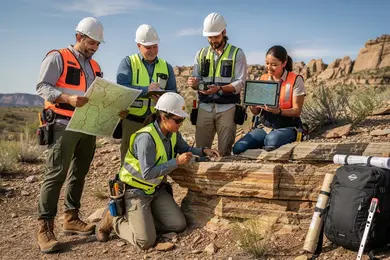
Students focused on research-oriented or policy roles may find online credentials adequate, yet those targeting technical field positions must seek supplemental in-person internships or bootcamps. Employers in oil, gas, and renewable energy industries particularly emphasize documented hands-on experience, and successful online programs tend to mitigate this by arranging local field placements or hybrid lab access models.
Prospective enrollees should critically assess how programs address lab access and practical field training, as missing these components complicates entry into roles requiring regulatory compliance and real-time environmental analysis.
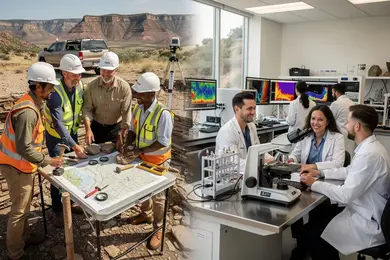
Prioritizing programs that blend rigorous supervised field components with virtual coursework offers a pragmatic path, balancing flexibility with essential experiential learning for career progression in geosciences. Students evaluating diverse pathways might also consider complementary fields, such as data science, to enhance marketability-resources like data science master online programs provide valuable adjunct skills useful in geosciences applications.
Which types of geosciences degrees best support careers in energy and natural resources?
Choosing a bachelor's degree in geology, geophysics, or environmental geoscience directly impacts employability and earning potential in energy and natural resources sectors. Programs focused on geology address core skills like stratigraphy and structural analysis necessary for exploration in oil and mining industries. Geophysics programs prioritize seismic data interpretation and subsurface modeling, vital for locating hydrocarbon reservoirs or geothermal sites. Environmental geoscience connects resource management with compliance demands crucial for sustainable extraction.
Employers emphasize applied technical expertise such as remote sensing, GIS, and data analytics. For instance, a geophysics graduate proficient in seismic software typically sees accelerated career progress and higher starting wages. Conversely, graduates lacking field experience or software skills face significant hiring barriers. Working professionals targeting a pivot into energy should carefully evaluate top geosciences programs for natural resources jobs that integrate hands-on labs and industry partnerships to meet these criteria.
The median salary for bachelor-level geosciences graduates stands at $99,240 annually, more than double the median wage across all U.S. occupations. This premium reflects the demand for specialized skills in resource extraction and regulatory reporting. However, degrees that focus heavily on general earth science or academic research often limit immediate access to high-paying roles in energy companies focused on commercial operations.
Given practical constraints, flexible program delivery combined with internships or practicum options is critical for on-site proficiency, especially when competing against candidates holding advanced degrees or certifications. Prospective students weighing academic directions may also consider whether a is a library science degree worth it fits alternative career pathways in research and data management within geosciences.
What accreditation and program quality standards should online geosciences degrees meet?
Regional accreditation remains a fundamental baseline for online geosciences degree programs, but it does not assure that graduates meet practical employer expectations. Employers demand degree holders with skills validated through hands-on lab work, field experience, or sophisticated virtual simulations that reflect energy, environmental, and resource extraction realities. For instance, a petroleum geology specialization requires proficiency in geophysical methods and reservoir analysis, supported by training on industry-standard software. These elements distinguish programs aligned with established accreditation standards for online geosciences degree programs from those lacking applied components, which often produce graduates less competitive in energy and natural resources sectors.
Programs that emphasize curriculum rigor through frameworks like those outlined by the American Geosciences Institute provide clearer quality indicators for online geosciences degrees in the United States. Such alignment ensures competencies are relevant and address employer demands. Students should scrutinize course syllabi for these specifics and prioritize programs offering professional network access or internships, as these connections often influence employability more than accreditation alone.
Cost remains a critical factor, as illustrated by OnlineU's 2026 data showing some public online environmental science bachelor's programs offering in-state tuition below $4,000 annually-far more affordable than many traditional options. This cost efficiency invites prospective students to balance tuition expenses against program features and skills gained. Those interested in cost-effective alternatives may also explore the cheapest online mechanical engineering degree programs for comparative financial context.
What courses and specializations are typically offered in online geosciences programs for energy careers?
Geosciences programs intended for energy sector roles must balance foundational knowledge with practical skills that align with specific employer demands in exploration and environmental management. Core coursework in mineralogy, sedimentology, structural geology, and geophysics provides essential tools for interpreting subsurface formations linked to hydrocarbon or mineral deposits.
Specializations such as petroleum geology and GIS for earth sciences sharpen expertise toward workflow realities: petroleum geology trains professionals in fluid dynamics critical for oil and gas extraction, while GIS concentrates on spatial data analysis necessary for on-site evaluation. Environmental geoscience degrees address regulatory compliance and impact mitigation, reflecting employer expectations for field-ready graduates.
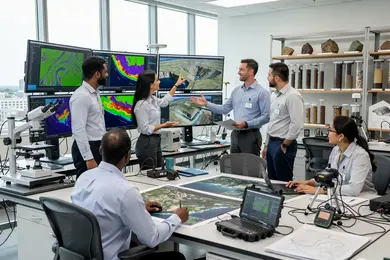
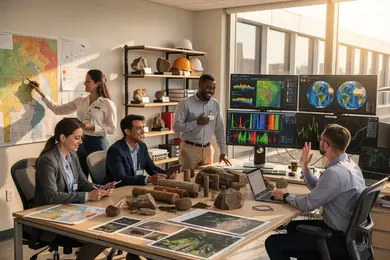
Industry-standard software proficiency-in platforms like ArcGIS, Petrel, and Surfer-is frequently integrated through simulated field labs, reinforcing data-driven decision-making and operational efficiency. However, hands-on training intensity varies by program and significantly affects graduate readiness.
Typical workforce trajectories differ; for instance, an energy exploration geoscientist analyzes geophysical surveys and core samples, whereas an environmental consultant prioritizes contamination assessments and documentation for regulation adherence. Since most technical roles require a bachelor's degree in geoscience as the minimum credential, prospective students should scrutinize curriculum depth, specialization options, and applied learning opportunities when selecting an online program.
What are the typical admission requirements and prerequisites for online geosciences degrees?
Admission to online geosciences master's programs often hinges on prior STEM coursework and relevant professional experience, rather than simply academic credentials. Candidates without a geology-specific background typically must complete prerequisites in calculus, chemistry, physics, and introductory geology, adding time and expense before progressing to advanced material. This can pose a significant barrier for working professionals seeking timely career shifts.
Programs generally require a minimum undergraduate GPA around 3.0 to 3.2, alongside academic references and personal statements tied to roles in energy, environmental consulting, or natural resource sectors. While some still request GRE scores, many waive this requirement for applicants demonstrating industry experience, valuing practical skills over standardized tests.
For mid-career professionals, such as petroleum geologists balancing job duties, the challenge lies in fulfilling prerequisites and program demands while maintaining employment-highlighting the importance of part-time or flexible scheduling options.
The University of Georgia's online M.S. in Environmental Geology reports a 90% employment rate within five years, suggesting alignment between admissions rigor and workplace expectations. Prospective students should critically evaluate how prerequisite courses and part-time formats influence their ability to enter specialized fields like energy extraction or regulatory agencies.
How long do online geosciences degrees take and what do they cost?
Online geosciences degrees often extend beyond traditional timelines due to the field's inherent need for hands-on experience. While bachelor's programs typically require 120 to 130 credit hours over four years full-time, part-time or transfer students may take five years or longer. Annual tuition ranges from approximately $7,000 for in-state public options to over $20,000 at private institutions, with an added $1,500-$3,000 annually for lab kits, software, and mandatory fieldwork expenses.
Employers in geosciences fields like petroleum geology and environmental consulting frequently question the credibility of degrees completed entirely online without supervised field components. Practical skills such as direct soil sampling, field mapping, or drilling site analysis cannot be fully replicated via virtual labs. For example, a candidate relying solely on remote learning may encounter challenges obtaining roles that mandate proven fieldwork competence.
Prospective students must consider additional travel and lodging costs tied to required in-person field sessions, which can add thousands in expenses and logistical complexity. Hybrid programs, incorporating scheduled field weeks, tend to offer a balance between flexibility and skill acquisition, whereas fully online tracks often shift the burden of securing quality field experiences onto students themselves. Prioritizing programs with recognized accreditation and transparent fieldwork opportunities is key to ensuring that online geosciences qualifications align with industry standards and enhance employability.
What jobs can you get with an online geosciences degree in energy and natural resources?
Graduates holding online geosciences degrees focused on energy and natural resources confront distinct workforce dynamics shaped by sector-specific demands and environmental constraints. For example, environmental scientists who earn median wages near $78,980 concentrate on regulatory compliance and sustainable resource management, responding to persistent oversight pressures that influence hiring volume and role longevity.
Practical career pathways include:
- Environmental consulting professionals assessing contamination risks and guiding land rehabilitation
- Hydrologists supporting water resource planning in drought-sensitive areas, directly impacting municipal and agricultural policies
- Mining and petroleum geologists whose geological expertise mitigates operational risks in mineral extraction and drilling site selection
- Renewable energy geoscientists evaluating subsurface conditions for geothermal projects
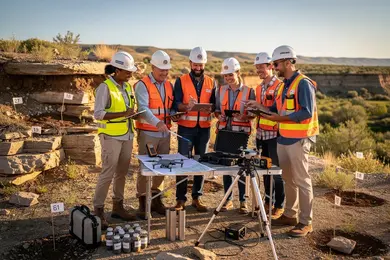
Success in these roles hinges on combining technical competence with proficiency in geospatial software, data analytics, and environmental regulations. Early career fieldwork often demands physical resilience and travel to remote locations, whereas advancement may pivot toward resource management or consultancy requiring multidisciplinary collaboration and project oversight. Online programs that integrate practical labs and industry internships tend to produce graduates better aligned with employer expectations, underscoring the importance of curricula that extend beyond theory to applied sector-specific skills.
What salary ranges and job outlook can geoscience graduates expect in energy-related roles?
Starting salaries for geoscience graduates aiming at energy sectors generally range from $60,000 to $85,000, with mid-career figures rising to $90,000-$130,000 depending on location and specialization. Employment demand remains steady through 2034 in oil and gas extraction, engineering services, and government sectors, supported by ongoing resource exploration and infrastructure initiatives.
Job growth averaging 5% to 7% reflects infrastructure expansion and a gradual pivot toward sustainable energy, but compensation and stability vary by sector. For example, oil and gas roles offer top salaries but carry volatility tied to commodity markets. Engineering services provide more consistent employment requiring advanced interdisciplinary and compliance skills, while government positions, paying around $75,000, often need security clearances or graduate credentials.
Field realities such as offshore exploration or geographically remote postings affect work-life balance and total remuneration. Renewable energy-oriented geoscientists may see slower initial pay but benefit from emerging market stability. Achieving certifications like the Professional Geologist (PG) license typically boosts earning potential by 10%-20% and unlocks leadership roles.
How can prospective students choose a reputable online geosciences program aligned with their career goals?
Choosing an online geosciences program requires weighing accreditation, cost, and tangible career support to align with energy and natural resources sectors. Accreditation from recognized bodies confirms the curriculum's rigor and industry relevance, directly affecting employer acceptance. For instance, regional or discipline-specific accreditation in an Environmental Geology master's signals that graduates meet standards valued in environmental consulting or energy exploration.
Cost efficiency should be assessed by comparing tuition expenses against verified employment outcomes. The University of Georgia's online M.S. in Environmental Geology, totaling about $20,220 in tuition, exemplifies a cost-effective pathway given its documented strong alumni placement in earth science roles. More expensive programs without clear job placement data may not justify their premium.
Career services differentiate programs substantially. Access to internships, employer networks, and hiring partnerships in oil, gas, renewables, or environmental remediation often determines real-world job entry. Without active employer engagement, degree holders may struggle to translate academic credentials into sector-specific roles.
Program design must balance flexibility with practical training. Fully asynchronous coursework benefits working professionals but risks insufficient hands-on experience. For example, hydrologists require GIS proficiency and field data collection skills-competencies that purely theoretical classes rarely provide.
Finally, curricular specialization matters. Options tailored to petroleum geology, environmental monitoring, or hazard assessment better position students for relevant certifications and job functions.
Other Things You Should Know About Geosciences
Online geosciences degrees designed for working professionals often balance coursework with real-world application, but the workload remains rigorous, especially in quantitative and lab components. Time management challenges increase with fieldwork simulations or virtual labs requiring extended engagement. Candidates should prioritize programs offering flexible pacing without sacrificing depth, as overcommitting can delay graduation or degrade learning outcomes critical for technical proficiency in energy sectors.
Graduates aiming for professional licensure usually start with the Fundamentals of Engineering or Fundamentals of Geology exam, then complete about four years of qualifying work experience before applying through the state licensing board. Some states also require references, transcripts, and continuing education for renewal.
For energy sector careers, specialization in areas like petroleum geosciences or environmental monitoring can increase competitiveness in niche roles. However, broad foundational knowledge in geophysics, geochemistry, and data interpretation supports adaptability amid shifting energy markets. Most effective approach is to choose a program offering core broad skills with elective options for targeted specialization, ensuring flexibility for both current job placement and future career shifts.
References
- Choosing the Right Degree: How to Find the Path That Fits Your Goals - CIS University https://www.cis-spain.com/en/blog/choosing-the-right-degree-how-to-find-the-path-that-fits-your-goals/
- The Geological Society - Degree Accreditation https://www.geolsoc.org.uk/education-and-resources/universities/university-degree-accreditation/
- Environmentalscience https://www.environmentalscience.org
- Information about Geoscience Related Careers https://careerexplorer.americangeosciences.org/careersinfo/
- 8. Recruiting, Retaining, and Promoting Success of Undergraduate Students with Emphasis on Students Underrepresented in the Geosciences https://www.americangeosciences.org/change/sections/recruitment/
- Quality Standards and Accreditation of Distance Education Programs in a Pandemic - OJDLA https://ojdla.com/articles/quality-standards-and-accreditation-of-distance-education-programs-in-a-pandemic
- Supporting Geoscience Students https://www.grow-geocareers.com/forgeodepartments
- Best Online Geoscience Courses and Programs | edX https://www.edx.org/learn/geosciences
- The Need of Accreditation in Online Degree Programs https://www.onlinecu.in/blog/cu/the-importance-of-accreditation-in-online-degree-programs.php
- Geoscience Careers https://education.americangeosciences.org/resources/geoscience-careers/