2027 Online Geosciences Degrees With Physical Geology Coursework

Co-Founder and Chief Data Scientist
Environmental consultants and exploration geologists face a critical bottleneck: how to acquire robust physical geology skills without interrupting ongoing projects or relocation constraints. As online education enrollments grew by 14% in 2024 according to the National Center for Education Statistics, many professionals seek programs offering comprehensive physical geology coursework remotely.
Yet, not all online degrees deliver sufficient hands-on or field-based training essential for licensure and competitive employment. This intensifies the challenge of selecting programs that balance accessibility with rigor and real-world applicability.
This article examines online geosciences degrees featuring physical geology coursework to guide informed decisions aligned with career goals and industry standards.
Key Things You Should Know
- Online geosciences degrees with physical geology focus incur a 15% premium in completion time versus in-person programs, per NCES 2024, impacting timely workforce entry and salary trajectory.
- Employer surveys from AGI 2024 report 62% preference for hybrid-trained grads due to hands-on lab exposure gaps, influencing recruitment and skill equilibration in field roles.
- Federal STEM loan incentives emphasize traditional lab coursework, limiting funding for pure online physical geology curricula, creating financing barriers that reshape candidate affordability and program selection.
What is an online geosciences degree with physical geology coursework, and who is it best for?
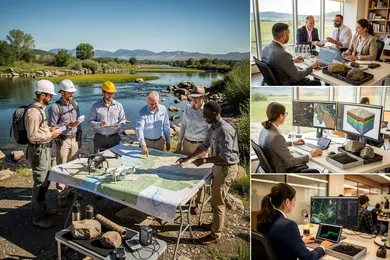
Online geosciences degrees with physical geology curriculum negotiate a demanding balance between theoretical mastery and the necessity for hands-on skills. These programs cater especially to working professionals or recent graduates who require flexible scheduling but face logistical challenges such as securing field experience essential for many geology roles. Unlike traditional campus-based tracks, strictly online pathways often incorporate brief on-site residencies or leverage partnerships with regional agencies to meet practical requirements.
Physical geology coursework encompasses mineralogy, petrology, geomorphology, and tectonics, foundational for evaluating geological hazards, resource extraction, and environmental consequences. However, completing lab components remotely can impede skill development without structured in-person sessions. For students considering best online geosciences programs for geology coursework, verifying how these programs address internship and licensing prerequisites is crucial since these requirements impact employability, particularly in oil and gas or environmental remediation sectors.
Employers emphasize competencies in geospatial analysis, data interpretation, and field methods, meaning graduates must demonstrate practical application beyond theory. Labor market data from the U.S. Bureau of Labor Statistics reports a median annual wage of $92,700 for geoscientists, with a 5% growth forecast from 2022 to 2032, indicating sustained demand. This educational route suits those balancing work, family, or geographic constraints while seeking a viable career pivot with a measurable return.
For those comparing career changes within STEM or allied fields, understanding earnings potential is critical. For example, insights from speech language pathologist salary research illustrate how occupation-specific wage data can guide decision-making and clarify financial expectations during a transition.
How do online geosciences degrees compare with on-campus programs for studying physical geology?
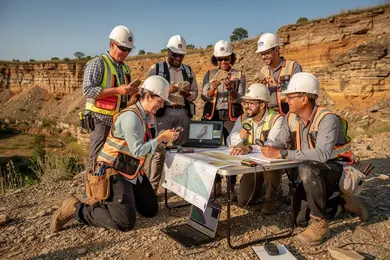
Online geosciences degree programs with physical geology coursework often fall short of delivering the hands-on experience essential for licensure and employability compared to on-campus curricula. Licensing boards typically require 30 semester hours of geoscience courses, including 20-24 hours at the upper-division level covering core subjects like structural geology, earth materials, geomorphology, and physical geology. Fully online degrees rarely provide structured fieldwork or lab sessions, compelling students to arrange costly local experiences independently or pursue hybrid formats. This tradeoff can delay professional licensure and limit early-career technical opportunities.
Employers, particularly in specialized areas such as petroleum geoscience, expect demonstrated field competencies-including rock and mineral identification and stratigraphic mapping-making in-person training indispensable. Candidates with practical physical geology backgrounds from campus or hybrid programs hold a clear advantage in securing entry-level roles that demand precise geological modeling on complex terrains. Those seeking online routes must critically assess how their programs meet state-specific licensing requirements and whether they facilitate local supervised practicals.
- Inclusion of on-site field studies or lab sessions
- Partnerships enabling local physical geology practicums
- Compliance of upper-division courses with licensing standards
- Additional financial and logistical burdens linked to travel or extra course enrollment
Prioritizing programs with integrated experiential learning reduces barriers faced in pivoting careers within regulated geoscience professions, where fully online physical geology courses rarely align with licensing benchmarks ratified in 2024 and beyond. For detailed cost comparisons in related fields, consider examining animal science bachelor degree online programs as a reference for balancing online studies with practical requirements.
Which types of online geosciences degrees include robust physical geology coursework?
Online geosciences degrees with comprehensive physical geology courses deliver distinct advantages in market readiness that broader earth sciences curricula often lack. Programs specifically titled geology or geological sciences tend to require essential core courses such as mineralogy, petrology, sedimentology, and structural geology, developing technical mastery needed for field interpretation and geotechnical roles. For instance, the University of North Dakota's BS in Geology reports a 100% employment or graduate school placement rate within six months, validating the alignment of these focused programs with industry demands.
In contrast, degrees labeled general geosciences or earth sciences usually treat physical geology as an elective, limiting students' depth of expertise crucial for mining, hydrogeology, or environmental assessment positions. Fully online options employ virtual labs to simulate fieldwork, yet many employers still prefer candidates with hybrid or in-person practical training to ensure proficiency in hands-on tasks.
Those targeting professional certification, including the Fundamentals of Geology (FG) or Professional Geologist (PG) exams, benefit from geosciences programs with mandatory physical geology components that correspond directly to credentialing requirements like mineralogy and stratigraphy. Balancing this technical rigor against delivery format is essential.
For a comparative view on other relevant degrees, prospective learners might explore exercise science degrees online, which similarly vary in technical depth and practical experience emphasis across accredited US online geosciences programs featuring physical geology.
What physical geology courses and lab experiences can you expect in an online geosciences curriculum?
Online geosciences programs with physical geology courses in online geosciences programs must balance foundational theory with limited tactile field exposure, which has direct consequences for employability in field-intensive roles. Students gain critical skills through virtual lab experiences for physical geology studies-such as interactive digital tools, 3D modeling, and remote sample analysis replicating petrographic and mineralogical work. These virtual exercises develop technical familiarity suited to analytical and software-driven positions found in urban environmental planning, hazard assessment, and geotechnical engineering.
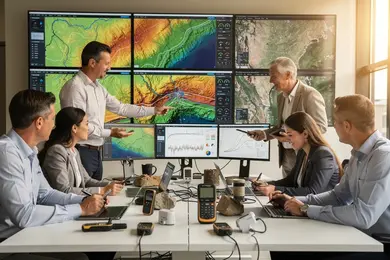
To compensate for the reduced hands-on fieldwork, many programs integrate local field assignments or simulated exercises using GIS technology and remote sensing data, fostering spatial analysis and geologic mapping skills necessary for environmental consulting and resource exploration. However, this approach imposes trade-offs: while analytical capabilities and digital fluency improve, students targeting physically demanding roles might find their training less comprehensive.
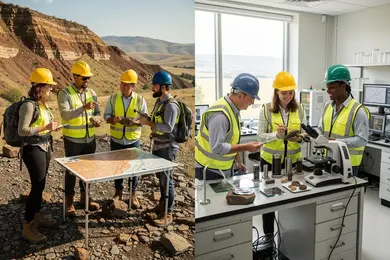
Laboratory coursework emphasizes data interpretation, including petrographic thin section analysis and structural measurement, supporting competency in natural resource management and governmental land-use roles. At Southern New Hampshire University, a fully online BS in geosciences offers an illustrative cost structure with a published tuition of $38,280 and typical out-of-pocket expenses reduced by approximately 17% through grants.
Prospective learners should also consider cost-effectiveness when comparing pathways; for instance, exploring a library degree provides a model for evaluating affordability alongside career utility.
How can you verify accreditation and program quality for online geosciences degrees?
Employers and licensure boards demand verifiable accreditation from recognized agencies approved by the U.S. Department of Education or Council for Higher Education Accreditation to trust online geosciences degrees. This verification is essential because accreditation status can shift, impacting a graduate's eligibility for certification or employment in regulated roles.
Curriculum quality hinges on demonstrable rigor and alignment with key industry competencies. For instance, Carleton College requires Physical Geology (Geos 251) as a mandatory core, reflecting the standard expectation for foundational knowledge in physical geology. Programs without this core risk leaving students underprepared for technical positions in environmental consulting, resource extraction, or geological mapping.
Practical experience remains a critical differentiator. While some online programs struggle to provide hands-on lab work or field components, these experiences strongly influence job readiness and licensure outcomes. Prospective students should inquire about syllabus details showing applied labs, virtual simulation opportunities, and partnerships enabling local fieldwork consistent with standards from entities like the U.S. Geological Survey.
Tradeoffs involve balancing flexible online access against potential gaps in experiential learning and faculty expertise applicable to workforce demands. Graduates from accredited programs embedding recognized core courses report higher employment rates in specialized geoscience roles, emphasizing that transparency in both accreditation and curricular content is a decisive factor in meaningful career outcomes.
What are the typical admission requirements for online geosciences programs with a geology focus?
Admission to online geosciences programs focused on physical geology requires a firm grasp of STEM fundamentals, especially biology, chemistry, physics, and calculus. Applicants typically need a high school diploma or equivalent, with competitive programs insisting on GPAs near 3.0 to match the rigor of scientific coursework. While standardized tests like the SAT or ACT remain common prerequisites, several programs have softened these demands in response to evolving admissions standards.
Working professionals entering geosciences often encounter prerequisite gaps, necessitating foundational coursework before progressing. International students must demonstrate English proficiency through TOEFL or IELTS scores. Submission of detailed transcripts, letters of recommendation that spotlight analytical and field capabilities, and personal statements articulating career objectives are standard. Some programs expect portfolios or documented scientific experience, which influences admission outcomes.
Employers in fields such as environmental science, mining, engineering geology, and cartography prioritize graduates whose academic records evidence strong quantitative and scientific reasoning skills. Failure to satisfy admission criteria often leads to conditional acceptance, mandating extra coursework that extends time-to-degree and delays workforce integration.
Those weighing this pathway should consider that early gaps in prerequisite knowledge can translate into longer programs and slower entry into applied roles. However, mastery of interdisciplinary skills significantly boosts market relevance in applied geosciences sectors, offering practical returns when balanced against admission hurdles and program demands.
How long do online geosciences degrees take, and what do they typically cost?
Completing an online geosciences degree with a strong physical geology component demands navigating the practical challenges of hybrid learning formats. Unlike fully remote programs, these degrees often require balancing remote coursework with mandatory lab sessions and fieldwork, which can extend program duration beyond the standard four years depending on part-time or accelerated enrollment.
Financially, students face substantial variation. Public in-state tuition ranges roughly from $10,000 to $15,000 annually, while private institutions can charge over $20,000 per year. Additional costs, including specialized equipment and field training fees, increase the total investment and should factor into any decision-making process.
From a workforce perspective, graduates with hands-on physical geology experience are positioned more competitively in high-paying segments such as petroleum geology. The upper decile of geoscientists earn beyond $164,940 annually, reflecting employer preference for candidates who demonstrate applied field skills alongside theoretical knowledge. Purely online degrees without verified physical components risk limiting access to these roles, particularly in resource extraction industries.
Prospective students should weigh these tradeoffs: hybrid formats that integrate field experience enhance employability but require more logistical coordination, potentially extending costs and study time. Prioritizing programs with employer-recognized credentials linked to practical geology application is strategic for navigating the sector's demand for verifiable real-world competence.
What careers can an online geosciences degree with physical geology preparation lead to?
An online geosciences degree with a focus on physical geology often limits graduates' access to traditional geology roles that demand extensive fieldwork. Positions in mineral exploration or paleontology typically require in-person data collection and sample analysis-skills rarely imparted in online-only programs. Consequently, candidates without demonstrated field experience face a competitive disadvantage, as employers prioritize hands-on proficiency.
Graduates from these programs frequently find employment in roles that emphasize data interpretation, modeling, and regulatory compliance rather than core geologist functions. Common positions include:
- Environmental specialists conducting impact assessments without onsite sampling
- GIS technicians developing spatial data layers for resource management
- Laboratory analysts working with remotely gathered geological data
- Science communicators or technical writers focusing on earth science topics
These roles tend to offer salaries 10% to 25% lower than field-intensive geologist positions, reflecting the premium placed on practical, hands-on expertise. Employers often require internships or supplemental fieldwork training to consider candidates for advanced roles.
Students pursuing online geosciences programs should strategically seek hybrid training, community college field courses, or internships to gain applicable skills. Without such investments, their careers will likely remain within administrative or technical support pathways rather than progressing into onsite geologist roles demanding experiential competency.
What salary ranges and job outlook can geology-focused geoscience graduates expect?
Starting salaries for geology-focused geoscience graduates in 2026 typically range from $55,000 to $75,000, but real earning potential heavily depends on licensure and coursework completion. Securing Professional Geologist licensure-mandated by most state boards-requires at least 30 semester hours in geoscience, including 24 upper-division hours across critical subjects like structural geology, sedimentology, and geochemistry. Without meeting these coursework thresholds, graduates face significant barriers to higher-paying roles and upward mobility.
Industry sectors such as oil and gas may offer top-end salaries up to $110,000 mid-career but come with employment volatility. Conversely, environmental consulting and government agencies present steadier but more modest compensation closer to the national median. Entry-level unlicensed roles hover near $55,000 but often plateau unless supplemented by strong academic credentials and subsequent licensure.
Job growth in geoscience remains modest, around 5%, with demand skewed toward licensed professionals capable of independently managing fieldwork and regulatory compliance. For students weighing interdisciplinary degrees, the tradeoff often means sacrificing licensure eligibility and access to industry-standard positions, limiting long-term earning and career advancement.
- Licensure is pivotal for accessing specialized, higher-paying jobs
- Robust geology coursework directly impacts license eligibility
- Industry choice affects salary stability and growth potential
Graduate decision-making must consider these variables concretely: a geology-focused curriculum aligned with licensure prerequisites safeguards career flexibility and wage trajectory more than broader, interdisciplinary programs.
How do licensing, certifications, and professional standards affect geoscience career options?
Licensing remains the definitive gatekeeper for professional geoscience practice in the U.S., with many state agencies mandating a Professional Geologist (PG) license for environmental reviews, resource management, and public safety roles. Candidates without this license-regardless of whether their degree was earned online or onsite-often face employer rejection on regulated projects requiring legally accountable sign-off. The typical path to licensure demands accredited education, substantial field experience, and passing challenging exams, making online degree holders reliant on securing supervised fieldwork externally to meet these criteria.
Online programs continue to expand, but their alignment with licensing boards' standards-especially regarding physical geology exposure and field internships-can vary considerably. This discrepancy means prospective students must critically assess whether a program's curriculum and field requirements map effectively to their target state's licensing rules. Failure to do so risks delays, additional training, or diminished job prospects when licensure is required.
Certification through entities like the American Institute of Professional Geologists offers supplemental advantages, recognizing ethics and specialized expertise without substituting for state licenses. Employers prioritizing licensed professionals typically regard certifications as secondary credentials rather than standalone qualifications.
Key workforce considerations include:
- Legal authority to sign off on technical reports in environmental consulting or mining sectors hinges on licensing.
- Online degree completers need proactive planning for field experience to qualify for licensure.
- Substantial variation in state requirements necessitates deliberate program-state compatibility checks.
- Certifications differentiate but do not replace state-mandated licenses in hiring decisions.
Other Things You Should Know About Geosciences
Online geosciences programs often replace traditional labs with virtual simulations or at-home kits, which do not fully replicate fieldwork or tactile sample analysis. This gap can disadvantage graduates when employers expect hands-on skills in rock identification, mapping, and instrumentation. Candidates should seek programs that either integrate optional in-person field sessions or have strong industry partnerships to compensate for practical experience.
Yes. Many accredited geoscience programs require a field camp or field methods course, usually 1 to 6 credit hours, even when most classes are online. Some schools allow approved local fieldwork or intensive summer sessions, but students should confirm whether the requirement is mandatory for graduation.
Internships and research experiences are critical for applying physical geology knowledge and gaining industry-relevant skills not easily acquired online. Students should actively seek opportunities even if their program doesn't require them, as employers often view practical experience as a decisive hiring factor. Prioritizing programs with established internship networks or assistance in placing students can significantly enhance career outcomes.
References
- The Geological Society - Degree Accreditation https://www.geolsoc.org.uk/education-and-resources/universities/university-degree-accreditation/
- Working Geoscience https://profession.americangeosciences.org/working/
- Why is it Important to be Licensed to Practice Applied Geology? https://www.aegweb.org/index.php
- Is Your Online Degree Legitimate? How to Verify Private University Approval https://matchtocollege.com/blog/verify-private-university-online-degree-approval
- 500+ Water Jobs (Updated Today) â Free to Apply https://jobs.watertechintel.com/blog/geology-major-jobs
- Online Geoscience Degrees: Top Schools and All Programs in 2026 https://www.gisdegree.org/online/geoscience-degrees/
- ThisIsGeoscience - Geoscience Salaries https://www.thisisgeoscience.com/the-resources/geoscience-salaries
- P.G. Licensing FAQs https://tbpg.state.tx.us/p-g-licensing-faqs/
- Are Online Degrees Accredited? How to Identify Quality Distance Learning Programs https://www.umassglobal.edu/blog-news/online-degrees-accredited-identify-quality-distance-learning-programs
- Professional Geologist Licensure https://www.grow-geocareers.com/licensure