2027 Geosciences Roles With the Strongest Career Momentum

Co-Founder and Chief Data Scientist
Professionals in geosciences face a critical challenge: identifying roles with real upward momentum amid volatile funding, evolving climate priorities, and automation reshaping fieldwork. This urgency sharpens as the U. S. Bureau of Labor Statistics projects a 10% growth rate in environmental and geoscience technician jobs through 2032, outpacing many technical occupations.
However, navigating expanding online program options-with enrollment surging by 18% among adult learners recently according to the National Center for Education Statistics-requires discerning which credentials genuinely enhance employability and career mobility versus those that serve as mere formalities. This article analyzes the geosciences roles gaining traction and offers data-driven guidance to help students and professionals align educational choices with robust long-term opportunities.
Key Things You Should Know
- Petroleum and environmental geosciences roles diverge sharply: 12% employment decline expected in fossil fuel sectors by 2030 versus 18% growth in renewable-related geology per U.S. Energy Information Administration, prompting strategic skill adaptation.
- Employers prioritize GIS proficiency and remote sensing over traditional fieldwork; U.S. Bureau of Labor Statistics reports 35% of geoscience job postings require advanced data analytics, reshaping workforce capabilities.
- Professional licensure delays extend career entry by 1.5 years on average, per National Society of Professional Engineers, increasing opportunity costs disproportionately for nontraditional students balancing time and financial resources.
Which geoscience roles currently show the strongest career momentum in the United States?
Employment projections show targeted growth within United States geosciences career growth, especially in environmental geology, hydrogeology, and energy resource geology. Environmental geologists are increasingly indispensable due to stringent regulations on contamination cleanup and land reclamation, notably in industrially complex states. Hydrogeologists remain vital as urban expansion intensifies water management challenges, fueling roles in municipal water planning and drought response. Energy resource geologists are adapting to shifts from coal to renewables, requiring skills in subsurface analysis and environmental impact assessment concurrently.
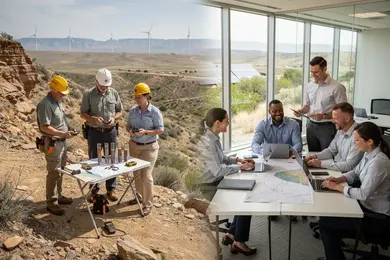
These high-demand geoscience jobs in the US generally require a bachelor's degree for entry-level roles with technical proficiency. However, advanced research or leadership positions demand graduate specialization and nuanced expertise. Employers prioritize candidates with demonstrated project experience, proficiency in GIS and data analytics, and adaptability in interdisciplinary teams over purely theoretical credentials.
Networking through professional societies and internships tied to clear regional economic priorities often determine practical career trajectories. Students seeking a sustainable foothold in the sector must weigh the time and cost of graduate education against realistic workforce entry expectations, focusing on sectors with strong legislative or project support such as environmental remediation or water resource engineering.
For those exploring pathways and outcomes, resources explaining what can you do with an environmental studies degree provide context on skill sets and career options within this evolving landscape.
What education, degrees, and skills are required for today's in-demand geoscience careers?
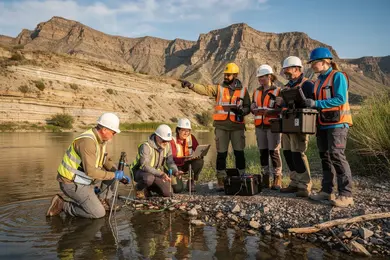
Geoscience careers increasingly demand not just a bachelor's degree in geosciences, geology, environmental science, or a related STEM field but often a master's or higher for niche sectors like petroleum or hydrogeology. Employers look for candidates with solid quantitative skills-statistical analysis, Geographic Information Systems (GIS), and remote sensing are vital tools in exploration and environmental monitoring. Practical competence hinges on field methods, data modeling software, and navigating environmental regulations, reflecting the need to blend physical techniques with technical software expertise.
For example, a mineral exploration geologist must interpret core samples and analyze geospatial data efficiently under tight deadlines, whereas environmental geoscientists prioritize regulatory compliance and impact assessments. Certification, such as Professional Geologist licensure, enhances career potential but requires several years of mentored experience, demanding that entry-level roles offer substantial fieldwork oversight. Communication skills also weigh heavily, as technical results must be conveyed effectively to non-specialists.
Geoscience professionals must remain agile amid technological shifts, including machine learning applications in subsurface modeling, which increasingly influence job security and sector growth. This integration of skill, regulation, and technology shapes the practical realities of degrees and certifications required for geoscience careers in the United States.
Those seeking to expand their data expertise alongside geoscience may explore flexible pathways such as an online masters in data science, providing relevant quantitative skills that complement geoscience specialties.
Employers emphasize the blend of technical proficiency and communication ability as essential, highlighting the critical intersection of essential skills and education for American geoscientists.
How do salaries compare across high-growth geoscience roles and experience levels?
Salary variations in high-growth geosciences roles reveal a strong correlation with specialization and sector volatility, underscoring that experience alone does not guarantee higher earnings. Environmental scientists and specialists report a median annual wage of $80,060, with job growth projected at 4% from 2024 to 2034. Entry positions often pay $55,000 to $65,000, especially in government and nonprofit roles focusing on environmental monitoring. As experience approaches five to ten years, salaries can surpass $90,000, primarily when shifting into consulting or regulatory compliance fields requiring advanced data analysis and reporting.
In contrast, geoscientists in oil, gas, and mining sectors typically earn more early on, with starting salaries near $70,000 and faster progression to six figures. However, these roles carry inherent risk due to commodity price fluctuations affecting job security and hiring patterns. This dynamic illustrates the practical tradeoff between compensation and employment stability in geosciences career salary comparison by experience level.
For strategic advancement, specialization in data-intensive areas such as geospatial analysis, remote sensing, or hydrogeology offers durable demand and higher salary potential. Employers increasingly prioritize proficiency in specialized software and interdisciplinary skills, often requiring additional certifications or graduate education, which come with both financial and time investments.
Real-world hiring data indicate that candidates with diversified sector experience and robust technical portfolios can negotiate salaries up to 15% above their single-industry peers. For those considering a pivot, focusing on regulatory frameworks or environmental risk assessment expertise can accelerate income growth more effectively than general experience accumulation. Prospective students juggling practical considerations might explore exercise science degrees online as an example of flexible education paths balancing career goals and constraints.
What is the job outlook for geoscientists in energy, environment, climate, and sustainability?
Job outlook for geoscientists in energy and sustainability fields reflects a landscape that demands adaptive expertise beyond traditional geoscience roles. Professionals who integrate geospatial analysis, remote sensing, and domain-specific knowledge-such as renewable energy resource management or carbon capture technologies-are most competitive. For instance, a hydrologist managing watershed projects must merge field data with advanced hydroinformatics to inform sustainable water policies effectively.
Career growth trends for environmental and climate geoscientists show increased opportunities driven by regulatory demands and ESG commitments, although competition persists against candidates lacking advanced degrees but possessing relevant experience or certifications. Median wages for hydrologists are stable around $92,060 annually, yet job security can fluctuate due to funding cycles and contract-based work.
Those shifting from oil and gas sectors must focus on retraining with practical skills in sustainable resource management and climate modeling, including proficiency in GIS software and climate data interpretation frameworks.
Educational pathways should be evaluated through the lens of applied learning and industry relevance rather than purely theoretical tracks. Prospective students pursuing a mechanical engineer degree or related technical fields can benefit from programs offering internships and strong industry connections to navigate this evolving market effectively. For detailed program options, consider reviewing mechanical engineer degree resources for practical alignment.
Which geoscience degrees and specializations best align with emerging industry needs?
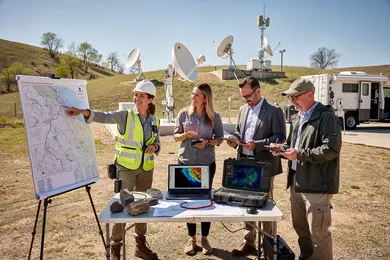
Choosing degrees focused on geospatial analysis, cartography, and photogrammetry directly addresses distinct employer demands for applied technical proficiency rather than broad geological theory. Hiring trends favor graduates who can work with GIS software, remote sensing, and data visualization to convert complex spatial datasets into actionable solutions across government and private sectors. For example, a cartographer skilled in drone data processing and Python scripting improves automation and precision in infrastructure mapping projects.
The median salary for cartographers and photogrammetrists stands at $78,380 with a projected 6% job growth from 2024 to 2034, reflecting stable investment in climate resilience and infrastructure. Yet, candidates must weigh this specialization against broader geosciences paths that offer versatility but may lack cutting-edge geospatial training. Aligning coursework with industry-relevant certifications enhances employment prospects amid evolving spatial data applications.
Environmental geology combined with GIS offers pathways into impact assessment and regulatory roles in energy and construction but demands balancing earth science fundamentals with digital skillsets. Graduates without targeted technical focus risk missing opportunities in data-centric decision roles. Key considerations include:
- Practical GIS and remote sensing experience over theoretical geoscience breadth
- Certification-aligned training to meet employer automation expectations
- Tradeoffs between specialization for mapping precision versus broader earth science knowledge
Adopting programs emphasizing hands-on geospatial technology and automation prepares students for workforce realities shaped by federal and private investment in spatial data-driven solutions.
How do online geoscience programs compare to campus-based options for career preparation?
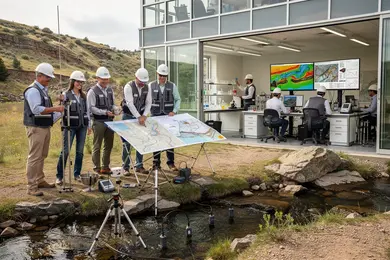
Employers in the U.S. geosciences labor market increasingly prioritize candidates with hands-on field and lab experience, a gap where many online geoscience programs fall short. Although theoretical knowledge from remote learning matches campus offerings, practical skills remain essential for roles in environmental consulting, oil and gas exploration, and hazard assessment. The American Geosciences Institute reports 342,002 working geoscientists in April 2026-a 5% growth from the prior month-underscoring demand for graduates who can demonstrate applied competence.
Campus-based degrees provide structured access to fieldwork, specialized equipment, and employer networks, enabling students to acquire core proficiencies such as seismic data interpretation and safety protocol adherence. This direct training often accelerates workforce entry and enhances wage prospects.
For online students, securing local internships or coordinating practical experience independently is critical; failure to do so risks underqualification and delayed placement in technical roles. Working professionals pivoting careers benefit from the flexibility of online study but must supplement coursework with employer-partnered or weekend field sessions to develop marketable skills.
- Campus programs offer integrated hands-on training and networking advantages often absent online
- Applied experience is a decisive factor for employability and compensation in geosciences
- Online learners require proactive arrangements for field exposure to remain competitive
How can students evaluate accreditation and program quality for geoscience degrees?
Choosing a geoscience degree requires strict scrutiny of accreditation and tangible career outcomes, especially amid recent job contractions. Regional accreditation approved by the U.S. Department of Education or the Council for Higher Education Accreditation remains the baseline for programs that reliably meet academic and professional standards. Specialized accreditation from entities like the Geological Society of America signals curriculum alignment with industry demands.
Graduates face a contracting labor market: a 13% decline in geoscience employment within one month, totaling nearly 40,000 jobs lost, highlights the need for programs with clear, sector-specific placement data rather than generic employment statistics. Students should prioritize institutions with consistent connections to stable fields such as environmental consulting, energy, or government roles.
Hands-on learning is decisive. Fieldwork, internships, and labs that develop proficiency in GIS and field sampling are non-negotiable given employer preferences for practical skill sets. Programs with active employer partnerships and career services that support job transitions during economic downturns add considerable value.
Tuition cost must be weighed against demonstrated return on investment. Higher-cost programs need to prove superior salary outcomes or networking advantages. Conversely, state universities offering focused, accredited curricula often align closely with regional industry needs-an important consideration for students targeting local government or niche sectors.
What does a typical geoscience curriculum include at the bachelor's and master's levels?
Choosing between a bachelor's and a master's degree in geosciences often hinges on balancing immediate employability with long-term career growth. A bachelor's level education covers essential foundations in earth sciences, alongside necessary skills in calculus, chemistry, and physics, reinforced through hands-on lab work, field studies, and GIS software proficiency. Graduates with this level typically qualify for entry roles in environmental consulting or resource assessment, but face a salary ceiling and limited advancement without further specialization.
Advancing to a master's program introduces sophisticated modeling, quantitative methods, and specialized subjects like hydrogeology or environmental geoscience. Graduate training demands original research or thesis completion, fostering abilities in problem solving and project management valued by employers managing complex, multidisciplinary initiatives or employing remote sensing technologies.
Key workforce realities include:
- Bachelor's credentials enable entry but restrict upward mobility and leadership prospects.
- Master's degrees significantly improve competitiveness for supervisory roles overseeing environmental or energy sector projects.
- Employer demand increasingly focuses on expertise in climate adaptation, hazard mitigation, and predictive analytics.
Data from the American Geosciences Institute indicates a 4.5% wage increase across geoscience fields, signaling a pronounced premium for graduate-level technical skills. Prospective students should assess whether investing in advanced credentials aligns with their career objectives and the specific requirements of their target geoscience sector.
Which licenses, certifications, and professional memberships matter most in geoscience careers?
Licenses, certifications, and professional memberships directly affect employment options and progression in geosciences by confirming expertise and legal qualifications. For example, obtaining a Professional Geologist (PG) license involves passing the ASBOG Fundamentals of Geology exam, completing approximately four years of supervised experience, and passing an ethics exam. This process often delays workforce entry but is essential for positions requiring legal responsibility and state compliance, such as senior roles in environmental consulting or government agencies.
Certifications like Certified Hydrogeologist or GIS Professional typically supplement but do not replace mandatory licensure. Their impact varies by employer and sector, with GIS certification commonly linked to better starting salaries and faster promotions in environmental or energy firms. Professional affiliations with organizations such as the American Geosciences Institute provide networking and access to resources but are not substitutes for formal credentials.
Financially, early-career professionals face licensing costs generally under $20,000, while advanced certifications and continuing education later in a career can cost between $50,000 and $200,000, reflecting cumulative investment. Choosing between immediate employment and pursuing licensure should consider employer mandates, legal requirements by state, and long-term role aspirations. For instance, environmental consulting firms often require a PG license for lead roles but accept certified technicians for entry-level positions.
- Licenses enforce standards critical to public safety and environmental compliance.
- Certifications increase technical credibility but rarely fulfill licensing requirements alone.
- Professional memberships support career growth through networking and information access.
How can prospective students choose the right U.S. geoscience school or program for their goals?
Choosing a U.S. geoscience program requires balancing specialized training with employment realities. With roughly 2,000 annual job openings driven mainly by retirements, selecting programs that align with industry demands directly influences hiring prospects. For example, students focused on energy roles should target institutions offering petroleum geology or environmental geoscience tracks linked to established internship pipelines.
Programs tied to federal agencies or natural hazard mitigation demand access to government-funded research collaborations and fieldwork in seismology or hydrogeology. Institutional location near geological hotspots or energy hubs enhances experiential learning and professional connections, which substantially shape post-graduate employment outcomes.
Graduate employment rates exceeding 85% within six months signal programs effectively matched to labor market needs, a critical metric beyond mere curriculum content. However, part-time or online options-while offering flexibility for working professionals-may restrict hands-on field training, posing a tradeoff between access and practical skill acquisition.
Cost considerations are equally pivotal. Prospective students must evaluate total expenses against anticipated starting salaries in their target sector, referencing government labor statistics to avoid disproportionate debt burdens. Informed decisions rest on a nuanced view of program flexibility, specialization focus, institutional networks, and measurable employment results.
Other Things You Should Know About Geosciences
Employers most often look for ArcGIS Pro, QGIS, ERDAS IMAGINE, ENVI, and Google Earth Engine. Proficiency with Python for geospatial analysis, plus GPS and LiDAR workflows, strengthens candidacy for roles in environmental consulting, hydrology, mining, and natural hazards mapping.
Although advanced degrees can open doors to research and academic leadership, many industry leadership roles prioritize practical experience and project management skills over additional degrees. In sectors like environmental consulting and energy, a strong professional track record combined with certifications often outweighs graduate education. Candidates aiming for leadership should assess whether time and cost of advanced degrees align with their targeted industry sector and leadership path, as in some cases gaining multidisciplinary experience yields better returns.
Specializing in areas like hydrology or seismic interpretation leads to deep technical expertise but narrows job opportunities to specific sectors. Generalist geoscientists have broader job prospects but may compete at lower salary levels and face slower skill development. Students and professionals must evaluate market demand in their region and industry trends before selecting a path. Favor specialization if you can commit to continual learning in a niche; choose generalist roles if you seek flexibility and diverse project exposure.
References
- How to Find and Choose the Right College | University of Bridgeport https://www.bridgeport.edu/news/finding-and-choosing-the-right-college-for-you/
- What Does the Future Demand Look Like for Applied Geoscientists? https://www.aegweb.org/index.php
- Geoscience Jobs https://jobs.americangeosciences.org/
- How to Choose the Best University in the USA for Your Goals https://www.massinteract.com/blog/how-to-choose-the-best-university-in-the-usa-for-your-goals/
- AGI Press Release - Geoscience Employment - American Institute of Professional Geologists https://aipg.org/news/696255/AGI-Press-Release---Geoscience-Employment.htm
- Geoscience Careers https://careers.geoscience.org.za/
- ThisIsGeoscience - Geoscience Salaries https://www.thisisgeoscience.com/the-resources/geoscience-salaries
- Geology & GeoSciences jobs in United States https://www.careermine.com/jobs/geology-and-geosciences/united-states/
- Working Geoscience https://profession.americangeosciences.org/working/
- Salary Information https://www.geolsoc.org.uk/Geology-Career-Pathways/Careers/Salary-Information.html