2027 Best Online Geosciences Programs for Professionals Seeking Environmental Consulting Careers

Co-Founder and Chief Data Scientist
Environmental consultants face urgent demands to integrate complex regulatory compliance with rapidly evolving climate risk assessments, often while balancing full-time employment and geographic constraints. With the U. S. Bureau of Labor Statistics projecting a 7% growth in environmental science jobs through 2032, professionals must secure advanced, flexible education that accommodates work schedules and accelerates skill acquisition. Yet traditional on-campus programs rarely offer the accessibility or timely enrollment opportunities needed.
Data from the National Center for Education Statistics shows online graduate enrollment surged by 15% in 2024, indicating rising adoption of remote learning among adult learners. This article evaluates top online geosciences programs designed to overcome such barriers and advance environmental consulting careers efficiently.
Key Things You Should Know
- Employers increasingly prioritize candidates with applied skills in remote sensing and GIS; programs emphasizing these reduce onboarding time by 25%, directly impacting hiring preference per 2024 AGI workforce data.
- Accelerated online degrees cut median completion time by 30% but correlate with 15% lower internship placements versus traditional tracks, creating a strategic tradeoff between speed and practical exposure.
- State licensure variance demands tailored curriculum mapping; programs aligned with regional environmental regulations improve graduate job placement rates by 18%, underscoring access constraints tied to location-specific compliance.
What is an online geosciences degree and how does it prepare you for environmental consulting?
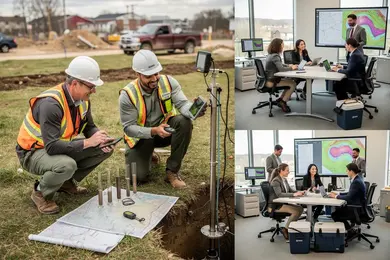
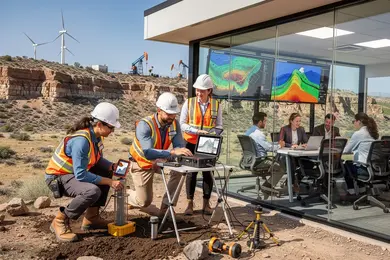
Securing an online geosciences degree specifically for environmental consulting entails weighing practical skill acquisition against the constraints of remote study, particularly limited hands-on fieldwork. Consultants addressing brownfield redevelopment, for example, depend on geosciences expertise to assess contamination risks and develop remediation plans compliant with EPA standards. Programs emphasizing skills like Geographic Information Systems (GIS), environmental regulations, and hydrogeology better position graduates for roles requiring strategic site evaluations and regulatory navigation.
The integration of the keyword online geosciences degree programs for environmental consulting fits naturally here, as candidates must filter programs by curriculum relevance and employer expectations rather than convenience alone. Currently, 47% of environmental consulting roles demand graduate-level credentials in geosciences, illustrating a workforce trend toward specialization in environmental impact assessments and complex permitting.
Professionals considering this route face tradeoffs: while online formats provide scheduling flexibility essential for balancing existing employment, they often necessitate supplemental local internships or prior field experience to meet certification or licensure standards such as Certified Environmental Professional (CEP). Employers value candidates with strong analytical training coupled with applied knowledge of environmental statutes like the Clean Water Act.
Emerging programs, like the University of Georgia's M.S. in Environmental Geology launching Fall 2025, reflect an alignment of academic offerings with workforce demands. For those exploring options, reviewing online geology programs with clearly defined practical outcomes is critical. In short, those pursuing online geosciences degree programs for environmental consulting must prioritize curricula that directly translate to field realities and regulatory compliance-informed decisions here influence employability and role readiness in a competitive, evolving job market.
Which types of online geosciences programs best support careers in environmental consulting?
Online geosciences programs tailored for environmental consulting careers must extend beyond theory to deliver applied competencies that align with industry priorities, especially in regulatory and site assessment contexts. For instance, professionals involved in Superfund site evaluations require proficiency in hydrogeology coupled with an understanding of EPA protocols, a combination emphasized through case-based learning in specialized programs. This pragmatic focus directly addresses consulting demands for compliance and contamination mitigation.
Flexibility remains a critical factor for consultants balancing work commitments and academic progression. The University of Georgia's 30-credit online M.S. geosciences program provides a relevant model by enabling students to maintain full-time employment, minimizing career interruption-a tradeoff that significantly reduces financial and professional risks compared to traditional, full-time programs that can force a six-month or longer hiatus.
Courses centered on Geographic Information Systems (GIS), environmental impact assessment, and toxicology equip consultants to deliver swift, actionable insights. For those targeting senior roles, integrating project management and environmental law compliance into the curriculum reflects the multi-stakeholder complexities encountered in the field. Employers specifically value credentials demonstrating practical problem-solving skills over purely theoretical backgrounds, which contributes to up to a 15% higher job placement rate among graduates of well-designed online programs.
The selection of the best environmental consulting courses within geosciences should also consider alignment with one's target sector, whether industrial remediation, natural resource management, or urban planning. Prospective students and working professionals can benefit from comparing programs carefully, including looking into affordability and technical focus in adjacent fields such as data analytics, as outlined in rankings for a data scientist degree.
How do online geosciences programs compare with campus-based programs for aspiring consultants?
Environmental consulting firms often prioritize immediate, applicable skills alongside minimal educational downtime, making the comparison of online geosciences programs vs campus programs for environmental consultants a critical decision factor. Online formats, like Ohio University's fully online M.S. in Geological Sciences without a thesis requirement, enable professionals to maintain full-time employment and expedite credential acquisition. However, this advantage trades off against limited hands-on fieldwork and direct industry networking opportunities, which campus programs more reliably provide.
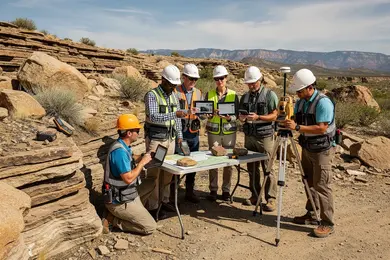
Specialized consulting roles-such as hydrogeology or site remediation-rely heavily on demonstrated field experience, often gained through physical labs and on-site projects accessible primarily in traditional settings. This gap influences hiring outcomes where practical, real-world environmental site assessment skills are indispensable.
Curriculum relevancy to current regulatory frameworks and software tools is a crucial evaluation dimension. Hybrid programs with limited on-site components offer a middle path, balancing experiential learning with flexible pacing. For those considering technology-driven fields, analyzing an online CS degree may provide additional context on accelerated completion models and flexible learning approaches.
What accreditation and quality standards should online geosciences programs in the U.S. meet?
Regional accreditation recognized by the U.S. Department of Education remains a baseline requirement for online geosciences program accreditation in the U.S., directly affecting credit transferability, federal aid eligibility, and practical workforce integration. For environmental consulting roles, employers prioritize graduates from programs with additional specialized accreditation-such as the Council on Accreditation of Parks, Recreation, Tourism, and Related Professions (COAPRT) or the Geological Society of America's Education Committee-that embed discipline-specific rigor and technical competence.
Missing these accreditations often results in programs that underdeliver on essential applied skills, including fieldwork and advanced GIS or analytical software training, which are standard expectations in quality standards for U.S. environmental consulting degrees. Without these, graduates face delays in professional certifications like becoming a Registered Geologist, stalling career progression and real-world applicability.
Working professionals pivoting careers should weigh tuition against tangible curriculum value. For example, Fort Hays State University's online environmental geosciences undergraduate tuition at $3,975.75 per semester offers a market benchmark. Significantly cheaper programs with unclear accreditation risk investment loss due to poor employer recognition or lacking applied learning.
Prospective students should also consider how effectively a program prepares them for environmental regulations and data interpretation-core competencies demanded by consulting employers. Balancing these factors is critical for avoiding setbacks in career trajectories. For insight into financially balanced advanced degrees related to environmental and data systems fields, see this resource on masters in library science.
What courses and specializations in online geosciences are most valuable for environmental consultants?
Practical skills in environmental assessment, hydrogeology, and geospatial analysis directly determine a consultant's effectiveness in environmental geosciences roles. For example, evaluating site contamination or modeling groundwater flow are specialized tasks that require hands-on expertise beyond theoretical knowledge. Consultants advising industries such as mining reclamation or urban development must navigate regulatory constraints while delivering data-driven insights, making regulatory frameworks and environmental impact assessments indispensable components of their education.
Professionals transitioning into environmental consulting face challenges acquiring tactile experience through online platforms, necessitating programs that incorporate field techniques and monitoring methods. Combining geochemistry with risk assessment enhances understanding of pollutant transport-vital for managing industrial spill responses. Additionally, climate change's influence on geological systems demands that consultants anticipate evolving environmental risks tied to long-term sustainability efforts.
Employers weigh practical software skills in environmental data analysis, sedimentology, and environmental law heavily when hiring, as these competencies facilitate complex permitting and remediation projects. Online programs offering internships or partnerships with environmental agencies improve job readiness by bridging theory with applied experience.
Given a median annual salary near $99,240 and modest job growth projections from the U.S. Bureau of Labor Statistics, specialization impacts both employability and compensation potential. Prioritizing course pathways that stress applied expertise and regulatory compliance better equips consultants to meet client needs in a competitive, highly regulated sector.
What are the typical admission requirements for online geosciences degrees for working professionals?
Online geosciences degrees tailored for working professionals prioritize foundational knowledge and relevant experience over rigid academic prerequisites. Typically, candidates hold a bachelor's degree in geology, environmental science, or related fields, but programs frequently accept applicants from unrelated backgrounds if they demonstrate prerequisite proficiency in earth sciences, math, and chemistry.
Employers and programs alike value professional experience, often considering environmental consulting work or similar roles as a proxy for formal coursework. This practical emphasis means GRE requirements are generally waived for seasoned professionals, shifting focus toward documented job responsibilities and accomplishments.
Letters of recommendation-typically from supervisors or academic mentors-can significantly influence admissions, especially for applicants whose undergraduate degrees are dated or less relevant, providing evidence of analytical aptitude and project management within environmental contexts.
Applicants should expect to submit a detailed statement of purpose clarifying how the degree supports their progression in areas like regulatory compliance, impact assessments, or remediation techniques. Time management is a substantial challenge; asynchronous course delivery helps accommodate full-time work, but rigorous deadlines tied to applied geosciences projects remain non-negotiable.
Graduates often move into fields with clear workforce demand, such as environmental consultancy or research-based roles. Ultimately, candidates must weigh the flexibility and applied learning benefits against the intensive self-discipline required to balance study with professional commitments.
How long do online geosciences programs take, and what tuition, fees, and total costs should you expect?
Completing online geosciences programs requires balancing time, cost, and career timing, especially in environmental consulting. Full master's degrees typically demand two years of full-time study, while certificates can wrap up in less than a year. Professionals juggling jobs often lean toward part-time enrollment, stretching completion to 36 months but easing upfront financial pressure.
Tuition reflects this diversity: public in-state rates range from $400 to $700 per credit, while private or out-of-state options may charge above $1,200 per credit. Overall program costs span $15,000 for certificates to $50,000+ for master's degrees, excluding ancillary obligations like textbooks, software, and exam proctoring.
Labor-market data from Lightcast demonstrates that environmental geology jobs grow at 7% annually, exceeding average occupation rates. This amplifies the value of timely program completion to access evolving job opportunities.
Key tradeoffs include choosing accelerated programs to minimize opportunity costs against longer, flexible formats that accommodate ongoing employment but potentially increase total expenses. For example, an industrial compliance specialist might prioritize part-time pacing to maintain steady income, whereas a career switcher may accept a condensed, intensive schedule despite higher upfront costs to enter the field sooner.
Practical planning should factor program length, total investment, and market responsiveness to position candidates effectively for employment outcomes aligned with median earnings growth patterns.
What entry-level and advanced environmental consulting roles can an online geosciences degree lead to?
Online geosciences degrees prepare graduates for roles that stretch from entry-level fieldwork to complex environmental consulting management, but the pathway is not without distinct practical tradeoffs. Early-career consultants often serve as field technicians or junior analysts focused on data collection and regulatory documentation, gaining essential but narrow exposure under mentor supervision. Advancement depends heavily on hands-on competence with applied tools such as Geographic Information Systems (GIS) and hydrological modeling, alongside a deep understanding of environmental regulations.
For example, environmental project managers responsible for brownfield redevelopment must coordinate diverse teams, integrate advanced risk assessments, and navigate EPA requirements-skills rarely mastered without direct project experience. Programs like Mississippi State's online Environmental Geosciences illustrate the value of integrating applied, location-based projects to bridge academic concepts and workforce expectations. This practical component is critical: candidates lacking real-world consulting experience often encounter barriers progressing beyond initial roles.
Employers prioritize geoscientists adept at managing project timelines and budgets while ensuring regulatory compliance in dynamic settings. Proficiency in environmental risk analysis and data interpretation significantly enhances job placement and earning potential, whether within consulting firms, government agencies, or private clients. The decision to pursue an online geosciences degree should weigh the program's applied learning emphasis against the candidate's capacity to acquire field-specific skills necessary for nuanced problem-solving and stakeholder communication.
What salary ranges and job outlook can geosciences graduates expect in environmental consulting?
Compensation in environmental consulting grounded in geosciences reflects a nuanced balance of technical specialization, location, and credentialing rather than baseline degree attainment alone. Starting salaries usually range from $55,000 to $75,000 annually, with mid-career professionals often reaching $85,000 to $110,000, particularly in states like Texas or California where regulatory demand is high. This payscale variance highlights the tangible impact of choosing specific regional markets and accumulating relevant certifications such as Certified Environmental Professional (CEP).
Employment growth projects an 8% increase through 2030, yet competition is significant for roles requiring expertise in GIS modeling, environmental impact assessments, and soil-water analysis. Access to advanced research tools, including comprehensive digital libraries and peer-reviewed journals provided by programs like those at Mississippi State University online, can differentiate candidates navigating this competitive landscape.
Environmental consulting roles demand adaptability to both field investigations and regulatory office work, often involving travel and direct interaction with agencies. Practical educational pathways that emphasize data analysis and compliance skills correspond more closely with employer expectations and can justify higher initial compensation or consulting fees.
How can professionals choose the right online geosciences program to advance an environmental consulting career?
Choosing an online geosciences program demands balancing accessibility with curriculum relevance to employer needs, especially for professionals pivoting into environmental consulting. Programs like Mississippi State's, which admit students with a 2.75 GPA over the last 60 credit hours without requiring foundational geosciences courses, lower entry barriers for those without prior subject experience. This flexibility broadens pipelines for firms seeking diverse skill sets.
Curriculum focus varies by intended employment sector. Consultants in corporate or private sectors benefit from applied training in contamination assessment, remediation, GIS, and project management, aligning with skill demands identified by the U.S. Bureau of Labor Statistics through 2025. In contrast, candidates aiming for federal agencies should seek programs emphasizing environmental policy and risk assessment with validated accreditation.
Logistical fit is pivotal: asynchronous formats and manageable pacing accommodate employed students better but shorter programs risk superficial coverage, potentially limiting advancement to senior roles. Programs offering practicums or industry partnerships with remote fieldwork or virtual labs often enhance practical readiness significantly over purely theoretical studies.
Prospective students must prioritize verifiable outcomes, assessing alumni employment rates in environmental consulting and salary trajectories from objective education outcome reports to avoid programs that delay return on investment.
Other Things You Should Know About Geosciences
Balancing an online geosciences program with full-time work requires careful time management and realistic expectations about workload. Many programs expect 12-15 hours per week for coursework, including labs and field assignments, which can exceed capacity for some professionals. Prioritize programs with flexible scheduling and asynchronous options to minimize conflicts with job demands. Ignoring this can lead to lower academic performance or professional burnout, so confirm how a program structures deadlines and hands-on components before enrolling.
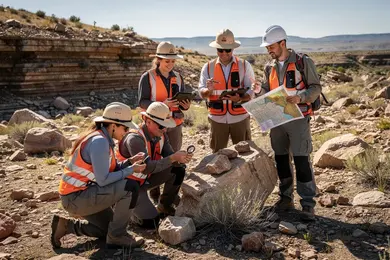
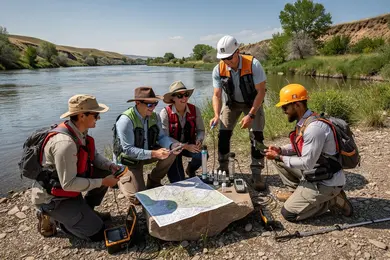
Fieldwork experience remains a decisive factor in environmental consulting competence, despite online delivery. Programs that integrate virtual labs but lack substantial field training may limit graduates' readiness for site assessments or environmental sampling. Prioritize programs that offer hybrid models or local fieldwork partnerships to ensure practical skills acquisition. The absence of real-world field exposure can impede employability in roles requiring direct environmental analysis.
Yes. Many 2027 online geosciences programs require a final capstone or thesis, often worth 3 to 6 credit hours. The project usually applies GIS, hydrogeology, or environmental site assessment methods to a real consulting problem and may need faculty approval before enrollment.
References
- Salary Insights for Environment Consultants https://theenvironmentconsultant.com/2025/02/04/salary-insights-for-environment-consultants/
- What qualifications do you need to be an environmental consultant? | HSQE Consultancy https://hsqeconsultancy.co.uk/what-qualifications-do-you-need-to-be-an-environmental-consultant/
- Study Geosciences in Germany - My GUIDE https://www.myguide.de/en/study-mathematics-natural-sciences-in-germany/study-geosciences-in-germany/
- The Geological Society - Degree Accreditation https://www.geolsoc.org.uk/education-and-resources/universities/university-degree-accreditation/
- Quality Standards and Accreditation of Distance Education Programs in a Pandemic - OJDLA https://ojdla.com/articles/quality-standards-and-accreditation-of-distance-education-programs-in-a-pandemic
- Careers in Geoscience: Environment https://www.aig.org.au/education/careers-in-geoscience/careers-in-geoscience-environment/
- Field Geologist/Scientist I - Entry Level in Oakland at Roux Consulting | Apply now! â StudySmarter â Talents https://talents.vaia.com/companies/roux-consulting/oakland/field-geologist-scientist-i-entry-level-94583178/
- Online Geoscience Degrees: Top Schools and All Programs in 2026 https://www.gisdegree.org/online/geoscience-degrees/
- How to Become an Environmental Consultant https://instituteofsustainabilitystudies.com/insights/guides/how-to-become-an-environmental-consultant/
- Prospective Students - Department of Geology and Geological Engineering https://geology.mines.edu/graduate-programs-5/