2027 Employers Hiring Most Aggressively for Geosciences Talent

Co-Founder and Chief Data Scientist
Mid-career professionals and recent graduates in geosciences confront a critical timing dilemma: employers increasingly prioritize candidates with practical, current expertise, yet traditional degree programs often require multi-year commitments incompatible with immediate workforce demands. The U.S. Bureau of Labor Statistics projects a 10% job growth in geosciences occupations through the next decade, intensifying competition and urgency for market-ready skills. Meanwhile, rising enrollment in flexible, hybrid learning models registered a 25% increase across STEM fields in 2024, signaling a broader shift in how students gain credentials without sacrificing career momentum.
Navigating educational options that align with accelerated hiring patterns remains essential. This article identifies which employers are aggressively expanding geosciences talent pools and evaluates educational strategies to maximize timely career entry or advancement amid shifting workforce expectations.
Key Things You Should Know
- Federal energy transition funding increased geosciences demand by 18% since 2023, pressuring employers to prioritize candidates with advanced hydrocarbon and renewable resource modeling, limiting entry points for bachelor's-only graduates.
- Employers report a 26% hiring gap tied to candidates lacking integrated software skills, forcing firms to invest heavily in training mid-career hires rather than recent graduates, impacting onboarding speed and project timelines.
- Average recruitment lead times extended 40% due to scarcity of specialized master's holders in geosciences analytics, inflating salary offers 12%, intensifying cost pressures on mid-sized exploration firms.
What employers hire geoscience graduates most actively?
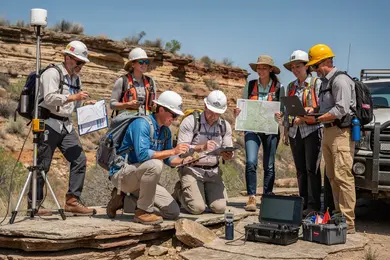
Employers hiring geoscience graduates in North America increasingly prioritize candidates who integrate core earth science knowledge with technical capabilities in GIS, remote sensing, and data analytics directed at sustainability. Mining firms, for instance, focus on advanced mineral exploration methods essential for securing raw materials critical to battery and renewable energy production, emphasizing hires who can navigate these evolving technical demands.
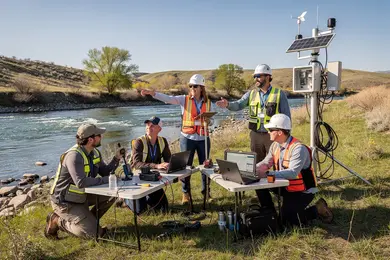
Utilities and construction companies offer contrasting yet complementary opportunities. Utilities need geoscientists adept at geotechnical assessments that underpin renewable grid expansion and climate resilience, while construction firms seek expertise in subsurface investigations and environmental impact evaluations to meet green building and circular economy objectives. This diversity of application underscores the need for graduates to tailor their skill sets toward interdisciplinary integration.
Top companies recruiting geosciences talent tend to require proficiency beyond traditional theory, including specialized certifications and digital modeling fluency. This creates a practical tradeoff for job seekers: choosing roles in sectors like professional/technical services may demand broader consulting skills, whereas positions in physical infrastructure focus more on field and regulatory knowledge.
Students and professionals considering a transition into geosciences should weigh these sector-specific expectations carefully. For individuals exploring a career pivot similar in complexity, resources like speech pathologist career guides can offer useful frameworks for managing skill realignment and market demands.
Which geoscience jobs are in highest demand now?
Demand for environmental scientists and specialists leads hiring growth within geoscience-related roles, with an estimated 7,100 job additions projected between 2019 and 2029. Employers target candidates skilled in climate risk assessment, pollution mitigation, and sustainability across energy, government, and consulting sectors. This creates the strongest opportunities for those versed in environmental regulations and data analysis. Regional nuances play a significant role; for example, energy sector geoscience jobs in North America show heightened demand linked to infrastructure and environmental monitoring needs.
Hydrogeologists and geological engineers remain vital to projects requiring precise subsurface data, often balancing fieldwork readiness with expertise in GIS and modeling software. However, mineral and petroleum geologist positions, tied to resource extraction, involve greater volatility due to reliance on commodity prices and geographic mobility, which may affect long-term stability.
Students pursuing geosciences programs should consider the tradeoff between established fields and emerging environmental roles. Favoring environmental science tracks aligns with employer priorities but demands practical preparation such as internship acquisition and multidisciplinary communication skills. Addressing these challenges improves alignment with market demands, particularly for environmental geoscientist roles in U.S. oil and gas industries.
Those comparing pathways may also examine options like an accredited online animal science degree for broader interdisciplinary exposure, though it diverges from core geoscience workforce needs.
What degree do you need for geoscience careers?
Employers hiring aggressively in the United States often look for candidates with a solid educational background, making the question of what degree do you need for geoscience careers highly relevant. The baseline for most professional roles is a bachelor's degree in geosciences, geology, or earth science, providing essential expertise in mineralogy, sedimentology, and geophysics. For instance, environmental consulting firms typically require a geology bachelor's graduate who understands site assessments and contamination risks, while energy and mining fields expect specialized knowledge like petroleum geology.
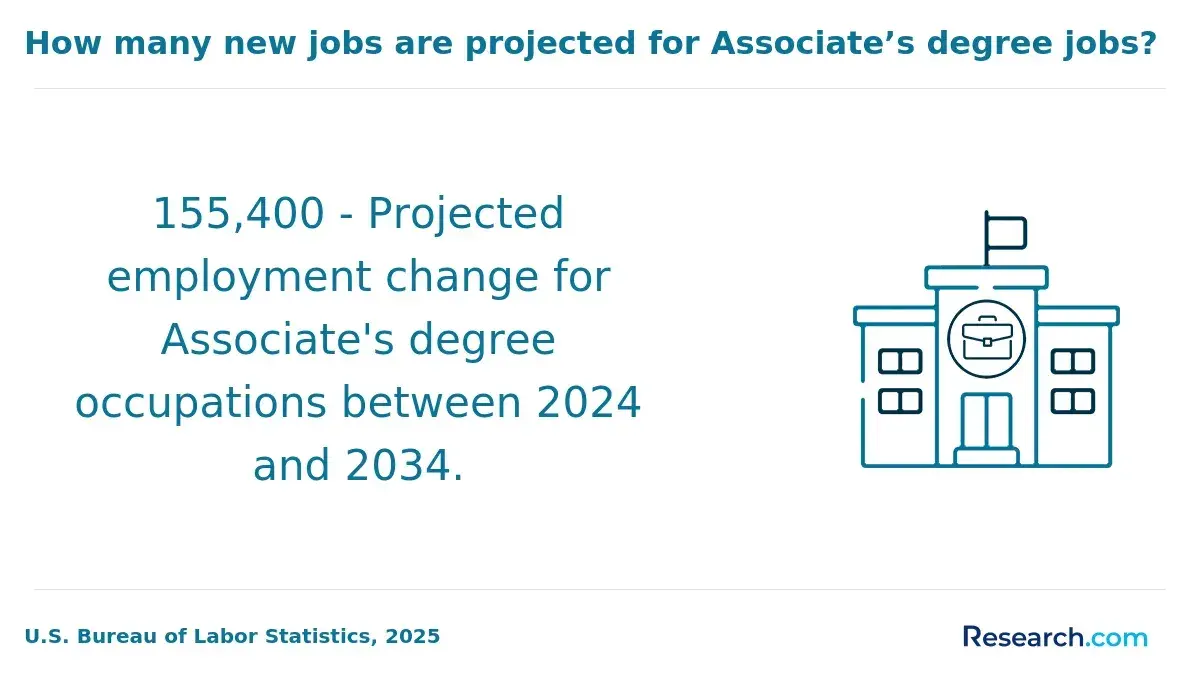
One of the fastest-growing areas is for geotechnicians, with annual job growth near 16%, surpassing broader geoscience growth. These roles often require only an associate degree or technical certification focused on applied soil analysis, drilling, and field data collection. However, advancing beyond field technician positions usually demands at least a bachelor's degree.
Graduate-level credentials-master's or PhD-are necessary for research-intensive or senior roles such as hydrogeologists or geophysicists but come with tradeoffs, including longer educational commitments and possibly less direct industry exposure. Prospective students should align degree choices with market realities and program strengths, especially those emphasizing fieldwork and local industry connections.
Those weighing options can consider how an is a library science degree worth it discussion reflects the broader challenge of balancing practical skills against academic credentials in specialized fields.
Are online geoscience degrees respected by employers?
Employers assessing online geoscience degrees focus sharply on practical experience rather than just virtual coursework. The value of accredited geoscience degrees in job market sectors like mining and environmental consulting hinges on demonstrated skill sets that extend beyond theoretical knowledge. Positions in mining companies, for example, favor candidates whose online bachelor degree includes mandatory fieldwork, documented site assignments, and internships directly aligned with industry needs.
Purely online programs lacking structured lab work or field immersion face skepticism due to critical hands-on requirements such as core sampling and geological mapping. Some roles even require licensure based on coursework with residency mandates, limiting the acceptability of fully remote degrees without hybrid components.
Prospective students should critically evaluate whether programs offer hybrid structures, capstone projects partnered with employers, or cooperative education to document applied experience. Failure to meet these criteria risks job placement difficulties despite sector growth projections of 3-5% annually through 2034. Leveraging internships and direct industry engagement often proves decisive in hiring decisions for geoscience graduates.
Balancing accessibility with rigor, students might also consider parallel degrees such as a computer science bachelor degree online for complementary skills in data analysis and modeling increasingly relevant in geoscience roles.
How do accredited geoscience programs differ from unaccredited ones?
The distinction between accredited and unaccredited geoscience programs critically shapes graduate outcomes in employability and industry relevance. Accreditation guarantees adherence to rigorous curriculum standards, qualified faculty, and practical training aligned with labor market demands, especially within professional, scientific, and technical services-a sector projected to grow 8.4% and add over 16,000 geoscience jobs from 2019 to 2029.
Employers reliably prefer candidates from accredited programs due to their demonstrated readiness for tasks like hydrogeological modeling or environmental site assessments. For example, a consulting firm hiring a water-resources geoscientist expects proficiency in specific software and regulatory knowledge often embedded in accredited curricula. Graduates of unaccredited programs frequently require extended on-the-job training, which can delay advancement and depress initial earnings.
Prospective students must weigh accreditation against factors such as faculty experience, internships, and licensure alignment. Without accreditation, credit transfers and professional exam eligibility become more complex, especially in states with stringent certification rules. This complexity often offsets the apparent lower cost of unaccredited studies by incurring hidden expenses in time and limited career mobility.
- Accredited programs provide consistency with industry needs and recognized qualifications.
- Unaccredited pathways may reduce upfront costs but carry long-term risks in employability and certification access.
- Verification via research.com can aid in evaluating program legitimacy.
What coursework is included in geoscience degree programs?
Success in geosciences degree programs hinges on balancing foundational theory with the advanced quantitative and technical skills demanded by employers, especially in sectors where median wages exceed industry norms. Core courses in mineralogy, sedimentology, and structural geology establish essential knowledge of earth materials and deformation processes, while stratigraphy and paleontology deepen analytical accuracy on earth history and fossil data. Neglecting rigorous training in geostatistics, geophysics, and remote sensing limits competitiveness in fields that rely on analyzing extensive datasets for resource exploration and environmental management.
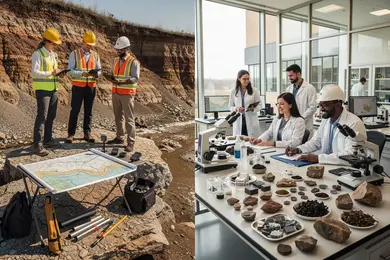
Fieldwork and laboratory proficiencies-such as sample collection, geochemical testing, and GIS software use-are non-negotiable skills shaping employability. Specialized modeling courses in subsurface simulation and reservoir characterization significantly enhance marketability for technical consulting roles and scientific services, which offer premium compensation according to Bureau of Labor Statistics data referenced by AGI.
Environmental geology and hydrogeology courses prepare graduates for regulatory and consulting roles dealing with contaminant pathways and groundwater flow, areas experiencing consistent governmental and industry demand. Students focusing on geotechnical engineering benefit from integrating soil mechanics with rock engineering principles to meet infrastructure development needs.
- Electives in scientific communication and ethics address the practical demands of interdisciplinary work and regulatory compliance.
- Forgoing advanced quantitative methods and field techniques risks reduced job prospects and a suppressed wage ceiling in geosciences occupations.
- Prioritizing hands-on modeling and data interpretation aligns directly with employer expectations in higher-wage geosciences sectors.
How long does a geoscience degree usually take?
Completing a geoscience degree involves a clear tradeoff between time investment and labor market positioning. A four-year bachelor's program remains the most common pathway for entry-level roles, but accelerated three-year tracks demand uncompromising schedules, often limiting accessibility for working adults or those balancing external duties. Professionals targeting specialized niches like hydrogeology or petroleum geology generally require at least a two-year master's extension to meet employer expectations and unlock better compensation.
Consider the growing geospatial analytics sector, where median salaries increased 4.5% from 2024 to 2025 per the American Geosciences Institute. Candidates armed with advanced degrees combined with domain-specific data science expertise gain a distinct advantage, while bachelor-level entrants face tighter competition and slower wage growth.
Beyond academic credentials, employers prioritize tangible experience. Internships, fieldwork, and research within undergraduate programs significantly improve job readiness and familiarity with emerging technologies such as AI-driven data analysis.
Students should anticipate a realistic timeline of four to six years to balance degree completion and meaningful technical exposure, since delays or insufficient applied experience can hinder competitiveness amid rapid sector innovation.
What geoscience certifications improve job prospects?
Certification in geosciences functions as a gatekeeper for both public and private sector roles, requiring candidates to align credentials with employer expectations and regulatory contexts. For instance, the Certified Professional Geologist (CPG) credential-demanding five years of experience and two exams-serves as a clear differentiator in environmental consulting or government positions that emphasize ethical and technical compliance. In contrast, roles in energy exploration favor more specialized certificates tied to resource evaluation, which face volatility in market demand.
Key hiring bodies, such as federal agencies that employ about a quarter of all geoscientists, prioritize certifications validating regulatory knowledge and practical experience in environmental policy and remediation sectors. The Certified Hydrogeologist credential from the American Water Resources Association, for example, targets water resource management, an area with consistent governmental hiring patterns.
Tradeoffs matter: Candidates must weigh longer certification timelines and upfront costs against benefits like salary premiums and job stability. The growing emphasis on documented field experience and ongoing education means that merely obtaining a certificate is insufficient without proven application. Mapping certification requirements directly to targeted employers ensures relevance, especially given divergent demands between government roles and private sector energy exploration.
What salaries do geoscience careers offer?
Salary trajectories in geoscience highlight clear tradeoffs between specialization, experience, and sector stability. Entry-level roles in environmental consulting or as field technicians start near $60,000, but advancing into petroleum geology or hydrogeology typically nets $80,000 to $95,000 mid-career. Salaries exceeding $110,000 are common in senior positions within energy firms, government agencies, or research institutions, where expertise in data modeling, GIS, or remote sensing is essential. Choosing a path in renewable energy or environmental remediation often aligns with higher-paying roles due to the demand for skills in geospatial data analysis and regulatory compliance.
Employment growth for U.S. geoscience professionals expanded to over 340,000 workers recently, signaling aggressive hiring and a shift toward flexible, including remote, arrangements. This introduces heightened competition, notably from international talent pools, making digital collaboration skills and cultural adaptability critical for securing top roles.
Educational investment decisions must balance the upfront cost and time for advanced degrees or certifications, such as data analytics or environmental law, against the probability of salary gains. Immediate entry-level jobs offer faster income but lower upward mobility without continuous skill enhancement.
For those pivoting into or advancing within geosciences, success hinges on selecting training that targets market-relevant competencies while factoring in location, sector volatility, and evolving employer expectations for technological and interpersonal adaptability.
What is the job outlook for geoscience graduates?
The geoscience job market is constrained by slow growth and a workforce shaped more by retirements than new opportunities. Forecasts indicate only a 3.7% increase in employment over a decade, equating to about 2,000 openings annually. This limited expansion concentrates hiring on mid- to senior-level replacements, reducing entry-level roles and making competition among recent graduates intense.
For example, environmental consulting firms often hire experienced geologists to manage complex regulatory challenges, sidelining fresh graduates. Similarly, sectors like oil and gas face hiring freezes influenced by commodity volatility and automation. This dynamic forces students to carefully assess their specialization, as degrees emphasizing data analytics, GIS, or renewable energy geology offer clearer pathways to employment than general geology programs.
Employers now expect candidates to bring multidisciplinary skills and applied expertise beyond foundational knowledge, raising the bar for newcomers. To navigate this environment, geoscience students should anticipate longer job searches and invest in targeted certifications, internships, and continuing education that align with industry-specific technologies. Those able to immediately fill specialized roles or mid-career positions gain a competitive edge.
Understanding these labor market realities helps students align educational choices with practical employability. This analysis draws on 2026 data from the Bureau of Labor Statistics and industry reports to provide a realistic perspective on workforce entry challenges in geosciences.
Other Things You Should Know About Geosciences
The strongest demand is in environmental consulting, energy transition, groundwater and hydrology, GIS and remote sensing, and geotechnical engineering. Employers want candidates with field methods, data analysis, and mapping skills, plus software such as ArcGIS, Python, and MATLAB. Strong internship or fieldwork experience is also a major advantage.
Specializing early narrows your skill set but often matches specific employer needs more precisely, enhancing immediate job prospects in niches like hydrogeology or petroleum geology. Generalizing allows flexibility to shift sectors but may reduce competitiveness for specialized roles that dominate hiring demand. For those targeting rapid employment, focusing on in-demand specialties aligned with regional job markets is advisable.
Advanced degrees can differentiate candidates for research, consulting, or supervisory roles but do not guarantee better job placement. Many employers prioritize field experience and technical certifications over an additional degree unless tied to specialized expertise. Assess your career goals carefully; pursue graduate education primarily if targeting leadership or R&D positions that explicitly require it, rather than assuming it accelerates entry-level employment.
Location significantly influences practical training and employment outcomes. Programs near active mining, energy, or environmental hubs often provide superior fieldwork options and stronger local employer connections. Choosing a program in a region with limited industry presence can restrict both learning opportunities and job prospects. Prioritize programs that offer strong regional ties to geosciences employers aligned with your career focus.
References
- Geology Degree Timeline | ValidGrad https://validgrad.com/blog/how-long-does-it-take-to-get-a-geology-degree/
- What Does the Future Demand Look Like for Applied Geoscientists? https://www.aegweb.org/index.php
- Geoscience Job Boards https://www.grow-geocareers.com/jobboards
- Technology-Supported Assessment Systems: A Comparison of Accredited and Unaccredited Programs https://citejournal.org/volume-13/issue-4-13/current-practice/technology-supported-assessment-systems-a-comparison-of-accredited-and-unaccredited-programs
- Accredited vs. Non-Accredited Schools: What Every Parent Should Know https://www.ieac.org.uk/66-Accredited-vs-Non-Accredited-Schools-What-Every-Parent-Should-Know--blog.php
- 15 Best Certifications for Geologists in Nigeria (2026â2026 Guide) | Profolio https://www.profolio.ng/geologist/best-certifications
- The Geological Society - Degree Accreditation https://www.geolsoc.org.uk/education-and-resources/universities/university-degree-accreditation/
- GEOXPERT HUB | Exploration Geology Job Vacancies and Internships https://www.geoxperthub.com/employment/job-vacancies/exploration-geology.php
- Geoscience Careers https://education.americangeosciences.org/resources/geoscience-careers/
- AGI Geoscience Currents: Geoscience Employment Begins to Rebound in 2021 - American Institute of Professional Geologists https://aipg.org/news/579137/AGI-Geoscience-Currents-Geoscience-Employment-Begins-to-Rebound-in-2021.htm