2027 Best Online Geosciences Degrees for Water Resources Careers

Co-Founder and Chief Data Scientist
Water resource professionals increasingly face the challenge of mastering complex watershed management and hydrological modeling while balancing full-time employment and evolving regulatory demands. As workforce data from the National Center for Education Statistics shows a 38% surge in adult enrollment in online STEM degrees since 2022, flexibility has become essential to maintaining career momentum. This shift reflects a growing need for programs that accommodate professionals juggling fieldwork, certifications, and continuing education.
Navigating these constraints calls for strategic selection of online geosciences degrees that provide relevant skills without sacrificing accessibility or advancement opportunities. This article evaluates top online geosciences degrees tailored for water resource careers, enabling informed decisions that align educational outcomes with real-world professional demands.
Key Things You Should Know
- Graduate employment in water resources-related geosciences roles is concentrated among programs offering integrated hydrology-mapping curricula, with the US Bureau of Labor Statistics noting 12% higher placement rates versus general geoscience degrees, impacting ROI prioritization.
- Employers prioritize graduates with remote sensing and GIS proficiency, with 68% of national water agencies citing these skills in 2024 workforce surveys, forcing candidates to weigh program specialization tradeoffs against broad foundational training.
- Remote online geosciences degree costs average 25% less but extend median completion time by 18 months, per NCES data, introducing a timing-versus-expense tension critical for mid-career professionals targeting rapid sector entry.
What is an online geosciences degree for water resources and who is it best for?
Online geosciences degree programs for water resource management require students to navigate the tradeoff between theoretical mastery and limited hands-on access typical of remote learning. For example, a municipal water manager applying groundwater modeling to advise infrastructure investments must develop GIS proficiency and familiarity with regulatory frameworks - skills emphasized in well-structured online curricula but difficult to acquire without lab or field experiences. This gap obliges prospective students to prioritize programs integrating internships or fieldwork to boost applied competence.
The best online geosciences courses for water careers in the United States focus on hydrology, groundwater management, and environmental impact assessment while enabling working professionals to study without relocating. Employers expect graduates to demonstrate readiness in hydrological modeling and regulatory compliance, so program accreditation and evidence of practical learning opportunities are critical selection criteria.
In practice, environmental consultants use remote sensing data to evaluate contamination risks, showcasing the diverse applications of this degree. According to the U.S. Bureau of Labor Statistics, geoscientists earn a median salary of $99,240 annually, with employment growth projected at 3% through 2034, signaling steady demand in water-related roles.
For those assessing strategic career pivots, understanding realistic skill acquisition pathways and workforce expectations is essential. Students looking at compensation comparisons across fields may also consider resources like the speech pathologist salary as part of their broader decision-making process.
How do online geosciences degrees compare with on-campus programs for water resources careers?
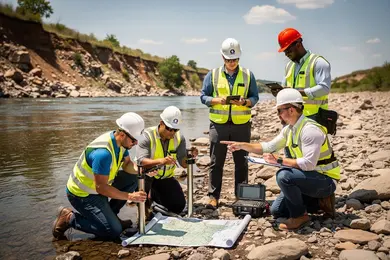
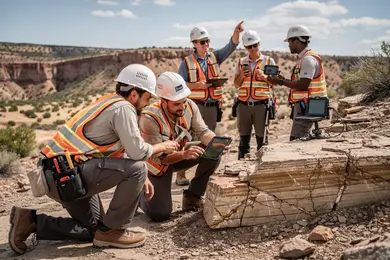
Choosing between on-campus and online geosciences programs for water management involves critical tradeoffs that affect career readiness and employability. While both paths provide foundational knowledge, on-campus programs deliver immersive hands-on training-fieldwork, lab access, and direct faculty mentorship-often preferred by employers for roles requiring practical hydrogeological skills. For example, a government hydrology position focused on groundwater sampling or flood risk assessment necessitates mastering in-person methodologies that online formats alone struggle to replicate.
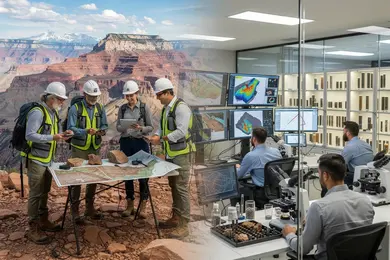
Employers universally expect proficiency with Geographic Information Systems (GIS) and quantitative analysis. Online geosciences degree benefits for water resources careers often center on flexible schedules and technology-driven simulations that efficiently build these competencies, especially for working professionals or remote students unable to attend campus. However, online students must actively pursue local internships or research assistantships to offset limited direct field exposure.
The U.S. Bureau of Labor Statistics forecasts a modest 3% employment growth for hydrologists through 2033 with 500 annual openings, reinforcing steady demand across environmental agencies and consulting firms. Candidates aligning their education with explicit employer expectations and skill requirements gain a distinct advantage.
Students interested in remote learning options may find the online environmental engineering degree pathways relevant for integrating technical expertise with geosciences frameworks while balancing logistical constraints.
What types of online geosciences degrees prepare you for water resources jobs?
Online geosciences degrees for water resources management carry significant employability implications, particularly when specializing in hydrogeology, environmental science, or conservation science. These programs must go beyond foundational knowledge to integrate applied geospatial analysis, groundwater hydrology, and regulatory frameworks to meet the expectations of government agencies and consulting firms focused on water quality and resource sustainability.
Consider a professional moving from general environmental consulting into hydrology: without specific training in groundwater modeling and contaminant transport, their qualifications may fall short in competitive job markets. Programs emphasizing environmental policy and land use planning further equip candidates to navigate the competing demands of agriculture, urban development, and conservation.
Among the best geosciences programs for careers in water resources, rigorous coursework combined with internships or capstone projects tied to real-world water agencies enhances workforce readiness. The University of Texas Jackson School of Geosciences data shows median annual wages of $85,990 for hydrologists and $76,480 for environmental scientists, reflecting the economic value of targeted specialization.
Prospective students should also evaluate program accreditation and licensure support, especially where state certification applies. Selecting electives or certifications that address emerging issues like climate impact modeling or advanced remote sensing can affect long-term adaptability in evolving sectors.
For those comparing disciplines, it's worth noting that degree pathways vary widely in focus and practical outcomes. Exploring related fields such as exercise science degrees online may offer alternative career pivots but differ substantially in technical demands and employment contexts.
How can you verify accreditation and program quality for online geosciences degrees?
For those assessing online geosciences degree accreditation standards, regional accreditation remains non-negotiable, as state licensure and employer recognition heavily rely on it. Specialized accreditation or endorsement by bodies like the American Geosciences Institute can signal a curriculum tuned to industry needs, which is particularly important for water resources online geosciences degrees focusing on applicable skills such as hydrology and GIS. Without this alignment, graduates risk entering a workforce where their training does not meet practical demands.
Employment outcomes and curriculum relevance should drive program selection. Programs with documented graduate placement rates, partnerships for internships at water resource agencies, and faculty engaged in current research provide tangible indicators of quality. For example, a hydrology-focused degree that integrates data analysis and environmental modeling better prepares candidates for government or consulting roles requiring those competencies.
Cost considerations influence accessibility and completion timelines; Southern New Hampshire University's rate of $320 per credit hour suggests a lower barrier relative to market averages, which can affect how quickly students finish and enter the workforce. However, cost alone doesn't compensate for shortcomings in accreditation or practical curriculum components.
Also critical is flexibility for working professionals through asynchronous learning and strong technical support. Balancing these factors with accreditation and outcome metrics forms the baseline for a valid, career-relevant credential. For comparative context on educational expenses, see analyses of mechanical engineering degree online cost.
What courses and specializations focus on water resources within online geosciences programs?
Specialized online geosciences programs in water resources prioritize skills directly tied to employer needs in freshwater management, contamination mitigation, and regulatory compliance. Graduates aiming for municipal water management or environmental consulting roles benefit from coursework in water treatment technologies, ecosystem restoration, and water resource economics, which correlate with infrastructure planning and legal frameworks. In contrast, candidates targeting research or federal agency work require stronger grounding in climate impact modeling and hydrosystems engineering for long-term resource planning and risk assessment.
Practical experience remains a critical hurdle for remote learners, as access to lab facilities or fieldwork is limited. Effective online programs address this through virtual simulations, remote data analysis, and capstone projects reflecting real-world water management challenges.
Core technical offerings typically include groundwater flow analysis, surface water quality assessment, geospatial data techniques like GIS, and policy applications. Students must weigh regional industry demands and varying state regulations when selecting programs, especially those incorporating updated EPA standards and USGS data. For example, Georgia Military College Online's estimated cost of $8,415 for 45 quarter hours represents a comparatively affordable route versus more costly traditional degrees without narrow water resource specialization, highlighting tradeoffs in cost versus focused applicability.
What are typical admission requirements, timelines, and program lengths for these online degrees?
Online master's degrees in geosciences with a water resources focus demand prior academic and practical grounding, typically a bachelor's in earth sciences, environmental science, engineering, or related disciplines, often with at least a 3.0 GPA. Applicants should expect prerequisite coursework in calculus, chemistry, and geology as foundational, while GRE requirements vary, reflecting some programs' flexibility based on professional experience.
Program durations generally span 18 to 36 months depending on enrollment pace and research obligations. For example, the University of Oklahoma's online Master of Environmental Science in Hydrology and Water Security requires around 30 credit hours and costs about $1,015 per credit, which totals approximately $30,450. This investment must be weighed against the potential for specialized skill acquisition in hydrological modeling, GIS, and sustainable water management-skills increasingly prioritized by employers in public and private sectors.
Professionals working full-time benefit from flexible pacing options but should consider that competitive programs fill quickly and may emphasize quantitative proficiency and real-world problem-solving ability in admissions. Prior water resource management experience can substitute for some academic prerequisites but verifying financial aid eligibility remains important given variations in tuition assistance for online learners.
Entering students with interdisciplinary backgrounds should anticipate addressing technical gaps early, especially mastering data analysis tools essential to workforce readiness in hydrological and environmental problem-solving contexts.
How much do online geosciences degrees cost and what financial aid options are available?
Costs for online geosciences degrees vary notably, typically between $15,000 and $45,000 in total tuition, influenced by public versus private institutional status and residency factors. Public universities often provide more affordable in-state rates, whereas private and out-of-state options increase financial commitment, especially when lab fees and digital resources integral to water-focused curricula are factored in. For professionals assessing these programs, the critical measure is the return on investment relative to local salary ranges, such as the University of Wisconsin-Green Bay data showing water scientists earning approximately $61,535 to $68,692 annually, which supports degrees priced below $45,000 as financially viable.
Financial aid sources are varied but come with conditions: federal Pell Grants serve lower-income students without repayment obligations, university scholarships require early applications and GPA adherence, and employer tuition reimbursement can fully fund education though it demands ongoing employment commitment. Federal Direct Loans are considered last-resort options, offering fixed low-interest rates and income-driven repayment plans but increase debt burden.
Applicants must prioritize thorough and timely FAFSA submissions for aid eligibility and monitor deadlines carefully. State and regional workforce grants tied to geosciences and water resource roles offer additional funding aligned with sectors experiencing projected 6% job growth through 2030. These nuances affect financial planning and strategic positioning in public sector and environmental technician careers.
What water resources careers can you pursue with an online geosciences degree?
Online geosciences degrees with a focus on water resources position graduates for practical roles in managing and mitigating water challenges but require more than theoretical knowledge to succeed. Employers increasingly seek candidates skilled in hydrologic modeling, GIS data analysis, and regulatory frameworks, reflecting a shift toward applied STEM competencies rather than purely academic credentials.
Water resource management careers typically demand direct experience in designing sustainable systems for agriculture or urban infrastructure, while groundwater remediation specialists need to navigate environmental regulations and implement contaminant treatments. Hydrologic modelers play a vital role in simulating flood risks and drought impacts, which informs infrastructure planning and disaster management efforts.
The field faces a narrowing supply of qualified geoscience graduates amid employment growth projections of about 5% through 2031, according to data from the University of Pennsylvania's Master of Science in Applied Geosciences program and the American Geosciences Institute. This scarcity drives employers to favor candidates with certifications and hands-on experience, often accessible only through targeted online programs or practicums.
Professionals pivoting from related STEM fields should expect to invest significant effort into acquiring field-specific knowledge and applied skills. Employers prioritize demonstrable expertise via internships or projects over academic transcripts alone, underscoring a practical skills gap that must be addressed for successful entry into the water-focused geosciences job market.
What salary ranges and job outlook can geoscience water resources professionals expect?
Salary progression in geoscience water resources closely tracks specialization and years of experience, with clear distinctions emerging between technical and leadership roles. Professionals with 3-7 years in hydrology, groundwater modeling, or watershed management typically earn between $62,090 and $80,060 annually. Moving beyond this phase to senior-level roles-often requiring 7-15 years-means shifting from hands-on tasks to project leadership and interdisciplinary coordination, with salaries rising to $80,060-$103,730. Leadership positions, which also demand management and regulatory negotiation capabilities, commonly surpass this range.
This segmented growth reflects employer priorities, especially in sectors like environmental consulting, government agencies, and water utilities where combining field knowledge with data analytics and regulatory expertise is essential. For instance, water resources engineers focused on drought mitigation infrastructure tend to command salaries at the higher end due to localized demand and project complexity.
The job market remains steady but favors candidates supplementing geoscience degrees with GIS or data science, without which salary advancement slows. Tradeoffs are evident: while entry-level roles offer immediate employment, lacking advanced skills delays access to senior positions and leadership opportunities, making continued education a strategic consideration. Practical workforce preparation hinges on balancing early field experience against investment in specialized technical skills to navigate this career landscape effectively.
How do licensing, certifications, and professional membership affect water resources careers?
Licensing and certifications serve as gatekeepers in water resources careers, particularly for roles with regulatory responsibility or advanced technical demands. For example, holding a Professional Geologist (PG) license or Certified Hydrogeologist credential is often non-negotiable for senior positions in state agencies or consulting firms managing groundwater assessments and water quality compliance. These credentials provide measurable assurance of a professional's applied knowledge, which employers weigh heavily when assigning project leadership or risk-sensitive duties.
Without such licenses, professionals frequently find themselves confined to entry-level or supporting roles, where salary and advancement potential lag significantly. In California, state water resources roles illustrate this, with salaries ranging from $62,880 to over $132,210-higher pay brackets generally accessible only to credentialed individuals, according to the California Department of Water Resources.
Joining professional organizations like the American Water Resources Association expands networks and access to niche opportunities but requires balancing membership costs and time against career stage priorities. Obtaining licensure demands documented work experience and passed examinations, introducing a temporal hurdle that delays full entry into higher-tier roles but increases long-term labor market viability.
Pragmatically, candidates aiming for regulatory careers should prioritize licensure and professional affiliations early, whereas those leaning toward research or technical support roles may place greater value on advanced degrees rather than certification. Strategic credential planning is necessary to align educational investment with realistic career trajectories and employer expectations.
Other Things You Should Know About Geosciences
Online geosciences programs often require equal rigor to on-campus degrees but shift the pacing responsibility to the student. Many programs incorporate synchronous sessions, complex data analysis projects, and independent fieldwork, which demand disciplined time management. Prospective students should evaluate whether the program's schedule flexibility matches their capacity to maintain consistent study habits amid other commitments. Choosing programs with structured cohort models generally improves accountability and completion rates.
Employer acceptance largely depends on the program's accreditation and the reputation of its institution rather than the delivery mode alone. Graduates from regionally accredited programs featuring robust technical coursework and virtual lab simulations are competitive, though some employers may prefer candidates with hybrid or in-person field experience. Candidates should supplement their degree with internships or professional certifications to overcome any perceived gaps in practical skills.
Yes. Many 2027 online geosciences programs require an in-person field course, lab intensive, or supervised internship before graduation. These components often total 1 to 6 credit hours and may be completed during summer sessions, because employers and licensure boards value direct sampling, mapping, and hydrology experience.
References
- Water Industry Certifications – Career & Salary Guide https://jobs.watertechintel.com/water-certifications
- Water Career Guide - Freshwater Society https://freshwater.org/watercareerguide/
- Are Online Degrees Accredited? How to Identify Quality Distance Learning Programs https://www.umassglobal.edu/blog-news/online-degrees-accredited-identify-quality-distance-learning-programs
- The Geological Society - Degree Accreditation https://www.geolsoc.org.uk/education-and-resources/universities/university-degree-accreditation/
- Water Resources Engineering https://www.asce.org/career-growth/civil-engineering-certification/water-resources-engineering
- Online Geoscience Degrees: Top Schools and All Programs in 2026 https://www.gisdegree.org/online/geoscience-degrees/
- Are Certified Professionals More Likely to Get Hired? https://www.financialprofessionals.org/training-resources/resources/articles/Details/are-certified-professionals-more-likely-to-get-hired
- Eau-Ressource (ER) https://formations-en.umontpellier.fr/fr/formations/master-XB/master-sciences-de-l-eau-ME143/eau-ressource-er-KKIDV3T2.html
- Courses and education in water resources https://eng.geus.dk/products-services-facilities/training-courses-and-excursions/courses-and-education-in-water-resources
- Geoscience Careers https://education.americangeosciences.org/resources/geoscience-careers/