2027 Online Geosciences Degrees for Environmental Monitoring Roles

Co-Founder and Chief Data Scientist
Environmental monitoring professionals often confront urgent challenges tracking pollutant dispersal in remote or hazardous locations while balancing the constraints of rapidly evolving regulations. This dynamic demands advanced analytical skills alongside flexible education routes that accommodate full-time jobs and shifting field conditions. With the National Center for Education Statistics revealing a 21% increase in adult enrollment for online science degrees since 2023, prospective geosciences students now face both unprecedented accessibility and the complexity of selecting programs that truly equip them for high-stakes fieldwork and data interpretation.
This article examines accredited online geosciences degree options optimized for environmental monitoring careers, focusing on program structures, career relevance, and workforce alignment to aid strategic educational decisions.
Key Things You Should Know
- Remote lab limitations in online geosciences degrees reduce hands-on field skill acquisition by 20%, complicating readiness for environmental monitoring roles where in situ data collection is critical, per U.S. Bureau of Labor Statistics 2024.
- Employers report 35% lower preference for exclusively remote degrees in environmental agencies, emphasizing hybrid credentials to validate practical competencies and cross-disciplinary collaboration, according to NSF workforce surveys.
- Online programs reduce geographic and financial barriers, cutting relocation costs by up to $15,000, but extend average completion time by 12 months, delaying workforce entry amidst urgent demand in climate-sensitive monitoring sectors.
What is an online geosciences degree for environmental monitoring and how does it work?
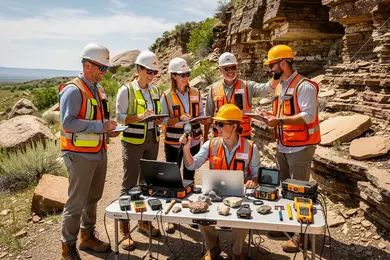
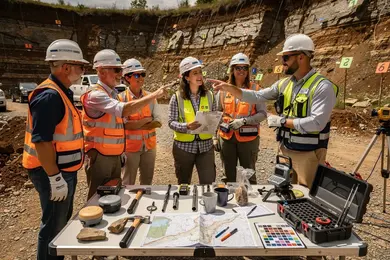
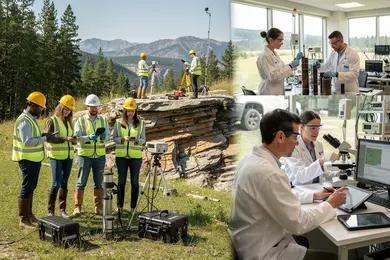
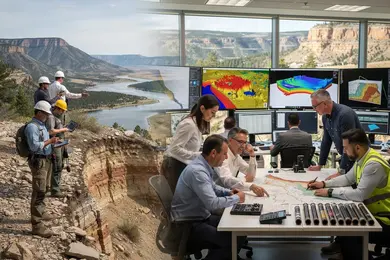
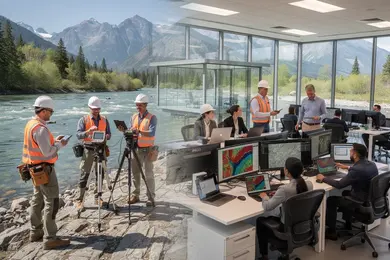
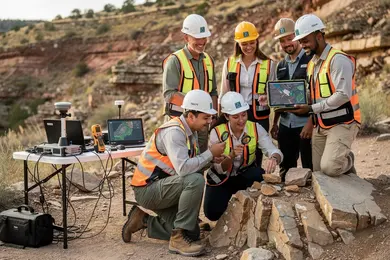
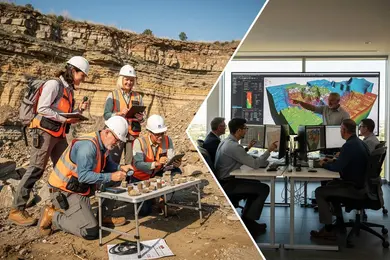
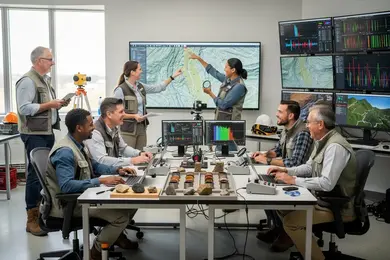
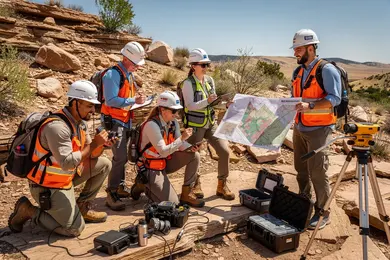
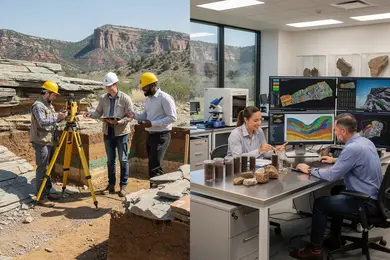
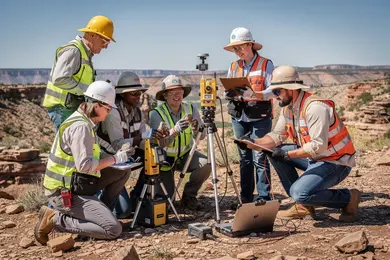
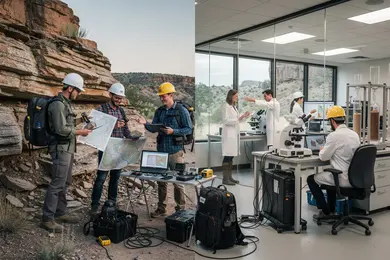
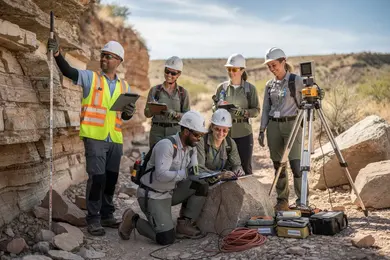
An online geosciences degree designed for environmental monitoring demands more than theoretical knowledge; it requires concrete skills in geospatial technologies, environmental data modeling, and regulatory compliance. Students must navigate a hybrid learning model combining self-paced digital coursework with virtual labs and necessary in-person field experiences, which are essential to acquiring practical expertise. This structure offers flexibility but also introduces logistical challenges, particularly regarding access to specialized fieldwork equipment and scheduling.
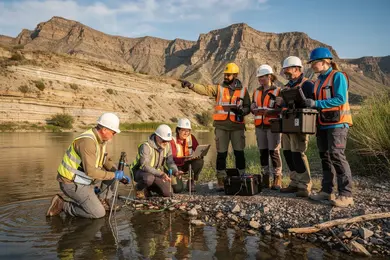
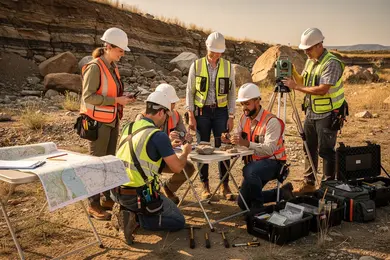
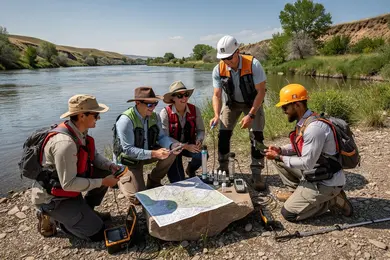
Professionals leveraging online geosciences degree programs for environmental monitoring often find themselves conducting groundwater contamination assessments for municipal agencies or using satellite data to monitor deforestation trends in conservation efforts. Employers increasingly expect graduates to present verifiable experience in environmental sampling and data management, typically gained through capstone projects or partnerships with local organizations.
Those pursuing a geology online degree through accredited online programs benefit from reduced commuting time and broadened access to specialized curricula, particularly when physical relocation is impractical. However, students must be proactive in organizing fieldwork and demonstrate high technical aptitude and self-discipline to succeed. The tradeoffs between flexibility and hands-on training capacity can shape both educational outcomes and employability in environmental sectors.
The U.S. Bureau of Labor Statistics reports a median annual wage of $99,240 for geoscientists, with expected job growth of 3% through 2034 and around 2,000 openings yearly, driven in part by environmental monitoring demands. Individuals evaluating this path should consider how an online geosciences degree supports environmental monitoring careers realistically and align their choices with workforce expectations.
Resources that map top programs and credentials in this domain can provide strategic guidance, including comprehensive rankings of quality programs such as those outlined in the geology online degree reviews.
Which types of online geoscience degrees prepare you for environmental monitoring careers?
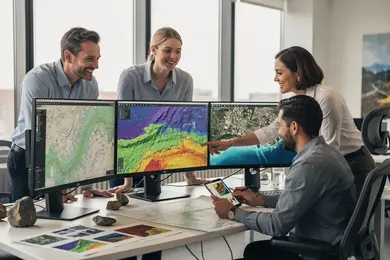
Selecting online geosciences degrees for environmental monitoring careers requires careful consideration of practical skill development and employer expectations. Programs focusing on environmental science provide essential expertise in ecosystem assessment and pollution tracking, while geology emphasizes earth materials and hazard evaluation critical to identifying contamination sources. Geospatial science degrees leverage GIS and remote sensing technology, skills increasingly demanded for real-time analysis of pollutant dispersion and land-use change.
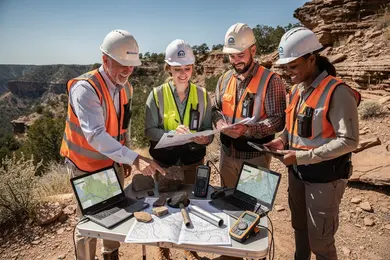
Employers prioritize candidates with hands-on experience, particularly those trained in software like ArcGIS or QGIS, as demonstrated in applied projects within online geosciences programs. This practical training directly influences hiring in sectors such as water resource management and industrial pollution control. Graduates lacking exposure to fieldwork or lab components may face challenges in roles requiring regulatory compliance and environmental reporting, underscoring the importance of programs that balance theory with field simulation.
The U.S. Bureau of Labor Statistics projects a steady 4% job growth for environmental scientists with a median salary near $80,000, highlighting ongoing demand. However, the limited availability of fully online degrees integrating comprehensive applied training means students must evaluate program design carefully against career goals and workforce realities. For those exploring complementary competencies, considering options such as an online MS data science may enhance data analysis capabilities relevant to environmental monitoring tasks.
The best online geosciences programs for environmental monitoring jobs will clearly specify the extent of fieldwork, software training, and regulatory content, enabling informed decisions that reflect the tradeoffs between accessibility and employability.
How do online geoscience programs compare with on-campus options for environmental monitoring roles?
Online geoscience degrees versus on-campus programs for environmental monitoring present a clear operational tradeoff: theoretical learning parity clashes with practical skill gaps. Virtual simulations and remote data exercises replace traditional in-person lab work and field surveying, which remain critical for roles requiring hands-on proficiency with geological and GIS mapping tools. Employers often prefer graduates with direct field experience, favoring on-campus educations or those online students who proactively secure internships or regional fieldwork.
Geoscience students focusing on cartography and photogrammetry, vital for environmental roles, must weigh access to updated GIS labs and licensed software typically available on-campus against the flexibility of online education. These GIS professionals earned a median salary of $78,380 with projected employment growth of 6% from 2024 to 2034, reflecting the market demand for spatial data analytics skills integrated with environmental knowledge.
Flexibility and career outcomes of online environmental monitoring geoscience education depend heavily on students taking initiative to obtain field experience. Rigorous online programs that enforce project-based assessments and partnerships with local agencies can mitigate practical shortcomings but may delay skill accreditation, affecting early-career salary negotiations.
Prospective students should critically assess program structures, prioritizing those with mandatory internships or hybrid options for stronger alignment with employer expectations. Additionally, individuals exploring interdisciplinary pathways may consider a library science degree to complement environmental data management skills in geosciences.
What accreditation should online geoscience programs have for environmental monitoring careers?
Accreditation plays a decisive role in the value of an online geosciences degree for environmental monitoring careers. Programs lacking recognized regional accreditation certified by the U.S. Department of Education or the Council for Higher Education Accreditation (CHEA) risk producing graduates with limited eligibility for federal financial aid and diminished employer credibility. Beyond general academic standards, targeted certifications from bodies like the Association of Environmental and Engineering Geologists (AEG) or the American Geosciences Institute (AGI) reinforce program alignment with industry requirements.
Demand for GIS and remote sensing competencies is expected to grow approximately 9% annually through 2028, with the U.S. Bureau of Labor Statistics projecting a 5% employment increase in GIS-related roles through 2030, making curriculum rigor in these areas critical. Online geosciences degree accreditation for environmental monitoring must verify that practical GIS tool applications, spatial analysis, and remote sensing interpretation are integral components.
For professionals pivoting careers, choosing a program endorsed by environmental regulatory bodies enhances internship and on-the-job training opportunities, which are often prerequisites for certifications required in environmental consulting or government monitoring roles. Institutions without recognized credentials risk offering outdated content and limited workforce relevance, creating gaps that hinder employment outcomes.
Evaluating recognized geosciences program certifications in North America involves weighing accreditation's practical advantages against potential student friction and employability barriers. Prospective students should also consider pathways like military friendly online electrical engineering degree programs when broadening technical skill sets relevant to environmental monitoring.
What courses and specializations are included in online geosciences for environmental monitoring?
Transitioning into environmental monitoring through online geosciences programs demands prioritizing skill sets explicitly valued by employers, such as contaminant transport modeling and geospatial data analytics. For professionals shifting from general earth sciences to environmental consulting, mastering pollutant dispersion models and GIS applications is essential for competitiveness.
Workforce demand increasingly targets candidates who not only understand environmental systems but can leverage quantitative tools for risk assessment and regulatory compliance; this requires coursework in statistics and data analytics integrated with hands-on data interpretation exercises.
Tradeoffs in program selection frequently hinge on balancing cost, curriculum relevance, and practical exposure. For example, Massey University's estimated 2026 on-campus tuition of NZ$8,420 (domestic) versus NZ$42,300 (international) highlights the financial burden absent in many online formats, which reduce geographic and scheduling barriers for working students.
Effective online geosciences education often rests on modular course designs that accommodate professional schedules and include lab simulation software to mitigate limited fieldwork opportunities. Students should confirm a program's emphasis on active instructor-led data analysis to develop competencies directly applicable to monitoring water quality, soil contamination, and ecosystem services evaluation.
- Core topics: earth system science, remote sensing, hydrogeology, environmental chemistry
- Skills focus: pollutant transport modeling, climate impact assessment, geospatial regulatory compliance
- Practical outcomes: data collection, processing, interpretation for environmental risk management
What are the typical admission requirements for online geoscience degrees in this field?
A bachelor's degree in a STEM or related field, accompanied by foundational chemistry, physics, and math coursework, remains the baseline for admission into online geoscience programs focused on environmental monitoring roles. Programs typically demand a minimum 3.0 GPA on a 4.0 scale, evidencing quantitative rigor essential for analyzing environmental data. Applicants with prior earth science or introductory geology coursework hold a strategic advantage, given the technical complexity of advanced environmental monitoring topics.
Standardized tests like the GRE are optional in many cases but may still be required by selective programs or candidates with unconventional academic histories. Working professionals aiming to pivot into environmental geosciences can bolster their applications through detailed statements of purpose emphasizing experience in data analysis or fieldwork relevant to environmental contexts.
Access to reliable technology is non-negotiable, as coursework heavily involves GIS software, remote sensing platforms, and environmental modeling tools. Some programs require demonstrated familiarity with such software or successful completion of preparatory modules before full admission.
Employers prioritize candidates who combine analytical skills with practical technological proficiencies, a reflection of the geospatial analytics market poised to nearly triple by 2030-2035, driven by AI and environmental demand. Admission committees seek evidence of aptitude in data science integration and technology use, often requesting professional resumes and letters of recommendation that validate analytical capability and commitment to environmental applications. These admission criteria reflect evolving labor market needs highlighted by Project Geospatial at Montana State University Billings.
How long do online geoscience programs take and what do they cost?
Choosing an online geoscience program requires balancing time-to-degree completion with real workforce dynamics, especially in sectors like clean energy where hiring rapidly outpaces qualified talent. Accelerated bachelor's programs, typically 3 to 4 years, can mitigate missed opportunities in a labor market growing 11-12% annually, compared to roughly half that supply growth for candidates.
Associate degrees usually span about two years, while master's degrees add one to two years post-bachelor's, varying by research demands or thesis completion. Learners working full-time often extend timelines due to obligatory fieldwork or lab practicums, which sometimes require attendance during summers or intersessions.
Cost considerations further complicate the decision: bachelor's tuition ranges from approximately $25,000 to $60,000, while master's programs typically fall between $15,000 and $40,000, with extra fees for field materials, software, and travel. Public universities generally provide more affordable options compared to private institutions. Financial aid and employer assistance are often essential to managing these expenses.
Evaluating how much hands-on lab or field time is required-and whether these components offer remote flexibility-is critical. Programs integrating direct employer collaboration and career services can enhance job readiness and shorten time-to-hire. Without these alignments, even highly credentialed graduates may face underemployment in a competitive labor market that favors timely degree completion.
What jobs can you get with an online geoscience degree in environmental monitoring?
Graduates with an online geoscience degree in environmental monitoring gain direct access to specialized roles where technical skill intersects with regulatory enforcement. Positions such as environmental compliance specialist, water quality analyst, and air quality technician require proficiency in analyzing soil, water, and atmospheric data to detect contamination and advise remediation efforts. For instance, a water quality analyst at a municipal utility leverages geospatial tools and lab results to identify pollution trends, an operational detail demanding both technical and regulatory expertise.
The field advances beyond entry-level roles into managerial or consultancy positions, including environmental project manager and remediation consultant. These higher-responsibility jobs typically command median salaries exceeding $90,000, compared to about $70,000 for standard environmental scientists, according to the US Bureau of Labor Statistics. Such figures reflect the added complexity in decision-making inherent to environmental monitoring careers.
Employers emphasize hands-on experience with geographic information systems (GIS), remote sensing, and environmental data modeling. Online degrees often provide foundational training in these areas but usually require supplementation through internships or certificates to overcome hiring challenges caused by limited field exposure.
Job growth in this sector outpaces average occupational trends due to stricter environmental regulations and growing demands for sustainable resource management. Roles span government agencies, energy sectors, and public health organizations, with some necessitating state licensure or additional certifications. Prospective students must weigh these credentialing requirements alongside practical training opportunities when selecting online options.
What is the salary potential and job outlook for environmental monitoring roles in geosciences?
Environmental monitoring roles within geosciences offer differentiated salary outcomes tied closely to technical competencies and sector specialization. Entry-level positions typically command between $55,000 and $70,000 annually, but specialists proficient in data analysis and remote sensing frequently surpass $90,000, especially when affiliated with renewable energy projects or stringent regulatory environments.
The clean energy segment has expanded by roughly 11-12% globally during 2023-24, outpacing the supply of qualified candidates. This demand imbalance elevates the value of practical skills in geographic information systems (GIS), environmental impact assessment, and field data acquisition. Candidates lacking these interdisciplinary skills often encounter slower advancement and fewer opportunities.
Professionals engaged in solar and wind energy projects must navigate complex environmental risk assessments alongside permitting deadlines, making their roles critical to project viability and timeline adherence. This intricate balance typically corresponds with higher compensation and greater job security.
Job gains are strongest within government agencies, environmental consulting, and climate resilience nonprofits. However, workforce shortages necessitate strategic credentialing combined with targeted internship or co-op experiences to translate academic knowledge into immediate employment readiness.
- Entry-level salaries: $55,000-$70,000
- Experienced specialists: $90,000+
- Skills in GIS, impact assessment, data acquisition prioritized
- Strong growth in clean energy and government sectors
How can you choose a reputable online geoscience program for environmental monitoring work?
Selecting an online geoscience program demands scrutiny beyond accreditation or course listings. The most viable options are those embedding clear applied skill development in areas like hydrology, GIS, and environmental data analysis linked to regulatory or industry standards. For example, with hydrology roles paying a median of $92,060 annually and showing steady job openings, programs emphasizing quantitative training and proficiency with government datasets notably boost employment prospects.
Practical experience components-such as virtual labs, internships, or fieldwork alternatives-are essential because purely theoretical instruction often fails to replicate real-world monitoring challenges. Prospective students working full-time should weigh asynchronous courses against their ability to meet deadlines, while those aiming for federal employment must ensure programs meet U.S. Office of Personnel Management credentialing guidelines.
Consider faculty expertise and their engagement with current environmental projects; limited access or outdated scholarship signals a weaker program. Reliable graduate outcomes, particularly employment rates within environmental agencies or consulting firms, provide tangible measures of program effectiveness and value.
Finally, technology support should accommodate geoscience software demands to avoid remote learning friction. Choosing a program without transparent outcomes data or with vague learning goals may lead to costly dead ends rather than functional career pathways.
Other Things You Should Know About Geosciences
Employers in environmental monitoring prioritize practical skills and field experience over the mode of delivery. Online geosciences programs that include substantial applied labs, fieldwork opportunities, or internships tend to have better recognition. Purely theoretical online degrees without hands-on components may limit immediate employability in technical roles, making program selection critical to meet employer expectations.
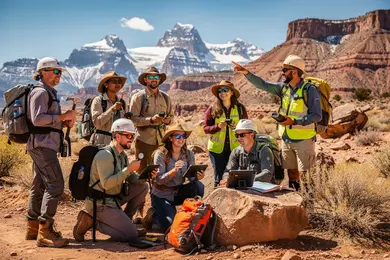
Transferring online theoretical knowledge to real-world environmental monitoring involves overcoming limited direct field exposure during study. Graduates must proactively seek internships or local field experiences during or immediately after the program to develop practical data collection and analysis skills. Employers may require demonstrable proficiency in field instruments and software not fully taught online.
A strong 2027 online geosciences degree should include GIS, remote sensing, and statistical analysis tools, plus training in ArcGIS Pro or QGIS, Google Earth Engine, and basic Python or R. Employers in environmental monitoring also look for coursework in sensor data management, GPS, and QA/QC procedures.
References
- Explore where VIU is going https://socialsciences.viu.ca/geography/professional-accreditation
- The Geological Society - Degree Accreditation https://www.geolsoc.org.uk/education-and-resources/universities/university-degree-accreditation/
- Online Geoscience Degrees: Top Schools and All Programs in 2026 https://www.gisdegree.org/online/geoscience-degrees/
- Faculty of Earth Sciences and Environmental Management - Uniwersytet Wrocławski https://uwr.edu.pl/en/scientific-research/faculty-of-earth-sciences-and-environmental-management/
- Earth and Environmental Science https://ees.acadiau.ca/faqs.html
- Best Online Geoscience Courses and Programs | edX https://www.edx.org/learn/geosciences
- Environmental Geoscience https://www.durham.ac.uk/study/courses/environmental-geoscience-f630/
- Geoscience Jobs in Industry https://www.grow-geocareers.com/exploreindustries
- EM - Environmental Monitoring Online Certificate https://www.unbc.ca/continuing-studies/courses/em-environmental-monitoring-online-certificate
- Environmental Geosciences Diploma (CIP 30.4101) https://catalogue.coastmountaincollege.ca/programs/environmental-geosciences-diploma/