2027 Best Cities for Geosciences Careers by Pay, Cost of Living, and Job Openings

Co-Founder and Chief Data Scientist
Choosing where to build a geosciences career requires balancing salary potential, cost of living, and local demand-factors that directly affect long-term financial stability and job security. Nearly 45% of professionals pursuing career shifts in geosciences face relocation hesitations, often because median wages in high-opportunity metro areas don't always offset higher living expenses, according to recent data from the U. S. Bureau of Labor Statistics.
This dynamic intensifies for adult learners balancing education with family and financial obligations, complicating decisions around location-based job openings. This article benchmarks top U. S. cities by pay, affordability, and employment availability to help geosciences professionals make strategic career moves informed by comprehensive market realities.
Key Things You Should Know
- Houston offers a 15% higher median geosciences salary than the national average but a 10% higher cost of living, creating a tradeoff where net disposable income gains depend on tax and housing market timing, per Bureau of Labor Statistics 2024 data.
- Denver's expanding energy and environmental sectors drive a 12% annual job opening increase, signaling employer demand that favors candidates with combined GIS and remote sensing skills, which are absent in 20% of current local resumes, based on industry labor reports.
- Midwestern cities like Tulsa provide lower tuition and living costs with geosciences programs that graduate 30% more students annually than regional competitors, presenting quicker market entry but with 8% lower starting salaries as reported by the National Center for Education Statistics.
Which cities pay geoscientists the most and offer strong job growth?
Houston-Sugar Land-Baytown, Texas, and Tulsa, Oklahoma, rank as the top-paying cities for geoscience careers in the US, offering average annual salaries of $170,870 and $164,990 respectively. These hubs lead not only in compensation but also in strong job growth fueled by ongoing fossil fuel infrastructure investments and expanding environmental consulting firms. However, these high salaries are accompanied by elevated expectations for advanced technical skills, including proficiency in industry-standard software, data modeling, and project management.
For professionals navigating these markets, the decision involves balancing higher incomes against significant cost-of-living differences and the volatility of sectors tied to commodity price fluctuations. Employers generally prefer candidates with graduate degrees or certifications, which markedly influence hiring outcomes and promotion potential. Targeting roles linked to upstream oil and gas, environmental geosciences, or mining can maximize both salary and advancement opportunities.
Realistically, a geoscientist might choose a Houston-based position despite longer commutes or higher housing costs because salary premiums and project variety drive faster skill development and wage growth. Conversely, smaller markets may provide more stability but limit growth and earning potential. Such tradeoffs underline the importance of aligning one's career path with both market demands and lifestyle considerations.
This analysis reflects US cities with highest geosciences job growth and salaries and practical workforce implications, making clear choices about location and specialization critical. Prospective students or professionals evaluating an environmental science degree should consider these factors alongside regional market dynamics.
How does cost of living affect geoscience salaries in major cities?
Geoscience salaries must be assessed by factoring in city-specific living costs, as nominal wage increases in high-expense metropolitan areas often do not translate into better purchasing power. For instance, Green River, WY reports geoscience salaries about 19.9% above the U.S. average wage of $93,950, offering meaningful real income gains due to lower expenses. In contrast, San Francisco, CA offers roughly 15.1% above the national average, but elevated housing and living costs erode much of this advantage. This uneven dynamic shapes geosciences salary adjustments based on city living expenses, influencing where professionals can realize the most sustainable earnings.
Key practical considerations include:
- Smaller cities with lower costs but competitive pay enable better savings and discretionary income for early-career geoscientists.
- High-cost regions require premium salaries to attract talent, but these rarely offset full expense disparities, creating budgeting strain.
- Differences in rent and living costs can eclipse nominal salary gaps, impacting career planning and relocation decisions.
Job seekers evaluating educational pathways and career moves should weigh compensation relative to living cost indices rather than chase top-line salaries alone. This approach aligns with data from government labor statistics and industry reports, reinforcing that net earnings, not gross pay, drive long-term viability in the geosciences sector. For more detailed cost versus salary analyses relevant to STEM fields, exploring a data scientist degree affordability can provide complementary insights.
Which cities have the most geoscience job openings?
Job openings for geoscientists concentrate in Houston, Denver, and Anchorage, reflecting the distinctive industrial ecosystems driving demand in each city. Houston's dominance hinges on its extensive oil and gas sector, requiring specialists in seismic data analysis. Denver's market favors environmental consulting and mining expertise, tethered closely to federal geological agencies and regulatory environments. Anchorage's niche centers on climate impact research and natural resource management in Arctic conditions.
The national median wage for geoscientists was $99,240 in May 2024, with a modest 3% projected employment growth over a decade and approximately 2,000 annual openings. Candidates evaluating the geoscience job market in top U.S. cities must balance these figures against significantly higher living costs in Houston and Denver compared to Anchorage, influencing net compensation and quality of life.
Employer expectations emphasize advanced technical skills tailored to region-specific challenges: Houston demands proficiency in fossil fuel exploration, Denver prioritizes regulatory and environmental modeling expertise, and Anchorage requires knowledge of permafrost dynamics and climate science. For example, a geoscientist pivoting toward environmental consulting should understand how Denver's regulatory climate differs from Houston's petroleum-centric market, which shapes long-term career trajectory and salary progression.
Strategies to increase employability include pursuing targeted internships, certifications, and geographic flexibility. New entrants concentrated in these cities typically see faster employment and salary advancement compared to weaker markets. Those also considering adjacent fields might explore online library science programs for complementary skill sets that enhance research and data management capabilities relevant to geoscience roles.
What geoscience jobs are available in these cities?
Earning potential for geoscience careers in top cities heavily depends on the dominant industry and job nature within those locales. Extraction-focused roles in mining, quarrying, and oil and gas hover around $126,140 annually, often demanding extensive fieldwork in remote locations and robust technical expertise. Conversely, major US urban centers emphasize consulting services with salaries averaging $78,610, favoring professionals skilled in environmental risk analysis, regulatory compliance, and client-facing communication. These jobs typically offer more balanced work-life dynamics but lower pay compared to extraction sectors.
Government research labs and university-driven projects in hydrology, seismology, and climate science emphasize data modeling, publication, and grant writing. Such roles suit those seeking academia or specialized research but require ongoing technical education and networking. Job seekers targeting geoscience careers in top cities must consider tradeoffs such as salary versus cost of living and the physical demands of field roles versus office-based work.
For those navigating job opportunities for geoscience professionals in major US cities, key operational realities include higher competition in urban areas and location constraints in resource-rich but isolated regions. Practical pathways often blend technical skill development with multidisciplinary collaboration and grant writing to remain competitive.
Applicants evaluating long-term potential should also assess education options aligned with military backgrounds or career pivots, such as programs highlighted for veterans. For example, prospective students aiming to complement geoscience expertise with technical engineering skills might explore the best military friendly online electrical engineering degrees as a hybrid approach supporting adaptability and enhanced employability.
Which geosciences degrees lead to the best city-based career options?
The choice among petroleum geology, environmental geology, and hydrogeology degrees distinctly shapes city-based career trajectories due to their alignment with localized economic sectors and employer demand. Petroleum geologists gravitate toward energy-intensive metros like Houston and Denver, where high concentration of drilling, exploration, and corporate research supports premium salaries but also entails elevated living costs. Environmental geology roles cluster in cities with stringent environmental regulations such as Seattle and Boston; professionals here balance moderate housing expenses against steady growth in compliance and sustainability positions. Hydrogeologists find their niche in urban centers prioritizing water resource management, including Phoenix and Atlanta, where municipal and environmental agencies drive hiring needs.
These location-dependent tradeoffs emphasize that a higher nominal salary in expensive cities may not translate into net financial advantage when considering cost-of-living factors. For instance, a petroleum geologist in Houston may benefit from industry density and specialized job openings but must weigh this against housing and living expenses, while an environmental geologist in Seattle might achieve better net savings through stable demand plus reasonable costs.
The U.S. Bureau of Labor Statistics forecasts a 3-5% growth in geoscientist employment over the next decade, with roughly 2,000-2,200 openings annually. Across specialties, proficiency in applied data analysis and geographic information system (GIS) skills consistently enhances employability. Hands-on experience gained through internships or local agency collaborations remains indispensable for converting geographic knowledge into tangible career progress.
Do online geosciences programs work as well as campus programs?
Online geosciences programs face inherent challenges matching the hands-on skills expected by employers, especially in field-intensive roles. Practical competencies like geospatial mapping, soil sampling, and rock formation analysis cannot be fully replicated in virtual settings, creating a disconnect that affects employability. In markets with high demand such as Houston, El Paso, and Fort Worth, TX, employers emphasize verified field experience alongside academic performance, a trend supported by the 2025 Zippia ranking which evaluates salary against local job availability per capita.
A hybrid educational model blending online coursework with mandatory in-person labs or internships addresses this gap more effectively than fully remote alternatives. Graduates relying solely on online studies must actively secure local fieldwork opportunities or employer-sponsored training to stay competitive for technical and leadership roles. For entry-level positions, online degrees are generally accepted, but advanced roles lean heavily toward candidates with campus-based training.
Prospective students should critically assess online programs for access to industry-standard equipment, faculty expertise, and local field integration, particularly when targeting dense geoscientist networks. Neglecting these factors can delay technical proficiency and reduce initial earning potential. Ultimately, balancing cost savings from online study against practical readiness is essential for sustainable career progression.
What accreditation should a geosciences program have?
Regional accreditation combined with specialized recognition from bodies like the Accreditation Board for Engineering and Technology (ABET) or CHEA-recognized earth sciences organizations is a decisive factor in geosciences program quality and graduate employability. Employers distinctly favor candidates from accredited programs because these curricula deliver critical skills in field methods, data analysis, and laboratory techniques, which correspond to a national average hourly wage of $45.17, per June 2025 ZipRecruiter data.
Job expectations vary significantly by specialization and location-for instance, a petroleum geologist targeting Houston's energy sector must meet different competency standards than an environmental geoscientist working on municipal projects in Seattle. Accreditation ensures programs emphasize practical skill development and critical thinking, which non-accredited programs frequently lack, limiting access to professional licensure and reducing salary prospects especially in regulated fields like hydrogeology or mining.
Programs with inadequate accreditation or cost-saving measures often omit essential fieldwork and emerging technologies such as GIS and remote sensing, undermining readiness for entry-level positions that pay near the 25th percentile wage of $20.19 per hour. In contrast, graduates demonstrating proficiency in these areas enjoy placement and wage advantages approaching the 75th percentile of $58.41 per hour across urban markets.
- Accreditation acts as a gatekeeper for licensure and certification options.
- Curricula including hands-on experience and modern software skills improve hiring outcomes.
- Tuition cost must be carefully weighed against the potential salary ceiling aligned with program credibility.
What coursework and skills do geosciences students need?
Proficiency in both theoretical and applied skills is the essential differentiator for geosciences students entering a competitive job market. Foundational coursework in geology, mineralogy, geophysics, and geochemistry must be paired with advanced mathematics-primarily calculus and statistics-because quantitative modeling and data analysis drive critical industry applications such as resource estimation and environmental assessment.
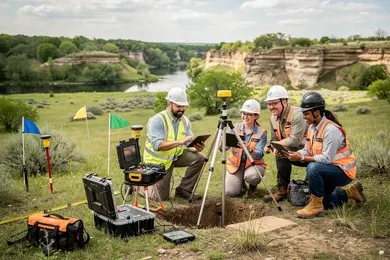
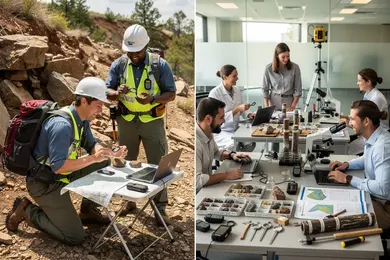
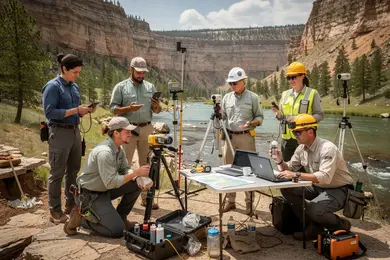
Technical competence alone does not guarantee employability. Practical field experience, gained through internships or cooperative programs, remains a decisive factor for employers in energy, environmental consulting, or government roles. For instance, firms prioritize candidates who can operate surveying equipment, conduct sample collection, and manage geospatial modeling, emphasizing hands-on data interpretation over purely theoretical knowledge.
Employers also expect strong communication skills and effective project management, which facilitate clear reporting to stakeholders and regulators. Given that approximately 24,620 geoscientists were employed nationally with a mean annual wage near $104,000, this blend of hard and soft skills substantially affects salary potential and career longevity.
Specializations in hydrogeology, petroleum geology, or environmental impact assessment can provide market differentiation but require careful evaluation of educational programs to ensure an optimal balance between rigorous theory and applied training, reflecting the immediate demands faced by entry-level professionals.
What salary can geosciences graduates expect by city?
Salary expectations for geosciences graduates vary sharply by region, driven by local industry demands, cost of living, and workforce saturation. A national average salary near $92,580 masks these disparities, requiring candidates to evaluate regional dynamics carefully when planning their career paths.
In Houston, TX, geoscientists benefit from a robust energy sector, with entry-level salaries often ranging from $95,000 to $110,000. However, this premium comes with the caveat of high living costs and intense competition, making advanced skills in petroleum geology and seismic analysis essential. Graduates should anticipate the need for targeted networking to access top-paying roles.
By contrast, Denver, CO offers a more balanced tradeoff: salaries around $90,000 combined with lower living expenses and opportunities in environmental consulting and mining exploration. Practical competencies in GIS and regulatory compliance weigh heavily in hiring decisions here.
Western states like California and Alaska feature some of the highest pay, exceeding $100,000, largely due to their focus on oil extraction and environmental remediation. Yet, these opportunities often require candidates to endure remote or harsh conditions and frequently to hold advanced degrees to maintain upward mobility.
Emerging markets in the Southeast present lower starting salaries near $75,000 but offset this with reduced housing costs and expanding renewable energy sectors. Candidates must consider whether initial pay aligns with their tolerance for slower wage growth but greater long-term opportunity in evolving markets.
- Cost of living remains a critical factor in net salary evaluation.
- Specialized technical skills directly influence job market competitiveness.
- Geographic flexibility often correlates with higher compensation potential.
Choosing where to build a career in geosciences involves weighing these factors pragmatically. Understanding employer expectations and sector-specific demands helps align educational investments with realistic employment outcomes and long-term career trajectories.
What certifications help geoscientists get hired?
Certification decisions within geosciences impact more than resume value-they dictate practical eligibility for government contracts, environmental consultancy roles, and specialized industry segments. For instance, the Certified Professional Geologist (CPG) and Registered Professional Geologist (RPG) licenses remain mandatory credentials in regulated settings, serving as benchmarks of ethical and technical competence.
Specialized GIS certifications, such as the GIS Professional (GISP), function as strategic differentiators in sustainability-focused urban markets like Washington, DC; San Francisco, CA; and Denver, CO. Employers here prioritize spatial data expertise, so GIS certification often signals readiness for complex environmental analysis projects.
Environmental compliance credentials attuned to OSHA standards or hazardous materials handling reduce employer liability and onboarding time, which shapes hiring preferences in energy exploration and remediation sectors.
Tradeoffs include the cost and time of certification upkeep, plus the necessity to align credentials with specific geoscience subfields. For example, possessing a mining-focused certification offers limited leverage when pursuing urban environmental roles with distinct compliance demands.
Documented 5-10% annual job growth in geoscience-related positions correlates with salary premiums of 10-20% for certified professionals, who also gain access to leadership tracks and specialized projects. This suggests that strategic certification planning, attentive to regional workforce demands and role specificity, materially affects career trajectory.
Other Things You Should Know About Geosciences
Most geoscience jobs do not require a license, but environmental and consulting roles often prefer the ASBOG Fundamentals of Geology exam, followed by a Professional Geologist license. State licensing boards set the rules, and requirements commonly include a bachelor’s degree, four years of qualifying experience, and references.
Choosing a specialization early can lead to deeper expertise and access to niche roles, but it narrows job prospects geographically and across industries. Maintaining a broad skill set allows more flexibility to adapt to shifting market demands and relocate more easily for better pay or openings. For those new to geosciences, prioritizing a strong foundational knowledge combined with adaptable skills is generally a better approach, shifting specialization once clear career goals emerge and market trends stabilize.
Government geoscience jobs typically offer more predictable hours and greater job stability but can involve slower project timelines and less exposure to high-stakes decision-making. Private sector roles often demand longer hours, faster turnaround, and higher pressure to deliver actionable insights that impact business decisions. Candidates weighing these options should consider their tolerance for workplace stress and value for job security when making career choices.
Advanced degrees unlock leadership roles, specialized research positions, and higher salary brackets, particularly in competitive job markets and technical subfields. However, extensive on-the-job experience paired with ongoing professional development can also lead to career growth, especially in applied or operational roles. Candidates should evaluate their target sector's expectations, as academia and certain government agencies heavily favor advanced degrees, while industry positions may allow more flexibility on formal education if compensated by practical results.
References
- Salaries in These Cities Make Up for the High Cost of Living | Revelio Labs https://www.reveliolabs.com/news/business/salaries-in-these-cities-make-up-for-the-high-cost-of-living/
- Salary Information https://www.geolsoc.org.uk/Geology-Career-Pathways/Careers/Salary-Information.html
- Geoscientists Canada - BECOMING A P.GEO. https://geoscientistscanada.ca/becoming-a-p-geo.php
- Information about Geoscience Related Careers https://careerexplorer.americangeosciences.org/careersinfo/
- ThisIsGeoscience - Geoscience Salaries https://www.thisisgeoscience.com/the-resources/geoscience-salaries
- Certifications https://www.grow-geocareers.com/certifications
- Section 4. Skills Framework https://graduate.americangeosciences.org/report/section-4/
- Online Geoscience Degrees: Top Schools and All Programs in 2026 https://www.gisdegree.org/online/geoscience-degrees/
- 15 Best Certifications for Geologists in Nigeria (2026â2026 Guide) | Profolio https://www.profolio.ng/geologist/best-certifications
- Geoscience Careers https://education.americangeosciences.org/resources/geoscience-careers/