2027 Best Online Geosciences Degrees for Environment-and-Data Hybrid Careers

Co-Founder and Chief Data Scientist
Professionals aiming to bridge environmental science and data analytics often struggle to find flexible programs that deliver both rigorous geosciences training and advanced data skills. This challenge intensifies for working adults balancing job and family commitments, particularly as the U. S. Department of Education reports a continued 12% annual growth in online degree enrollments among adult learners.
Such trends reflect shifting access demands that traditional campus schedules fail to address, limiting career mobility in a field where employers increasingly value hybrid expertise. This article evaluates online geosciences degrees tailored for environment-and-data hybrid careers, guiding strategic educational choices to overcome these practical constraints.
Key Things You Should Know
- Programs blending environmental science with data analytics report 12% higher starting salaries versus traditional geosciences, but extended 4-5 year curricula impose up to 25% greater tuition costs, delaying workforce entry per NCES data.
- Employers prioritize interdisciplinary skills; 68% of energy sector geoscience job postings in 2025 required proficiency in both GIS and data modeling tools, pressuring candidates to pursue integrated degrees to remain competitive.
- Federal workforce projections through 2030 indicate 9% growth in environment-data hybrid roles, but access disparities persist: lower-income students face 30% lower enrollment rates in STEM-focused geosciences programs according to NSF statistics.
What is an online geosciences degree and why is it ideal for environment-and-data careers?
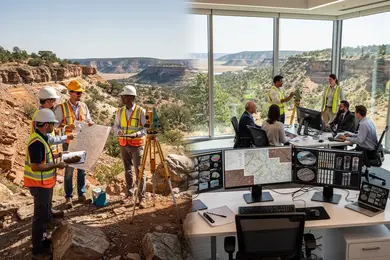
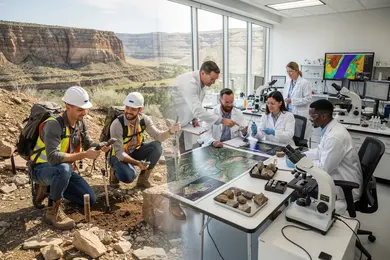
Online geosciences degree programs for environmental data analysis equip candidates with interdisciplinary skills necessary to handle environmental challenges through data-driven methods. These programs merge earth science fundamentals-geology, hydrology, climatology-with technical training in GIS, remote sensing, and statistical modeling. This hybrid expertise suits professionals aiming to assess environmental impacts for infrastructure projects or manage natural resource data without interrupting existing employment.
Employers across environmental consulting, renewable energy, and government sectors increasingly seek graduates proficient in interpreting large environmental datasets and understanding underlying physical processes. However, students must scrutinize program accreditation and the availability of virtual labs or internships, as limited fieldwork experience can diminish employability in certain applied roles. Individuals weighing a transition might consider career resources like those for a speech language pathologist to understand the nuances of career pivots involving specialized training and certifications.
Wage data underscores the financial viability of this education path, with median annual earnings for geoscientists around $99,240. Yet, a 3% employment growth projected from 2023 to 2034 indicates competition will be steady but significant. Graduates must therefore develop concrete skills in environmental systems modeling and data management to stand out. Best online geosciences degrees for environment and data science careers prioritize these competencies, offering accessible pathways that reduce geographic constraints and accelerate readiness for complex, data-intensive environmental roles.
How do online geosciences programs prepare graduates for hybrid environmental and data-focused roles?
Online geosciences programs for environmental and data science careers demand a balance between core earth science expertise and applied data analytics. Graduates need proficiency in GIS mapping, remote sensing, and statistical software to meet employer expectations for roles involving complex environmental data interpretation. For example, a hydrologist leveraging geospatial data models to predict urban flood risks demonstrates how hybrid environmental and data analytics training in geosciences translates to impactful, real-world decision-making.
Programs typically incorporate project-based learning with datasets from authorities like the US Geological Survey or NOAA, which helps students navigate data variability inherent in climate models and resource assessments. However, a persistent challenge is how to allocate effort between technical depth and environmental literacy, especially for those juggling course loads remotely.
Cost is a significant factor: according to a 2024 Learn.org analysis, online bachelor's geoscience programs range from about $129 to $683 per credit hour as of 2025. Students prioritizing affordability must verify inclusion of data science components and access to software tools; less expensive options often omit this, potentially limiting employment opportunities. Prospective candidates can explore detailed options through resources like the environmental engineering online degree listings.
Because many online curricula lack fieldwork, securing internships or cooperative education placements is crucial to bridge theoretical understanding and practical skills. This integration is essential to remain competitive in increasingly data-driven environmental sectors.
Which types of online geosciences degrees best support emerging geospatial and climate data careers?
Programs offering online geosciences degrees for geospatial data analysis provide a distinct edge by combining traditional Earth sciences knowledge with data analytics and geospatial technologies. Employers increasingly demand professionals skilled not only in geology but also proficient in tools like Python, R, ArcGIS, and QGIS to interpret extensive environmental data sets and produce actionable climate models. The U.S. Department of Labor forecasts above-average job growth in geoscience and environmental science fields, underlining this skill combination's labor market relevance.
Degrees focused solely on classical geology often fail to prepare students for dynamic roles requiring real-time spatial data integration and analysis. For instance, coastal hazard assessors must merge remote sensing data with spatial simulations to generate flood predictions for decision-makers-a task requiring simultaneous command of geosciences principles and data modeling software.
Students aiming for strategic shifts into climate data careers should seek programs emphasizing remote labs, partnerships with applied projects, and current quantitative tools. Conversely, programs lacking in software currency or quantitative rigor risk impeding timely workforce integration. Verified internships or capstone projects that synthesize theory and practice markedly enhance candidate profiles.
For professionals evaluating options, considering the best online geosciences programs for climate data careers means weighing practical experience opportunities against curriculum modernization. For related interdisciplinary pathways, see exercise science online degree listings that similarly combine fieldwork with data analysis skills.
What courses and specializations are included in an online geosciences curriculum with strong data skills?
Addressing a looming shortfall of roughly 130,000 geoscientist roles by 2029 demands programs that go beyond traditional coursework. Online geosciences degree programs with data analysis specialization blend foundational subjects like mineralogy, sedimentology, and hydrogeology with advanced skills in geospatial information systems (GIS), remote sensing, and programming languages such as Python and R. This combination equips students to handle large, complex environmental datasets and generate actionable insights, a necessity recognized by most employers in consulting, environmental compliance, and government sectors.
Environmental geosciences courses combined with data science skills often include machine learning and spatial data analysis, preparing students for roles in renewable energy and water resource management. However, mastering these competencies requires balancing a substantial time investment in coding and data manipulation alongside core geoscience studies. Students should evaluate programs based on the depth of data analytics integration and availability of real-world projects, as employers increasingly expect graduates to produce quantifiable metrics and policy recommendations immediately after graduation.
Those aiming for effective career pivots or advancement should consider how applied projects or internships with real datasets align with workforce demand. Candidates lacking robust data expertise risk limiting their access to higher-paying positions. For professionals exploring interdisciplinary STEM pathways, the online electrical engineering bachelor degree for veterans offers an example of a technical program structured to integrate practical and analytical skills relevant to evolving industries.
How do online geosciences degrees compare with campus programs for labs, fieldwork, and research?
Choosing between online and campus geosciences degrees demands a clear understanding of practical skill acquisition and workforce expectations. Online programs typically replace hands-on labs and fieldwork with virtual simulations or brief in-person residencies, which may suffice for data-oriented roles but fall short for positions requiring manual geological sampling or onsite analysis. For instance, environmental consultants using remote GIS platforms gain essential geospatial skills but lack tactile experience found in sedimentology labs.
Campus programs grant continuous access to specialized equipment, collaborative research, and physical fieldwork, aligning more closely with employer demands in sectors such as hydrology and mineral exploration where precise manual data collection is indispensable. Meanwhile, growth projections for GIS and cartography roles-expected to increase by about 5% from 2022 to 2032 according to U.S. Bureau of Labor Statistics-support the relevance of online education for careers centered on geospatial analytics.
Prospective online students must proactively secure local field internships or programs with established practicum partnerships, navigating logistical challenges absent in campus settings. Research options are also more limited online, often constrained to remote, data-heavy projects rather than faculty-led physical investigations. Ultimately, career trajectory considerations should prioritize whether physical field expertise or data-centric skills form the core of the intended role, shaping the choice of educational delivery mode accordingly.
How can students verify accreditation and program quality for online geosciences degrees?
Accreditation is the most critical determinant of an online geosciences degree's value, especially when targeting federal or specialized environmental roles where clearance and licensure depend on recognized credentials. Without confirmation from the U.S. Department of Education or CHEA-listed bodies, candidates risk pursuing programs whose credits and qualifications employers or certification boards reject. For example, a security clearance for a federal environmental scientist position can be denied if the degree lacks valid accreditation.
Beyond institutional status, program content must display alignment with evolving industry demands by integrating competencies like GIS, remote sensing, and environmental data analytics. Employers consistently prioritize demonstrable skills over generic coursework, so assessing syllabi for applied training and internship access is essential. Formats-synchronous versus asynchronous-also affect networking opportunities that impact employment probabilities.
Salary data illustrates this connection: environmental scientists earn a median of $78,980 annually while geoscientists command $99,240, indicating that program credibility directly relates to earning potential. Neglecting accreditation or relevance to sector-specific skills often leads to wasted investment, limited job options, and hindered professional licensing.
What are typical admission requirements, program length, and total costs for online geosciences study?
A bachelor's degree in geology, environmental science, or a similar STEM discipline with a GPA near 3.0 is the baseline for entry into most online geosciences master's programs. However, practical readiness often hinges on having prerequisite coursework in calculus, chemistry, and physics, alongside professional references and a clearly articulated statement of purpose. Some specialized programs add work experience requirements, highlighting a need to balance academic credentials with applied skills.
Completion timelines typically range from 18 to 36 months full-time, but part-time study can extend to five years, accommodating professionals who must juggle employment and study. This extended pacing supports skill-building in technical geoscience methods, data analytics, and environmental applications-key competencies sought by employers bridging fieldwork with data-driven decision-making.
Tuition costs vary-with the University of Georgia's fully online M.S. in Environmental Geology offering a model at roughly $20,220 total, noticeably less than comparable on-campus programs exceeding $30,000. Candidates should factor in supplementary costs like digital lab access or software fees and occasional on-site requirements. Such investments often pay off in roles emphasizing GIS analytics or environmental consulting, where advanced qualifications yield measurable income gains.
What environment-and-data hybrid careers can you pursue with an online geosciences degree?
Success in environmental consulting, GIS analysis, or resource management requires more than a geosciences degree; it demands integration of geospatial data with environmental science framed by regulatory and applied analytics skills. For instance, environmental consultants must proficiently analyze site-specific data, model pollutant dispersion, and produce reports that meet U.S. EPA standards, necessitating fluency in data analytics and local regulations.
Government roles prioritize applied programming and GIS skills to manage extensive environmental monitoring datasets and support policy development. These positions favor hands-on experience with languages like Python and geospatial software over purely academic research. In contrast, private sector engineering firms seek experts who quickly interpret soil stability and hydrological data to assess construction risks and communicate findings clearly to non-technical stakeholders. The Chicago metro area alone hosts over 100 firms consistently recruiting Earth science graduates for these roles.
Key competencies include mastery of ArcGIS, remote sensing tools, and statistical software. Candidates combining data science skills with environmental understanding tend to access higher starting salaries but encounter a challenging learning curve in balancing interdisciplinary demands. Prospective students should critically weigh programs emphasizing practical technical training alongside environmental theory to align with employer expectations and workplace realities.
What salary ranges and job outlook can geosciences graduates expect in data-intensive roles?
Salary potential for geosciences graduates in data-intensive roles varies notably by sector, location, and experience, typically ranging from $60,000 at entry-level to over $100,000 in mid-career positions focused on energy or climate analytics. For example, an entry-level environmental consulting analyst might start near $60,000 to $75,000, but professionals skilled in geospatial or remote sensing techniques within energy firms can command significantly higher pay. Employment growth for earth and environmental scientist roles is projected at about 7% through 2032, placing a premium on interdisciplinary skills that combine core geosciences expertise with data analytics.
Washington University in St. Louis illustrates how sector choice shapes both salary trajectory and job stability: government science roles typically offer steadier employment but slower pay increases, whereas private energy or climate sectors reward hybrid data and geosciences skills with higher compensation but potentially less stability. Prospective candidates face a trade-off between investing time and resources in internships or certifications in GIS, Python, and R-which are increasingly prerequisites for employability-and entering the workforce sooner at lower starting salaries.
In practice, environmental consulting jobs may fluctuate with regulatory shifts, while roles in climate policy and sustainability show steadier demand. Graduates who pursue targeted credentials and adapt to shifting market demands will better position themselves for upward mobility. Employers emphasize hands-on data skills alongside fundamental geosciences knowledge, meaning educational choices must balance practicality with technical breadth to maximize long-term career outcomes.
How should prospective students choose the best-fit online geosciences program for their goals?
Selecting an online geosciences program demands prioritizing alignment with tangible career trajectories and employer standards-particularly when combining environmental science with data analytics roles like climate risk assessment or urban sustainability. Programs emphasizing geospatial data tools, statistical methods, and environmental systems modeling provide the technical foundation that hiring managers expect in technical roles.
For those targeting federal agencies or consulting firms, accreditation and curriculum recognition by bodies such as the U.S. Geological Survey or EPA serve as practical benchmarks for program credibility. Faculty involvement in active applied research or government projects can indicate curriculum relevance and better prepare graduates for real-world tasks.
Working professionals face the necessity of flexible scheduling and asynchronous content delivery to reconcile employment commitments. Prioritizing programs that integrate industry-standard software (e.g., GIS, remote sensing) alongside robust data science training enables smoother transitions into compliance or environmental analytics roles.
For instance, Texas State University offers an economical online B.S. in Geography and Environmental Studies at $405 per credit (about $1,216 per course), reducing financial exposure while covering core competencies vital across public and private sectors in the evolving geosciences workforce.
Other Things You Should Know About Geosciences
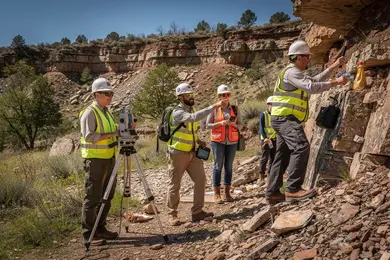
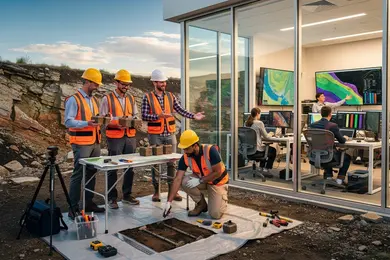
Online geosciences programs vary in how they address fieldwork, which is essential for many environmental and data hybrid careers. Some programs require short, intensive on-site residencies or partner with local organizations to provide practical experience, while others rely more heavily on virtual simulations. Students prioritizing careers in field-intensive roles should choose programs with explicit field components or plan supplemental internships to meet employer expectations for applied skills.
Many online geosciences bachelor’s programs require a capstone, while some master’s programs require either a thesis or a non-thesis project. A common minimum is 120 semester credit hours for a bachelor’s degree, with the capstone completed in the final term under faculty supervision.
The best online geosciences degrees in 2027 for hybrid careers focus on integrating GIS, remote sensing, and data analytics within environmental studies. Accredited programs often include flexible schedules, real-world problem-solving projects, and partnerships for internships to enrich hands-on experience.
Programs integrating geosciences with data science and environmental policy offer practical advantages in hybrid careers by broadening knowledge and adaptability across sectors. Prioritizing these interdisciplinary offerings enhances employability, especially in roles requiring translation of geospatial data into actionable environmental strategies. Students focused on future-proofing their skillsets should select programs that embed cross-disciplinary collaboration rather than narrow specialization.
References
- Online Geoscience Degrees: Top Schools and All Programs in 2026 https://www.gisdegree.org/online/geoscience-degrees/
- Supporting Geoscience Students https://www.grow-geocareers.com/forgeodepartments
- Where do geographers work? Geo industries & career paths https://www.gogeogo.com/en/blog/geosectors-overview
- Geoscience Careers https://education.americangeosciences.org/resources/geoscience-careers/
- Best Online GIS Degree Programs, Up to Date for 2026 http://www.gisdegrees.org/programs/online
- Is Your Online Degree Legitimate? How to Verify Private University Approval https://matchtocollege.com/blog/verify-private-university-online-degree-approval
- How do recent geoscience graduates experience the job market? - GeoExpro https://geoexpro.com/how-do-recent-geoscience-graduates-experience-the-job-market/
- ThisIsGeoscience - Geoscience Salaries https://www.thisisgeoscience.com/the-resources/geoscience-salaries
- Change the World: Online Options for Green Master’s Degrees https://www.onlinemastersdegrees.org/features/green-masters-degrees/
- The Geological Society - Degree Accreditation https://www.geolsoc.org.uk/education-and-resources/universities/university-degree-accreditation/