2027 Online Geosciences Degrees With Strong Employer-Relevant Geoscience Skills

Co-Founder and Chief Data Scientist
Environmental consultants or energy sector specialists often confront the challenge of acquiring employer-relevant geoscience skills without disrupting ongoing professional commitments. With the U. S. Department of Education reporting a 31% increase in online enrollment for STEM fields in 2024, flexibility in geoscience education has notably expanded, yet not all programs equip students with the practical expertise demanded by employers.
Many candidates underestimate the impact of program structure and applied skill development on career mobility, leading to wasted time and resources. This article evaluates online geosciences degrees designed to deliver strong, job-ready skills and guides readers in selecting programs aligned with workforce expectations and career goals.
Key Things You Should Know
- Only 42% of online geosciences graduates report employer satisfaction in advanced fieldwork skills, suggesting programs with weak practical components hinder readiness for resource exploration roles according to recent Bureau of Labor Statistics workforce surveys.
- Employers prioritize interdisciplinary data analytics proficiency in geosciences hires, with industry reports noting candidates lacking GIS and remote sensing experience face up to 35% reduced job placement within two years post-graduation.
- Extended duration and higher costs of accredited online geosciences degrees-averaging $28,000 over 3.5 years-limit access for mid-career professionals seeking rapid pivot, per National Center for Education Statistics 2024 enrollment and pricing data.
What is an online geosciences degree and how does it prepare you for geoscience careers?
Choosing an online geosciences degree program entails navigating distinct tradeoffs between flexibility and hands-on experience, which can significantly influence employability in this technical field. While online programs provide accessible pathways for working professionals to update skills in tools like GIS, remote sensing, and climate data analysis, the absence of immersive fieldwork may pose limitations for licensure or specialized roles.
For instance, a professional aiming to shift into environmental remediation can benefit from targeted coursework on soil science and pollutant pathways without disrupting their current employment. However, students must proactively secure internships or partnerships to supplement virtual labs and field simulations with real-world applications.
Employment projections from the U.S. Bureau of Labor Statistics show steady demand for geoscientists with a median wage of $99,240 and a job growth rate of 3% through 2034, emphasizing opportunities for graduates who integrate quantitative data skills with geoscience expertise. Evaluating online geosciences degree programs with practical career skills should focus on curriculum alignment with current professional tools and relevance to sectors such as energy, water resources, and environmental policy.
Online delivery requires strong self-discipline and technology access, balancing convenience against diminished immersive experiences. To explore options rigorously, prospective students should reference geology degrees online that emphasize practical skills and workforce readiness.
Are online geosciences degrees respected by employers and equivalent to on-campus programs?
Employers value online geosciences degrees recognized by employers equally to their on-campus counterparts when programs maintain rigorous accreditation and align curricula with industry standards. A key differentiator in hiring is demonstrated competency rather than education format. For instance, firms in environmental consulting expect proficiency with geospatial analysis tools and real-world field data collection. Online programs that integrate virtual labs and partner with local sites can meet these expectations effectively.
Job placement for graduates of online and on-campus geosciences programs shows parity in natural resource management and energy exploration sectors. Still, to overcome the limitations of remote study, students must engage in internships or local fieldwork, reinforcing practical skills crucial for workforce readiness.
With employment in geosciences projected to grow about 5.6% over the next decade-surpassing the average 4% growth for all U.S. occupations-hiring managers seek candidates who can verify practical abilities alongside theoretical knowledge. Pursuing a degree with sufficient field experience or hybrid training options mitigates the common tradeoff of reduced lab access in online settings.
Prospective students should verify program accreditation and develop portfolios highlighting expertise in GIS, remote sensing, and data analysis. Navigating options carefully can create a strategic balance between flexibility and applied skills acquisition, a necessary factor for long-term career viability in this field.
For candidates weighing alternatives, comparing costs and program quality can inform decisions. Resources like the best data science masters listings provide context on program affordability and outcomes that could influence your educational investment.
How can you verify that an online geoscience program and its school are properly accredited?
Employers and licensure boards in geoscience fields almost universally require degrees from programs with regional accreditation, such as those recognized by the Higher Learning Commission or WASC. Without this foundational accreditation, graduates risk diminished eligibility for certifications and face barriers in professional settings where skills like project planning and field data collection are mandatory. Most accredited programs also benefit from specialized endorsements-for example, from the Geological Society of America-affirming their curriculum's alignment with current industry competencies.
When evaluating an online geoscience program accreditation verification, prospective students must scrutinize beyond surface claims. Accreditation tied solely to the parent university or issued by non-recognized agencies often lacks the rigor and national acceptance that significantly influence credit transfer, federal aid access, and labor market credibility. The Department of Education's official database remains the most reliable resource to confirm institutional and programmatic status.
In practice, entry-level geoscience roles consistently list communication and fieldwork skills as critical-skills best developed in accredited programs with transparent oversight. This reality underscores the real-world impact of choosing poorly accredited programs: limited workforce readiness and fewer job prospects. For those seeking a strategic pivot, comparing geosciences credentials against alternative fields, such as a degree in library science, can reveal distinct differences in accreditation patterns and career pathways.
What geoscience skills and competencies should a strong online program help you develop?
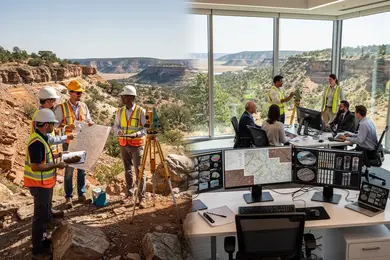
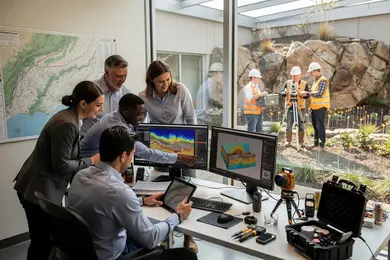
Employers in the United States prioritize geoscience programs that deliver strong United States geoscience data analysis skills alongside practical geological fieldwork competencies in the US. Data visualization and mapping software proficiency tops technical requirements, reflecting demand for professionals who turn complex spatial datasets into actionable insights across environmental consulting, resource exploration, and hazard assessment sectors.
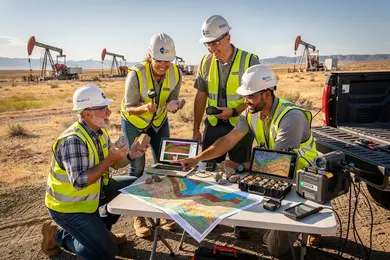
The emphasis on integrating computational expertise with domain knowledge becomes apparent in field scenarios-for example, a hydrogeologist analyzing aquifer data must balance field observations with sophisticated geospatial data processing. Similarly, energy sector professionals rely on seismic and satellite data handling to inform resource extraction decisions. Such real-world applications reveal the tradeoff between theoretical knowledge and hands-on data fluency, a gap that many graduates struggle to bridge effectively.
Addressing employer concerns about graduates' capacity to manage large data sets and communicate complex spatial information, quality online programs incorporate collaborative projects and case-based labs that simulate workplace scenarios. Students should seek curricula with updated software tools and reliable computing support, as access limitations can compromise skill acquisition and workforce readiness.
Those evaluating geosciences educational pathways should weigh these competencies against practical constraints and future job requirements. Prospective learners aiming for a career pivot or advancement will find detailed program analyses and affordability insights valuable, such as those available for a master of library science, which parallels the rigor of technical and analytical training in this field.
What types of online geoscience degrees and specializations can you pursue?
The choice between broad geoscience degrees and specialized tracks significantly impacts employability and practical readiness. Environmental geoscience programs best suit candidates aiming for roles in regulatory and consulting sectors that demand skills in climate data analysis and sustainability practices. Conversely, petroleum geology specializations, although technically focused on reservoir modeling and extraction, face cyclical market demand, requiring students to time their entry carefully. Hydrogeology stands out for addressing groundwater scarcity, often combining GIS training with resource management to meet municipal and agricultural employer needs.
Hands-on experience remains a pivotal differentiator. Online programs that integrate virtual labs or local fieldwork enhance technical competency in industry-standard tools, a top expectation among employers. Supplementing degrees with certificates in geospatial analysis or climate science increases competitiveness, especially as environmental scientist salaries range broadly from median wages of $99,240 to top earners near $178,880 according to U.S. Bureau of Labor Statistics data.
Prospective students must critically verify program accreditation and ensure alignment with state licensure if professional geoscientist credentials are a goal. Flexibility in course delivery often demands negotiating summer residencies or local partnerships to fulfill practical requirements. This balancing act between curriculum depth and scheduling feasibility directly influences the graduate's ability to meet real-world workforce demands, particularly in environmental consulting, hazard mitigation, and resource management sectors.
How do online geoscience programs work day to day, including labs and field experiences?
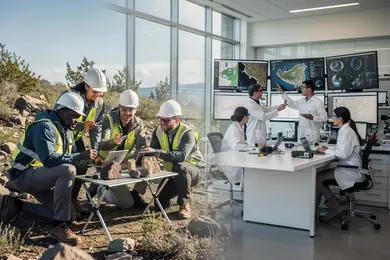
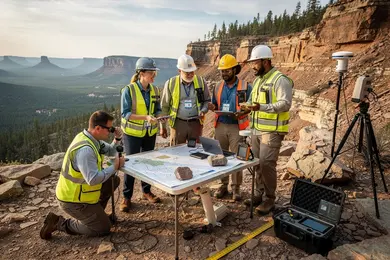
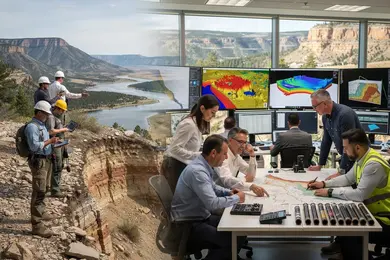
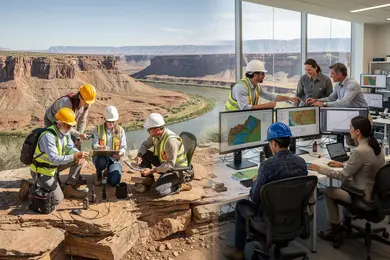
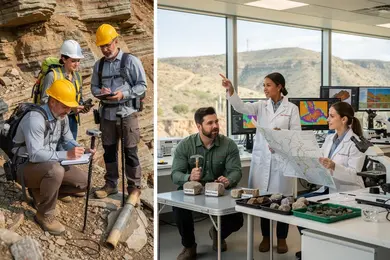
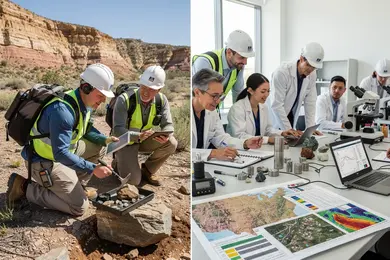
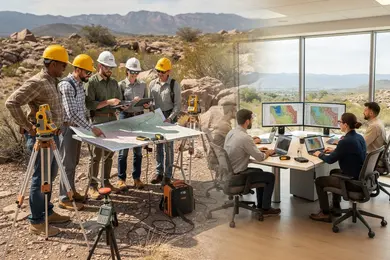
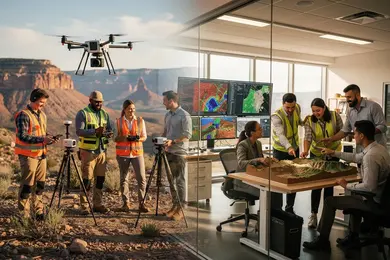
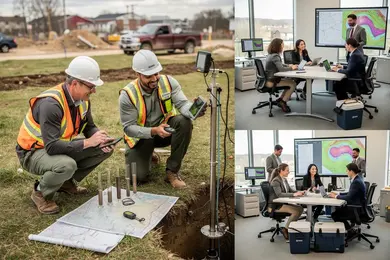
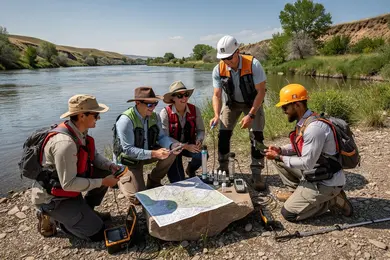
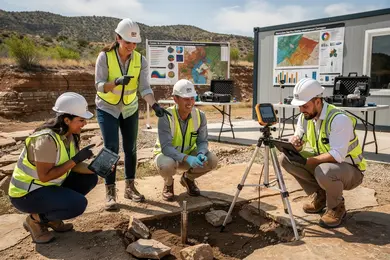
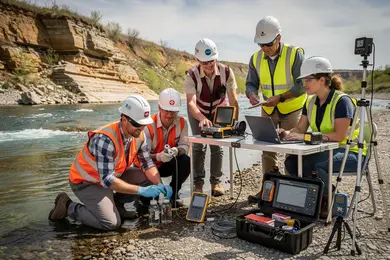
The practical viability of online geoscience programs largely depends on how effectively they replicate essential hands-on experience, which remains a critical hiring filter in sectors like energy and mineral exploration. Virtual labs offer simulated training in mineral identification, data analysis, and geologic processes, but students must complement these with locally conducted fieldwork-often involving independent site selection, mapping, and sample collection-to meet employer expectations for immediate field readiness.
This hybrid model presents clear tradeoffs:
- Flexible, asynchronous coursework suits working professionals but shifts logistical responsibility for field components to students, potentially extending time to completion.
- Dependence on accessible local sites or approved camps can introduce cost and scheduling challenges not faced by traditional campus cohorts.
- Programs that lack rigorous and verifiable field experience risk graduates entering the workforce without the applied skills employers require.
Workforce data from the American Geosciences Institute highlights a looming labor gap due to upcoming retirements, intensifying demand for graduates who can perform stratigraphic analysis, GIS data interpretation, and onsite sampling within weeks of hire. Those delayed in completing or unable to secure meaningful fieldwork may face diminished employment prospects and ROI.
Prospective students should scrutinize program accreditation, the quality of simulation software, and fieldwork supervision rigor to ensure alignment with real-world competencies prioritized by employers.
What are the typical admission requirements, time to completion, and costs for online geoscience degrees?
Choosing an online geoscience degree demands careful consideration of practical tradeoffs between time, cost, and workforce readiness. Bachelor's programs typically require a high school diploma, with some schools initially requesting SAT/ACT scores-though many waive these in 2026 under test-optional policies. Transfer credits from relevant fields like physics or environmental science can significantly accelerate completion.
Full-time bachelor's degrees often take about four years but can be compressed to three years with summer courses or prior credits. Part-time study, common among working professionals, may extend to six years or beyond, increasing total expenses and potential loan interest. Master's programs usually require two to three years, a factor critical for mid-career professionals balancing work and study.
Tuition varies considerably: public in-state rates range from $200 to $600 per credit hour, while private or out-of-state can exceed $1,000. For bachelor's degrees, total costs fall between $25,000 and $70,000, while master's programs typically range from $15,000 to $40,000. Additional costs such as GIS software and weekend field residencies may impact budget planning.
Employers increasingly prioritize graduates with skills in data modeling, GIS, and environmental regulation compliance. Median geoscientist salaries reached $99,240 in 2024, with entry-level salaries between $50,130 and $62,090 and senior roles exceeding $134,830. Aligning curriculum with current workforce demands is essential for sustaining job market relevance and maximizing return on investment.
What geoscience careers can you pursue with an online degree, and what do they pay?
Online geosciences degrees create differentiated career outcomes heavily dependent on applied skill acquisition and network access. For example, environmental consultants earning around $70,000 typically work with regulatory bodies or firms mitigating environmental impacts, where curriculum emphasis on environmental law and data interpretation proves essential. Hydrogeologists, with salaries near $80,000, focus on groundwater management, often within agencies requiring proficiency in hydrogeologic modeling software.
Entry-level roles such as geological technicians, usually accessed through associate or bachelor's online degrees, start near $50,000 but often hinge on hands-on fieldwork exposure, which remains a bottleneck in purely remote learning formats. Petroleum geologists command over $100,000 reflecting the oil and gas industry's premium on subsurface analytical skills typically built through advanced, application-intensive courses.
Employers prioritize candidates with internships or practicums, as those lacking field experience face slower placement and limited earnings. Prospective students should scrutinize program-industry collaborations, securing remote internships or project partnerships to bridge this gap. Programs integrating GIS mapping, remote sensing, and environmental regulation mastery better align with evolving market needs. The American Geosciences Institute's 4.9% projected job growth from 2019 to 2029 signals stable demand but also intensified competition fueled by retirement-driven vacancies.
What is the job outlook for geoscience roles, and where is employer demand strongest?
Demand for geoscience professionals in sectors such as energy, environmental consulting, and natural resource management will remain stable, but candidate success depends on blending domain expertise with computational skills. The U.S. Bureau of Labor Statistics forecasts a 5% growth rate for geoscientists over the next decade, marginally ahead of the average in STEM fields, indicating consistent but selective hiring.
Practical workforce conditions require geoscientists who can interpret seismic and geospatial data to optimize drilling or renewable energy site selection. Environmental firms focus on candidates capable of large dataset analysis and regulatory navigation, while government agencies prioritize expertise in geospatial-temporal datasets for hazard management and water resource issues.
A critical tradeoff for graduates is the need to augment geoscience knowledge with programming abilities, particularly in Python or R, GIS proficiency, and familiarity with machine learning frameworks. Without these, career mobility narrows, even if core geoscience skills are strong. Those aiming to pivot to data science or advanced analytics must invest specifically in these competencies, a step often underestimated in academic programs.
Employers grant competitive advantage to candidates who demonstrate fluency in both geoscience and computational methodologies. Degree programs that integrate these areas align more accurately with employer expectations, though students should be aware that this dual focus demands substantial additional effort beyond traditional coursework.
How should you compare and choose between different online geoscience programs and schools?
In geoscience education, mastery of data science, machine learning, and AI now drives employability more than classical geology expertise. Hiring managers prioritize candidates with skills in computational geoscience, spatial analysis, and algorithmic modeling, as these directly address the sector's evolving technical demands. For instance, environmental consultants emphasize regulatory data interpretation and GIS capabilities, while petroleum and mining fields rely on predictive analytics and subsurface data processing.
Students must weigh curriculum focus against their targeted industry because theoretical programs without practical, industry-aligned projects rarely prepare graduates for real-world challenges. Employer connections and transparency around graduate outcomes are critical signals of program relevance, with internships and capstone partnerships serving as key differentiators in skill-building for competitive roles in AI-driven geoscience.
Tradeoffs between program pacing and depth are significant: accelerated tracks may limit exposure to advanced analytics, reducing readiness for data-intensive roles. Prospective learners should prioritize accredited programs recognized by national geoscience organizations to ensure credential credibility and market acceptance.
- Match your chosen program's technical focus with target sector needs.
- Validate programs' industry ties and employment transparency.
- Balance time commitment against technical rigor to avoid superficial certification.
Other Things You Should Know About Geosciences
Online geosciences programs often require the same total credit hours as on-campus degrees but expect more self-directed learning and time management. Without daily in-person reminders, students must proactively schedule labs, virtual fieldwork, and assignments, which can intensify the perceived workload. Programs with synchronous components or mandatory field experiences demand additional time coordination, sometimes conflicting with full-time jobs. Prioritize programs that offer clear weekly structures and adequate support for balancing practical work with coursework when managing these challenges.
Employers typically expect online geosciences graduates to demonstrate equivalent practical skills, including data analysis, GIS proficiency, and field methods, as those from traditional programs. Verified hands-on experiences, such as virtual labs or local fieldwork options, become critical in hiring decisions to mitigate concerns about online-only learning gaps. Candidates should focus on programs that provide documented competency assessments and employer-aligned project work to directly meet these market demands.
Balancing work and study requires selecting programs with flexible asynchronous coursework and reasonable deadlines to accommodate fluctuating job demands. Intensive lab or field modules should ideally be scheduled during predictable periods of lighter work obligations. Prospective students should prioritize programs offering part-time enrollment and accessible faculty or peer support, as these reduce dropout risk and enable consistent progress without sacrificing job performance.
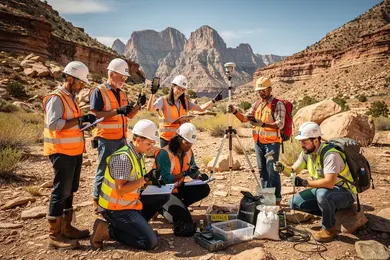
Yes. Many geoscience programs require a field camp or fieldwork component, often 1 to 6 credit hours, because mapping, sampling, and field methods are core employer skills. Some online programs let students complete this requirement in summer field sessions or approved local equivalents under faculty supervision.
References
- What’s it like studying Geology? https://durham-student.org/whats-it-like-studying-geology/
- The Geological Society - Degree Accreditation https://www.geolsoc.org.uk/education-and-resources/universities/university-degree-accreditation/
- Geology, Geophysics, Geoscience: What's the difference? https://www.letschalkaboutit.blog/post/geology-geophysics-geoscience-what-s-the-difference
- Section 4. Skills Framework https://graduate.americangeosciences.org/report/section-4/
- Supporting Geoscience Students https://www.grow-geocareers.com/forgeodepartments
- Opening up the geosciences: making work experience more accessible - British Geological Survey https://www.bgs.ac.uk/news/opening-up-the-geosciences-making-work-experience-more-accessible/
- How to Verify a US Partner School's Accreditation Before Committing https://www.amerigoeducation.com/news/how-to-verify-a-us-partner-schools-accreditation-before-committing
- Are Online Degrees Accredited? How to Identify Quality Distance Learning Programs https://www.umassglobal.edu/blog-news/online-degrees-accredited-identify-quality-distance-learning-programs
- Earth and Environmental Science https://ees.acadiau.ca/faqs.html
- Geology | Study https://www.uottawa.ca/study/career-experiential-learning/career-development/what-can-i-do-with-my-studies/geology