2027 Water Resources Roles You Can Target With a Geosciences Degree

Co-Founder and Chief Data Scientist
Facing escalating drought conditions in the western U.S., water resource professionals must rapidly assess groundwater availability amid shifting climate baselines and competing urban demands. The Bureau of Labor Statistics projects a 5% growth in hydrologist and environmental scientist roles through 2032, driven by urgent needs for sustainable water management. This growth coincides with increased enrollment flexibility: recent Department of Education data shows a 12% rise in online Geosciences degree programs supporting adult learners balancing careers and study. Understanding these evolving educational pathways is critical for securing timely entry or advancement in water resource roles tied to a geosciences degree.
This article outlines targeted water resource roles accessible with a geosciences degree, helping students and professionals align program choices and career moves with real-world labor market demands and industry expectations.
Key Things You Should Know
- Water resource roles favor candidates with advanced geosciences skills in hydrogeology, reflecting a 15% wage premium but necessitating costly graduate education, limiting accessibility for mid-career pivots, per 2024 BLS data.
- Employers prioritize geospatial analysis proficiency for water data modeling, increasing demand by 22% in federal and private sectors, pressuring curricula to integrate coding and remote sensing practicals.
- State-level water policy volatility requires geosciences professionals to navigate shifting regulatory frameworks, creating high job retention risk without continuous specialization or dual qualifications, according to recent EPA workforce surveys.
What water resources careers can you pursue with a geosciences degree?
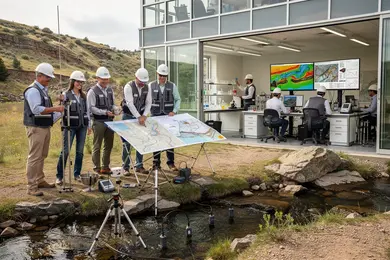
Entry into water resources jobs for geosciences graduates demands more than theoretical knowledge; employers prioritize candidates with applied skills in hydrology, watersheds, and GIS software such as ArcGIS and MODFLOW. Hydrologists, a common career target, earned a median wage of $92,060 in 2024, with a 3% projected employment growth through 2034, driven by increasing needs in water supply management and flood risk evaluation. However, immediate placement in mid-level roles often requires practical experience beyond the degree itself.
Water resource specialists typically operate within municipal agencies or private sectors, focusing on sustainable planning, watershed modeling, and contamination assessment, key tasks where a geosciences background supports effective execution. Similarly, environmental consultants apply detailed sampling and geochemical interpretation to navigate regulatory compliance pressures. Groundwater analysts collaborate with engineers on aquifer remediation, demanding proficiency in remote sensing data integration and regulatory frameworks.
Decision-making for candidates must weigh the gap between academic training and real-world job requirements. Those without internships or certifications in technical tools frequently encounter barriers to advancement. Continuous education is essential as evolving climate models and water policies increasingly influence resource allocation strategies.
This practical orientation toward careers in water management with a geosciences degree highlights the necessity of targeted skill-building. Professionals preparing for a strategic shift might find useful guidance comparable to that offered when changing career tracks, such as from teacher to speech language pathologist.
How does a geosciences degree prepare you for water resource management roles?
Candidates pursuing water resource management careers with a geosciences degree face a complex hiring landscape where technical precision and regulatory knowledge weigh heavily. Employers seek professionals skilled in interpreting hydrogeological data, designing well placements, and navigating environmental compliance to balance sustainable extraction with contamination risk mitigation. The practical value of a geosciences degree lies in its integration of hydrology, environmental chemistry, and geology to manage aquifer recharge zones and pollutant migration-key factors in urban water supply and remediation projects.
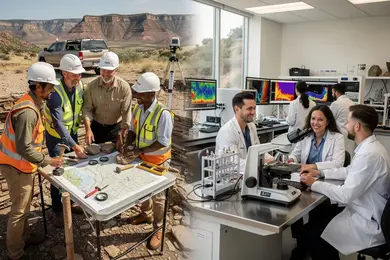
Consultants often employ soil permeability tests and groundwater flow modeling to guide site-specific decisions, while government roles demand adeptness in hydrological monitoring and drought forecasting. Success depends on proficiency with Geographic Information Systems (GIS), remote sensing technologies, and environmental regulation frameworks, alongside clear communication to convey technical findings to stakeholders.
Skills gained from a geosciences degree for water resource management also necessitate multidisciplinary coordination, bridging gaps between scientific data and policy implementation. Salary metrics from the National Ground Water Association reflect this expertise with median wages near $78,000, starting at $62,000 and exceeding $128,000 for senior specialists.
For those considering further specialization or complementary skills, a masters degree in data science online can enhance data analysis capabilities critical to environmental modeling and decision-making workflows.
What entry-level water resources jobs are available to recent geoscience graduates?
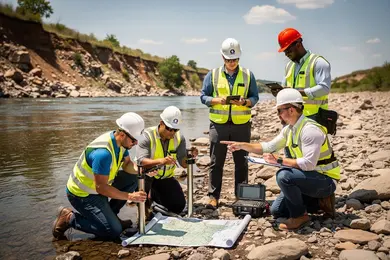
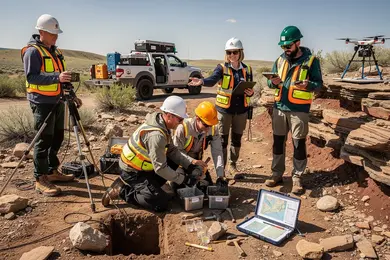
Entry-level water resources analyst positions for geoscience graduates typically involve technical roles that demand both field and data skills, such as water quality technician or hydrologic technician. For instance, a hydrologic technician with the U.S. Geological Survey might oversee river flow monitoring crucial to flood forecasting, requiring mastery of specialized instruments and data management software. These positions often situate graduates in municipal water treatment facilities, environmental consulting, or government agencies.
Water resource technician careers in geosciences for recent graduates present several practical challenges, including extensive field hours under varying environmental conditions and stringent data quality control against tight project timelines. Employers expect candidates to handle regulatory complexities across federal, state, and local levels while collaborating with multidisciplinary teams that include engineers and biologists. Failure to develop effective communication skills alongside technical expertise can limit progression.
Regions like Louisiana illustrate sustained demand with projections of 100,000-195,000 new jobs in geoscience-related water and oil/gas management over the next two decades. To improve employability, graduates should gain hands-on experience with GIS, remote sensing, and basic hydrologic modeling, ideally through internships or cooperative education. Some graduates may consider complementing their technical foundation with a library science masters to enhance data management and research skills, which are increasingly valuable for water resources analysis.
Which advanced or specialized water resources positions can experienced geoscientists target?
Experienced geoscientists aiming for advanced water resource engineering roles face a landscape where specialized technical knowledge must be paired with regulatory acumen and leadership capabilities. Positions like environmental scientists and specialists focusing on water quality command a median salary of $80,060 with modest job growth, reflecting steady demand for skills in contamination assessment and regulatory compliance within government, consulting, and industrial sectors. These practitioners must navigate evolving environmental regulations while balancing practical mitigation strategies.
Hydrogeologist roles, critical in municipal water supply and mining operations, require strong expertise in groundwater modeling, geophysical data integration, GIS proficiency, and aquifer protection laws. These fields demand precise risk assessment and sustainable resource planning, underscoring the complexity of water resources management careers for experienced geoscientists.
Water resource managers bring together multi-disciplinary teams to address water availability and climate-related pressures, blending geosciences knowledge with leadership and policy navigation. Remediation project leads, meanwhile, coordinate treatment system design and permit management to address industrial or legacy contamination, requiring seamless integration of geochemical processes with engineered solutions under demanding schedules.
Advancement into these advanced water resource engineering roles for geosciences professionals typically necessitates graduate credentials or certifications such as Certified Hydrogeologist. Aspiring candidates must weigh the challenge of gaining specialized technical skills alongside project management experience to succeed within competitive environments. For professionals also evaluating educational investments, understanding the mechanical engineering degree online cost can provide a benchmark for comparing program affordability and return on investment.
What education level and geoscience concentrations are best for water resources careers?
Choosing a bachelor's degree in geosciences with concentrations in hydrology, hydrogeology, or environmental science directly influences employability and job function in water resources by 2026. Candidates focused on these areas typically develop technical skills in water chemistry, fluid dynamics, and GIS mapping-capabilities that employers require for managing watersheds and groundwater systems. Lacking this specialization, graduates with broader geosciences backgrounds face significant hiring challenges, especially in government or consulting roles that demand regulatory knowledge and precise modeling expertise.
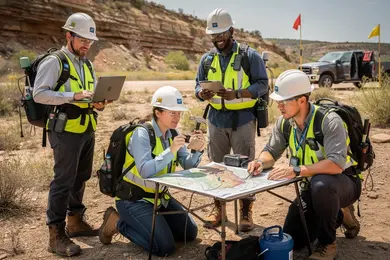
Practical experience through internships or cooperative placements in watershed assessment is a critical differentiator, bridging academic theory with field data analysis and water quality evaluation. For example, conservation scientist positions, which manage aquatic habitats and watershed sustainability, generally require a bachelor's degree and offer median wages around $64,420, as reported by the Bureau of Labor Statistics via the University of Texas Jackson School of Geosciences.
Advanced roles in hydrologic modeling, policy, or engineering favor candidates holding master's degrees emphasizing climate impact research or water resource sustainability. Employers expect not only technical rigor but also the ability to navigate regulatory frameworks and use advanced hydroinformatics tools. Certifications in GIS and water quality software can enhance candidacy but are rarely sufficient alone without a targeted degree.
- Focused degrees provide competitive advantage over general geosciences graduates.
- Hands-on watershed assessment experience meets employer expectations.
- Graduate-level education is often necessary for specialized, senior positions.
How do online geosciences programs for water resources compare with campus-based options?
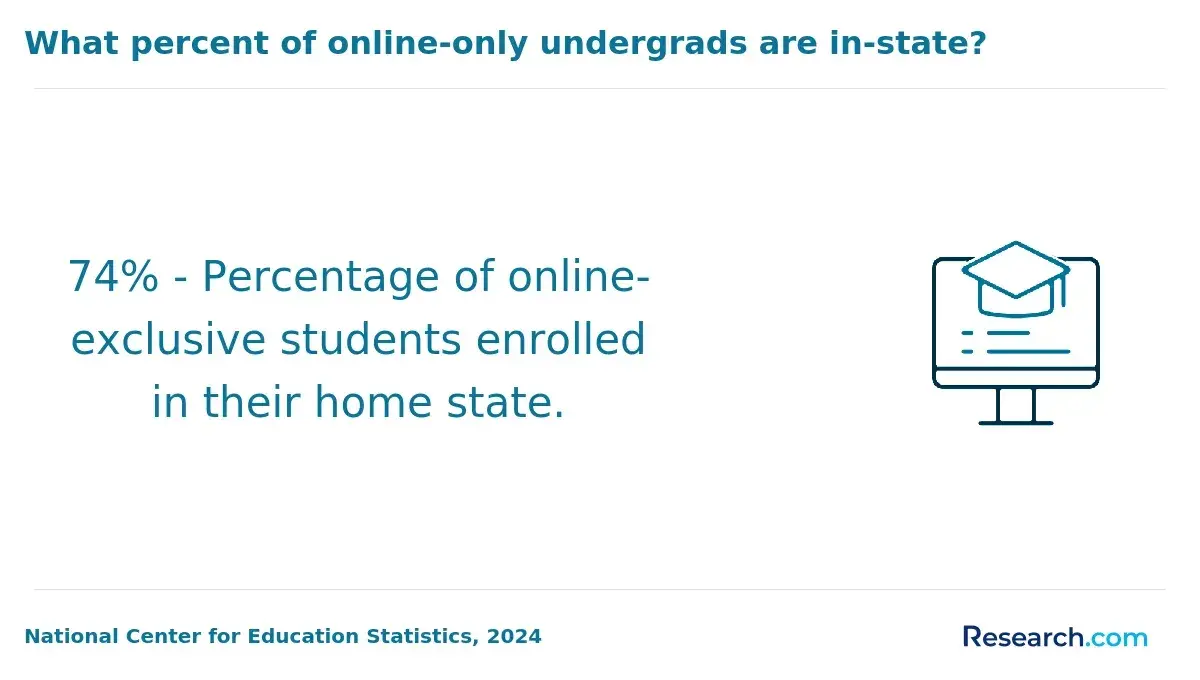
Online geosciences programs for water resources offer theoretical knowledge comparable to campus-based options but fall short in providing hands-on field experience that employers prioritize. Practical skills in hydrological modeling, GIS integration, and site data collection remain challenges for online formats, which depend on virtual tools rather than in-person lab access and mentorship. This gap can limit early-career opportunities in roles requiring physical site assessments or specialized instrumentation.
Mid-career professionals transitioning into GIS-focused water resource roles may find online programs adequate, as this segment values demonstrated technical ability and certifications over direct field training. For example, cartographers and photogrammetrists working in water and environmental applications earned a median salary of $78,380 in 2024 with a 6% job growth projected through 2034, signaling steady demand for geodata expertise regardless of education format.
Key tradeoffs include:
- Campus-based programs provide substantial hands-on training through access to hydrology labs and water sampling essential for experiential learning.
- Online programs offer schedule flexibility and targeted GIS skills but require students to independently seek local internships or fieldwork to supplement practical experience.
- Government agencies and consulting firms often prefer candidates with campus-based practicum, which fosters trust and quicker assignment of field responsibilities.
Prospective students should weigh their career timing and capacity for self-directed learning when selecting a pathway for water-focused geosciences roles.
What courses and technical skills in geosciences matter most for water resources work?
Success in water resources roles relying on a geosciences degree depends on combining technical mastery with interdisciplinary agility. For example, expertise in hydrology and watershed management provides the foundational understanding critical for managing surface and groundwater systems. However, employers increasingly expect fluency in environmental regulations like the Clean Water Act to ensure compliance during project implementation in public utilities or policy settings.
Practical competence requires advanced statistical analysis and data modeling skills, enabling professionals to interpret water quality trends and predict climate impacts. Remote sensing technology and GIS proficiency are indispensable for large-scale land use assessment and aquifer mapping, especially for government agencies or consultancies addressing contamination risks.
Water resource employers prize candidates who can integrate geologic knowledge with civil engineering principles to support infrastructure development such as dams or treatment plants. Additionally, programming skills in Python or R enhance capacity to handle automation and big data projects that optimize water distribution systems in utilities.
Balancing technical rigor with an understanding of socio-political factors shapes project feasibility and stakeholder engagement strategies, a necessary tradeoff in policy-driven roles. Choosing curricula that emphasize applied data analysis, legal frameworks, and interdisciplinary fieldwork aligns with evolving sector demands and offers measurable advantages for water resource careers targeted for 2026 and beyond.
What are typical salaries and earning potential in geoscience-related water resources roles?
A career path in water resources tied to a geosciences degree presents clear earnings disparities shaped by sector, location, and specialization. Entry-level salaries generally range from $55,000 to $75,000, with government roles often starting near $60,000 due to standardized pay scales. By contrast, private firms focusing on urban infrastructure projects frequently offer higher initial compensation, reflecting intense market demand linked to an infrastructure investment gap exceeding $1 trillion over upcoming decades.
Professionals with skills in GIS, remote sensing, and regulatory compliance are favored, particularly in hydrologic modeling or water quality analysis roles within municipal agencies, where salaries tend to surpass $100,000 after roughly ten years. However, those entering academia or nonprofits face slower salary growth, highlighting the importance of sector selection in career trajectory.
The geographic dimension plays a significant role-water-stressed western states command salary premiums due to urgent infrastructure needs. Public sector positions provide steadier employment with better benefits but typically offer lower pay compared to consulting jobs, which can be volatile and project-driven.
- Entry-level pay varies by sector: government baseline vs. private premium
- Certification and project experience improve earnings
- Geographic demand influences salary scale
- Sector choice impacts long-term career stability
Remaining informed about federal and state investment cycles is critical for professionals aiming to maximize income and relevance over time.
What is the job outlook and employer demand for water-focused geoscientists in the U.S.?
Water-focused geoscientist roles in the U.S. are sustained primarily by workforce replacement and climate adaptation needs rather than growth. Agencies managing water resilience confront aging infrastructure and shifting drought patterns, creating demand for professionals who combine hydrogeological expertise with climate data analysis. For example, water utilities in drought-affected regions seek candidates able to evaluate aquifer recharge under stress, highlighting a need for interdisciplinary skill sets.
The job market favors mid-career geoscientists with hands-on experience addressing regulatory compliance, resource allocation, and adaptive management. Yet, retirements drive most openings, limiting entry-level opportunities and pressuring institutions to rely on contractors or temporary hires for short-term climate projects. Candidates with flexible training in both technical modeling and water policy stand out.
Educationally, students should prioritize programs offering internships closely tied to governmental agencies or environmental consultancies, as this practical exposure translates directly into employability. Familiarity with current regulatory frameworks, emerging modeling tools, and climate adaptation practices is essential. Tradeoffs include balancing a specialized focus on hydrology against gaining broad interdisciplinary capabilities to navigate evolving employer demands.
How do licensing, certifications, and professional organizations affect water resources geoscience careers?
Licensing and certifications in water resources geoscience distinctly affect job eligibility, compensation, and professional mobility by aligning with employer demands for legal accountability and technical expertise. For example, obtaining a state Professional Geologist (PG) license unlocks roles involving environmental compliance and resource management that are otherwise off-limits. The absence of such credentials can bottleneck career progression, especially in government and regulated sectors.
Technical certifications in GIS or remote sensing signal proficiency that enhances employability in data-driven positions, where median salaries of around $78,380 are common-though still below broader geoscientist medians near $99,240, according to the University of Wisconsin-Oshkosh. This pay discrepancy reflects specialization tradeoffs: technology credentials often accelerate entry but may limit upward mobility relative to fully licensed professionals.
Active engagement in professional organizations like the American Geophysical Union or National Ground Water Association offers more than networking; it facilitates mentorship and timely access to evolving certification requirements and regulatory changes. A mid-career hydrogeologist shifting toward climate modeling, for instance, leverages these resources to navigate new credential demands and policy frameworks effectively.
Professionals must weigh the cost, duration, and renewal demands of licenses versus certifications based on their career niche. Field-based roles impose stricter licensure mandates, while tech-focused positions favor certifications. Early strategic credential acquisition aligned with targeted roles mitigates risks of stalled advancement caused by noncompliance or skill gaps.
Other Things You Should Know About Geosciences
Specialization can enhance employability in niche water resources roles but may limit flexibility in a fluctuating job market. General geosciences knowledge provides broader employment options, especially early in a career, but may be less competitive for roles requiring advanced technical expertise. Individuals should consider the trajectory they aim for: pursuing a specialized track is advisable when targeting long-term positions in hydrology, hydrogeology, or environmental consultancy, whereas a broad foundation suits those open to varied geoscience assignments or future shifts within the water sector.
Internships and co-op positions remain crucial for real-world skill acquisition and networking in water resources geoscience. Employers consistently prioritize practical experience due to the technical and regulatory complexities of water-related roles. Without these hands-on opportunities, graduates often face barriers to entry or limited advancement. Candidates should prioritize degree programs with strong industry connections and mandatory experiential learning components to improve employment prospects and readiness for workplace demands.
The Professional Geologist license is the main credential for senior water resources roles in many states. Most boards require a geoscience degree, about 30 semester hours in geoscience courses, 5 years of qualifying experience, and passage of the ASBOG Fundamentals of Geology and Practice of Geology exams.
References
- Geoscience Profession Data https://profession.americangeosciences.org/research/data/
- Other Industry Events https://aipg.org/page/OtherIndustryEvents
- Water Career Guide - Freshwater Society https://freshwater.org/watercareerguide/
- Groundwater | Groundwater industry careers https://www.ngwa.org/advance-your-career/groundwater-industry-careers
- What coursework should I take to become a successful Applied Geoscientist? https://www.aegweb.org/index.php
- Eau-Ressource (ER) https://formations-en.umontpellier.fr/fr/formations/master-XB/master-sciences-de-l-eau-ME143/eau-ressource-er-KKIDV3T2.html
- 500+ Water Jobs (Updated Today) â Free to Apply https://jobs.watertechintel.com/blog/geology-major-jobs
- Master's degree in Geoscienze per lo Sviluppo Sostenibile - Curricu... https://apply.unipv.eu/en_GB/courses/course/205-geo-emw-masters-degree-geoscienze-per-lo-sviluppo-sostenibile---curriculum-geosciences-energy-mineral-and-water-resources
- 3. What Undergraduate Geoscience Education Should Accomplish https://www.americangeosciences.org/change/sections/concepts/
- Undergraduate MajorHydrology and Water Resources Engineering-CUGB https://en.cugb.edu.cn/SWRE/40986.jhtml