2027 Natural Resources Roles You Can Target With a Geosciences Degree

Co-Founder and Chief Data Scientist
Environmental consultants with geosciences degrees often confront urgent demands to assess subsurface contamination risks on tight deadlines tied to regulatory compliance. Navigating shifting workforce needs intensifies pressure, as the U.S. Bureau of Labor Statistics projects 7% growth in geoscientist employment through 2032, emphasizing energy transition and resource management roles.
However, sudden shifts to online or hybrid learning formats challenge professionals balancing continued education with full-time work, highlighting a growing 25% annual increase in adult learners seeking flexible degree options via accredited programs. This dynamic reshapes how career-focused students strategize timing, specialization, and credentialing. This article examines natural resource roles ideal for geosciences graduates, clarifying pathways to targeted employment and advancement.
Key Things You Should Know
- Despite renewables growth, 2024 US BLS data projects 10% job growth in oil and gas geosciences roles by 2032, exposing tradeoffs between immediate earnings and industry cyclicality impacting career stability.
- Employers increasingly require integrated skills in data analytics and remote sensing, reshaping the traditional geosciences degree into a hybrid credential, tightening entry-level hiring and amplifying workforce skill disparities.
- Average bachelor's degree completion in geosciences costs over $40,000 nationally, with extended internships and certifications needed for competitive roles, creating timing and financial barriers for mid-career pivots.
What natural resources careers can you pursue directly with a geosciences degree?
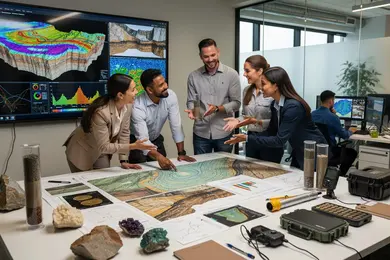
Jobs in natural resources with a geosciences degree sharply diverge by sector, with mining, quarrying, and oil and gas extraction offering the highest median wage at $126,140 annually as per U.S. Bureau of Labor Statistics data. These roles demand technical expertise in subsurface mapping, resource estimation, and extraction planning, along with proficiency in geospatial software and real-world field experience. Employers favor candidates who have navigated practical challenges through internships or co-op programs due to the rapid evolution of industry regulations and technology.
Conversely, environmental consulting positions focus on contamination assessment, risk evaluation, and compliance but generally pay 20-30% less and often fluctuate with project funding. Hydrogeology blends geological and hydrological skills to address groundwater resource management, offering moderate pay and stable prospects, particularly within government and utilities sectors where sustainability pressures grow.
These contrasting pathways emphasize the need for geosciences graduates to balance market demand with personal readiness to engage in fieldwork or regulatory environments. Students pursuing careers in natural resources with a geosciences degree should critically evaluate employer expectations and regional market dynamics. Prioritizing technical certifications and internships mitigates practical employment barriers.
For complementary insights on career options related to earth and environmental sciences, review what can you do with an environmental science major.
Which geoscience roles are most in demand in natural resources industries today?
Hydrologists, environmental consultants, and petroleum geologists represent the distinct contours of demand within geosciences careers in natural resources industry. Hydrologist openings remain consistent at around 600 annually through 2034, largely driven by workforce replacement rather than sector growth. This stability reflects a hiring environment where experience and up-to-date certifications directly influence employability, especially in public-sector roles tied to state and federal agencies.
Environmental consulting demands geoscientists versed in regulatory compliance, site assessments, and remediation efforts amid increasing pressure to address legacy pollution. Success in this sector hinges on managing complex permitting processes and meeting expedited deadlines, requiring applicants to combine technical knowledge with project leadership skills.
Petroleum geologists face a more volatile market, where job prospects fluctuate with oil price cycles and the ongoing shift toward renewable energy technologies. This sector favors candidates equipped with advanced seismic modeling skills and often requires graduate-level education to remain competitive.
These dynamics influence practical decision-making for those evaluating top geoscience jobs in natural resources sectors. Candidates must balance hydrology's predictable demand and government alignment against the project variability of consulting and market sensitivity in petroleum. Strong networking and internship experiences targeting each niche improve employment outcomes.
Prospective students can also benefit from complementary skills in data analytics, with data science master online programs offering strategic value in interpreting complex geospatial and environmental datasets.
What salaries and earning potential can geoscience graduates expect in natural resources jobs?
Starting salaries for geoscience graduates aiming for natural resources roles in 2026 typically range from $55,000 to $75,000 annually, but these figures can climb beyond $120,000 within ten years based on specialization and employer. Those pursuing natural resources jobs salary ranges for geoscience graduates should consider that private sector roles in mining, oil, and gas exploration generally offer higher entry pay than public or environmental consultancy positions, where budget constraints limit salaries.
Mid-career professionals with skills in resource modeling, environmental compliance, or geospatial analysis can expect earnings between $90,000 and $110,000, while senior technical or management roles, especially within energy firms, can exceed $120,000. However, reaching these upper tiers often requires targeted internships, professional certifications, and advanced technical software competencies, underscoring that earning potential for geosciences degree holders in natural resources careers is closely tied to ongoing skill development.
Location significantly affects salary, with resource extraction hubs like Texas, Colorado, and Alaska frequently paying premiums. Market cyclicality and regulatory complexity demand role diversification and adaptability. Practical understanding of regulatory frameworks and sustainable resource management enhances long-term compensation more than purely technical expertise.
Prospective students should also note that educational pathways vary widely in return on investment. For those considering options in allied fields, a nutritionist degree online represents an alternative with different labor market dynamics and salary structures.
How do bachelor's, master's, and doctoral geoscience degrees change your career options?
Deciding between bachelor's, master's, and doctoral degrees in geosciences hinges on navigating distinct employment expectations and their practical implications in the workforce. Bachelor's degrees typically enable entry into roles such as environmental technician or field geologist, emphasizing data collection and routine assessments aligned with modest job growth and a median wage near $80,060. However, employers often expect field experience before considering advancement, highlighting a tangible tradeoff between early employability and slower career progression.
Master's degrees in geosciences offer access to supervisory or specialized positions in environmental consultancy and resource management, demanding proficiency in technical writing, project management, and interdisciplinary analysis. Graduates with such credentials frequently handle complex environmental remediation or GIS-driven compliance tasks, often surpassing median salaries and taking on leadership roles that shape organizational outcomes.
Doctoral degrees focus on research, policy influence, and senior scientific roles, requiring demonstrated expertise through peer-reviewed contributions. Although the extended education period delays workforce entry, PhD holders engage in innovative projects with strategic impact across government and industry spheres, balancing long-term specialization against immediate employment opportunities.
When weighing these pathways, consider:
- The immediate versus delayed financial and career returns.
- Employer demands for practical experience or advanced interdisciplinary skills.
- The intended role's complexity and leadership expectations.
The decision intersects with real-world labor market dynamics and personal career goals, where advanced geosciences degrees and job opportunities vary significantly in scope and reward. For detailed financial planning related to advanced degrees, understanding the average cost of MLIS degree us offers a useful comparative perspective on graduate education investment.
What geosciences courses best prepare you for natural resources roles?
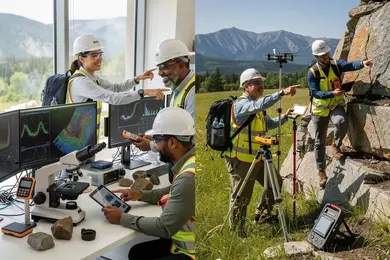
The demand for skills in spatial data analysis and mapping technologies is reshaping job qualifications in natural resources sectors. Geosciences students who invest in Geographic Information Systems (GIS), cartography, and remote sensing are best positioned for roles in resource management, land use, and environmental monitoring. This focus equips them with expertise in digital map creation and spatial problem solving-skills tied to a 6% employment growth and median pay near $78,380, according to data summarized by University of Wisconsin-Oshkosh Geology.
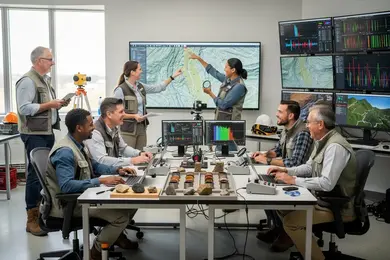
However, proficiency in software like ArcGIS, QGIS, and ERDAS Imagine is more than a technical add-on; employers increasingly expect immediate on-the-job competency. Balancing such technical skills with foundational knowledge in geology and hydrology is necessary because resource extraction and conservation demand understanding both surface and subsurface conditions.
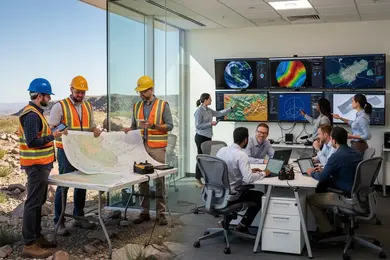
Mining companies illustrate this divide: geologists skilled in structural and earth materials support interpretation, while GIS specialists create precise resource mapping. Graduates lacking mapping proficiency risk missing roles as spatial analytics become central to resource industries.
Courses combining labs with project work simulating real-world challenges-such as environmental assessment or site remediation-significantly boost employability. Students should critically evaluate programs for these integrated experiences, which foster both theoretical insight and field-ready technical capabilities.
How do online geosciences programs for natural resources careers compare with campus programs?
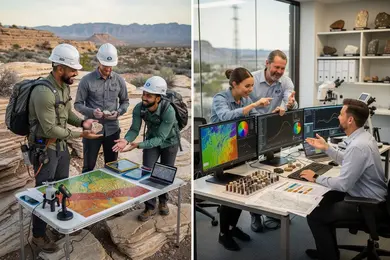
Students seeking immediate employability in geosciences should weigh the critical difference between online and campus programs: hands-on experience. Employers, especially those hiring for roles in environmental assessment, resource extraction, or hazard mitigation, prioritize candidates with practical exposure that campus programs inherently provide through access to specialized equipment, fieldwork, and direct faculty mentorship. For instance, a natural hazards specialist working with state emergency management must demonstrate skills acquired through immersive, campus-based modeling projects rather than virtual simulations alone.
While online programs offer flexibility and virtual labs, they cannot fully replicate on-site data collection or collaborative field exercises. This gap requires online students to proactively pursue external internships or field placements to remain competitive. Meanwhile, campus students benefit from integrated industry partnerships and on-site career services that facilitate timely, relevant field experiences.
The median annual salary for geoscientists nears $99,240, according to U.S. Bureau of Labor Statistics projections, with roughly 2,000 job openings expected annually over the next decade. Choosing a program therefore depends on an individual's current experience, target occupation, and employer demands for practical expertise versus theoretical knowledge.
- Online options best serve working professionals balancing schedules and career pivots within environmental science or engineering fields.
- Campus programs offer structured, hands-on training necessary for technically demanding roles.
In evaluating programs for geosciences careers in natural resources, the tradeoff between flexibility and experiential rigor shapes readiness and long-term employability.
What accreditation and program quality indicators matter for geoscience and natural resources study?
Employers in geosciences and natural resources prioritize candidates from programs with recognized regional accreditation and strong professional affiliations, such as ABET and the Geological Society of America. These credentials signal curriculum rigor and the integration of applied skills critical to workforce demands. Coursework emphasizing environmental policy, hydrogeology, and geospatial analysis combined with field experience is non-negotiable for roles like regulatory positions at the U.S. Environmental Protection Agency.
Without robust field lab components and industry or government partnerships, programs risk producing graduates ill-prepared for technical requirements. Data from Penn State Geosciences shows geoscientists in federal roles command an average wage of $110,400, linked to both credentials and practical expertise in resource management.
Prospective students should critically assess graduate employment rates within their target sectors, including mining, environmental consultancy, or energy exploration, as these rates directly reflect program alignment with current industry needs. Certification such as the Certified Professional Geologist enhances credibility but must be weighed against jurisdictional licensing specifics.
For career changers, program duration and cost must be balanced against tangible outcomes like internship availability, demonstrated job placement rates, and employer connections. Programs lacking up-to-date regulatory content and measurable outcomes often leave graduates at a disadvantage in competitive federal and private sector job markets.
What licenses or professional certifications are required for geoscientists in natural resources fields?
Licensure for geoscientists working in natural resources is a strategic but often complex choice, heavily shaped by employer demands and regulatory frameworks. The Licensed Professional Geologist (PG) credential remains the essential license, requiring a bachelor's degree in geosciences or related fields, four-plus years of supervised experience, and success on both the Fundamentals and Practice of Geology Exams. This license is not merely a formal credential; it grants legal authority to conduct environmental impact assessments, resource permitting, and safety evaluations, which many employers and projects mandate.
In practical terms, securing a PG license unlocks responsibilities such as signing off on mining or hydrogeological technical reports-a requirement in many states to meet environmental and resource management laws. Other certifications like the Certified Environmental Professional (CEP) supplement but do not replace the legal weight of licensure, especially in government or regulatory roles.
The tradeoffs involve a 4-6-year commitment to meet education and experience benchmarks versus improved job stability, wider project involvement, and a measurable salary premium. Data from the American Geosciences Institute reveals that median salaries for credentialed professionals increased by 4.5% recently, reflecting market preference for licensed expertise. Non-licensed geoscientists frequently encounter capped career progression and limited project scopes, particularly within consulting and policy-driven environments.
Prospective candidates should weigh licensing not just as a credential but as an investment influencing long-term employability, legal responsibilities, and access to higher-value roles in this specialized workforce sector.
How can internships, field camps, and research experiences boost natural resources job prospects?
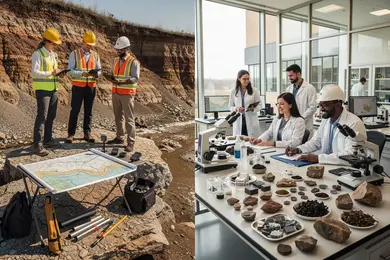
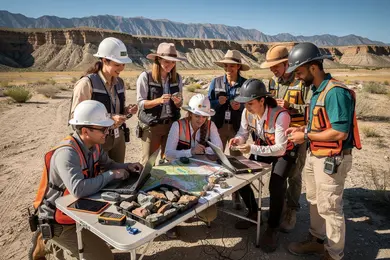
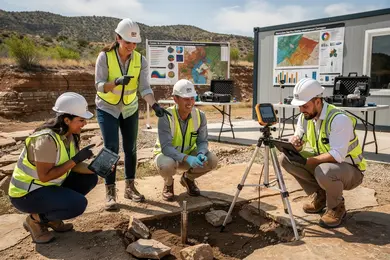
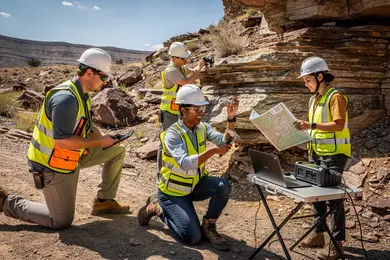
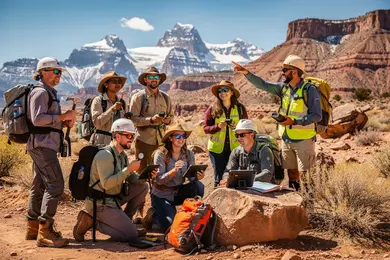
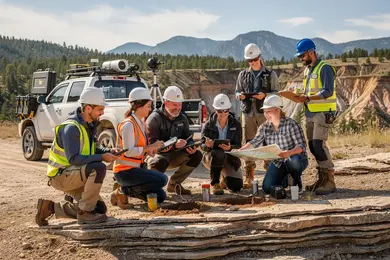
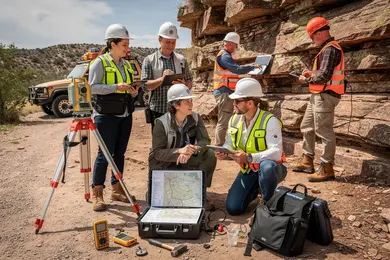
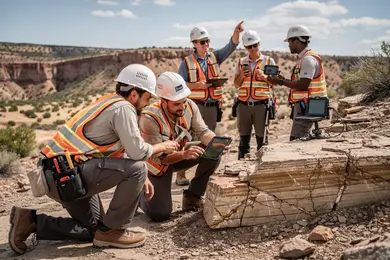
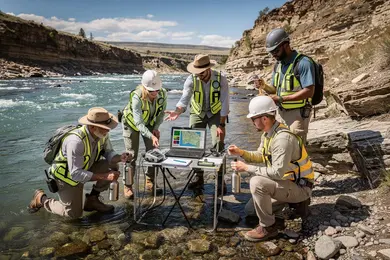
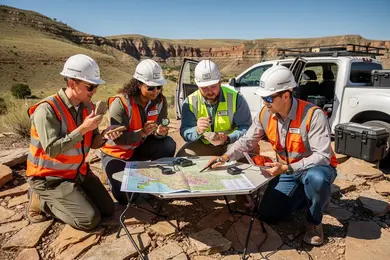
Employers in natural resources prioritize candidates with verifiable practical experience, as it directly translates to workplace readiness in geosciences roles. Internships, field camps, and research projects provide essential applied skills that academic coursework alone often fails to deliver. For example, field camps offer controlled environments to practice remote navigation, rock sampling, and geophysical surveys-skills critical in environmental consulting, mineral exploration, and energy sectors where operating conditions can be unpredictable. Without these, graduates frequently struggle with job expectations and confidence in fieldwork.
Internships also expose students to real-world team dynamics, project management, and workplace protocols, clarifying career trajectories across specialties like petroleum versus environmental geology. Students who complete internships typically benefit from faster employment due to clearer professional focus and early networking opportunities.
Research involvement enhances analytical competence necessary for data interpretation and technical reporting, which are fundamental in both government and private geotechnical roles. This combination addresses a persistent industry gap where new hires lack sufficient hands-on experience, increasing retention and productivity once employed.
In Canada, data shows 34.65% of Geological and Earth Sciences graduates secure roles as geoscientists or oceanographers, with another 2.38% entering geological engineering (Government of Canada Job Bank graduate outcomes, 2021-2023). For U.S. students, prioritizing such applied training is vital in a competitive labor market demanding field-ready, research-capable professionals.
How should you choose a geosciences school aligned with your natural resources career goals?
Choosing a geosciences program requires aligning curriculum focus with specific industry demands to avoid skill gaps that can slow entry or advancement. For example, a mining geologist must seek out programs with intensive mineral exploration coursework and fieldwork, as well as connections to mining companies for internships. In contrast, pursuing water resource management necessitates emphasis on hydrogeology and applied environmental chemistry projects, which shape relevant job readiness.
Faculty expertise and institutional networks strongly influence graduate outcomes; programs linked to government agencies or leading resource firms often provide access to current practices that employers prioritize. This alignment is reflected in workforce data such as the 2016 median wage of $102,200 reported by Canadian geosciences graduates five years after graduation, illustrating the financial impact of program quality.
Students should weigh program flexibility too, including options for dual majors or certifications in GIS, data analytics, or environmental policy-skills increasingly demanded across natural resource roles. Geographic proximity to resource hubs or regulatory bodies also affects practical training opportunities and employer engagement.
Requesting graduate employment stats and assessing how a program balances field skills with emerging digital competencies will clarify if it prepares candidates for measurable career trajectories rather than generic credentials. This pragmatic approach supports strategic decision-making amid evolving sector needs.
Other Things You Should Know About Geosciences
A geosciences degree provides a foundational skill set in earth systems, but practical flexibility depends heavily on specialization and experience. Transitioning between subfields like petroleum geology and environmental geoscience often requires additional certifications or targeted work experience. Employers expect candidates to demonstrate relevant technical skills and industry familiarity beyond the degree, so plan to supplement your education with specific training or internships aligned with the area you want to enter.
Yes. Many employers in mining, water resources, environmental consulting, and land management prefer geosciences graduates with ArcGIS or QGIS training. An Esri Technical Certification or a university GIS certificate shows practical mapping and spatial-analysis skills, which are often listed in entry-level job postings.
Employers in natural resources expect geoscience graduates to be proficient in GIS, data analysis software, and industry-specific modeling tools. Prioritizing technical skill development alongside core geoscience courses increases employability and ability to contribute immediately. Failing to acquire these competencies can limit job prospects and slow career advancement, so deliberate integration of software training within your study plan is essential.
Location matters significantly for networking, internships, and exposure to industry employers in natural resources. Programs near resource-rich regions or active exploration sites offer practical advantages, including easier access to local companies and field sites. Prioritize schools with strong regional industry ties, as this can lead to stronger professional connections and more immediate employment prospects post-graduation.
References
- Streamlining Accreditation Preparation with Program Review https://www.qualitymatters.org/qa-resources/resource-center/articles-resources/streamline-accreditation-prep
- Natural Resources https://e-catalog.sewanee.edu/arts-sciences/departments-interdisciplinary-programs/earth-environmental-systems/natural-resources-environment-major/
- Professional licensure in geological sciences and engineering | University of Nevada, Reno https://www.unr.edu/geology/undergraduate/professional-licensure
- CAREERS https://earthsci.org/education/careers/geolo.html
- Top Research Programs to Apply For High School Environmental Studies https://pioneeracademics.com/news/top-environmental-studies-research-programs-for-high-school-students/
- Choosing Your Degree https://www.geolsoc.org.uk/Geology-Career-Pathways/University/Choosing%20your%20degree.html
- Geology - ABET https://www.abet.org/accreditation/new-and-developing-program-areas/geology/
- ThisIsGeoscience - Geoscience Salaries https://www.thisisgeoscience.com/the-resources/geoscience-salaries
- Becoming a P.Geo. https://www.geoscientistscanada.ca/becoming-a-p-geo.php/1000
- Online Geoscience Degrees: Top Schools and All Programs in 2026 https://www.gisdegree.org/online/geoscience-degrees/