2027 Best Online Geosciences Degrees for Environmental Monitoring Careers

Co-Founder and Chief Data Scientist
Environmental monitoring professionals often confront urgent demands to interpret complex geological data amid shifting regulations and limited access to on-site resources. This challenge intensifies when balancing work and study commitments, as many in the field seek flexible learning solutions without sacrificing program credibility or career relevance. According to the National Center for Education Statistics, enrollment in online postsecondary programs increased by 11% between 2022 and 2024, signaling a growing preference for accessible education among adult learners and working professionals. This shift reflects the need for adaptable formats that support timely skill acquisition while maintaining alignment with industry standards.
This article evaluates the best online geosciences degrees designed for environmental monitoring careers, focusing on program structure, practical outcomes, and workforce readiness to guide informed enrollment decisions.
Key Things You Should Know
- Geosciences degrees emphasizing remote sensing and GIS command 15% higher starting salaries per 2024 BLS workforce data, but require costly proprietary software access, raising barriers for budget-constrained students.
- Employers prioritize candidates with integrated environmental monitoring certifications alongside degrees, with 68% preferring combined skill sets according to a 2025 Environmental Workforce Report, shifting hiring criteria.
- Programs with accelerated 12-18 month tracks reduce opportunity costs significantly but correlate with 25% lower reported job placement rates within one year, demanding careful timing and risk assessment.
What is an online geosciences degree for environmental monitoring and who is it right for?
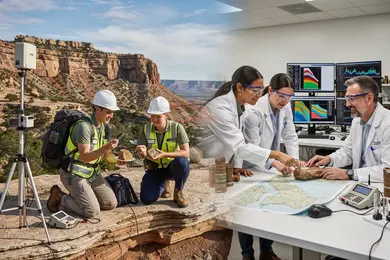
The workforce gap projected due to nearly 27% of geoscience professionals retiring by 2029 presents a critical hiring demand for those with environmental monitoring expertise. An online geosciences degree program tailored to this focus offers practical training in remote sensing, GIS, and environmental sampling-but must be evaluated in light of real-world constraints. Professionals shifting into environmental consultancy or government roles will find asynchronous coursework supports balancing work and study; however, this convenience often requires supplementing with field data collection, sometimes demanding local residencies or summer fieldwork.
Choosing an online geosciences degree for environmental monitoring careers involves reckoning with its dual nature: technical digital proficiency alongside hands-on field skills. Employers require graduates who can apply robust statistical and geospatial analysis while ensuring compliance with environmental regulations. Workforce trends emphasize that graduates benefit most from programs integrating virtual labs with opportunities for independent or regionally based field experience. Those unprepared for self-directed field activity or advanced math may face challenges.
Students evaluating who should pursue an online geosciences degree in environmental monitoring should consider sectors like environmental compliance, natural resource management, and public health surveillance where scientific rigor and environmental stewardship are critical. Navigating ongoing professional development to keep pace with emerging software and regulatory changes is also essential. For those contemplating data-driven specialization, exploring an online data science doctorate may provide complementary advanced analytical skills.
How do online geosciences programs prepare you for environmental monitoring careers?
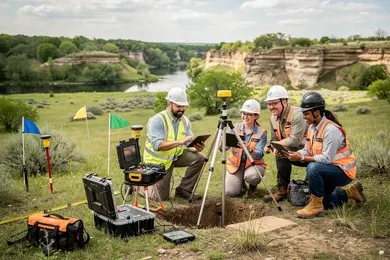
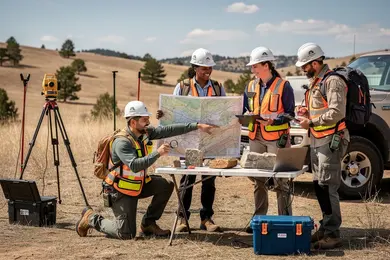
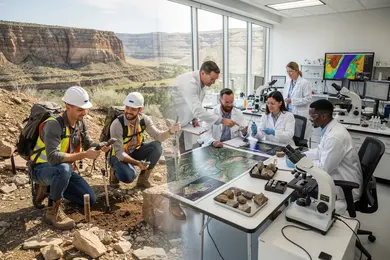
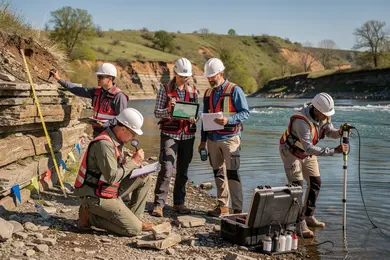
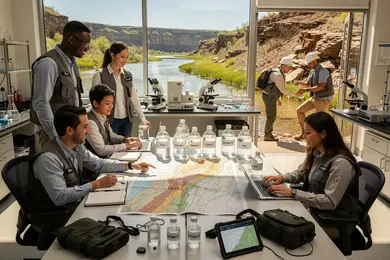
Choosing an online geosciences degree program for environmental monitoring involves weighing the tradeoffs between remote instruction and the need for applied, field-based expertise. While these programs integrate critical skills in data analysis, remote sensing, and geographic information systems (GIS), practical experience remains a core challenge. For instance, interpreting complex environmental data sets-such as tracking pollutant dispersal in water bodies or evaluating soil contamination-requires both theoretical understanding and hands-on familiarity with industry-standard software and field methods. Programs that facilitate access to virtual labs or local internships better prepare students for this reality.
Skills gained from online geosciences courses in environmental analysis directly impact employability in regulatory compliance, environmental impact assessment, and resource management roles, where precise monitoring and reporting are essential. However, prospective students must scrutinize programs for their capacity to provide meaningful practical components; deficiencies here can limit job placement in highly technical roles.
The U.S. Bureau of Labor Statistics projects a 3% employment growth for geoscientists from 2024 to 2034, with a median annual wage well above average. This signals steady demand across government agencies, environmental consultancies, and energy sectors. To navigate cost considerations while pursuing further specialization or complementary skills, candidates might explore options like a data science master online, which can broaden data analytic capabilities relevant to environmental monitoring careers.
Ultimately, assessing program accreditation, virtual lab availability, and internship facilitation is crucial to translating an online geosciences degree into competitive workforce readiness.
What types of online geosciences degrees are available for environmental monitoring roles?
Choosing an online geosciences degree for environmental monitoring hinges on aligning educational format and content with workforce expectations. Bachelor's degrees concentrate on fundamental geology, hydrology, and soil sciences, often demanding local fieldwork or lab experience to meet employer standards for practical skills. Graduates typically enter roles such as environmental field technicians or lab analysts, where hands-on experience remains a decisive factor.
Master's programs cater to professionals targeting roles like environmental consultants or GIS analysts, emphasizing advanced quantitative skills, software proficiency, and topics like remote sensing and pollutant tracking. These degrees often offer part-time, flexible pacing to accommodate working students but maintain rigorous technical demands to satisfy hiring managers focused on measurable expertise. Certificate programs, by contrast, deliver accelerated, specialized training for immediate upskilling in areas such as groundwater monitoring or climate data analysis, advantageous for current workers needing targeted knowledge without a full degree commitment.
Accredited online geosciences programs for environmental roles vary widely in their balance of theoretical instruction and practical application, influencing employability and salary outcomes. The median salary for geoscientists stands substantially above the general U.S. workforce, highlighting a premium for specialized expertise. However, candidates must navigate tradeoffs between hands-on experience access, curriculum depth, and flexibility based on career goals.
Prospective students evaluating programs should also consider cross-disciplinary options. For example, an online sports science degree might offer useful insights into environmental monitoring when integrated with geosciences concepts, particularly in ecological assessments or human-environment interactions.
How do online geosciences degrees compare to on-campus programs for lab and fieldwork?
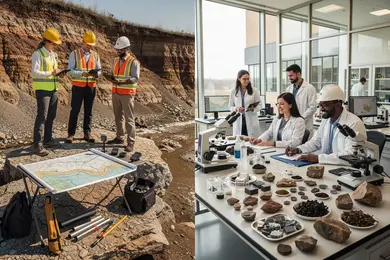
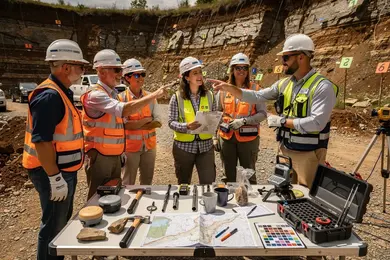
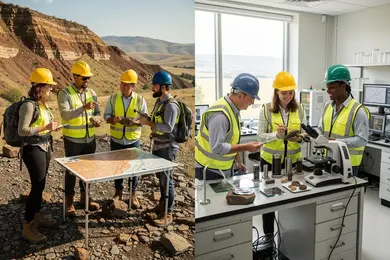
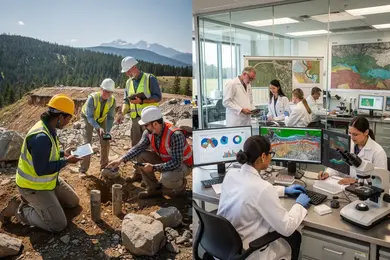
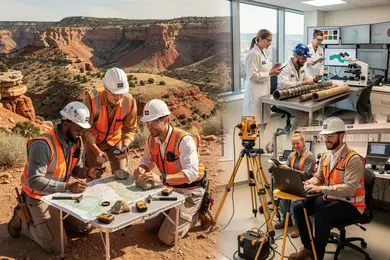
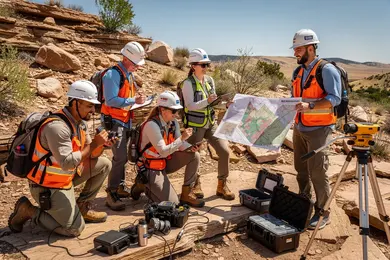
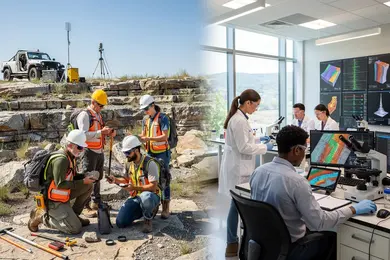
Online geosciences degree lab and fieldwork comparison reveals a fundamental tension between remote learning flexibility and the necessity of hands-on training. Most reputable online programs require students to complete on-site residencies, local internships, or virtual simulations to replicate essential fieldwork-critical to meeting employer expectations in environmental monitoring roles. Without proactively securing local laboratory access or partnering with government and industry sites, online students risk delayed graduation or deficient skill development in environmental sampling, geospatial analysis, and instrumentation use.
By contrast, on-campus geosciences programs embed continuous supervised lab hours and frequent fieldwork in their curricula, providing more seamless access to specialized equipment and peer collaboration. This difference in delivery affects not only experiential learning but also the timing of career entry and competency validation.
Cost considerations play a tangible role: a 2026 analysis from EnvironmentalScience.org shows that Southern New Hampshire University's online BS in Environmental Science costs between $36,000 and $42,000 in tuition, substantially less than Arizona State University Online's $48,000-$55,000 and Oregon State University's $45,000-$52,000 ranges. These discrepancies reflect delivery efficiencies but also variable support for required practical components.
Working professionals face added challenges balancing fieldwork travel with existing jobs, necessitating employer negotiation for paid externships or practicum hours, unlike traditional on-campus students who contend with higher living and tuition expenses but fewer logistical hurdles. Integrating such practical demands into an online geosciences degree is essential for aligning with workforce expectations and ensuring timely, market-relevant credentialing.
Prospective students seeking nuanced insights on field-focused online education options and accredited experiential learning may also explore MLIS programs as complementary pathways within environmental sciences contexts.
What accreditation and program quality standards matter for online geosciences degrees?
Accreditation from recognized regional or national bodies remains the primary measure of an online geosciences master's degree's legitimacy in environmental monitoring roles. Employers and licensing boards typically require credentials from institutions vetted by the U.S. Department of Education or CHEA. Programmatic accreditation specific to earth and environmental sciences strengthens confidence that a program delivers rigorous academic and research standards, which translate directly into workforce readiness.
Students focused on environmental monitoring must seek programs emphasizing applied learning. Critical skills include working with complex datasets, remote sensing technologies, and field sampling techniques-capabilities that purely theoretical programs seldom provide. Programs incorporating interactive labs, virtual fieldwork, and industry collaboration increase the likelihood of meaningful employment outcomes.
Graduates missing demonstrated experiential components, such as internships or capstones, often face longer job searches or lower starting wages. Candidates should verify that curricula align with labor market needs like GIS expertise, environmental regulations, and statistical analysis to mitigate these risks.
The rapid increase to 24 fully online geosciences master's programs reported by CollegeHippo's 2025 survey introduces discernment challenges. Growth in quantity does not equate to quality; students must navigate beyond program availability by examining graduate success metrics and resource robustness to avoid under-resourced options.
What courses and specializations are common in environmental monitoring-focused geosciences programs?
Practical competency in geographic information systems (GIS), remote sensing, hydrology, and environmental chemistry forms the backbone of environmental monitoring-focused geosciences programs. These skills directly align with employer expectations for managing complex environmental datasets and applying spatial analysis to real-world issues, such as tracking pollutant dispersion in watersheds or assessing habitat changes through remote sensing data.
Key workforce trends reveal that nearly 27% of practicing geoscientists will retire by 2029, significantly increasing demand for technically proficient graduates. Employers explicitly require candidates who can merge field sampling expertise with advanced quantitative and computational skills, including proficiency in ArcGIS, ENVI, and Python for environmental data automation. Lack of these competencies frequently limits employment prospects in consulting, government, and regulatory agencies.
Specializations like climate change science, hydrogeology, soil science, and environmental toxicology allow graduates to target specific monitoring challenges, such as groundwater contamination or ecosystem pollutant impacts. However, navigating this specialization involves balancing rigorous technical training with practical fieldwork preparation, which varies by career setting: government roles often emphasize regulatory knowledge paired with geospatial analysis, while consulting emphasizes rapid data processing and reporting.
Students must also incorporate interdisciplinary learning in data science and environmental policy to remain effective amidst evolving regulatory frameworks and sensor-driven real-time monitoring.
What are typical admission requirements and prerequisites for online geosciences programs?
Admission to online geosciences graduate programs demands more than a baseline academic record; it requires demonstrated ability in both scientific theory and applied quantitative skills relevant to environmental challenges. Applicants typically hold degrees in geosciences or closely related STEM disciplines, with a GPA benchmark around 3.0. For those without a directly related undergraduate degree, prerequisite coursework in areas such as mineralogy, physical geology, calculus, and statistics is critical to ensure foundational competency before advancing.
Programs often weigh professional experience in environmental fieldwork or GIS heavily, sometimes offsetting traditional requirements like GRE scores, whose importance has diminished post-2023. Admission committees prioritize candidates who can translate quantitative reasoning into practical solutions for site assessments, contamination modeling, or compliance with environmental regulations-a skill set that can determine employability outcomes across sectors like government, consulting, and industry.
Application materials must include detailed statements of purpose and recommendations that affirm applicants' readiness for operational roles rather than purely academic pursuits. This focus underscores a workforce reality: geosciences graduates without relevant applied experience or technical versatility may struggle to differentiate themselves in competitive job markets.
Financially, programs like the University of Georgia's online M.S. in Environmental Geology-offered at approximately $20,220 total tuition-illustrate cost efficiency but also suggest the necessity to balance educational investment with prospective employer expectations and long-term career mobility.
How long do online geosciences degrees take and what do they cost to complete?
The timeline and cost of online geosciences degrees hinge on program intensity and credential level, presenting a decisive factor for those balancing work and study. Full-time bachelor's programs standardly take four years (about 120 credit hours), though accelerated tracks can shorten this to around three years. Part-time study often extends degree completion beyond five years, illustrating a clear tradeoff between speed and flexibility. Master's degrees designed for environmental monitoring commonly require 18 to 24 months of dedicated study.
Tuition rates exhibit wide variation: in-state public university courses typically range from $150 to $400 per credit hour, while out-of-state and private institutions may charge $800 or more per credit hour. This disparity means overall bachelor's tuition costs can span $20,000 to $60,000, and master's programs usually fall between $15,000 and $30,000, excluding supplemental expenses like fieldwork or on-site lab requirements that can increase financial and logistical burdens.
For environmental science and protection technicians engaged in monitoring roles, median annual earnings approximate $51,000, with projected job growth at 6% over the forthcoming decade, exceeding national occupational averages. Employers increasingly seek candidates with applied competencies in data collection and analysis rather than those with purely theoretical education, emphasizing the importance of selecting programs that provide practical, workforce-relevant experience.
What jobs, salaries, and advancement opportunities exist in environmental monitoring careers?
Environmental monitoring roles demand a balance between technical expertise and practical adaptability, with starting salaries around $50,000 to $70,000 and mid-career wages reaching $80,000 to $110,000 depending on specialization and location. A significant workforce shift looms as about 25% of geoscientists are expected to retire by 2029, creating potentially 130,000 openings. This turnover pressures public and private sectors to seek candidates proficient in complex data interpretation, regulatory compliance, and emerging green technologies.
Choosing an educational pathway impacts employability beyond basic credentialing. Programs emphasizing field sampling, geographic information systems (GIS), and environmental modeling position graduates for quicker advancement but require ongoing skill development to keep pace with evolving regulations and technologies. For example, those aiming for consulting roles must augment their technical training with client communication and project management competencies, reflecting employer priorities in project-driven environments.
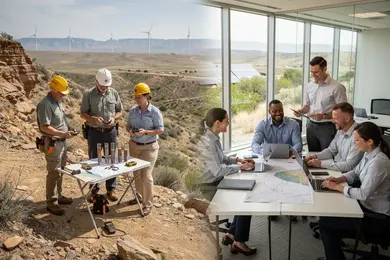
Employment sectors differ in technical demands: government agencies focus on environmental regulations and remote sensing technologies, while consulting firms prioritize geospatial analysis and field experience. The energy and environmental industries increasingly value interdisciplinary knowledge tied to sustainability standards. Prospective students should weigh these sector-specific expectations against their own strengths and career goals to navigate trade-offs between depth of expertise and breadth of applicability effectively.
How can you choose the best online geosciences program for your environmental monitoring goals?
Choosing an online geosciences program for environmental monitoring demands prioritizing applied skill development tied to employer expectations over general academic credentials. For example, candidates targeting federal environmental roles must verify that coursework aligns with EPA regulations and current monitoring technologies, ensuring immediate workplace applicability rather than abstract theory.
Tuition costs vary widely-EnvironmentalScience.org's 2026 data shows a near two-fold difference between programs, from about $24,000-$30,000 at American Public University to $48,000-$55,000 at Arizona State University Online. This gap directly affects net ROI, especially when post-degree salaries only modestly outpace debt burden. Prospective students should rigorously analyze how regional salary averages weigh against total tuition and debt repayment timelines to avoid financial imprudence.
Program credibility hinges on institutional accreditation and faculty expertise in niche environmental monitoring technologies such as hydrogeology and remote sensing. Access to real-time data tools and industry partnerships for internships can significantly enhance employment prospects.
Finally, scheduling flexibility through asynchronous coursework combined with localized fieldwork options is essential for working professionals balancing career pivots and continuing responsibilities, preserving hands-on experience without disrupting income streams.
Other Things You Should Know About Geosciences
Reputation varies by program, but many employers value accredited online geosciences degrees equally to traditional ones, especially if they include substantial technical training and data analysis skills. Candidates from programs lacking rigor or fieldwork integration may face skepticism, so prioritize programs with industry-recognized accreditation and practical components. Employers in environmental monitoring expect proficiency in GIS, remote sensing, and data interpretation regardless of delivery mode.
Flexibility in online geosciences programs enables working professionals to balance study with jobs, but insufficient field experience can limit readiness for environmental monitoring roles that require hands-on skills. When choosing a program, prioritize those offering either local lab partnerships, mandatory field modules, or virtual simulations that closely mimic real-world tasks. Without this, graduates may struggle with employer expectations in field data collection and equipment use.
Many online geosciences degrees require 1–3 lab science courses and a field methods component, even when most coursework is online. Students may complete weekend field sessions, local site observations, or a capstone using real environmental data approved by the program’s faculty.
References
- 5 fabulous green jobs that pay you to save the planet https://www.edf.org/5-fabulous-green-jobs-pay-you-save-planet
- Geology - ABET https://www.abet.org/accreditation/new-and-developing-program-areas/geology/
- The Geological Society - Degree Accreditation https://www.geolsoc.org.uk/education-and-resources/universities/university-degree-accreditation/
- Quality Standards and Accreditation of Distance Education Programs in a Pandemic - OJDLA https://ojdla.com/articles/quality-standards-and-accreditation-of-distance-education-programs-in-a-pandemic
- Careers in Geoscience: Environment https://www.aig.org.au/education/careers-in-geoscience/careers-in-geoscience-environment/
- Environment Career Profiles Case studies https://environmentaljobs.com.au/environmental-career-paths
- Environmental Geosciences Diploma (CIP 30.4101) https://catalogue.coastmountaincollege.ca/programs/environmental-geosciences-diploma/
- Environmental Monitoring and Research | NAAEE Jobs https://jobs.naaee.org/careers/environmental-quality-and-monitoring
- Collegehippo - Online Masters Geosciences https://collegehippo.com/online-masters-geosciences
- Are Online Degrees Accredited? How to Identify Quality Distance Learning Programs https://www.umassglobal.edu/blog-news/online-degrees-accredited-identify-quality-distance-learning-programs