2027 Best Online Geosciences Programs for Advancement Without Leaving Work

Co-Founder and Chief Data Scientist
Field geologists and environmental analysts often confront narrow time frames for certification or advancement, hindered by inflexible traditional programs that require full-time attendance or relocation. This bottleneck coincides with a 17% surge in enrollment among adult learners in accredited online science programs reported by the National Center for Education Statistics in 2024, reflecting a shift toward modular, career-compatible study models. Such alternatives matter as employers increasingly seek candidates with updated technical skills but cannot accommodate extended absences.
This article evaluates the leading online geosciences programs designed to accelerate professional growth without interrupting ongoing employment, providing strategic guidance for effective upskilling decisions.
Key Things You Should Know
- Online geosciences programs average 25% lower total costs than on-campus equivalents, yet 18-month average completion times-per National Center for Education Statistics-pose opportunity cost challenges for midcareer acceleration.
- Employers report that 62% of geosciences roles require advanced GIS and remote sensing expertise, making programs without integrated specialized tech courses less valued in workforce transitions, according to the U.S. Bureau of Labor Statistics.
- Tradeoffs between asynchronous content and live field component access significantly affect employability; absence of hands-on modules correlates with 14% lower hiring rates in environmental consulting firms as tracked by industry surveys.
What is an online geosciences degree and how does it differ from campus-based study?
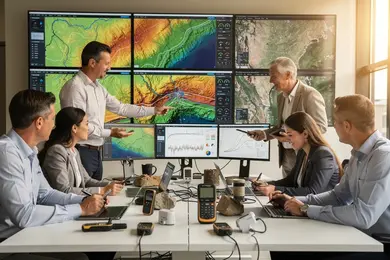
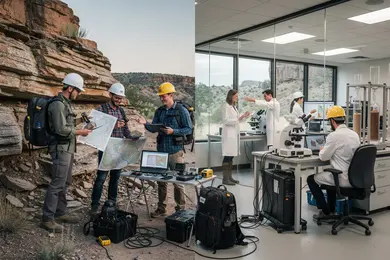
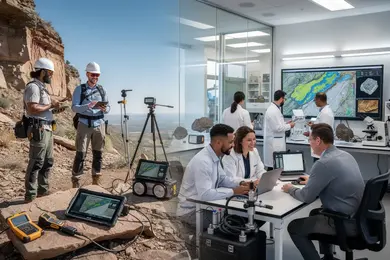
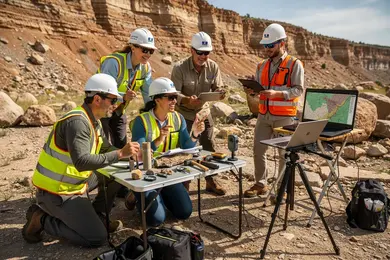
Choosing an online geosciences degree program for working professionals requires weighing the tradeoffs between flexible study formats and hands-on skill acquisition. Online programs prioritize asynchronous learning through virtual labs and remote data analysis, accommodating variable schedules but limiting direct access to fieldwork and specialized equipment essential for practical competencies in rock sampling or seismic surveys. Students must independently arrange regional field projects or internships to meet employer expectations for technical proficiency, a notable gap compared to campus-based programs that embed such experiences within their curriculum.
Networking opportunities differ significantly: on-campus study naturally fosters mentorship and industry connections through daily interactions, while online learners must proactively engage with professional associations and virtual conferences to build similar support networks. This distinction impacts career trajectory, especially in sectors like environmental consulting and energy exploration.
Employment growth for geoscientists is projected at about 5% over the next decade, emphasizing the importance of selecting programs aligned with workforce demands. Prospective students evaluating differences between online and campus-based geosciences study should consider how each path supports practical readiness and professional integration.
For those exploring related routes, understanding what can you do with an environmental studies degree offers additional context on adjacent career options within science fields.
What types of online geoscience degrees and certificates are available for working professionals?
Choosing an online geoscience degree program often means carefully weighing the flexibility needed to maintain employment against the depth of academic rigor required for meaningful career shifts. For working professionals aiming to transition into or advance within geosciences, bachelor's degrees typically serve as foundational retraining for those new to the field, while master's programs focus on specialization and leadership skills critical for roles like environmental impact assessment or project management. Flexible geosciences certificate options for career advancement provide a strategic shortcut, particularly in niche areas such as GIS, hydrology, or mineralogy, where emerging employer demand rewards targeted technical proficiency.
Programs designed for working professionals blend asynchronous coursework with occasional synchronous labs, reflecting the real-world constraints of field schedules and shift work. For example, an engineer moving into geoscience consultancy must consider how a master's degree influences credibility versus the quicker entry afforded by certificate programs. Those already practicing geoscientists might prioritize certificates to boost salary potential and address evolving technology needs, such as advanced GIS tools or environmental regulation compliance.
The median annual wage for geoscientists was $96,530 in May 2024, illustrating the sector's valuation of specialized expertise. However, balancing program rigor, hands-on experience, and time commitment is essential for professionals advancing without a career break. This practical context aligns with broader workforce trends visible in related fields, like the online animal science degree salary, reinforcing the importance of credential versus return-on-investment calculations when selecting a pathway.
How do I choose an accredited and reputable online geosciences program in the United States?
Choosing an accredited online geosciences program in the United States carries direct consequences for professional credibility and workforce integration. Regional accreditation aligned with standards recognized by the U.S. Department of Education or the Council for Higher Education Accreditation is critical-it ensures that academic training meets employer expectations and licensing board requirements. For a working professional pursuing a strategic career pivot or advancement in geosciences, the curriculum should emphasize practical competencies such as GIS mapping, environmental analysis, and simulated fieldwork, reflecting the skill demands of energy, environmental consulting, and government sectors.
Cost considerations must be balanced against quality and credit transferability. For example, the University of Florida offers an online geology program at $129.18 per credit hour, among the most affordable in reputable listings, which can lessen debt but requires scrutiny of how well coursework supports future certifications or licensure. Programs that fail to address these nuances risk leaving graduates underprepared or hindered when pursuing targeted career moves.
Graduate employment success depends heavily on access to current geosciences software tools, industry certifications, and employer partnerships. Flexible pacing and asynchronous course formats also play a decisive role for professionals maintaining full-time employment. Evaluating whether programs provide robust career counseling and internship placements can differentiate the ease of market entry or promotion.
Credits that transfer toward state licensure or recognized professional societies matter significantly in specialized fields such as hydrogeology or environmental remediation. Making these connections clear prevents unnecessary repetition and supports upward mobility. Prospective students assessing online offerings should also consider comparisons to best online registered dietitian programs as a strategic exercise in evaluating program rigor and market relevance alongside other science-based professional paths.
What admission requirements and prior coursework do online geosciences programs typically expect?
Admission to online geosciences programs demands not only a bachelor's degree-typically in geosciences, earth sciences, environmental science, or related STEM fields-but also demonstrated quantitative proficiency. Programs often require a minimum undergraduate GPA of around 3.0 and prior coursework covering essential subjects like geology, chemistry, physics, calculus, and statistics. This foundation ensures readiness for the technical rigor ahead. Applicants missing key prerequisites may gain conditional admission but must complete these courses to advance.
Employers and admissions committees prioritize candidates' skills in data interpretation, geospatial analysis, and laboratory techniques, reflecting workforce realities tied to roles at agencies like the EPA and USGS. While internships and research enrich applications, they do not replace formal quantitative coursework. Working professionals should note that accelerated program options, like Ohio University's 30-credit M.S. in Geological Sciences finishing in three semesters, cater to those needing swift yet comprehensive upskilling without leaving employment.
Strong documentation of prior coursework and technical competencies is critical, given the focus on laboratory and quantitative expertise over broad subject knowledge. When selecting programs, candidates must weigh tradeoffs between pacing and depth, especially if targeting specialized tracks that align closely with workforce demands. Those exploring an online library science degree will find different admissions expectations but similar rigor in prerequisite evaluation.
In practice, meeting these admission criteria influences immediate employability and long-term adaptability in a geosciences career. Strategically choosing a program with clear prerequisite requirements and alignment to professional standards mitigates the risk of extended program duration due to prerequisite deficits.
How long do online geosciences programs take to complete while working full time?
Professionals balancing full-time work with online geosciences degrees typically face a tradeoff between pacing and career timing. A bachelor's program taken part-time often extends from the traditional four years to three or more, while master's degrees may span 18 to 30 months with asynchronous coursework. For example, a working geoscience professional might complete a bachelor's degree in three years, compared to two years for a full-time student, affecting how quickly new skills translate into workplace impact.
Employers value candidates advancing their education while maintaining job performance, as concurrent skill application supports immediate organizational needs. However, longer program durations can delay eligibility for leadership roles or specialist positions, which frequently require advanced credentials within about five years. Selecting a program with flexible modular courses, transparent credit transfer policies, and robust advising mitigates these timing challenges.
Financially, a University of Florida online geology degree offers an estimated 20-year net ROI of $430,000, according to College Values Online. This illustrates the long-term payoff of sustained educational investment, though candidates must weigh this against workload pressures and personal obligations that might favor accelerated or alternative pathways.
Prudent candidates assess how program timelines align with professional certifications and tuition assistance benefits to optimize both completion likelihood and labor market relevance.
What core courses and specializations are offered in online geosciences programs?
Online geosciences programs focus heavily on foundational earth science disciplines while balancing practical skills with theoretical knowledge. Core coursework centers on earth systems, mineralogy, sedimentology, geophysics, and GIS tools-skills that align with analytical roles in sectors like environmental consulting and resource exploration. Electives offer specialized training in hydrogeology, remote sensing, paleontology, and geochemistry, enabling a tailored approach suited to niche industry needs such as water management or energy resource development.
One critical tradeoff in online formats is limited hands-on field experience. Programs attempt to bridge this gap with virtual labs, project-based tasks, or optional local fieldwork, but this can affect graduates' readiness for roles demanding demonstrable field proficiency. For example, urban planners advancing their careers depend on spatial data integration and environmental impact modeling skills, which strong GIS and mapping modules can provide despite the online setting.
Employers prioritize not only broad knowledge but also verified technical competencies. Certifications in GIS and data modeling incorporated into these programs add tangible value to resumes, increasing employability in specialized roles such as cartography and photogrammetry, where average salaries reach $68,900 annually.
Prospective students must weigh accessibility against practical experience and seek programs with industry-recognized credentials that maximize workforce competitiveness without full-time campus attendance.
How do online geosciences programs handle labs, fieldwork, and hands-on learning requirements?
Online geosciences programs partially mitigate the challenge of replicating hands-on experience through hybrid and simulation-based methods, but these cannot fully substitute for tactile skills crucial in fieldwork and equipment handling. Virtual labs and remote sensing software provide practical exposure while accommodating work schedules; however, this approach leaves gaps in real-world competency essential for many employers.
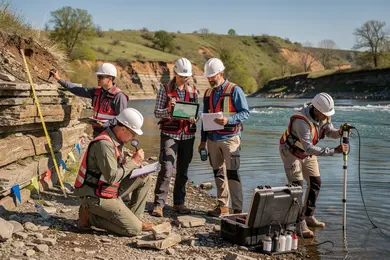
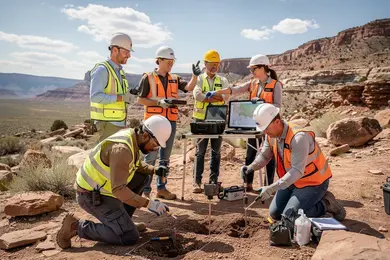
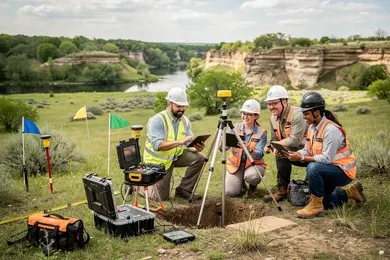
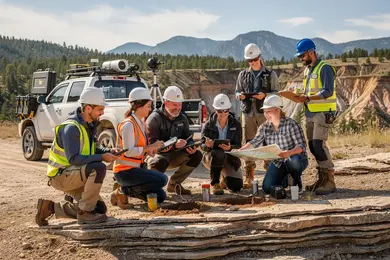
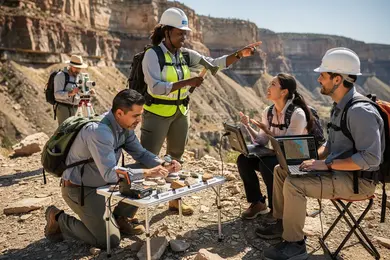
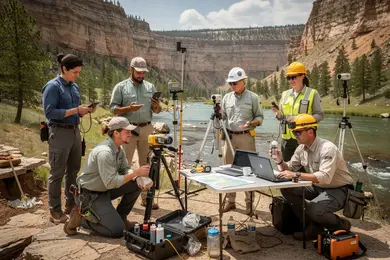
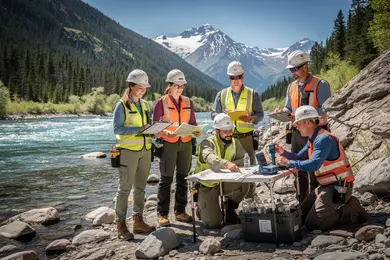
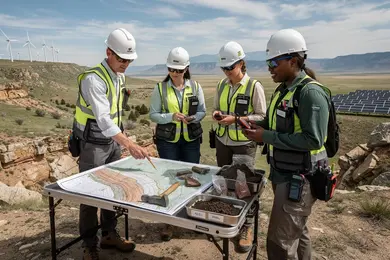
Addressing this, most programs require mandatory in-person field sessions-often 1-2 week intensive camps focused on terrain analysis and drilling operations-typically scheduled on weekends or breaks to minimize conflict with professional commitments. For example, mining engineers seeking advancement rely on these immersive experiences to convert theoretical knowledge into operational skills aligned with workplace demands.
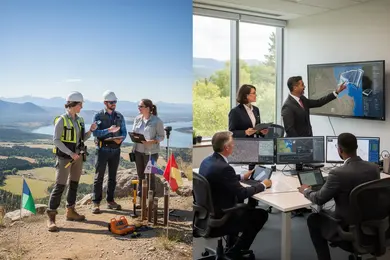
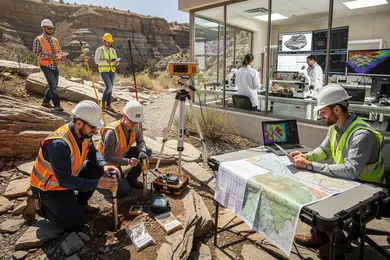
Local industry partnerships further reduce logistical strain by offering nearby site visits, critical for environmental consultants and mining professionals who must understand site-specific geology to deliver results. Yet, balancing these requirements with full-time employment frequently demands employer flexibility or personal time tradeoffs.
The workforce implication is clear: mining and geological engineers, earning a median wage of $97,090, face hiring preferences that emphasize validated hands-on competence. Prospective students must therefore critically assess program field components to ensure their chosen online path delivers tangible skills without incurring credential deficiencies.
What does an online geosciences degree cost, and what financial aid options are available?
Cost variability in online geosciences degrees is significant, shaped by institutional type and residency, with programs ranging from $15,000 to $40,000. Public universities offer more affordable in-state tuition, potentially under $300 per credit hour, while private institutions can exceed $1,000 per credit. This cost spread directly impacts student debt levels and timelines for financial return on investment.
Federal aid through FAFSA remains a primary resource, including Pell Grants and Stafford Loans, with repayment options tailored to income, allowing working professionals to manage payments alongside ongoing employment. Employer tuition reimbursement often covers partial or full tuition if the degree supports the employee's role, yet this resource is underutilized. Industry-specific scholarships also alleviate loan dependency for geosciences students.
Consider a mid-career environmental technician earning $50,000 annually who incurs $30,000 in tuition costs. If employer tuition assistance covers half and federal loans with income-driven repayment manage the rest, the technician can limit debt impact while maintaining cash flow. This strategic financing is critical given that the median wage for environmental scientists and specialists is $76,530, indicating potential salary growth post-degree without forgoing employment. Lack of aid or employer support elevates financial risk, emphasizing the need for proactive cost management and aid exploration before committing to an online geosciences program.
What careers can an online geosciences degree lead to, and what are typical salaries?
Opting for an online geosciences degree involves navigating varied industry demands and salary realities driven by sector and geography. For example, entry-level environmental scientists average around $58,000 annually, while petroleum geologists with mid-career experience can command salaries near $105,000 due to the energy sector's premium wages. Hydrologists working in federal or state agencies typically earn about $79,000, benefitting from more stable public-sector roles. These numbers illustrate how career trajectory and employer type shape earning potential.
Technical skills alone are insufficient; graduates must combine expertise with client communication and data interpretation, especially in consulting roles. Oil and gas sectors reward high pay but require coping with cyclical hiring tied to commodity prices. Meanwhile, geospatial analysts often find steadier but lower-paying positions in urban planning or federal agencies, with early-career salaries ranging from $65,000 to $75,000.
Cost efficiency is a practical consideration-programs charging $320 per credit hour, like Southern New Hampshire University, obligate students to scrutinize return on investment based on access to internships, networking, and recognition within the field. Success frequently depends on supplementing academic study with certifications in GIS software or part-time internships. Demonstrated competence in data modeling and remote sensing remains critical for securing roles exceeding $85,000.
What is the job outlook for geoscientists and related roles, and where is demand growing most?
Job growth for geoscientists is projected at 6% through 2032, outpacing many fields due to sustained demand in energy, environmental consulting, and government roles focused on resource management. Regions like Texas, California, Colorado, and Alaska remain hotspots for employment because of ongoing fossil fuel activities and renewable energy projects.
Employers prioritize candidates proficient in GIS, data analytics, and sustainable resource strategies. For instance, environmental consultancies need geoscientists to evaluate contamination risks, while energy companies depend on seismic and geological modeling to guide exploration. Urban planning and infrastructure sectors also increasingly seek expertise in climate resilience and geohazard analysis.
Professionals advancing without pausing their careers face a balancing act between skill development and productivity. Accelerated, flexible programs-such as an online master's requiring fewer than 40 credits-address this challenge by enabling timely credential upgrades. This is especially relevant for federal agency roles or private sector jobs emphasizing environmental risk assessment.
Key workforce implications include:
- Need for interdisciplinary skills bridging geology, technology, and environmental policy
- Pressure to swiftly update credentials without career interruption
- Importance of choosing training aligned with current software and industry practices
Ultimately, targeting education that responds to employer demands in resource development and infrastructure resilience is essential for positioning oneself competitively in this evolving sector.
Other Things You Should Know About Geosciences
Online geosciences programs vary in flexibility, but most require a consistent weekly time commitment of 10 to 15 hours. Programs that offer asynchronous content provide more control over scheduling, which suits professionals with erratic hours, but careful time management is still critical to maintain steady progress. Prioritize programs with reasonable workload pacing and clear timelines, as overly compressed courses will create conflict with demanding jobs and reduce quality of learning.
Employers increasingly accept accredited online degrees, especially when paired with relevant work experience. However, programs with a strong emphasis on practical skills, field experience, and recognized industry partnerships carry more weight. Candidates should choose online degrees with proven employer alignment and opportunities for applied projects to offset any bias against non-traditional formats.
Many online geosciences master’s programs waive the GRE in 2027, but some still require it for applicants with lower GPAs or unrelated undergraduate degrees. Schools usually ask for transcripts, a statement of purpose, and two to three recommendation letters. Confirm each program’s policy before applying.
Certifications focusing on niche skills like GIS, remote sensing, or environmental compliance enhance employability and justify the additional time and cost. Prioritize certifications that match your career goals and current job market demand rather than general credentials. Combining targeted certifications with an online degree creates a stronger profile, accelerating advancement and helping differentiate candidates in a crowded field.
References
- Professional Master's Mineral Exploration Degree - Department of Geology and Geological Engineering https://geology.mines.edu/graduate-programs/professional-master-2-2/
- Geology Degree Timeline | ValidGrad https://validgrad.com/blog/how-long-does-it-take-to-get-a-geology-degree/
- 5. Best Practices for Instruction of Geoscience Undergraduates https://www.americangeosciences.org/change/sections/instructional_best_practices/
- Interactive Online Short Courses - eage.org https://eage.org/education/interactive-online-short-courses/
- The Geological Society - Degree Accreditation https://www.geolsoc.org.uk/education-and-resources/universities/university-degree-accreditation/
- Geoscientists Canada - THE PROFESSION https://geoscientistscanada.ca/profession.php
- What Does the Future Demand Look Like for Applied Geoscientists? https://www.aegweb.org/index.php
- Online Geoscience Degrees: Top Schools and All Programs in 2026 https://www.gisdegree.org/online/geoscience-degrees/
- Geoscience Jobs in Industry https://www.grow-geocareers.com/exploreindustries