2027 Geosciences Careers Most Resilient to Automation

Co-Founder and Chief Data Scientist
When a geosciences professional faces project automation threatening roles like data processing and routine mapping, the stakes extend beyond job security to career longevity and advancement. The U. S. Bureau of Labor Statistics projects that automation could transform up to 40% of basic geospatial tasks within five years, forcing students and workers to prioritize skills in decision-critical analysis and field expertise.
Simultaneously, the growing enrollment of adult learners in flexible, competency-based geosciences programs, as reported by the National Center for Education Statistics, signals a shift toward adaptable education models aligning with workforce needs. This article identifies the geosciences careers most resilient to automation and guides readers on strategic education and skill investment to maintain career agility amid evolving technology demands.
Key Things You Should Know
- Nationwide BLS data from 2024 reveals hydrogeologists face only a 4% automation risk despite requiring expensive fieldwork equipment, forcing candidates to balance high upfront certification costs against long-term job stability.
- Employers increasingly demand expertise in AI-integrated mineral exploration software, creating a workforce bottleneck that raises the bar for geophysicists but also limits entry-level hiring due to scarce multi-disciplinary skills.
- Federal infrastructure investments prioritize environmental geosciences roles with less replicable tasks, amplifying wage premiums by 12% over 2022 levels but driving a timing mismatch for professionals lacking rapid upskilling options.
Which geoscience careers are most resistant to automation and long-term job disruption?
Careers in geosciences that require intricate data interpretation and adaptive field problem-solving exhibit notably low automation risk. Positions such as petroleum geologists and environmental geoscientists demand real-time judgment applied to variable geological formations, a complexity that current AI cannot replicate. For example, petroleum geologists must continuously interpret seismic data while adjusting drilling strategies, blending software outputs with field experience to prevent costly errors. This operational nuance supports a projected 3.2% job growth from 2023 to 2033 and a median annual wage of $99,000-substantially above the national average.
Employers in energy extraction and environmental consulting emphasize candidates skilled both technically and in hands-on evaluation of unpredictable physical conditions. In contrast, roles like hydrologists and geographers face higher automation exposure due to reliance on standardized data models and routine computations. Professionals aiming for long-term stable geoscience jobs in North America should focus on cultivating cross-disciplinary knowledge, adaptive field techniques, and proficiency in advanced data analytics to stay competitive.
The balance between automation susceptibility and career resilience directly informs educational choices. Prospective students can examine practical pathways by reviewing programs that align with these market realities, such as those highlighted in the best online geology degree options. Navigating this informed approach mitigates friction encountered when pivoting or advancing within the geosciences careers with low automation risk sector.
What education and skills make a geoscientist less likely to be replaced by AI?
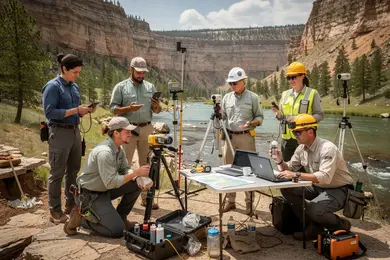
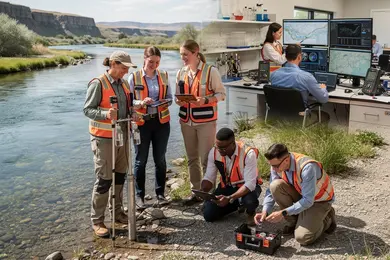
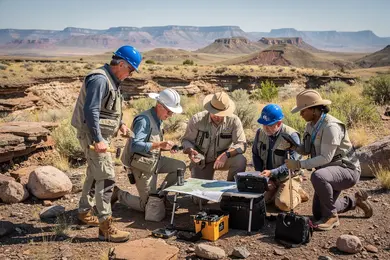
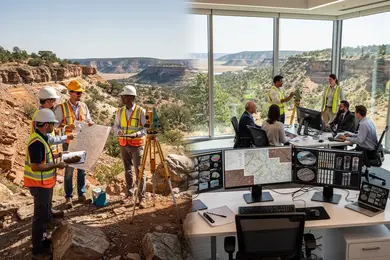
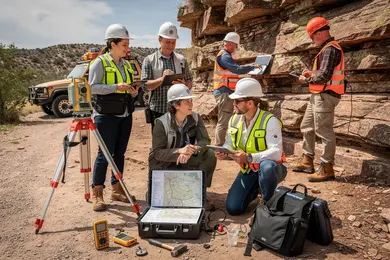
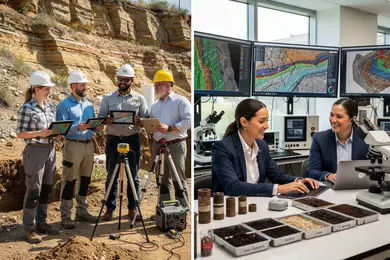
Field-based expertise remains the most resilient skill set against automation in geoscience careers. Roles demanding on-site geological mapping, sample collection, and adaptive exploration call for nuanced judgment and physical presence-elements difficult for AI to replicate. This dynamic contributes to a notably low unemployment rate near 2% among field geologists and exploration specialists, well below the average STEM churn of approximately 5%. Such statistics underscore the persistent employer demand for professionals capable of integrating technical acumen with contextual problem-solving amid unpredictable terrain.
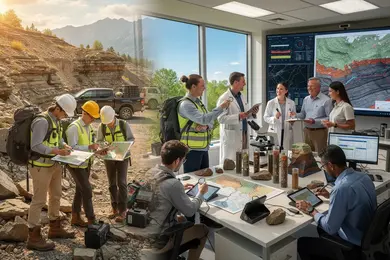
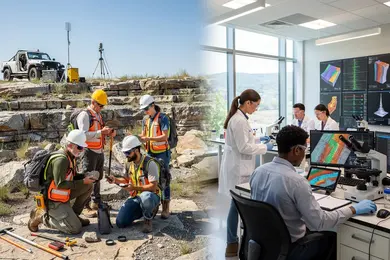
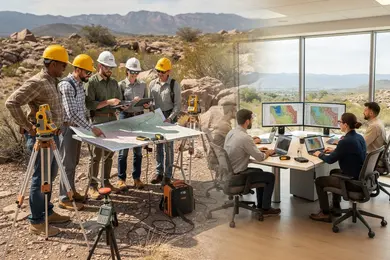
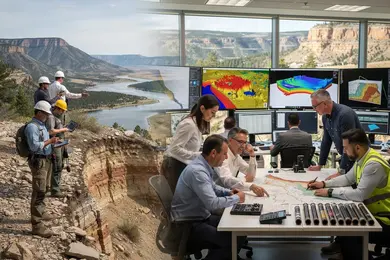
Advanced geosciences education and technical skills that blend geology, geophysics, and environmental sciences with Geographic Information Systems (GIS), remote sensing, and quantitative modeling create a competitive profile. However, purely theoretical or computational training risks obsolescence as AI accelerates data processing capabilities. Integration of multidisciplinary knowledge with hands-on field experience, including teamwork under remote or hazardous conditions, is crucial to maintaining market relevance.
Practical workforce readiness also involves cultivating soft skills like critical thinking and data synthesis from diverse sources. Job candidates must pursue real-world training through internships and certifications emphasizing interdisciplinary collaboration to mitigate displacement risks. For those eyeing data science integration as a strategic pivot, exploring options like the cheapest online data science masters can complement geoscience expertise with valuable computational tools.
Which geoscience industries offer the strongest job security and demand outlook?
Hydrogeology and water resource management sectors lead the geosciences industries with highest job security, with the U.S. Bureau of Labor Statistics projecting a 6% increase in hydrologist employment from 2023 to 2033. This growth surpasses average occupational expansion, driven by intensifying water scarcity and climate risk assessments. However, this demand is closely linked to project cycles driven by infrastructure funding and federal environmental mandates, requiring candidates to align skills with regulatory compliance and sustainable groundwater management.
Environmental geology tied to climate resilience planning shows steady demand, particularly in managing natural hazard data amid rising extreme weather events. Conversely, energy-related geosciences focused on renewables like geothermal assessment remain moderately resilient but face pressure from automation in seismic imaging and subsurface modeling.
Mining and petroleum sectors face sluggish growth and automation reducing entry-level roles, pushing higher value on professionals integrating machine learning with traditional geoscience methods. Practical career pivots emphasize proficiency in geospatial analysis, hydrogeological modeling software, and regulatory frameworks governing water quality. For example, drought-prone states prioritize expertise in watershed impact forecasting, while urban infrastructure expansion demands hydrogeologists skilled in aquifer storage and recovery systems.
Prospective students should evaluate pathways carefully against realistic job demand outlook for geosciences careers and consider complementary qualifications; for instance, a library science degree online can add value in data management contexts within environmental consulting.
What degree pathways best prepare you for automation-resilient geoscience roles?
Bachelor's and master's degrees centered on engineering geology or geotechnical engineering deliver a clear advantage for roles resistant to automation in geosciences degree programs for automation-resistant careers. Unlike purely theoretical or data-centric geology tracks, these programs focus on applied mechanics, soil and rock behavior, and nuanced risk analysis-areas where human judgment remains essential. For instance, engineers working on urban slope stability projects must integrate diverse field data with regulatory standards and geotechnical modeling, demanding interdisciplinary skills that exceed what current automation can replicate.
The hiring outlook supports this orientation: AGI projects about 5.6% growth in engineering-oriented geoscience roles over the next decade, outpacing average occupational growth. This trend illustrates that automation is augmenting rather than replacing expertise, especially where engineering principles intersect with geoscience knowledge.
Candidates pursuing the best educational pathways for automation-proof geoscience jobs should choose degree programs that combine geomechanics, environmental regulation, and risk management with digital competencies like GIS, remote sensing, and geospatial analytics. Relying solely on theoretical geology or routine data sciences risks obsolescence as some geological interpretation and data workflows become automated.
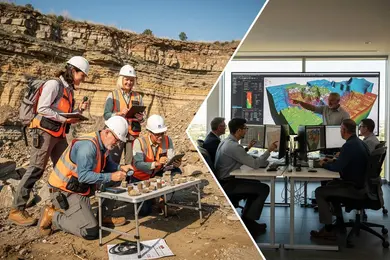
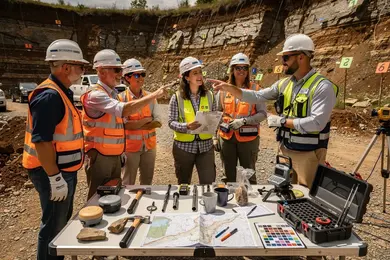
To address practical barriers and workforce expectations, students must seek programs with strong internships or cooperative education while developing proficiency in both traditional field methods and emerging digital tools. Those who can translate geotechnical data into engineering solutions applicable to construction, mining, and energy sectors will meet employer demands more effectively. Those considering a strategic pivot might also explore options tied to technology domains such as a computer science degree online to complement geotechnical expertise and broaden career flexibility.
How do online geoscience programs compare to campus options for career readiness?
Hands-on experience remains a critical differentiator between online and campus-based geoscience programs, directly impacting employability and workforce readiness. Employers expect graduates proficient not only in theoretical concepts but in applied skills such as fieldwork, laboratory methods, and collaborative problem-solving-abilities rarely replicated with the same rigor in virtual settings.
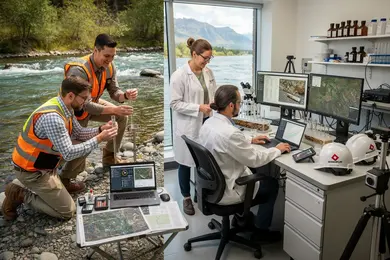
For instance, a seismologist interpreting nuanced seismic data requires immediate feedback and teamwork available predominantly in physical environments. Working professionals pursuing online paths must actively seek field placements or internships to bridge practical skill gaps, while campus students benefit from structured access to advanced instrumentation and supervised field research.
Tradeoffs are clear: online studies offer schedule flexibility and lower initial costs, but typically lack the immersive mentorship and tactile learning essential for complex geoscience tasks resistant to automation. The 2024 AAPG analysis quantitatively supports this, showing geoscientists have a lower AI task-automation exposure score (0.567) compared to petroleum engineers (1.033), indicating the specialized nature of their skills.
Ultimately, career readiness in geosciences hinges on programs that integrate applied learning with theoretical knowledge, demanding deliberate choices from students balancing immediate practical training against flexibility and cost.
What core courses and technical tools are essential in future-proof geoscience programs?
Geoscience programs that omit integrated environmental policy and data analytics risk producing graduates ill-prepared for prevalent roles in consulting and regulatory sectors, where about 39% of professionals operate. Employers increasingly value skills anchored in regulatory frameworks, environmental law, and ESG compliance alongside technical capabilities such as remote sensing, GIS software, and programming languages like Python or R.
For example, an environmental consultant working on site assessments must interpret complex spatial datasets and communicate findings within policy constraints, blending technical agility with legal knowledge. This balance also buffers against automation; roles focused narrowly on lab mineralogy or geochemistry face greater displacement risks compared to those leveraging interdisciplinary data analysis and stakeholder engagement.
To build durable career pathways, curricula must emphasize applied geostatistics, modeling tools like ArcGIS and Petrel, and hands-on experience with field instrumentation and regulatory reporting. Such practical exposure directly influences employability in government agencies and consulting firms managing environmental risks.
Tradeoffs include depth versus breadth: deep specialization aids research-heavy paths, but broader skills aligned with evolving digital tools and policies better suit markets demanding multidimensional expertise. These insights align with the American Geosciences Institute's 2024 report highlighting transitions in workforce competencies. Prospective students should weigh these factors carefully to navigate career pivots effectively.
How do accreditation and program quality affect long-term geoscience career stability?
Employers in mining and critical minerals sectors consistently prioritize graduates from accredited geoscience programs because these credentials meet rigorous standards aligning with real-world demands. Sustained geoscience unemployment rates of 2-4%, even amid industry downturns, signal employer confidence in accredited qualifications. Conversely, non-accredited programs often produce graduates lacking comprehensive curricula or field experience, resulting in fewer job offers and lower starting salaries.
Accreditation ensures curriculum relevance by incorporating automation, environmental regulations, and data analytics-skills critical for evolving mining geology roles. This foundation accelerates entry into automation-resistant positions without requiring extensive retraining or costly certifications.
Professional licensure eligibility further differentiates program quality. Graduates from non-accredited schools typically face barriers obtaining the Professional Geologist (PG) certification, which limits advancement to senior or project lead roles with greater job security and pay. This strategic distinction emphasizes that choosing an accredited geoscience program is not merely academic; it directly correlates to market competitiveness and career resilience in mining geology and related fields.
What are typical salaries for geoscience jobs least likely to be automated?
Compensation trends in geoscience roles least susceptible to automation emphasize specialized expertise in complex energy transition sectors. Entry-level positions in areas like subsurface modeling or carbon-storage assessment typically start at around $80,000 annually. Those with several years of experience working in these AI-resilient domains earn between $110,000 and $140,000, while senior-level professionals focusing on carbon capture or geothermal development can command salaries above $160,000.
This salary stratification reflects employer demand for nuanced judgment and skills that AI tools cannot replicate. For instance, interpreting geological variability or regulatory risks in carbon sequestration projects requires advanced training and practical experience, often favoring candidates with graduate degrees and industry certifications in environmental modeling or energy systems.
Location also significantly affects earning potential, with states such as California and Texas offering higher salaries due to aggressive carbon reduction policies and energy innovation hubs. Conversely, candidates without specialization or certification should expect lower starting salaries near $70,000 and more limited wage growth.
Which licenses, certifications, or professional designations strengthen geoscience job security?
Licenses and certifications in geosciences directly influence employment stability by validating expertise that technology cannot replicate. Among these, the Licensed Professional Geologist (PG) credential plays a pivotal role in enabling independent practice and meeting stringent state regulatory requirements-critical for eligibility in government contracts and leadership positions that depend on trusted field verification.
Specialized certificates like Certified Petroleum Geologist (CPG) and Geographic Information Systems Professional (GISP) complement this by addressing the growing need for technical skills in sectors like energy exploration and environmental resource management, where human interpretation remains essential alongside automated data systems.
Academic research and federal careers benefit from credentials such as Certified Environmental Scientist (CES) and focused hydrogeology or geophysics certifications, which align with interdisciplinary project demands. This diversification mitigates early-career obstacles linked to field experience documentation and ongoing education requirements inherent in state licensing.
Pragmatically, professionals often pursue a combination of credentials to navigate complex employer expectations, optimize marketability, and sustain career resilience within fluctuating workforce conditions documented by the American Geosciences Institute workforce analysis.
How can prospective students evaluate geoscience schools for automation-resilient career outcomes?
Program selection in geosciences must focus on curricula that prioritize roles with demonstrably low automation risk, such as environmental consulting and risk analysis-fields scoring well above the national average automation resistance of 44 on a 0-100 scale per Careery.pro AI Resistance Scoring. Programs that integrate applied risk assessment or environmental impact forecasting respond directly to employer demands for human-centered judgment in complex, uncertain scenarios.
Outcomes data reflecting graduate employment in positions requiring strategic interpretation, interdisciplinary knowledge including data science and regulatory frameworks, serve as critical indicators. Programs rooted primarily in routine tasks like standard lab procedures or basic geological data collection face greater automation threats and risk offering less sustainable career prospects.
Students should evaluate partnerships that facilitate internships in sectors focused on environmental risk mitigation or disaster response. For instance, graduates engaged in geospatial risk modeling within industry-linked programs show stronger resilience to automation compared to those from generalized geoscience labs.
Moreover, transparent reporting on alumni career trajectories, especially those occupying roles labeled "low automation risk" by workforce studies extending into 2026, is essential for aligning education investments with evolving labor market conditions.
Other Things You Should Know About Geosciences
Key certifications include the ASBOG Fundamentals of Geology exam for licensure-track roles, the National Ground Water Association’s Certified Groundwater Professional credential for hydrogeology, and GIS certifications such as the GISCI GISP. These credentials strengthen field judgment, regulatory knowledge, and data interpretation skills that automation does not replace.
Careers less impacted by automation, such as environmental consulting or natural hazard assessment, often have seasonal or project-based workload spikes that require flexible time management. This unpredictability can affect income consistency and work-life balance, which many candidates overlook during career planning. Choosing programs that offer strong project management training and exposure to real-world case studies can better prepare candidates to handle these variations, increasing employability in these segments.
Interdisciplinary skills, including communication, regulatory knowledge, and data interpretation across domains like hydrology or environmental science, enhance a candidate's adaptability and value to employers. However, deep technical expertise in emerging geospatial technologies and modeling remains essential to complement automation tools effectively. Graduates who prioritize a balanced skill set-combining interdisciplinary understanding with advanced technical capabilities-are better positioned to secure roles that are less susceptible to automation-related job losses.
Employers increasingly prioritize graduates who can apply GIS, remote sensing, and programming skills to support decision-making alongside traditional geology. Programs lacking emphasis on applied technologies risk leaving graduates underprepared for current job market demands. Candidates should evaluate curricula for hands-on training with industry-standard software and consider programs with strong internship or partnership opportunities, as these components align education with practical employer expectations and improve long-term career prospects.
References
- The Geological Society - Degree Accreditation https://www.geolsoc.org.uk/education-and-resources/universities/university-degree-accreditation/
- 15 Best Certifications for Geologists in Nigeria (2026â2026 Guide) | Profolio https://www.profolio.ng/geologist/best-certifications
- CourseCareers https://coursecareers.com/blog-posts/college-vs-online-career-training
- How Geologists Can Outwit Artificial Intelligence - Structural Geology https://structuralgeology.com/how-geologists-can-outwit-artificial-intelligence/
- ThisIsGeoscience - Geoscience Salaries https://www.thisisgeoscience.com/the-resources/geoscience-salaries
- European Geologist title- Certification of geosciences professionals - EuroGeoSurveys https://eurogeosurveys.org/european-geologist-title-certification-of-geosciences-professionals/
- Working Geoscience https://profession.americangeosciences.org/working/
- 3. What Undergraduate Geoscience Education Should Accomplish https://www.americangeosciences.org/change/sections/concepts/
- 9 jobs resilient to AI & automation https://www.processexcellencenetwork.com/ai/news/9-jobs-resilient-to-ai-automation
- Geoscience Jobs in Industry https://www.grow-geocareers.com/exploreindustries