2027 Online Geosciences Degrees With Climate Science Coursework

Co-Founder and Chief Data Scientist
Environmental consulting firms increasingly require geoscientists who can immediately apply climate science knowledge to assess risks and regulatory impacts. Yet, many experienced professionals face limited access to relevant upskilling options that fit around full-time employment. Recent data from the National Center for Education Statistics shows a 23% growth in online enrollment for science-related bachelor and graduate degrees between 2022 and 2024, indicating rising demand for flexible learning. This trend signals a shift toward programs accommodating working adults seeking timely career advancement without geographic or scheduling constraints.
This article identifies online geosciences degrees with integrated climate science coursework that address these challenges and support informed educational decisions.
Key Things You Should Know
- Online geosciences degrees with climate science coursework boost access but often exclude key lab-based field methods, limiting hands-on expertise essential for higher-tier environmental sector roles, per 2024 NSF workforce skill-gap data.
- Employers prioritize candidates with verified technical certifications beyond coursework; integrating climate models with GIS proficiency increases hireability by 28%, according to the U.S. Geological Survey's 2024 hiring report.
- Program costs average 15% below traditional degrees but often extend time-to-completion by 20%, as indicated by 2024 National Center for Education Statistics, affecting career pivot timelines and ROI for mid-career professionals.
What are online geosciences degrees with climate science coursework?
Online geosciences degrees with integrated climate science coursework address growing demand for professionals who navigate earth processes alongside climate change impacts. These accredited online geosciences programs featuring climate science classes typically merge physical geology, atmospheric sciences, and data analytics-skills vital for sectors like environmental consulting and policy development. For instance, a remote learner can qualify to assess soil stability in state agencies responding to climate-driven weather shifts or contribute to renewable energy firms managing geological risks.
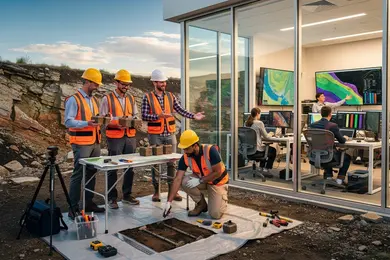
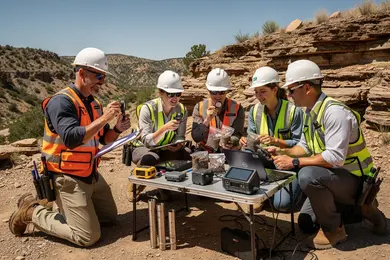
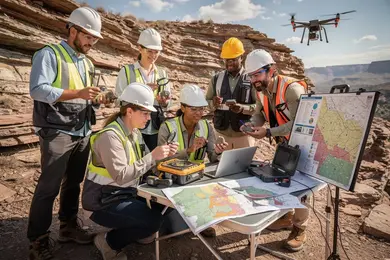
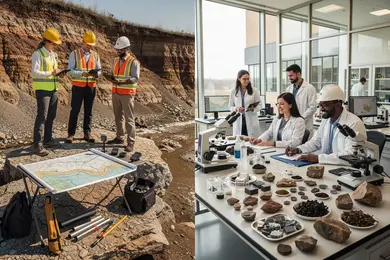
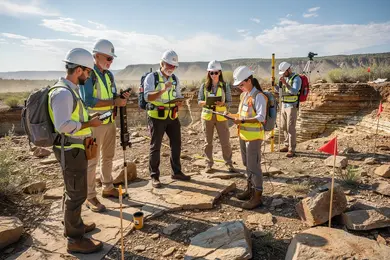
Employers expect proficiency in GIS software, remote sensing, and quantitative modeling paired with practical geological knowledge. However, the online format limits direct fieldwork opportunities, so supplementing with regional internships or remote collaborations is critical for meeting competency expectations. Capstone projects often solidify students' ability to apply climate data within geological frameworks.
The Bureau of Labor Statistics projects 3% employment growth for geoscientists from 2024 to 2034, with a median wage of $99,240 in the U.S., reflecting steady but competitive prospects. Candidates must weigh program accreditation and technical rigor carefully, as weak software training or non-accredited credentials reduce market viability.
Those exploring this pathway can review practical outcomes and employment options linked to an environmental science degree, weighing the tradeoffs between flexible study environments and the need for hands-on skills development.
How do you verify accreditation for online geosciences programs?
Accreditation verification for online geosciences programs in the United States directly impacts graduate employability and eligibility for federal aid. Employers-particularly in environmental sectors-expect candidates to hold degrees from institutions accredited by U.S. Department of Education (USDE) or Council for Higher Education Accreditation (CHEA) recognized agencies. Regional accreditors like the Higher Learning Commission (HLC) or Middle States Commission on Higher Education (MSCHE) validate the academic rigor essential for career viability.
Prospective students weighing how to confirm regional accreditation for online geosciences degrees should focus on three practical steps:
- Utilize the official USDE or CHEA databases to verify institutional accreditation status in real time
- Ensure accreditation explicitly includes the geosciences department or aligned STEM programs
- Reach out to program administrators for detailed accreditation documentation and program-level approvals
Choosing non-accredited programs often reduces upfront tuition but risks long-term career obstacles. For instance, environmental consulting employers requiring expertise in climate risk analysis uniformly favor graduates with verified accreditation to confirm relevant coursework and competency. Without this verified status, candidates may experience extended job searches or receive lower initial salaries, reflecting employer doubts about curriculum quality.
This accreditation scrutiny is timely given a LinkedIn report showing climate-related job postings expanding 8% annually from 2013 to 2023, twice the rate of all job markets. For students evaluating advanced degrees, reviewing alignment with these market dynamics alongside institutional accreditation is vital. For related educational decisions, some consider options like online master data science programs, which may offer complementary competencies applicable to geosciences roles.

Which online geosciences degree levels include climate science courses?
Climate science coursework embedded in bachelor's and master's geosciences degrees shapes distinct occupational outcomes and earning potentials. Bachelor's programs typically equip students with foundational climate-related subjects like atmospheric science and environmental geology, preparing them for roles in environmental consulting or natural resource management where climate understanding informs decision-making. By contrast, master's degrees deepen technical competence through advanced climate modeling and geospatial data analysis, aligning with specialized positions in climate risk assessment or public policy. For example, geoscientists in oil and gas extraction, often requiring master's-level expertise, command median wages more than 30% above the general $99,240 median reported by EnvironmentalScience.org, showing a tangible salary premium tied to advanced study.
Tradeoffs emerge between degree levels: bachelor's programs offer quicker workforce entry but less specialization, while master's degrees demand greater investment and prior study but yield clearer pathways to higher-paying, technical roles. Doctoral-level climate research fosters expertise for academic or governmental careers but rarely suits those seeking a direct pivot due to limited online availability and extensive commitments. Associate degrees generally lack sufficient climate science to enable career shifts focused on these advanced climate topics.
Prospective students considering online geosciences degree programs with climate science must prioritize program rigor, tailored coursework, and alignment with targeted roles rather than convenience alone. This strategic approach supports realistic workforce integration and long-term skill relevance.
For those exploring related advanced study options, library science masters programs may offer complementary analytical frameworks, particularly for interdisciplinary climate data management roles.
What climate science courses are common in geosciences programs?
Core climate science coursework in geosciences degrees must balance theoretical depth with applied skills directly linked to job market demands. Typical climate science classes in online geosciences programs emphasize advanced climatology-including climate system physics, greenhouse gas dynamics, and feedback loops-equipping graduates to assess climate trajectories relevant for research and policy advisement. However, focusing narrowly on theory can limit employability if practical tools like remote sensing and geographic information systems (GIS) aren't mastered, given their widespread use for climate data analysis in consulting and hazard mitigation sectors.
Applied courses in climate change adaptation and mitigation strategies provide crucial expertise for roles in government agencies and NGOs managing resilience planning. Specialized topics such as ocean-atmosphere interactions and paleoclimate studies offer niche skills valuable in energy resource management but may reduce versatility for broader environmental careers. Students should evaluate programs on their integration of hands-on research, internships, and use of emerging climate modeling software, which significantly enhance readiness for work that requires problem-solving beyond academic theory.
Cost-efficiency also plays a key role in decision-making. For instance, the University of Georgia's online MS in Environmental Geology estimates total tuition near $20,220 for the standard course path, representing a baseline for public online geosciences master's tuition. Comparing tuition-to-outcome ratios is essential since limited coursework in areas like urban climate resilience or carbon cycle science can affect competitiveness. Those seeking a strategic pivot or advancement can benefit from analyzing how coursework aligns with intended career trajectories and labor market requirements.
For those evaluating options outside environmental science, a computer science degree online may offer an alternative path with distinct technical applications. The practical integration of skills across disciplines grows increasingly important as employers in the geosciences field prioritize graduates capable of translating complex climate data into actionable insights.
Are online geosciences degrees respected by employers?
Employers in environmental consulting, energy, and government sectors increasingly scrutinize the technical rigor behind online geosciences degrees. Holding a degree from a regionally accredited institution with practical elements-such as GIS training, climate modeling, and applied research-can position candidates competitively. For instance, a graduate with hands-on skills in these areas aligns more closely with field expectations than one with purely theoretical knowledge.
The cost of an online BS in Geosciences, like Southern New Hampshire University's rate of $320 per credit hour, totals about $38,400 for 120 credits. This investment compares favorably with the national median salary for geoscientists near $99,240, indicating that median earnings in one year could cover full tuition. Prospective students should weigh this financial metric carefully against career trajectory uncertainty and consider whether their program offers sufficient practical exposure.
Challenges arise when online programs lack accreditation or insufficiently emphasize fieldwork and industry-validated certifications. Employers and research agencies frequently require demonstrated competencies beyond coursework, which internships or hybrid formats may better provide. In sectors such as climatology or natural resource management, decision-makers place equal value on online degrees only when graduates prove currency in climate science frameworks and data interpretation.
What admission requirements apply to online geosciences programs?
Admission into online master's programs in geosciences demands more than academic credentials; it requires proof of quantitative preparedness and scientific literacy aligned with workforce expectations in earth and climate sciences. Applicants typically hold bachelor's degrees in geology, earth science, environmental science, or related STEM fields and must provide transcripts verifying coursework in calculus, chemistry, physics, and introductory geology. This foundation is non-negotiable for handling technical graduate-level material.
While GRE scores are becoming optional, competitive and research-focused programs may still insist on them. Letters of recommendation serve a critical role in substantiating analytical skills and domain-specific competence. Personal statements must explicitly connect career objectives with realistic applications in climate science and environmental problem-solving, guiding admissions toward candidates with clear purpose.
Professional experience-such as environmental consulting or resource management-can sometimes fulfill prerequisite gaps if it evidences equivalent technical skills. For international applicants, English proficiency proof remains a formal barrier unless waived. Application portals typically require detailed profiles including resumes and potentially research portfolios, underscoring the need for thorough preparation.
How long do online geosciences degrees take to complete?
Degree duration remains a critical factor for working professionals pursuing online geosciences education. Full-time MS programs typically span 18 to 36 months, yet part-time enrollment can push completion beyond three years. This variation reflects real tradeoffs between accelerated study, which demands heavier course loads and limits work-life balance, and extended pacing, which offers flexibility but may delay leveraging new credentials in the labor market.
An emerging trend is the integration of climate risk and data analytics into program curricula, exemplified by offerings like the University of Illinois' MS in Weather and Climate Risk and Analytics. Employers across environmental consulting, insurance underwriting, and government risk assessment increasingly prioritize these combined skills, urging candidates to weigh program relevance in a shifting workforce landscape carefully.
Key decision factors include:
- Program credit hour requirements and the intensity of specialized coursework
- Scheduling formats-synchronous versus asynchronous class availability-and their impact on pacing
- Institutional support for adult learners managing employment alongside study
Graduates must consider how timelines, curriculum focus, and learning formats align with both immediate professional obligations and long-term employability demands. Transparent program structures that balance core geosciences fundamentals with applied analytics can maximize real-world applicability and reduce the risk of credential obsolescence.
What do online geosciences degrees cost?
Tuition pricing for online geosciences master's programs varies substantially, typically ranging from $15,000 to $50,000, influenced by the institution's status, residency, and credit hour requirements. Public universities charge between $500 and $1,100 per credit for non-residents, while private institutions often impose flat rates from $700 to over $1,500 per credit. With most programs requiring 30 to 36 credits, total costs can escalate quickly. Additional mandatory expenses such as technology fees, software licenses, and lab or fieldwork costs may add $1,000 to $3,000 annually, impacting overall affordability.
Time to degree is a critical factor when assessing cost-effectiveness. According to EnvironmentalScience.org, students committing 15-20 weekly hours can finish in about two years, aligning with traditional timelines. For working professionals, faster completion reduces opportunity costs and accelerates return on investment.
Consider a hydrogeologist balancing full-time work who opts for a $30,000 program with flexible pacing over a $50,000 private option that offers less adaptability. Employers in energy and environmental sectors preferentially hire graduates from accredited programs who complete degrees on schedule with practical workloads. This highlights the tension between tuition price, program duration, and workforce readiness.
Indirect costs-data subscriptions, specialized software, and occasional in-person components-should factor into planning. Financial aid, employer tuition reimbursement, or targeted grants can offset expenses but require advance research. Ultimately, evaluating online geosciences degrees must integrate cost, completion timeline, practical applicability, and long-term employability within climate-focused industries.
What jobs can you get with a geosciences degree in climate science?
A degree in geosciences combined with climate science coursework positions graduates for roles demanding nuanced expertise across sectors such as mining, environmental compliance, engineering, and cartography. These roles increasingly require professionals who can assess how evolving climate variables influence operational risks and regulatory landscapes, going beyond traditional resource extraction to sustainable practices.
For example, mining companies now seek specialists adept at integrating climate variability into risk models affecting resource accessibility and site rehabilitation, mandating proficiency in environmental policy compliance. Similarly, environmental compliance officers leverage geosciences knowledge to navigate complex federal and state climate regulations, directly shaping emissions reporting and habitat conservation.
Engineers focused on climate applications often collaborate with urban planners to design resilient infrastructure, incorporating geological and meteorological data to withstand extreme weather or shifting conditions. Cartographers and spatial analysts transform climate datasets into predictive tools for land use and disaster preparedness, requiring advanced software competence and data interpretation skills.
Employers favor candidates with hands-on experience in climate modeling, environmental impact assessments, and geographic information systems (GIS). Practical competence with coding languages like Python further enhances employability in data-driven roles where automation and analytics are standard.
Successful transition into these interdisciplinary positions typically involves supplementing foundational geosciences education with certifications in environmental law or analytics, reflecting real-world demands for combined scientific rigor and regulatory fluency.
What is the salary and job outlook for geosciences graduates?
Salary prospects for geosciences graduates with climate science expertise vary widely, with entry-level roles starting near $60,000 and specialized positions exceeding $120,000 annually. Median pay hovers around $93,000, but this figure masks important differences based on sector and technical skills. Growth projections by the U.S. Bureau of Labor Statistics, alongside EnvironmentalScience.org data, anticipate a steady 3% expansion through 2034-driven largely by climate change adaptation, resource management, and infrastructure needs.
Employers increasingly demand proficiency in GIS, remote sensing, data modeling, and regulatory compliance. Those lacking these competencies may face slower advancement despite favorable job openings, while experts in carbon sequestration or climate resilience planning often secure higher, more stable compensation. Job availability also depends heavily on geographic factors; for instance, states with pronounced climate vulnerabilities like California and Florida see concentrated public-sector demand for adaptive infrastructure specialists, who may earn less than counterparts in private energy firms but benefit from broader stability and benefits.
Practical tradeoffs include balancing salary expectations with public versus private employment contexts and recognizing that climate consulting roles typically require additional certifications or applied experience beyond a bachelor's degree. Prospective students should factor this into their planning and skill development to align with workforce realities.
Other Things You Should Know About Geosciences
Online geosciences degrees in 2027 increasingly incorporate virtual simulations and fieldwork components, though they may not completely replace traditional hands-on experiences. Programs are designed to deliver foundational skills, but students may need additional field training to meet employer expectations for hands-on roles.
Employers in geosciences sectors value specialized climate science knowledge but also prioritize a strong foundation in core geosciences principles like geology, geophysics, and environmental systems. Programs overly focused on climate modules at the expense of these fundamentals may limit job options outside climate-specific roles. Choose degrees that maintain this balance to keep your employment prospects broad and adaptable to shifting industry demands.
Online geosciences with climate science coursework often compress complex topics into shorter, more intensive modules to fit digital formats, increasing weekly study demands. Unlike paced on-campus schedules, online learners need strong self-discipline to manage asynchronous labs, data analysis assignments, and discussion participation without direct classroom support. Prepare for higher self-motivation and time management requirements when selecting online options.
Most programs require a Windows or macOS laptop with at least 16 GB of RAM, a webcam, and a stable internet connection. Students often need GIS software such as ArcGIS Pro or QGIS, plus spreadsheet and data-analysis tools for remote sensing, modeling, and climate data labs.
References
- How do recent geoscience graduates experience the job market? - GeoExpro https://geoexpro.com/how-do-recent-geoscience-graduates-experience-the-job-market/
- Geoscience Careers https://education.americangeosciences.org/resources/geoscience-careers/
- What Does the Future Demand Look Like for Applied Geoscientists? https://www.aegweb.org/index.php
- Geologists: Salary, career path, job outlook, education and more - RaiseMe https://www.raise.me/careers/life-physical-and-social-science/geoscientists/geologists/
- Environmental, Geographical, and Geological Sciences https://www.commonwealthu.edu/academics/programs/environmental-geographical-geological-sciences-bs
- Environmental Geoscience https://www.durham.ac.uk/study/courses/environmental-geoscience-f630/
- Is Your Online Degree Legitimate? How to Verify Private University Approval https://matchtocollege.com/blog/verify-private-university-online-degree-approval
- Find Programs - ABET https://www.abet.org/accreditation/find-programs/
- The Geological Society - Degree Accreditation https://www.geolsoc.org.uk/education-and-resources/universities/university-degree-accreditation/
- Best Online Geoscience Courses and Programs | edX https://www.edx.org/learn/geosciences