2027 Geosciences Specializations for Sustainability Consulting Careers

Co-Founder and Chief Data Scientist
Securing a sustainability consulting role today demands more than general geosciences knowledge; professionals face the challenge of aligning specialized expertise with rapidly evolving environmental policies and market needs. The U.S. Bureau of Labor Statistics projects a 9% growth in environmental science jobs over the next decade, yet employers increasingly seek candidates with focused backgrounds in areas like hydrogeology or climatology, calibrated to sustainability applications.
Meanwhile, 58% of working adults pursuing further education opt for flexible, online program formats, reflecting a shift toward accessibility that impacts how and when students can specialize. This article identifies key geosciences specializations and educational pathways that best position candidates to meet employer demands and navigate practical constraints effectively.
Key Things You Should Know
- Environmental geoscience graduates face a median starting salary 15% lower than petroleum-focused peers, per 2024 BLS data, creating a tradeoff between sustainability mission alignment and immediate financial returns.
- Employers report a 23% shortfall in candidates with combined hydrogeology and GIS expertise, critical for resource mapping roles, pressuring aspirants to integrate dual specializations for better job market positioning.
- Completion time for advanced geosciences sustainability certifications averages 18 months with costs exceeding $10,000, limiting rapid entry and necessitating employer sponsorships or alternative financing for career pivots.
What are the main geosciences specializations that lead to sustainability consulting careers?
Sustainability consulting rooted in geosciences demands deliberate specialization choices shaped by emerging market and environmental stressors. Environmental geology and hydrogeology represent distinct yet complementary paths: the former addresses soil contamination and erosion before development projects, while the latter focuses on groundwater protection critical for agriculture and urban water management amid climate pressures.
Incorporating climate science into geosciences degrees equips consultants to project localized climate impacts and translate these into practical resilience strategies. However, this specialization requires advanced data modeling skills and familiarity with evolving regulatory scenarios, often favored by international NGOs and policy-driven entities.
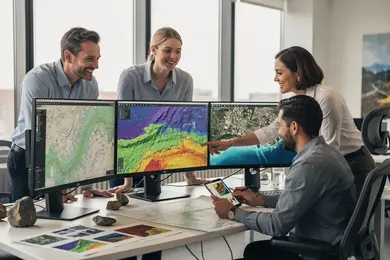
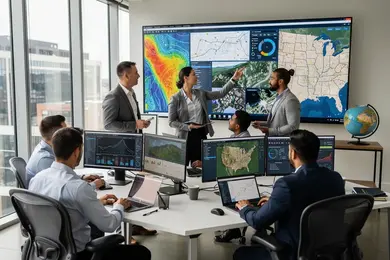
Geospatial analysis, leveraging GIS and remote sensing, stands out for its versatility across cause-based environmental work and disaster response planning. Those targeting municipal or infrastructure consulting should evaluate GIS-focused programs carefully; data from best GIS schools illustrate the growing premium on these competencies.
Real-world consulting consistently demands the ability to convert technical findings into clear, actionable recommendations adapted to client priorities and compliance frameworks. Trade-offs between specialization focus and broader market adaptability frequently define career trajectories, especially within renewable energy geosciences specializations for consulting careers, where cross-disciplinary fluency enhances long-term viability.
How does a geosciences degree prepare you for work in sustainability consulting?
Proficiency in earth system processes developed through a geosciences degree is increasingly critical for sustainability consultants confronting tangible environmental risks. With projections indicating a 40% global freshwater deficit by 2030, the specialized skills in water-risk assessment and management taught by geosciences programs are essential. These curricula produce quantitative capabilities in hydrology, geochemistry, and remote sensing that enable precise evaluation of groundwater vulnerability and surface water dynamics, addressing employer expectations for translating geological data into actionable sustainability frameworks, particularly within agriculture and manufacturing sectors under regulatory scrutiny.
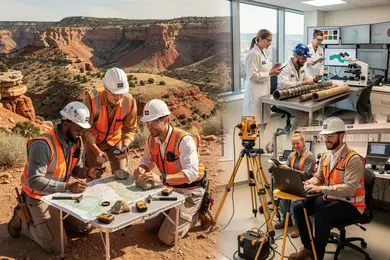
The skills acquired include soil and mineral mapping, contamination assessment, and predictive impact modeling, each crucial for managing environmental risks. For instance, a consultant assessing a manufacturing site's environmental footprint must understand subsurface water flow and pollutant transport-competencies embedded in geosciences degree skills for sustainability consulting. However, the route demands a balance between computational literacy and fieldwork adaptability. Advanced geological modeling can enhance employability in resource management but requires substantial technical and practical commitment.
Furthermore, this degree path enhances interdisciplinary communication, empowering graduates to bridge technical and regulatory divides among engineers, policy makers, and stakeholders. Workforce trends reflect growing demand for geospatial and environmental risk analysts in consultancy firms, reinforcing how applying geosciences knowledge in sustainability consulting careers positions candidates for immediate contributions through field data collection, GIS expertise, and regulatory compliance. Prospective students should evaluate these dimensions carefully against their professional goals and capacities.
Those seeking flexible pathways may consider programs noted for affordability and accessibility, such as certain online environmental engineering degree science and engineering options, which intersect with geosciences knowledge and sustainability competencies.
What education level and coursework are typically required for geoscience-based sustainability consultants?
A bachelor's degree in geosciences, environmental science, geology, or a related STEM field remains the foundational requirement for sustainability consulting roles centered on geoscience applications. Employers expect candidates to demonstrate proficiency in core areas such as geospatial analysis, environmental impact assessment, GIS, hydrology, soil science, and remote sensing. When assessing geosciences degrees for sustainability consulting careers, the distinction often lies in integrating technical skills with applied sustainability frameworks and regulatory knowledge.
Master's level study typically offers measurable advantages, particularly with advanced training in spatial data analytics or environmental risk modeling, both increasingly valued in a market where spatial ESG data interpretation and risk analytics demand are growing. The practical reality is that experience with software like ArcGIS and QGIS is indispensable for candidates entering this field amid the projected doubling of the global geospatial analytics market for environmental and urban applications.
Real-world scenarios highlight tradeoffs students face balancing intensive coursework with experiential internships that cultivate client communication and project management. For example, consultants working with municipal governments on sustainable infrastructure projects must translate complex spatial analysis into accessible insights for non-technical stakeholders. Prospective students should also consider certification paths in environmental consulting or GIS specialization but weigh the additional time and cost against immediate employability needs.
To further refine career decisions, exploring options such as a library science degree online may offer complementary skills in data curation and information management. Understanding required coursework for geoscience-based sustainability consultants helps clarify the blend of technical rigor and strategic versatility necessary to meet employer expectations in this evolving sector.
Which U.S. geoscience programs and departments offer strong tracks in sustainability consulting?
Specialized sustainability consulting tracks within U.S. geosciences programs shape career prospects by tightly coupling environmental science with practical consulting skills. Stanford University's Earth System Science and the University of Wisconsin-Madison's Geoscience Department both exemplify this integration, emphasizing contaminant hydrology alongside policy and resource management. With projected global PFAS remediation spending surging from $2.5 billion to $6.0 billion by 2030, expertise in real-world PFAS site assessment becomes a decisive hiring advantage.
Top American university geosciences departments for sustainability careers often require fieldwork and internships embedded in remediation consulting firms, providing exposure to regulatory frameworks and client communication under industrial conditions. Oregon State University's Environmental Sciences track, for instance, merges contaminant transport modeling with economic risk analysis, reflecting employer demands for balancing technical proficiency and stakeholder engagement.
Students must weigh program tradeoffs such as an academic focus over applied problem-solving, which can restrict immediate consulting employability. Departments like Texas A&M University's Geosciences Department enhance competitiveness by incorporating GIS and data analytics, skills increasingly valued for productivity in sustainability project management.
Evaluating program fit also involves understanding workforce realities and developing skills aligned with client-driven environmental consulting, essential in a rapidly evolving market. For those exploring a pivot or advancement in geosciences, exploring options including online electrical engineering degrees for veterans may offer additional pathways complementary to sustainability consulting education.
How do online geosciences programs for sustainability compare with on-campus options?
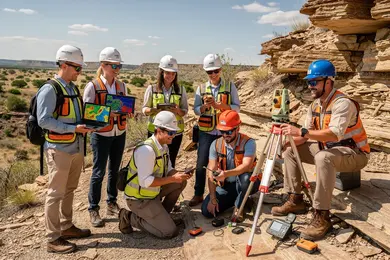
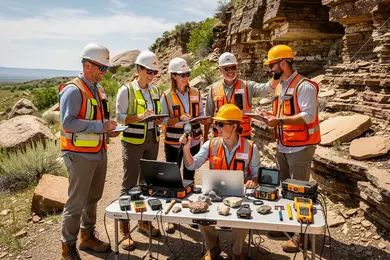
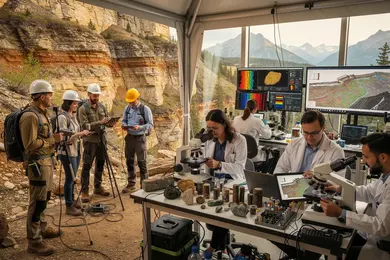
Online geosciences programs provide theoretical foundations comparable to traditional campus offerings but often lack standardized, rigorous field training crucial for sustainability consulting roles emphasizing low-carbon infrastructure and subsurface storage. Employers in this niche prioritize proven capabilities in geological sampling, GIS mapping, and resource evaluation-skills cultivated more reliably through on-campus labs and direct mentorship than through virtual or locally arranged experiences that vary in quality.
With clean energy infrastructure investment projected at $2 trillion, demand intensifies for specialists skilled in onsite environmental assessments, regulatory compliance, and complex subsurface modeling. Graduates of fully online programs may face skepticism regarding their practical competencies, potentially limiting immediate job placement in areas where hands-on expertise is non-negotiable.
For career changers balancing full-time work, online options offer necessary flexibility but require proactive pursuit of internships or collaborative projects to compensate for restricted access to institutional networks and fieldwork. Key evaluation criteria include:
- Verification of local or hybrid fieldwork opportunities embedded in the curriculum
- Support for internship placements or industry partnerships
- Employer preferences for demonstrable technical and field proficiencies
Prospective students targeting sustainability consulting should prioritize programs that mandate in-person residencies or lab engagements to align with market expectations shaped by the escalating clean energy investment documented by the International Energy Agency.
What accreditation and program quality indicators matter for geosciences and sustainability consulting degrees?
Employers in sustainability consulting demand geosciences degrees with rigorous accreditation, such as ABET, because academic rigor directly affects workforce readiness. Graduates from programs lacking comprehensive accreditation or cross-disciplinary focus often struggle with the practical complexities of real-world consulting, where technical skills must integrate with socio-economic variables. For instance, a graduate who interned on a FEMA-backed hazard mitigation project gains critical hands-on experience that purely theoretical curricula fail to provide.
Current and relevant curriculum content is equally decisive. Programs incorporating climate risk modeling software and updated regulatory frameworks enable graduates to navigate post-disaster analytics and resilience planning effectively. Those without exposure to contemporary data tools face significant onboarding challenges in sectors like insurance and urban development.
Transparent program metrics-employment rates, sector placement, and certification success (for example, Professional Geologist credential passage)-are vital indicators of a program's true value. These outcomes metrics often separate degrees that deliver long-term career stability from those that underperform in meeting employer expectations.
- Integration of advanced risk modeling and data analytics aligned with real disaster impact data
- Experiential learning through government or consultancy internships increasing employability
- Curriculum currency with software and regulatory updates reflecting recent market shifts
- Clear reporting on graduate employment and certification passage for informed decision-making
What are the typical entry-level and advanced job roles for geoscience-trained sustainability consultants?
Entry-level roles for geoscience-trained sustainability consultants center on foundational tasks like environmental data collection, GIS mapping, and regulatory compliance support. These positions-environmental analyst, junior urban planner, and sustainability data specialist-require technical proficiency to interpret geospatial data critical for sustainable infrastructure planning. Such roles typically operate under senior guidance, building practical expertise in managing environmental risks associated with urban growth; a significant challenge given that urban populations are projected to reach nearly 70% globally by 2050.
Advancement shifts the focus to leadership and synthesis of geoscience with policy, engineering, and community needs. Senior sustainability consultants and environmental risk assessors independently drive projects involving urban flood mitigation or water resource sustainability, balancing complex scientific data with budgetary and socio-economic constraints. Employers highly value advanced degrees and certifications, such as LEED or ISO 14001, combined with applied experience in these frameworks.
Career progression depends on mastering data modeling, stakeholder communication, and navigating regulatory affairs. Given the global forecast of 2.5 billion new urban residents by mid-century, the demand intensifies for professionals equipped with specialized geoscience expertise to deliver actionable sustainable solutions across sectors like real estate and government.
Trade-offs include reconciling long-term environmental priorities with immediate financial and policy limitations, challenging consultants to adopt flexible, interdisciplinary strategies for urban sustainability planning.
What salary ranges and earning potential can geoscience-focused sustainability consultants expect?
Starting salaries for geoscience-focused sustainability consultants in the U.S. typically range from $65,000 to $85,000, with mid-career professionals earning between $90,000 and $130,000. Those specializing in ocean economy sectors like offshore renewable energy or coastal resilience planning can surpass $150,000 due to the nuanced expertise required. The projected $4-5 trillion ocean economy growth by 2030 reinforces strong demand for professionals able to navigate marine infrastructure challenges.
Government and industry employers value candidates combining technical geoscience skills with project management experience. Salary premiums commonly apply for certifications or advanced sustainability degrees, though the cost-benefit of graduate study should be carefully weighed. Consultants in smaller firms or developing markets often start at lower salary points but may boost income by targeting offshore renewables or climate adaptation niches.
Workforce outcomes differ notably by sector. Consulting on offshore wind or blue carbon projects tends to command higher compensation than general environmental assessments. Performance bonuses linked to federally funded adaptation contracts or private offshore investments also affect total earnings. Professionals must assess sector-specific credentials against education time-costs to optimize long-term value.
An analytical approach to this field reveals income progression depends largely on managing complex, multidisciplinary projects with measurable environmental and economic results-assets increasingly sought after in the expanding ocean economy.
What is the job outlook and industry demand for sustainability consultants with geoscience expertise?
The shifting demands in sustainability consulting underscore a clear workforce preference for professionals who combine geoscience expertise with environmental analytics and interdisciplinary skills. Market growth projections-rising from about $21 billion to over $35 billion by 2030-signal employer investment focused on candidates able to integrate geological data, data modeling, remote sensing, and risk evaluation within sustainability frameworks.
For instance, a consultant collaborating with urban planners must interpret groundwater contamination risks amidst competing land-use priorities, balancing regulatory compliance with community development. This kind of cross-disciplinary insight is increasingly expected.
Technical proficiency in geosciences alone no longer ensures employability. Employers prioritize individuals skilled in GIS, environmental policy interpretation, and stakeholder communication. Those without these competencies may experience prolonged job searches or require supplementary training.
Career changers and new entrants should be aware that sector-specific demands vary: energy-related roles contrast sharply with opportunities in government agencies or consulting firms, influencing required skill sets and project scopes.
To align with workforce realities, educational programs that integrate geoscience fundamentals with applied sustainability analytics and communication development offer the most strategic value.
Are there certifications or professional credentials that strengthen a geoscience sustainability consulting career?
Certifications such as the Certified Environmental Professional (CEP), Registered Professional Geologist (PG), and ISSP Certified Sustainability Professional deliver measurable advantages in geoscience sustainability consulting by verifying specialized skills directly tied to employer requirements. For instance, holding a PG license allows candidates to legally approve environmental impact reports-a non-negotiable credential in sectors like energy and infrastructure-thereby influencing immediate employability and responsibility scope. Meanwhile, sustainability certifications broaden a geoscientist's role into ESG advisory capacities, enabling engagement beyond traditional geotechnical functions.
These credentials require deliberate investment: candidates must navigate prerequisites like documented fieldwork, exams, and ongoing education while balancing early career employment pressures. The decision to pursue one certification over another depends heavily on targeted consulting domains, as some firms prefer interdisciplinary portfolios combining geoscience expertise with environmental law or project management credentials.
Given that median annual wages reach $99,240 and job growth is projected at 3.7% through 2034 (U.S. Bureau of Labor Statistics), credentialing can be a strategic differentiator. However, professionals must weigh the time and financial costs against these benefits, since certifications do not guarantee advancement but can unlock specific job functions and employer trust.
Employers evaluating candidates often prioritize demonstrated competence beyond academic degrees, particularly exposure to regulatory compliance and sustainable resource management, making credentials a practical requirement rather than a mere formality.
Other Things You Should Know About Geosciences
Environmental geochemistry is most useful for carbon accounting roles because it supports emissions inventories, soil carbon analysis, and greenhouse gas monitoring. Employers often expect a bachelor’s degree in geosciences plus 1–3 years of greenhouse gas, climate data, or ESG reporting experience, with familiarity in GHG Protocol methods and ISO 14064 standards.
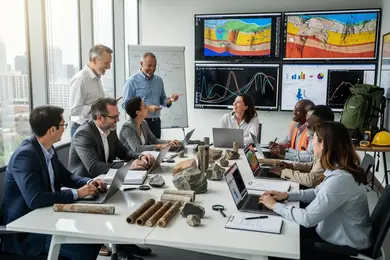
Academic programs frequently emphasize theoretical knowledge and technical skills over client communication, project management, and interdisciplinary collaboration. Employers seek candidates who can translate complex geoscientific data into actionable recommendations and work effectively within multi-sector teams. Candidates should prioritize programs that include practical internships, teamwork projects, and opportunities to develop presentation and report-writing skills. Bridging these gaps early reduces onboarding time and improves consulting effectiveness.
Directly entering a graduate program can accelerate specialization and access to higher-tier consulting roles but limits early industry experience that informs career direction. Conversely, gaining 1-3 years of relevant work allows candidates to refine their academic goals, build professional networks, and enhance graduate applications. For those certain about sustainability-focused research or advanced technical roles, immediate graduate study is pragmatic. Otherwise, practical experience before graduate education often yields better alignment with workforce demands and clearer leadership pathways.
References
- 44 sustainability certifications for businesses and sustainability professionals https://fsc.org/en/blog/sustainability-certifications
- Environmental / Sustainability Consultant - Green Careers Hub https://www.greencareershub.com/find-your-green-role/job-profiles/environmental-sustainability-consultant/
- Earth and Environmental Science https://www.fandm.edu/fields-of-study/earth-and-environmental-science/
- WaterJobsIntel | 500+ Water Engineering Jobs Daily https://jobs.watertechintel.com/blog/environmental-science-job-outlook
- Geoscience Jobs in Industry https://www.grow-geocareers.com/exploreindustries
- Online Geoscience Degrees: Top Schools and All Programs in 2026 https://www.gisdegree.org/online/geoscience-degrees/
- Top Certifications for Remote Environmental Jobs 2025 https://redrockconsultinggroup.com/top-certifications-that-help-you/
- Careers in Geoscience: Environment https://www.aig.org.au/education/careers-in-geoscience/careers-in-geoscience-environment/
- What coursework should I take to become a successful Applied Geoscientist? https://www.aegweb.org/index.php
- Specialization comes to the sustainability career | Trellis https://trellis.net/article/specialization-comes-sustainability-career/