2027 Hydrologist Roles You Can Target With a Geosciences Degree

Co-Founder and Chief Data Scientist
Facing shifting water supply challenges, professionals with a geosciences degree must navigate complex hydrological data to inform sustainable resource allocation in drought-prone regions. Meanwhile, the U.S. Department of Education reports a 15% surge in adult learners enrolling through flexible online programs since 2023, signaling changing expectations for accessible credentials that support career mobility without pausing employment. This evolving landscape demands strategic choices that balance specialized expertise with adaptability to emerging technologies and regulatory shifts in water management.
This article identifies viable hydrologist roles grounded in geosciences education and offers insights to help align academic pathways with practical workforce demands and career outcomes.
Key Things You Should Know
- Federal hydrology roles grew 12% from 2022 to 2024 due to intensified climate adaptation policies, but requiring advanced hydrological modeling skills creates a 6-month training gap for recent geosciences graduates.
- Private sector employers demand integrated hydrogeology and data analytics proficiency, pushing geosciences degree holders toward interdisciplinary certifications for a 14% salary premium, complicating straightforward hiring pipelines.
- State-level licensure delays averaging 9 months limit immediate employment for entry-level hydrologists, disproportionately affecting candidates without established local networks or the financial buffer for extended unpaid internships.
What does a hydrologist do and how does this role connect to geosciences?
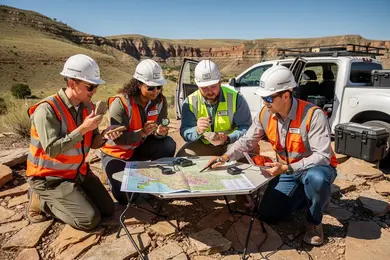
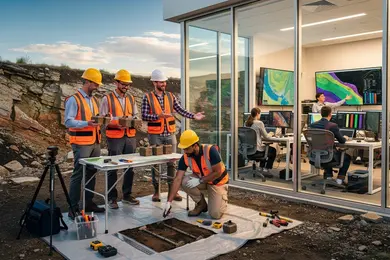
Hydrologist career opportunities in geosciences depend heavily on specialized expertise in earth materials, hydrogeology, and watershed hydrology rather than general environmental science knowledge. Their responsibilities include using geoscience-based data models to evaluate watershed behavior and flood risk, directly influencing infrastructure planning such as urban drainage systems. For instance, understanding soil permeability and geological formations is essential when designing stormwater management to avoid urban flooding.
Employers expect proficiency with tools like MODFLOW and ArcGIS, making qualifications from recognized programs such as the best GIS programs in the US especially relevant. Lack of a geosciences degree limits a candidate's ability to interpret geological surveys or accurately forecast water cycle dynamics, affecting employability and career growth.
Financially, hydrologists earned a median wage of $92,060 in May 2024, with steady demand driven by workforce turnover and increased water resource management needs amid climate challenges. However, roles and responsibilities of hydrologists in geosciences emphasize advanced skills in remote sensing and hydrogeology, with practical experience often determining opportunities for lead positions versus supporting roles.
Students and professionals should prioritize coursework and hands-on training in geoscientific data modeling and watershed management to achieve immediate workforce impact. Without this integration, candidates risk being sidelined in a field where depth of technical competence outweighs credential volume.
What hydrologist job titles can you pursue with a geosciences degree?
Hydrologist career opportunities with a geosciences degree demand strategic sector selection due to varying advancement patterns and salary structures. Hydrogeologists, water resources specialists, and environmental hydrologists represent typical hydrologist job titles in geosciences field, each aligned with distinct employer expectations. Entry-level hydrogeologists with a master's degree in the UK typically start between £30,000 and £35,000, though progression to senior roles-such as principal hydrogeologist-can raise earnings beyond £55,000. Experience in complex hydrological modeling, regulatory negotiation, and cross-disciplinary leadership proves essential for such advancement.
In environmental consulting, career growth often follows from field data collection to project design oversight, emphasizing technical skill acquisition like GIS mapping and hydrogeologic risk assessment. Government roles, in contrast, demand policy development expertise and adherence to public sector standards, prioritizing stability over rapid salary increases.
Industry sector choice affects employability and professional trajectory; for example, consultancy may offer faster promotion and increased salary, while regulatory agencies provide more consistent long-term roles. Regardless, obtaining certification or licensing strengthens market position in this competitive field.
For those considering an environmental engineer degree online as a complementary qualification, online programs can provide practical pathways to update skills while balancing workforce commitments. Such integration benefits professionals targeting multidisciplinary roles intersecting environmental engineering and hydrology.
How does a geosciences major prepare you for specialized hydrology careers?
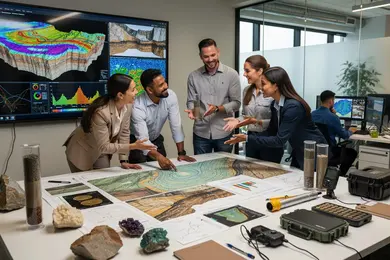
Specializing in hydrology through a geosciences degree equips graduates with analytical and technical skills directly aligned with employer expectations for managing complex water resource challenges. Candidates who can synthesize geospatial data into actionable insights are preferred in infrastructure projects, where understanding sediment transport impacts urban drainage design under shifting climate conditions. This practical ability distinguishes those prepared for hydrologist roles, reflecting essential skills gained from a geosciences degree for hydrologist roles such as expertise in geology, environmental systems, GIS, and statistical modeling.
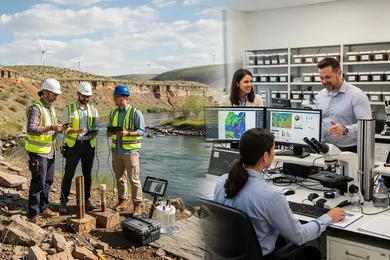
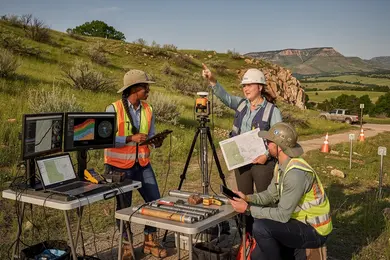
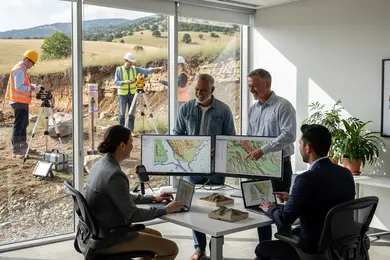
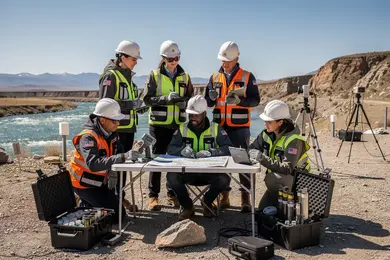
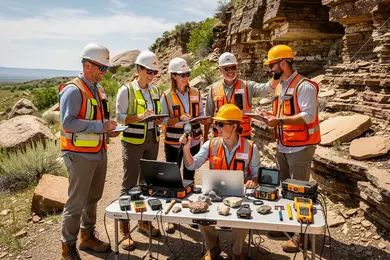
Training often involves fieldwork and software proficiency to handle large datasets and interdisciplinary collaboration, a necessary balance as hydrologists must translate scientific findings clearly for engineers and policy-makers. These real-world demands illustrate how geosciences graduates navigate technical and communication challenges common in hydrology career pathways for geosciences graduates.
Salary data further clarify sector viability: in Alberta, Canada, hydrologists earn an average annual salary of CAD $138,135 and CAD $79.71 hourly, signaling strong regional demand linked to urban growth. While these benchmarks indicate upward mobility potential, U.S. candidates should weigh program specifics, including practical exposure and data analytics training, to align with U.S. workforce needs. For those scoping educational options, exploring broader STEM degrees like the best online exercise science degree can offer complementary skills relevant to data analysis and applied sciences.
What degree level and coursework do you need to become a hydrologist?
A bachelor's degree in geosciences or a related field such as environmental science, hydrology, or civil engineering is the baseline for those pursuing a hydrologist career in the United States. Effective programs incorporate core hydrology coursework for geosciences students including fluid mechanics, geology, and environmental chemistry alongside practical skills like GIS, data analysis, and computer modeling, reflecting employer demands.
Advanced degrees often differentiate candidates for specialized roles in resource management, climate assessment, or regulatory compliance. Those without graduate credentials typically enter as technicians or assistants, facing limited autonomy. Hydrologists in government must navigate environmental law and policy frameworks, while private sector professionals tend to emphasize quantitative modeling and software proficiency for consulting tasks.
Employment growth in geosciences is moderate, around 3% from 2024 to 2034, with median pay near $99,240, illustrating the importance of targeted skillsets rather than general credentials in securing roles. Students weighing graduate studies versus augmenting a bachelor's with internships and technical certificates should consider direct implications for job function, hiring prospects, and earning potential in this competitive subset of the workforce.
For those interested in broadening technical qualifications beyond initial degrees, programs such as online library science masters offer structured advancement options. Clear evaluation of career goals against hydrologist degree requirements in the United States is essential before committing to specialized pathways.
Are online geosciences and hydrology programs as respected as campus options?
Employer preference in geosciences and hydrology fields hinges more on proven competency than on whether a degree was earned online or on campus. Practical experience integrated into a program-through fieldwork, lab simulations, or data analysis-is essential, especially in sectors like environmental consulting where regulatory compliance is strictly enforced. For example, consulting hydrologists, who command median salaries above $104,000, are evaluated heavily on real-world problem-solving and understanding of environmental regulations. A purely online degree with limited hands-on training may restrict access to specialized roles requiring site assessments or lab skills.
Prospective students should prioritize programs that:
- Provide access to field-based training or local internships
- Include faculty mentorship with active industry experience relevant to contamination and compliance
- Align curricula with professional certification standards such as state geoscience boards or the American Institute of Hydrology
Hybrid or regionally connected programs offering tangible experiential components tend to better prepare graduates for agency exams and ongoing education mandates. Hiring managers in government and private environmental sectors focus less on delivery mode and more on a candidate's readiness to meet stringent regulatory and technical demands. Ultimately, the credibility of an online degree depends on its ability to replicate the practical rigor of traditional formats.
Which hydrologist roles are in highest demand across government, industry, and consulting?
Government hydrologist positions consistently offer higher salaries and job stability compared to industry and consulting roles, with federal employment averaging $97,340 annually versus the national median of $88,770. This wage premium corresponds to responsibility for large-scale watershed assessment, flood risk, and groundwater monitoring, often within agencies like USGS and EPA. Candidates must demonstrate expertise in managing extensive environmental data alongside compliance with complex regulatory frameworks.
Industry roles demand advanced skills in hydrologic modeling, climate impact forecasting, and water quality analysis, often leveraging remote sensing and GIS technologies to optimize resource management in energy, agriculture, and urban sectors. Employers prioritize professionals capable of translating hydrologic data into actionable strategies for risk reduction and environmental compliance.
Consulting hydrologists tackle diverse, deadline-driven projects, requiring rapid problem-solving and clear communication of technical findings to non-specialist clients. This sector rewards versatility, project management, and integration of field and model data under variable conditions.
Key differentiators across sectors include:
- Government: emphasis on policy adherence and data scale
- Industry: technological innovation and applied modeling
- Consulting: client responsiveness and operational flexibility
Prospects must balance government job security with consulting's dynamic workload and industry's fast-evolving tech landscape. Early acquisition of statistical and geospatial proficiencies enhances adaptability amid regulatory shifts and climate uncertainties that shape hydrologist demand within geosciences.
What is the typical salary range for hydrologists and related geoscience roles?
Salary outcomes in hydrology and allied geoscience roles strongly depend on industry sector and technical specialization, with typical annual pay ranging from $60,000 for entry-level positions to beyond $110,000 in high-demand fields. Median compensation for geoscientists reached $99,240, illustrating robust earning potential aligned with applied resource management and infrastructure expertise.
Industries such as mining, quarrying, and oil and gas extraction often pay premiums due to the complexity and safety-critical nature of the work. Federal environmental agencies also provide competitive salaries, particularly for analysts handling large-scale water resource projects. Engineering and architectural firms value geoscientists who can translate hydrogeological data into compliant infrastructure designs, reinforcing salary vitality.
Students and professionals considering hydrology must weigh practical tradeoffs: entry roles without advanced technical skills or certifications hover near $60,000, while progression to higher pay often mandates proficiency in groundwater modeling and environmental impact assessments. Employment stability and salary growth tend to correlate with sectors maintaining sustained capital investment.
Modern hiring emphasizes field experience and software fluency alongside academic credentials. Candidates capable of navigating complex datasets and regulatory frameworks gain measurable advantages over peers, enabling them to surpass median pay scales in core geoscience sectors.
Do hydrologists need professional licensing or certification, and how do you qualify?
Licensure is a pivotal factor distinguishing senior hydrologists from entry-level roles, especially within consulting and regulatory sectors. The Professional Engineer (PE) license remains the most recognized credential, required for responsibilities involving public safety and regulatory compliance. Obtaining a PE license demands an accredited geosciences degree, passing the Fundamentals of Engineering exam, four years of supervised work under a licensed engineer, and a discipline-specific PE exam. This process, while rigorous, aligns closely with employer expectations and unlocks greater authority in engineering reports and decision-making.
Alternatively, certification through the American Institute of Hydrology (AIH) targets professionals inclined toward research or government roles, emphasizing academic qualifications, experience, and a technical exam, but it holds less sway in private engineering practice. The choice between licensure and certification hinges on career focus and sector demands.
Projected geology job growth of 35% over the next decade signals increasing opportunity, yet hiring managers still favor licensed professionals for senior technical positions. For example, in water resource management, unlicensed employees often remain in supportive roles, while licensed hydrologists oversee critical compliance tasks affecting public health.
The time and financial investment for licensure preparation can delay leadership entry but generally leads to higher salary tiers and job stability in competitive markets. Candidates should weigh these tradeoffs against their targeted roles and long-term advancement potential.
- PE licensure requires structured mentorship and exams that mirror employer rigor.
- AIH certification suits those focused on research or governmental hydrology roles.
- Licensure correlates with increased job security and expanded responsibilities.
How can you choose an accredited geosciences program that leads to hydrology careers?
Programs lacking recognized accreditation such as ABET or regional bodies significantly diminish a graduate's competitive edge for hydrology roles, where employer demand heavily favors candidates with hands-on fieldwork and experience in quantitative modeling. Consider a graduate who undertakes watershed analysis coursework combined with internships at state environmental agencies; such exposure aligns tightly with employer expectations and workforce data emphasizing applied skills over theoretical knowledge alone.
Proficiency in industry-standard tools like ArcGIS and MODFLOW is essential, as over 60% of water management employers require these competencies. Programs missing coursework in applied water-quality assessment or groundwater-surface water interactions limit immediate employability and restrict career adaptability in evolving water resource sectors. Graduate placement rates exceeding 70% within a year strongly correlate with curricula attuned to current water management challenges and strong employer networks.
National projections indicate geology and related water management jobs will expand by 35%, increasing demand for graduates adept in applied geology and data analytics. Programs with faculty engaged in funded research or policy advising provide direct benefits by opening pathways to internships and professional networks crucial for employment in public agencies, consulting, or multinational projects.
Avoid programs without transparent accreditation, outdated content, or poor employer engagement, as these factors reduce job prospects and fail to equip students for the analytical rigor and practical demands that define the modern hydrology workforce.
What is the long-term job outlook for hydrologists and water-focused geoscientists?
Hydrologists and water-focused geoscientists face stable job prospects with a 7% employment growth projected from 2024 to 2034, aligning with the national occupational average. This demand reflects the growing need for professionals who integrate advanced modeling, GIS, remote sensing, and machine learning into water-resource management. For instance, water utilities require hydrologists to build predictive models that balance reservoir supply against climate variability, underscoring the necessity for interdisciplinary technical proficiency.
Employers differentiate candidates based on their command of data science tools layered onto hydrogeology fundamentals, making specialized training an essential investment. Candidates lacking these skills often encounter limited opportunities despite solid geosciences backgrounds.
Regional demand disparities-such as heightened opportunities in drought-prone states like California and Arizona versus flood-focused roles in wetter climates-compel prospective professionals to weigh relocation or remote work against personal circumstances.
Significant tradeoffs exist between time-intensive fieldwork and more sedentary analytical roles, impacting work-life balance and job satisfaction. Additionally, roles increasingly require blending technical expertise with policy navigation and stakeholder communication, heightening the value of project management and engagement training.
These workforce realities suggest that graduates should strategically align their educational focus with targeted technical skills and job environment preferences to sustain career progression.
Other Things You Should Know About Geosciences
In 2027, graduates with a degree in geosciences can pursue various hydrology roles, including water resource managers, environmental consultants, and hydrogeologists. These positions focus on water resource assessment, environmental impact analysis, and groundwater modeling, highlighting the practical application of geosciences skills in hydrology.
Specialization directly impacts employability because hydrology roles favor candidates with expertise in hydrogeology, environmental geochemistry, or GIS analysis over broader geosciences tracks. Focusing on water resource management, climatology, or remote sensing within geosciences strengthens alignment with hydrology employers' needs. Students should prioritize coursework and research opportunities that provide technical skills in groundwater modeling, water quality assessment, and hydrologic data interpretation to differentiate themselves in competitive markets.
Courses in groundwater hydrology, surface-water hydrology, fluid mechanics, statistics, GIS, and numerical modeling best prepare students for hydrologic modeling jobs. Employers often expect experience with software such as ArcGIS, MODFLOW, and HEC-RAS, plus lab or field data analysis from a geosciences degree.
Research-heavy programs excel in scientific methods and data analysis but can lack exposure to regulatory frameworks, client project management, and field-based problem solving. Graduates of such programs may face steeper learning curves adapting to consulting or government agency roles where deliverable timelines and stakeholder communication matter. Applied hydrology-focused programs train students in environmental regulations, water resource projects, and software used by employers, but may provide less scientific theory depth. Students must weigh their long-term career goals-research and academia versus immediate workforce readiness-and choose a program aligned with their target role in hydrology.
References
- Careers in Hydrology - Division of Natural Resources and Sciences https://naturalresources.skc.edu/hydrology/careers-in-hydrology/
- Careers in Geoscience: Environment https://www.aig.org.au/education/careers-in-geoscience/careers-in-geoscience-environment/
- Hydrologist Jobs (with Salaries) - SEEK https://au.seek.com/hydrologist-jobs
- H is for Hydologist- all you need to know about becoming a Hydrologist https://www.drilcorp.com/h-is-for-hydrologist/
- Hydrologists and Hydrogeologists https://careerexplorer.americangeosciences.org/careersinfo/19204300/
- Environment https://www.careerpilot.org.uk/job-sectors/environment/job-profile/hydrologist
- Hydrogeology https://www.geolsoc.org.uk/Geology-Career-Pathways/Careers/Job-Sectors/Hydrogeology-Sector.html
- Professional Designation - Canadian Society for Hydrological Sciences https://cshs.cwra.org/en/profressionaldesignation/
- Career Cornerstone Center: Careers in Science, Technology, Engineering, Math and Medicine https://www.careercornerstone.org/geosciences/geosci.htm
- Certification https://aihydrology.org/certrequirements/