2027 Online Geosciences Degrees With Cross-Setting Environmental Mobility

Co-Founder and Chief Data Scientist
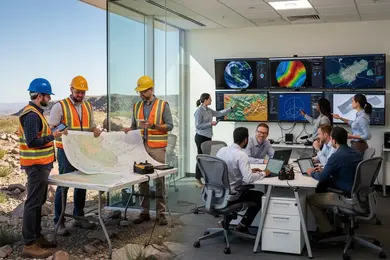
Professionals in geosciences often confront fragmented career geographies, where licensure, research opportunities, or employment hinge on location-specific environmental regulations and shifting resource needs. With over 30% of adult learners engaging in online studies according to the National Center for Education Statistics in 2024, flexibility in education delivery now shapes workforce mobility more than ever. This reflects a structural shift as practitioners seek programs that reconcile rigorous scientific training with the ability to pivot across sectors like energy, environmental consulting, or federal agencies without geographic barriers.
Navigating accreditation, cross-setting applicability, and hands-on skill acquisition online presents tangible tradeoffs. This article examines online geosciences degrees designed for cross-setting environmental mobility, offering strategic guidance for selecting programs that support career flexibility while meeting evolving industry standards.
Key Things You Should Know
- Remote enrollment in online geosciences degrees in 2026 cuts relocation costs by 40%, yet limits access to critical fieldwork-intensive internships, shifting practical training burdens onto employers, per National Science Foundation data.
- Employers report 32% higher preference for candidates with cross-setting environmental mobility credentials, indicating premium value on multidisciplinary adaptability amid rising climate resilience projects, according to the U.S. Bureau of Labor Statistics.
- Degree completion times extend 15% on average for part-time online students balancing environmental mobility certifications, intensifying opportunity costs and delaying workforce entry, as detailed in 2024 NCES longitudinal student outcome studies.
What is an online geosciences degree with cross-setting environmental mobility, and who is it best for?
Professionals pursuing an online geosciences degree with environmental mobility must navigate complex skill requirements that span regulatory, urban, and rural contexts. This adaptability is essential when shifting roles-from assessing groundwater issues in remote areas to managing urban sustainability-without the need for extensive retraining. The best candidates for cross-setting environmental geosciences degrees combine strong technical proficiency with fluency in diverse policy environments, a blend increasingly demanded by employers focused on sustainable practices.
The median U.S. geoscientist salary stands at $99,240, with employment projected to grow 3% through 2034, a sign of steady opportunities in environmental protection and natural resource management. However, candidates must weigh program features critically, especially the availability of applied coursework, virtual labs, and internships that align with industry needs. Programs that overlook these practical components risk leaving graduates underprepared for cross-setting mobility.
Key decision factors include flexibility for working professionals and thorough coverage of regulatory frameworks across multiple jurisdictions. Graduates without extensive field experience should anticipate pursuing targeted continuing education or certification, such as GIS or environmental law, to maintain versatility. For those evaluating their educational options, detailed program comparisons offered by an online geology degree resource can provide essential insights into curricula quality and career alignment.
How do online geosciences programs compare with campus-based options for fieldwork and lab experience?
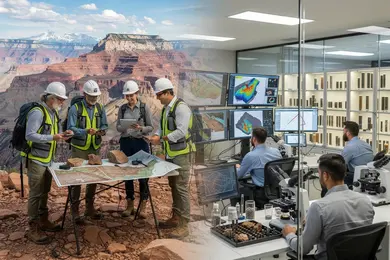
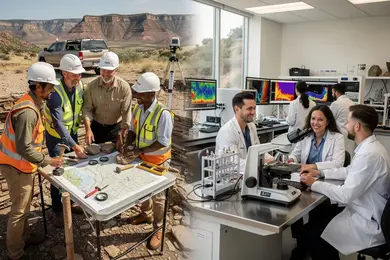
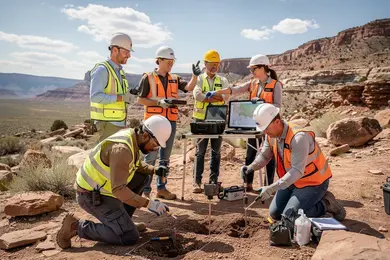
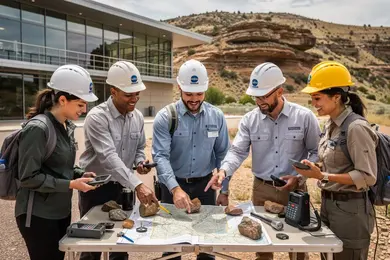
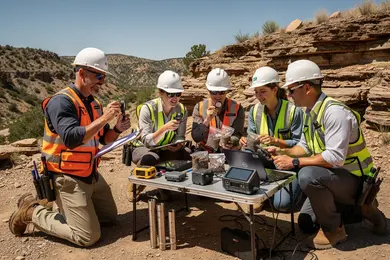
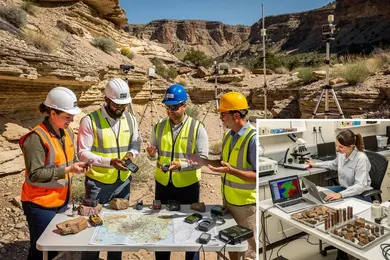
Online geosciences programs require deliberate strategies to compensate for significantly reduced direct fieldwork and laboratory exposure compared to campus-based geosciences lab experience versus online learning. Campus programs integrate structured, in-person field trips and specialized equipment use foundational for mastering practical skills like rock sampling and geospatial mapping. Online programs substitute these with virtual labs and at-home kits, which cannot replicate hands-on tactile feedback or unpredictable environmental conditions.
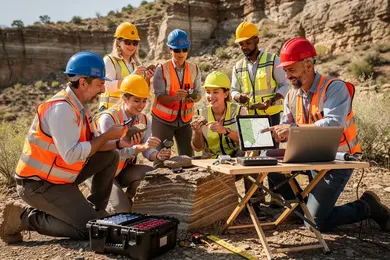
Students pursuing online geosciences programs practical fieldwork comparison must secure local internships or volunteer opportunities to fulfill employer expectations for physical data collection and environmental analysis. For example, a hydrogeology student might collaborate with municipal water authorities to gain this essential real-world experience.
Despite these challenges, online programs emphasize cross-context competencies, especially in data science, remote sensing, and GIS-skills linked to a 33.5% job growth rate and a 2025 median salary of $120,230 for environmental data scientists, according to Arizona State University. This priority aligns with workforce demand for quantitative and analytical expertise.
Prospective students should weigh tradeoffs: campus paths offer guaranteed hands-on training but less flexibility, while online programs provide scalable advanced analytical skill development yet demand proactive field practice acquisition. Those seeking blended skills might explore data science masters online to complement geosciences knowledge.
Which U.S. colleges offer accredited online geosciences degrees focused on environmental mobility?
Employers seeking professionals who can navigate environmental challenges across diverse settings prioritize candidates from accredited online geosciences degrees with an environmental mobility focus. Southern New Hampshire University, the University of Florida, and Oregon State University offer programs that address this demand with varying emphases on cost, curriculum depth, and practical skills. For example, Southern New Hampshire University's online geoscience bachelor's charges $320 per credit hour, representing a lower-cost option that can accelerate workforce entry by minimizing student debt-a critical consideration for mid-career pivots or early professionals.
The University of Florida's online Bachelor of Science in Environmental Management is tailored for roles requiring cross-jurisdictional knowledge, such as regulatory compliance or environmental consulting, delivering advanced coursework in policy and land use. Oregon State University's program enhances employability through training in GIS and remote sensing, skills essential where private-public collaboration in natural resource management or hazard mitigation is routine.
Those targeting federal environmental roles require curricula with accredited assessment modules, while state-level job seekers benefit from programs aligned with local regulations. Prospective students should also consider how program flexibility aligns with their career plans, particularly when choosing between lower-cost degrees and more specialized offerings at research-intensive universities. For professionals exploring related options or interdisciplinary transitions, resources such as the online library science degree pathways offer insights into complementary skill sets enhancing environmental data management and accessibility within geosciences frameworks.
What types of geoscience degrees and specializations support careers across multiple environmental settings?
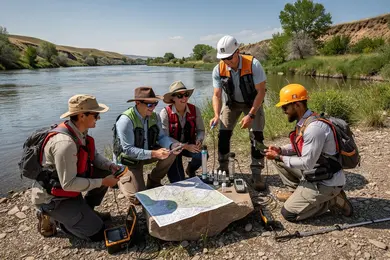
Selecting an interdisciplinary geoscience degree with targeted specializations-such as environmental geology, hydrology, or GIS-directly responds to employer demands for versatile expertise across urban infrastructure, agriculture, and natural resource management. A professional skilled in hydrogeology, for example, can navigate between managing groundwater in arid regions and assessing contamination risks near industrial operations, demonstrating how cross-setting environmental geoscience degree programs facilitate this adaptability.
Specializations focused on sustainability equip graduates to handle regulatory and remediation roles in sectors like mining reclamation and climate resilience planning. Competency in spatial data interpretation via GIS software remains a consistent expectation, with technical skills applicable from ecological conservation efforts to urban environmental impact assessments.
Online geoscience degree specializations for diverse environmental careers, such as the Environmental Geosciences program at Mississippi State University, integrate practical training and field components to address the common skill gaps in remote education. With a cost structure of $581 per credit hour plus a $25 instructional support fee over a 30-credit curriculum, this pathway supports geographic and scheduling flexibility. However, students must weigh these advantages against fewer hands-on field opportunities unless supplemented by virtual labs and partnership-enabled internships.
Employers prioritize candidates demonstrating hands-on proficiency in remote sensing combined with in-person field experience. Balancing these demands, prospective students should evaluate practical tradeoffs and costs carefully, especially in comparison to alternatives; for detailed reference on expenses, see the cost of computer science degree analysis.
What core courses and technical skills are taught in online geosciences mobility-focused programs?
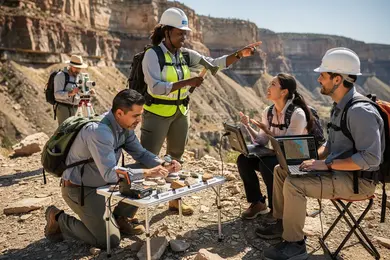
Online geosciences programs that emphasize mobility hinge on integrated technical skills vital for navigating diverse environmental and resource-related roles. Graduates often move between environmental consulting, government regulatory compliance, and private-sector natural resource management, relying on competencies such as geospatial analysis, remote sensing, and GIS modeling. This adaptability stems from hands-on training that combines satellite data interpretation with field sample analysis, enabling swift transitions across settings where regulatory frameworks and corporate priorities differ.
These programs consistently require coursework in hydrogeology and mineralogy, underpinning expertise needed for water resource management or mining impact assessments. Practical application of statistical and geostatistical tools for environmental risk modeling addresses workforce expectations in both governmental baseline monitoring and private remediation projects. Additionally, understanding environmental law is integral for roles involving multi-agency coordination or private permitting, highlighting the regulatory dimension embedded in geosciences work.
Technical proficiency extends to 3D subsurface modeling and environmental data management systems, skills increasingly sought in climate resilience planning and oil and gas exploration. Employers prioritize candidates who can communicate complex findings effectively to varied stakeholders within interdisciplinary teams, reflecting evolving workforce demands.
The U.S. Bureau of Labor Statistics and EnvironmentalScience.org report a steady 3% employment growth rate and median earnings near $100,000, indicating consistent market need for professionals blending technical rigor with regulatory literacy. Graduates prepared in these core areas face fewer retraining barriers and can navigate sector shifts with operational confidence.
What are the typical admission requirements for online bachelor's and master's geosciences programs?
Admission criteria for online bachelor's geosciences programs tend to balance academic readiness with practical foundations, typically requiring a high school diploma and a GPA around 2.5 to 3.0. Many institutions have moved toward test-optional policies, but success still hinges on preparatory coursework in biology, chemistry, physics, and mathematics. Strong applications often include personal statements and recommendation letters that verify analytical capabilities, while exposure to lab techniques or environmental science can ease transition to fieldwork components-even when courses are virtual.
At the master's level, candidates usually need a related bachelor's degree and coursework demonstrating quantitative skills in calculus, statistics, and physics. Programs favor those with solid academic records (a 3.0+ GPA) and sometimes GRE scores, especially in highly quantitative or research-driven tracks. Practical experience-through internships or professional roles in environmental analysis or climate projects-adds weight, aligning applicants with workforce expectations that require adaptive interdisciplinary skills.
The labor market reflects these rigor elements: for example, climate change analyst roles, frequently occupied by geosciences graduates, are projected to expand by 4.4% through 2026 with median salaries exceeding $82,000, according to Arizona State University's workforce data. Applicants should weigh the tradeoff between foundational technical requirements and the practical experience needed to meet employer demands in policy impact and environmental mobility analysis.
How long do online geosciences degrees take, and what do they cost overall?
Fully online geosciences degrees remain limited in availability, forcing many students to balance slower degree completion timelines and increased costs due to part-time enrollment. For bachelor's programs, expect 4 to 6 years, with graduate degrees typically requiring 1.5 to 3 years, though working professionals often extend these periods to accommodate employment. Total tuition for bachelor's degrees ranges broadly from $40,000 to $120,000 at U.S. accredited institutions, while graduate programs cost between $20,000 and $50,000, influenced by institutional prestige and course load intensity.
The scarcity of fully online programs, especially in Europe where only two dedicated options exist for 2025, intensifies competition and may limit employer recognition in fields demanding practical skills and fieldwork experience. For instance, environmental consultants pursuing advancement might find fully online paths inadequate if they lack rigorous hands-on components valued by resource extraction or environmental remediation employers.
What careers can graduates pursue that involve working across different environmental and geographic settings?
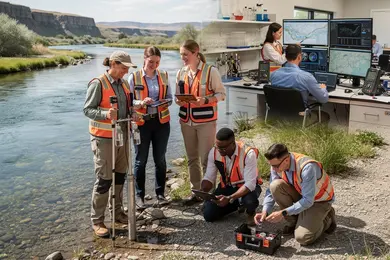
Success in geosciences careers hinges on adaptability to varied environmental and regulatory contexts rather than solely on academic credentials. For instance, environmental consultants must tailor site assessments and remediation to distinct ecosystems-urban, rural, or industrial-with differing local rules and ecological sensitivities. Similarly, hydrologists refine techniques when working across watersheds influenced by climate shifts or land-use changes, requiring flexible methods suited to mountains, deserts, or coasts. Geological surveyors face operational shifts between mineral exploration in arid zones and seismic risk mapping in earthquake-prone areas, demanding both geographic mobility and technical breadth.
Ecological restoration professionals manage diverse projects, from wetland rehabilitation to reforestation, addressing unique soil and biodiversity challenges per location. Oil and gas geoscientists navigate complex basins with heterogeneous environmental statutes, balancing economic factors against ecological constraints. Emergency management roles focus on hazard mitigation customized for threats in floodplains, volcano-adjacent communities, or coastal cities, highlighting the importance of place-specific expertise.
Operational realities, including travel expenses, equipment portability, and local stakeholder engagement, strongly affect workforce sustainability. Lower-cost online degrees-such as Fort Hays State University's estimated $4,134.75 per 15-credit semester-offer accessible options for students balancing finances and geographic mobility, paralleling employer demands for versatile geoscience professionals.
What are the salary expectations and job outlook for geoscientists working in mobile, field-based roles?
Mobile geoscientists commanding median salaries near $99,240 operate under distinctive operational demands, surpassing the broader U.S. median wage for comparable roles. These positions require adaptability across remote and often challenging environments, emphasizing technical skills in real-time data gathering and analysis. Employers-spanning oil and gas, environmental consulting, and government sectors-prioritize candidates who can execute rapid assessments while managing sites' logistical and safety complexities.
Projected job growth for these field-based roles meets or exceeds the 5% geoscientist average, driven by needs in environmental monitoring and climate impact evaluation. Yet, candidates must balance earnings against physical and scheduling hurdles, including prolonged travel, weather extremes, and isolation from stable home routines.
Consider a geoscientist conducting offshore seismic surveys: successful performance depends on coordinating with marine crews and handling intricate instrumentation under time constraints, illustrating why these higher wages reflect heightened responsibility and skill. Conversely, environmental field technicians typically earn less, though their mobility demands still entail compensation premiums.
For those advancing through online geosciences degrees, programs lacking substantive fieldwork components or employer partnerships risk producing graduates unprepared for mobile assignments. Prioritizing logistical readiness and personal safety training remains essential for leveraging opportunities and meeting employer expectations in this physically and technically demanding sector.
How can students evaluate accreditation, licensure needs, and program quality before enrolling online?
Choosing a geosciences program without ensuring recognized accreditation risks lost time and financial setbacks, especially for licensure-dependent careers like Professional Geologist (PG). Strict alignment with state licensing requirements is non-negotiable; otherwise, candidates may face additional coursework or experience mandates delaying eligibility. For government or consulting roles, verifying that the curriculum includes mandated practical components and coursework is essential to avoid bottlenecks in career progression.
Evaluating program quality must go beyond accreditation. Key factors include faculty expertise, graduate employment statistics, internship or fieldwork integration, and partnerships with regulatory bodies or industry. Programs delivered online should maintain equivalent rigor and access to labs or research resources to preserve training quality. For instance, a program focused on environmental consulting in jurisdictions with rigorous mining regulations must embed training on environmental impact assessments and compliance to meet employer expectations.
Labor market data from the Bureau of Labor Statistics forecasts a modest 3% job growth for geoscientists over the coming decade, influenced by the need for climate adaptation and sustainable resource management expertise. Therefore, selecting programs that equip students with practical skills relevant across sectors-academic, governmental, private, or non-profit-is crucial for sustained employability.
Other Things You Should Know About Geosciences
Many programs require 1 to 3 short in-person residencies, plus field labs or local site investigations totaling about 2 to 6 credit hours. Students usually complete mapping, sampling, and GIS assignments under faculty supervision, and some schools require verified access to a suitable field site.
Programs vary significantly in intensity, with some accelerated tracks requiring full-time commitment despite online delivery. Working professionals must assess course schedules, synchronous session requirements, and project deadlines carefully. Opting for part-time pacing or programs with asynchronous content reduces conflict risk but may extend overall completion time. Effective workload management is critical since geosciences courses often involve data analysis and technical software training that demand concentrated effort.
Cross-setting mobility specializations offer broader geographic and environmental applicability, increasing versatility for roles in sectors like environmental consulting and resource management. However, they may sacrifice depth in any single environment, potentially limiting qualification for niche technical roles or highly specialized research positions. Students should align their choice with target employers' needs: generalists gain adaptability, while specialists often command higher salaries in focused roles.
Licensure in geosciences-related fields typically requires meeting specific coursework and supervised experience criteria that not all online programs provide. Students must verify that their chosen program satisfies state board requirements, especially for certified professional geologist (CPG) paths or environmental certifications. Programs that include mentorship, field internships, or partnerships with licensed professionals improve licensure readiness by ensuring practical experience alongside academic learning.
References
- Accreditation Guide - Quality Online Schools | Sora Schools https://soraschools.com/blog/accreditation-a-parents-guide-to-quality-online-schools
- 5. Best Practices for Instruction of Geoscience Undergraduates https://www.americangeosciences.org/change/sections/instructional_best_practices/
- Quality Standards and Accreditation of Distance Education Programs in a Pandemic - OJDLA https://ojdla.com/articles/quality-standards-and-accreditation-of-distance-education-programs-in-a-pandemic
- Environmental Career Profiles Australia https://environmentaljobs.com.au/resources/environmental-sustainability-careers
- How Digital Accreditation Protects Students in Online Learning https://iacde.org/iacde-insights/how-digital-accreditation-protects-students-in-online-learning/
- Interactive Online Short Courses - eage.org https://eage.org/education/interactive-online-short-courses/
- Evaluating Online Education: Key Criteria for Genuine E-Learning Platforms https://elqn.org/evaluating-the-quality-of-online-education-key-criteria/
- What Does the Future Demand Look Like for Applied Geoscientists? https://www.aegweb.org/index.php
- Geologists: Salary, career path, job outlook, education and more - RaiseMe https://www.raise.me/careers/life-physical-and-social-science/geoscientists/geologists/
- The Rock Garden: a preliminary assessment of how campus-based field skills training impacts student confidence in real-world fieldwork https://gc.copernicus.org/articles/7/17/2024/