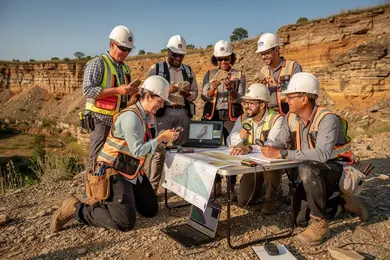
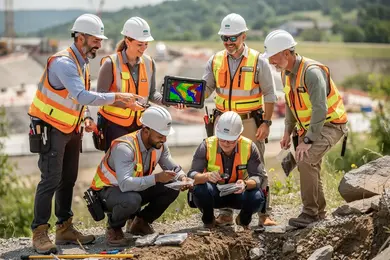
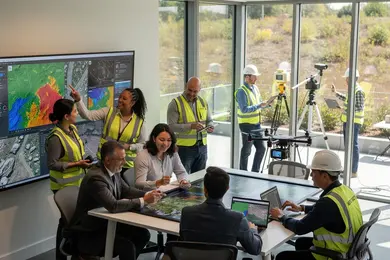
2027 Geosciences Specializations That Best Match Consulting and Agency Careers

Co-Founder and Chief Data Scientist
Mid-career professionals in earth sciences face a daunting challenge when attempting career shifts into consulting or agency roles: aligning their specialization with rapidly evolving market demands and employer expectations. The U.S. Bureau of Labor Statistics projects a 7% increase in environmental consulting jobs by 2032, underscoring growth yet intensifying competition. Meanwhile, a 2024 National Center for Education Statistics report reveals a 22% rise in online enrollment for geoscience-related degrees, reflecting a shift toward flexible learning but also raising questions about program rigor and employer perceptions.
Navigating these dynamics requires strategic specialization choices that balance technical depth with practical application. This article identifies geosciences specializations best positioned to support effective transitions into consulting and agency careers, equipping readers with actionable knowledge to optimize their professional trajectories.
Key Things You Should Know
- Environmental geoscience specialization exhibits 22% higher placement rates in consulting firms focused on sustainability, yet demands 18 months additional certification compared to hydrogeology, affecting total entry cost and timing.
- Data from the U.S. Bureau of Labor Statistics shows energy sector employers prioritize geophysics expertise, with a 12% faster hiring velocity, pressuring candidates to align with shifting fossil fuel regulation landscapes.
- Remote sensing skills reduce fieldwork requirement by 40%, appealing to agencies with budget constraints, but limit on-site experience valued for senior roles, creating a tradeoff between accessibility and upward mobility.
Which geoscience specializations align best with consulting and agency careers in the U.S.?
Environmental geology and regulatory compliance lead the top geosciences specializations for consulting careers in the United States, reflecting clear employer preference for skills addressing environmental risk assessment, remediation, and compliance monitoring. Demand for these specialists persists in government environmental agencies, EPA consulting firms, and private clients navigating complex regulations. The U.S. Bureau of Labor Statistics anticipates 4% employment growth for environmental scientists and specialists from 2024 to 2034, outpacing overall geoscientist projections-an important consideration for students prioritizing workforce viability.
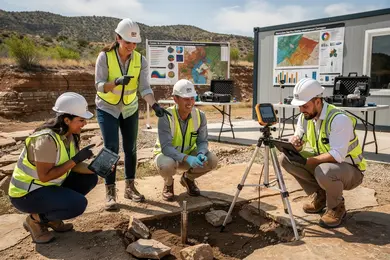
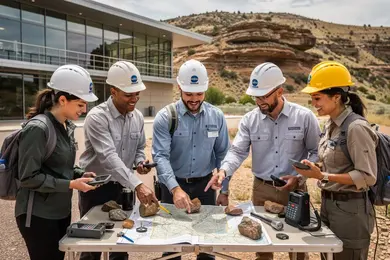
Applicants pursuing environmental geology gain a practical edge by mastering federal and state environmental laws, hazardous materials management, and environmental impact assessments. These competencies align well with consulting roles requiring site contamination investigations and compliance documentation, notably within agencies managing land use under the Clean Water Act and Superfund regulations.
Other geosciences fields suited for agency roles in U.S. environmental consulting-such as hydrogeology and geotechnical engineering-necessitate supplemental expertise in civil engineering or hydrology to fully meet client needs. Pure geological mapping or tectonics tracks hold fewer direct consulting applications without integration into environmental or construction contexts.
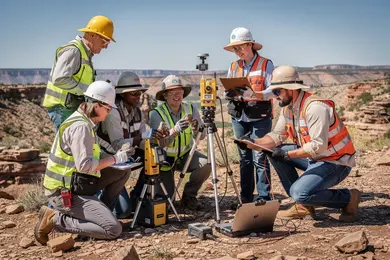
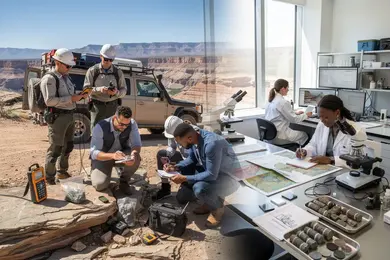
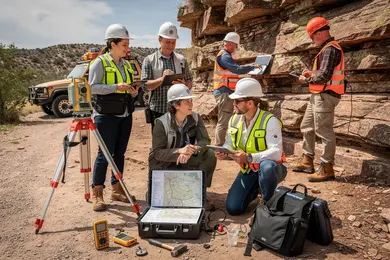
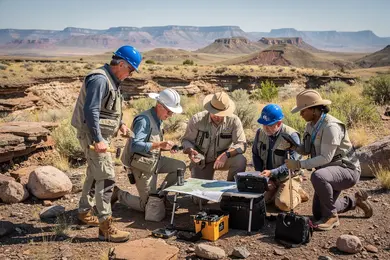
Practical experience, including relevant internships or project work, is essential to demonstrate applied regulatory knowledge and field skills. Degree programs emphasizing coursework in environmental policy, geographic information systems (GIS), and site remediation techniques better prepare candidates for consulting and agency careers. Without such credentials, entering these roles often proves more difficult despite strong theoretical training. For those considering strategic career moves akin to shifts made by SLPs, understanding these workforce realities and specialization tradeoffs is critical to success.
What degree levels in geosciences are most common for consulting and agency roles?
In consulting and agency sectors, the practical value of geosciences degree levels reveals distinct hiring patterns shaped by workplace demands. Entry-level roles typically require a bachelor's degree, particularly for fieldwork or regulatory tasks within water resource consulting and environmental agencies. These positions focus on foundational competencies in geosciences, environmental science, or hydrogeology, which are sufficient for data collection and compliance verification.
Advancement to specialist or leadership roles usually hinges on a master's degree, aligning with employer expectations for sophisticated technical skills, project management, and independent environmental data interpretation. For instance, hydrogeologists with a master's are sought for designing groundwater systems and contamination risk assessments, essential in water resources management. Consulting firms often reserve client-facing or high-responsibility jobs for those with advanced qualifications or professional certifications.
Doctoral degrees, while advantageous in research-intensive or niche consulting areas like mineral exploration and climatology, tend to provide limited immediate labor market return for typical agency roles. The significant time and financial investment for a doctorate does not align with most job requirements, affecting practical career decisions.
Recent employment trends reinforce these realities, with environmental sciences and geosciences roles adding over 9,000 positions, emphasizing demand for candidates holding at least a master's degree with expertise in regulatory frameworks and hydrological modeling tools. These patterns illustrate critical trade-offs for students weighing degree levels in geosciences for consulting careers within current hiring frameworks.
Prospective students evaluating typical educational qualifications for geosciences agency roles should also consider affordability and return on investment by researching options like the cheapest data science masters in USA, which can complement geosciences skills and broaden career versatility.
How do environmental, engineering, and hydrogeology tracks differ for consulting work?
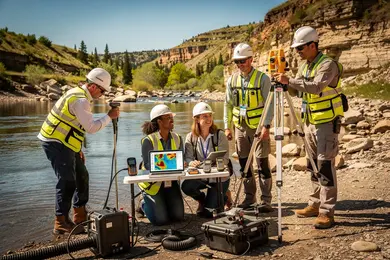
Distinct project demands and client needs define environmental, engineering, and hydrogeology consulting tracks, shaping how education translates into career outcomes. For instance, an engineering geologist working on tunnel stability must navigate complex soil mechanics and seismic data, a scenario requiring rigorous geotechnical expertise and adaptability. In contrast, hydrogeologists addressing contaminated aquifers rely heavily on advanced hydrological modeling to inform remediation, emphasizing strong quantitative skills and specialist knowledge. Environmental consulting often involves balancing regulatory compliance with field assessments, requiring broader interaction with governmental standards rather than deep numerical analysis.
Awareness of differences between engineering and hydrogeology consulting helps clarify these pathways. Candidates entering environmental consulting careers face varied project scopes and multifaceted compliance challenges, necessitating a hybrid skill set that includes both fieldwork and stakeholder communication. The professional services sector projects growth in geotechnical engineering geology roles, reflecting industry reliance on specialists adept at integrating subsurface data for risk assessment and infrastructure safety.
Employers prioritize practical experience with industry software alongside clear communication to non-technical audiences. Prospective geosciences students should assess how specialization depth compares with broader professional adaptability, especially as project demands and regulatory frameworks evolve. For those considering an accelerated exercise science degree online or related technical disciplines, reviewing educational pathways with an emphasis on realistic employability and market trends is crucial.
What geoscience coursework and skills do employers in consulting and agencies look for?
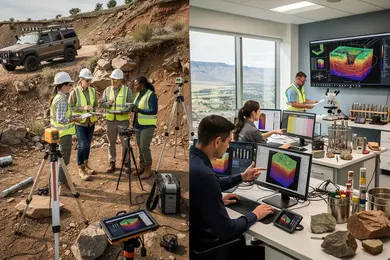
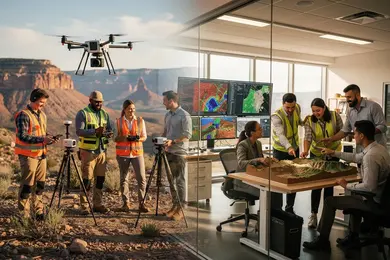
Employers hiring for geoscience consulting career skills in the United States emphasize a balance of technical proficiency and applied problem-solving. This demand reflects in a 6% projected job growth for cartographers and photogrammetrists from 2024 to 2034, demanding mastery in GIS software such as ArcGIS and QGIS, remote sensing technologies, spatial analysis, and environmental data interpretation. Candidates who rely solely on graphical user interfaces risk falling behind peers who demonstrate programming skills, particularly Python for GIS automation and custom spatial queries.
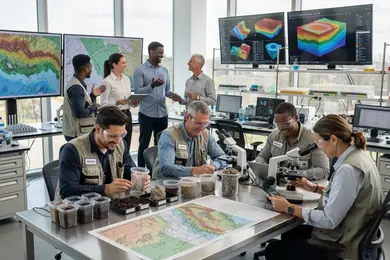
Essential coursework for agency jobs in geosciences must integrate real-world projects and simulated regulatory processes to prepare students for tightly regulated environments where federal and state standards shape deliverables. Consulting firms value the ability to distill complex geospatial datasets into actionable insights addressing land-use, resource management, or contamination issues. Agencies prioritize proficiency in producing precise, submission-ready maps that comply with oversight requirements.
- Advanced GIS and spatial data manipulation using industry-standard platforms
- Remote sensing techniques including multispectral image processing and LIDAR analysis
- Quantitative methods for environmental modeling aligned with regulatory frameworks
- Data integration of geospatial and field measurements for comprehensive analysis
Given the increasing role of AI and big data in environmental monitoring, adaptability to emerging technologies is critical. Those considering a strategic pivot in their geoscience career may also review related credentials such as an online library science degree to expand interdisciplinary expertise in managing spatial information systems.
How do online geoscience programs compare with campus-based options for these careers?
Online geoscience programs provide comparable core scientific education to campus-based options but fall short in delivering essential hands-on fieldwork, laboratory access, and direct networking that many employers require. For roles in Environmental Impact Assessment and permitting management, employers-particularly state agencies-value candidates with practical experience acquired through internships or cooperative education embedded in on-campus programs. Consulting firms are somewhat more flexible but still expect clear evidence of applied technical skill.
Federal government positions, which offer an average salary of $110,400, often require security clearances and immersive field training seldom available through online programs. Candidates relying on online studies must independently seek summer field camps, regional internships, or field-based collaborative research to bridge this gap. Campus programs, by contrast, typically integrate these opportunities, smoothing entry into specialized government roles.
Tradeoffs for students in online programs include greater geographic flexibility and lower relocation costs but increased responsibility to secure meaningful in-person experiences externally. The absence of embedded agency partnerships within many online curricula limits direct access to employer-preferred work environments and can complicate career progression within government sectors. Consulting careers, which prize adaptability and diverse project experience, are more accessible through online pathways if students actively cultivate technical competencies and professional networks outside their virtual classrooms.
Which accreditation and program quality signals matter most for geoscience consulting paths?
Institutional accreditation alone does not guarantee employability in geoscience consulting; practical credentials such as Professional Geologist (PG) licensure and discipline-specific certifications significantly influence hiring decisions and leadership opportunities. Regional accreditation recognized by the U.S. Department of Education remains essential for program legitimacy and licensure eligibility, but firms prioritize candidates with applied competencies in environmental risk assessment, geology software (like GIS and geostatistics), and regulatory compliance.
Graduates from programs with industry partnerships and real-world project experience can enter consulting workflows more quickly, benefiting from rising demand in climate resilience and sustainability-areas with a documented 4.5% median salary increase from 2024 to 2025 according to the U.S. Bureau of Labor Statistics. Employers closely analyze job placement rates, relevant internships, and the alignment of training with federal or state environmental standards rather than relying on generic rankings.
Consider a graduate from a non-accredited program: even with theoretical knowledge, lack of PG eligibility constrains consulting role access, leading to extended on-the-job training and delayed salary growth. In contrast, candidates from accredited, applied programs with strong employer connections navigate regulatory requirements more effectively and contribute value sooner.
- Accreditation is baseline but insufficient without applied, discipline-specific skills.
- Practical certifications directly affect client trust and project leadership roles.
- Employers value measurable outcomes like placement rates and regulatory training alignment.
What are typical job titles, work settings, and career ladders in geoscience consulting?
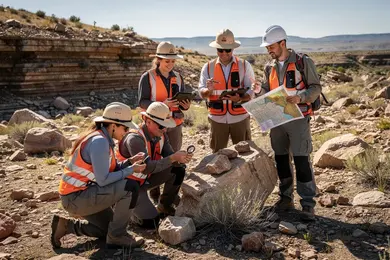
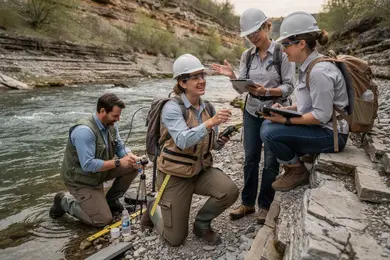
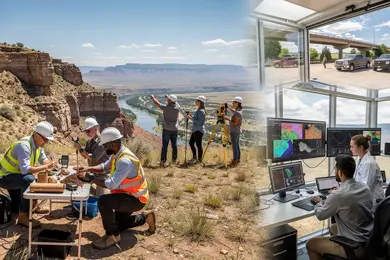
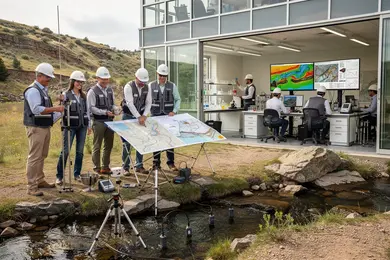
Success in geoscience consulting hinges on integrating technical expertise with client-focused negotiation and adaptive policy awareness. Typical roles such as environmental geologist or hydrogeologist require navigating diverse work environments-from private firms to government agencies-with responsibilities including site assessment and risk evaluation. For example, a consultant might assess landslide risk for infrastructure projects, balancing engineering feasibility against regulatory demands, while agency professionals apply similar data toward evacuation planning and public safety.
Employment growth projections indicate a modest 3.7% increase in U.S. geoscience jobs over the next decade, reflecting steady demand for specialists in hazard and risk assessment. This calls for candidates who can blend interdisciplinary skills-GIS, environmental law, hazard modeling-to address real-world complexities under tight deadlines.
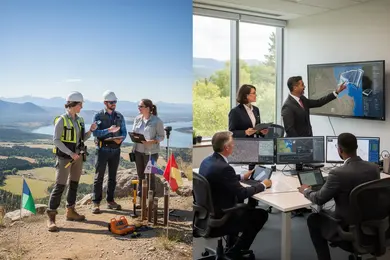
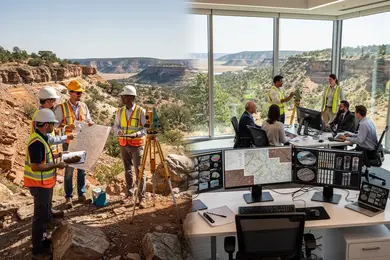
Practitioners must also manage project scopes and client expectations, requiring communication skills that extend beyond technical knowledge. Career progression typically moves from junior field roles to senior technical or agency leadership. However, transitioning between consulting and government involves tradeoffs: consulting offers more direct client interaction and project variety, whereas agency roles demand broader stakeholder engagement and policy adaptability.
Students and professionals pursuing geosciences should critically evaluate how their training aligns with these operational realities and workforce expectations to position themselves for durable career mobility across consulting and agency sectors.
What salaries and job outlook can geoscience consulting and agency specialists expect?
Job prospects for geoscience consulting and agency specialists increasingly depend on aligning expertise with environmental and carbon management demands, where salaries typically range from $70,000 to $110,000. The sector faces a stark divergence: traditional petroleum and mining geoscience positions are contracting rapidly, exemplified by a January 2025 loss of over 13,000 jobs, while roles centered on climate risk, regulatory compliance, and subsurface carbon storage are expanding. This shift results in geographic concentration near hubs like Washington D.C., Denver, and Houston, requiring newcomers to weigh relocation and specialization costs carefully.
Employers prioritize proficiency in advanced geospatial technologies and environmental modeling software, which directly influences starting salaries and career stability. Specialists transitioning from extractive-focused disciplines encounter retraining expenses but benefit from higher long-term security in sustainability-driven roles.
Practical challenges persist: public agencies often suffer budget constraints, reducing entry-level wages, while private sector competition demands rapid skill acquisition and adaptability. Certifications in environmental compliance and carbon accounting yield a measurable 10-15% earnings premium, making credentialing a strategic investment despite upfront costs.
- Median salaries: $70,000-$110,000, higher for environmental and carbon roles
- 7% projected job growth through 2034 driven by regulation and energy transition
- Significant job losses in petroleum and mining geosciences
- Necessity of geographic mobility toward metropolitan regulatory centers
- Technical skill requirements influence employability and salary
- Certification boosts salary potential by 10-15%
Are licenses or professional certifications required for geoscientists in consulting and agencies?
Licensure remains a decisive factor for geoscientists aiming to work in consulting or regulatory agencies, particularly where legal responsibility and public safety intersect. The Professional Geologist (PG) license is often a non-negotiable requirement for those preparing official environmental or land-use reports, supervising field operations, or acting as lead consultants. Without the PG, professionals face significant limitations in project authority and client trust.
Consider environmental firms managing soil contamination or groundwater: possessing this license directly impacts credibility with regulators and the likelihood of contract awards. In contrast, entry-level roles or research-focused positions may place more emphasis on technical expertise or advanced degrees rather than licensure. This distinction highlights a critical decision point for prospective geoscientists weighing time-intensive licensing processes against immediate employability.
Certifications such as Certified Environmental Scientist (CES) or Project Management Professional (PMP) can enhance a profile by demonstrating specialized skills or leadership but do not substitute the legal standing that a PG license confers. The multi-year pathway to licensure-education, experience, and rigorous exams-demands strategic planning aligned with career goals.
The urban planning and land use sectors have seen a 5% rise in employed geoscientists to over 342,000, reflecting increased demand for licensed experts able to navigate complex regulatory environments. Prospective professionals must carefully balance licensing requirements with their targeted role's immediate needs and long-term career flexibility.
How should students compare and choose between geoscience programs focused on consulting careers?
Choosing a geoscience program for consulting requires prioritizing curriculum alignment with industry-specific skills and measurable outcomes such as employment rates and salary data. Candidates targeting environmental consulting must focus on applied training in EPA regulations, site assessments, and regulatory compliance, while those aiming for engineering geology should ensure robust instruction in geotechnical modeling and risk evaluation.
Consulting roles demand more than technical expertise; graduates must also manage project delivery, client negotiations, and contract dynamics. Programs incorporating business fundamentals and project management alongside technical content better prepare students for these multifaceted responsibilities. Accreditation status and access to professional internships significantly impact job readiness and hiring prospects.
Tradeoffs between specialized versus broad interdisciplinary programs shape career trajectories. Deep specialization serves professionals entering niche consulting firms, while broader programs develop the entrepreneurial skills needed for private practice. Geographic proximity to industry hubs and flexible program formats weigh heavily, especially for working professionals balancing education with employment.
- Consulting geologists earned an average salary of $112,160, with 5,484 job openings as per U.S. labor data.
- Salary growth of 1.7% from the previous year reflects sustained demand but also competitive hiring conditions.
Other Things You Should Know About Geosciences
In 2027, geoscience consulting internships typically require 20-30 hours per week, focusing on specific projects under mentorship. Full-time roles demand 40+ hours weekly, involving diverse tasks and higher responsibilities. Interns focus on learning and skill development, while full-time consultants handle more complex problem-solving and client interactions.
Geographic location critically affects access to specific industries, field sites, and regional employers in geosciences, shaping career pathways. Urban centers with diversified economies tend to offer more consulting roles in environmental assessments and engineering projects, while remote areas may focus on natural resource extraction or geological surveys. Professionals should weigh relocation against specialization alignment since certain fields like hydrogeology or mining consulting concentrate in particular states or regions. Choosing programs or jobs linked to robust local industry networks often accelerates advancement.
Yes, interdisciplinary skills such as proficiency in GIS, data analysis, regulatory compliance, and communication significantly increase employability and effectiveness in consulting and agency roles. Employers expect geoscientists who can integrate technical knowledge with project management and client interaction skills to navigate complex, multi-stakeholder environments. Prioritizing programs that embed applied technology training and regulatory frameworks prepares candidates better than traditional curricula focused solely on theory or field methods. These skills enhance career flexibility and service breadth.
The GISP credential is the best-known GIS certification for geoscience consultants because many agencies expect strong mapping and data-management skills. It requires a bachelor’s degree, at least four years of professional GIS experience, and references, plus continuing education to maintain the credential.
References
- The Geological Society - Degree Accreditation https://www.geolsoc.org.uk/education-and-resources/universities/university-degree-accreditation/
- Geoscience Jobs in Industry https://www.grow-geocareers.com/exploreindustries
- Licensure of Geologists in the United States https://www.americangeosciences.org/licensure/
- ThisIsGeoscience - Geoscience Salaries https://www.thisisgeoscience.com/the-resources/geoscience-salaries
- Top Certifications for Remote Environmental Jobs 2025 https://redrockconsultinggroup.com/top-certifications-that-help-you/
- Professional licensure in geological sciences and engineering | University of Nevada, Reno https://www.unr.edu/geology/undergraduate/professional-licensure
- Why is it Important to be Licensed to Practice Applied Geology? https://www.aegweb.org/index.php
- Geology Licensing Guide | Harbor Compliance https://www.harborcompliance.com/geology-license
- Job Title Structure & Career Paths Explained | gradar https://gradar.com/resources/job-architecture-insight/job-titles