2027 Sustainability Analyst Roles You Can Target With a Geosciences Degree

Co-Founder and Chief Data Scientist
Facing tight timelines to pivot into sustainability roles, many geosciences professionals struggle to identify positions aligning tightly with their technical expertise amid a job market evolving toward integrated environmental solutions. The Bureau of Labor Statistics projects a 13% growth in environmental science and protection opportunities over the next decade, driven by regulatory demands and corporate ESG commitments, signaling expanded openings but also intensifying competition. This shift compels candidates to weigh program flexibility and practical skill applicability carefully, as employers increasingly prioritize hands-on experience and interdisciplinary knowledge over traditional credentials.
This article maps specific sustainability analyst roles accessible to geosciences graduates, clarifying actionable pathways based on real labor trends and qualification nuances to guide strategic career moves effectively.
Key Things You Should Know
- Federal energy and environmental agencies report a 14% growth in sustainability analyst roles requiring geosciences expertise by 2028, yet 62% demand sector-specific knowledge beyond standard geosciences curricula, limiting straightforward degree-to-role transitions.
- Hiring managers emphasize data modeling and lifecycle analysis skills over general geosciences knowledge, pressuring candidates to pursue costly certifications or specialized training, impacting recruitment timelines and wage negotiation leverage.
- Programs integrating applied sustainability with geosciences average 25% higher post-graduation employment rates, but extend study duration by 1-2 semesters, posing financial and timing tradeoffs for career changers balancing income loss and credential depth.
What sustainability analyst roles fit a geosciences degree?
Sustainability analyst positions for geosciences graduates require more than technical expertise; they demand the capacity to synthesize complex environmental data into strategic business insights. Practical roles, such as environmental data analyst or climate risk analyst, depend heavily on geospatial skills, statistical data interpretation, and regulatory fluency tied to earth systems. For instance, environmental data analysts in the energy sector forecast extraction project impacts, enabling compliance and proactive risk management.
Global demand is expanding sharply: the ESG reporting and data management market is expected to grow from $1.8 billion in 2024 to $7.5 billion by 2030 (23.1% CAGR). This growth elevates the need for sustainability analysts who merge geoscience knowledge with data management tools and reporting frameworks like GRI or SASB. Candidates must bridge gaps in interdisciplinary skills, balancing technical competencies with communication and regulatory understanding.
Career paths in sustainability analysis with a geosciences degree often require supplemental training in environmental law or data science to remain competitive. The challenge lies in meeting employer expectations for translating scientific data into actionable business intelligence within corporate sustainability frameworks. Professionals should also recognize competing priorities and the necessity of continuous skill development to navigate these roles effectively.
For those evaluating this transition, reviewing career resources such as SLPs offers perspective on managing pivot challenges across professions with specialized knowledge.
What skills do geoscience majors need for sustainability jobs?
Geoscience majors pursuing sustainability roles must integrate technical proficiency with analytical rigor, especially as climate risk analytics grow into a $7 billion market by 2030. Essential technical and analytical skills for sustainability jobs in the geosciences field include geographic information systems (GIS), remote sensing, and environmental modeling software. Mastery of programming languages like Python or R is increasingly non-negotiable to efficiently process environmental data, automate analyses, and support timely decision-making.
Understanding physical systems such as hydrogeology, climate dynamics, and soil science directly informs climate risk assessments and reveals ecosystem vulnerabilities. However, professionals aiming to influence financial decisions must also navigate risk management frameworks and regulatory environments, adding complexity beyond pure scientific expertise. Communication skills tailored to interdisciplinary teams remain critical, as sustainability analysts translate complex data into actionable plans for engineers, policymakers, and business leaders.
Skills needed for sustainability analyst roles with a geosciences degree in North America involve balancing scientific accuracy with applied analytics. For example, a geoscience analyst advising an energy company on climate resilience must integrate hydrological data, economic cost models, and emissions regulations, often coordinating with legal and operations staff under uncertainty. This scenario exemplifies the tradeoff between deep scientific analysis and strategic business considerations.
Prospective candidates should also consider how limited business acumen or programming fluency can restrict opportunities in integrated sustainability roles. Those evaluating this pathway should explore options such as a data scientist degree to supplement core geosciences training.
How do geosciences programs prepare students for sustainability careers?
Geosciences degree sustainability career preparation demands balancing technical expertise with applied environmental responsibilities, particularly in sectors like renewable energy and urban planning. For example, graduates engaged in solar or wind projects must use sedimentology and geotechnical analysis to select stable sites that reduce ecological disruption, demonstrating the real-world application of skills gained from geosciences programs for sustainability jobs. This practical integration is critical given that clean energy investment is projected to reach $2 trillion in 2024, increasing the need for professionals proficient in environmental impact assessments and sustainable resource management.
Core curricula often include geospatial analysis, hydrogeology, and environmental chemistry, equipping students to evaluate ecosystem health and regulatory compliance. However, these programs also require students to adapt by mastering advanced data science tools and gaining interdisciplinary insights into policy frameworks, which are essential for navigating workforce demands involving cross-sector collaboration beyond traditional geosciences training.
Tradeoffs frequently arise between industry-specific technical skills and broader sustainability mandates. For instance, geoscientists working in mining must reconcile geological risk assessments with evolving environmental standards, while those in urban planning leverage precise spatial data to inform green infrastructure development. Such role-specific challenges invite critical skill selection and strategic career decisions.
Prospective students should also consider alternative or complementary pathways such as an online degree for library science if their career goals align with managing environmental data or supporting sustainability research initiatives from an information sciences perspective.
Which geosciences courses support sustainability analyst work?
Courses aimed at sustainability analyst roles within geosciences demand a strategic balance between broad foundational knowledge and specialized technical expertise. Real-world application often requires integrating GIS proficiency with programming skills in Python or R to automate data workflows. For instance, assessing deforestation's environmental impact involves combining remote sensing data with hydrogeology models, highlighting the necessity of multidisciplinary synthesis expected by employers.
Core subjects span geographic information systems, remote sensing, environmental geology, hydrogeology, and climatology-each linking directly to environmental sustainability roles and practical decision-making regarding land-use, resource management, and climate adaptation. Advanced statistics and programming classes geared toward geospatial datasets are essential, especially as the geospatial analytics market is projected to double by 2030.
Students evaluating sustainability analyst courses in geosciences should consider the tradeoff between hands-on GIS project experience and the additional time needed to acquire coding skills that scale analyses efficiently. Incorporating environmental policy coursework is also critical for understanding regulatory constraints impacting project feasibility.
For professionals assessing alternative pathways, including an online MLIS may complement geosciences curriculum for environmental sustainability roles by enhancing data management and information organization capabilities valuable in interdisciplinary teams.
Should you choose an online or campus geosciences program?
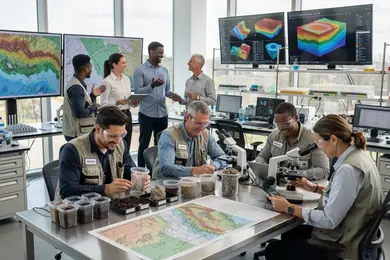
Hands-on experience remains paramount for geosciences roles requiring fieldwork and technical skills, a critical factor often underestimated by students choosing between campus and online pathways. Campus programs provide direct access to specialized labs, real-time faculty mentorship, and group projects that develop applied competencies in emission tracking and geospatial analysis-imperative for addressing complex sustainability challenges like monitoring Scope 3 emissions, which CDP data quantifies as averaging 11.4 times a company's direct operational footprint.
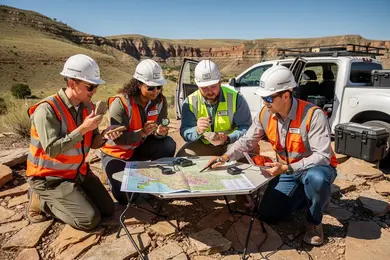
Online programs offer asynchronous learning beneficial for working professionals but lack immersive field components essential for roles involving on-site data collection or sampling. This gap can hinder readiness for positions demanding tangible proof of technical proficiency, especially in sectors like mining or environmental consulting where employers expect demonstrated mapping, GIS, and laboratory experience.
Students balancing employment might find remote labs and flexible schedules advantageous; however, they must compensate for limited networking opportunities and less hands-on practice, which can delay entry into competitive geoscience roles. Those targeting corporate sustainability roles focused on supply chain emissions will find the integration of site visits and practical labs, mostly available on campus, indispensable to credibility and skill mastery.
What accreditation should a geosciences degree have?
Employers targeting roles in water risk assessment and sustainability prioritize candidates with geosciences degrees accredited by recognized regional bodies or specialty organizations like the Geological Society of America (GSA) and the American Geosciences Institute (AGI). Accreditation signals a curriculum aligned with industry requirements, covering essential skills such as hydrogeology, environmental science, and geospatial analysis-key areas for addressing the UN's projection that 2.4 billion people will face water scarcity by 2030.
Graduates from non-accredited programs frequently encounter obstacles securing positions that demand federal or state licensure and certification, such as the Certified Environmental Professional (CEP). Without accreditation, employers may question the practical readiness of candidates, especially when jobs require proficiency with advanced modeling software and real-world dataset analysis. For example, water risk analysts rely heavily on predictive models standardized through accredited training to forecast scarcity and climate impacts accurately.
Choosing programs lacking hands-on experience or formal accreditation not only restricts immediate employability but can also extend onboarding and undercut early career growth. Conversely, programs emphasizing both rigorous accreditation and applied training better prepare graduates to meet regulatory compliance and complex resource allocation challenges in corporate or governmental settings.
What certifications help geosciences graduates in sustainability roles?
Certifications such as Certified Environmental Professional (CEP) and Leadership in Energy and Environmental Design (LEED) provide geosciences graduates targeted at sustainability roles with tangible skills, but their true value depends on the job context. For instance, LEED certification is highly marketable in urban infrastructure development where corporate environmental commitments drive demand, whereas in water resource management, credentials like Professional Wetland Scientist (PWS) may better align with employer needs.
The Sustainability Accounting Standards Board (SASB) Fundamentals of Sustainability Accounting (FSA) Credential bridges ecological expertise with financial reporting, a critical competency as businesses increasingly face biodiversity-related financial risks-MSCI's 2024 Nature & Biodiversity Report notes that 40% of publicly listed company value is at risk due to nature dependencies. This underscores a growing emphasis on translating ecological data into economic terms for risk mitigation and strategic planning.
In sectors like resource extraction and energy, Certified Energy Manager (CEM) certification enhances environmental efficiency knowledge but falls short without supplemental biodiversity impact skills to satisfy evolving international frameworks.
Potential candidates must navigate several tradeoffs: certification costs and renewal, documented project experience requirements, and varying sector applicability. Employers prioritize portfolios combining certifications with demonstrated field experience to tackle complex ecology embedded in supply chains and site operations, which often means a delayed timeline from graduation to certification relevance.
How much do sustainability analysts with geosciences degrees earn?
Geosciences graduates entering sustainability analyst roles can expect significant salary variation influenced by sector and specialization. Entry-level salaries typically start around $60,000 but can rise quickly to $85,000 within five years, particularly in energy, environmental consulting, or government. Those who develop technical expertise in areas such as carbon accounting, GIS, or environmental risk assessment may surpass $100,000 in private firms prioritizing sustainability solutions.
This salary differential reflects the growing demand for specialized skills, especially in the voluntary carbon accounting and management software market, which is forecasted to quadruple by 2030 with a compound annual growth rate exceeding 26%. Employers actively seek professionals adept at handling complex carbon data, verification standards, and regulatory compliance-skills that extend well beyond traditional geoscientific knowledge.
Practically, candidates must weigh the tradeoff between specializing deeply in carbon market technologies and cultivating a broader set of environmental policy and compliance competencies. Candidates lacking strong analytical skills tied to sustainability metrics often confront slower salary growth and fewer opportunities.
- Relocating to regions with active carbon management or energy transition hubs can materially enhance earning potential.
- Proficiency in carbon measurement protocols and environmental data modeling is critical for competitive positioning.
Strategic decisions around specialization influence not only starting offers but long-term career trajectories in geosciences-linked sustainability roles.
What is the job outlook for sustainability analysts?
The demand for sustainability analysts with a geosciences background is intensifying as urban climate resilience projects require a sharp balance between environmental, technical, and economic factors. Urban transit agencies expanding low-carbon initiatives illustrate this need: analysts must assess geological data ensuring infrastructure durability while minimizing ecological disruption. This intersection of geospatial analysis and sustainability metrics is critical for informed policymaking and investment prioritization.
Employers expect candidates to navigate complex tradeoffs, including stakeholder interests and fluctuating regulatory landscapes. Proficiency in data modeling and adaptive scenarios is necessary to provide actionable insights from diverse datasets. Entry-level roles typically focus on baseline data reporting, with advancement linked to strategic advising in sectors like energy, urban planning, and environmental consulting.
Key workforce implications include:
- Specialized technical skills significantly enhance market differentiation for geosciences graduates.
- Continual skill development is essential due to evolving climate models and regulatory demands.
- Practical experience handling real-world datasets determines readiness for higher-level decision-making roles.
The escalating $1.8 trillion annual investment projected through 2030 in climate-smart infrastructure sharply increases opportunities but also intensifies competition, requiring a sophisticated blend of geoscience expertise and interdisciplinary collaboration. Candidates must assess if they are prepared for such demands in strategic infrastructure contexts or if additional specialization is needed.
How do you choose a geosciences program for sustainability careers?
Programs targeting sustainability careers in geosciences must prioritize hands-on skills aligned with the rapidly growing demand for critical minerals, particularly lithium, whose market is forecasted to nearly triple by 2030 according to the International Energy Agency's 2024 Critical Minerals Market Review. This growth translates into a workforce need for expertise in mineralogy, sustainable extraction techniques, and resource lifecycle management relevant to renewable energy and battery supply sectors.
Key evaluation criteria include:
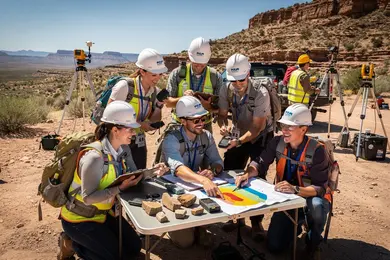
- Fieldwork experiences that replicate conditions found in lithium brine and hard rock mining, bridging classroom knowledge with industry realities.
- Faculty actively engaged in sustainability-related research or industry collaboration, providing students access to current innovations and professional networks.
- Interdisciplinary courses that combine environmental policies, geospatial tools, and lifecycle assessment methodologies, reflecting employer expectations for integrated environmental stewardship.
- Robust internship or co-op connections with government bodies or energy companies facilitating smooth transitions to employment.
Students must consider tradeoffs between programs emphasizing traditional geology theory versus those heavily weighted towards applied sustainability. Overemphasis on mineral specialization without geoscience breadth may hinder adaptability amid evolving market demands. Moreover, location factors significantly affect practical learning opportunities and local employment access, especially proximity to active mining or resource hubs.
For those aiming to pivot specifically into sustainability analytics within critical minerals extraction, confirming that programs align with IEA-highlighted mineral demand trends and offer relevant prerequisites and electives is essential for meaningful workforce entry.
Other Things You Should Know About Geosciences
While not always mandatory, a master's degree can provide a competitive edge for sustainability analyst roles by offering advanced skills and specialized knowledge crucial in 2027. Employers may prefer candidates with advanced degrees for higher-level analysis and problem-solving tasks.
Employers in sustainability roles typically prefer candidates who complement geosciences expertise with skills in data analysis, policy understanding, or environmental economics. Pure geosciences graduates may face challenges if they lack familiarity with cross-sector approaches that influence sustainability decisions. Those seeking to stand out should target programs or experiences that integrate social science or technology components alongside traditional geosciences training.
Fieldwork experience is valued for roles involving environmental monitoring, impact assessments, or geological surveying, but many sustainability analyst positions increasingly rely on lab-based research or computational modeling. Candidates investing heavily in fieldwork might limit opportunities in data-driven analysis sectors, which offer broader application in corporate sustainability and climate resilience. Balancing both skill sets is advisable, but prioritization should align with targeted employer sectors and job functions.
Proficiency in Excel, GIS, and basic data visualization tools is the most useful baseline, because sustainability analysts often track emissions, land-use data, and resource trends. Many employers also expect familiarity with SQL or Python for data cleaning, plus ESG reporting platforms used in corporate sustainability teams.
References
- Sustainability Analyst - Green Careers Hub https://www.greencareershub.com/find-your-green-role/job-profiles/sustainability-analyst/
- Occhipinti: Rethinking Geoscience Education: Integrating SDGs for Next-Generation Learning - Eurogeologists https://eurogeologists.eu/occhipinti-rethinking-geoscience-education-integrating-sdgs-for-next-generation-learning/
- Checklist for Starting a Career in Sustainability https://www.upskillist.com/blog/checklist-for-starting-a-career-in-sustainability/
- ABET Accreditation a Clear Pathway to Professional Geologist and Geologist in Training Licensure Under New California Regulations - ABET https://www.abet.org/abet-accreditation-a-clear-pathway-to-professional-geologist-and-geologist-in-training-licensure-under-new-california-regulations/
- Exciting ESG Analyst Role - Job Description https://enable.green/esg-roles/sustainability-and-esg-careers/esg-analyst-job-description/
- Online Geoscience Degrees: Top Schools and All Programs in 2026 https://www.gisdegree.org/online/geoscience-degrees/
- Salary Information https://www.geolsoc.org.uk/Geology-Career-Pathways/Careers/Salary-Information.html
- 8. Recruiting, Retaining, and Promoting Success of Undergraduate Students with Emphasis on Students Underrepresented in the Geosciences https://www.americangeosciences.org/change/sections/recruitment/
- How To Build Your Career In Sustainability | TSW Training https://www.tsw.co.uk/insights/how-to-build-a-career-in-sustainability/
- What can I do with a geology degree? https://learn.rumie.org/jR/bytes/what-can-i-do-with-a-geology-degree/