2027 Best Online Geosciences Programs for Science-and-Sustainability Professionals

Co-Founder and Chief Data Scientist
Professionals aiming to pivot into geosciences face a complex challenge: balancing rigorous scientific credentials with the need for flexible, career-compatible learning. Workforce projections from the U. S. Bureau of Labor Statistics forecast a 7% growth in environmental science roles over the next decade, intensifying competition for positions requiring specialized knowledge acquired through advanced education. Traditional programs often lack adaptable schedules, shutting out working adults-yet recent data from the National Center for Education Statistics shows that over 45% of graduate enrollments now come from part-time or non-traditional students. This shift demands accessible, quality online geosciences options aligned with evolving career trajectories and employer expectations.
This article evaluates the best online geosciences programs tailored for science and sustainability professionals, highlighting crucial attributes that enable strategic career advancement without sacrificing professional momentum.
Key Things You Should Know
- Geosciences online programs average 18 months with tuition ranging $20K-$45K, forcing tradeoffs between accelerated credentialing and depth of field specialization for timely entry into climate-driven roles.
- Employers prioritize candidates with integrated data science and GIS skills; programs lacking these produce graduates with 25% lower job placement rates per National Park Service workforce analytics 2024.
- Federal funding shifts favor environmental risk and disaster resilience topics, pressuring candidates to select curricula aligned with grant-backed projects, limiting broader geoscience specialization options.
What are the best online geosciences programs?
Successful pursuit of the best online geosciences degree programs for sustainability professionals involves prioritizing programs that integrate applied research with strong industry connections. Candidates shifting into energy resource management, for instance, must develop competencies in geophysics and remote sensing along with GIS proficiency to meet employer demands for measurable skills like environmental impact assessment and data modeling. Graduate outcomes are notably better when curricula include internships or capstone projects, as these experiences enhance workforce readiness.
Selection among top accredited online geosciences programs in the United States requires careful consideration of program delivery. Working professionals benefit from asynchronous and flexible pacing but must verify access to faculty mentorship and virtual labs, which many less expensive programs omit. This omission risks limiting technical preparedness and competitiveness in specialized roles involving sustainable resource extraction and environmental remediation.
The U.S. Bureau of Labor Statistics projects a 7% growth for geoscientists from 2022 to 2032, adding about 2,200 jobs, particularly in agencies focused on land management and environmental protection. Students targeting this market should align program focus with these sectors to capitalize on demand.
In evaluating educational pathways for technical depth and career transition potential, prospective students might also consider advanced interdisciplinary study, including options like a PhD data science online, to augment geosciences expertise with robust data analytics capabilities.
How do online geosciences degrees compare with campus programs?
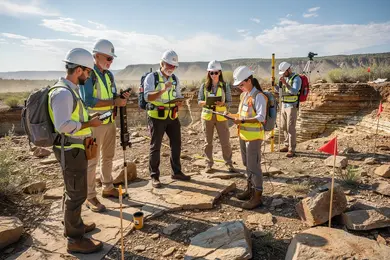
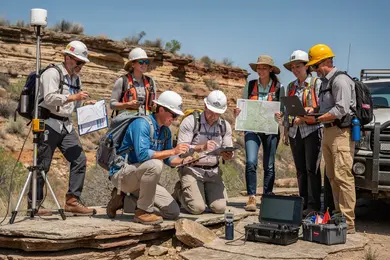
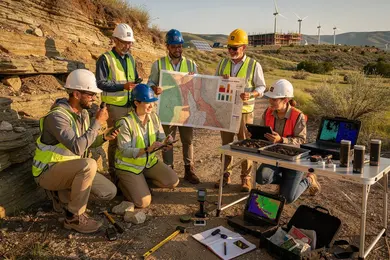
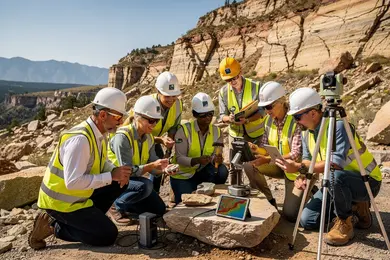
The most significant difference between online geosciences degree programs versus traditional campus learning lies in practical training and access to professional networks. Campus programs offer direct engagement with fieldwork, laboratory equipment, and face-to-face mentorship-skills essential for roles in environmental consulting and remediation. For instance, an environmental consultant working on contaminated sites requires hands-on soil testing experience, typically unavailable at a distance.
While accredited online degrees have advanced virtual labs and remote data analysis tools to foster analytical skills, those pursuing this path often must secure local internships independently and navigate limited access to employer connections commonly built through campus career fairs. This dynamic shapes a tradeoff where online studies provide flexibility for mid-career professionals seeking to pivot or upskill but demand greater initiative to attain practical exposure.
A clear understanding of employer hiring practices in geosciences underscores this point: documented field experience remains a top priority. Students comparing online and campus geosciences courses should carefully assess the impact on job placement and skill mastery.
For professionals weighing options, exploring options like an online masters in data science may offer complementary competencies valuable in emerging green jobs sectors, projected for 11.1% growth according to labor statistics.
What accreditation should an online geosciences program have?
Regional accreditation remains the baseline requirement for online geosciences degree programs in the United States, serving as a non-negotiable standard for employers, graduate schools, and certification entities. Degrees lacking this accreditation often face rejection during credential verification, directly impacting employability and eligibility for advanced study. For example, a geoscientist aiming to transition into a natural sciences manager role-where the median annual salary was $137,900-must present credentials from a regionally accredited institution for smooth career advancement.
While program-specific accreditation from bodies like the American Geosciences Institute adds depth, it is less common and typically non-essential for initial employment. However, certain roles in environmental consulting or government contracting depend on this specialized recognition due to strict curriculum alignment requirements. Accreditation also dictates transferability of credits and access to financial aid or employer tuition reimbursement, affecting students balancing work and study.
Prospective students evaluating accreditation standards for online geosciences degree programs should prioritize regional bodies such as the Middle States Commission on Higher Education or the Higher Learning Commission to safeguard credential validity. The accreditation landscape influences practical outcomes more than marketing claims.
Those seeking strategic pivots might also consider the broader educational ecosystem. Reviewing alternatives like a computer science degree online can be crucial where interdisciplinary skills enhance professional agility and market value.
What courses are in an online geosciences curriculum?
Online geosciences degree courses for sustainability professionals prioritize a curriculum that integrates core STEM foundations with applied environmental science, tailored to actual workforce demands. Foundational subjects like mineralogy, sedimentology, and geophysics provide essential technical skills, while GIS and remote sensing labs respond directly to job requirements in environmental consulting and resource management. For instance, urban sustainability analysts routinely depend on GIS proficiency to evaluate land-use impacts, making such expertise non-negotiable.
North America online geosciences programs often balance rigorous quantitative courses-calculus, statistics-with specialized topics such as hydrogeology and environmental geochemistry, equipping graduates to manage water resources and contamination challenges critical to public agencies and private firms engaged in climate resilience. Capstone projects and research methods enhance data analysis and communication abilities, aligning with employer expectations for scientists functioning within multidisciplinary teams.
Prospective students should weigh curriculum focus and expenses carefully. The University of Florida's online Bachelor of Arts in Geology offers a cost-efficient option at $129.18 per credit hour, an important factor for mid-career professionals minimizing debt. Programs typically allow concentration choices such as climate science or energy resources, facilitating strategic alignment with sectors like renewables or land reclamation.
Those considering a shift to geosciences may also explore related fields, for example, the growing opportunities linked to a library science masters, reflecting increasing data management needs in sustainability research and environmental archives.
What admissions requirements do online geosciences programs set?
Admission into online geosciences programs demands careful consideration of academic background and workforce alignment, often creating friction for those pivoting from non-science fields. Undergraduate applicants typically need a GPA between 2.5 and 3.0 and must demonstrate proficiency in prerequisite courses such as calculus, chemistry, and earth science. Although standardized tests are less emphasized under growing test-optional policies, applicants without STEM-focused degrees may face additional hurdles, including the necessity for bridge coursework or related STEM associate degrees, particularly in programs aimed at working professionals.
Graduate admissions require a bachelor's degree, preferably in geosciences or related environmental sciences, coupled with letters of recommendation highlighting quantitative and fieldwork skills. Personal statements must clearly articulate career objectives and sustainability concerns, addressing the hiring demands within environmental consulting and energy sectors where practical expertise weighs heavily.
For career changers, documenting prior academic rigor and relevance is essential since employers in geoscience-adjacent fields prioritize evidence of comprehensive scientific training. Over 20 fully online geosciences programs offered by accredited U.S. universities provide more accessible routes but also intensify competition, especially for programs valuing analytic proficiency and hands-on field experience. Prospective students should weigh the tradeoffs between program accessibility and the depth of applied skills critical to marketability.
How long does an online geosciences degree take?
Online geosciences degree timelines vary significantly based on level, format, and target outcomes, with tradeoffs between duration, depth, and career integration. Associate degrees often require two years, while bachelor's degrees typically span four years of full-time study. Accelerated or competency-based bachelor's programs can reduce this to 18 months but demand intensive weekly commitments, limiting flexibility for working students.
Master's degrees, favored by those pursuing advanced expertise, generally take 18 to 24 months online, though part-time tracks extend to three years to accommodate employment. Practical field requirements, such as remote or local supervised experiences for hydrologists and environmental geologists, can prolong study beyond the nominal timeline, adding logistical complexity.
Online certificates or shorter degree paths focusing on GIS software skills compress training into about one year. However, this comes with narrower foundational knowledge, which may limit long-term job versatility compared to more comprehensive programs.
Employers increasingly value applied geospatial analytics capabilities. Data scientists aligned with geosciences earn a median salary near $100,910, highlighting the marketplace premium for combined geology, hydrogeology, and GIS competencies. Students should weigh pacing choices against professional demands: full-time study expedites eligibility for higher-level roles, but part-time study eases work-study balance at the cost of extended timelines.
How much do online geosciences programs cost?
Choosing between accelerated certificates and full master's degrees in geosciences requires careful weighing of cost, time, and career impact. Certificates may be viable for professionals pivoting from related fields like environmental policy but typically offer less technical depth necessary for advanced roles. Master's programs generally entail 30-40 credit hours, often priced between $15,000 and $60,000, with public institutions charging $400-$700 per credit for in-state students and private or out-of-state rates exceeding $1,200 per credit.
Additional expenses such as technology fees, lab access, and proctoring can add thousands annually, and specialized climate or sustainability tracks command premiums reflecting faculty expertise and research facilities.
Employer expectations remain stringent, particularly for roles requiring intricate technical knowledge. For example, entry-level environmental consultant positions may accept a bachelor's degree plus certification, while advanced sustainability analyst roles increasingly demand graduate qualifications. The Bureau of Labor Statistics projects a 6% employment increase for environmental scientists over a decade, making robust credentials an investment aligned with market growth.
What careers can you pursue with a geosciences degree?
Graduating with a geosciences degree often means entering fields where adaptability and specialized knowledge determine career longevity. Entry-level roles focus heavily on field data collection, site analysis, and compliance reporting, which require resilience to variable outdoor conditions and attention to regulatory detail. For instance, environmental consultants must navigate complex federal and state laws to guide site remediation efforts, demanding both precise technical assessment and effective stakeholder communication under tight deadlines.
Mid-career professionals typically transition into project leadership or niche research positions, leveraging advanced skills in GIS, remote sensing, or climate modeling. Employers span energy firms, government agencies, and environmental nonprofits, reflecting a demand for practical problem-solving capabilities linked to sustainability and land-use planning.
Salary data positions geologists' average base earnings around $61,787, but this figure masks important variability dependent on geographic region, sector stability, and credentialing. The cyclical energy sector exemplifies the risk in this field, where market downturns tighten job availability. Diversifying into adjacent competencies like data science or environmental policy can improve resilience and opportunity breadth.
What salaries do geosciences graduates earn?
Starting salaries for geosciences graduates in the U.S. typically range from $60,000 to $75,000, but this varies sharply by specialization and region. For example, entry-level roles in energy and environmental consulting tend toward the lower end, around $60,000, while mineral exploration or government agency positions often start closer to $70,000 or higher. Salaries also rise significantly within five years for those focusing on critical mineral extraction and sustainable resource management, frequently surpassing $90,000 due to escalating demand and specialized expertise.
Geoscientists in areas like Nevada's lithium mining can expect higher wages compared to peers in regional environmental assessments, illustrating how location and sector heavily influence compensation. Transitioning into sustainability consulting can yield a 10-20% salary premium within three years, rewarding hybrid skills that combine fieldwork and data analytics.
Key hiring trends reflect the International Energy Agency's projection that demand for critical minerals essential to clean energy technologies will triple by 2040, driving robust opportunities specifically for candidates with sustainability and resource economics knowledge.
Graduates must weigh faster initial income versus longer-term gains tied to certifications such as the Professional Geologist license or advanced renewable energy degrees. While these credentials enhance marketability, they can delay earnings early on. Pragmatic career planning involves balancing credential investments against evolving employer expectations.
What certifications or licenses do geosciences careers require?
Licensure and certification in geosciences directly influence employability and the scope of professional responsibilities. For instance, roles that require legally endorsed geological judgments-such as environmental site assessments or regulatory report sign-offs-mandate a professional geoscientist (P.G.) license. Securing this license generally demands a bachelor's degree in geosciences, four years of supervised work, and passing the ASBOG exams. This credential is legally required in roughly 30 states, shaping the career trajectory for applicants targeting regulated sectors like hydrogeology.
Technical certifications have become equally important in applied fields leveraging GIS and remote sensing technologies. Over 70% of early-career geoscientists use these tools routinely, and credentials like the GIS Professional (GISP) or Esri Technical Certification demonstrate proficiency in spatial data and AI-driven analytics. These certifications complement but do not replace licensure, reflecting employers' desire for candidates who combine regulatory compliance with advanced technical skill sets.
Industry-specific certificates-such as the Certified Petroleum Geologist (CPG)-address niche demands in mining and petroleum sectors where experiential validation and examination are tailored to field-specific requirements. Candidates lacking the appropriate mix of licensure and certificates may face barriers in obtaining independent approval authority or lead roles. Strategically balancing formal education, licensing exams, and targeted certification aligned with evolving geospatial technologies influences both immediate job prospects and long-term adaptability in this workforce.
Other Things You Should Know About Geosciences
Most online geosciences programs offer asynchronous coursework, allowing students to study outside traditional hours, which suits full-time professionals. However, fieldwork components or synchronous labs may require scheduled attendance, limiting flexibility. Prospective students should prioritize programs that provide clear scheduling of any mandatory real-time activities to balance work and study effectively.
Online geosciences programs in 2027 incorporate flexible scheduling and asynchronous learning, allowing full-time science-and-sustainability professionals to advance their education alongside work. These programs often offer part-time options and interactive online resources, ensuring that students can balance work, study, and personal commitments effectively.
Advanced geosciences subjects often involve complex data analysis and equipment use, which can be difficult to fully replicate online. Students may struggle without direct access to specialized labs, requiring additional investments in remote software or local partnerships. It is advisable to evaluate how a program supports applied learning and access to resources when tackling advanced material remotely.
Most online geosciences programs require 1 to 2 semesters of college-level calculus, introductory chemistry or physics, and basic computer skills. Some graduate tracks also ask for prior coursework in statistics or GIS. Applicants usually submit transcripts and a statement of purpose, with no separate licensing exam required.
References
- How to find your career path with a geoscience degree https://www.grow-geocareers.com/
- Online Geoscience Degrees: Top Schools and All Programs in 2026 https://www.gisdegree.org/online/geoscience-degrees/
- Salary Information https://www.geolsoc.org.uk/Geology-Career-Pathways/Careers/Salary-Information.html
- Frequently Asked Questions https://www.americangeosciences.org/licensure/faq/
- Geoscience Careers https://education.americangeosciences.org/resources/geoscience-careers/
- ThisIsGeoscience - Geoscience Salaries https://www.thisisgeoscience.com/the-resources/geoscience-salaries
- Student Opportunities | NAU Earth Sciences & Sustainability Programs https://ses-nau.org/student-opportunities/
- Geosciences https://www.studium.uni-mainz.de/en/choosing-your-degree-program/courses-offered/geosciences_msc/