2027 Geosciences Specializations for Energy and Natural Resources Careers

Co-Founder and Chief Data Scientist
Energy sector professionals face a critical dilemma: how to acquire specialized knowledge in geosciences while managing unpredictable project cycles and shifting employer demands amid industry transformation. The U. S. Bureau of Labor Statistics projects a 5% growth in geoscience-related roles through the late 2020s, signaling rising demand but also intensifying competition for candidates with targeted expertise. Meanwhile, 40% of geosciences program enrollees in 2024 opted for flexible online or hybrid formats, reflecting broader workforce upskilling trends amid career interruptions or remote-location constraints. Navigating this complexity requires careful selection of specializations aligned with both technological innovation and evolving energy resource policies.
This article examines leading geosciences specializations for energy and natural resources careers, assessing their practical advantages and limitations to guide strategic educational investments and employment outcomes.
Key Things You Should Know
- Specializations in petroleum geosciences demand extensive field and software integration training, lengthening program duration by 20% on average versus environmental tracks, which impacts timely labor market entry according to Bureau of Labor Statistics 2024 data.
- Employers prioritize graduates with subsurface modeling expertise and cross-disciplinary skills; incomplete focus on these reduces employability by up to 30%, reflecting current workforce surveys by the American Geosciences Institute.
- Costly access to proprietary seismic interpretation tools creates barriers in advanced mineral resource geoscience education, leading to unequal upskilling opportunities and slower career progression noted in recent NSF workforce reports.
What are the main geosciences specializations for energy and natural resources careers?
Choosing a specialization in energy sector geosciences requires weighing labor market volatility against skill applicability. Petroleum geology remains foundational for hydrocarbon exploration but is susceptible to cyclical downturns driven by fluctuating oil prices. Candidates pursuing this path must develop deep knowledge in stratigraphy, sedimentology, and structural geology to assess subsurface reservoirs effectively. In contrast, geophysics demands strong quantitative and computational skills, leveraging seismic and other geophysical data to inform exploration and carbon capture projects. Its growing overlap with renewable resource management creates opportunities beyond traditional oil and gas roles. Reservoir engineering synthesizes geological insight with engineering approaches to enhance extraction efficiency, requiring proficiency in simulation tools and interdisciplinary problem-solving.
Natural resources geosciences career paths increasingly call for professionals adept at integrating data science methods and machine learning to interpret complex seismic information. Employers prioritize practical software competency and cross-disciplinary collaboration, reflecting the sector's technological evolution. For those seeking accelerated workforce entry, programs that emphasize applied training in geophysical data handling often yield faster employability.
Investment trends bear on specialization viability: with upstream oil and gas companies committing $570 billion to exploration and production, demand persists for expertise that mitigates drilling risks and optimizes recovery in challenging environments. However, shifting priorities toward sustainability mean versatility and computational fluency add critical career resilience.
Students contemplating advanced credentials might consider a doctorate in data analytics online to augment geosciences skills with data-driven decision-making capabilities.
How do petroleum geology, reservoir geology, and basin analysis support the energy industry?
Petroleum geology applications in energy exploration hinge on precise identification of source rocks and migration pathways, which directly limit drilling risks and avoid costly dry wells. Reservoir geology and basin analysis techniques provide quantifiable insight into porosity, permeability, and sedimentary basin structures, informing well placement and recovery strategies that are especially critical in mature fields. Basin analysis integrates tectonics and sedimentology to calibrate basin maturity and trap integrity, enabling energy firms to assess portfolio risks strategically amid fluctuating markets.
Employers prioritize candidates skilled in seismic interpretation, petrophysics, and sedimentary basin modeling-competencies that impact leasing, drilling timetables, and forecasting. For example, the rising importance of geothermal projects calls for reservoir geology expertise to optimize enhanced geothermal systems, an area expected to grow as global geothermal power capacity is projected to increase by 65% between 2024 and 2030. This reflects the value of bridging traditional petroleum geology with renewable energy assessments.
Real-world challenges include synthesizing diverse geological datasets within regulatory constraints. Progression often requires mastery of software like Petrel or Techlog and understanding basin thermal histories to distinguish senior professionals from entry-level. Candidates exploring strategic pivots in geosciences should consider ongoing skill development to adapt across fossil and renewable energy sectors. Those evaluating further specialization might explore the best online data science masters to complement domain expertise and improve data-driven decision-making.
What roles do environmental and hydrogeology specializations play in natural resources management?
Environmental and hydrogeology specializations distinctly influence natural resources management, particularly when regulatory complexity intensifies the need for technically precise roles. Environmental specialists focus on contamination assessment, waste management, and ecosystem impact analysis-one practical example being their role in mining and energy projects where detailed site characterization ensures compliance with EPA and state regulations. Their work directly affects permitting processes and risk mitigation strategies, functions central to sustainable extraction practices.
Hydrogeology specialization impact on environmental resource planning emerges clearly in managing groundwater critical to project viability, especially in regions facing water scarcity or sensitive aquifers. For industries like lithium extraction, where water demand is projected to triple by 2040 due to clean energy needs, hydrogeologists must assess groundwater flow and recharge to prevent depletion and contamination, balancing environmental and operational demands.
This convergence of environmental and hydrogeology roles in natural resources management means professionals increasingly require interdisciplinary skills, including geochemical sampling and groundwater modeling software. Employers often expect fluency across these domains to address evolving legal frameworks and stakeholder concerns effectively. For individuals evaluating this career path, understanding these tradeoffs-between depth in one specialization versus cross-functional flexibility-is critical.
Those examining how traditional geoscience disciplines intersect with regulatory and resource pressures may find value in exploring related fields such as library science for enhanced data management expertise; see what is library science for context on complementary analytical skills.
Which geoscience degrees and concentrations best prepare you for these specializations?
Degrees focusing on subsurface characterization, sedimentology, and petroleum geology offer the most direct preparation for geoscience degrees for energy sector careers, especially in oil and gas or carbon capture and storage (CCS) projects. The emphasis on reservoir engineering and seismic interpretation equips graduates to address the technical challenges in validating and monitoring storage sites, a skill set increasingly in demand as CO₂ capture capacity grows. For instance, by 2025, global CO₂ capture capacity had expanded over fivefold to exceed 1.5 billion tonnes per year, pushing employers to value geoscientists who can integrate complex geophysical datasets for precise risk assessment.
Best geoscience concentrations for natural resources jobs tend to combine applied field expertise with proficiency in industry-standard software like PETREL or Geolog. Specialized coursework in petrophysics and stratigraphy supports roles in unconventional resource extraction and geothermal energy, where understanding subtle rock property variations can affect operational safety and efficiency. Working professionals shifting into geosciences should also consider programs blending data science with traditional earth sciences, given the growing reliance on large-scale data analytics.
Choosing a broad geoscience degree versus a narrow specialization involves tradeoffs: the former offers flexibility across sectors, while the latter supplies targeted technical skills but may restrict cross-industry mobility. Prospective students evaluating pathways should balance these factors alongside practical training availability. For those comparing educational options, exploring the cheapest mechanical engineering degree online might provide insight into cost-effective technical programs with similar analytical rigor.
How do online geoscience programs compare with on-campus options for these career paths?
Choosing between online and on-campus geoscience programs fundamentally depends on the nature of the intended career within the field. Hands-on roles such as petroleum geology and mining exploration require direct experience with fieldwork and laboratory techniques that online programs cannot fully replicate. Employers in these sectors expect candidates to demonstrate practical skills developed through immersive, in-person training.
Meanwhile, specialties centered on data analysis, remote sensing, or GIS benefit from the flexibility of online learning, as these areas rely heavily on digital tools and software proficiency. Students pursuing fully online paths often need to complement coursework with part-time internships or virtual lab collaborations to align with industry standards.
The discrepancy is pronounced in sectors like hydrogeology, where roughly 52% of the global population faces water scarcity by 2025 per the UNESCO World Water Development Report 2024, and employers prioritize graduates with proven field exposure. On-campus programs offer structured field camps and immediate access to specialized equipment, providing a tangible advantage for these roles.
Career-minded students should also factor in networking differences: on-campus environments foster instant, informal access to faculty and peers, which is critical in competitive markets for energy and natural resources, while online learners must proactively build remote connections and technological fluency.
Prospective candidates should investigate hybrid models combining remote coursework with intensive field components as a strategic compromise to maximize employability without sacrificing practical competence.
What core courses and technical skills are taught in geoscience programs for energy fields?
Students pursuing geoscience programs for energy fields face the challenge of combining rigorous technical training with industry-relevant skills that directly impact employability. Core coursework in applied geology, geophysics, and geochemistry builds essential expertise in identifying hydrocarbon reservoirs and mineral deposits, but this foundation alone is insufficient without proficiency in tools like Petrel and ArcGIS. Employers increasingly expect familiarity with geographic information systems (GIS), data modeling, and programming in Python or MATLAB to manage large spatial datasets essential for subsurface mapping and environmental risk assessment.
Environmental site assessment and contamination remediation training respond to the growing environmental consulting market, projected to rise to nearly $52 billion by 2025. Specialists able to evaluate contaminated land and water are vital to energy firms navigating regulatory pressures and corporate sustainability targets. However, developing these competencies requires balancing traditional fieldwork-such as rock and soil sampling and geochemical assays-with practical software application, a frequent hurdle for students that delays workforce readiness.
A pertinent example involves geoscientists evaluating fracking operations, where integrating seismic interpretation with environmental risk data can determine project viability. Missing this integration risks project delays and added expenses, demonstrating the need for comprehensive program coverage that goes beyond theory. Graduates without this blend of practical and analytical capability may find their transition to energy sector roles constrained.
What are typical admissions requirements, program length, and tuition costs for geoscience majors?
Entry into geosciences programs requires more than baseline academic credentials; students benefit most from strong proficiency in chemistry, physics, and math before applying. Admission standards generally set minimum GPAs near 3.0 and SAT scores between 1050 and 1250, but competitive programs tend to value relevant extracurricular or field experiences. For professionals seeking specialization through graduate study, prior degrees in geosciences or closely related fields remain essential, while GRE scores have shifted toward optional status at many institutions.
Degree duration varies notably by level and enrollment status: bachelor's programs demand approximately four years full-time, master's degrees add 1.5 to 2 years influenced by thesis requirements, and doctoral studies span four to six years post-master's, largely dictated by research scope and fieldwork intensity. Part-time or online pathways offer flexibility but often extend completion time and raise cumulative costs.
Public in-state tuition ranges roughly $10,000 to $15,000 annually, doubling or more for out-of-state students, with private universities charging $30,000 to $50,000 per year. Graduate tuition typically runs higher, frequently between $20,000 and $40,000 annually, with the practical demands of fieldwork and specialized software contributing several thousand additional dollars each year.
The U.S. Bureau of Labor Statistics projects a 6% employment growth rate for GIS and mapping specialists from 2024 to 2034, outpacing average occupational growth. This trend reflects increasing industry reliance on precise geospatial data within energy, environmental, and infrastructure sectors. Students should weigh these workforce dynamics against program costs and timelines, especially when targeting roles that emphasize advanced GIS technology and applied field proficiency.
How can you verify accreditation and program quality for geoscience degrees in the U.S.?
Accreditation alone provides limited assurance for geoscience degrees targeting employment in energy and resource sectors. While regional and U.S. Department of Education accreditations confirm baseline academic standards, employers prioritize programs with direct industry relevance-particularly those emphasizing basin and stratigraphic analysis linked to unconventional oil and gas extraction. With unconventional sources contributing about 60% of U.S. natural gas and nearly half of crude oil production, practical training in these areas directly influences workforce readiness.
Programs lacking connections to employers or internship opportunities often produce graduates with theoretical knowledge insufficient for projects involving tight oil, shale gas, or coalbed methane. Evaluate programs on outcomes such as graduate placement rates in energy roles, partnerships with major firms, and integration of advanced analytics and field methods. Transparency in faculty research aligned to current market trends further signals program quality.
For mid-career professionals pivoting into geosciences, supplementing general degrees with industry-recognized certifications or continuing education is more effective than relying on unverified credentials. These targeted credentials often accelerate employability by addressing skill gaps specific to evolving energy extraction techniques and regulatory environments.
The Accreditation Board for Engineering and Technology (ABET) and professional endorsements from the American Geosciences Institute (AGI) offer additional quality markers beyond traditional accreditation, especially when applied geology or petroleum engineering are focal points.
What are the salary ranges and job outlook for geoscientists in energy and natural resources?
Geoscientists navigating career decisions face distinct tradeoffs shaped by evolving industry demands and geographic factors. Entry-level salaries start near $70,000, but specialization significantly affects earning potential-those focused on mining exploration or petroleum geology can exceed $130,000 annually. Growth projections of 8% through 2032 reflect increasing demand for critical metals central to battery and sustainable resource sectors, signaling higher value for expertise in lithium, cobalt, and related metals.
This shift creates a divergence: specialists in battery metals enjoy premium salaries and more stable outlooks, while fossil fuel-focused geoscientists encounter volatile opportunities amid the energy transition. Employers emphasize applied skills such as geospatial analysis, 3D modeling, and multidisciplinary collaboration addressing environmental and regulatory challenges. Advanced degrees and field experience improve compensation but extend apprenticeship periods.
Geographic mobility remains a central practical consideration. Many exploration projects require on-site presence in remote or developing regions, disadvantaging candidates unwilling to relocate. These professionals often pivot toward lower-paying but stable roles in local government or environmental consulting. Understanding these dynamics early informs targeted education and credentialing choices, aligning training with realistic career pathways and market demands.
How do certifications, licensing, and professional societies impact geoscience career advancement?
Licensing and certifications in geosciences function as essential career gatekeepers, especially for roles with legal accountability such as environmental assessments or resource permitting. Without a professional geoscientist license, candidates face significant barriers applying to regulated energy sectors or government agencies. Certifications focused on environmental risk or ESG analytics directly respond to rising market demands, driven by global ESG assets surpassing $30 trillion, which compels employers to prioritize professionals skilled in climate impact quantification.
Membership in specialized professional societies grants access to updated research, job leads, and mentorship-an integral support system for navigating fast-changing regulatory landscapes and renewable energy projects. For example, certified professionals often secure leadership roles requiring stakeholder engagement.
Obtaining these credentials involves practical tradeoffs: the licensure process demands documented field experience plus rigorous examinations, which can delay initial employment but typically results in higher mid-career wages. Maintaining licenses requires ongoing education, necessitating long-term planning. Candidates should selectively invest in credentials aligned with their target roles, such as climate science initiatives over broad geological memberships when focusing on carbon capture technologies.
Employers increasingly employ recruitment algorithms that filter based on certifications, raising the importance of credential strategies that demonstrably tie to ESG expertise and regulatory compliance.
Other Things You Should Know About Geosciences
In 2027, practical experience and internships are essential due to the hands-on nature of geosciences work. While formal education provides foundational knowledge, real-world experience offers valuable insights, making candidates more competitive in the energy and natural resources sectors.
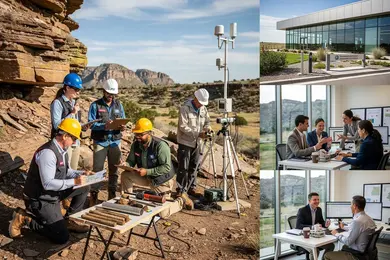
Fieldwork is often unavoidable in many geosciences specializations, but its intensity and frequency vary by focus area and employer. High fieldwork demands can impact work-life balance and long-term health, especially in remote or harsh environments typical of energy sector projects. Choose specializations and employers who match your tolerance for travel and physical work; some roles offer more office-based analysis and modeling work. Understanding these tradeoffs up front helps avoid burnout and supports a sustainable career trajectory.
For many U.S. roles, the Professional Geologist (PG) license from state boards is the main credential, usually requiring a bachelor’s degree, 5 years of qualifying experience, and passing the ASBOG Fundamentals and Practice of Geology exams. Offshore or field safety jobs may also require HAZWOPER training.
Formal education provides the foundational theory and credentialing necessary for geosciences careers, but employers in energy and natural resources place significant value on practical experience. Internships and cooperative education offer real-world problem solving, familiarity with industry tools, and networking, which greatly improve job placement outcomes. Candidates with moderate formal education but strong internship experience often outperform those with higher degrees lacking practical exposure. Prioritize obtaining hands-on experience during your studies to maximize employability and career advancement potential.
References
- Subject Areas https://www.geolsoc.org.uk/Geology-Career-Pathways/What-is-Geology/Subject-Areas.html
- Training Matrix - Canadian Energy Geoscience Association https://cegageos.ca/education/training-matrix/
- Play analysis lexicon | Energy & Mining https://www.energymining.sa.gov.au/industry/energy-resources/geology-and-prospectivity/petroleum-lexicon/play-analysis-lexicon
- Geologists: Salary, career path, job outlook, education and more - RaiseMe https://www.raise.me/careers/life-physical-and-social-science/geoscientists/geologists/
- Working Geoscience https://profession.americangeosciences.org/working/
- Geology - ABET https://www.abet.org/accreditation/new-and-developing-program-areas/geology/
- What coursework should I take to become a successful Applied Geoscientist? https://www.aegweb.org/index.php
- Energy Geoscience Career Pathways https://www.iom3.org/resource/energy-geoscience-career-pathways.html
- Energy from the Earth: Expanding the role of the oilfield expert to new opportunities https://ptrc.ca/media/blog/energy-from-the-earth
- Study Geosciences in Germany - My GUIDE https://www.myguide.de/en/study-mathematics-natural-sciences-in-germany/study-geosciences-in-germany/