2027 Best Online Geosciences Programs for Professionals Seeking Sustainability Consulting Careers

Co-Founder and Chief Data Scientist
Professionals aiming to transition into sustainability consulting within geosciences often confront a critical bottleneck: balancing full-time employment with acquiring specialized credentials that emphasize environmental resilience and resource management. According to the National Center for Education Statistics, over 45% of graduate-level enrollments in geoscience-related fields now come from adult learners seeking flexible, online programs-signaling a shift toward education models accommodating work schedules without sacrificing rigor. This change reflects evolving workforce demands where timely skill acquisition and employer-recognized credentials directly influence mobility and project eligibility.
This article evaluates the best online geosciences programs for professionals navigating these constraints and prioritizes those that optimize practical career advancement in sustainability consulting.
Key Things You Should Know
- Online geosciences programs priced 15-25% below in-person degrees reduce immediate financial burden but often trade off limited hands-on fieldwork critical for sustainability consulting certifications, per 2024 National Center for Education Statistics data.
- Employers prioritize candidates with integrated data analytics and environmental policy coursework; 72% of sustainability consulting roles cited by the U.S. Bureau of Labor Statistics now require hybrid skills beyond traditional geosciences expertise.
- Delays in program completion increase opportunity costs sharply: median part-time online candidates take 3.5 years versus 2.8 years full-time, intensifying wage stagnation risks noted in a 2024 workforce mobility report by the Department of Labor.
What are online geosciences programs and how do they prepare professionals for sustainability consulting careers?
Online geosciences degree programs for sustainability consulting demand a careful evaluation of practical outcomes beyond curriculum descriptions. These programs mix core earth sciences with applied environmental regulations and resource management, aiming to equip professionals with skills to interpret ecological data and formulate remediation strategies aligned with regulatory compliance. For instance, a consultant advising urban planners on groundwater contamination must apply remote sensing and GIS methods precisely to manage risk and regulatory obligations.
Such programs intend to support working professionals through asynchronous classes and virtual labs, yet they require students to independently secure local field internships essential for hands-on experience-an often overlooked barrier for career pivoters. Employers prioritize candidates who can integrate geoscience insights into business decisions, navigating sustainability certifications and environmental impact assessments effectively. Understanding how online geosciences education supports sustainability careers involves recognizing these real-world constraints and balancing technical training with market demands.
The U.S. Bureau of Labor Statistics projects 3% employment growth for geoscientists through 2034 with a median wage of $92,580, but competition intensifies as regulatory and economic factors converge. Programs that blend practical data analysis, compliance frameworks, and cross-disciplinary collaboration better position graduates for roles requiring both scientific expertise and actionable sustainability solutions.
For those comparing pathways, reviewing the best GIS undergraduate programs can provide relevant insights into complementary skills highly valued in this ecosystem.
What types of online geosciences degrees best support a transition into sustainability consulting?
Degrees that integrate applied geosciences with regulatory frameworks and sustainability metrics offer the most direct path into sustainability consulting. For instance, professionals working on water resource projects must master groundwater modeling and contamination mitigation-skills typically emphasized in online geosciences degrees for sustainability consulting careers. Programs lacking components like policy analysis, GIS applications, or climate risk assessment reduce immediate viability for consulting roles requiring cross-disciplinary problem solving.
Choosing the best online geosciences programs supporting sustainability consulting means balancing curriculum rigor against mode of delivery. Cohort-based formats with live seminars enhance networking opportunities critical for consultancy hiring, while fully asynchronous programs deliver scheduling flexibility but limit peer interaction and practical skill development.
The University of Georgia reports that 90% of its on-campus environmental geology graduates find earth science employment, affirming the value of professionally oriented programs. Prospective students should confirm that online offerings include hands-on projects or internships partnering with sustainability stakeholders, since purely theoretical or self-paced formats often fail employer expectations.
Working professionals evaluating this pathway should also consider integrating data science skills to complement geosciences expertise-an increasingly valued combination in environmental consulting. Resources like MS data science online programs can be a strategic supplement to strengthen analytical capabilities and marketability.
How do online geosciences programs compare with on-campus options for working professionals?
Choosing between online geosciences programs versus on-campus options for professionals hinges on balancing flexibility with experiential depth. Flexible geosciences degrees for working sustainability consultants often enable skill development concurrently with job responsibilities, a necessity for mid-career pivots or supplemental income without job disruption. For example, Fort Hays State University's environmental geosciences offering, priced affordably at $3,975.75 per semester, highlights online education's capacity to undercut legacy tuition, reflecting broader trends in cost-efficiency critical to workforce transition.
However, employer expectations in sustainability consulting frequently emphasize applied competencies and project experience, which many accredited online programs address through virtual labs and interactive simulations. Still, on-campus formats facilitate direct face-to-face networking with faculty and local industry partners, a factor not easily replicated remotely but vital for those targeting regionally concentrated geoscience roles.
Decision-makers must weigh these trade-offs:
- Online paths offer greater schedule flexibility and cost savings, supporting working adult learners.
- On-campus programs provide enhanced in-person experiential opportunities and stronger localized employer engagement.
- The reduced onsite interaction in online learning necessitates proactive external networking efforts.
- Embedding employer-verified practical projects within online curricula can help bridge employability gaps.
Professionals focused on sectors like environmental impact assessment or regulatory compliance may find immediate application of online coursework advantageous, while careers requiring frequent fieldwork or specialized instrumentation access may still benefit from traditional study. Prospective students should examine these variables closely, integrating considerations of real-world applicability with cost and scheduling needs.
As part of evaluating educational pathways, exploring options such as an accelerated bachelor's degree computer science online may also complement geosciences expertise in multidisciplinary roles.
Which accreditation and institutional quality standards matter most for online geosciences programs?
Regional institutional accreditation remains the baseline measure of quality and practical relevance for online geosciences program accreditation standards. For students targeting consulting roles or advanced sustainability careers, programmatic certification such as ABET or the Council on Education for Public Health (CEPH) becomes critical because these accreditations verify curriculum alignment with industry-standard technical proficiencies, such as environmental modeling and geological data analysis. Without such validation, graduates risk scrutiny from employers seeking demonstrated competence beyond a general degree.
Institutional quality criteria for online geosciences degrees extend beyond accreditation; they influence eligibility for professional certification, licensure, and access to internships or applied projects often required by hiring managers. For example, a consulting firm vetting candidates for sustainability strategy projects will prioritize those who have completed accredited programs with tangible experiential components. This affects long-run employability, as labor market demand for sustainability-related management analysts is projected to grow 9% from 2024 to 2034, according to the U.S. Bureau of Labor Statistics.
Decision-makers should weigh these factors against program cost and flexibility. Prospective students may benefit from comparing options, including the cheapest MLIS degree online as a cost benchmark in related interdisciplinary fields. Ultimately, rigorous accreditation tied to institutional standards signals readiness for roles requiring both theoretical knowledge and applied skills within environmental and geosciences sectors.
What core courses and specializations in geosciences are most relevant to sustainability consulting?
Effectively applying geosciences principles to sustainability consulting demands a curriculum focused on environmental processes, resource management, and specialized data analysis. Foundational courses like hydrogeology, environmental geology, and geochemistry empower professionals to interpret soil, water, and mineral interactions critical for sustainable land use or remediation efforts. Equally important, training in remote sensing and Geographic Information Systems (GIS) anchors spatial data capabilities vital for renewable energy siting or pollution mitigation strategies.
Specializations offer varying degrees of direct consultative value. For instance, climate vulnerability modeling aligns with infrastructure projects aiming to reduce carbon footprints and meet regulatory compliance, while petroleum geoscience may require integration with sustainability principles to maintain relevance in the current market. Practical proficiency in environmental regulations and policy shapes a consultant's ability to navigate permitting and compliance frameworks, a necessity for managing client risk.
Employers seek candidates able to translate complex geoscience data into actionable insights, combining applied technical skills with measurable sustainability metrics. Quantitative expertise, including statistical analysis and environmental modeling software, enhances forecasting accuracy under diverse development scenarios. Given a median annual wage of $99,240 reported by the U.S. Bureau of Labor Statistics in May 2025, strategic education in this sector offers tangible economic return coupled with expanded consulting prospects.
What are typical admission requirements and application materials for online geosciences programs?
Admission to online geosciences programs tailored for sustainability consulting demands more than credential verification; it requires alignment with workforce expectations that emphasize applied technical skills and field proficiency. Candidates holding a bachelor's degree in geosciences or related STEM fields typically meet baseline eligibility, but programs often enforce a minimum GPA near 3.0 and require transcripts evidencing strength in geology, chemistry, physics, and calculus. Letters of recommendation must validate quantitative competencies and research aptitude, while statements of purpose should clearly state career trajectories focused on sectors such as water-resource management or environmental consulting.
Standardized tests like the GRE have mostly become optional, yet can impact admission decisions for non-traditional applicants. Professional experience-especially in hydrogeology or environmental monitoring-provides a competitive edge since employers value practical field exposure in assessing candidates' readiness to address the reality that approximately 1.5 billion people worldwide depend on groundwater.
The documentation process is often burdensome, requiring detailed résumés that demonstrate relevant project involvement, internships, or consulting experience. Non-STEM applicants face additional barriers, frequently mandated to complete prerequisite coursework, which adds time and financial costs. International students must also submit TOEFL or IELTS scores to prove English proficiency. This admission complexity reflects the sector's stringent need for professionals who can translate academic knowledge into actionable solutions.
How long do online geosciences degrees take, and what do they cost compared with campus programs?
Completing an online geosciences degree requires balancing flexible pacing against professional demands and credential perceptions. Full-time master's programs typically run 18 to 24 months online, offering accelerated options compared to traditional campus degrees that demand physical attendance and complicate working professionals' schedules. Part-time online study extends duration beyond three years, requiring disciplined time management to avoid protracted completion.
Cost variation reflects institutional type and delivery mode, with public online programs charging roughly $300 to $600 per credit hour, and private institutions often exceeding $1,000 per credit. Total tuition ranges from about $15,000 to $45,000 for master's study, excluding additional campus fees like housing and transportation which can surpass $10,000 annually. Online formats lower these ancillary costs, enhancing financial feasibility for many professionals.
Employer valuation can vary significantly; certain federal or state environmental agencies prioritize traditional campus degrees, influencing career trajectories in roles connected to agencies such as the U.S. Environmental Protection Agency. The EPA's completion of cleanup at over 800 Superfund sites illustrates sustained demand for environmental geoscientists, highlighting the importance of coupling timely degree attainment with relevant field experience.
What sustainability consulting roles can geosciences graduates pursue, and what do these jobs involve day to day?
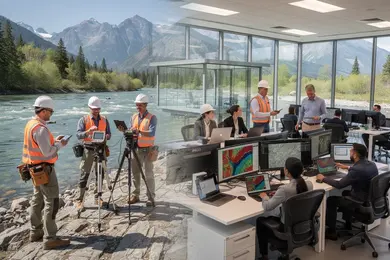
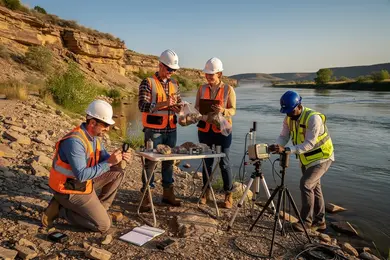
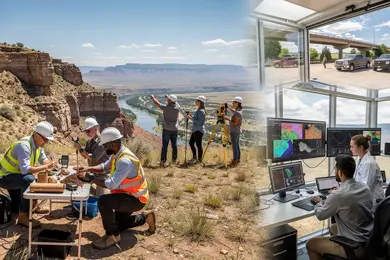
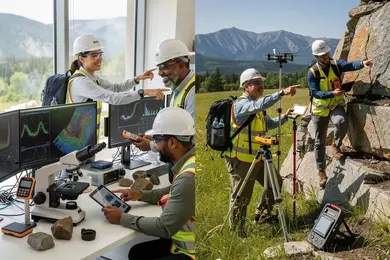
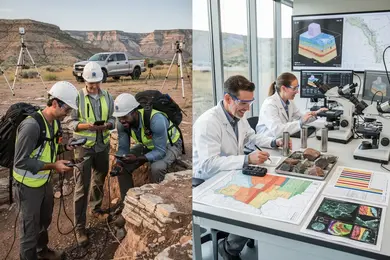
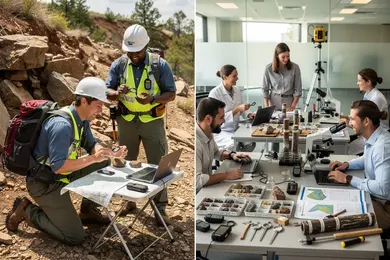
Choosing a career in geosciences oriented toward sustainability consulting involves navigating distinct operational roles with divergent demands. Environmental risk assessors engage heavily in fieldwork-collecting soil and water samples on-site and interpreting lab data to ensure regulatory compliance-balancing practical science with environmental law. In contrast, natural resource managers emphasize data analysis through GIS and remote sensing to optimize land use while preserving ecosystems, dedicating substantial effort to technical reporting and stakeholder coordination. Climate resilience strategists integrate complex geoscientific models and satellite data to forecast hazards like floods and droughts, translating these into actionable adaptation strategies within policy frameworks.
These differences highlight key workforce tradeoffs: field-intensive roles require physical presence and adaptability to variable conditions, whereas office-driven positions demand sustained interdisciplinary communication and synthesis. Professionals transitioning into these sectors must consider how daily routines align with personal capacity and long-term goals.
Georgetown University's Center on Education and the Workforce quantifies the economic benefit of a geosciences bachelor's degree, noting a lifetime earnings increase of approximately 84% compared to high school graduates. This data confirms that despite educational rigor and role-specific challenges, the financial returns justify investment in advanced training within geosciences fields.
What salary ranges, advancement opportunities, and job outlook can geoscience-trained sustainability consultants expect?
Starting salaries for geoscience-trained sustainability consultants in 2026 typically range from $60,000 to $85,000, with mid-career earnings between $90,000 and $120,000 varying by sector and location. Advancement is rarely linear and relies on combining technical proficiency with business insight, especially in roles involving environmental impact assessment, regulatory compliance, and data interpretation.
The demand for professionals in environmental science and protection is set to grow by 7% through 2032, driven by regulatory tightening and corporate ESG mandates. Yet, competition intensifies in consultancy environments that prioritize advanced certifications or master's degrees. Candidates who demonstrate proficiency in GIS software and effective communication tend to access leadership tracks more quickly.
Online geoscience education offers a practical means to upskill without sacrificing ongoing work income, supported by trends showing over half of undergraduates engage in some form of distance learning. This modality aids career switchers in maintaining momentum but introduces constraints such as limited networking and geographic mobility, which can delay high-impact project involvement and leadership ascension.
To mitigate these drawbacks, targeted internships or contract roles post-certification are advisable for building market presence and securing critical experience.
How can applicants evaluate and choose the best online geosciences program for sustainability consulting goals?
Career transitions into sustainability consulting demand geosciences programs that deliver verifiable outcomes and practical skills directly tied to industry needs. Credentials without demonstrable employment results risk low return on investment, especially where employers prioritize proficiency in subsurface analysis, environmental risk modeling, and regulatory compliance. Graduates must show familiarity with current geospatial data techniques aligned with evolving renewable energy markets, underscored by recent International Energy Agency reports on renewable capacity surges.
Applicants should critically assess programs based on:
- Employment rates in energy transition or sustainability consulting roles verified through labor market data.
- Access to project-based learning or partnerships with consulting firms active in environmental remediation.
- Curricula offering depth beyond traditional topics, including climate risk modeling and renewable resource management.
- Flexibility to accommodate professionals balancing advanced coursework with current job responsibilities.
- Faculty with active consulting experience and industry connections enhancing relevant knowledge transfer.
Consider the contrast between a mid-career engineer pivoting into sustainability, who requires advanced, application-focused modules, and a recent graduate needing foundational training combined with internship opportunities. Programs that fail to incorporate up-to-date datasets and methodologies pose risks of outdated instruction. Evaluating tuition against transparent graduate success metrics and employer engagement is essential to making informed educational investments that meet the realities of this dynamic sector.
Other Things You Should Know About Geosciences
Students should learn GIS, remote sensing, and spreadsheet or statistical analysis tools, because sustainability consulting uses spatial data and reporting. Employers often expect ArcGIS or QGIS, plus basic Python or R for data handling. Strong map interpretation and database skills also help with environmental assessments and resource planning.
Fieldwork is essential in geosciences, but it is frequently the weakest element in fully online programs. Some programs mitigate this by requiring in-person residencies, regional field trips, or partnerships with local organizations. Prospective students should prioritize programs offering substantial on-site components or virtual simulations if they lack flexibility for travel, as inadequate field experience can limit employment prospects in sustainability consulting roles that value applied skills.
Employers in sustainability consulting prioritize geosciences graduates with proficiency in GIS, remote sensing, and data modeling software. Online curricula that integrate hands-on projects using industry-standard tools deliver better outcomes than those focused mainly on theory. Job candidates should select programs with clear skill-building in these technical areas and verify that project work aligns with current consulting practices to maintain competitiveness.
Flexibility in online geosciences programs is crucial for working professionals but often comes at the expense of peer interaction and professional networking. Programs that incorporate cohort structures, interactive seminars, or industry partnerships provide better environments for building professional connections. Those aiming for career advancement in sustainability consulting should prioritize programs with robust networking features, as isolated study formats limit exposure to industry contacts and collaborative learning that influence long-term career success.
References
- 5 Sustainability Careers to Consider https://claremontlincoln.edu/news-blog/sustainability-careers/
- Information about Geoscience Related Careers https://careerexplorer.americangeosciences.org/careersinfo/
- Sustainability Consulting In 2026: How To Choose The Right Partner https://www.verdantix.com/insights/webinar/sustainability-consulting-in-2026--how-to-choose-the-right-partner
- Climate Consultant Salary - What They Do and Career Outlook https://www.casebasix.com/pages/climate-consultant-salary-career
- Online vs On-Campus Degrees: Honest Comparison for Tech Students 2026 https://hakia.com/compare/online-vs-oncampus/
- Environmental Geoscience Major | SUNY Plattsburgh https://www.plattsburgh.edu/programs/environmental-geoscience-major.html
- Accreditation 101 | C-RAC https://www.c-rac.org/accreditation-101
- How to Become a Sustainability Consultant https://www.learnbiomimicry.com/blog/how-to-become-a-sustainability-consultant
- How to Become a Sustainability Consultant https://teach.com/online-ed/short-courses/online-sustainability-courses/become-sustainability-consultant/
- Study Geosciences in Germany - My GUIDE https://www.myguide.de/en/study-mathematics-natural-sciences-in-germany/study-geosciences-in-germany/