2027 Online Geosciences Degrees With Climate Science Concentrations

Co-Founder and Chief Data Scientist
Professionals aiming to specialize in climate science within geosciences face the challenge of balancing ongoing employment with acquiring advanced qualifications tailored to evolving environmental demands. The U.S. Department of Education reports a 19% surge in adult enrollment in online STEM programs since 2023, demonstrating shifting preferences toward flexible learning models that accommodate workforce commitments and regional limitations of on-campus access.
This evolution signifies a strategic pivot in how practitioners navigate credentialing amid urgent climate data needs and sector-specific expertise shortages. This article examines online geosciences degrees featuring climate science concentrations, focusing on program structure, accessibility, and career impact to guide informed choices in this critical educational space.
Key Things You Should Know
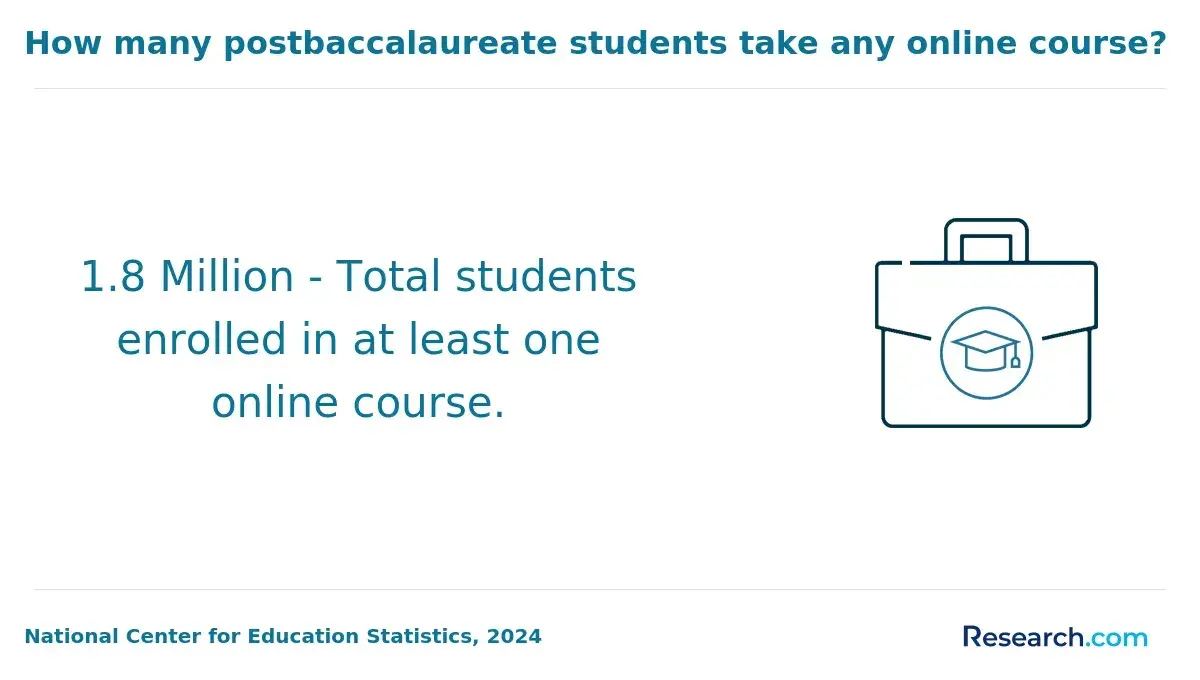
- Online geosciences degrees with climate science concentrations average 18-24 months longer to complete than on-campus counterparts, increasing total tuition costs by 15% on average, per 2024 National Center for Education Statistics data.
- Employers value measurable climate modeling and data analysis skills, yet 42% of graduates from online geosciences programs lack advanced GIS proficiency, limiting competitiveness in federal environmental agencies and private sector roles.
- Enrollment surges in online geosciences programs since 2023 have intensified peer network fragmentation, producing weaker professional connections that reduce internship and job placement rates by up to 20%, according to the American Geosciences Institute.
What are online geosciences degrees with climate science concentrations?
Completing accredited online geosciences degrees featuring climate science concentrations offers a targeted curriculum that aligns closely with current employer emphasis on climate resilience and risk mitigation. For professionals transitioning from general geology into climate-focused roles, these programs build indispensable skills in climate modeling, carbon cycle dynamics, and geospatial data analysis-foundational for positions requiring scenario forecasting and policy acumen.
Flexibility in delivery suits working students, though practical requirements such as fieldwork or labs may necessitate local arrangements that affect program selection. The reality of a steady 5% employment growth rate for geoscientists, reported by the U.S. Bureau of Labor Statistics, translates to around 2,200 annual openings, largely driven by demands in environmental consulting, government resource management, and renewable energy sectors.
Successful candidates typically demonstrate mastery of climate data handling alongside an understanding of atmospheric and oceanic processes, which are central to these degree tracks. Prospective students must also weigh the relevance of faculty expertise and career services tailored to climate-focused industries in their choice of online geosciences degree programs with climate science focus.
As a practical consideration, this pathway offers strategic positioning for those targeting roles found in agencies or firms valuing advanced environmental data interpretation. For deeper insight into realistic expectations and outcomes with environmental science credentials, consult jobs for environmental science majors.
Which schools offer accredited online geoscience programs?
Accredited online geoscience degree programs with climate science emphases vary significantly in focus and delivery, impacting graduate readiness for specialized roles. Selecting a program from top U.S. universities offering geoscience degrees online requires scrutiny beyond accreditation-from regional bodies or ABET-to evaluate curriculum alignment with employer demands, especially proficiency in GIS, climate modeling, and remote sensing technologies.
For example, professionals pivoting into climatology benefit from programs like Oregon State University Ecampus, which emphasizes applied GIS skills relevant to environmental consulting and government agency roles. Conversely, candidates must weigh tradeoffs including program length, whether accelerated or standard, and the availability of hybrid formats offering essential fieldwork or lab experience through weekend residencies, critical for sectors prioritizing practical competence.
The U.S. Bureau of Labor Statistics projects a 6% job growth rate for atmospheric scientists and climatologists, translating into about 900 new positions annually. This tightening labor market favors graduates who combine foundational geoscience knowledge with specialized climate science expertise, making curriculum rigor a key hiring criterion. Prospective students should also consider program flexibility, practical skill application, and industry connectivity when evaluating accredited online geoscience degree programs.
Those interested in related pathways should reference environmental engineering online degree options that can complement or extend a climate science career trajectory.
Are online geoscience degrees accepted by employers?
Employers' acceptance of online geoscience degrees hinges on program accreditation and tangible skills alignment, with online geoscience degrees credibility with employers tied directly to demonstrable proficiency in applied data analysis, GIS technology, and environmental modeling. Programs that integrate synchronous labs and project-based coursework better position graduates for roles where practical skills matter, especially in sectors like environmental consulting and natural resources management.
In contrast, candidates from theoretical or unaccredited online degrees often face barriers, particularly in jobs demanding regulatory compliance or fieldwork experience. For example, government agencies and specialized research institutions frequently prioritize hybrid or on-campus programs due to their emphasis on direct field training, influencing competitive hiring outcomes.
Employers look for candidates who pair accredited degrees with internships or cooperative experiences reflecting industry demands. This practical exposure often equalizes the standing of online graduates with their on-campus peers. Natural sciences managers in relevant fields earned a median annual wage of $137,900 in 2023, emphasizing the importance of both technical and leadership skills for advancing in geosciences careers.
Those considering strategic career moves should carefully assess whether online programs offer practicums or industry partnerships that develop critical real-world experience. Accreditation, institutional reputation among employers, and relevant certifications remain decisive criteria. For a broader view on educational pathways, consider related fields such as the degree in library science.
The acceptance of online geoscience degrees in the job market fundamentally depends on these practical factors rather than merely on the mode of instruction.
How do online and campus geoscience programs compare?
The choice between online vs campus geosciences degree programs hinges on critical tradeoffs in practical training and career positioning. Campus programs remain superior for hands-on skill acquisition, such as field sampling and GIS lab work, which environmental consulting firms and federal agencies frequently require. These programs often come with direct internship pipelines, aligning well with employers who value applied experience in climate science roles.
In contrast, online geosciences education offers significant flexibility, particularly beneficial for mid-career professionals balancing work or located remotely. Online degrees typically emphasize virtual labs and remote sensing technologies, which fit well for data analysis or policy development roles but may fall short of fully replicating in-person field exposure, leading some graduates to seek supplemental training to satisfy employer expectations.
Demand in this sector rewards a balanced skill set that integrates both theoretical knowledge and practical expertise. Prospective students must weigh their immediate career goals against logistical constraints, acknowledging that online learning may require proactive networking and skill-building to match the workforce readiness that campus programs produce more naturally. Notably, environmental science graduates command a median annual wage of $78,980, significantly above the $48,060 average for all occupations, reflecting the field's premium on expertise.
For those examining educational pathways in detail, including affordability considerations in technical fields, resources highlighting the cheapest online master's mechanical engineering can provide a comparative view of cost structures across disciplines.
What courses are in a climate science concentration?
Climate science concentrations within online geosciences degrees demand quantitative rigor and interdisciplinary knowledge that few programs fully communicate upfront. Core courses typically cover atmospheric science, earth system dynamics, climatology, and environmental data analysis. These equip students with practical skills in climate modeling, paleoclimate studies, and geospatial technologies like GIS, which are increasingly essential for assessing carbon cycles, greenhouse gas emissions, and climate variability.
The workforce implications are significant: graduates often confront roles requiring expertise in remote sensing, statistics, and climate risk assessment. For instance, professionals working on urban climate resilience initiatives must integrate climate projections with vulnerability mapping and real-world adaptation strategies. This specificity in training aligns with demand in environmental consulting and policy analysis but requires advanced proficiency in data handling, often through managing large satellite datasets or running global climate models.
Prospective students should understand the preparatory costs-both academic and financial. Many programs expect foundational knowledge in physics, chemistry, and mathematics, adding potential prerequisite credits and extending study duration. Southern New Hampshire University, for example, charges $354 per credit, amounting to roughly $31,860 for 90 credits, a significant financial commitment that underscores the need for careful planning when pivoting careers or advancing in climate science-focused geosciences.
What admissions requirements do these programs usually have?
Online geosciences degrees with climate science focuses require more than just basic admission criteria; they demand a foundational readiness in both sciences and mathematics, often via completed coursework in chemistry, physics, and calculus. For working professionals eyeing a strategic pivot, meeting GPA benchmarks near 2.5 to 3.0-higher in competitive programs-is a practical necessity rather than just a formality.
Applicants face nuanced evaluation that extends beyond transcripts. While test scores such as the SAT or ACT have become optional in many programs, strong quantitative reasoning remains a significant factor influencing admission and future success. Applicants must also demonstrate technological competence to navigate digital tools, including GIS software and interactive labs, reflecting the evolving skillset employers expect in geosciences roles.
Transfer students and returns to school carry added complexity through transcript reviews and prerequisite fulfillment, making prior academic tracking essential. Real-world experience, including internships in environmental research or fieldwork, can decisively differentiate candidates in graduate admissions and job markets alike.
The financial investment is considerable; for example, Florida Atlantic University's $85,000 out-of-state online bachelor's degree emphasizes the magnitude of resource allocation. This underlines why prospective students should carefully weigh return on investment, factoring in both career opportunities and personal circumstances before committing.
How long do online geoscience degrees take to finish?
Choosing an online geoscience degree with a climate science focus involves balancing degree duration against workforce entry speed and domain depth. Bachelor's programs generally require four years full-time with 120 to 130 credit hours, but part-time or accelerated tracks range from two to six years. This variability affects how quickly students, especially working professionals, can transition into climate-related roles where practical knowledge retention is critical.
Graduate degrees, such as online master's programs, typically span two years full-time but may accelerate to 12-18 months by credit transfer or professional experience, enabling mid-career pivots into environmental consulting, policy, or research focused on climate adaptation. This compressed timeline suits those targeting faster employability but demands greater academic intensity.
The U.S. Bureau of Labor Statistics projects a 6% increase in environmental scientist jobs through 2032, driven by climate mitigation and regulatory demands, with about 6,900 openings annually. Employers increasingly value candidates who complete degrees efficiently without sacrificing relevant skills, particularly in government or NGO sectors confronting urgent environmental challenges.
- Longer, thorough programs enhance conceptual mastery but delay market entry.
- Accelerated or part-time formats permit work-study balance but require disciplined time management.
- Curriculum alignment with current climate policy and geoscience methods is essential to maintain employability.
Prospective students must weigh these tradeoffs pragmatically, considering career timing, job market dynamics, and employer expectations to optimize educational investments in geosciences and climate science concentrations.
How much do online geoscience degrees typically cost?
Tuition costs for online geoscience degrees with climate science concentrations vary widely, with public institutions generally offering lower rates between $400 and $700 per credit hour compared to private schools exceeding $1,000, pushing total bachelor's costs from approximately $18,000 to over $40,000. This disparity significantly impacts return on investment, especially for working professionals balancing tuition expenses against time out of the workforce.
Graduate programs tend to cost between $20,000 and $45,000, with employers showing preference for candidates from programs that integrate applied climate science and remote sensing, alongside affordability and curriculum rigor. Part-time study or employer tuition assistance can alter cost and completion timelines, factors prospective students must evaluate carefully.
Additional expenses such as remote lab equipment or software licenses, often overlooked, may add $1,000 to $3,000, raising the overall financial burden. Oregon State University's high enrollment figures in online environmental programs highlight the appeal of established public institutions offering digital infrastructure that reduces per-credit costs without compromising quality.
Students should prioritize programs providing practical internships or employer connections, which can offset upfront investments by improving job placement outcomes. Employers increasingly prioritize demonstrated field skills over institutional prestige, emphasizing a strategic balance between cost-efficiency and proven practical experience.
- Public universities typically charge $400-$700 per credit hour for online programs.
- Private institution credits often exceed $1,000, pushing bachelor's degrees above $40,000.
- Additional costs for equipment or software may add $1,000 to $3,000.
- Employer tuition assistance and part-time enrollment affect total affordability and timing.
What jobs can you get with a geosciences degree?
A geosciences degree with a focus on climate science targets a specialized niche where expertise in spatial data and environmental modeling is a non-negotiable professional asset. Graduates often enter roles including environmental scientists, hydrologists, and climate specialists, who use geographic information systems (GIS) and remote sensing to analyze environmental data and influence policy decisions. Proficiency in GIS technologies is increasingly demanded by employers addressing climate adaptation.
Employment data forecasts 5% growth for cartographers and photogrammetrists-professions closely linked to geospatial climate analysis-with about 1,200 annual job openings. These roles serve as strategic entry points but expect a combination of fieldwork and data interpretation under varying geographical conditions.
Within government agencies like the Environmental Protection Agency and private sustainability firms, candidates specializing in climate science are tasked with transforming climate models into actionable infrastructure and land management strategies. For example, a hydrologist might assess flood risks for urban planning, while geologists evaluate soil stability amid changing precipitation patterns, reflecting the practical application of academic training.
Key challenges in this pathway include ongoing technical skill development, particularly in programming languages such as Python or R, and balancing remote analytical tasks with field mobility. Salary ranges for environmental consulting generally start from $60,000 to $90,000 for early-career professionals but vary widely based on specialization and certifications.
What salaries and job outlook do geoscientists have?
Climate-focused geoscientists encounter a significant salary range, typically between $50,000 and $90,000 annually, influenced by specialization, geographic location, and sector. For instance, conservation scientists and foresters working on carbon management earned a median wage of $63,750 in 2023, with a job growth projection of 4% over the next decade, creating about 3,100 new positions annually. Such roles often marry environmental policy demands with practical restoration work.
Career trajectories reveal tradeoffs: a state-employed hydrologist focusing on flood risk may earn less upfront than a private-sector climate modeler but benefit from greater job stability. Early career stages often emphasize fieldwork or data collection, progressing toward analytical and strategic responsibilities as skills develop.
Employers increasingly require interdisciplinary proficiency that blends geology, ecology, and data science, alongside mastery of remote sensing, GIS tools, and carbon accounting. Candidates lacking these credentials risk narrower opportunities despite relevant degrees.
- Proficiency in GIS and remote sensing is often mandatory.
- Certifications beyond a bachelor's degree can enhance employability.
- Hands-on experience via internships or climate adaptation projects gives a competitive edge.
Success depends on strategic skill enhancement aligned with evolving climate science demands, underscoring the complexity beyond mere degree completion for those seeking sustainable roles in climate-related geosciences.
Other Things You Should Know About Geosciences
Most online geosciences degrees still require 1–2 field-based components, such as a summer field camp, regional geology trips, or weekend lab residencies. Programs that include climate science often use remote sensing, GIS, and data analysis online, but field observation remains a core graduation requirement.
Employers prioritize practical skills and evidence of hands-on experience over the mode of degree delivery. Graduates from online programs must ensure their portfolio includes real-world projects or internships to demonstrate applied knowledge, especially for climate science roles. Prioritize programs offering integrated fieldwork or requiring capstone projects because these experiences directly affect job readiness and credibility in employer assessments.
Online students often encounter fewer organic networking opportunities compared to on-campus peers, which can affect job placement and career development in geosciences fields. Actively engaging in virtual professional groups, online conferences, and university alumni associations is essential to compensate. Prioritize programs with built-in career services, mentorships, or partnerships with industry organizations to enhance access to relevant networks.
References
- Guide to Your Med School Application https://www.princetonreview.com/med-school-advice/medical-school-applications
- What Does the Future Demand Look Like for Applied Geoscientists? https://www.aegweb.org/index.php
- Careers in Geology https://www.geolsoc.org.uk/Geology-Career-Pathways/Careers.html
- Admissions Criteria https://ed.wum.edu.pl/pl/admissions-criteria
- Requirements - Idaho College of Osteopathic Medicine https://www.icom.edu/admission-aid/requirements/
- Geologists: Salary, career path, job outlook, education and more - RaiseMe https://www.raise.me/careers/life-physical-and-social-science/geoscientists/geologists/
- Admissions Requirements https://www.aacom.org/become-a-doctor/apply-to-medical-school/admissions-requirements
- Geoscience Careers https://education.americangeosciences.org/resources/geoscience-careers/
- Online Geoscience Degrees: Top Schools and All Programs in 2026 https://www.gisdegree.org/online/geoscience-degrees/
- Harvard College Moving Toward Launch of New “Energy, Climate, and Environment” Concentration | News | The Harvard Crimson https://www.thecrimson.com/article/2026/2/11/new-ence-concentration/