2027 Geosciences Careers With the Best Long-Term Stability

Co-Founder and Chief Data Scientist
Facing volatile job markets and shifting environmental priorities, geosciences professionals must identify career paths with durable demand and resilience against economic fluctuations. Recent U. S. Bureau of Labor Statistics data indicates a projected 6% growth in geoscience employment over the next decade, concentrated in sectors integrating climate risk assessment and renewable resource management. This trend reflects a broader shift toward sustainability-driven projects, which prioritize interdisciplinary skills and adaptability. However, navigating educational options that balance practical training with emerging industry needs remains complex, especially for mid-career transitions or adult learners seeking flexible entry points. This article examines geosciences careers offering the most stable long-term prospects, guiding readers to informed decisions that align with evolving workforce realities.
Key Things You Should Know
- Federal data from 2024 signals a 5% decline in traditional petroleum geoscience roles by 2030, mandating a strategic pivot towards environmental geosciences despite lengthier re-skilling periods and certification costs.
- Employers in water resource and climate resilience sectors now prioritize applicants with integrated data analytics proficiency, pushing workforce entrants to pursue interdisciplinary training that extends beyond core geosciences knowledge.
- Public funding for applied geosciences expedites entry-level hiring but skews geographic job availability, requiring candidates to weigh relocation costs and regional industry concentration against long-term stability.
What geoscience careers offer the strongest long-term stability and recession-resistant demand?
Environmental scientists and specialists represent some of the few geosciences careers with highest job security, reflecting stable demand driven by regulatory compliance, climate initiatives, and resource management. The U.S. Bureau of Labor Statistics projects 6% growth from 2024 to 2034, with approximately 6,900 annual openings largely due to replacement needs. This recession-resistant geoscience job opportunity is particularly evident in roles like hydrogeologists, environmental consultants, and soil scientists, whose expertise supports evolving federal water quality standards and sustainable land use policies.
Geoscience professionals tied to fossil fuel extraction face cyclical hiring tied to market volatility, a notable contrast to growing but skill-intensive renewable energy sectors. Students must weigh these tradeoffs by prioritizing programs fostering applied environmental science skills, regulatory knowledge, and data analysis to maintain employability.
Geographic flexibility also factors into long-term resilience, as job availability clusters in regions active in natural resource management or remediation, such as California, Texas, and the Pacific Northwest. Graduates need to evaluate relocation costs against potential salary increases.
Certifications in environmental compliance, GIS, and project management increasingly influence hiring decisions, reinforcing the need for practical, legally aligned competencies. For those exploring high-paying jobs with environmental science degree, understanding these nuanced workforce demands is essential for strategic career planning.
What education and degree levels are required for the most secure geoscience roles?
Securing stable geoscience jobs increasingly hinges on obtaining at least a bachelor's degree in geoscience or related fields such as environmental science, geology, or hydrology, with specialized skills in water resource management and climate adaptation. Employers filling roles in water sectors-projected to grow globally by over 20% through 2030-expect proficiency in GIS, hydrogeology, and environmental regulation compliance, competencies that rarely develop without formal undergraduate education. This reality reflects the degree requirements for secure geoscience careers in a landscape of rising technical standards and regulatory complexity.
For mid-career professionals or recent graduates, the limitations of associate degrees become clear: insufficient scientific depth and analytical capacity restrict advancement in projects that demand intricate data use or infrastructure problem-solving. Graduate degrees-master's or PhD-are decisive for progression into leadership or specialized fields like groundwater modeling and climate risk analysis. These programs emphasize applied experience and often integrate policy with technical skills, addressing the practical challenges students face, such as balancing coursework with fieldwork via hybrid and internship options.
Students weighing their educational pathways should consider these employability factors alongside program design. Those contemplating a pivot toward geosciences would benefit from accredited graduate programs tuned to interdisciplinary training. For guidance on informed decision-making that factors affordability alongside program outcomes, resources like the data science degree rankings illustrate comparable evaluative frameworks relevant to rigorous fields.
Which geoscience specializations have the best job outlook and lowest automation risk?
Geoscience career paths with strong job security tend to intersect closely with civil engineering and geotechnical services, which face steady growth and minimal automation risk through 2026. This is due to persistent demand for professionals who perform nuanced assessments of soil, rock, and groundwater conditions on-site-tasks that resist standardization or remote automation. For instance, geotechnical engineers designing foundations for infrastructure projects rely heavily on interpreting highly variable subsurface data, a process unsuitable for current machine learning or remote sensing techniques.
Environmental geosciences, focusing on regulatory compliance and remediation, also offer sustainable opportunities. These roles require interpreting site-specific geochemical data and community engagement - responsibilities that cannot be easily automated or outsourced. In contrast, mineral exploration is increasingly affected by automation trends, with remote sensors and algorithms reducing labor intensity and job stability in that niche.
Students and professionals evaluating the geoscience specializations resistant to automation should prioritize hands-on field experience, interdisciplinary collaboration, and deep regulatory knowledge. These factors align with employer expectations and support more durable career trajectories despite shifts in technology. For those considering a flexible educational route aligned with market realities, exploring an exercise science degree online may provide insight into how blended technical and applied sciences curricula are structured, offering a comparative model for program design and delivery.
How do salaries compare across stable geoscience careers in the United States?
Salary comparisons for stable geosciences careers in the United States reveal significant variation depending on specialization and sector stability. For instance, hazard geoscientists who assess risk exposure for sectors like insurance see median annual wages between $85,000 and $110,000, benefiting from a growing market driven by climate-related disaster losses exceeding $143 billion globally in 2023. In contrast, environmental geoscientists focused on remediation and regulatory consulting earn $70,000 to $95,000 but face hiring cycles tied to government budgets, adding income unpredictability. Petroleum geoscientists often surpass $120,000 but contend with salary volatility caused by fluctuating commodity markets and shifting energy policies.
Long-term salary trends for geoscience professions in the U.S. also show government employees earning stable wages between $75,000 and $105,000, with structured promotions and pension plans fostering financial security over peak pay. Academia offers $80,000 to $115,000 but brings intense competition and reliance on grant funding, compromising job continuity.
Prospective geosciences professionals must weigh tradeoffs between roles with higher salary potential yet volatility and more predictable positions with modest earnings but job security. Balancing education costs, such as the cost of computer science degree analogs in related fields, with realistic salary growth is critical to strategic decision-making.
Key workforce implications include:
- Choosing hazard assessment roles aligns with increasing climate resilience investment but demands specific certifications.
- Environmental consulting careers offer stability tied to regulatory cycles but risk episodic hiring.
- Petroleum geoscience brings earning highs with energy sector vulnerabilities.
What accredited geoscience degree paths lead to the most reliable employment?
Prioritizing degrees with targeted training in economic geology and mineral exploration is critical for navigating the sharply growing demand for critical minerals through 2040. Programs emphasizing deposits like lithium, cobalt, and rare earth elements respond directly to employer needs shaped by climate policy-driven resource expansion. Graduates lacking specialized skills in geochemical analysis, GIS modeling, or extraction feasibility risk falling behind peers who demonstrate these practical competencies essential to electric vehicle battery supply chains and other high-growth sectors.
Choosing between a broad geosciences degree and a focused concentration has tangible career implications. Broad programs may offer initial flexibility, but often require further certifications or advanced degrees to access stable roles tied to critical minerals. Conversely, integrated degrees partnered with industry and internships foster pipelines into mining, energy, and government sectors facing rapid growth.
Employers now expect applicants to couple traditional geological knowledge with data analytics and sustainability expertise to meet evolving regulatory environments. Evaluating programs for these applied skills alongside core geology is necessary for market-ready qualifications. Students must weigh the tradeoff between flexibility and immediate employability in a tightly competitive labor market.
How do online geoscience programs compare with campus-based options for career stability?
Career progression in geosciences hinges strongly on hands-on experience rather than solely theoretical knowledge. Online geoscience programs provide solid academic foundations but typically lack the intensive fieldwork and laboratory training employers require for practical competency. This gap is significant given the technical demands and safety considerations inherent in environmental consulting, energy exploration, and urban planning sectors.
Employers prioritize graduates who demonstrate direct experience with physical sampling, geospatial data collection, and laboratory techniques-skills campus programs tend to integrate rigorously through internships, specialized equipment access, and research opportunities. The rapidly expanding global GIS market, forecasted to surge past $20 billion by 2030 from $11 billion in 2023, creates demand for geoscientists adept at on-site technical applications and multidisciplinary collaboration-a challenge for fully online graduates without supplementary field exposure.
For professionals pivoting careers, such as IT specialists moving to geosciences, securing in-person fieldwork or certifications beyond an online degree is essential to remain competitive. Selecting between campus and online pathways should align with target roles:
- Campus degrees fit candidates pursuing leadership or extensive field roles requiring direct applied skills.
- Online programs serve those focusing on GIS software proficiency or remote analysis but necessitate additional practical experience.
Applicants must critically assess how programs foster industry connections and practical training rather than relying on theoretical knowledge alone to ensure sustainable employability within the geosciences workforce.
What core courses and technical skills matter most for long-term success in geosciences?
Success in geosciences depends heavily on mastering core courses like geophysics, geochemistry, and structural geology, which underpin critical analyses of earth systems and natural resource assessment. Beyond theory, proficiency with data analysis tools such as GIS and statistical programming languages like Python or R is indispensable for roles in sectors including environmental consulting and federal hazard monitoring. For instance, geoscientists employed by regulatory agencies must use remote sensing and advanced modeling to evaluate disaster risks while ensuring compliance, necessitating the integration of multidisciplinary datasets.
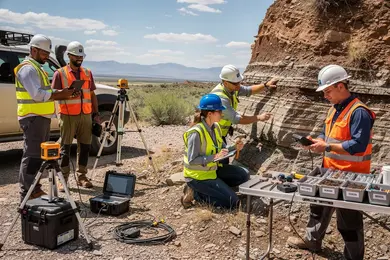
Field skills like core sampling, stratigraphic logging, and hydrogeology remain essential for translating academic knowledge into actionable insights. Graduates lacking hands-on experience often struggle to adapt in project-focused environments such as mining or oil exploration, where onsite decision-making and problem-solving are pivotal. Prioritizing coursework with substantial fieldwork and internships can mitigate these challenges.
Soft skills-including project management and regulatory policy comprehension-also influence career stability, especially within federal employment where mean annual wages reach $110,400. Navigating environmental mandates and resource management requires expertise beyond science: applied policy analysis and effective communication across interdisciplinary teams are key.
Students and professionals choosing this pathway should balance technical training with practical exposure and regulatory fluency to align with employer expectations and enhance long-term employability.
What licenses, certifications, and professional credentials strengthen geoscience career security?
Licensure as a Professional Geologist (PG) remains the most tangible credential to access independent practice and higher earning potential within geosciences, especially in environmental consulting and government sectors. Employers require active PG licensure for legally signing off technical reports, imposing strict limits on unlicensed professionals who often end up in subordinate roles. For example, environmental consulting firms routinely restrict contaminated-site sign-offs to licensed geologists, making credentials a decisive gatekeeper.
The licensure process requires a relevant bachelor's degree, 3 to 8 years of supervised experience, and passing two ASBOG exams. This multi-year commitment demands early strategic planning, as the pathway extends beyond five years in many cases. Alternative certifications, such as the Certified Environmental Professional (CEP) or Board Certified Environmental Scientist (BCES), can supplement value but do not replace the fundamental licensing requirement for autonomy.
Ongoing education is compulsory to maintain credentials, with an emerging emphasis on climate-risk disclosure and ESG reporting aligned with changing regulatory landscapes. Neglecting this requirement risks job security and narrows future professional options.
How can students evaluate geoscience schools and programs for quality and outcomes?
Graduate employment rates and tangible alumni career outcomes are decisive in evaluating geoscience programs for workforce alignment. With nearly 50% of geoscience professionals expected to retire within a decade, according to the American Geosciences Institute, programs that facilitate direct placement through internships or collaborations with energy companies, government agencies, or federal research labs offer a distinct advantage. These partnerships function not only as pipelines but also as an on-ramp to emerging sector demands.
Access to federal research collaborations, such as partnerships with the U.S. Geological Survey or the National Oceanic and Atmospheric Administration, is a practical metric that often translates into enhanced hands-on experience with state-of-the-art tools and data sets. This dimension of training reflects employer priorities in a competitive labor market.
Curriculum emphasis on robust quantitative skills-GIS, remote sensing, data analytics-remains essential. Graduates without these capabilities frequently face constrained employment opportunities regardless of the program's prestige. Transparent faculty research funding and publication records offer additional insight into a program's commitment to innovation and mentorship quality.
Students should also consider geographic and delivery-mode flexibility because replacement hiring surges concentrate in certain government and energy-sector regions. Schools offering co-op arrangements or flexible learning better accommodate location-driven constraints.
This strategy aligns with the American Geosciences Institute's workforce analyses to position graduates effectively amid shifting sector demographics and urgent labor needs.
What are typical program lengths, costs, and funding options for geoscience education?
Choosing a geoscience degree demands balancing cost, duration, and career trajectory, with bachelor's degrees serving as a practical minimum for most professional roles. Associate degrees at community colleges are less costly ($6,000-$15,000) and expedite entry into technician roles, but they constrain advancement and earnings potential when compared to bachelor's programs, which cost significantly more ($40,000-$100,000) yet align with industry standards, especially in environmental consulting and petroleum sectors.
Financial aid through FAFSA can offset undergraduate expenses by up to $12,000 annually, with Pell Grants targeting low-income students. For working professionals, employer tuition assistance can mitigate costs, particularly in part-time master's programs. Graduate paths often depend on competitive research assistantships or grants, primarily at public research universities, elevating the importance of institutional choice and network access.
Employment demand projects moderate growth at 3% over the coming decade with roughly 2,000 openings yearly, reflecting steady but specialized market needs. For instance, an environmental geologist in municipal work typically requires a bachelor's plus funded internships, while petroleum geology roles often expect a master's combined with industry partnerships that may offer partial tuition reimbursements.
The decision to pursue associate-level training must come with acceptance of narrower job scopes and slower wage progression, recognizing employer preferences for higher qualifications in professional roles. Hence, career-minded candidates should weigh upfront financial and temporal investment against long-term employability and income stability.
Other Things You Should Know About Geosciences
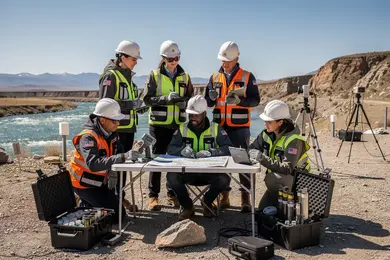
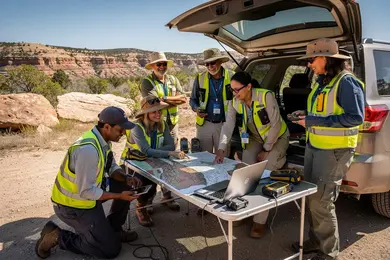
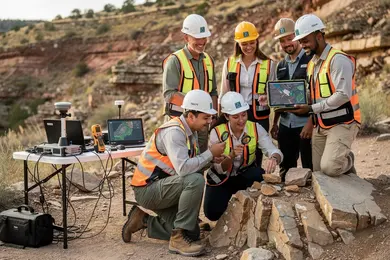
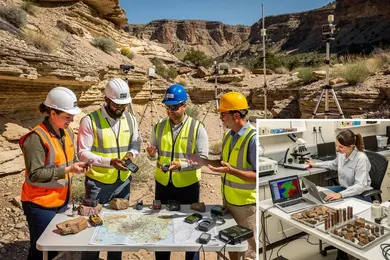
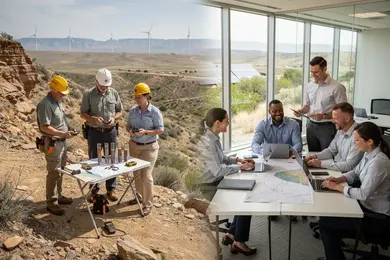
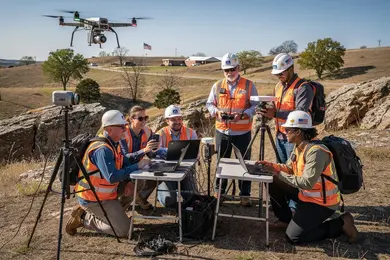
Fieldwork remains a core expectation for most stable geoscience roles, especially in environmental consulting, hydrogeology, and mineral exploration. Employers prioritize candidates who can independently collect and interpret field data under varied conditions, as these skills directly affect project reliability and client trust. While some lab and modeling roles minimize field exposure, lacking field experience typically limits advancement and narrows job opportunities in more secure sectors.
The most useful credentials are the Professional Geologist license and, for environmental and remediation roles, the Professional Hydrogeologist or state-specific equivalent. In many states, licensure requires a geology degree, several years of supervised experience, and a passing score on the ASBOG Fundamentals and Practice of Geology exams.
Government positions often offer higher job security, predictable workloads, and structured career paths but may have slower salary growth and limited innovation exposure. Private sector roles generally pay more and provide dynamic projects but are subject to market fluctuations and tighter budgets, increasing job risk during downturns. Candidates seeking stability should weigh the importance of steady advancement versus income potential and be prepared for different work cultures and expectations.
References
- Choosing Your Degree https://www.geolsoc.org.uk/Geology-Career-Pathways/University/Choosing%20your%20degree.html
- Information about Geoscience Related Careers https://careerexplorer.americangeosciences.org/careersinfo/
- Security career: a guide to professional certifications https://ack3.eu/security-career-guide-professional-certifications/
- What Does the Future Demand Look Like for Applied Geoscientists? https://www.aegweb.org/index.php
- 6. Practices for Assessment of Student Learning Outcomes https://www.americangeosciences.org/change/sections/student_assessment/
- Top Recession-Proof Careers That Actually Offer Long-Term Stability https://girlboss.com/blogs/read/top-recession-proof-careers-that-actually-offer-long-term-stability
- Security Officer Certifications and Their Benefits: Building a Career, Not Just a Job - NITA https://investigativeacademy.com/security-officer-certifications/
- Essential Certifications to Enhance Your Career in the Security Field https://www.trackforce.com/blog/top-security-guard-career-certifications/
- Will Geoscientists, Except Hydrologists and Geographers be replaced by AI & Robots? https://willrobotstakemyjob.com/geoscientists-except-hydrologists-and-geographers
- The Value of Undergraduate Geoscience Courses and Programs https://nagt.org/nagt/policy/ps-valuegeo.html