2027 Online Geosciences Degrees With Earth Systems Science Concentrations

Co-Founder and Chief Data Scientist
Professionals aiming to specialize in earth systems science increasingly face the dilemma of balancing advanced education with demanding careers or geographic constraints. With the U. S. Department of Education reporting a 12% surge in adult enrollment in online programs over the past two years, the appeal of flexible, accredited pathways has never been clearer. However, variations in curriculum rigor, practical fieldwork integration, and industry recognition affect how effectively these programs support career mobility and technical competency.
Navigating this landscape requires discerning programs that align with both workforce expectations and personal circumstances. This article examines online geosciences degrees with earth systems science concentrations that optimize accessibility, credibility, and career relevance for prospective learners.
Key Things You Should Know
- Earth systems science concentrations in online geosciences degrees show a 25% salary premium over generic geology degrees per 2024 US Bureau of Labor Statistics data, pushing graduates toward specialized climate risk roles but narrowing job market versatility.
- Employers increasingly demand demonstrable remote collaboration skills alongside field competence, with 62% of 2025 industry hiring managers prioritizing hybrid experience, reshaping graduate employability beyond academic credentials alone.
- Online programs extend access but typically require 20-30% longer completion times versus in-person due to reduced hands-on field training, increasing indirect costs and delaying workforce entry, according to National Science Foundation 2024 surveys.
What is an online geosciences degree with an earth systems science concentration?
Choosing an online geosciences degree with an earth systems science concentration demands careful evaluation of how integrated environmental processes are taught through digital platforms. This concentration equips students to model atmospheric, hydrological, terrestrial, and biological systems but entails balancing theoretical knowledge with applied skills essential for fields like natural resource management and climate impact analysis. For example, employers increasingly seek graduates who can navigate geospatial software and data analytics tools relevant to sustainable development and hazard mitigation.
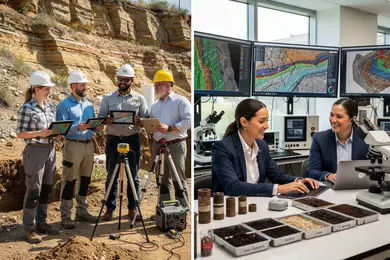
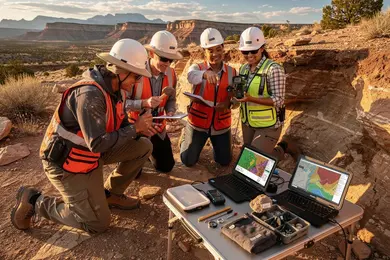
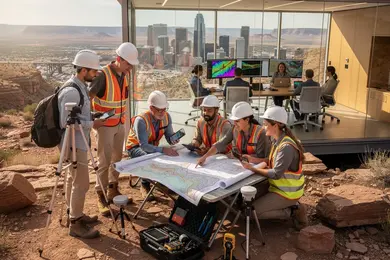
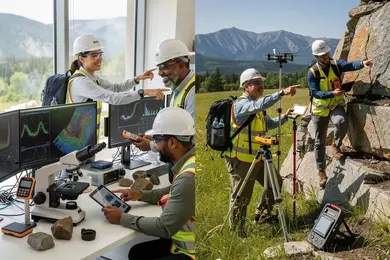
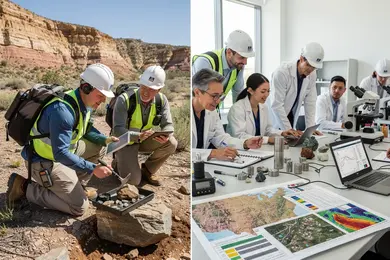
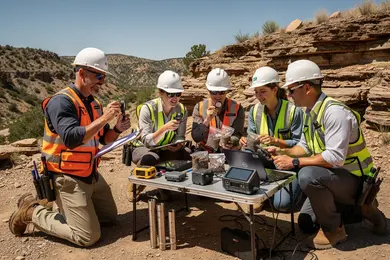
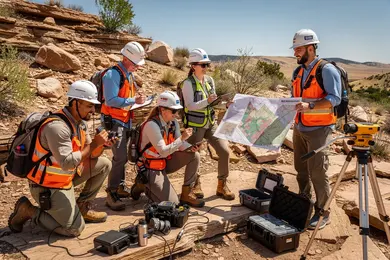
The practical component often requires organizing local fieldwork or internships, a critical factor for working professionals pursuing online geosciences degree programs with earth systems focus. Without these, hands-on competence risks being undervalued by hiring managers. Programs that clearly outline arrangements for experiential learning offer a stronger alignment with workforce demands.
Job growth projections for geoscientists indicate a 5% increase through 2032, reflecting steady demand but also rising employer expectations for quantitative and interdisciplinary problem-solving skills. Prospective students transitioning from unrelated fields should prepare for the rigorous STEM foundation and maintain disciplined time management to succeed in this format.
Those targeting specialized sectors such as energy or environmental policy should verify that the concentration's curriculum aligns with sector-specific tools and certifications. Additional research into program reputations can be supported by resources like the geographic information systems degree rankings, aiding comparative evaluation of related geospatial training options.
How do online earth systems science degrees compare to on-campus geoscience programs?
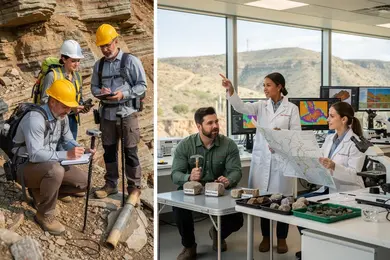
Online earth systems science degree benefits come with a significant caveat: while theoretical knowledge parallels that of on-campus geoscience programs, the absence of integrated hands-on training and field experiences can hinder skill acquisition essential for technical roles. Employers in sectors like renewable energy and environmental consulting prioritize candidates with demonstrated practical expertise in fieldwork, instrumentation, and collaborative projects-resources typically embedded in on-campus settings.
This difference creates a strategic tradeoff for students. Those aiming for roles requiring site assessments or equipment calibration must independently secure internships or local field opportunities to remain competitive. Conversely, professionals targeting data-centric roles such as remote sensing or policy analysis may find the flexibility and lower costs of online programs more aligned with their needs without sacrificing employability.
Reflecting growing industry demand, the International Renewable Energy Agency notes renewable energy employment rising substantially in recent years, increasing the need for earth systems science skills relevant to resource assessment and environmental monitoring.
Students and professionals assessing pathways in the geosciences field should consider combining virtual coursework with externally validated practical experiences, such as certified internships or project portfolios, to meet employer expectations effectively.
For guidance on efficiently structuring technical skills development alongside academic learning, exploring a well-defined data science learning path can offer valuable insights into balancing theory and practice across STEM disciplines.

Which accredited schools offer online geosciences degrees focused on earth systems science?
Online accredited geosciences degree programs with earth systems focus respond directly to evolving labor market demands by emphasizing applied technical skills such as GIS, remote sensing, and environmental modeling. Oregon State University's online Bachelor of Science in Geology uniquely integrates earth system science concepts with virtual labs designed around employer expectations for practical competencies, a critical consideration for working professionals who cannot engage extensively in traditional fieldwork.
Employers prioritize graduates adept at data analysis related to climate risk and resource management, making the tradeoff between remote accessibility and limited hands-on field experiences a key factor in program selection. The University of Florida's earth systems concentration within its Environmental Science bachelor's degree merges core geosciences with climate science and sustainability, aligning curriculum outcomes with state licensure requirements and job market realities.
Arizona State University offers an asynchronous B.S. in Earth and Environmental Sciences that suits professionals requiring scheduling flexibility while covering integrative earth process perspectives relevant to natural resource and policy sectors. These are the best universities offering earth systems science concentrations online that balance academic rigor and accessibility.
Growth trends reinforce this priority: National Student Clearinghouse data show a 16% increase in online undergraduate enrollment in physical sciences, including geosciences, between fall 2020 and fall 2023, notably outpacing overall growth. Prospective students should weigh program regional accreditation, curriculum relevance, and inclusion of in-demand geospatial technologies for sustained employability. Those comparing alternative options may find value in exploring whether is library science a good career aligns better with their occupational goals or skill sets.
What courses and specializations are included in an earth systems science concentration?
Earth systems science courses demand an integrated grasp of interactions among the atmosphere, hydrosphere, lithosphere, and biosphere, with a clear focus on real-world applicability. Roughly 70% of U.S. geoscience bachelor's programs require at least one such course, signaling employer expectations for graduates who can analyze complex environmental feedback loops. The earth systems science course curriculum fosters interdisciplinary competence through subjects like climate dynamics, geochemistry, and environmental systems modeling, cultivating the analytical skills necessary to address multifaceted ecological challenges.
Specializations in earth systems science degrees often focus on areas such as hydrogeology, climate science, and environmental sustainability. These paths teach practical skills for groundwater contamination assessment, climate change scenario analysis, and resource management. For example, an environmental analyst using GIS and hydrological models to inform urban flood mitigation illustrates how specialization directly impacts workforce roles.
The curriculum emphasizes technical mastery of GIS software, remote sensing, and statistical geospatial analysis, which are critical for employers seeking candidates who can translate field data into computational models. Because of this, students face the practical challenge of developing proficiency across both data acquisition and modeling techniques. Fieldwork is integral, offering hands-on validation of system models; prospective online students should confirm access to virtual labs or local fieldwork options to fully meet these requirements.
Professionals considering a pivot or advancement in geosciences should balance the comprehensive technical training with workforce realities, such as employer preferences for applied experience. Those exploring flexible learning routes might find value in an online library science masters as a point of comparison regarding curricular design and delivery flexibility.
What admission prerequisites and academic background are required for these online programs?
Applicants to online geosciences programs with earth systems science concentrations must meet substantial quantitative and scientific prerequisites to be viable in this competitive field. A bachelor's in geosciences, environmental science, physical science, engineering, or a related STEM discipline paired with proficiency in calculus, physics, chemistry, and earth science forms the essential baseline. These foundational skills enable mastery of technical content such as spatial modeling, GIS, and remote sensing, which are integral to workforce demands.
For professionals changing careers, completing bridge courses in math and science before admission is often non-negotiable, as gaps here can extend time-to-degree or limit access to specialized roles requiring high technical proficiency. Standardized tests are uncommon but sometimes used to confirm quantitative readiness. Admissions also emphasize problem-solving capabilities through interviews and statement of purpose evaluations.
The U.S. Bureau of Labor Statistics projects a 5% growth in GIS and photogrammetry roles through 2032, with median wages near $73,040. Employers prefer candidates demonstrating relevant coursework or certifications alongside practical experience in environmental data or remote sensing. Without formal academic prerequisites, candidates encounter barriers that risk program attrition or relegation to less technical positions.
- Strong STEM coursework is critical for direct entry and workforce alignment.
- Bridge or foundational courses serve as strategic prerequisites for career pivots.
- Professional experience must be paired with formal prerequisites to maximize employability.
How long do online geosciences degrees take and what do they typically cost?
Completing an online geosciences degree with an earth systems science concentration demands a strategic approach to time and financial resources. Bachelor's programs range from four to six years depending on enrollment status, but accelerated tracks that reduce this to three years are rare and require disciplined scheduling. Graduate degrees typically extend two to three years, sometimes longer for part-time students managing research and thesis components.
Cost differences hinge sharply on public versus private institutions and residency. Annual in-state tuition often falls between $8,000 and $15,000, while private university fees can surpass $30,000. Remote learning typically adds 5-15% in technology and lab fees, which drives total bachelor's degree expenses to a $40,000-$120,000 range.
- Remote delivery challenges include maintaining rigorous STEM skills without hands-on labs.
- Securing geographically relevant internships or fieldwork is critical but logistically complex.
- Employer recognition depends not only on accreditation but on demonstrated practical experience.
From an earnings standpoint, geosciences graduates enjoy roughly 20% higher median wages than average bachelor's degree holders, with an estimated $74,000 annual median for full-time workers aged 25 to 59. This premium captures demand in environmental consulting, resource management, and sustainable energy sectors.
What careers can you pursue with an online geosciences degree in earth systems science?
Graduates holding an online geosciences degree with an earth systems science focus face distinct employability considerations shaped by sector-specific demands and experiential prerequisites. While over 300,000 environmental and geoscience-related roles exist nationwide, tangible field experience often distinguishes candidates, particularly for engineering and environmental consulting positions.
Environmental consulting roles typically require direct involvement in site assessments, contamination evaluation, and remediation planning, skills that are difficult to acquire solely through virtual coursework. Employers expect internships or project-based documentation demonstrating applied expertise. In comparison, climate analysis positions emphasize proficiency in geospatial software and statistical modeling to support policy development and disaster readiness.
Strategically building experience through local environmental agencies or volunteer projects is crucial, as geographic familiarity with regional geology and regulations impacts hiring decisions. This regional factor underscores the tradeoff online learners face: broad theoretical knowledge versus the practical, localized skills employers prefer.
Career trajectories also involve credentialing, such as Certified Environmental Professional or GIS Specialist certifications, which can enhance marketability. Additionally, the degree's relevance extends into emerging domains like renewable energy site evaluation, demanding interdisciplinary understanding of environmental impacts.
- Nearly half of geoscientists work in environmental and engineering services, highlighting steady demand
- Field experience and regional knowledge significantly impact employability
- Certifications and applied skills often outweigh degree completion alone
What salary ranges and earning potential exist for earth systems science professionals?
Starting salaries for earth systems science professionals generally range from $55,000 to $75,000, but mid-career compensation varies substantially based on technical skills, sector, and location. Government positions at agencies like the EPA or USGS tend to offer stable salaries near the midpoint, while private-sector roles in energy or environmental consulting can surpass $120,000, particularly for those handling advanced data analysis or management. The U.S. Bureau of Labor Statistics forecasts 6% growth in employment for environmental scientists and specialists over the next decade, reflecting increased demand for expertise in climate science and resource management.
Technical versatility impacts earning potential significantly. For instance, an earth systems scientist focusing on field sampling might plateau near $60,000, whereas integrating GIS skills or regulatory knowledge could push compensation above $100,000. Geographic factors also influence pay; coastal states with stringent environmental policies generally offer higher wages than rural areas. Students and career changers should weigh the tradeoff between immediate income and the investment required to develop specialized competencies in areas like climate modeling or environmental policy.
Those transitioning into earth systems science from unrelated fields often experience a salary plateau in their early years while building necessary expertise. Prioritizing coursework with hands-on geospatial analytics and real-world applications aligns better with employer needs and long-term career growth than purely theoretical training. Navigating this balance is crucial for maximizing both employability and salary trajectories in geosciences.
What is the job outlook for geoscientists and earth systems science specialists in the U.S.?
Prospective geoscientists must weigh sector-specific skill demands and employment volatility when choosing educational paths. In the oil and gas industry, expertise in geophysical methods and exploration is critical but subject to boom-bust hiring cycles tied to commodity prices. Conversely, environmental and sustainability sectors prioritize long-term competence in ecosystem analysis and regulatory frameworks, offering steadier roles but with intense competition. Candidates with advanced degrees or certifications focusing on earth systems science often gain significant advantages in modeling and technical specialties.
Programs offering online geosciences degrees with concentrations in earth systems appeal to professionals balancing work and study but require careful scrutiny. Accreditation, faculty qualifications, and hands-on training options directly impact graduates' readiness for employer expectations including proficiency in data analysis software, remote sensing, and GIS technologies.
Employment opportunities cluster geographically around resource-rich states or research hubs, necessitating flexibility regarding relocation or hybrid work. Strong networks built through internships and professional organizations enhance practical experience-often the key differentiator beyond academic credentials.
- Growth projections for geoscience-related fields remain positive at roughly 5% over a decade, driven by resource extraction and climate-focused consulting.
- Successful candidates demonstrate technical competencies aligned with real-world challenges like groundwater contamination mitigation and hazard assessment.
- Flexible online learning suits nontraditional students but demands rigorous evaluation to avoid programs with limited employer credibility.
How can you evaluate and choose a reputable online earth systems science program?
Choosing an online earth systems science program without verifying its accreditation and curriculum updates can severely limit job prospects. Over 60% of geoscience departments revised their courses after 2018 to incorporate climate science, sustainability, and system processes; programs behind this trend risk delivering outdated content that employers may disregard. For example, a professional seeking roles in environmental consulting or renewable energy must gain practical skills such as GIS, remote sensing, and data modeling rather than solely theoretical knowledge.
Practical workforce alignment demands candidates assess programs based on:
- Integration of interdisciplinary earth system topics relevant to evolving industry roles
- Graduate employment rates and sectors that reflect cross-sector adaptability
- Availability of asynchronous, flexible pacing to accommodate full-time workers balancing education
- Transparent transfer credit policies to shorten degree timelines and reduce costs
Programs lacking robust online infrastructure or limited faculty accessibility risk hindering progress and skill acquisition. Focusing on measured alignment to labor market data and employer expectations ensures the educational investment translates into sustainable workforce outcomes within geosciences. Evaluating these factors with employer demand and real-world application in mind distinguishes mere credentialing from meaningful preparation for emerging geoscience roles.
Other Things You Should Know About Geosciences
Employer acceptance varies widely and depends heavily on the institution's accreditation and the program's rigor. Programs that include synchronous labs, real-time research projects, or access to industry tools demonstrate stronger alignment with employer expectations. Candidates from purely asynchronous or overly theory-focused programs may face skepticism in technical roles, so prioritizing programs with practical components significantly improves employment prospects.
Full-time professionals should evaluate time management, as online geosciences degrees demand dedication and self-discipline. Most programs offer flexible schedules, but balancing work, study, and personal commitments requires careful planning. Seeking employer support and understanding program requirements are key steps for successful navigation.
Earth systems science concentrations emphasize interdisciplinary understanding, which broadens career options into environmental consulting, climate analysis, and natural resource management but may limit entry into specialized geotechnical or petroleum industry roles. If your goal is to maximize versatility across environmental sectors, this concentration is advantageous. However, for roles demanding intensive specialization in mineral exploration or geophysics, more focused geosciences tracks are preferable.
Most programs require college algebra or calculus, introductory chemistry, and one or two physical science courses before admission. Some also ask for general biology, physics, or geology with laboratory work. Transfer students usually need a minimum 2.5 GPA, and upper-division earth systems courses often require junior standing.
References
- Required application documents https://www.vu.lt/en/required-attachments
- Earth system science - Wikipedia https://en.wikipedia.org/wiki/Earth_system_science
- Athabasca University https://www.athabascau.ca/programs/summary/master-of-science-earth-system-science.html
- Agriculture and Environmental Science Degree Careers and Salary in Europe - StudyinEurope.eu https://www.studyineurope.eu/agriculture-environment/agriculture-environment-degree-careers-salary-europe/
- Geoscience Careers https://education.americangeosciences.org/resources/geoscience-careers/
- Earth System Science Master of Science Program https://www.tyyc.itu.edu.tr/ProgramHakkinda.php
- What Does the Future Demand Look Like for Applied Geoscientists? https://www.aegweb.org/index.php
- Best Earth Science Research Programs for High Schoolers https://riseglobaleducation.com/blogs/best-earth-science-research-programs-for-high-schoolers
- Geography Major: Earth System Science Concentration https://catalog.worcester.edu/undergraduate/school-education-health-natural-sciences/geography-earth-sciences/major-earth-system-science-concentration/
- Online Geoscience Degrees: Top Schools and All Programs in 2026 https://www.gisdegree.org/online/geoscience-degrees/