2027 Online Geosciences Degrees With Strong Earth Systems Thinking

Co-Founder and Chief Data Scientist
Facing an urgent need to integrate climate resilience into urban planning, geoscientists must rapidly adapt their skills to model complex earth systems with limited access to traditional campus resources. The ability to juggle field expertise with remote data analysis grows increasingly vital as adult learners represent over 40% of online degree enrollments nationally, according to the National Center for Education Statistics. This shift reflects a workforce demanding flexible, career-aligned education that accommodates professionals balancing job and life commitments.
This article evaluates online geosciences degrees with robust earth systems thinking components, guiding learners through program features that address this exact professional and educational balancing act.
Key Things You Should Know
- Only 42% of 2024 online geosciences graduates with earth systems emphasis secured roles aligned with climate and environmental modeling, per U.S. Bureau of Labor Statistics data; this signals significant employer skill mismatch and limits immediate ROI.
- Program costs averaging $24,000 for full online degrees in 2026, according to NCES, often exclude critical in-person fieldwork expenses, forcing candidates to balance affordability with essential hands-on competencies.
- Earth systems thinking content integration varies widely, with only 35% of accredited programs embedding up-to-date climate data analysis tools, creating employer hesitancy and extending onboarding times by 20% in industry reports.
What is an online geosciences degree with an earth systems thinking focus?
An online geosciences degree programs with earth systems focus demands more than isolated technical knowledge; it requires integrating atmospheric, hydrologic, geologic, and ecological systems to solve layered environmental problems. For instance, assessing how groundwater contamination disrupts adjacent ecosystems showcases the value of earth systems thinking in online geosciences education.
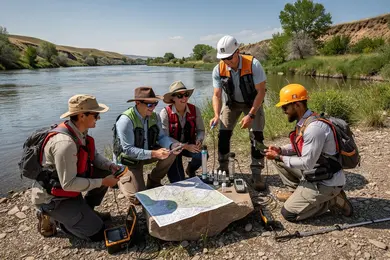
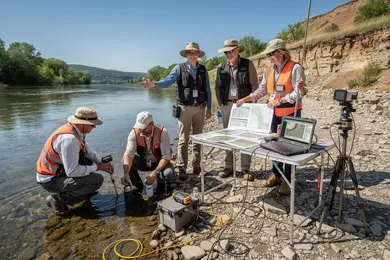
This interdisciplinary lens equips graduates for roles that involve multi-factorial challenges, such as environmental consulting and resource management, where employers expect proficiency in systems modeling, data analytics, and sustainability assessment. However, remote study formats usually lack direct fieldwork opportunities, compelling students to pursue hybrid or local lab components to meet practical skills standards that impact employability.
The U.S. Bureau of Labor Statistics projects a 5% job growth for geoscientists through 2032, with a median wage near $92,580 in 2023. Still, candidates without strong systems integration skills face narrower options, especially in industries focused on climate resilience and infrastructure risk. Decision-makers must evaluate programs on applied interdisciplinary training, employer engagement, and hands-on learning pathways rather than narrow specializations alone.
Prospective students considering technical pivot points might also explore related fields; for example, those interested in advanced data interpretation could investigate a doctorate in data analytics online to complement their geosciences expertise and broaden career trajectories.
How do online geosciences programs compare to on-campus options for earth systems learning?
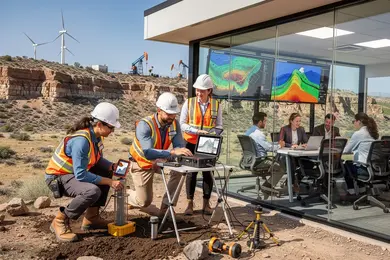
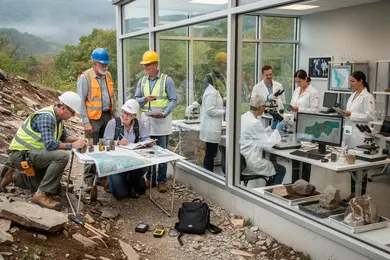
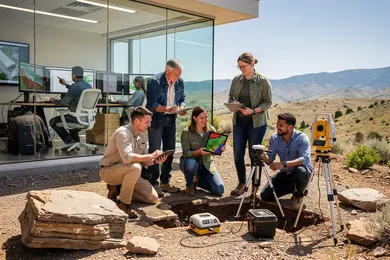
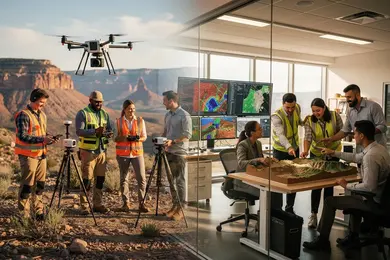
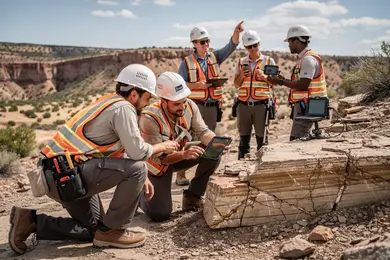
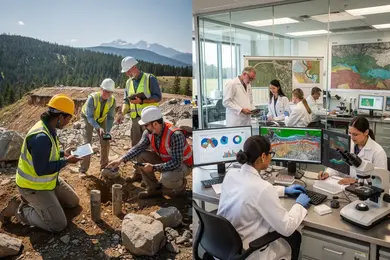
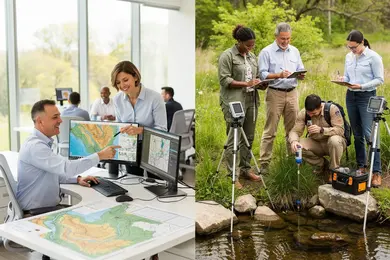
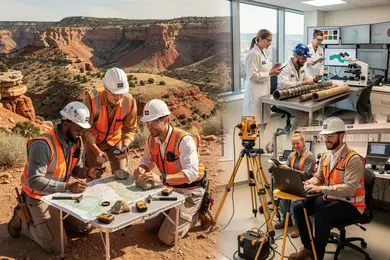
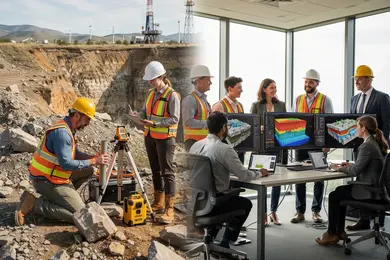
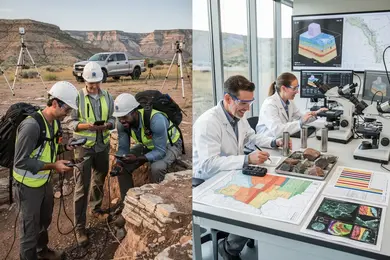
Online geosciences programs provide theoretical earth systems knowledge with notable scheduling flexibility but fall short in delivering the tactile skills and fieldwork experience employers demand for many applied roles. The stark differences between online geosciences programs versus on-campus earth systems education surface most clearly when evaluating hands-on competencies; virtual labs and simulations cannot fully replicate the spatial reasoning and site-specific judgment developed through real-world field exercises.
For example, a professional engaged in contaminated site remediation must directly analyze soil and water samples on location, a process better supported by on-campus resources and mentorship. Conversely, careers centered on geospatial data analysis or environmental modeling align well with the remote tools taught in online programs. This divergence influences employability and may compel online graduates targeting field-intensive roles to pursue additional internships or practicums.
The labor market's 4%-6% projected growth in environmental engineering, geoscience, and agricultural science fields from 2022 to 2032 amplifies the need to balance flexible education with practical experience. Employers prioritize candidates demonstrating applied earth systems skills, not only conceptual understanding.
Decision-making around program format involves weighing logistical constraints-full-time workers or those in remote areas benefit from accessible curricula but should anticipate extra costs for onsite fieldwork. When comparing virtual and traditional geosciences degrees for earth system studies, the distinction hinges on the depth of experiential learning, which remains superior in physical settings. Prospective students looking for cost-efficient options might consider the cheapest online environmental science degree pathways that integrate foundational theory with targeted practical components.
- Virtual labs and simulations support robust theoretical learning but lack field context
- On-campus programs provide critical hands-on training crucial for field sampling and site assessments
- Online pathways suit data-centric roles utilizing GIS and modeling software
- Employers may require supplementary field experience for online graduates to stay competitive
- Careful budget planning should include onsite practicum and equipment costs
- Environmental and agricultural scientists face growing labor demand, increasing the stakes for demonstrated applied proficiency
Which types of geoscience degrees are available online, from certificates to graduate study?
Online geoscience degree programs with earth systems focus must balance theoretical knowledge with practical skills that align with employer expectations. Certificates offer targeted expertise in GIS or environmental monitoring, enabling credential upgrades without committing to a full degree, appealing especially for technician or analyst roles. Associate degrees primarily ground students in foundational geology, serving as stepping stones toward more specialized training or entry-level positions in environmental consulting.
Bachelor's programs, often available fully online, integrate earth system science critical for roles in hydrogeology, climatology, and resource assessment. For example, Southern New Hampshire University's fully online BS in Geosciences charges $39,456 in tuition, while the national median wage for geoscientists is $92,580, pointing to recovery of educational investment in under a year when employed full time. This data emphasizes the strategic value of accredited online geosciences certificates and graduate degrees for rapid workforce reentry or advancement.
Graduate degrees, such as master's and doctorates, demand competencies in research, data modeling, and interdisciplinary integration, often requiring coordination of virtual labs or regional fieldwork. Given the technical and logistical challenges, these pathways suit those pursuing senior consultancy or policy roles. Key tradeoffs include managing field experience requirements within online formats.
Employers prioritize candidates with practical experience; therefore, integrating internships or cooperative projects is essential. Prospective students should assess whether a certificate, bachelor's, or advanced degree best fits their career goals and aligns with job market demands. Those evaluating a strategic pivot might also explore how an accelerated bachelor's degree computer science online could complement geosciences skills, particularly in environmental data analytics.
How can you verify accreditation and program quality for online geosciences degrees?
Accreditation affects career mobility and employer acceptance more than is often acknowledged in evaluating accreditation standards for online geosciences degrees in the United States. Without current validation from regional accreditors like the Higher Learning Commission or specialized bodies such as ABET, degrees risk being disregarded in competitive job markets or in applications to graduate studies. Prospective students must verify accreditation through official databases to avoid costly delays in workforce entry or credential recognition.
Quality assurance for U.S. online Earth systems programs hinges on measurable outcomes, especially the integration and assessment of systems thinking within curricula. Although over 80% of geoscience faculty emphasize its importance, fewer than half evaluate this competency, creating a mismatch between academic training and employer expectations, especially in sectors like environmental consulting and hazard mitigation.
Faculty engagement with applied research and active industry partnerships is a critical selection factor. For instance, online learners aiming for GIS analyst roles benefit from programs whose faculty are involved in spatial data projects, ensuring relevant skill acquisition and internship opportunities.
Students must also weigh logistical factors such as credit transfer rules and tailored advising for online formats, which influence how swiftly they can pivot or advance. Outcomes data, including graduate employment rates, should be confirmed through institutional and national reports to verify alignment with labor market demands.
For those balancing budgeting concerns with these priorities, exploring the cheapest online master's mechanical engineering options can offer comparative insight into managing cost without sacrificing essential program quality.
What core courses and earth systems topics do online geosciences programs usually include?
Employers in natural resource management and environmental consulting increasingly demand graduates who can integrate core geosciences knowledge with applied technical skills. Online geosciences programs traditionally cover foundational courses such as mineralogy, petrology, sedimentology, and structural geology, while incorporating earth systems topics like climatology and hydrology to foster an understanding of complex geophysical interactions.
Yet, the value of these online programs hinges on how well they address hands-on training gaps inherent to remote study. Field methods and lab experience are critical for roles involving environmental sampling or geotechnical analysis. Programs that include hybrid components, regional field stations, or virtual labs better position students for technical roles.
Graduates must also navigate the growing importance of GIS and remote sensing skills, which employers prioritize for environmental risk assessments and spatial data interpretation. Additionally, combining science with coursework in policy and sustainability better aligns candidates with governmental and private sector roles focused on land use, water resources, or climate resilience projects.
The steady growth to over 30 fully online geoscience bachelor's programs reflects demand for flexible access but also introduces important tradeoffs. Prospective students should critically evaluate course rigor, applied learning opportunities, and alignment with specific workforce needs to ensure practical competence post-graduation.
Advanced electives in areas like paleoclimatology and environmental data science can enhance a candidate's profile for specialized fields, including climate modeling and resource exploration, where long-term Earth system analysis is essential.
What are the admission requirements and prerequisites for online geosciences programs?
Admission to online geosciences programs hinges on meeting rigorous academic prerequisites that directly influence post-graduation employability in technical roles. Undergraduate entry demands a high school diploma with solid coursework in math, chemistry, physics, and biology, aligning with the analytical and scientific literacy employers require for earth systems positions like environmental consulting or geospatial analysis. Graduate candidates must hold a relevant bachelor's degree with completed classes in calculus, statistics, and earth sciences, emphasizing quantitative rigor and relevant fieldwork experience.
Applicants frequently face hurdles such as the need for proficiency in geographic information systems (GIS) and computer applications, skills that increasingly define job readiness in applied geosciences sectors. Prior laboratory or field experience requirements can pose challenges for career changers without direct earth science backgrounds, potentially elongating time-to-employment or requiring additional preparatory coursework.
Variation in prerequisite enforcement across institutions impacts credit transfers and program duration. For instance, a professional moving from environmental engineering to geosciences may encounter mandatory supplemental courses, increasing cost and delay. University data from the University of Alaska Fairbanks shows over 70% of recent graduates secure jobs demanding comprehensive earth systems expertise, revealing the operational necessity of robust prerequisite standards.
- Meeting STEM foundational course requirements upfront prevents admission or graduation delays
- Fieldwork experience strengthens candidacy in competitive earth sciences labor markets
- Program selection should weigh flexibility in prerequisite completion against long-term workforce alignment
How long do online geosciences degrees take and what do they typically cost?
Choosing an online geosciences degree requires weighing timing, cost, and career integration carefully. Typical full-time programs last about four years, mirroring traditional on-campus degrees, while part-time options extend to five to seven years. This extended pathway suits professionals managing ongoing work or family responsibilities, allowing steady income without pausing their careers. For example, a mid-career environmental technician shifting into consulting might opt for part-time study, accepting a slower completion timeline to balance financial stability.
Tuition varies widely, from around $40,000 to more than $85,000, heavily influenced by residency and institutional pricing policies. Florida Atlantic University exemplifies a high-cost non-resident option but remains popular with non-traditional students due to its fully online delivery and scheduling flexibility. Such premium pricing must be evaluated against savings from avoiding relocation or commuting and the value of maintaining employment.
- Part-time enrollment suits career switchers prioritizing income stability over speed.
- Full-time study accelerates workforce entry but requires significant upfront time commitment.
- Employer acceptance hinges more on practical skills and accredited program standards than on tuition fees.
Decisions about online geosciences programs should prioritize institutional alignment with industry certifications and realistic time-to-completion assessments over surface-level cost comparisons. This pragmatic approach helps optimize long-term employability within environmental consulting, government research, and energy sectors.
What careers can an online geosciences degree with earth systems training prepare you for?
Choosing an online geosciences degree with earth systems specialization should weigh both technological proficiency and practical employment hurdles. Employers expect graduates to master GIS, remote sensing, and data modeling but often require verifiable field experience and certification-credentials that online programs alone rarely provide. For example, a candidate advising on infrastructure must integrate soil stability data with ecosystem preservation, which demands hands-on understanding beyond classroom theory.
The U.S. Bureau of Labor Statistics forecasts a 7% employment increase for surveyors, cartographers, and related roles, driven by expanding climate monitoring and hazard assessment needs. This growth signals opportunities but also intensifies competition, especially where government jobs offer stability at lower initial salaries compared to private consulting sectors demanding flexible schedules and locations.
Graduates should seek internships or applied projects to bridge practical skill gaps. The multidisciplinary earth systems approach is particularly valuable in roles focused on environmental impact, where recognizing feedback loops between human activity and natural processes informs critical decision-making.
Long-term success depends on adapting to evolving geospatial technologies, including machine learning for earth data analytics. Prospective students must assess whether their chosen program's curriculum aligns with these demands, particularly its strength in earth systems integration versus generic geosciences content.
What are the salary expectations and job outlook for geoscience and earth systems careers?
Starting salaries for geoscience and earth systems graduates with a bachelor's degree typically range between $55,000 and $75,000 annually, heavily influenced by sector and location. Federal agencies and environmental consulting firms generally offer more stable roles with moderate salary growth, while private energy companies present higher pay but increased volatility due to market fluctuations. Specialization in remote sensing, GIS, and data modeling often accelerates salary advancement and job placement.
The job market's projected 6% growth through 2032 primarily reflects demand for environmental assessments, resource management, and climate adaptation expertise. However, this growth masks varied outcomes depending on the sector-public roles emphasize job security over rapid pay increases, whereas private industry rewards versatility but entails economic risks. For example, a candidate combining geology with data science skills is more competitive amid industry shifts toward integrated environmental risk analysis.
Employers now expect candidates to demonstrate applied computational skills and project experience beyond traditional geoscience fundamentals. Penn State's College of Earth and Mineral Sciences reports that over 90% of recent graduates secure employment or graduate study within six months, a signal that technical breadth is increasingly valuable. Consequently, students should deliberate on building portfolios that bridge geoscience with data proficiency and cross-sector knowledge to navigate both opportunity and uncertainty effectively.
How can you choose the best-fit online geosciences program for your goals and lifestyle?
Selecting an online geosciences program demands prioritizing how well its curriculum aligns with targeted career trajectories and identified skill deficiencies. For example, the U.S. Bureau of Labor Statistics projects a 6% job growth for environmental scientists and specialists driven by areas like climate change, sustainability, and environmental restoration-translating into nearly 6,900 new positions through 2032. Programs embedding earth systems thinking alongside these specialized modules position graduates for concrete workforce demand.
A critical factor is the availability of experiential learning tailored to current professional goals. A candidate shifting toward urban sustainability must seek courses offering urban ecosystem modeling or policy impact assessments rather than generalized physical geology. Accessibility to virtual labs, remote GIS software training, or field data exercises often distinguishes programs that effectively build applicable skills.
Students must weigh logistical tradeoffs: asynchronous models offer flexibility but may limit timely instructor feedback necessary for mastering technical competencies, whereas synchronous formats afford direct interaction but reduce scheduling adaptability. Accreditation and faculty expertise remain essential to ensure credibility and relevance to employers' standards.
Support services such as career counseling and internship placement materially affect employment success in competitive fields, while transparent data on graduate employment rates in earth systems science clarify realistic returns on investment. Understanding program completion timelines and workload is vital for employed students balancing multiple responsibilities.
Other Things You Should Know About Geosciences
Most programs require a laptop with stable broadband, GIS software, and remote access to data sets from NOAA, USGS, or NASA. Courses with lab components often use virtual labs, downloadable mapping tools, and short in-person field sessions, plus a webcam for proctored exams.
Working professionals benefit most from prioritizing program flexibility when balancing education with career demands. However, oversimplified programs that emphasize convenience at the expense of depth in earth systems topics can limit employability in specialized roles. A strategic approach is to select flexible programs with modular structures that still deliver rigorous core content and applied skills, ensuring career advancement potential without sacrificing current work obligations.
Employers recognize online geosciences degrees but often scrutinize the program's reputation, curriculum robustness, and demonstrated practical experience more than the delivery mode. Degrees that incorporate substantial earth systems thinking, verified project work, and field components align better with employer expectations. Graduates should highlight these aspects and any internships or applied work to offset potential bias toward on-campus credentials.
References
- Earth System Sciences https://www.gu.se/en/study-gothenburg/earth-system-sciences-gv0340
- Geoscience Careers https://education.americangeosciences.org/resources/geoscience-careers/
- Best Online Geoscience Courses and Programs | edX https://www.edx.org/learn/geosciences
- The Geological Society - Degree Accreditation https://www.geolsoc.org.uk/education-and-resources/universities/university-degree-accreditation/
- Are Online Degrees Accredited? How to Identify Quality Distance Learning Programs https://www.umassglobal.edu/blog-news/online-degrees-accredited-identify-quality-distance-learning-programs
- Earth Science – Bachelor of Science https://www.massey.ac.nz/study/all-qualifications-and-degrees/bachelor-of-science-UBSCN/earth-science-UBSCN2JERSC1/
- What Does the Future Demand Look Like for Applied Geoscientists? https://www.aegweb.org/index.php
- Online Geoscience Degrees: Top Schools and All Programs in 2026 https://www.gisdegree.org/online/geoscience-degrees/
- Is Your Online Degree Legitimate? How to Verify Private University Approval https://matchtocollege.com/blog/verify-private-university-online-degree-approval
- Curriculum https://earthsciences.dartmouth.edu/undergraduate/curriculum