2027 Best Online Geosciences Degrees for Advancement in Earth and Environmental Leadership

Co-Founder and Chief Data Scientist
Faced with accelerating climate crises and stricter environmental regulations, geosciences professionals must rapidly update skills to remain effective and competitive. Yet traditional campus programs often conflict with demanding work schedules, delaying critical career moves. Recent data from the National Center for Education Statistics reveals a 27% surge in online STEM enrollments by adult learners since 2022, signaling a shift toward more flexible, accessible degree options.
This change reflects a growing demand for programs that align with workforce needs without sacrificing practical depth or credibility. This article identifies the best online geosciences degrees specifically designed to enhance leadership opportunities in earth and environmental fields.
Key Things You Should Know
- Geosciences degrees with integrated data science skills yield 18% higher median salaries per the U.S. Bureau of Labor Statistics 2024, but demanding curriculum reduces time for experiential learning, affecting field readiness.
- Employers prioritize graduates with hands-on environmental impact analysis experience; nationwide surveys find 62% of firms require applied project competencies over theoretical knowledge alone.
- Online geosciences programs cut relocation and opportunity costs by 30% but often delay access to critical lab resources, extending time-to-employment by an average of 6 months according to NSCEA labor studies.
What is an online geosciences degree and who is it best suited for?
Choosing online geosciences degree programs for environmental careers requires balancing flexibility against inherent limitations, particularly for professionals seeking to maintain employment while upskilling. For example, a mid-career environmental consultant aiming to transition into leadership benefits from digital coursework focusing on data analytics, GIS, and environmental policy without pausing their career.
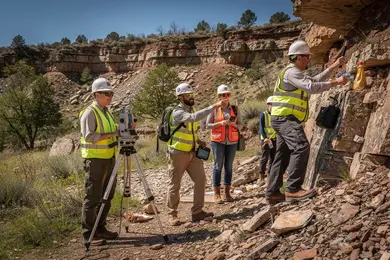
Key tradeoffs include the necessity for disciplined self-management and dependable technology access. Some programs incorporate fieldwork requiring local coordination or occasional on-site sessions, which can complicate scheduling. Employers expect applicants to present applied skills such as remote sensing and environmental impact assessment, often cultivated through virtual labs and digital simulations. However, the restricted access to physical field experience compared to traditional courses remains a practical consideration.
Decision-makers must critically evaluate accreditation, curriculum rigor, and congruence with industry certifications in sectors like energy, mining, and climate adaptation. Given the U.S. Bureau of Labor Statistics projects 7% job growth for geoscientists through 2032, candidates armed with leadership training, regulatory knowledge, and technical competencies hold a competitive edge.
The best online geosciences degrees for earth science leadership integrate these elements thoughtfully, albeit with tradeoffs in direct field exposure. Prospective students exploring what can you get with an environmental science degree will find a strategic balance between theoretical foundation and market-relevant skill sets essential.
How do online geosciences degrees compare to on-campus programs in quality and outcomes?
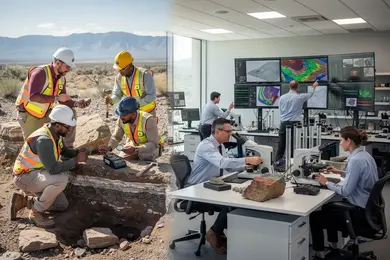
Online geosciences degrees can offer academic rigor comparable to on-campus programs when curricula align with industry standards and include synchronous labs or fieldwork simulations. However, candidates must recognize the tradeoff: on-campus programs provide direct access to specialized equipment, face-to-face collaboration, and hands-on field experience critical in subfields like mineralogy or paleontology. For instance, hydrology professionals aiming for federal government roles often benefit from documented operational experience acquired through integrated fieldwork on campus, a factor harder to replicate online.
The comparative career prospects for online and on-campus geosciences programs hinge on these experiential components alongside core knowledge. The U.S. Bureau of Labor Statistics reports a median wage of $137,900 for natural sciences managers, who frequently rise from advanced geosciences backgrounds, emphasizing the need for technical and managerial training supported by verifiable hands-on learning.
Students balancing employment often opt for online paths to avoid relocation and commuting while maintaining access to expert faculty. Yet reliance on asynchronous study risks gaps in collaborative problem-solving skills vital in multidisciplinary environmental leadership roles. Evaluating program accreditation, employer connections, and alumni outcomes is essential to ensure online geosciences degrees translate into realistic, long-term employment benefits.
For those exploring cost-effective options, reviewing the online environmental engineering degree alternatives can provide insight into practical pricing and program structures available in the broader environmental and geosciences education landscape.
What types of online geosciences degrees are available, from associate to graduate levels?
Choosing an online geosciences degree program in North America requires careful weighing of career goals against program rigor and workforce needs. Associate degrees deliver technical foundations in physical geology and environmental science, fitting for roles like geological technicians who need quick entry and field-ready skills in two years. By contrast, bachelor's programs extend to four years with deeper study in mineralogy, geophysics, and environmental policy, cultivating analytical proficiency employers demand for natural resource analysis or consulting roles.
Graduate and associate level geosciences degrees online, especially master's and PhD options, target specialization, leadership, and research capacities. Master's curricula often emphasize data modeling and regulatory frameworks suited for mid-career pivots, while PhDs prepare candidates for academic and high-level policy influence via dissertation-driven interdisciplinary work.
In evaluating these options, prospective students should prioritize accredited programs with strong experiential components despite the remote format. The U.S. Bureau of Labor Statistics forecasts a 6% growth in environmental scientists and specialists from 2022 to 2032, yielding approximately 6,900 annual openings driven by climate and policy demands. This market dynamic stresses the importance of programs aligned with evolving environmental regulations and scientific methodologies.
For those considering adjacent science pathways, exploring a nutritionist degree may offer alternative or complementary career opportunities where environmental and biological sciences intersect.
How can students verify accreditation and program quality for online geosciences schools?
Accreditation verification for online geosciences programs is a critical step because many employers prioritize candidates from rigorously accredited institutions. Regional or national accreditation recognized by the U.S. Department of Education's Database of Accredited Postsecondary Institutions and Programs (DAPIP), such as the Higher Learning Commission or Middle States Commission on Higher Education, indicates adherence to high academic and administrative standards. Additionally, specialized program-level accreditation from professional geoscience bodies reflects curriculum relevance and practical research quality. Without these verifications, graduates risk earning credentials that lack employer recognition or hands-on applicability.
Evaluating program quality in online earth science degrees requires analyzing more than just tuition costs. For example, the University of Florida offers an online Bachelor of Arts in Geology at $129.18 per credit hour, one of the nation's lowest rates, yet it maintains strong alignment with industry demands. However, less expensive programs with poor post-graduation employment rates pose significant long-term risks. Prospective students should use NCES College Navigator data on graduation rates, employment outcomes, and debt levels to judge program efficacy before enrolling.
Students planning a strategic career pivot or advancement should take practical steps: verify faculty credentials and the availability of hands-on training, review syllabi for updated content, inquire about research or internship opportunities, and consult independent workforce or geoscience community reports. Understanding these factors helps avoid costly mismatches between education costs and job market readiness. For insights into comparative educational expenses, the computer science cost landscape provides a useful parallel framework for assessing tuition versus outcomes in technical fields.
What core courses and specializations are offered in online geosciences programs?
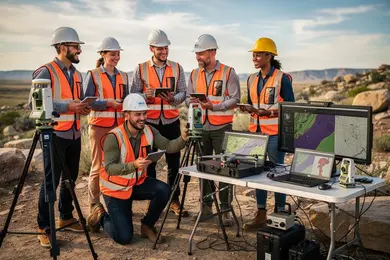
Core coursework in online geosciences programs establishes technical proficiency necessary for roles requiring geological analysis and environmental assessment. Essential subjects like mineralogy, sedimentology, and geophysics underpin the ability to interpret earth systems, while applied classes in GIS and remote sensing equip students for spatial data analysis vital to regulatory compliance and private-sector consulting.
Specializations tailor skill sets to sector-specific demands, which directly affects employability and job function scope. For instance, hydrogeology programs prepare professionals to tackle water resource management challenges at municipal agencies compelled by evolving regulatory frameworks. Meanwhile, expertise in energy and mineral resources aligns with exploration companies navigating commodities' cyclical markets, requiring adaptability and economic awareness.
Cost remains a critical factor in program selection, particularly for working adults balancing budget constraints and time. Data from Learn.org's 2025 ranking indicate that many accredited online geoscience bachelor's degrees charge less than $300 per credit hour, significantly undercutting traditional four-year programs. This lower tuition can mitigate student debt while sustaining workforce relevancy through current technologies and applied skills.
Prospects should weigh these practical considerations against longer-term career trajectories, acknowledging that specialized training may limit mobility across sectors but amplify niche expertise. The choice of program and focus area thus carries direct implications for flexibility in a shifting labor market and regulatory environment.
What are typical admission requirements and application steps for online geosciences degrees?
Online geosciences degrees impose practical admission expectations essential for clear workforce pathways. Candidates typically must hold a bachelor's degree in geosciences or a closely related discipline with a GPA threshold often between 3.0 and 3.5. Application dossiers include official transcripts, two to three recommendation letters, a statement of purpose focused on career and research intent, and a current resume highlighting pertinent professional experience. Although some programs still require GRE scores, many have removed this barrier to broaden access.
For professionals pivoting fields, prerequisite courses in geology, chemistry, or environmental science can be a gatekeeper, sometimes necessitating completion of online bridge modules. Application processes often start with an inquiry or questionnaire, then document submission through online portals; transcripts must be verified directly by institutions, which can delay admission decisions by weeks.
Competitive master's tracks with limited seats and fieldwork components frequently add virtual interviews to assess motivation and fit. Candidates balancing full-time work should anticipate challenges with synchronous sessions and occasional on-campus fieldwork commitments despite predominantly asynchronous coursework designs.
Accreditation remains a critical factor for employer recognition, licensure prospects, and further academic mobility. The availability of 21 online geology master's programs for 2025, as reported by Mastersportal, signals intensified competition but also a wider array of accessible options, demanding careful program selection aligned with specific career goals.
How long do online geosciences degrees take, and what do they cost to complete?
Choosing an online geosciences degree demands evaluating the tension between time, cost, and practical skill acquisition. While bachelor's programs typically span about four years and require 120-130 credit hours, part-time pacing or professional obligations often extend this timeline. Accelerated master's options exist but expect at least 18 months, with many balancing full-time work stretching duration to three years or more.
Cost differences reflect program type and residency status. Public bachelor's degrees generally range from $10,000 to $30,000 total tuition, but private institutions and specialized master's degrees can exceed $40,000. State residency may cut public tuition by 50% or more, a decisive factor for cost-conscious students.
- Master's degrees target GIS specialization critical for cartography, photogrammetry, and geospatial analysis roles, matching employer demands for applied skills over theory.
- Earnings for cartographers and photogrammetrists averaged $68,900 in 2023, surpassing many general geosciences positions and emphasizing practical training's impact on employability.
- Part-time study delays career gains and extends total cost, while full-time study accelerates credential completion but may require sacrificing immediate income.
These tradeoffs underscore the need to align educational pace and financial investment with career interruption tolerance and employer support. Balancing these variables improves workforce readiness and long-term return on investment in geosciences education.
What careers can an online geosciences degree lead to in earth and environmental fields?
Graduates with an online geosciences degree enter a labor market that demands proficiency beyond foundational knowledge-technical skills like Geographic Information Systems (GIS) and environmental modeling are baseline expectations. Roles such as environmental scientist or hydrogeologist increasingly require competence in interpreting complex data and conducting impact assessments aligned with regulatory frameworks. For example, hydrogeologists working with consulting firms may analyze groundwater contamination for urban planners, illustrating how remote analytical skills translate to tangible project outcomes.
Salaries reflect this complexity; environmental scientists earned a median wage of $76,530 in 2023, signaling a premium for expertise in sustainability and regulatory compliance. However, an online degree alone seldom suffices for advancement. Employers prioritize candidates who supplement their academic credentials with industry certifications and demonstrate applied problem-solving through internships or cooperative experiences-elements that remain challenging in purely virtual formats.
Advancement often involves integrating knowledge of environmental law, public policy, or project management, calling for interdisciplinary academic options within online programs. Navigating this path requires awareness that management or scientific specialization hinges on such cross-domain fluency combined with continuous professional development. Without deliberate pursuit of these dimensions, graduates risk plateauing in technical roles rather than moving into leadership or strategic functions.
What salary ranges and job outlook can geosciences graduates expect across key roles?
Geosciences graduates face a broad salary spectrum, shaped heavily by sector and experience, which demands clear strategic prioritization when selecting educational and career paths. Entry-level geological scientists start near $55,000, but specialized roles in environmental consulting, energy exploration, and mining often exceed $100,000, particularly after gaining leadership responsibilities.
Consider an environmental consultant with a master's degree: the starting salary typically approaches $65,000, with opportunities to surpass $100,000 as project management skills and technical expertise deepen. Conversely, government geological survey positions often offer lower starting salaries but compensate with job security and benefits, highlighting a tradeoff between immediate earnings and long-term stability.
The geosciences job market projects a 7% growth between 2024 and 2034, outpacing average national rates, driven by climate resilience initiatives and energy transition demands. However, graduates must balance salary prospects with certification hurdles, localized employment trends, and sector cyclicality, especially in resource extraction.
Key considerations include:
- The necessity for ongoing technical adaptation, particularly in renewable energy and critical minerals exploration.
- Evaluating regional demand against licensing and certification effort.
- Weighing public vs. private sector opportunities based on job security versus salary potential.
Prospective students should assess these factors through the lens of durable skill-building and sector-specific realities rather than generic salary data.
How can professionals use online geosciences degrees for leadership and advancement opportunities?
Online geosciences degrees serve as practical tools for professionals aiming to shift into leadership roles within environmental consulting, energy resource management, or government policy sectors. These programs allow employed adults to upskill without interrupting work, addressing employer demand for hybrid expertise in technical analysis, project management, and data analytics. For example, a natural resources manager who earns an online geoscience master's can lead multi-million-dollar conservation projects using advanced data modeling, thereby outperforming peers lacking formal credentials.
Salary data from MyDegreeGuide's analysis of BLS figures shows a broad earnings spectrum: conservation scientists average around $63,750, data scientists grounded in geosciences reach about $100,910, and natural sciences managers command approximately $137,900. This range illustrates how advanced qualifications facilitate transitions from technically focused roles into senior positions with significantly higher compensation.
Prospective students should prioritize programs emphasizing quantitative skills, environmental policy, and technologies like GIS and remote sensing, alongside curricula validated by employer feedback. Networking elements embedded in coursework enhance chances of securing supervisory roles, requiring connections beyond the classroom. The challenge remains balancing coursework with full-time employment and verifying industry recognition through outcome-based data.
Institutions offering flexible scheduling, real-world simulations, and mentorship better enable graduates to leverage their degrees effectively. Candidates who navigate these tradeoffs carefully can align educational investment with tangible workforce advancement.
Other Things You Should Know About Geosciences
Employers increasingly accept online degrees for technical geosciences roles but remain cautious about leadership candidates without demonstrated project management or team supervision experience. Combining an online degree with relevant work experience or certifications in environmental management boosts leadership prospects. Prioritize programs that integrate case studies or group projects simulating real-world management challenges, as employers expect leaders who can apply theory in practical settings.
Broad programs provide foundational knowledge across multiple geosciences areas but may delay specialization critical for certain advanced roles or certifications. Specialized programs streamline skill development tailored to sectors like hydrogeology or environmental policy, enhancing job readiness but reducing flexibility if career interests shift. Choose broad curricula for early career exploration and specialized ones to accelerate advancement in defined niches.
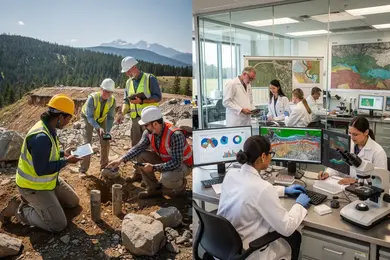
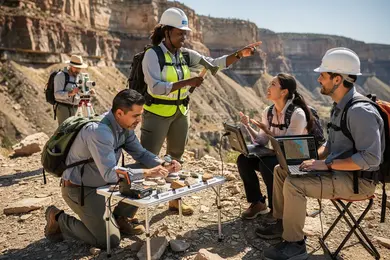
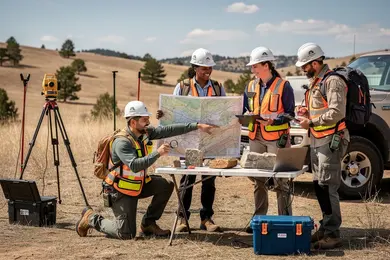
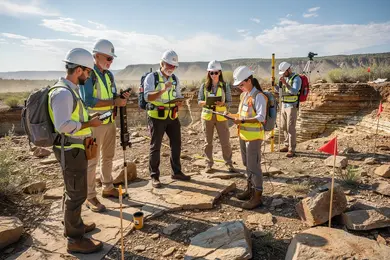
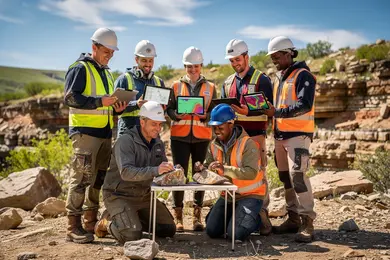
Most online geosciences degrees require at least one field component or hands-on lab sequence, often completed in a short residency, approved local site, or summer field course. Programs commonly pair 3 to 6 credit laboratory courses with virtual instruction, and some require documented outdoor observations for capstone completion.
References
- The Geological Society - Degree Accreditation https://www.geolsoc.org.uk/education-and-resources/universities/university-degree-accreditation/
- Online Geoscience Degrees: Top Schools and All Programs in 2026 https://www.gisdegree.org/online/geoscience-degrees/
- Are Online Degrees Accredited? How to Identify Quality Distance Learning Programs https://www.umassglobal.edu/blog-news/online-degrees-accredited-identify-quality-distance-learning-programs
- Understanding Academic Accreditation for Online Universities https://www.qahe.org/article/understanding-academic-accreditation-for-online-universities/
- Best Online Geoscience Courses and Programs | edX https://www.edx.org/learn/geosciences
- How to become a Geoscientist in Ireland https://www.gsi.ie/en-ie/education/life-as-a-geoscientist/Pages/Where-to-study-in-Ireland.aspx
- 500+ Water Jobs (Updated Today) â Free to Apply https://jobs.watertechintel.com/blog/geology-major-jobs
- Working Geoscience https://profession.americangeosciences.org/working/
- Parents: How to Verify College Accreditation Online for Your Child's Future https://matchtocollege.com/blog/verify-college-accreditation-online-parents-guide
- Interactive Online Short Courses - eage.org https://eage.org/education/interactive-online-short-courses/