2027 Geosciences Specializations for Water Resources Careers

Co-Founder and Chief Data Scientist
Facing increasing drought severity, a hydrologist must pinpoint specialized expertise to optimize groundwater management projects under shifting climate patterns. The urgent need to balance limited water supplies with expanding urban demand forces students and professionals to choose geosciences specializations aligning tightly with evolving industry requirements. According to the National Center for Education Statistics, a 19% surge in enrollment among adult learners pursuing environmental science and geosciences-related degrees since 2023 reflects growing workforce reskilling needs to meet emergent water resource challenges. This trend indicates heightened demand for flexible, targeted credentials that directly enhance practical problem-solving capacities.
This article examines critical geosciences specialization pathways specifically tailored to water resources careers, guiding readers to make informed educational decisions that advance their professional objectives and respond effectively to real-world water management challenges.
Key Things You Should Know
- Hydrogeology specialization commands a 12% higher median salary due to its direct impact on municipal water management, but requires 18+ months of fieldwork training compared to other geosciences tracks, raising opportunity costs.
- Employers now prioritize interdisciplinary GIS proficiency combined with geochemistry expertise, with 67% of water resource firms listing these as mandatory skills in 2024 workforce surveys, altering hiring criteria fundamentally.
- Advanced modeling competencies in climate-influenced hydrology offer a 25% gain in job placement rates but demand significant computational coursework, presenting a tradeoff between technical depth and timely workforce entry.
What are geosciences specializations for water resources careers?
Specializing in hydrogeology or environmental geosciences careers in water resource sustainability requires navigating distinct educational and workforce challenges. Hydrogeology's focus on groundwater flow and aquifer contamination suits sectors like municipal water supply and oil and gas but often demands advanced field skills and state licensure, extending credential timelines. Hydrology, with its emphasis on surface water and flood risk, may allow entry with a bachelor's degree, yet practical advancement typically hinges on graduate-level data modeling and GIS expertise.
Salary variation reflects this technical depth and regional factors; for example, hydrogeologists in arid consulting markets command salaries exceeding $128,000, while hydrologists in local government roles tend to see more stable but lower pay, typically between $62,000 and $100,000. Such disparities underscore the importance of aligning specialization choices not only with interest but employment sector realities.
Employers prioritize candidates demonstrating hands-on groundwater sampling, contaminant transport simulations, and regulatory knowledge, particularly related to frameworks like the Safe Drinking Water Act. Graduates lacking these proficiencies frequently encounter hiring delays or must pursue continuing education to close these gaps.
Prospective students should assess program rigor and practical exposure critically, balancing the tradeoff between longer credentialing pathways and stronger job placement rates. In this context, geosciences graduates pursuing water resources often face significant geographic and interdisciplinary mobility.
Those considering a career shift may find useful insights by exploring resources tailored to workforce transitions, such as SLPs.
Which geosciences degree best prepares you for water resources work?
The best geosciences degree for water resources management focuses tightly on hydrology and water systems, equipping graduates with practical skills directly sought by employers. Degrees centered on water resource specializations emphasize hydrologic modeling, water quality evaluation, and GIS applications-critical competencies for roles in government agencies and environmental consulting. For instance, hydrologists analyzing long-term water availability under evolving climate conditions need a strong foundation in statistics and environmental system dynamics, which specialized programs typically provide.
Top geosciences specializations for water resource careers often integrate extensive quantitative methods with field training, an approach that broad earth sciences degrees generally lack. Graduates from less targeted programs commonly face delays entering the workforce due to the need for additional certifications or relevant experience. Practical internships and partnering with local water authorities enhance hiring chances by fostering applied problem-solving and professional contacts.
Employment projections for hydrologists align with overall job market growth but rely heavily on replacement demand, highlighting the importance of aligning education with employer expectations to avoid skill gaps. Students should prioritize programs that incorporate remote sensing and current water regulations, as these tools are essential for specialized environmental roles. Those evaluating pathways might also consider data science affordability-exploring what is the cheapest data science course in the US? to complement their hydrology expertise with analytical skills increasingly valued in this sector.
What accreditation should geosciences water resources programs have?
Regional accreditation recognized by the U.S. Department of Education forms the baseline for evaluating geosciences water resources program accreditation standards, but specialized endorsements such as ABET or the Council of Engineering and Scientific Specialty Boards provide essential assurances of technical rigor tailored to water resource professionals. Employers in engineering and environmental consulting frequently prioritize degrees with these specialized accreditations, which align training with applied science competencies critical for licensing.
Choosing a program absent of recognized accreditation bodies for geosciences water resources degrees can limit exposure to core disciplines like hydrology and environmental data analysis, reducing eligibility for state-level Professional Geologist (PG) or Certified Hydrogeologist certifications. For instance, professionals tasked with managing municipal water quality must navigate federal EPA requirements alongside localized regulatory standards-a balance typically embedded in accredited curricula.
This alignment with regulatory frameworks and technical skills is crucial given workforce growth projections from the American Geosciences Institute, which forecast a 3.7% rise in geoscience employment over the coming decade, primarily driven by climate adaptation and sustainable resource management demands.
Prospective students should verify that program accreditation matches their licensing and career objectives, recognizing that ambiguous credentials often elevate perceived hiring risk. This strategic verification parallels other fields, where credentials such as those for a nutrition degree online must clearly support professional standards to avoid obstacles in employment and advancement.
Are online geosciences programs good for water resources careers?
Online geosciences degrees for water resources management must go beyond theoretical instruction to effectively prepare graduates for practical roles. Many employers demand proficiency in site assessment, environmental modeling, and real-world data analysis-skills rarely honed in fully remote programs lacking partnerships for internships or regional fieldwork. For instance, a water resources analyst evaluating municipal water quality relies heavily on interpreting spatial data and conducting on-site inspections, competencies that require hands-on experience layered on academic knowledge.
Programs that integrate applied GIS training, hydrogeology labs, and remote sensing with regional collaborations better position students for these occupational demands. The University of Wisconsin-Oshkosh reports that cartographers and photogrammetrists earn a median salary of $78,380 with a favorable 6% growth outlook, underscoring the premium on advanced geospatial skills within water resource sectors.
Evaluating online geosciences programs for water resource careers involves verifying accredited fieldwork and access to essential geoscience tools and software. Assessments of graduate employment outcomes and industry reputation offer additional insight into a program's relevance. These tradeoffs demonstrate why purely theoretical curricula risk leaving learners underprepared for nuanced environmental challenges and career advancement.
Prospective students should also consider cross-disciplinary pathways by comparing costs, such as affordable computer science degrees, which may offer complementary skills valuable in water resource management.
What courses do water resources geosciences students take?
Water resources geosciences students develop a skill set tightly aligned with employer expectations in groundwater management and environmental consulting. Core coursework centers on hydrogeology, soil science, sedimentology, and environmental chemistry, equipping students to address groundwater flow, contaminant transport, and pollutant behavior. These foundational sciences are paired with quantitative tools such as GIS, statistical analysis, and remote sensing to handle complex spatial datasets crucial for risk assessment and resource planning.
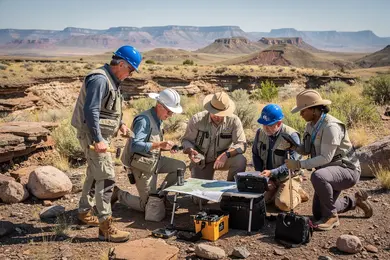
Practical application is essential given job market demands. Field methods and laboratory analysis courses foster hands-on experience with groundwater sampling and chemical assays, skills highly valued by government agencies and private firms responsible for compliance and remediation. Understanding regulatory frameworks is non-negotiable for navigating water quality laws and permitting processes.
Students face a tradeoff when choosing specialization tracks like hydrodynamics or ecohydrology: these deepen ecosystem-focused expertise but may limit immediate applicability in broader commercial or municipal water roles. The median annual salary for environmental scientists addressing contaminated water and remediation stands at $80,060, with employment projected to grow 4% through 2034, translating to roughly 6,900 annual openings including replacement hires according to the U.S. Bureau of Labor Statistics.
Careful selection of coursework and demonstration of applied skills differentiate candidates in this competitive labor market, underscoring the necessity to balance technical knowledge with regulatory and field-based competencies.
What admission requirements do geosciences water resources programs use?
Applicants to geosciences water resources programs must demonstrate strong quantitative abilities and relevant practical experience to remain competitive, especially as employer demand tightens around analytical and project management skills. Typical admissions require a bachelor's degree in geosciences or closely related STEM fields, with prerequisite coursework in calculus, chemistry, physics, and earth sciences. Programs increasingly value internships or research tied to hydrology or groundwater modeling over standardized test scores, which are now optional or waived in many cases.
For those without direct preparation, conditional admission paired with bridge courses often addresses foundational gaps in geology and computational methods, but this can extend time to degree and potentially reduce job market agility. Admission committees scrutinize statements of purpose and recommendation letters for clear alignment with water resource management goals and technical competence. Relevant work experience substantially enhances candidacy, particularly for mid-career professionals moving from civil engineering or environmental consulting into water-resources management.
The practical impact of admission rigor is reflected in workforce outcomes. Water-resources specialists targeting senior roles can expect median salaries around $161,180, according to the U.S. Bureau of Labor Statistics, with 8,500 annual job openings driven by retirements and industry growth projected at 4% through 2034. Meeting academic and experiential prerequisites reduces time to credential and improves positioning for these openings, while shortfalls increase career risk by delaying advancement and limiting hiring scope in a technically demanding sector.
How long do geosciences water resources degrees usually take?
Securing a foothold in water resources within geosciences requires strategic navigation of education duration against employer expectations and income timing. A four-year bachelor's degree in geosciences, hydrology, or environmental science remains the essential baseline for entry-level roles in government or consulting sectors, where foundational knowledge in geology and hydrology is non-negotiable. Delaying workforce entry beyond this point can affect immediate earnings.
Positions involving complex water system management or subsurface resource oversight typically mandate a master's degree, adding two years of study. This advanced credential aligns with demands for specialized skills in regulatory compliance, data modeling, and resource management, reflected by an average annual salary exceeding $126,000 in related mining and extraction roles. However, this comes with the tradeoff of postponed income and the necessity for in-depth technical expertise.
Practitioners pivoting later in their careers face decisions around program format flexibility versus hands-on field experience-critical for employability in water-focused roles. Accelerated or online programs speed completion but often limit essential fieldwork, whereas project-based master's degrees can better satisfy employer preferences.
- Four-year bachelor's degrees cater to rapid workforce entry with baseline skills
- Two-year master's degrees develop specialization critical for higher-level roles and wages
- Program format choices affect balance between time, experience, and practical readiness
What jobs can geosciences water resources graduates get?
Graduates with geosciences water resources degrees typically enter sectors demanding distinct technical proficiencies and operational adaptability, such as hydrogeology, environmental consulting, and resource extraction. Nearly half of earth and environmental science bachelor's holders initially find roles in oil, gas, or mining industries, where water management expertise is often applied to hydraulic fracturing water use or aquifer protection. This sector's environmental and regulatory complexities require applied problem-solving under fluctuating market pressures.
About 20% of graduates fill roles within environmental consulting firms focused on groundwater assessment, contamination remediation, and urban water planning. These positions prioritize hydrological modeling, regulatory compliance, and clear technical communication directed at municipal or industrial clients.
Early-career water resources specialists engage heavily in fieldwork and data collection, often collaborating with diverse teams. Progression toward project management or policy roles necessitates skills in GIS mapping, groundwater modeling software, and navigating regulatory frameworks tied to sustainable resource management.
Decisions between sectors such as consulting and resource extraction boil down to tradeoffs involving environmental impact, job stability, and scope of technical challenges. Consulting demands versatility across projects, while mining firms seek deep expertise in hydrogeological conditions unique to complex extraction environments. Targeted internships and certifications aligned with employer requirements remain critical for entry and advancement.
How much do water resources geosciences careers pay?
A master's degree markedly shifts earning potential and role eligibility in water resources geosciences, where specialized knowledge overlaps with governance demands. About half of water resource specialists hold graduate degrees, which is often a prerequisite for managing complex regulatory and environmental projects. For instance, a hydrologist leading watershed management within state agencies must navigate compliance, team coordination, and policy frameworks to command salaries near $161,000 annually, according to CareerOneStop data from 2024.
Entry-level roles such as geological or hydrological technicians present a stark contrast, typically offering $50,000-$70,000 without advanced credentials or leadership experience. This wage gap reflects clear tradeoffs between immediate workforce entry and long-term strategic positioning, particularly for professionals targeting policy influence or resource allocation roles.
Employers consistently seek candidates who merge technical expertise with governance capabilities, favoring those who invest in ongoing professional development and networking to advance. Those aiming for senior natural sciences management must often balance the financial and time costs of graduate education against the prospect of accessing six-figure positions and leadership responsibilities.
For working professionals, this data-driven salary differential supports the decision to pursue a master's degree not merely as an academic milestone but as a calculated step toward roles weighted with authority and impact within water resources administration.
What certifications help geosciences graduates in water resources careers?
Professional certifications in geosciences directly affect employability and salary trajectories, especially when targeting water resources roles. The Registered Professional Geologist (PG) license, for instance, holds significant regulatory weight, often required in positions involving compliance, groundwater modeling, and site characterization. Obtaining the PG license demands passing rigorous ASBOG exams and meeting state-specific experience thresholds, which can delay career advancement by several years after graduation.
Conversely, the Certified Hydrogeologist credential caters to expertise in aquifer testing and groundwater remediation-skills highly sought by environmental consulting firms and government agencies. This specialization implies a different value proposition: focused technical authority without the full regulatory mandate. The Certified Water Resources Professional (CWRP) designation blends hydrogeology with policy and project management, aligning better with roles in watershed management and interdisciplinary collaboration.
Salary growth in this field now favors candidates with advanced data analysis competencies, such as proficiency in MODFLOW or geospatial modeling tools. The 4.5% median salary increase reported by the American Geosciences Institute underscores the advantage of combining certification with these technical skills. Without relevant credentials, early-career professionals often confront slower progression and fewer leadership opportunities.
- PG license suits those prioritizing regulatory authority despite the longer qualification timeline
- Certified Hydrogeologist offers niche technical recognition without full licensure delays
- CWRP prioritizes interdisciplinary and project experience suitable for mid-career transitions
Career decisions should weigh the tradeoff between time-to-credential and the specific market demand for each certification's skillset, emphasizing alignment with targeted employer expectations in water resource sectors.
Other Things You Should Know About Geosciences
Employers often look for ArcGIS Pro, QGIS, MODFLOW, and HEC-HMS or HEC-RAS skills. A strong candidate can map watersheds, analyze streamflow, and model groundwater or flood risk. Many entry-level jobs also expect basic Python or Excel data analysis for handling field and monitoring data.
Pursuing a focused water resources specialization narrows early career options but strengthens targeted expertise valued in sectors like municipal water management and environmental consulting. Conversely, a general geosciences degree offers broader adaptability across mining, petroleum, and climate sectors but may require additional on-the-job training for water-specific roles. For candidates confident in a water resources trajectory, specialization improves hiring prospects and speed to professional certification. Those uncertain about a narrow path should prefer broader programs to maintain flexibility while gaining foundational skills.
Graduate degrees often become essential for roles involving advanced data analysis, project leadership, or regulatory compliance in water resources. While entry-level positions are accessible with a bachelor's, employers routinely reserve senior technical or managerial roles for candidates with master's degrees due to the complexity of modern water resource challenges. Invest in graduate education selectively: prioritize programs offering practical skills like GIS modeling and environmental policy training, as purely research-focused tracks may not align with applied career advancement.
References
- Subject Areas https://www.geolsoc.org.uk/Geology-Career-Pathways/What-is-Geology/Subject-Areas.html
- Water Resources Scientist https://www.joshswaterjobs.com/jobs/329936/
- 2,000+ Water Jobs (Updated Today) – Free to Apply https://jobs.watertechintel.com/blog/jobs-in-water-resource-management
- Jobs in Geosciences and Environment https://geops.geol.u-psud.fr/en/jobs-in-geosciences-and-environment/
- Careers in the Environmental and Water Resources Management https://www.knowyourh2o.com/water-blog/careers-in-the-environmental-and-water-resources-management
- Careers in Geoscience: Environment https://www.aig.org.au/education/careers-in-geoscience/careers-in-geoscience-environment/
- Master's degree in Geoscienze per lo Sviluppo Sostenibile - Curricu... https://apply.unipv.eu/en_GB/courses/course/205-geo-emw-masters-degree-geoscienze-per-lo-sviluppo-sostenibile---curriculum-geosciences-energy-mineral-and-water-resources
- Courses and education in water resources https://eng.geus.dk/products-services-facilities/training-courses-and-excursions/courses-and-education-in-water-resources
- Water Resources https://www.uwec.edu/academics/programs/undergraduate/water-resources
- Information about Geoscience Related Careers https://careerexplorer.americangeosciences.org/careersinfo/