2027 Geosciences Roles That Often Lead to Leadership Positions

Co-Founder and Chief Data Scientist
Securing a leadership position in geosciences demands navigating a complex career landscape where technical expertise must align with strategic project management and cross-disciplinary collaboration. With over 60% of STEM professionals in recent reports by the National Science Foundation shifting toward roles requiring advanced interdisciplinary skills, the pressure on geoscientists to broaden their competencies intensifies. This evolution challenges both early-career professionals and mid-career changers to identify roles that not only deepen scientific knowledge but also cultivate leadership potential. Understanding which geosciences roles most frequently pave pathways to upper management can streamline career decisions, prioritize skill development, and optimize timing for pivotal job moves.
This article identifies key geosciences roles that historically lead to leadership positions, offering actionable guidance for strategically aligning career steps with long-term advancement goals.
Key Things You Should Know
- Data from the U.S. Bureau of Labor Statistics shows 38% of leadership hires in geosciences come from roles heavily invested in data modeling, underscoring the rising demand for quantitative expertise over traditional fieldwork, though this narrows early-career role diversity.
- Employers report a 27% preference for candidates with direct interdisciplinary collaboration experience, driven by complex project structures; lacking this limits advancement despite strong technical credentials, redefining in-house leadership pipelines.
- The National Science Foundation finds 42% of professionals who pivot to leadership by age 40 incurred advanced degree costs exceeding $60K, highlighting the financial and time investment tradeoff between accelerated study and delayed career income growth.
Which geoscience roles most commonly lead to leadership positions in industry and academia?
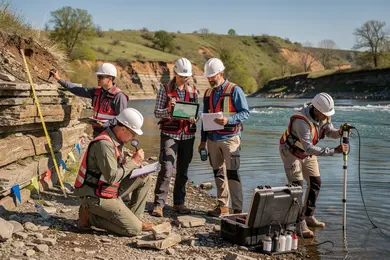
Leadership trajectories in geoscience demand more than technical proficiency, particularly for those eyeing senior roles in industry and academia. Positions such as senior exploration geologists or reservoir engineers with geoscience expertise typically evolve through mastery of subsurface characterization combined with operational leadership, reflecting the complex blend of skills needed to influence strategic decisions. For example, geoscientists in the UK energy sector with 11-15 years of experience earn £100,000-£150,000 annually, illustrating how technical-lead roles translate into financial and leadership advancement before reaching executive levels.
Academia follows a different path, where recognized leaders often emerge from roles heavily weighted toward grant acquisition and project coordination. Progression to department chairs or research center directors hinges on managing large portfolios of funding and mentoring junior researchers-elements not always included in traditional academic training.
Key challenges for individuals pursuing geoscience career paths leading to leadership roles include developing financial oversight, personnel management, and stakeholder negotiation skills beyond their scientific expertise. Effective leaders must navigate these logistical demands while maintaining technical credibility.
For professionals considering an educational foundation tailored to these demands, pursuing a focused GIS degree can provide practical skills in spatial analysis critical to geological modeling and environmental applications, enhancing both industry and academic prospects.
In summary, top geoscience positions for academic and industry leadership require a combination of specialized expertise, strategic operational insight, and adaptive management capabilities.
What degrees and specializations in geosciences best prepare you for leadership pathways?
Leadership roles in geosciences in 2026 increasingly demand specialization in environmental sciences, with climate change, sustainability, and resource management at the forefront. Employment data from December 2024 to January 2025 shows a clear shift: environmental sciences and geosciences grew by 9,324 jobs in the U.S., while petroleum, mining, and geological engineering shed 13,456 positions. This transition affects where leadership pipelines flow, now favoring expertise in environmental impact assessment, regulatory compliance, and renewable resource exploration over traditional extractive industries.
Those pursuing degrees in geosciences leadership development must navigate complex regulatory environments and coordinate diverse stakeholders. For example, managing a coastal resilience project involves both scientific knowledge and leadership skills to integrate engineers, policymakers, and communities. This cross-disciplinary expectation extends to skills in data analytics, project management, and public communication, demanding that professionals complement technical training with certifications in environmental law and GIS.
Students weighing educational paths should note that employers prefer candidates who marry technical credentials with management savvy. Specializations in geosciences for management roles must also consider the necessity of reskilling for professionals transitioning from shrinking sectors like mining, as lacking environmental expertise narrows executive advancement opportunities amid evolving climate policies.
For those evaluating distinct educational pathways, exploring programs such as a masters degree in data science online can supplement geosciences expertise with critical data skills increasingly valued in leadership roles.
How do geoscience leadership roles differ across energy, environment, mining, and government sectors?
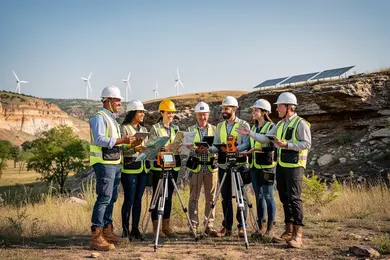
Leadership roles in geosciences across energy and environment sectors demand distinct skill sets shaped by operational priorities and stakeholder dynamics. For instance, leaders in the energy sector must integrate risk management with rapid technological shifts, balancing fossil fuel extraction and renewable energy initiatives under strict compliance and financial pressures. This contrasts with the environmental sector, where leadership emphasizes interdisciplinary coordination and stakeholder engagement to drive policy implementation and address climate challenges.
Differences in geoscience leadership in mining and government industries further illustrate practical tradeoffs. Mining leaders prioritize technical expertise in geotechnical risk and resource estimation while managing fluctuating commodity markets and labor relations. Government sector leaders operate within formal policy frameworks, translating scientific data into actionable public policy amid political and inter-agency complexities, often handling emergency response or infrastructure projects.
A real-world scenario includes hydrologists in regulatory agencies facing a projected 6% employment growth from 2024 to 2034, driven by climate change impacts and water management demands. This growth intensifies pressure to allocate limited resources efficiently and adapt swiftly to evolving regulations.
Professionals considering leadership paths need to weigh sector-specific demands, such as commercial acumen in mining and energy versus interdisciplinary policy skills in government and environment. Those evaluating educational pathways should avoid assuming uniform leadership competencies across sectors, as this can hamper strategic career decisions.
For those assessing whether is library science a good career offers relevant crossover skills, it is important to recognize that geosciences leadership roles typically require specialized technical and sector-specific knowledge rather than broad library or information science backgrounds.
What education and experience do you need to move from field geologist to manager or director?
Advancing from a field geologist position to a managerial role demands more than practical expertise; it requires targeted education paired with strategically acquired experience. Most leadership roles necessitate a master's degree in geosciences or a closely related engineering discipline, which equips candidates with advanced technical skills and foundational project management knowledge. The typical experience needed to become a geoscience manager includes at least 7-10 years of progressively complex roles, expanding from hands-on data work to encompassing budgeting, risk assessment, and cross-disciplinary collaboration.
Specialization in emerging sectors such as carbon capture, utilization and storage (CCUS) is increasingly important. U.S. employment in CCUS is projected to grow more than 50% by 2034, which makes applied knowledge in this area-including regulatory frameworks and stakeholder engagement-a critical differentiator for leadership candidates. Gaining such expertise often involves additional certifications or training beyond conventional geology degrees.
Consider a field geologist in oil and gas transitioning to district manager: the role shift requires supplementing technical field acumen with strategic planning skills relevant to volatile commodity markets. This transition typically involves pursuing supervisory responsibilities, formal leadership development, and consistent project success.
Practical tradeoffs include balancing ongoing technical skill enhancement with managerial competencies and accepting a potential shift from fieldwork to office duties. Depending on your background and goals, combining the right educational pathway-such as advanced degrees or targeted programs like online electrical engineering degree programs for veterans for relevant engineering crossover-with deliberate leadership experience can sharpen your trajectory while mitigating long-term career friction.
How do online geoscience programs compare with campus-based options for future leaders?
Practical expertise and professional networking remain decisive in geosciences leadership roles, with campus-based education typically delivering stronger outcomes than online formats. Approximately 39% of geoscientists work in professional, scientific, and technical services-fields that demand advanced geospatial and data analysis skills coupled with real-world teamwork experience. While online programs offer flexibility for working professionals, they often lack the immersive fieldwork and direct collaboration that employers prioritize for management and consulting positions.
A geoscientist leading a consulting firm, for example, must navigate complex site evaluations-skills honed through hands-on field exposure difficult to replicate in virtual environments. Campus programs provide access to laboratories, face-to-face mentorship, and internships that cultivate these competencies and professional relationships critical for career progression.
Online pathways can serve those balancing employment and upskilling, especially in data-centric roles emphasizing theory and software. Still, such learners should proactively seek external field experiences and engage with industry networks to mitigate inherent limitations.
Decision-makers should consider these tradeoffs: campus-based learning offers superior experiential depth and networking channels essential in dominant geoscience sectors, whereas online options require deliberate integration with practical engagements to achieve comparable leadership readiness.
Which accreditations, certifications, and professional societies matter most for geoscience leadership careers?
Leadership pathways in geosciences demand more than technical expertise; they require a strategic blend of accredited certification and engagement with professional societies. Membership in organizations like the American Geosciences Institute (AGI), Society of Mining, Metallurgy & Exploration (SME), and Geological Society of America (GSA) provides access to leadership training, policy insights, and networking channels that lead to governance roles.
For example, a mining engineer must not only maintain a Professional Geologist (PG) license but also acquire project management skills to remain competitive amid slow sector growth and industry consolidation. The Bureau of Labor Statistics projects minimal overall growth for mining and geologic engineering, making leadership and operational competence essential for standing out.
Employers increasingly prefer credentials that merge geoscience mastery with management aptitude, such as Certified Petroleum Geologist (CPG) or Certified Environmental Professional (CEP). These certifications validate critical competencies including risk assessment, regulatory compliance, and interdisciplinary collaboration.
- Balancing technical licenses with project and safety management certifications enhances promotion prospects.
- Active participation in professional societies accelerates exposure to policy-making and leadership experience.
- The modest 3.7% job growth in U.S. geosciences through 2034 suggests prioritizing credentials recognized by the target sector is crucial.
Strategic credential selection and society engagement create the experiential foundation necessary for navigating tightening labor market conditions and securing advanced roles.
What core skills and coursework help geoscience professionals advance into supervisory and executive roles?
Supervisory and executive roles within geosciences increasingly demand mastery of advanced data analysis, risk assessment, and project management, with a focus on integrating quantitative methods and geographic information systems (GIS). For instance, senior professionals overseeing infrastructure projects must synthesize geospatial modeling with effective stakeholder communication to proactively manage risks and reduce costly delays.
The complexity of leadership now requires fluency in climate science intertwined with regulatory frameworks. This dual expertise supports more strategic approaches to adaptive risk management-a critical capacity as economic losses from natural disasters surged to $283 billion in 2023, marking a nearly 22% increase compared to the previous decade's average, according to the 2024 Aon Weather, Climate and Catastrophe Insight report.
Practical competencies extend beyond technical skills to include budgeting and personnel oversight, demanding a balance between scientific rigor and business acumen. Coursework encompassing corporate governance, environmental economics, and technical writing aligns with employer expectations for leaders capable of translating geoscientific insights into actionable plans for diverse stakeholders.
Emerging technologies such as remote sensing and machine learning are increasingly integral to maintaining a competitive edge, especially within public agencies, energy sectors, and consultancy. These tools enable prediction-based project adjustments that reduce costs and bottlenecks, underscoring the necessity to pair applied tech skills with management education for upward mobility in geosciences.
What are typical salaries and total compensation for mid- and senior-level geoscience leaders?
Mid-level geoscience leaders in the U.S. usually command base salaries between $90,000 and $130,000, with total compensation, including bonuses and benefits, ranging from $110,000 to $160,000. Senior leaders earn substantially more-base salaries of $140,000 to $210,000 are common, with total packages often exceeding $180,000. Compensation varies significantly by sector: private energy and environmental consulting tend to offer higher pay but carry cyclical market risks and project-driven pressures, while federal and state government roles provide steadier, if somewhat lower, remuneration focused on long-term stewardship.
Government agencies employ about one-third of all U.S. geoscientists, with leadership positions expected to grow 5-7% over the coming decade due to increased policy and resource management demands. Transitioning into public-sector leadership, such as a regional director at a state geological survey, often raises salaries by 20-30% but requires balancing administrative responsibilities and slower career progression compared to private-sector roles.
Key factors when negotiating leadership compensation include total remuneration, job security, and sector-specific growth trends. Continuing qualifications-advanced certifications or project management expertise-are critical in shaping salary outcomes and employability across sectors. Candidates must weigh tradeoffs between income variability and job stability, technical challenges versus administrative work, and short-term compensation against strategic career longevity.
What is the job outlook for geoscience managers and other leadership-track positions?
Advancement into leadership within the geoscience field tightly aligns with sector-specific demands and educational credentials, not merely tenure or experience. For example, geological project managers in energy or mining sectors face increasingly stiff competition for limited senior roles, making advanced degrees and proven leadership in complex, budget-constrained projects vital credentials.
Academic leadership roles offer a contrasting but demanding path, requiring a Ph.D., sustained research output, grant procurement, and administrative skill. These positions, although fewer in number, have shown a 4.5% median salary increase recently, driven by institutional and federal investments in research and education leadership. However, the tradeoff involves enduring intense pressure to publish and secure funding long before salary gains materialize.
Key considerations for professionals eyeing leadership include mastering interdisciplinary team management and communication with non-technical stakeholders. Industry roles typically require a master's degree for mid-level management, while senior academic posts demand doctoral qualifications. Navigating these pathways necessitates assessing not just educational program content but also how effectively they develop measurable outcomes aligned with sector expectations.
Practical advancement strategies:
- Prioritize programs integrating leadership training with geoscience expertise.
- Develop skills in regulatory frameworks and resource planning for industry roles.
- Focus on research productivity and grant writing for academic tracks.
These realities shape career trajectories, requiring clear-eyed evaluation of educational investments relative to sector-specific leadership criteria.
How can students choose geoscience programs that align with long-term leadership and management goals?
Leadership pathways in geosciences demand programs that blend technical mastery with targeted management training, ensuring graduates can tackle real-world challenges like regulatory compliance and team coordination. For instance, environmental consultants aiming for leadership should integrate courses in business operations and regulatory policy alongside core geoscience topics to effectively manage interdisciplinary teams and client relationships.
Prospective students must scrutinize alumni outcomes and institutional links to industry through internships and mentorships, as these practical experiences are pivotal for transitioning into supervisory roles. Programs heavy on technical depth without leadership components risk limiting graduates to specialist roles with slower compensation growth, while broadly focused management studies lacking geoscience rigor may undermine credibility in field-specific leadership.
Financial analysis shows median salaries in U.S. geoscience occupations rose 4.5% from 2024 to 2025, with top earnings in senior and management-track positions, reflecting a premium on leadership capability. Students should assess curricula against industry-specific leadership skills like resource management in mining or hazard coordination in geotechnical services, ensuring access to experiential learning aligned with evolving workforce needs.
Tradeoffs to consider:
- Technical intensity vs. leadership skill balance
- Program connections to industry pipelines
- Alignment with sector-specific leadership competencies
Regular consultation of updated governmental workforce projections and industry reports ensures that educational decisions remain tightly aligned with practical leadership demands in geosciences.
Other Things You Should Know About Geosciences
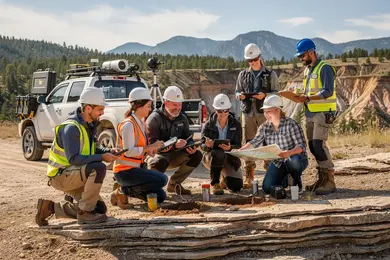
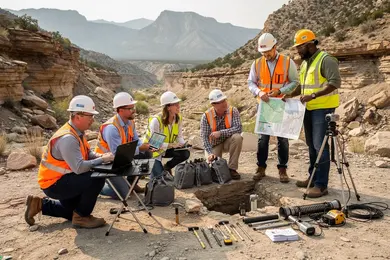
Field experience remains a critical factor employers weigh heavily for leadership roles, especially in applied sectors like mining and environmental consulting. While advanced technical skills in data analysis and modeling are important, leaders must demonstrate practical judgment gained through direct observation and problem-solving onsite. Prioritize gaining at least several years of diverse field assignments early in your career, as this experience often defines your ability to manage teams and projects under real-world conditions.
For leadership positions, especially at the management or director level, broad multidisciplinary knowledge typically offers more value than deep technical specialization. Leaders must integrate insights from geology, hydrology, geochemistry, and data science to make strategic decisions. Professionals should prioritize developing versatile technical competencies combined with interdisciplinary understanding to increase their usefulness across projects and sectors, which aligns better with employer expectations for adaptability.
Project Management Professional (PMP) and Certified ScrumMaster are the most useful management credentials for geoscientists moving into supervision. PMP requires 36 months of project leadership experience with a bachelor’s degree, or 60 months without one, plus a 35-hour training course and a 180-question exam.
A graduate degree is not universally required but is increasingly expected for senior leadership roles in geosciences, especially in competitive sectors like energy or government agencies. Experience alone can secure mid-level supervisory positions, but advanced degrees deepen technical expertise and signal commitment to professional growth. If your goal is executive management or specialized leadership, prioritize graduate education alongside targeted leadership training to meet employer standards and stand out among peers.
References
- Universities & Academia https://www.geolsoc.org.uk/Geology-Career-Pathways/Careers/Job-Sectors/Research-Teaching-and-Communication/Academia.html
- Occhipinti: Rethinking Geoscience Education: Integrating SDGs for Next-Generation Learning - Eurogeologists https://eurogeologists.eu/occhipinti-rethinking-geoscience-education-integrating-sdgs-for-next-generation-learning/
- European Geologist title- Certification of geosciences professionals - EuroGeoSurveys https://eurogeosurveys.org/european-geologist-title-certification-of-geosciences-professionals/
- ThisIsGeoscience - Geoscience Salaries https://www.thisisgeoscience.com/the-resources/geoscience-salaries
- Working Geoscience https://profession.americangeosciences.org/working/
- This key job family involves professional geological and geophysical work, requiring an applied know https://www.energyskills.co.nz/page/geoscience-professionals/10/31/
- Geosciences Partnering in Innovating the Future https://www.criticalneeds.org/innovation/
- Geoscience Jobs https://jobs.americangeosciences.org/
- Geoscience Career Pathways https://www.grow-geocareers.com/careerpathways
- Information about Geoscience Related Careers https://careerexplorer.americangeosciences.org/careersinfo/