2027 First Geosciences Roles for Career Changers Entering Environmental Work

Co-Founder and Chief Data Scientist
A midcareer professional aiming to enter environmental work through geosciences faces a critical challenge: identifying roles that balance their limited technical background with employers' rising expectations for specialized skills. The U.S. Bureau of Labor Statistics projects 8% growth in geoscience jobs by 2032, but many openings increasingly require domain-specific data analysis or fieldwork experience. Meanwhile, 75% of adult learners now prefer flexible or hybrid education formats, indicating changing enrollment behavior that often conflicts with traditional full-time degree timelines.
This misalignment poses tough choices in timing, program format, and credentials crucial for timely workforce entry. This article examines accessible first geosciences roles designed for career changers, clarifying requirements and pathways to facilitate a strategic transition into environmental careers.
Key Things You Should Know
- Geosciences roles for career changers demand advanced modeling skills, with 62% of employers prioritizing proficiency in GIS and remote sensing tools per the 2024 US Bureau of Labor Statistics, delaying job entry by 12-18 months if absent.
- Entry-level positions cluster in environmental consulting firms, where 48% of hires value interdisciplinary STEM experience over traditional geology degrees, creating employer bias favoring candidates blending coding or data science.
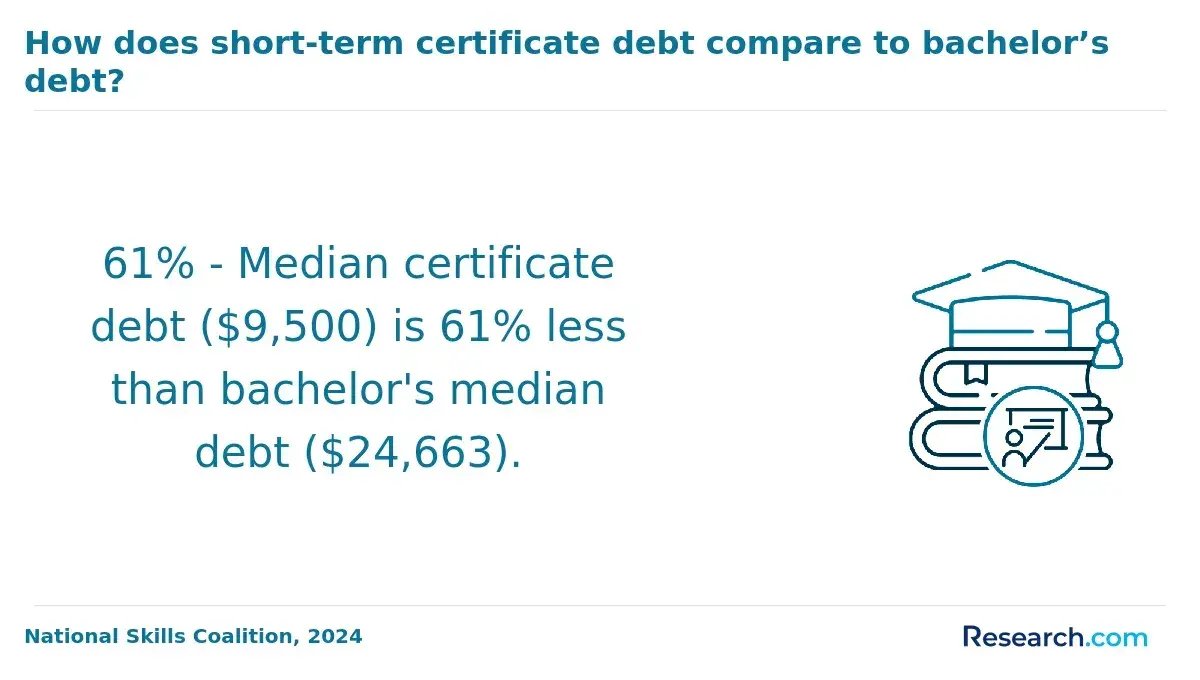
- Certificate programs average $7,500 with limited regional availability, constraining access and prompting 35% of applicants to incur debt or seek employer tuition aid, introducing tradeoffs between upfront costs and accelerated hiring.
What are the best first geosciences roles for career changers entering environmental work?
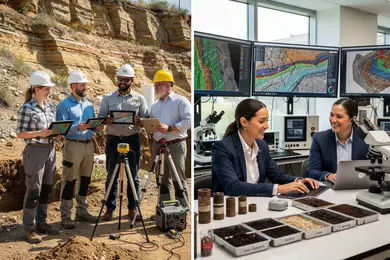
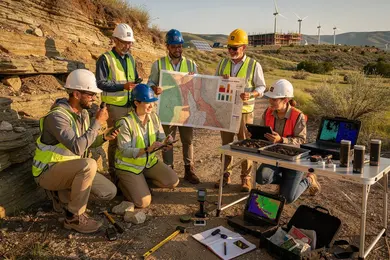
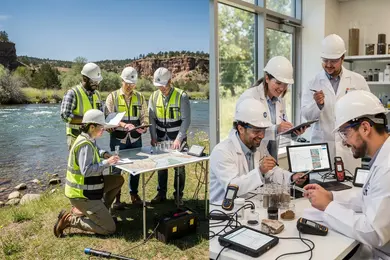
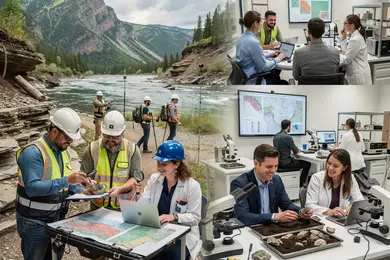
Career changers targeting environmental sectors within geosciences should focus on roles that align practical skills with growing market demand, such as applied field technician positions, environmental consulting, and regulatory compliance specialist jobs. These entry-level geosciences jobs in environmental work often prioritize hands-on experience over advanced degrees, enabling professionals from biology, chemistry, or engineering backgrounds to transfer relevant expertise rapidly.
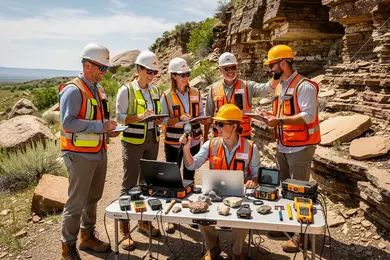
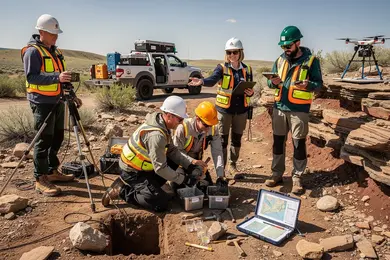
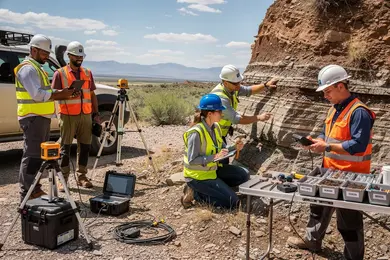
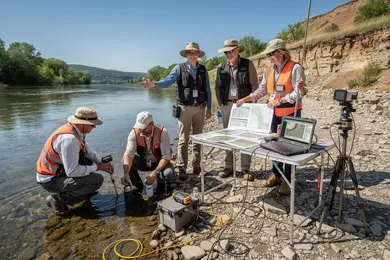
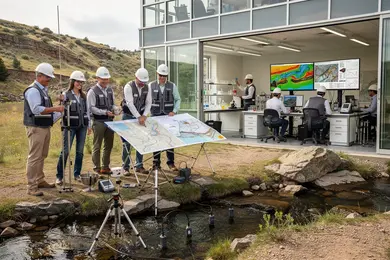
Key job functions include environmental sampling and site assessments for field technicians, environmental site assessments (Phase I and II ESAs) in consulting, and navigating stringent regulatory frameworks for compliance specialists. Candidates enhance employability by obtaining certifications, OSHA hazard training, and mastering geospatial software-prerequisites that reinforce practical capability over theoretical knowledge.
The workforce transition away from petroleum and mining, indicated by a recent loss of 13,456 jobs, contrasts with a simultaneous gain of 9,324 environmental and geosciences roles, underscoring a shift towards sustainability. Prioritizing fields like environmental monitoring and remediation is strategic, given their career stability and clearer certification pathways.
For example, a civil engineer shifting to environmental geosciences might initially assist environmental engineers on contamination remediation projects, applying transferable skills while acquiring specialized geoscience credentials. This pathway positions them for progression to roles such as environmental geologist or hydrogeologist.
Evaluating educational options is essential; for practical pathways that balance theory and field application, exploring an online geoscience degree can be a viable step towards these first geosciences careers for environmental career changers.
What education and skills do you need to transition into entry-level geoscience jobs?
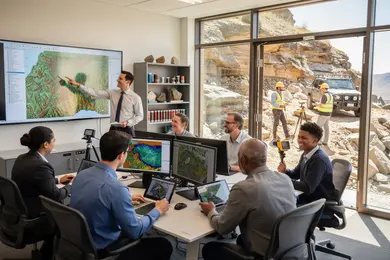
Securing entry-level geoscience jobs in environmental sectors increasingly demands not just a bachelor's degree in geology, environmental science, geography, or a related STEM field but targeted technical competencies. Practical expertise in Geographic Information Systems (GIS), remote sensing, and data analysis markedly improves job prospects, particularly in GIS-intensive roles like cartographers and photogrammetrists, projected to grow 6% from 2024 to 2034-outpacing general geoscientist and environmental scientist growth rates of 3% and 4%, respectively.
Employers expect candidates to demonstrate familiarity with core GIS software such as ArcGIS and QGIS, alongside scripting skills in Python or R to automate spatial processes. Those pivoting from less technical science backgrounds must prioritize these skills early, often through supplemental certificates or targeted coursework, which can be found in flexible online data science programs, enhancing GIS and analytical capabilities without the time commitment of full degrees.
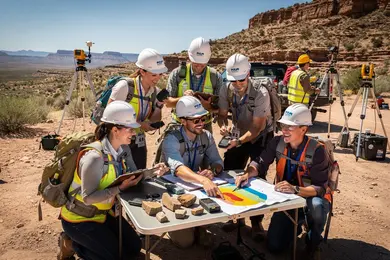
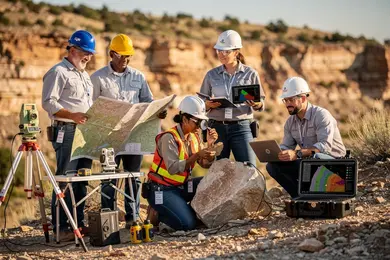
Field-based experience remains a decisive hiring factor, as entry-level roles frequently require hands-on data collection, environmental assessments, or spatial analysis in situ. Parallel development of report-writing and data visualization is essential to communicate findings effectively across interdisciplinary teams and stakeholders.
For career changers, investing 1-2 years in specialized master's studies or certifications aligned with high-growth geospatial areas is a strategic choice. This decision demands weighing immediate employability benefits against educational costs and time, given that competencies in remote sensing and mapping currently trump traditional theoretical geoscience roles in market demand.
Which environmental careers in geosciences are most accessible without a prior science degree?
Entry level geosciences jobs for career changers without a prior science degree often involve roles such as environmental technician, GIS specialist, and environmental compliance inspector. These positions focus on applied skills and certifications rather than extensive scientific theory, enabling professionals to pivot more swiftly and cost-effectively. For instance, an environmental technician supporting site assessments requires competency in sampling protocols and regulatory standards without a full geoscience background.
GIS specialists are in demand in utilities and government agencies, where practical experience with GIS software and spatial data analysis is prioritized over traditional science credentials. Certifications in these areas provide a viable route into environmental geosciences careers without a science degree.
Environmental compliance inspectors rely heavily on knowledge of environmental laws and industry standards, attainable through focused training rather than formal degrees. These roles emphasize ensuring regulatory adherence, balancing legal understanding and technical skills.
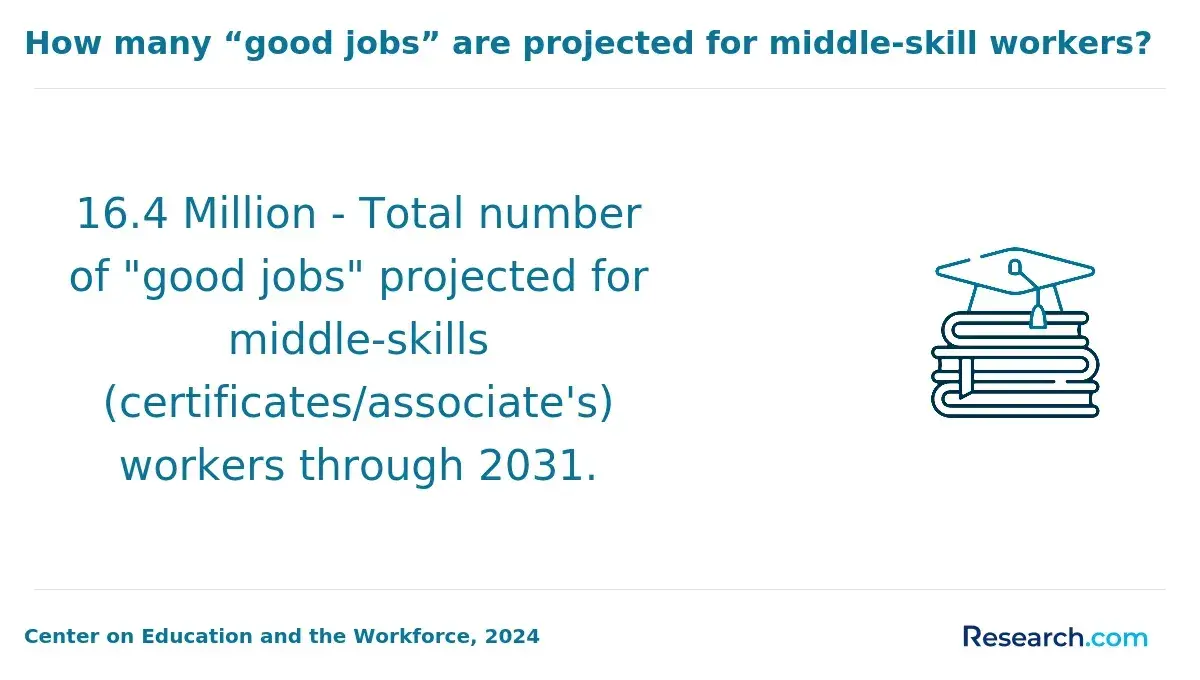
Career changers should consider that certification- and associate degree-based paths typically start with median salaries around $55,000-$70,000 but may have slower long-term wage growth compared to geoscientist roles averaging $99,240 annually according to the U.S. Bureau of Labor Statistics. Deliberate credentialing decisions influence employability and progression within this specialized labor market.
For those considering a broader pivot in STEM, exploring a fast track computer science degree can complement or provide alternative digital skillsets aligned with evolving environmental and geosciences demands.
How do associate, bachelor's, and graduate degrees in geosciences affect early career options?
Associate degrees in geosciences primarily target technician roles focused on field support, data gathering, and entry-level GIS tasks. These positions typically offer lower pay and limited progression compared to advanced degrees. Essential skills include proficiency with software like ArcGIS and knowledge of environmental regulations, reflecting common components of associate curricula emphasizing practical application. Those pursuing an associate degree geosciences career opportunities should understand the constraints on upward mobility without further education or certifications.
Bachelor's degrees unlock access to professional roles involving environmental consulting, resource management, and regulatory compliance, where responsibilities extend to data analysis, modeling, and project oversight. Employers usually require at least a bachelor's for positions demanding independent decision-making and client interactions. This aligns with the sector employing 39% of geoscientists and projecting an 8.4% job growth through 2029, notably within GIS-driven services, according to the American Geosciences Institute.
Graduate degrees-master's and PhDs-are often prerequisites for specialized jobs like remote sensing experts, environmental modelers, and research scientists who handle complex data and lead multifaceted projects. For mid-career professionals pivoting toward roles in remote sensing and urban environmental monitoring, graduate education typically becomes necessary, whereas technician roles in local government may only require an associate degree plus certifications.
Choosing a degree level also influences access to industry networks and internships; graduate programs commonly provide stronger research opportunities and professional connections, accelerating advancement compared to entry-level or associate pathways. Prospective students should weigh time and financial costs against immediate job access and long-term trajectory when evaluating options for a bachelor's and graduate geosciences environmental roles.
For those exploring options, institutions offering an affordable online computer science degree may also support complementary skills beneficial in data-intensive geosciences positions.
What is the difference between online and campus-based geoscience programs for career changers?
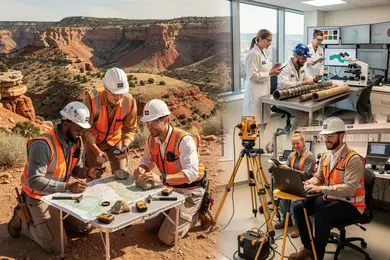
Career changers evaluating online versus campus-based geoscience programs face a critical tradeoff between flexible access and assured hands-on training essential for environmental consulting roles. Campus programs confer a distinct advantage by providing supervised fieldwork and laboratory experience with direct access to specialized equipment and established employer networks. These elements align with employer expectations, where practical competence in site assessment and sample analysis is mandatory. For example, field-verified skills streamline entry into the workforce where 7,100 new environmental consulting roles are projected by 2029 (American Geosciences Institute, Geoscience Currents).
Conversely, online programs offer scheduling flexibility suitable for working professionals or those with geographic limitations but often lack integrated field components. Students must independently secure credible internships to meet practical training standards, introducing variability and potential gaps in applied experience. Employers often require additional onboarding for online graduates to bridge these gaps, increasing transition friction for those without prior geoscience backgrounds.
Key decision factors include:
- Availability of structured externships or internships aligned with industry expectations
- Access to professional networks facilitating mentorship and job placement
- Your capacity to independently verify hands-on competencies if choosing an online pathway
Effective program selection requires assessing how well a program integrates field experience with theory, given the direct impact on employability in environmental consulting and site assessment occupations.
How can you evaluate accredited and reputable geoscience programs focused on environmental careers?
Choosing a geoscience program aimed at environmental careers requires prioritizing accreditation and alignment with industry demands over institutional prestige alone. Programs accredited by recognized agencies such as the Geological Society of America ensure that curricular content meets professional standards essential for employability in fields like water resource management or environmental consulting. Institutions emphasizing applied skills-hydrology, GIS mapping, environmental impact assessments, and regulatory compliance-better prepare graduates to meet employer expectations in a job market shaped by technical expertise and practical experience.
Partnerships with government entities or environmental industry leaders provide tangible benefits through internships and applied training, critical for entering roles where median wages reach $92,060 for hydrologists and workforce turnover creates openings through 2034. Evaluating published graduation and job placement rates helps identify programs that transparently track alumni success and minimize risks of retraining or employment delays.
Flexibility is another operational factor: programs with part-time, evening, or hybrid formats accommodate professionals balancing work or family responsibilities while upgrading skills. Additionally, curricula updated with current data and regulatory changes mitigate the risk of obsolete knowledge-a vital consideration as national environmental policies evolve rapidly.
- Accreditation aligned with recognized geological societies
- Applied coursework tied to environmental regulations and technology
- Internships via partnerships with government and industry
- Transparent alumni outcomes and certification preparation
- Flexible learning formats to maintain workforce engagement
What core courses and fieldwork should you expect in geoscience programs for environmental work?
Choosing a geoscience program for environmental careers requires weighing the balance between technical rigor and field experience, as this directly impacts job prospects and role suitability. Core coursework centers on soil science, hydrology, GIS, environmental chemistry, and climate change science-all essential for addressing climate risks through data-driven modeling and analysis. However, programs often trade off depth in computational skills for extensive fieldwork, which may limit access to data-intensive careers in consulting or government agencies.
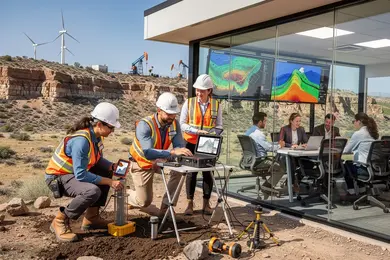
Employers expect graduates to handle hands-on site assessments, sediment sampling, and geospatial data collection across challenging terrains and weather, integrating geological knowledge with environmental policy frameworks and regulatory standards such as FEMA hazard mapping. For example, those engaged in coastal resilience projects must merge physical geology with hazard mitigation strategies, demanding interdisciplinary expertise.
Workforce data from the U.S. Bureau of Labor Statistics projects moderate job growth, with 4% increase for environmental scientists and about 2,000 annual openings for geoscientists driven by climate adaptation needs. Programs with modern GIS tools, internship opportunities, and agency partnerships enhance immediate employability more than purely academic tracks.
Practical considerations like travel demands and seasonal fieldwork disrupt work-life balance, particularly for career changers. Effective training includes multi-stakeholder communication and project management skills, critical for navigating complex environmental projects tied to climate resilience.
What are typical salaries and advancement paths for early-career geoscientists in environmental roles?
Starting salaries for early-career geoscientists in environmental roles typically range from $55,000 to $75,000 annually, but these figures vary significantly by sector and location. Government roles generally offer structured pay beginning near $60,000 with predictable grade-based raises, while private consulting firms may start closer to $70,000, albeit with less salary stability over time. Entry-level positions prioritize skills in data analysis, GIS, and regulatory compliance-areas demanding rapid upskilling to move beyond the initial pay range.
Progression often hinges on developing niche expertise, such as contaminated site assessment or environmental policy navigation. Mid-career geoscientists in government agencies can expect salaries between $90,000 and $110,000 after 5 to 10 years, with advancement tied to project leadership and technical depth. Private sector careers may advance more quickly but expose professionals to market volatility and contract dependencies.
Projected job growth at 5% over a decade indicates stable demand, mainly within government and regulatory environments. However, many positions require advanced degrees or specialized credentials, which poses a barrier for career changers without graduate education. Those shifting fields should consider that exceeding entry-level salary thresholds often requires continuing education and sometimes relocation to regions with robust environmental sectors.
Practical career advancement also depends on understanding complex regulatory frameworks and building agency relationships, critical for policy-related roles. Without these competencies, professionals risk stagnating in technical positions with slower wage growth and limited promotion opportunities.
What is the job outlook and employer demand for geoscience professionals in environmental fields?
Workforce replacement is the primary driver of demand for professionals in environmental geoscience, with nearly 50% of the current workforce nearing retirement within a decade as reported by the American Geosciences Institute using 2024 Bureau of Labor Statistics data. This dynamic shifts hiring focus toward candidates ready to fill immediate knowledge gaps, particularly in academia, outreach, and regulatory compliance roles.
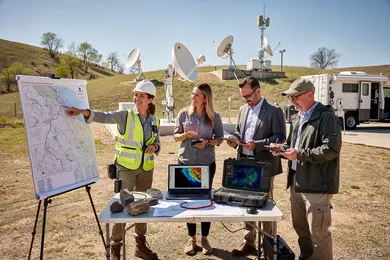
Environmental consulting firms, government bodies, and nonprofits favor applicants who demonstrate proficiency in data analysis, GIS, and environmental impact mitigation. Entry-level competition remains stiff, but career changers equipped with prior expertise in engineering or data science and targeted geoscience credentials can position themselves for mid-level roles more effectively.
Success hinges on mastering regional regulatory frameworks such as the Clean Water Act or NEPA, which fluctuate by policy and funding cycles. Professionals pivoting from fields like civil engineering into site remediation must invest in EPA or state-specific certifications to meet employer standards. Ongoing professional development is essential to maintain relevancy amid evolving environmental regulations and technology.
- Nearly half the geoscience workforce will retire within 10 years, creating immediate demand.
- Cross-disciplinary skills accelerate access to mid-level roles.
- Regulatory and certification knowledge is critical, varying by region.
Strategic upskilling aligned with employer expectations dictates employability more than traditional supply-demand imbalances in environmental geoscience careers.
Are there licenses or certifications that help career changers qualify for entry-level geoscience roles?
Licenses and certifications distinctly influence entry-level geoscience candidates' marketability by verifying technical competence and adherence to regulatory standards. For example, the Fundamentals of Geology (FG) exam-administered by the Geological Society of America-functions as a practical credential that can differentiate career changers without formal geoscience degrees. However, some roles, especially those involving environmental regulation or public safety, mandate Professional Geologist (PG) licensure, which is state-dependent and requires documented education, supervised work, and passing a comprehensive exam.
Certification value varies by sector and employer expectations:
- Environmental consulting commonly requires FG certification paired with OSHA HAZWOPER training due to direct impacts on site safety and regulatory compliance.
- Mining and oil fields often prioritize skills in GIS and remote sensing, which are frequently endorsed through supplemental certificates rather than formal licensure.
The credentialing process entails investment in time and finances, sometimes delaying job market entry. Yet the 4.9% workforce growth forecast by the American Geosciences Institute outpaces average U.S. employment growth, providing a buffer against automation pressures. Absence of certification can limit candidates to less technical roles and reduce competitiveness when employers seek verifiable proficiency.
Aligning certification choices with targeted career paths is critical. For instance, environmental remediation roles typically look for FG certification plus specialized safety training, while federal research positions might focus more on advanced degrees rather than licensure, marking a distinct strategic tradeoff for applicants.
Other Things You Should Know About Geosciences
Most entry-level geosciences roles expect at least a bachelor’s degree in geology, environmental science, geography, or a related field. Employers often require introductory coursework in GIS, chemistry, or earth systems, plus 1 to 2 field or lab experiences. Some public-sector jobs also require U.S. citizenship or a background check.
Early specialization limits entry-level positions to niche roles but may speed advancement within that subfield if demand is steady. A broader geosciences education provides flexibility across environmental roles but can dilute expertise, slowing initial job placement. Career changers should assess local employer needs and long-term industry trends to choose a path that balances adaptability with marketable skills.
Field experience is a critical differentiator for entry-level roles, as employers expect practical knowledge of site assessments, sampling, and data collection. Lack of hands-on experience often leads to longer job searches despite strong academic records. Programs offering integrated, supervised fieldwork internships increase employability and reduce reliance on unpaid or informal work to build practical skills.
For career changers targeting environmental geosciences roles, programs with established industry partnerships provide more direct access to job placement, mentorship, and relevant work experience. Research-focused programs benefit those aiming for specialized or doctoral paths but may limit immediate job opportunities in the environmental sector. Prioritizing programs with applied, employer-linked training improves early career outcomes.
References
- What coursework should I take to become a successful Applied Geoscientist? https://www.aegweb.org/index.php
- Fieldwork https://www.geolsoc.org.uk/Geology-Career-Pathways/University/During-your-degree/Fieldwork.html
- Associate in Science, Emphasis in Geology | Estrella Mountain Community College https://www.estrellamountain.edu/degrees-certificates/science-technology-engineering-and-mathematics/associate-science-emphasis-geology-8608-as
- Careers in Geoscience: Environment https://www.aig.org.au/education/careers-in-geoscience/careers-in-geoscience-environment/
- Geoscience Jobs in Industry https://www.grow-geocareers.com/exploreindustries
- Geologists: Salary, career path, job outlook, education and more - RaiseMe https://www.raise.me/careers/life-physical-and-social-science/geoscientists/geologists/
- Information about Geoscience Related Careers https://careerexplorer.americangeosciences.org/careersinfo/
- 8. Recruiting, Retaining, and Promoting Success of Undergraduate Students with Emphasis on Students Underrepresented in the Geosciences https://www.americangeosciences.org/change/sections/recruitment/
- Top 5 careers in Environment & Geoscience at AtkinsRéalis https://careers.atkinsrealis.com/en/life-at-atkinsrealis/blogs/2023/top-5-careers-in-environment-geoscience-at-atkinsrealis
- 500+ Water Jobs (Updated Today) â Free to Apply https://jobs.watertechintel.com/blog/geology-major-jobs