2027 Best Online Geosciences Programs for Professionals Seeking Career Mobility Across Earth Science Settings

Co-Founder and Chief Data Scientist
Professionals in geosciences often confront a stark dilemma: the need to pivot swiftly amid shifting environmental priorities, regulatory demands, or technological advances, yet face enrollment barriers entrenched in rigid, location-based programs. As the U. S. Department of Education reported in 2024, online degree enrollment surged 17% among adult learners seeking flexible schedules, reflecting growing demand for accessible credentials that accommodate full-time employment and geographic mobility. This shift signals vital implications for geosciences professionals aiming to remain competitive without sacrificing income or relocation constraints.
This article evaluates top online geosciences programs optimized for practical career mobility across diverse earth science sectors, guiding informed, strategic enrollment decisions.
Key Things You Should Know
- Over 40% of geosciences job openings require advanced modeling or remote sensing proficiency, limiting degree holders with traditional curricula and pressuring programs to expand technical coursework despite lengthening time-to-degree, per U.S. BLS data.
- Employers prioritize candidates with integrated fieldwork and computational skills; graduates lacking both face 25% lower initial salary offers, affecting mid-career pivot viability according to the AGI Workforce Report 2024.
- Online program costs average 30-50% less than on-campus, but varying state residency policies create uneven financial burdens, often delaying credential completion and diminishing immediate earnings gains in a fast-evolving job market.
What are the best online geosciences programs for working professionals seeking career mobility?
Selecting from the best online geosciences degree programs for career advancement requires emphasizing curricula that deliver applied expertise aligned with employer demands rather than generic theory. Working professionals considering top remote geosciences programs for professionals in earth science should scrutinize program flexibility, accreditation, and direct pathways to certifications like GIT or Professional Geologist credentials, which strongly influence hiring and pay scales.
The choice between flat-rate tuition and per-credit fees significantly impacts long-term affordability, especially for part-time learners balancing work commitments. Employer tuition assistance and robust alumni networks also bear heavily on post-graduation job prospects. For example, a professional pivoting from environmental remediation toward data-driven roles benefits most from programs incorporating advanced geospatial analytics over traditional environmental science tracks.
Prioritizing modular coursework that supports specialization in GIS, hydrogeology, or petroleum geology meets workforce preferences for practical skills. Programs offering asynchronous study combined with live case studies or internships enhance job readiness without disrupting ongoing employment. Those targeting regulatory roles should seek programs emphasizing policy standards and environmental law to remain competitive.
Prospective students can explore the best GIS programs in the US as a strategic subset of geosciences degrees delivering in-demand technical proficiencies critical for advancing in earth science disciplines.
How do online geosciences degrees compare to campus-based programs for Earth science careers?
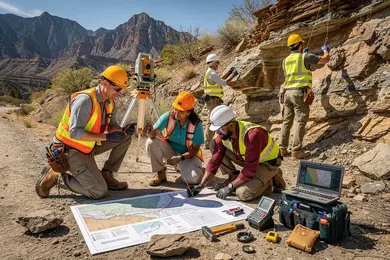
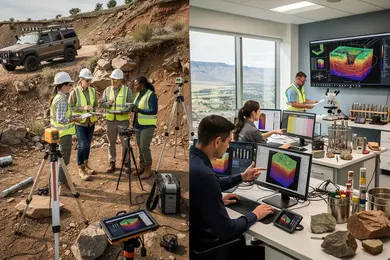
Choosing an online geosciences degree requires weighing critical tradeoffs between flexible academic delivery and the inherent limitations in hands-on fieldwork. While online programs often match campus-based curricula in theoretical knowledge, they fall short in providing the immersive geophysical data collection and direct lab experience essential for many specialized Earth science roles. For example, professionals aiming at hydrology or petroleum exploration frequently need campus access to extensive research facilities to meet job readiness expectations.
Employers acknowledge accredited online geosciences degree benefits for Earth science professionals when supplemented by practical internships or local part-time roles. This alignment with workforce demands is timely given that the U.S. Department of Labor forecasts approximately 9,600 new geoscience-related jobs by 2034, driven largely by environmental remediation and energy transition sectors which emphasize applied skills alongside academic credentials.
A strategic approach includes:
- Engaging with hybrid learning options integrating online coursework with required regional field modules to satisfy licensure prerequisites.
- Proactively securing employer partnerships or internships to compensate for reduced on-campus networking.
- Managing time effectively amid career responsibilities to succeed in structured, timeline-driven programs.
Those evaluating a environmental engineering degrees online alongside geosciences options should consider this balance carefully. The comparison of online and campus-based geosciences programs for career advancement hinges on one's ability to supplement virtual education with targeted field exposure to enhance employability across diverse sectors.
What types of online geoscience degrees and certificates are available for midcareer professionals?
Advancement in geosciences for midcareer professionals hinges on targeted educational credentials that align with evolving industry demands and employer expectations. Online geoscience degree programs for midcareer professionals are tailored to balance depth in technical specialties such as stratigraphy, GIS, and geostatistics with leadership-oriented skills like applied research and project management. These layered competencies support transitions into supervisory or niche roles in sectors like hydrogeology or environmental consulting.
Certificates focused on discrete skills-such as seismic interpretation or regulatory compliance-offer a faster route to upskilling but rarely match the promotion or salary impact of degree programs. For example, a geoscientist with extensive oil exploration experience might pursue a Master's in geological engineering to manage drilling operations, while a professional in environmental remediation could choose an advanced certificate in earth sciences for career mobility to satisfy regulatory credentialing requirements.
Decision-making involves weighing the long-term return on investment from degrees against the time constraints and immediate skill demands addressed by certificates. Employers prioritize credentials with measurable outcomes and hands-on applicability, influencing hiring and promotion trajectories in fields ranging from natural resource extraction to environmental monitoring. Midcareer salaries typically range between $62,090 and $80,060, increasing significantly at leadership levels.
In comparing educational pathways, professionals may find insights by exploring related fields; for example, exercise science degrees illustrate how applied sciences balance theoretical depth with practical workforce readiness.
How can I confirm an online geosciences program is properly accredited and respected by employers?
Regional accreditation from a U.S. Department of Education-recognized agency remains the foundational criterion for identifying accredited online geosciences programs in the United States. Without this, federal financial aid eligibility, state licensure, and employer recognition become problematic, especially for candidates targeting environmental consulting or petroleum geology. Specialized accreditation, such as from ABET or geological societies, often signals curriculum rigor aligned with industry benchmarks and can influence employability within competitive sectors.
Employer approval of recognized online geosciences degrees with employer approval frequently hinges on measurable outcomes like graduate employment rates, internship quality, or research output. Professionals aiming for roles in federal or state agencies should verify that degrees meet credentialing standards set by accreditation oversight bodies, as some agencies restrict hires to graduates of certain certified programs.
Online delivery constituting 100% of distance geosciences master's options worldwide-according to 2025 Mastersportal data-raises important tradeoffs. Programs relying solely on asynchronous coursework may lack sufficient fieldwork or practical lab exposure, a disadvantage for roles demanding hands-on skills. Prospective students need to confirm if virtual labs, fieldwork components, or industry partnerships are embedded to offset these challenges.
State authorization remains a critical, though often overlooked, factor. Some boards restrict licensure or employment to graduates of approved programs, complicating job mobility across state lines. Additionally, networks linked to active research institutions or professional geoscience organizations enhance access to internships and career pathways, which can directly affect employment outcomes.
Cost considerations are another operational reality. For those balancing finances and career goals, exploring resources like the cheapest online mechanical engineering degree listings can provide comparative insight, even if outside geosciences, reflecting broader trends in affordable, accredited online education.
What core courses and specializations do online geosciences programs typically include?
Online geosciences programs offer focused training in core disciplines such as physical geology, mineralogy, geophysics, sedimentology, and GIS applications, tailoring specializations like hydrogeology, environmental geology, and petroleum geology to meet sector-specific demands. This alignment improves employability in diverse settings, from government agencies to energy firms.
Students face a notable tradeoff: degree costs, averaging $20,000-$30,000, are substantially lower than those of many STEM master's programs, but remote delivery can limit hands-on field experience essential for roles dependent on practical skills in contamination assessment or seismic analysis. Prospective candidates must weigh whether available virtual labs and internships adequately substitute for in-person learning, particularly where regulatory certifications or state licensure pathways are prerequisites.
Employers expect graduates to be fluent in data interpretation and earth systems modeling, often using industry-standard software. Curricula integrating applied projects and real-time data analysis are more likely to produce workforce-ready candidates. Practical program evaluation includes:
- Verification of real-time or fieldwork components that build practical skills
- Consideration of program support for certification and licensing applicable to targeted jobs
- Assessment of quantitative training relevance to employer expectations in environmental consulting and resource management
What are the admission requirements and application materials for online geoscience programs?
Applicants to online geoscience programs face a critical selection process where foundational knowledge in earth science or related STEM disciplines must be clearly evidenced, typically via a bachelor's transcript. A minimum GPA of 3.0 is common, but competitive tracks often require higher, with standardized tests like the GRE increasingly optional except for research-intensive master's paths. The practical emphasis on quantitative skills-math, chemistry, and physics-aligns with employer expectations for roles such as GIS analysts or environmental consultants.
Effective applications include detailed personal statements aligned with specialized fields like hydrogeology or remote sensing, and letters of recommendation from professionals who can affirm technical proficiency and project experience. Working professionals switching into geosciences benefit from highlighting relevant geospatial or field experience, which corresponds to an anticipated 5% job growth through 2032 according to GISDegree.org's 2025 review.
International candidates must navigate credential verification and demonstrate English proficiency via TOEFL or IELTS. Some certificate programs bypass degree prerequisites in favor of demonstrable work experience, targeting professionals seeking focused skill upgrades.
Consider a mid-career professional pivoting to cartography who must corroborate prior geospatial data work and connect program content to salary targets near $68,900. Insufficient or poorly aligned documentation can stall admission and delay workforce entry, making careful preparation essential for alignment with earth science employer standards.
How long do online geosciences programs take and what do they cost to complete?
Online geosciences degrees demand careful consideration of time, cost, and practical alignment with employer needs. Master's programs typically require 18 to 24 months full-time, with bachelor's degrees usually spanning four years but potentially accelerated to 2.5-3 years for transfer students. Part-time students working full-time should anticipate program extensions of 6 to 12 months, raising indirect costs and delaying workforce reentry.
Tuition varies broadly, with bachelor's degrees costing $15,000 to $40,000 overall and master's degrees between $20,000 and $50,000, influenced by institutional reputation and residency. Transfer credit policies and financial aid availability significantly affect total investment and completion timelines.
Employment outcomes hinge on practical competence rather than degree alone. Entry-level environmental consulting or resource management roles start around $50,000, advancing toward $80,000-$103,000 at senior levels. Programs lacking applied training, such as GIS or energy sector case studies, may leave graduates underprepared for regulatory and fieldwork demands.
For example, a professional shifting into energy exploration needs a curriculum tailored for sector-specific case analyses and flexible pacing around project cycles, while aspiring environmental consultants must prioritize training in environmental law and geographic information systems to meet job requirements.
What geoscience careers, sectors, and roles can online graduates pursue across Earth science settings?
Employers increasingly seek geoscience graduates who couple technical competence with adaptability to diverse sector demands-a combination online programs can provide if structured around practical experience. For instance, environmental geologists tasked with contamination evaluation or hydrogeologists managing scarce groundwater resources must demonstrate proficiency with specialized software and remote data interpretation, skills attainable through rigorous online study paired with hands-on internships. Job roles now extend beyond traditional fieldwork to include GIS specialists and data scientists contributing to environmental impact assessments and resource management.
Mid-career professionals aiming to pivot must carefully align online coursework with state-specific licensure requirements for roles like environmental compliance officers or geospatial intelligence analysts. These certifications often carry more weight with employers than the mere mode of program delivery. Graduates who leverage integrated practicum projects enhance their portfolios notably, addressing employer preferences for demonstrated project experience over degree format alone.
According to EnvironmentalScience.org, online geoscience master's students who dedicate 15-20 hours weekly generally complete their degrees within two years while maintaining full-time employment, offering a feasible balance for career-focused learners. However, prospective students should critically evaluate mentorship quality and real-world project availability, as these factors directly influence readiness for roles in mining, urban planning, and environmental remediation. The decision to pursue an online degree demands a strategic assessment of how well the program bridges theoretical knowledge and employer-valued competencies.
What salary ranges and job outlook can geoscience professionals expect with an online degree?
Geoscience careers requiring online degrees reveal a spectrum of salary outcomes shaped more by specialization and experience than by the mode of education alone. Entry salaries for graduates usually fall between $55,000 and $85,000 annually, but those engaged in sectors like environmental consulting or public agencies can expect mid-career wages of $90,000 to $120,000. This variation depends on regional demand, industry focus, and skill integration beyond formal credentials.
Institutions offering online geoscience programs must align curricula with evolving workforce needs, especially in geospatial analysis, hydrology, and geotechnical engineering. Employers emphasize demonstrable abilities and validated project experience, often gained through internships or certifications. For example, a professional shifting from oil and gas to environmental remediation typically requires additional targeted certifications that modular online courses can provide.
Job stability varies significantly by discipline: hydrogeologists supporting municipal water systems face steady demand, while mining geologists encounter cyclical volatility tied to commodity markets. Technologies like GIS and remote sensing are increasingly essential and correlate strongly with employability and salary enhancement.
How should professionals choose the right online geosciences program for their experience and goals?
Online geosciences programs must be carefully matched to specific career goals to avoid gaps between education and job market demands. For example, professionals targeting sustainability or environmental compliance roles should prioritize programs that include climate resilience and hazard mitigation, given the anticipated growth in these areas beyond the 3% occupational average through 2034, according to GISDegree.org's 2026 data. Conversely, those pursuing traditional geology roles in resource extraction benefit from programs emphasizing mineralogy and geophysical methods.
A critical practical consideration is verifying that coursework provides applied learning components like GIS software experience, remote sensing, or virtual fieldwork. Employers increasingly expect graduates to demonstrate technical proficiency, not just theoretical knowledge. A professional shifting from general environmental science to climate adaptation consulting must ensure the curriculum covers climate risk assessment tools, not just general geology principles.
Balancing program flexibility with professional responsibilities involves tradeoffs: part-time or asynchronous formats help maintain employment but can limit internship and networking opportunities essential for job placement. Accreditation status and institutional standing influence employer trust and hiring outcomes, making verification of these factors essential. Cost and financial aid are relevant but secondary to outcome data such as graduate employment rates and salary growth. Prospective students should request this information upfront to assess return on investment, especially when aiming for licensure or certification in regulatory or public-sector roles requiring specific exam preparation.
Other Things You Should Know About Geosciences
Most online geosciences programs for working professionals minimize or simulate fieldwork through virtual labs or local field assignments. However, limited direct field experience can constrain readiness for roles that prioritize on-site data collection or physical site assessments. When selecting a program, prioritize those offering practical, supervised field opportunities or partner arrangements, especially if targeting careers in environmental consulting or geological surveying where field competence influences employability.
Most online geosciences graduate programs do not require GRE scores in 2027, but some waive them only for applicants with a 3.0 GPA or relevant professional experience. Official transcripts, a statement of purpose, and two to three recommendation letters are commonly required.
Employer acceptance differs across geosciences sectors. Environmental remediation fields often value practical credentials over institution type, making online degrees comparatively competitive. Conversely, petroleum and energy sectors frequently prefer candidates with traditional campus experience and direct industry internships, affecting hiring prospects for online graduates. Professionals aiming for specialized sectors should seek programs with explicit industry ties or co-op components to enhance sector-specific legitimacy.
Graduate certificates offer concentrated skill upgrades and faster completion with lower cost, beneficial when pivoting within a related Earth science area or supplementing existing expertise. However, certificates deliver narrower credentials that may limit eligibility for advanced technical or leadership roles requiring comprehensive graduate degrees. Choosing between them depends on the target role's credential expectations; for substantial career shifts or roles demanding deep technical knowledge, a full degree is usually necessary.
References
- Best Online Geoscience Courses and Programs | edX https://www.edx.org/learn/geosciences
- Online Geoscience Degrees: Top Schools and All Programs in 2026 https://www.gisdegree.org/online/geoscience-degrees/
- Working Geoscience https://profession.americangeosciences.org/working/
- Are Online Degrees Accredited? How to Identify Quality Distance Learning Programs https://www.umassglobal.edu/blog-news/online-degrees-accredited-identify-quality-distance-learning-programs
- ThisIsGeoscience - Geoscience Salaries https://www.thisisgeoscience.com/the-resources/geoscience-salaries
- Career Services | University of Manitoba - Career Compass: Earth Sciences https://www.umanitoba.ca/career-services/career-planning/career-compass-earth-sciences
- Online Courses - American Institute of Professional Geologists https://aipg.org/page/onlinecourses
- The Geological Society - Degree Accreditation https://www.geolsoc.org.uk/education-and-resources/universities/university-degree-accreditation/
- Geoscience Careers https://education.americangeosciences.org/resources/geoscience-careers/
- How to Choose the Best Specialization for Your Online Degree https://dsuonline.com/resources/blogs/how-to-choose-the-best-specialization-for-your-online-degree/