2027 Best Online Geosciences Programs for Professionals Seeking Water Resources Careers

Co-Founder and Chief Data Scientist
Professionals aiming to transition into water resources careers confront the challenge of accessing rigorous geosciences education without disrupting their work schedules or relocating. With the U. S. Department of Education reporting a 23% increase in online enrollment for adult learners since 2023, the demand for flexible, accredited programs aligned to workforce standards is reshaping how expertise is acquired. This shift reflects broader structural barriers faced by mid-career students balancing employment, family, and evolving industry needs. Selecting a program that delivers practical skills, employer recognition, and adaptable pacing becomes a critical strategic decision.
This article evaluates top online geosciences programs designed explicitly for professionals targeting water resources roles, focusing on accessibility, curriculum relevance, and career impact to guide informed choices.
Key Things You Should Know
- Federal data reveals water resources roles in geosciences grow 7% annually, but accelerated credentialing delays cost mid-career professionals up to 20% annual wage growth when extending studies beyond two years.
- Employers prioritize candidates with specialized hydrogeology coursework and practical site assessment skills, with 65% of hiring managers in EPA surveys rating hands-on remote sensing proficiency as mandatory.
- Programs concentrated in engineering-heavy curricula limit cross-sector mobility; selecting interdisciplinary tracks enhances access to state and federal water policy jobs, which expanded 15% post-2023 climate legislation.
What is an online geosciences degree and how does it prepare you for water resources careers?
Online geosciences degree programs for water resource management offer targeted training that addresses specialized skills in hydrology, environmental chemistry, and geospatial data analysis, distinguishing them from broader earth sciences curricula. These programs emphasize applied competencies such as groundwater modeling, contaminant transport analysis, and watershed management, aligning closely with compliance and project-driven roles in sectors like environmental consulting and public utilities.
One practical scenario involves professionals transitioning from civil engineering to water resource roles; the focused coursework on aquifer testing and watershed hydrodynamics fills gaps not typically covered in standard engineering programs. The asynchronous delivery model supports working professionals by integrating education with ongoing employment without significant disruption.
Labor market evidence points to sustained demand: over 88,000 water and environmental engineering positions existed in the U.S. in 2025, with a projected 6,600 annual openings through 2035. Candidates who acquire an online geosciences degree aligned to employer expectations-especially those programs that integrate applied research and regulatory frameworks-are better positioned to meet workforce needs in infrastructure resilience and contamination control.
Considerations for prospective students include program accreditation, relevant applied research opportunities, and pathways to professional licensure, all of which affect the practical value of the credential beyond academic theory. Researching accredited programs can inform decisions about the degree's alignment with career objectives, as shown through resources such as the geology online degree listings.
How do online geosciences programs focused on water resources compare with on-campus options?
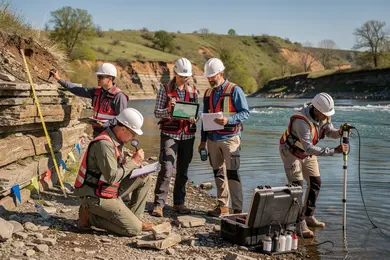
Choosing between online and on-campus geosciences programs focused on water resources involves weighing practical workforce outcomes against educational format limitations. Employers prioritize candidates with hands-on experience such as fieldwork or supervised internships, which traditional campus programs provide more directly. Online geosciences programs water resources career advantages hinge on how effectively they incorporate applied learning through virtual labs, remote sensing simulations, and mandatory local placements to offset decreased physical interaction.
For professionals making a strategic career pivot, online curricula offer unmatched flexibility to remain employed during study, yet this flexibility demands heightened self-discipline and initiative to coordinate local experiential requirements. On-campus students benefit from easier access to university-affiliated projects and mentoring networks that correlate with higher early-career placement rates, while online students must intentionally seek programs with strong virtual advising and alumni connectivity.
The U.S. Bureau of Labor Statistics projects at least 5% growth in geoscientist employment through 2033, with median wages above $99,000. Hiring managers expect demonstrated skills in hydrological modeling, GIS, and regulatory compliance, verified through portfolios or project documentation-elements more straightforward on campus but achievable online with rigorous program design and student engagement.
Working professionals in remote areas can reach comparable outcomes if they actively participate in applied learning beyond coursework, underscoring the critical difference between format convenience and authentic skill acquisition. Prospective students evaluating an environmental engineer degree online path should audit how programs address these tradeoffs before committing.
What types of online geosciences degrees best support careers in water resources?
Online geosciences degrees for water resources careers must prioritize technical skillsets aligned with employer demand rather than broad theoretical knowledge alone. Specialized hydrogeology programs produce graduates capable of detailed groundwater flow analysis, contamination assessment, and aquifer recharge modeling-abilities strongly sought by consulting firms and government bodies overseeing water supply and quality. Conversely, environmental engineering degrees with a water resources focus benefit those transitioning from civil engineering roles, particularly within public utilities, where infrastructure design, lifecycle evaluation, and regulatory compliance are primary concerns.
Watershed management programs emphasize surface water evaluation, hydrologic modeling, and ecosystem resilience strategies, aligning candidates with federal agencies such as the EPA or USGS and environmental consultancies. Incorporating substantial GIS and data analysis coursework is critical across programs since spatial data interpretation remains a consistent requirement in this sector.
For example, a candidate moving into consulting hydrogeology must demonstrate proficiency with field data collection and groundwater modeling software typically embedded in specialized hydrogeology curricula. National labor market data project median wages around $153,300 in 2025 for U.S. environmental and water resources engineers, reflecting premium compensation for combined expertise in technical analysis, regulatory frameworks, and applied resource management.
Students evaluating these pathways should also consider licensure requirements and specific software proficiencies prioritized by employers. For broader context on technical degrees related to water resource management, exploring related fields such as exercise science degrees online can offer insight into program delivery dynamics across disciplines. Selecting the best online geosciences programs supporting water resource management involves balancing specialization depth with practical workforce expectations.
How can you verify accreditation and program quality for online geosciences schools?
Evaluating accreditation standards for online geosciences programs in the United States requires more than confirming U.S. Department of Education-recognized institutional approval; it demands scrutiny of discipline-specific recognition from bodies like the Commission on Accreditation of Environmental Engineering Programs. This differentiation matters because general institutional accreditation does not guarantee the rigor needed for fields like water resource management, where employers expect verified expertise in hydrology, GIS, and regulatory compliance.
Employment outcomes serve as a critical benchmark. Metrics such as graduation rates and job placement percentages reveal whether programs align with labor market realities. For example, hydrologists are increasingly sought after in environmental consulting, cleanup, and government water quality agencies. Programs demonstrating strong employer partnerships and embedded practical skills better prepare students for immediate workforce integration.
When verifying program quality and accreditation for US-based online geosciences schools, demand transparent curriculum details and active faculty research credentials through 2024 or later. Experiential learning components like internships and capstone projects in regulated environments significantly elevate career readiness by offering hands-on exposure to sector-specific challenges.
Cross-reference claims via databases from the Council for Higher Education Accreditation and National Center for Education Statistics to avoid unrecognized or for-profit accreditors that may jeopardize licensure and professional credibility. Consulting third-party rankings or employer surveys on program reputation can provide an additional perspective. For those considering interdisciplinary options, comparative review alongside programs such as a master of library science may clarify strategic educational investments.
What core courses and specializations do online geosciences programs offer in water resources?
Online geosciences programs concentrated on water resources require mastery of core subjects such as hydrology, hydrogeology, geochemistry, and geomorphology to build practical expertise valued by employers. These courses equip students to understand groundwater flow and contaminant transport, critical in environmental consulting, water resource management, and regulatory roles. A specialization in watershed management, for instance, prepares students to create sustainable land-use strategies that mitigate flooding and erosion-a direct asset for municipal planners and environmental policy agents.
Practical skills in GIS, remote sensing, and environmental modeling are indispensable, as demand grows for analysts who manage complex datasets tied to infrastructure and regulatory compliance. Awareness of federal and state water laws is key for navigating permitting processes and impact assessments, a focus often underrepresented in less rigorous programs.
Advanced students study quantitative methods including statistical hydrology and numerical modeling to forecast water availability under climate stressors, an increasingly necessary competence in water science sectors. The geographic reach of online delivery, such as at Southern New Hampshire University, extends access nationwide-addressing regional workforce shortages more effectively than traditional campus-only offerings.
Prospective professionals must scrutinize programs for hands-on virtual labs or field data projects aligned with Environmental Protection Agency standards and current groundwater remediation techniques to ensure workplace readiness.
What are the typical admission requirements for online geosciences degrees in water resources?
Admission to online geosciences programs focused on water resources hinges on more than academic credentials; it reflects a balance between foundational expertise and workforce alignment. Candidates typically need a bachelor's in geosciences, environmental science, engineering, or a related STEM discipline, with minimum GPAs around 3.0 to 3.5. Programs commonly request GRE scores but may waive them for applicants with relevant professional experience or graduate coursework. Essential prerequisite knowledge in calculus, chemistry, physics, and earth sciences often dictates initial program access and influences length and cost, especially for those shifting careers.
Employers in water system modernization increasingly seek professionals with applied skills in hydrogeology, water quality, and infrastructure projects, linking program admission scrutiny with labor market trends. Work experience, particularly aligned with sustainability efforts, strengthens candidacies and correlates to better job prospects through 2035, as noted by institutions like the University of Kansas. Applicants without a geosciences background should anticipate delays due to prerequisite completion, impacting practical research or internship scheduling.
Admission processes often require a detailed statement of purpose and letters of recommendation focusing on technical and project management capability. Prospective students must verify transfer credit policies, standardized test requirements, and employer tuition assistance to mitigate risks to graduation timing and return on investment. Navigating these operational realities is critical for maximizing both educational and professional outcomes in this narrowly specialized field.
How long do online geosciences programs take and what do they cost?
Programs in geosciences focused on water resources present a distinct time-cost balance that directly affects professional trajectories. Part-time students, often balancing employment, typically spend up to three years completing coursework due to sequencing and workload constraints; full-time candidates might finish in 18 to 24 months but face higher immediate expenses. This timeframe variation largely depends on prerequisite demands and program intensity, with tuition ranging broadly from $15,000 to $45,000, plus additional fees that can add 5 to 10 percent of the total cost.
Employers in environmental management, urban planning, and hydrology prioritize candidates with practical experience, which often means internships or applied projects within the online program are decisive. For example, individuals seeking government roles in water security-a sector addressing challenges affecting over 2 billion people-benefit from programs integrating fieldwork despite longer durations.
Students shifting from unrelated disciplines should anticipate extended timelines and higher costs due to necessary prerequisite courses. Part-time formats offer required flexibility but demand consistent self-discipline to avoid delays. Conversely, accelerated full-time paths suit those able to pause work commitments for faster degree completion at greater upfront cost, facilitating quicker workforce reentry.
Weighing these factors against career goals helps determine the most strategic route in geosciences education, particularly when balancing employability gains with time and financial investments.
What water resources jobs can you get with an online geosciences degree?
An online geosciences degree opens pathways primarily in water resource management, hydrogeology, environmental consulting, and natural hazard assessment, but success depends on matching sector-specific skills to employer demands. For instance, hydrologists focusing on groundwater modeling differ sharply in daily tasks and required expertise from water resource engineers who design infrastructure systems balancing sustainability and distribution efficiency.
Employers-ranging from municipal agencies to federal organizations-seek candidates capable of integrating data analytics, GIS, and regulatory compliance with hands-on skills like field data collection and remote sensing. This intersection expands traditional technical roles into interdisciplinary positions that require versatility beyond foundational geoscience knowledge.
Key workforce trends reveal:
- Increasing investment in natural hazard management due to climate-driven phenomena such as flooding and coastal erosion
- The growing necessity for hydrogeologic modeling software proficiency and advanced data interpretation
- Career differentiation where federal hydrologists earn $75,000-$95,000 annually, but private-sector environmental consultants specializing in water can exceed $100,000 depending on project scope and location
Those weighing an online geosciences program for water resource careers should critically assess how well the curriculum develops specialized competencies aligned with sector priorities and practical tools. This focus is paramount given the expanding public and private sector funding in climate resilience and water system adaptations. Inappropriate alignment can limit employability despite the degree's broad applicability.
What salary ranges and job outlook can geoscience graduates expect in water resources?
Salary expectations for geoscience graduates focusing on water resources vary significantly based on experience, location, and employer type. Entry-level positions typically offer $55,000 to $75,000 annually, with median salaries rising to around $85,000 as professionals build expertise. Hydrologists and water resource specialists often earn median wages above $90,000, outperforming environmental technicians who average near $53,000 according to updated U.S. Bureau of Labor Statistics data. The 6% job growth projection through 2032 aligns with average occupational trends but is strongly influenced by regional water challenges and infrastructure demands.
Practical skills drive employability; for example, proficiency in groundwater modeling, GIS, and regulatory compliance is frequently mandated by municipal water agencies and consulting firms. Candidates aiming for federal roles at agencies like the U.S. Geological Survey or EPA should anticipate longer hiring timelines but benefit from more stable compensation packages. Graduates from cost-effective online master's programs, such as the University of Pennsylvania Applied Geosciences degree with tuition between $40,000 and $50,000, can mitigate student debt, providing a stronger return on investment compared to traditional campus-based alternatives.
Salary and hiring considerations vary by geography. Positions in drought-affected states like California pay premiums but require expertise in local water law and policy. To maintain upward mobility beyond entry-level roles, developing skills in data analytics and remote sensing is increasingly essential, as is pursuing relevant certifications that correlate with higher wages and job stability.
How do licenses, certifications, and professional societies impact water resources careers?
Licenses and certifications serve as critical gatekeepers in water resources within geosciences, reflecting both technical expertise and legal responsibility. For example, state regulatory agencies typically require a Professional Geologist (PG) license or Certified Water Rights Examiner credential to authorize independent work on groundwater or surface water projects. This demand stems from the need to mitigate legal liability and ensure regulatory compliance amid a labor market expecting over 130,000 openings fueled by retirements and sector growth.
Professionals without these credentials can face significant limitations: roles involving project sign-off or senior oversight are often off-limits, underscoring the tangible penalty for delaying licensing.
Memberships in professional societies such as the American Water Resources Association (AWRA) and the Geological Society of America (GSA) play a practical role by offering access to up-to-date research, continuing education, and peer networks that help maintain certifications and amplify visibility. Such involvement correlates with better salary outcomes and leadership opportunities, particularly in specialties like water rights litigation and infrastructure projects.
Transitioning professionals, especially from adjacent fields like civil engineering, must navigate the financial and time demands of preparatory exams and supervised experience, often while working full time. This balancing act requires deliberate planning but is necessary for access to advanced roles. Without these credentials, career progression stalls at mid-level technical positions.
Other Things You Should Know About Geosciences
Many 2027 online geosciences master’s programs end with either a thesis or a capstone. Thesis tracks usually require 6 to 9 credit hours of research, while capstones are often 3 credits and may use a workplace-based case study, GIS model, or groundwater analysis completed under faculty supervision.
Some accredited online geosciences programs mandate practical fieldwork or internships, which can complicate completion for remote or employed students. These requirements often demand local arrangements or travel, increasing time and cost commitments. Choosing programs with flexible or virtual lab components reduces barriers but might limit hands-on skill acquisition valued by some employers in water resources management roles.
Online geosciences programs focused on water resources typically last 18 to 24 months for part-time students. This allows professionals to balance their studies with work commitments, offering a route to enhance expertise without interrupting their careers.
Choose programs with specialized coursework aligned to water resources, practical skill-building opportunities, and connections to industry networks. Prioritize those offering mentorship, updated curricula reflecting current water management challenges, and pathways for certification support. While cost and duration matter, the practical applicability of knowledge and employer recognition are decisive factors for career advancement.
References
- Career Cornerstone Center: Careers in Science, Technology, Engineering, Math and Medicine https://www.careercornerstone.org/geosciences/geosci.htm
- Careers in Geoscience: Environment https://www.aig.org.au/education/careers-in-geoscience/careers-in-geoscience-environment/
- Undergraduate MajorHydrology and Water Resources Engineering-CUGB https://en.cugb.edu.cn/SWRE/40986.jhtml
- Geoscience Careers https://education.americangeosciences.org/resources/geoscience-careers/
- Water Resource Specialists https://careerexplorer.americangeosciences.org/careersinfo/11912102/
- Are Online Degrees Accredited? How to Identify Quality Distance Learning Programs https://www.umassglobal.edu/blog-news/online-degrees-accredited-identify-quality-distance-learning-programs
- Master's degree in Geoscienze per lo Sviluppo Sostenibile - Curricu... https://apply.unipv.eu/en_GB/courses/course/205-geo-emw-masters-degree-geoscienze-per-lo-sviluppo-sostenibile---curriculum-geosciences-energy-mineral-and-water-resources
- Working Geoscience https://profession.americangeosciences.org/working/
- Degrees in Texas Water — Texas Water Foundation https://www.texaswater.org/degrees-in-texas-water
- The Geological Society - Degree Accreditation https://www.geolsoc.org.uk/education-and-resources/universities/university-degree-accreditation/