2027 Geosciences Specializations That Best Match Climate and Water Careers

Co-Founder and Chief Data Scientist
Facing escalating droughts and erratic flood cycles, professionals in water resource management confront the urgent need to predict and adapt to evolving climate impacts with precision. Yet many entering or pivoting within the geosciences field struggle to identify specializations that align tightly with both cutting-edge climate modeling and practical water policy implementation. Compounding this, recent data from the National Center for Education Statistics reveals a 37% rise in adult enrollment in online geosciences programs since 2022, signaling growing demand for flexible pathways that support career advancement without interrupting existing commitments.
This article examines geosciences specializations tailored to these realities, guiding readers to select options that optimize timing, employability, and sector relevance.
Key Things You Should Know
- Hydrogeology specialties report a 17% wage premium for graduates with advanced GIS and data modeling skills, but candidates face a 24-month average certification delay impacting early-career entry, per US Bureau of Labor Statistics 2024 data.
- Employers in climate resilience sectors prioritize integrated knowledge of remote sensing and hydrology; 62% of posted jobs require cross-disciplinary expertise, creating a workforce bottleneck in single-focus geosciences degrees.
- Short-term training in water resource management boosts employability by 18%, yet tradeoffs include lower lifetime earnings compared to traditional geosciences BS degrees, affecting long-term career progression in climate adaptation roles.
What geosciences specializations align most directly with climate and water-focused careers?
Specializing in hydrogeology, climatology, or environmental geoscience shapes distinct but overlapping career paths in climate-focused geosciences specializations. Hydrogeology candidates are expected to analyze groundwater flow and contamination, integral for managing agricultural and municipal water supplies vulnerable to climate variability. For instance, water utilities rely on hydrogeologists to assess drought impacts on aquifer recharge, maintaining supply stability under shifting climatic conditions.
Climatology skills enable professionals to model atmospheric changes and extreme weather, which inform disaster preparedness and energy infrastructure planning. Environmental geoscience graduates bring together soil, water quality, and ecosystem data, often applying geographic information systems (GIS), remote sensing, and data analytics to address regulatory compliance and ecosystem remediation.
Trade-offs exist when focusing too narrowly within these disciplines. Hydrogeologists lacking climatology insights may face challenges addressing comprehensive climate risk scenarios. Integrating interdisciplinary skills, including hydrology, atmospheric science, and environmental policy, substantially improves employment prospects in the competitive job market.
In water resource management geosciences careers, employers favor candidates demonstrating versatility alongside technical expertise. According to U.S. Bureau of Labor Statistics data summarized by EnvironmentalScience.org, the median annual wage for geoscientists in climate and water fields reached $99,240, with a projected 3% job growth adding roughly 800 positions by 2034. Geographic mobility and advanced certifications in climate adaptation technologies or water policy frameworks are often necessary for accessing roles in government, consulting, and nonprofits.
Students evaluating options for specialization may find value in reviewing online geology degrees programs that emphasize these interdisciplinary competencies.
Which degrees do you need for climate and water careers in the geosciences?
Degrees in geosciences for climate science careers demand a strategic balance between quantitative proficiency and interdisciplinary adaptability. Employers notably seek candidates skilled in geographic information systems (GIS) and data modeling related to watershed or aquifer dynamics, linking hydrology fundamentals directly to operational climate adaptations such as flood risk management at water utility agencies. A bachelor's degree may open entry-level roles in water resource management geosciences degrees, but advanced positions typically require graduate education focused on climate impacts and water resource policy.
Students must weigh the tradeoffs between theoretically oriented curricula and applied training including fieldwork, lab experience, and internships with agencies managing water resources. Missing integrated climate-water program exposure can hamper transition into interdisciplinary job demands common in municipal or agricultural water planning.
Certification in climate science, environmental policy, and remote sensing enhances employability by addressing gaps federal and state employers highlight, particularly regarding regulatory frameworks and stakeholder coordination skills.
Job market projections estimate nearly 20% growth in hydrology and water resource fields through 2030, emphasizing the urgency of specialized skill sets aligned with climate adaptation and infrastructure resilience. Prospective students should also explore cost-effective program options such as those outlined in online environmental engineering degree science and engineering to optimize investment without sacrificing critical competencies.
How do climate and water-related geoscience careers differ in roles, settings, and daily work?
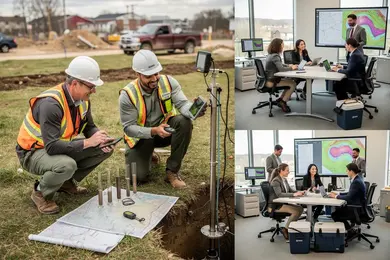
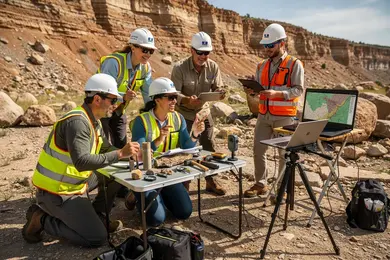
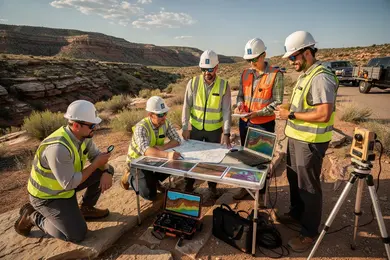
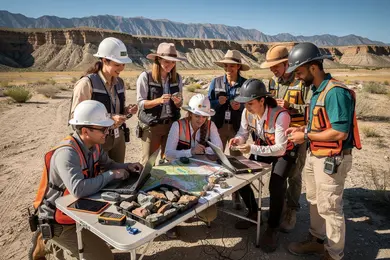
Distinct skill sets define climate and water resource geoscience career differences, with climate specialists centered on atmospheric data modeling and policy analysis, typically employed by federal agencies or research institutions. One practical example is a climate scientist developing predictive models for temperature changes, which demands advanced statistical and programming skills. Water-focused geoscientists, working in local agencies or engineering firms, engage in hands-on activities such as groundwater monitoring and watershed assessments, blending technical fieldwork with infrastructure planning.
Work environments in climate and water geoscience jobs shape required expertise and daily responsibilities. Climate roles often require managing extensive datasets and cross-disciplinary collaboration on broad scales, while water roles prioritize localized problem-solving tied to tangible environmental management. Consequently, employer priorities diverge, with climate careers showing higher median salaries exceeding $97,000 and top earnings above $145,000, highlighting the added value of analytical complexity and federal funding in these positions.
Choosing between these pathways entails weighing whether to pursue computational, large-scale system analysis or more applied, site-specific environmental work. This decision impacts educational focus and professional networking strategies, crucial for aligning with the practical realities of different employers. For those evaluating educational options, programs offering an accelerated exercise science degree online might serve as a model in balancing expedited credentialing with career relevance.
What geoscience coursework best prepares students for climate science and water resource jobs?
Job readiness for climate science and water resource roles demands coursework that blends hydrology, meteorology, and environmental geochemistry. Hydrology courses ground students in water movement and distribution, skills essential for urban water management or watershed restoration. Meteorology knowledge equips students to anticipate climate impacts on water systems, a key competency for consulting jobs centered around climate risk assessments.
Programs with a focus on geosciences coursework for climate change studies must also integrate environmental geoscience methods, such as soil and groundwater contamination analysis. These skills align with growing environmental consulting and remediation demand, especially in urbanized Northeastern U.S. regions like New York, as workforce trends indicate. Proficiency in Geographic Information Systems (GIS) enhances spatial data interpretation vital for modeling climate-driven resource changes.
Courses addressing environmental policy and regulations bolster employability by preparing graduates for compliance and impact assessments required by consulting firms and public agencies. Graduates lacking combined technical and regulatory training often face adaptation challenges in complex consulting or government roles.
Practical experience through internships with urban environmental consulting firms or municipal water agencies is crucial to build applied skills and industry networks. Limiting electives to either climate science theory or water chemistry curtails versatility and weakens competitiveness for jobs demanding multidisciplinary expertise in water resources and climate science degree programs.
Students evaluating advanced paths should also consider program affordability and value. For example, prospective enrollees can review comparative data on related fields like masters in library science to contextualize costs and options in adjacent disciplines.
How do online geoscience programs for climate and water compare with on-campus options?
Effective preparation for hydrosphere-focused roles in geosciences hinges on immersive, practical experience-elements rarely offered by fully online programs. Positions in oceanography and water-quality monitoring demand direct engagement with fieldwork, research-grade instruments, and advanced climate modeling. On-campus programs maintain a distinct advantage by providing access to these resources through established research facilities and partnerships, which align with employer expectations emphasized by the American Geosciences Institute in 2024.
For professionals navigating career pivots, hybrid programs present a workable compromise by blending online theory with mandatory lab residencies. These formats can sustain work commitments while ensuring skill development, unlike purely online degrees that obligate additional internships or site visits to close the practical gap needed for employability in specialized water resource roles.
Choosing a program should prioritize hands-on data collection and analytical tool training rather than mere convenience. Employers explicitly value candidates who demonstrate mastery in real-world data and sophisticated modeling used in hydrosphere sciences. Upcoming cohorts must consider programs that embed internships or collaborations with research entities to meet the labor market's evolving demands, as outlined in the American Geosciences Institute's hydrosphere careers guidance.
What accreditation and program quality standards matter for climate and water geoscience degrees?
Guaranteed baseline academic rigor from regional accreditation is necessary but insufficient for climate and water geoscience degrees to meet employer demands. Specialized accreditation through bodies like the Geological Society of America validates programs that integrate advanced techniques such as spatial analysis, remote sensing, and data analytics into their curricula. In practice, graduates who lack hands-on experience with industry-standard software and real-world datasets often face a steep skills gap, especially in roles requiring hydrological modeling or climate impact assessments.
For example, a professional analyzing water quality must manipulate geospatial data for watershed modeling beyond theoretical knowledge, highlighting the need for experiential learning components. Internship or cooperative education opportunities are pivotal for translating academic concepts into workplace-ready competencies, a non-negotiable in sectors like government and environmental consulting.
Employers prioritize candidates who demonstrate competency in GIS-related tools and climate data interpretation given these fields commonly serve as entry points into the energy and environmental sectors, as noted by Washington University in St. Louis (EEPS Careers). Without updated lab resources or industry engagement, programs risk limiting graduates' immediate job readiness and long-term adaptability amidst evolving data demands.
Prospective students should critically assess how programs balance accreditation status with practical skill-building opportunities, since this combination directly affects employability in entry-level geosciences roles projected to grow through 2026.
What are the typical admission requirements and program lengths for climate-focused geoscience majors?
Choosing an educational path in climate-focused geoscience directly shapes career opportunities and professional scope, particularly for hydrogeology roles that demand licensure and advanced technical skills. A bachelor's degree, typically four years, offers critical STEM foundations but restricts access to senior positions requiring graduate credentials and state licensure.
Master's programs, generally two years full-time, bridge this gap by developing expertise in groundwater modeling, climate impact analysis, and regulatory navigation. However, the additional time, cost, and fieldwork requirements pose realistic challenges, especially for working adults balancing other responsibilities. Accelerated or part-time options compress timelines to 18-24 months but intensify time management pressures.
Key tradeoffs include:
- Foundational knowledge versus advanced, licensure-aligned specialization
- Longer time and financial investment to improve employability in technical roles
- Practical constraints of juggling work-study-life balance in non-traditional program formats
Admissions demand strong STEM preparation and, increasingly for graduate entry, documented research or practical experience. GPA thresholds hover near 3.0 with traditional letters of recommendation and personal statements essential to demonstrate focused interest.
Given the U.S. average annual hydrogeologist salary of approximately $97,760, the decision to pursue advanced credentials is consequential for accessing higher earnings and professional recognition.
What are the salary ranges and earning potential in climate and water-related geoscience careers?
Salary outcomes in climate and water-related geoscience roles are tightly linked to technical proficiency and sector-specific demand. Entry-level hydrologists and environmental scientists typically earn between $55,000 and $75,000, but those who acquire advanced skills, especially in quantitative Earth and environmental data science, can expect mid-career salaries from $80,000 to $110,000. Senior roles in consulting or government agencies, particularly in regions affected by water scarcity, often exceed $120,000. Employers place a premium on expertise in Earth system modeling, remote sensing, and statistical analysis-skills that have propelled Earth & Environmental Data Science graduates at Iowa State University to an 87% placement rate over five years.
Workforce shifts toward climate risk assessment create pathways starting near $70,000 with rapid growth potential surpassing $100,000 when paired with certifications in climate adaptation or GIS. However, the absence of programming or modeling skills can leave professionals near the lower wage band. Navigating pay increases depends on mastery of data integration and scenario forecasting rather than basic data collection.
Career trajectories also vary based on geographic and sectoral contexts, with drought-prone states and climate resilience-focused regions paying up to 15% more. Students and professionals must weigh tradeoffs between broad water resource management and specialized climate modeling to align skills with market realities.
What is the job outlook and employer demand for climate and water geoscience specialists?
Employment growth for climate and water geoscience specialists is modest but stable, with about 5% expansion projected over a decade, yielding roughly 1,400 new roles nationally. Demand favors candidates who can merge geoscience proficiency with applied climate risk assessment and water resource planning-skills that transform climate data into actionable policies.
For instance, a state water authority analyst may be tasked with creating flood-risk maps that integrate projected rainfall trends and urban growth, requiring mastery of both geospatial data and hydrological modeling. This kind of role emphasizes the value of interdisciplinary capabilities over narrow theoretical study.
Tradeoffs in education can strongly affect employability: while candidates with combined expertise in geoscience fundamentals and data analytics certifications unlock diverse opportunities across federal agencies and sustainability sectors, those focused solely on theoretical geology without applied skills often face limited prospects.
Employer expectations now prioritize practical experience in specialized software like GIS, remote sensing, and water quality modeling, making early demonstration of these competencies via internships or targeted projects critical. Professionals who cultivate cross-sector adaptability and technical versatility align best with the sector's evolving demands.
How can students choose a reputable U.S. geoscience program specializing in climate and water?
Prioritizing geoscience programs with targeted integration of hydrology, atmospheric science, and environmental policy is essential for those seeking roles in climate and water sectors. Generic geosciences tracks often lack the curriculum specificity needed to meet employer demands for measurable skills in these interlinked fields. For example, working professionals aiming to transition into water security or climate resilience roles must evaluate programs by their demonstrated access to applied research and partnerships with agencies like the U.S. Geological Survey or EPA, which provide practical, government-aligned experience.
Key decision factors include:
- Accreditation ensures programs meet industry-recognized academic and professional standards.
- Graduate placement rates focused on climate and water sectors validate the program's workforce relevance.
- Faculty actively publishing peer-reviewed research addressing current and anticipated climate adaptation challenges.
- Program flexibility and availability of complementary certifications or joint degrees to accommodate career shifters balancing STEM rigor with policy fluency.
Tradeoffs stem from course content emphasis: intensive quantitative training suits water resource modelers, while policy analysts benefit from interdisciplinary, less technical modules. Moreover, verifying a program's network with municipal water management or climate consulting firms critically impacts job pipelines beyond promotional narratives. This approach mitigates investing in misaligned curricula that delay entry into competitive climate-water geosciences careers.
Other Things You Should Know About Geosciences
Broad geosciences programs offer flexibility and foundational knowledge but may leave graduates underprepared for niche climate and water roles requiring targeted expertise. Specialized programs provide relevant technical skills and thus align better with employer expectations in these areas. When career certainty in climate or water fields is strong, choosing specialization usually leads to quicker job placement and more direct career advancement. Those uncertain about focus areas might accept the tradeoff of broader study but should plan supplementary certification or experience.
Many senior or research-focused roles in climate and water sectors require at least a master's degree due to complex analytical and modeling demands. A graduate degree can open doors to leadership, agency positions, and higher salaries but significantly increases time and financial investment. Professionals aiming for rapid entry into technical or field roles might prioritize bachelor's credentials initially, with plans for graduate study once practical experience directs specialization more clearly.
A strong specialization should include hydrology sampling, GIS mapping, remote sensing, and basic geochemical analysis. Programs tied to climate and water careers often require at least 12 to 18 credits of field and lab work, plus training in data logging, watershed surveys, and climate-model interpretation.
References
- Online Geoscience Degrees: Top Schools and All Programs in 2026 https://www.gisdegree.org/online/geoscience-degrees/
- Best Geography and Earth Science Programs for High School Students https://riseglobaleducation.com/blogs/top-geography-and-earth-science-programs-for-curious-teens
- Supporting Geoscience Students https://www.grow-geocareers.com/forgeodepartments
- Are geologists climate scientists? - EuroGeoSurveys https://eurogeosurveys.org/are-geologists-climate-scientists/
- The Geological Society - Degree Accreditation https://www.geolsoc.org.uk/education-and-resources/universities/university-degree-accreditation/
- Careers in Geoscience: Environment https://www.aig.org.au/education/careers-in-geoscience/careers-in-geoscience-environment/
- Major to Career: Geosciences https://www.dickinson.edu/info/20107/geosciences/3969/major_to_career_geosciences
- Geology, Geography, and Environment https://calvin.edu/geology-geography-and-environment
- Geoscience Careers https://education.americangeosciences.org/resources/geoscience-careers/
- WaterJobsIntel | 500+ Water Engineering Jobs Daily https://jobs.watertechintel.com/blog/environmental-science-job-outlook