2027 Geosciences Specializations for Environmental Consulting Careers

Co-Founder and Chief Data Scientist
Facing a contaminated site requiring swift environmental risk assessment, a professional must quickly identify which geosciences specialization optimizes data reliability and regulatory compliance. With environmental consulting firms reporting a 15% workforce growth since 2022 according to the U. S. Bureau of Labor Statistics, demand for niche expertise in hydrogeology, geochemistry, or geospatial analysis has intensified. Simultaneously, rising adult learner enrollment in flexible, hybrid geosciences programs signals shifting accessibility that professionals must navigate to balance work and upskilling. This article outlines current geosciences specializations aligned with environmental consulting market demands and educational pathways to guide informed career decisions within these evolving dynamics.
Key Things You Should Know
- Hydrogeology specialization commands a 12% salary premium but requires 2+ years of field sampling skills; regional water scarcity intensifies demand, driving employer preference for candidates with advanced data analytics experience, limiting entry for generalists.
- Environmental geochemistry roles grew 18% nationally in 2025 according to BLS, yet employers prioritize applied laboratory certification over pure research degrees, forcing graduates to choose costly trade-off certifications or risk underemployment.
- Remote sensing and GIS integration in geosciences mandates upfront software proficiency training costing $5,000+ on average, impacting part-time candidates' timeline to hire; employers increasingly require portfolio demonstration over traditional credentials.
What are the main geosciences specializations used in environmental consulting careers?
Choosing a specialization within geosciences for environmental consulting dramatically affects employability and job function. Hydrogeology is often prioritized by employers due to the high demand for groundwater contamination analysis and aquifer management, requiring proficiency in well data interpretation and contaminant transport modeling. Conversely, environmental geology's focus on soil and bedrock effects from natural hazards or land use changes demands strong fieldwork skills and regulatory integration, especially in site assessments and development planning.
Geochemistry is valuable in environmental consulting careers in geosciences disciplines when chemical analysis drives pollution source identification and regulatory compliance. Mastery of laboratory techniques and interpretation directly supports mitigation strategies for toxic sites, aligning with employers' expectations for data-driven decision making. Geomorphology, while less data-intensive, provides insights into sediment transport critical for habitat restoration and infrastructure projects adjacent to rivers or coasts.
Employers favor candidates who tailor their education to the specific geosciences specialization matching regional industry needs and project types. For example, hydrogeologists may find more opportunities near industrial site remediation, while environmental geologists might focus on land development risk assessments. The U.S. Bureau of Labor Statistics reports a median annual wage of $99,240 for geoscientists, reflecting varied market demand influenced by specialization.
Prospective students weighing these options should consider practical tradeoffs, including the balance between lab versus field proficiency, and regulatory knowledge versus data analytical skills. For those exploring advanced educational routes, exploring a PhD data science online may enhance analytical capabilities applicable in geochemistry or hydrogeology contexts.
Which geoscience degrees best prepare you for environmental consulting roles?
Degrees in geology, environmental science with geoscience focus, or hydrogeology most effectively align with employer demands for environmental consulting roles, particularly when paired with substantive field experience. For example, a geology degree's focus on mineralogy and stratigraphy equips consultants to accurately interpret subsurface data, critical for industrial site assessments. Hydrogeology's emphasis on groundwater flow and contamination modeling supports water resource management projects, reflecting how best geosciences specializations for environmental consultants directly shape consulting scopes.
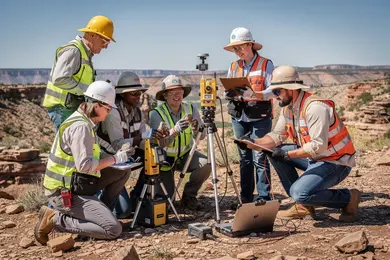
Employers consistently prioritize candidates with hands-on proficiency in geographic information systems (GIS), regulatory frameworks, and risk assessment methods. Graduates lacking practical exposure frequently encounter barriers entering consulting, emphasizing the need for internships or project-based coursework that demonstrate environmental sampling and reporting skills.
Environmental engineering or soil science can supplement relevant expertise but may delay technical mastery of core geosciences tools essential for early career progress. This tradeoff between specialization depth and broader environmental science education impacts versatility and employability in the consulting marketplace.
The median annual wage for environmental scientists and specialists was $80,060 in May 2024, confirming sustained demand within this talent pool. Prospective students evaluating geosciences degrees for environmental consulting careers should consider how integrated practical training influences their preparedness. Additional pathways include pursuing animal science degrees online for those interested in cross-disciplinary environmental roles, though such options typically require alignment with consulting-specific geoscience competencies.
What jobs can you get in environmental consulting with a geoscience background?
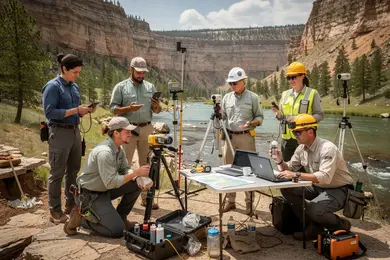
Environmental consulting roles for geosciences graduates in North America often require a blended skill set beyond traditional geology, focusing on environmental law, toxicology, and GIS mapping. In practice, environmental geologists or hydrogeologists assess soil and groundwater samples to guide remediation projects and ensure compliance with complex EPA and state-specific regulations. For example, a contaminated site assessor must interpret field data carefully to recommend effective cleanup strategies while anticipating regulatory hurdles, a task that demands both technical expertise and clear communication with non-specialist stakeholders.
Employment growth in geosciences environmental consulting career opportunities in the US is moderate, with about 2,000 annual openings projected by 2034. However, competition for entry-level positions is significant, pushing candidates toward graduate degrees or certifications like Certified Hydrogeologist to stand out. Salary ranges at the start typically fall between $50,000 and $70,000, rising more quickly for those who develop project management and client interaction skills.
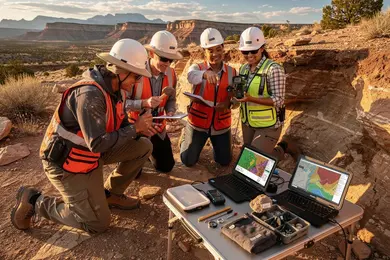
Those moving from pure geology must adapt to fieldwork variability and emerging data visualization tools to remain competitive. Employers value practical experience integrating laboratory analysis with GIS for modeling contaminant transport and natural resource management across sectors. Candidates actively balancing these technical proficiencies with soft skills improve their prospects significantly. Prospective students should also consider leveraging online degrees in computer science to enhance their data analytics and modeling capabilities, expanding their role in environmental consulting firms and government agencies.
How do geology, hydrology, and environmental geoscience specializations differ in practice?
Choosing between geology, hydrology, and environmental geoscience requires weighing distinct practical applications and workforce demands. Geology remains anchored in solid Earth materials, critical for industries like mineral extraction and infrastructure development. For instance, a geologist's assessment of subsurface rock stability directly impacts mining project feasibility or the safety of construction foundations. Hydrology's domain is water movement and quality, with roles shaping flood risk management and municipal water supply-such as hydrologists creating groundwater models to inform drought mitigation strategies.
Environmental geoscience merges these disciplines but emphasizes pollution tracking, remediation, and regulatory compliance-a core concern in environmental consulting where specialists map contaminant pathways near industrial sites to reduce ecological and human health risks. Each specialization entails distinct skills: geology demands petrology and structural analysis; hydrology requires fluid dynamics expertise and GIS watershed modeling; environmental geoscientists add regulatory knowledge and interdisciplinary communication.
The sector's uneven growth means career choice hinges on individual priorities. Geology roles often involve field-intensive work; hydrology offers increasing opportunities in urban climate adaptation but demands strong quantitative ability; environmental geoscience suits those comfortable navigating complex regulatory frameworks for consulting or agency work. Prospective students should assess their readiness for fieldwork, regulatory environments, and quantitative rigor when exploring geosciences career differences. Students aiming for a strategic career pivot might also consider online MLIS programs as part of broadening interdisciplinary skills relevant in environmental consulting and information management.
What courses and technical skills are most important in geoscience programs for consultants?
Proficiency in core geology, geochemistry, and hydrogeology is foundational for environmental consulting, as these areas enable precise assessment of site conditions and contamination risks. However, possessing technical skills in Geographic Information Systems (GIS) and environmental data modeling is what distinguishes candidates capable of delivering actionable insights to regulators and clients.
Consultants working on brownfield redevelopment projects must integrate risk assessment and impact analysis knowledge to accurately forecast contamination spread and guide mitigation strategies. This expertise directly influences regulatory outcomes and project timelines, underscored by 8,500 annual job openings projected in the U.S. through 2034, per the U.S. Bureau of Labor Statistics.
Increasingly, employers expect familiarity with programming languages such as Python or R to automate data processing and improve modeling accuracy. Candidates without these skills often experience slower onboarding and diminished efficiency in complex projects involving sectors like energy, construction, and government compliance.
Key tradeoffs emerge when balancing geoscience fundamentals against specialized skills: while comprehensive theoretical study is critical, insufficient applied training in GIS, data analytics, and environmental law limits immediate workforce readiness. Programs prioritizing interdisciplinary approaches better prepare graduates to navigate client expectations and regulatory frameworks in diverse consulting environments.
How do online geoscience programs for future environmental consultants compare with campus options?
Online geoscience programs for environmental consulting provide flexibility but fall short in delivering the tactile, hands-on experiences that employers prioritize. Field proficiency-such as site assessments, soil and water sampling, and equipment calibration-remains central to consulting effectiveness and is best developed through direct laboratory access and fieldwork offered by on-campus programs. Graduates lacking this practical foundation often face extended onboarding and slower advancement.
For working professionals balancing employment and study, online degrees may support career pivots without geographic disruption, yet they frequently omit the critical kinesthetic components needed for technical mastery. Such students must actively pursue internships or employer-backed projects to attain skill parity.
Employers in management, scientific, and technical consulting sectors consistently seek candidates with both conceptual understanding and demonstrated applied abilities. The U.S. Department of Labor reports that geoscientists in these roles averaged an annual wage of $78,610 in 2023, reflecting a competitive market premium for readiness and compliance familiarity. Prospective students should evaluate their capacity to engage hands-on alongside coursework when choosing between modalities to ensure marketable skills aligned with employer expectations.
What are the typical admission requirements and program lengths for geoscience majors?
Admission to geoscience majors demands strong competencies in math and science at the high school level, especially chemistry, physics, and calculus. A minimum GPA of 3.0 in these subjects is commonly required, with some programs relaxing standardized testing but maintaining rigorous AP or college-level science prerequisites. Candidates who have demonstrated analytical skills and relevant field experience-often via internships or summer research-are favored by competitive programs.
Bachelor's degrees typically extend over four years combining theory, laboratory work, and field practice. For careers in environmental consulting or mining geology, a master's degree, adding around two years, is often essential due to the industry's demand for specialized technical skills. Doctoral study, requiring an additional 3 to 6 years, is best suited for those focused on research with direct applications in resource extraction or environmental assessment sectors.
Employers in higher-wage industries such as mining or oil and gas extraction value program rigor, practical skills, and internships highly. For example, environmental consulting roles prioritize graduates with experience in regulatory compliance and site assessments, often gained from capstone projects or cooperative education. Mining positions emphasize expertise in mineral exploration and geostatistics.
Choosing programs lacking strong fieldwork or industry partnerships can delay entry into these sectors. Advanced degrees reduce the time needed to reach senior roles, which frequently require at least a master's level credential, particularly in hydrocarbon extraction and environmental risk analysis.
How much do environmental consultants with geoscience training earn, and what affects salary?
Salary trajectories for environmental consultants with geoscience expertise hinge on a practical blend of experience, specialization, and regional demand rather than fixed benchmarks. Entry-level positions generally offer $55,000 to $70,000 annually, but progression into specialized areas-such as hydrogeology or contaminated site remediation-can push earnings beyond $130,000, reflecting the premium placed on regulatory knowledge and technical skill. For example, consultants involved in large infrastructure or energy projects navigate complex compliance requirements that justify higher compensation.
Regional workforce dynamics significantly affect pay scales. States with higher environmental regulation and industrial presence like California and Texas typically provide elevated wages, illustrating how localized demand impacts earning potential. The American Geosciences Institute's data showing a 5% growth in active geoscientists suggests a competitive but stable job market, balancing supply with sustained client and project needs.
Private sector roles often offer more remuneration compared to government positions but come with broader responsibilities such as business development and stakeholder coordination. This distinction underscores a tradeoff between compensation and job scope. Further, professionals who supplement field skills with proficiency in data analysis and environmental compliance realize better market positioning.
Targeted educational investment-like geospatial analysis or environmental risk assessment certifications-can sharply boost income, a strategic move for career changers. Conversely, absence of these applied skills tends to anchor hourly rates near entry-level thresholds. Aligning skill development with niche industry demands remains a critical determinant of long-term financial and professional growth.
What licenses, certifications, and professional credentials matter in environmental consulting?
Licensure as a professional geologist (PG) remains a nonnegotiable credential in environmental consulting, particularly where regulatory sign-off on site assessments and remediation is mandated. Without a PG license, a geoscientist's capacity to independently authorize critical environmental reports is severely limited, restricting access to government contracts and senior consulting roles. Complementary certifications such as Certified Environmental Professional (CEP) enhance practical skills but do not substitute for regulatory licensure.
Employers expect consultants to navigate complex federal and state environmental laws, meaning that a blend of licensing and targeted certifications-like those for hazardous waste or groundwater analysis-is often essential. For example, a geoscientist working on brownfield redevelopment must hold both a PG license and site assessment credentials to comply with state permitting and buyer due diligence standards.
Market demand has slowly pushed median geoscience salaries up by 4.5%, partly due to increasing preference for credentialed professionals who combine technical capability with regulatory authority. However, gaining these credentials involves significant time and cost investments that vary by state, affecting strategic planning for professional pivots. Prioritizing states with licensure aligned to one's target market is critical. Adding certifications in emerging areas like GIS or environmental data modeling can enhance competitiveness but should be weighed against financial and timeline constraints.
How can you evaluate and choose an accredited geoscience program for environmental consulting?
Choosing an accredited geoscience program for environmental consulting requires prioritizing programs with proven alignment to consulting industry demands and measurable graduate employability. Accreditation by established bodies such as the Geological Society of America (GSA) or regional agencies confirms that curricula meet essential professional standards, but accreditation alone does not guarantee practical readiness.
Programs that emphasize applied skills-hydrogeology, environmental impact assessment, and geostatistics-better equip graduates for consulting roles, where about 20% of earth and environmental science graduates enter this sector, according to Weber State University data. Candidates should evaluate how programs integrate internships or partnerships with environmental consulting firms or government entities to gain exposure to real-world assessments, regulatory compliance, and remediation projects.
The balance between theory and hands-on experience is a critical factor. Professionals aiming for swift workforce entry benefit from cohort-based field training and case-study modules rather than research-heavy programs, which may delay practical skill acquisition.
Faculty expertise linked to active consulting practices enhances curriculum relevance and networking opportunities. Also, confirm whether the program supports preparation for professional credentials like state licenses or Certified Professional Geologist (CPG) certification, often prerequisites for consultancy roles.
Logistical considerations-program proximity to regional consulting hubs, availability of online or hybrid formats, and program duration-affect return on investment and career disruption. Selecting a program with clear post-graduation employment outcomes backed by industry-accredited standards offers the most reliable pathway for transitioning into environmental consulting.
Other Things You Should Know About Geosciences
Early specialization can limit exposure to the wider geosciences landscape, which reduces flexibility in environmental consulting roles that often require interdisciplinary knowledge. Prioritizing a strong foundation in core subjects like geology, hydrology, and geochemistry during the first two years allows you to adapt to various employer needs and increases your long-term employability. Employers often value candidates who can navigate multiple subspecialties, so delaying specialization until you understand the practical applications across fields is advisable.
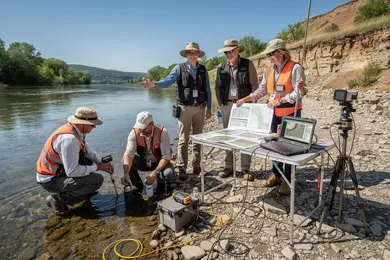
Hydrogeology is the most directly useful specialization for contaminated site assessment. It covers groundwater flow, plume migration, well design, and sampling methods. Many employers also look for 24–32 credit hours in geology, hydrogeology, geochemistry, or environmental science, plus field mapping and groundwater modeling experience.
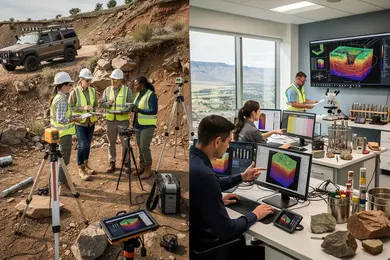
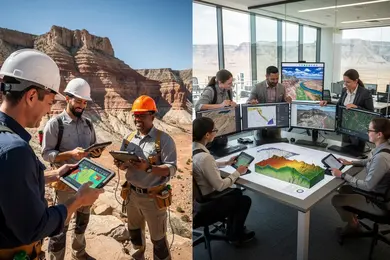
Field-intensive coursework builds experience in site assessments and data collection, which are highly valued in environmental consulting for direct client deliverables. However, such programs may require significant time in unpredictable outdoor conditions and travel, which impacts work-life balance and costs. Lab-focused coursework improves technical analysis and data interpretation skills but may reduce exposure to real-world field challenges, potentially making initial consulting work less practical. Prioritize your choice based on whether you aim for roles involving frequent site visits or analytical positions within firms.
References
- 3. What Undergraduate Geoscience Education Should Accomplish https://www.americangeosciences.org/change/sections/concepts/
- Disciplines Practiced in Applied Geosciences https://www.aegweb.org/index.php
- Environmental Geoscience Major | SUNY Plattsburgh https://www.plattsburgh.edu/programs/environmental-geoscience-major.html
- Subject Areas https://www.geolsoc.org.uk/Geology-Career-Pathways/What-is-Geology/Subject-Areas.html
- Geoscience Jobs in Industry https://www.grow-geocareers.com/exploreindustries
- 8 Types of Experts Environmental Consultants Employ | Nichols Environmental + Engineering https://nichols.ca/blog/more-than-just-geoscientists-the-many-experts-behind-environmental-consulting/
- Online Geoscience Degrees: Top Schools and All Programs in 2026 https://www.gisdegree.org/online/geoscience-degrees/
- What qualifications should geological service providers have? - Palsatech https://palsatech.fi/what-qualifications-should-geological-service-providers-have/
- Major to Career: Geosciences https://www.dickinson.edu/info/20107/geosciences/3969/major_to_career_geosciences
- Careers in Environmental Consultancy | RPS https://www.rpsgroup.com/consulting-uki/careers-in-environment-uk/