2027 Geosciences Salary by State Report

Co-Founder and Chief Data Scientist
Choosing where to pursue a career in geosciences often hinges on salary expectations that vary widely by state, yet many professionals and students face uncertainty navigating this disparity when planning education or relocation. The U. S. Bureau of Labor Statistics reveals that states with energy, mining, or environmental sectors tend to offer significantly higher geoscience wages, influencing workforce mobility and affordability decisions. Meanwhile, the growing flexibility in online and hybrid geosciences programs extends career pivot options for adult learners balancing upskilling with employment. This report breaks down the state-by-state geosciences salary data to clarify earning potential and inform strategic education and career choices.
Key Things You Should Know
- Median geosciences salaries vary by over 40% between states, with Alaska averaging $98K annually due to energy sector demand, forcing candidates to weigh relocation costs against salary premiums.
- Employers in New Mexico and Texas prioritize candidates with applied data analytics alongside core geosciences skills, reflecting a shift toward hybrid roles that integrate GIS and machine learning.
- States with high academic output in geosciences, like California, show slower salary growth due to workforce saturation, pressuring students to consider alternative specializations or experience-based hiring to offset tuition and opportunity costs.
What are geosciences degrees and careers?
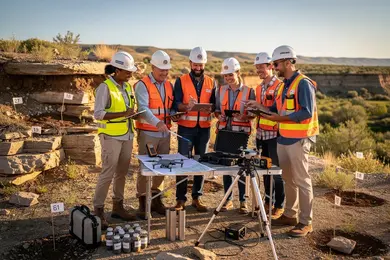
Geosciences degree programs emphasize developing expertise that aligns directly with workforce demands, especially in sectors like natural resource management, environmental consulting, and energy. Graduates must navigate rigorous STEM coursework and gain practical field experience to effectively assess complex environmental scenarios such as groundwater contamination or seismic risk. Regional job markets vary considerably, so evaluating state-by-state geosciences job opportunities and salaries is essential for strategic positioning.
Real-world roles often require blending technical skills with regulatory knowledge. For example, oil and gas geoscientists assess subsurface formations to balance drilling viability against environmental impact, collaborating closely with engineers and regulators. Environmental consultants implement monitoring and compliance programs, demanding familiarity with both federal and state regulations. These positions highlight the tradeoffs between economic priorities and environmental stewardship inherent in the field.
Prospective students should consider programs that provide strong field training and internships to build hands-on skills, as practical experience significantly impacts employability. Geographic mobility is another factor, since many jobs cluster near resource extraction sites or government research centers. The U.S. Bureau of Labor Statistics reports the median annual wage for geoscientists was $99,240 in May 2024, reflecting the value of specialized technical competence for practical problem-solving.
Those evaluating educational shifts comparable to a speech language pathologist pivot will find that understanding sector-specific requirements and regional dynamics is key to aligning their education with marketplace realities.
Which geosciences jobs pay the most by state?
Geosciences roles pay highest where resource extraction thrives, notably in Texas, where median wages for geoscientists reach $127,450, over 38% above the national median. This wage premium aligns with industry needs for expertise in reservoir modeling and advanced subsurface analysis. Yet, pursuing these top-paying positions often involves operational tradeoffs including volatile employment cycles and demanding field conditions.
States like California and Colorado offer geosciences salaries above the national median in environmental consulting and renewable energy-sectors expanding under regulatory and sustainability pressures. Contrastingly, mining-focused geologists in Nevada and Alaska face higher pay coupled with seasonal job instability.
Midwestern states such as Ohio and Illinois typically provide more stable geoscience employment in academic and government roles, though compensation hovers near the national median, reflecting a focus on research and regulatory compliance rather than direct resource extraction.
Job seekers evaluating the highest paying geosciences careers by state should weigh whether higher salary premiums justify potential instability. Matching skills with sector-specific demands is critical, and leveraging data like the 2023 BLS wage insights can guide targeted education and credentialing decisions. Individuals interested in environmental pathways might explore environmental engineering degrees online as complementary qualifications to broaden opportunities.
Prioritizing states and sectors aligned with one's risk tolerance and career goals will optimize both earnings and long-term employability prospects.
How do geosciences salaries vary by state?
Geosciences salary differences across US states are driven primarily by regional economic structures and the presence of resource extraction industries. Texas leads with a median salary of $155,330, over 56% higher than the national median of $99,240, fueled by its robust oil, gas, and energy sectors. This sector concentration creates a strong wage premium but also introduces workforce dynamics like cyclical employment linked to commodity prices and longer, sometimes remote, job sites.
Conversely, states such as those in the Pacific Northwest and New England offer lower geosciences earnings. Here, roles often emphasize environmental consulting or academic research rather than extractive industries, reflecting state-by-state variation in geosciences earnings with more stable but less lucrative career tracks. Professionals must weigh these geographic earnings disparities against lifestyle factors and career stability.
For those evaluating educational pathways, targeting states with strong petrochemical, mining, or geothermal sectors can provide higher salary potential but may require tradeoffs in work conditions and job security. States emphasizing environmental and governmental roles often provide steadier employment but more modest compensation.
Prospective geoscientists should integrate labor market data with personal priorities to navigate this complex landscape. Those considering exercise science degrees online or other specialized programs should also assess how specific regional demands affect long-term career outcomes.
What degree do geosciences careers require?
A bachelor's degree in geosciences or a closely related field remains the baseline requirement for most careers in this sector, but the practical implications of this credential vary substantially by state and industry. Employers value candidates with rigorous training in geology, earth science, environmental science, or geophysics, typically provided through a four-year undergraduate program. However, technical competencies such as GIS, remote sensing, and data analysis embedded in these curricula significantly enhance employability and readiness for real-world challenges.
Certification requirements-especially important for fields like environmental consulting and petroleum geology-differ by state, creating a landscape where licensure demands both accredited education and verified experience. This reality forces candidates to weigh the tradeoff between pursuing graduate education, which can accelerate advancement into senior or research roles, and the significant investment of time and money without guaranteed wage increases in every job market.
California's labor market exemplifies these disparities: 2024 data show median geoscientist wages from $80,933 in Stanislaus County to $123,171 in Santa Cruz County, illustrating how regional economic factors overshadow uniform degree credentials. Prospective students must align their choices with such locality-specific market demands, balancing cost, time, and expected outcomes.
Entry through community college or certificate programs usually won't suffice, but they offer practical avenues for skill upgrades or sector shifts. In all cases, employers prioritize applied problem-solving skills and workforce readiness, making internships and cooperative education critical components bridging formal education and employment. Students considering career transitions should also evaluate options like a veteran friendly online electrical engineering degree if interdisciplinary skills matter.
Geosciences degree requirements by state and typical educational background for geosciences careers remain essential decision factors shaping strategic career moves within this field.
Which geosciences programs are properly accredited?
Employers in geosciences prioritize candidates from programs accredited both regionally and by specialized bodies like the American Geosciences Institute (AGI) or ABET for engineering-related tracks. This dual accreditation signals that graduates possess practical skills and technical knowledge aligned with industry expectations.
Choosing programs without these credentials compromises hands-on training and weakens pathways to internships, which are often prerequisites for field proficiency and employment. For instance, Texas recruiters explicitly favor graduates from accredited programs due to their rigorous instruction and field methodologies. This preference translates into a salary premium: geoscientists in Texas earn a price-adjusted median of $159,903, 61% above the national median-an advantage tied to validated expertise accessible only through recognized programs.
Key practical influences on career outcomes include:
- Accreditation affects eligibility for professional certifications like the Certified Professional Geologist (CPG), essential for advancement.
- Programs with strong industry ties facilitate internships, accelerating workforce entry and enhancing starting salaries.
- Graduates from non-accredited programs may face delayed employment and lower wages, especially outside premium markets such as Texas.
Prospective students should rigorously verify accreditation status and industry partnerships to navigate real-world employment hurdles and wage disparities effectively.
Are online geosciences degrees respected by employers?
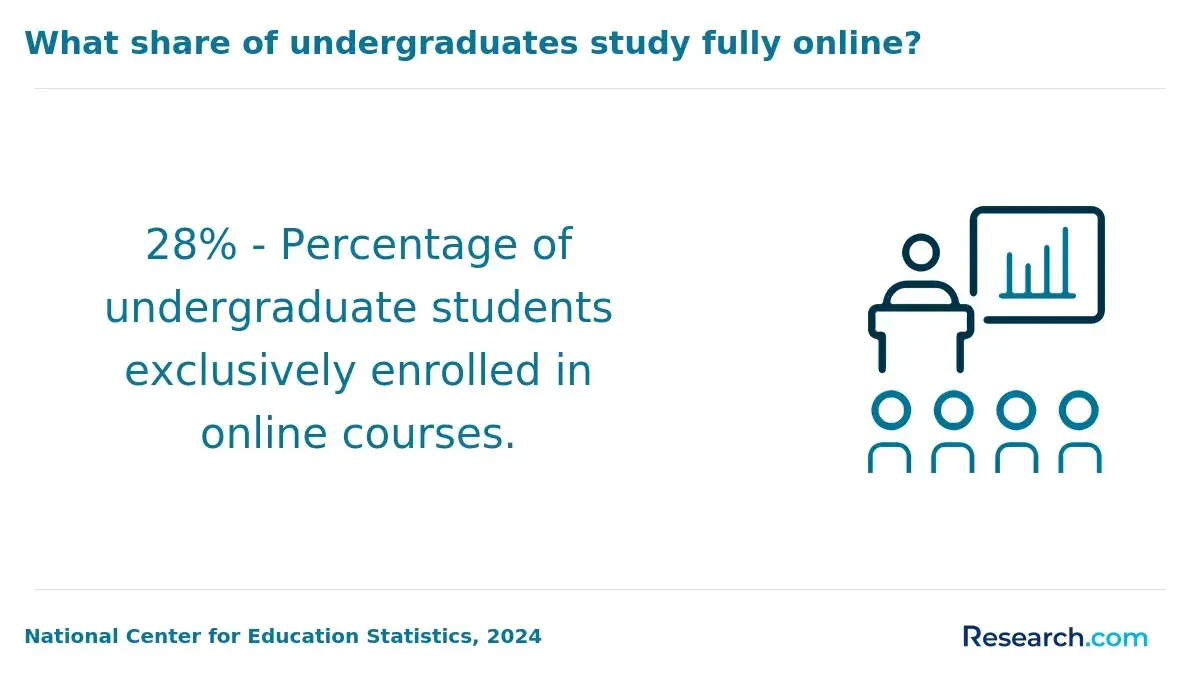
Employers in geosciences demand credentials that combine regional accreditation with verified hands-on experience. Degrees that lack supervised fieldwork or lab interaction often fall short in high-paying sectors like mining or oil and gas extraction, where practical skills directly influence employability and compensation. For example, data from Penn State Geosciences based on 2023 U.S. Department of Labor figures show geoscientists in resource extraction average $126,140 annually, substantially more than the $78,610 average in consulting roles, emphasizing the economic value of applied expertise.
Fully online geosciences programs frequently present a tradeoff: accessibility versus credibility. Students without access to hybrid options or local partnerships miss critical experiential learning, limiting entry into technically demanding roles. Online degrees aligned with consulting or policy careers may offer more flexibility but require deliberate skill-building outside the classroom to remain competitive.
When evaluating online geosciences degrees, consider:
- Whether the program's accreditation is recognized by employers and whether it includes field experience or residencies.
- Availability of local lab access or co-op placements that validate practical competence.
- Comparison of job placement rates and income data specific to subfields to assess real market alignment.
Informed decisions hinge on matching educational models with long-term workforce demands rather than convenience alone.
What coursework is included in geosciences programs?
Geosciences programs demand rigorous integration of fieldwork, lab precision, and quantitative skills, reflecting employer expectations for versatile problem solvers capable of navigating complex environmental, regulatory, and resource-related challenges. Core courses in mineralogy, sedimentology, structural geology, and geophysics form the foundational toolkit for careers in resource management or environmental assessment.
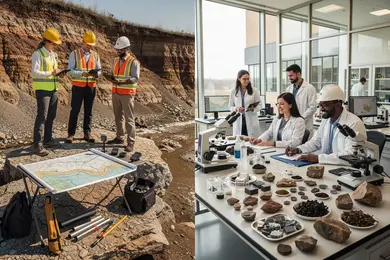
Field methods training is non-negotiable for roles in environmental consulting or natural resource extraction, requiring adept geological data collection and interpretation onsite. Laboratory emphasis on petrology and geochemical analysis supports roles in precision-dependent industries like oil, gas, and mining, where sample accuracy directly impacts operational decisions.
Students face a tradeoff balancing intense technical demands and extensive field activity against practical career outcomes. Advanced topics in climate science, oceanography, and environmental regulations prepare graduates for growing sustainability and compliance pressures in industry.
- Strong quantitative skills in mathematics and statistics are critical for modeling and forecasting within hydrology and climate impact contexts.
- Understanding environmental policies and remediation strategies is essential for meeting federal and state regulatory standards.
- Salary data from the American Geosciences Institute indicate a marked increase in median wages, particularly for specialized roles like postsecondary geography instructors, who saw rises up to 13%.
Prospective students and professionals must evaluate the intensity and breadth of this pathway against their long-term career goals, recognizing that multidisciplinary competence and applied environmental stewardship are increasingly table stakes for employability in geosciences fields.
How long does a geosciences degree take?
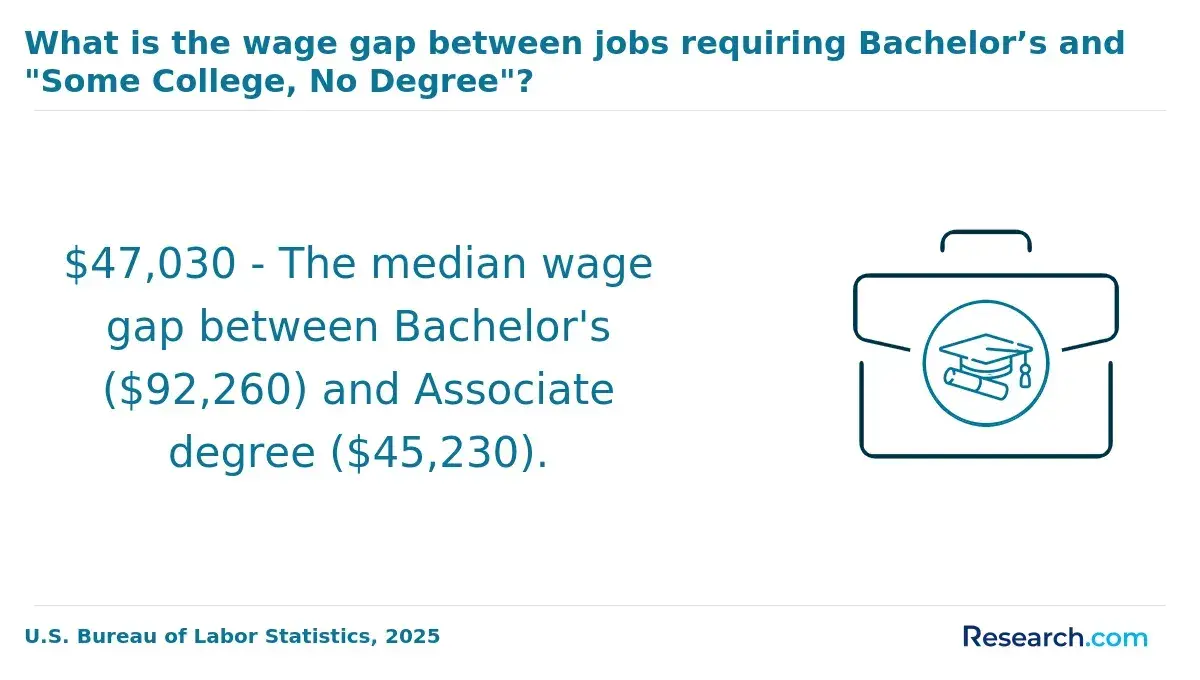
Bachelor's degrees in geosciences remain the baseline credential for most entry-level roles, requiring four years of focused study in geology, chemistry, and allied sciences. Yet, the clear dividing line in earning potential and job scope emerges with graduate education. For instance, positions valuing research skills or higher salaries near the national median pay of $92,580 typically expect a master's degree, which adds around two years of specialized training.
Practical experience is frequently non-negotiable. Employers in sectors like oil and gas or environmental consulting often prefer candidates with internships or applied fieldwork, extending the timeline but greatly enhancing job prospects. Conversely, governmental and technical field roles may prioritize certifications and software proficiency over further formal education.
Opting for accelerated programs or associate-level credentials risks insufficient preparation for complex data analysis tasks that substantively influence wages and long-term job stability. Students seeking quick workforce entry must balance entry-level salaries closer to $52,500 against slower career progression without a full bachelor's degree combined with real-world experience.
- Four-year bachelor's degrees provide foundational knowledge essential for technical roles.
- Master's programs typically require two additional years but open access to higher salary brackets and research positions.
- Applied experience through internships or fieldwork is often a hiring prerequisite rather than a bonus.
Decisions should weigh immediate job market entry against the significant long-term benefits of graduate-level education and hands-on experience in geosciences employment trajectories.
What certifications help geosciences graduates earn more?
Licenses and certifications in geosciences directly affect earning potential but require careful consideration of time investment versus payoff. For example, the Professional Geologist (PG) license demands extensive fieldwork and exam preparation, which can delay early salary growth but often results in 15%-25% pay increases and access to senior roles exceeding $150,000 annually. Employers in environmental consulting and petroleum industries frequently mandate PG licensure for advanced positions and client-facing responsibilities.
The Geographic Information Systems Professional (GISP) credential emphasizes spatial data analysis skills, providing a 10%-20% salary premium, particularly valued in mining and hydrology sectors where data interpretation impacts project outcomes. Its quicker certification timeline offers versatility, though with more modest income improvement compared to PG licensure.
The Certified Environmental Professional (CEP) credential aligns with regulatory-heavy roles, boosting entry-level salaries and opening pathways to senior management jobs with substantial pay gains. Employers prioritize certifications that demonstrate practical skills reducing project risk and ensuring compliance, which matters for salary progression in both technical and leadership tracks.
PathScorer's 2026 geoscientist salary data using BLS OEWS figures shows median salaries rising from roughly $58,790-$72,440 at entry to above $178,880 for geoscientists with over 15 years' experience and recognized credentials. Focused investment in these certifications, coupled with field expertise beyond five years, typically doubles compensation, underscoring the tangible returns tied to credentialing decisions within geosciences.
What is the job outlook for geosciences graduates?
Employment outcomes for geosciences graduates hinge on regional industry alignment and practical skillsets rather than degree credentials alone. While the median wage for geoscientists is about $99,000, roughly 40% above the U.S. average, this premium depends heavily on experience with geological modeling software, regulatory knowledge, and data analysis capabilities. For example, graduates aiming for oil and gas roles in Texas or California confront a different market dynamic than those pursuing environmental consulting in Colorado or Washington.
Entry-level positions typically require certifications or field experience beyond academic credentials, extending the timeline to median wage levels and making internships or cooperative education essential for minimizing transition lag. Employers prioritize applied technological skills, such as remote sensing or machine learning applications, combined with interdisciplinary collaboration.
Regional specialization affects job availability and salary negotiation strategies, necessitating nuanced understanding of local industry demands. Long-term advancement demands continuous skill updates, especially in emerging tools, and leadership development that includes project management alongside technical expertise.
Strategic career decisions in geosciences thus involve balancing immediate employability challenges with ongoing adaptability requirements. Practical experience trumps theoretical knowledge in securing competitive positions, and graduates should prepare to invest in both technical credentials and targeted regional job market research.
Other Things You Should Know About Geosciences
Specializations such as petroleum geology or environmental geoscience lead to different employer demands and salary trajectories. Petroleum-focused roles often offer higher starting salaries but depend on volatile energy markets, increasing career risk. Environmental specializations provide more stable job outlooks but typically have lower earning ceilings. Prioritize specializations aligned with your risk tolerance and geographic mobility to balance income potential against economic cycles.
A graduate degree generally improves eligibility for higher-paying research or management positions but requires significant additional time and financial investment. Many entry-level roles, especially in fieldwork or technician positions, accept a bachelor's degree, allowing earlier workforce entry and income. Accept graduate studies if targeting long-term advancement in specialized or analytical roles; otherwise, entering the field sooner can build practical experience and income faster.
In 2027, geoscientists earn the highest average wages in Alaska, Texas, and California. These states combine strong demand from energy, environmental consulting, and government geology work, with annual pay often exceeding the national median for geoscientists by several thousand dollars.
Geosciences job markets vary significantly by state due to local industry presence, such as mining, oil, or environmental consulting. Choosing a program and specialization aligned with regional industry strengths increases the likelihood of employment. Students must weigh the benefits of higher salaries in specific states against cost of living and relocation challenges to make efficient career decisions.
References
- Certifications https://www.grow-geocareers.com/certifications
- What coursework should I take to become a successful Applied Geoscientist? https://www.aegweb.org/index.php
- The Geological Society - Degree Accreditation https://www.geolsoc.org.uk/education-and-resources/universities/university-degree-accreditation/
- Geology BSc (Honours) 2026 entry https://www.st-andrews.ac.uk/subjects/earth-environmental-sciences/geology-bsc/
- Geoscience Profession Data https://profession.americangeosciences.org/research/data/
- High-Earning Careers in Geology | Rangefront Geological https://rangefront.com/blog/high-earning-jobs-geology/
- How do recent geoscience graduates experience the job market? - GeoExpro https://geoexpro.com/how-do-recent-geoscience-graduates-experience-the-job-market/
- Pikes Peak State College, PPSC https://www.pikespeak.edu/programs/geology/geology-resources.php
- Education Requirements https://www.americangeosciences.org/licensure/education/
- Geologists: Salary, career path, job outlook, education and more - RaiseMe https://www.raise.me/careers/life-physical-and-social-science/geoscientists/geologists/